WMS-ready High-Density Four-Way Shuttle System Manufacturers & Exporter Serving the Frankfurt Market
CE-aligned documentation, WMS/WCS integration planning and 1-set MOQ pilot programmes for high-density pallet storage in Frankfurt, the Rhine-Main logistics corridor and across Germany.
Eight production-ready models for a Frankfurt four-way shuttle project
A four-way shuttle system is only as productive as the fleet that feeds and discharges it. These eight models support WMS-directed pallet flow, narrow aisles, high-density storage and 24/7 logistics in and around Frankfurt. Product links are preserved; each card highlights the specifications most often requested by German buyers.
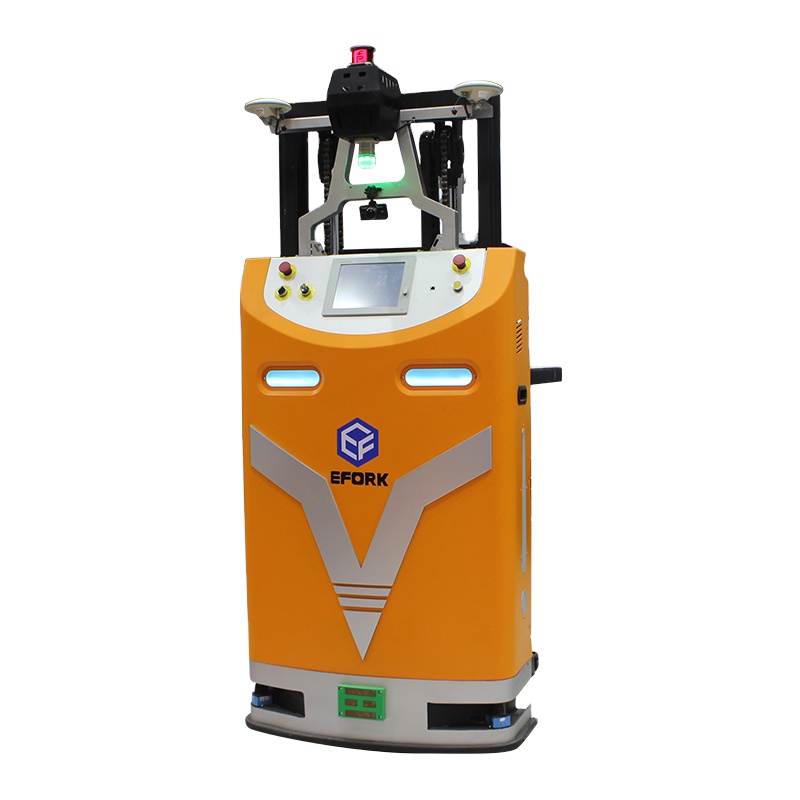 3D SLAM
CE Certified EFORK EDA20-16 2T 1200mm Fork Width 180mm 3D SLAM Laser Navigation AGV WIFI/5G 10mm Accuracy 1600mm Lifting Height
A flexible 3D SLAM/laser AGV for moving pallets between shuttle infeed, staging and dispatch. The 1,600 mm lift and 10 mm accuracy support WMS-directed put-away without floor tape.
- Load 2,000 kg
- Fork 1,200 mm
- Lift 1,600 mm
- Accuracy 10 mm
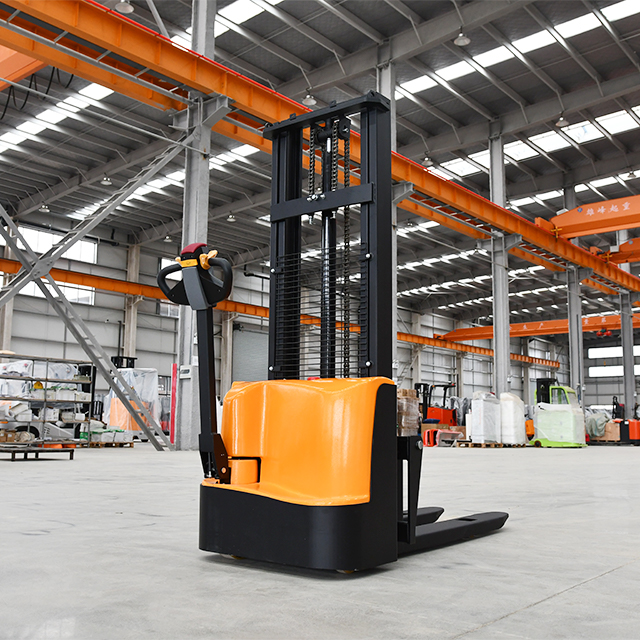 Walkie
1Ton & 2Ton Full Electric Pallet Stacker Walkie Type High Performance, Low Cost Optional with Training Wheels
A cost-controlled stacker for low-rack and line-side replenishment in 3PL operations. Useful where part of the flow remains manual while the shuttle handles dense reserve storage.
- Load 1–2 T
- Type Walkie
- Option Training wheels
- MOQ 1 set
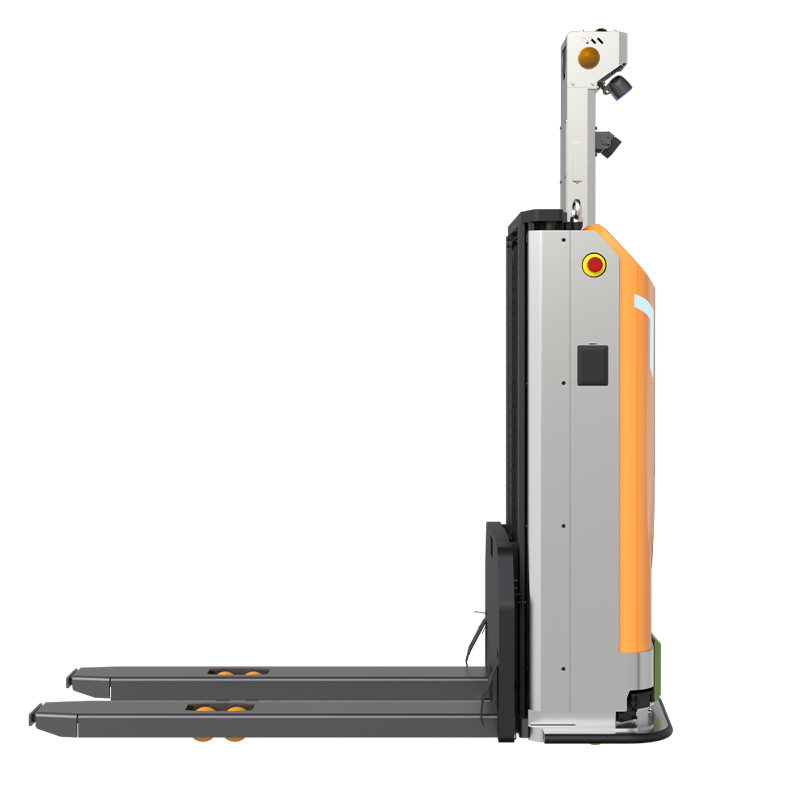 Narrow Body
2T Slim Narrow-Body Stacker AGV with 3D SLAM & WIFI/5G for High-Density Storage 1.6M Pallet Stacking Maximize Warehouse Space
A narrow-body stacker AGV for compact shuttle infeed lanes and 1.6 m pallet stacking. It suits Frankfurt buildings where aisle width is fixed and every metre of racking must be justified.
- Load 2,000 kg
- Lift 1.6 m
- Nav 3D SLAM
- Network WiFi/5G
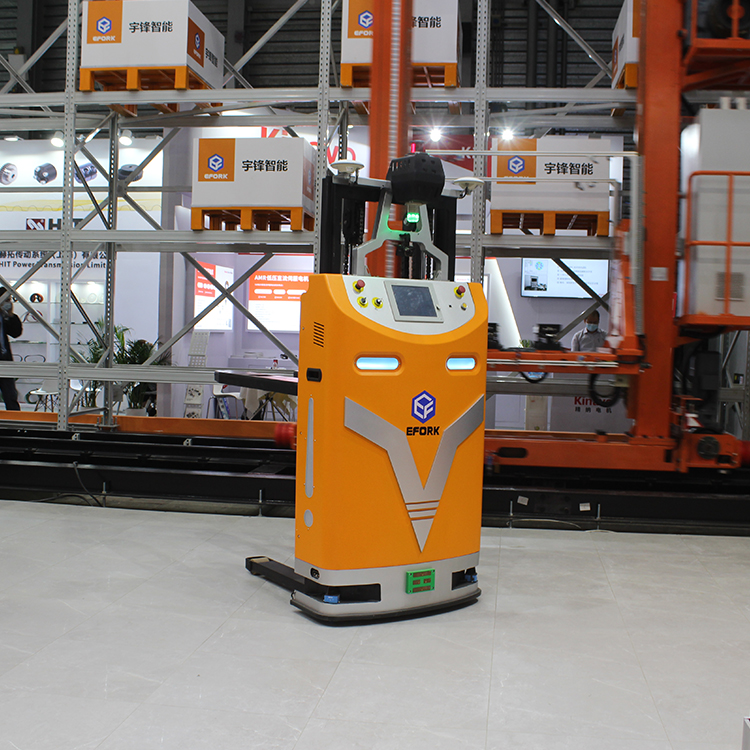 Laser AGV
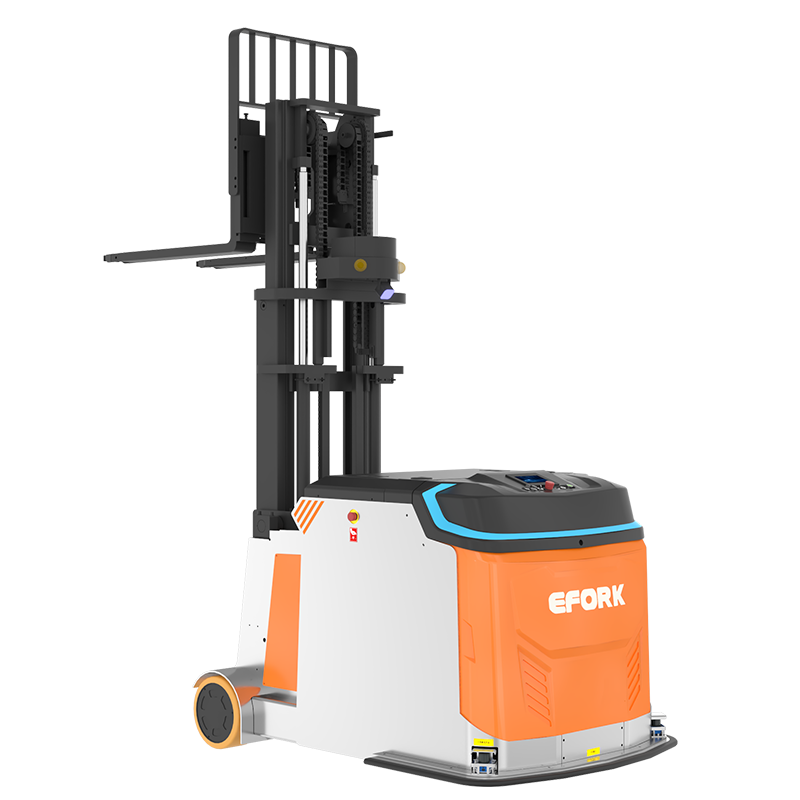
CE Certified EFORK EDA20-16 2T 1600mm Laser Navigation Self-Driving Forklift AGV WIFI/5G 10mm Accuracy 6-8H Working Time
Designed for repetitive transport between warehouse zones, this laser navigation AGV offers predictable 6–8 hour working cycles and 10 mm positioning accuracy for WMS task execution.
- Load 2,000 kg
- Lift 1,600 mm
- Accuracy 10 mm
- Working 6–8 h
 Counterbalanced
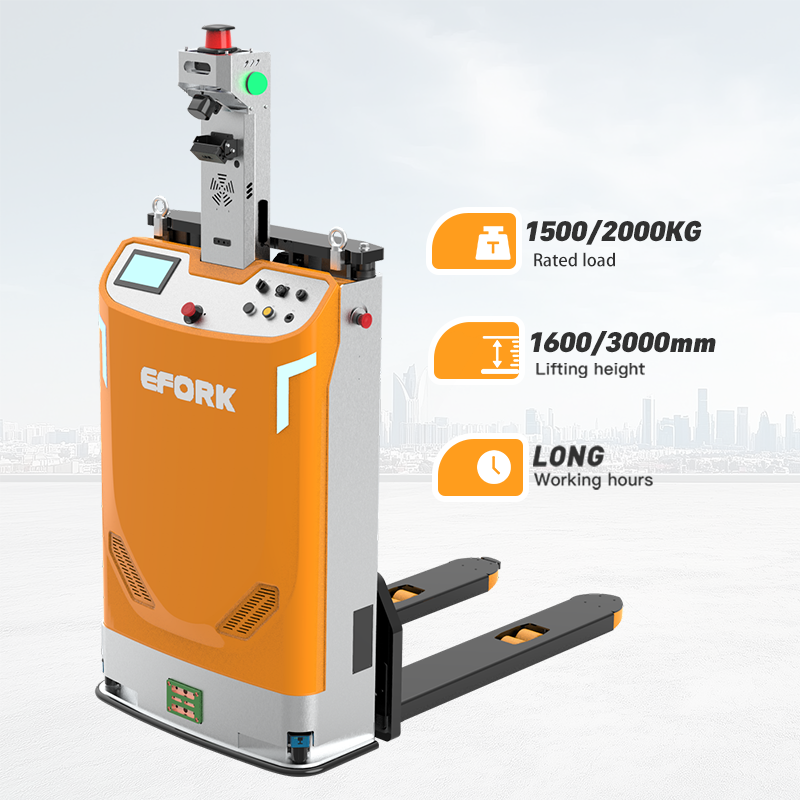
EFORK EDB30-30 Counterbalanced AGV Body 3M 3T High Lift Capacity Forklift with Flexible Fork Legs and 3D SLAM Navigation for Warehouse Logistics
A counterbalanced platform for closed-bottom pallets, cages and trailer or container interfaces. It complements shuttle storage where loads cannot be handled by stacker legs.
- Load 3,000 kg
- Lift 3 m
- Nav 3D SLAM
- Type Counterbalanced
 3T Stacking
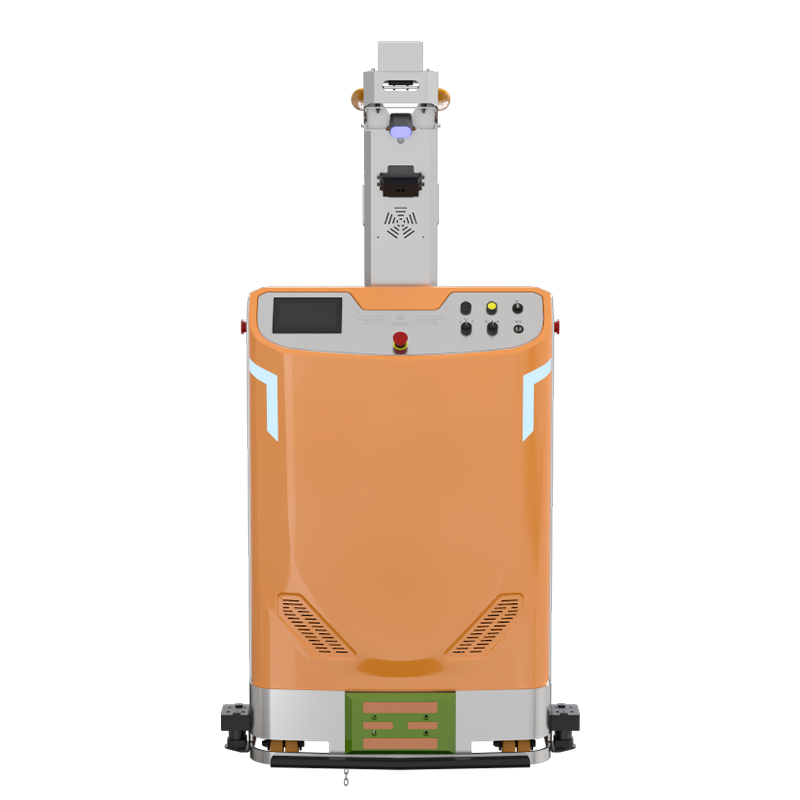
New Heli Yufeng EDA20-30 Slim Stacking AGV Forklift CE Certified 2T 3M 3D SLAM WIFI/5G for Stacking Mobile Robot
A slim 2T stacking AGV with 3 m lift, CE documentation and 3D SLAM navigation. It can support high-density block patterns and low-to-medium rack heights around a shuttle core.
- Load 2,000 kg
- Lift 3 m
- Nav 3D SLAM
- Compliance CE
 Compact Chassis
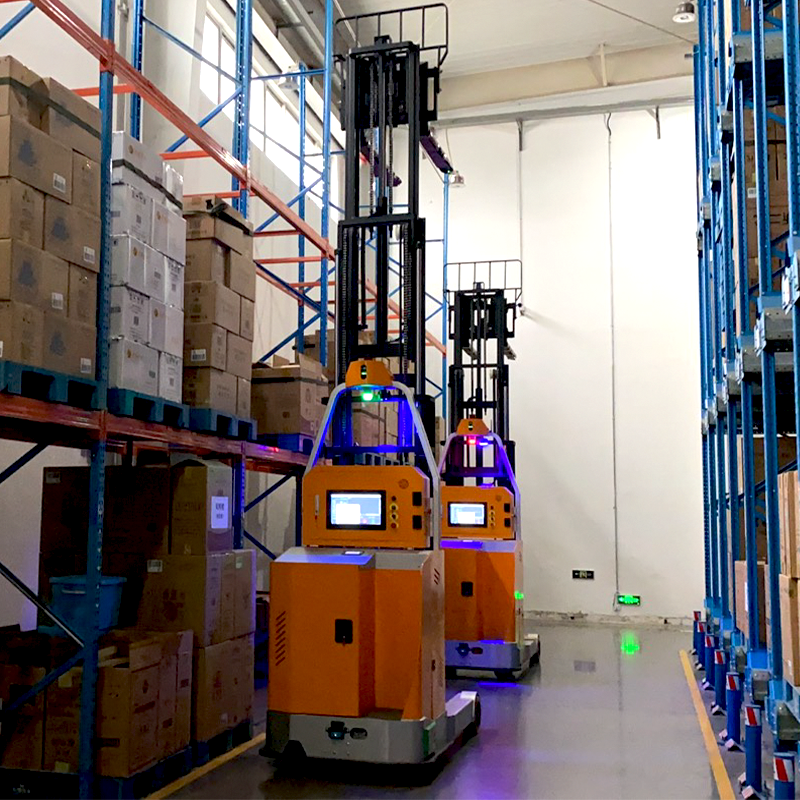
2T Material Handling AGV Body Narrow Body Compact Chassis 3D SLAM Navigation Laser Obstacle Avoidance for Workshop Transport
A compact 2T transport platform for workshop and production-line logistics, with laser obstacle avoidance for mixed pedestrian zones and narrow service corridors.
- Load 2,000 kg
- Body Narrow
- Nav 3D SLAM
- Safety Laser avoidance
 Reach Truck
EFORK EQDA15-30 Automated Reach Truck Laser SLAM Navigation 1.5T Capacity ±10mm Accuracy Forklift for Warehouse Logistics
A reach truck AGV for selective racking and truck-to-rack workflows where aisle space is tighter than a counterbalanced truck allows. The ±10 mm accuracy supports WMS-driven pallet handling.
- Load 1,500 kg
- Accuracy ±10 mm
- Nav Laser SLAM
- Type Reach truck
High-density storage is a real-estate and labour strategy in the Rhine-Main region
Frankfurt am Main is one of Europe's densest logistics decision centres. Within a short drive of the city, operators manage Frankfurt Airport CargoCity, Rhine-Main rail and motorway corridors, contract logistics campuses around Offenbach, Hanau, Rüsselsheim and Wiesbaden, and high-value pharma, industrial and e-commerce supply chains. Industrial land is scarce, rents are high, planning and fire-protection reviews are demanding, and qualified forklift drivers are harder to secure. That is why the question from Frankfurt buyers is rarely “What is the cheapest shuttle?” It is “How many reliable pallet positions can we add without expanding the building?”
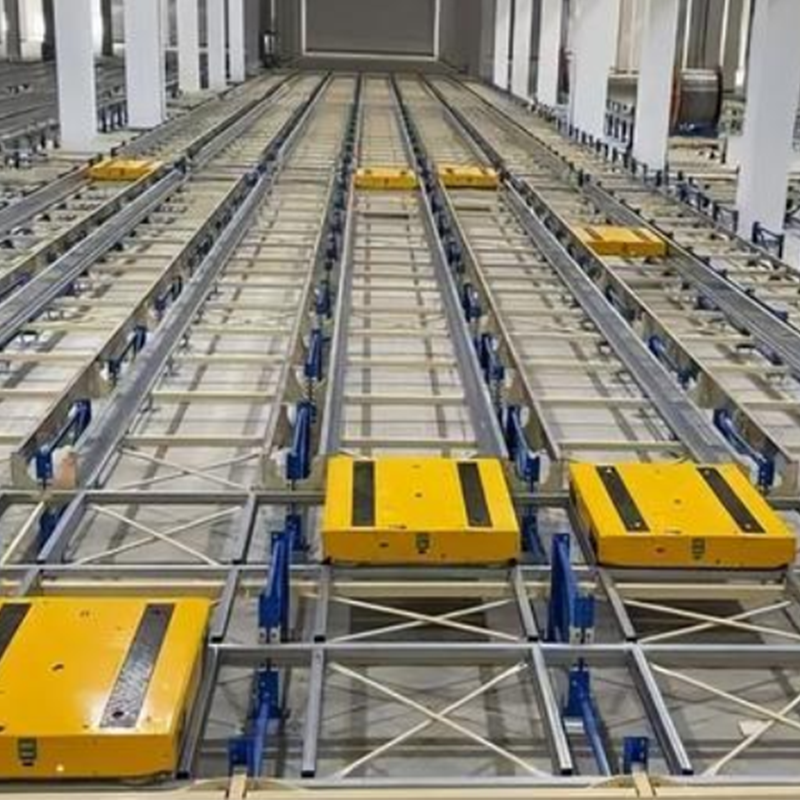
A WMS-ready high-density four-way shuttle system addresses that question by decoupling storage density from aisle width. Instead of every pallet facing a forklift aisle, pallets are stored in deep racking lanes; shuttles travel in four directions — along the rail, across the transfer aisle and between levels via lifts — so the WMS can assign the nearest available pallet position, sequence retrieval and feed replenishment or dispatch tasks to the rest of the fleet. For a Frankfurt 3PL serving same-day or next-day customers, the value is not only space. It is predictable inbound and outbound flow when labour availability changes.
The engineering reality is that the best four-way shuttle providers are not just welders or software coders. They must align rack survey tolerances, pallet quality, shuttle positioning, lift handshakes, WMS/WCS logic, fire-protection concepts and spare-parts planning. Our role as a manufacturer and exporter is to bring these disciplines together before the rack is fixed to the floor. For a Frankfurt project, we normally request the rack drawing, pallet drawing, load weight and overhang, rack load heights, site temperature profile, throughput profile by hour and shift, and the intended WMS interface. From those inputs we generate a layout, fleet size and control concept that can be reviewed by the operator, racking supplier and WMS team.
- Density without blind spots: shuttle lanes reduce aisle footprint while WMS rules keep FIFO, FEFO or LIFO logic visible.
- CE-aligned safety planning: risk assessment, interlocks, light curtains and emergency recovery are reviewed before shipment.
- WMS/WCS acceptance criteria: task states, error handling and manual intervention are tested, not assumed.
- Expansion path: a 1-set MOQ pilot can validate routes and cycle times before a full fleet commitment.
Manufacturing capacity that stands up to German due diligence
For an automation project expected to run for a decade, supplier capacity, traceability and certification matter as much as the shuttle itself. These figures come from our factory and third-party onsite verification.
Total Staff
Onsite-verified team across engineering, production, quality and export.Factory Floorspace
Two production bases in Anhui supporting AGV and AS/RS manufacture.Annual Revenue
Stable capacity for fleet orders, OEM programmes and turnkey projects.Awarded Patents
Plus 1 registered trademark and ongoing R&D in navigation and controls.Where the Frankfurt market deploys four-way shuttle storage
The same shuttle platform can serve very different business models. These four scenarios are common in Rhine-Main projects; final layout and fleet sizing remain project-specific.
Airport-linked 3PL & cargo buffering
CargoCity and nearby contract logistics operations handle irregular receipts, cross-docking and time-window dispatch. A four-way shuttle acts as a dense pallet buffer with WMS-driven batch retrieval, while AGVs transfer loads to staging.
Pharma, medical & cold-chain
Frankfurt life-science and healthcare distributors need batch visibility, FIFO/FEFO logic and audit trails. Shuttle systems can be configured for refrigerated or deep-freeze zones; WMS interface testing, temperature monitoring and contingency procedures should be completed before go-live.
Automotive & industrial spare parts
Suppliers and aftermarket operations around Rüsselsheim, Darmstadt, Hanau and Wiesbaden often manage slow-moving but high-value SKUs. Dense storage reduces travel, while 3D SLAM stacker or reach truck AGVs handle line-side replenishment.
E-commerce & retail replenishment
Retail and e-commerce fulfilment centres must rebalance stock between reserve storage and pick faces. Shuttle lifts and conveyors can feed batch picks during peak campaigns; WMS rules decide when pallets move to the picking area.
Local trends shaping the Frankfurt buying decision
German buyers increasingly compare equipment on total lifecycle performance, not just purchase price. These trends are visible in tender documents, internal investment cases and factory acceptance criteria.
Density-first real estate
High land and rent costs push buyers to evaluate pallet positions per cubic metre. Four-way shuttles, AS/RS cranes and VNA AGVs are compared in one business case rather than as separate equipment categories.
Labour resilience
Shift gaps and driver shortages make 24/7 consistency a board-level issue. WMS-directed shuttle and AGV fleets reduce dependence on manual fork-truck cycles and help stabilise service levels.
WMS-first integration
Procurement teams ask for interface documentation, data ownership, exception handling and acceptance tests before selecting hardware. A WMS-ready claim must be supported by a defined WCS handshake, not a brochure line.
Energy & lifecycle transparency
Energy costs and CO2 reporting are part of German investment approval. Buyers ask for standby behaviour, maintenance intervals, remote diagnostics and expansion plans that avoid a second building.
Which system fits your Frankfurt warehouse?
Use this engineering matrix to shortlist equipment before requesting a layout proposal. The best choice is driven by pallet profile, building height, throughput, WMS rules and the fire-protection concept.
| System | Best-fit Frankfurt use case | Typical load | Height / levels | Navigation / control | Buyer note |
|---|---|---|---|---|---|
| Four-way shuttle | Dense pallet reserve for airport 3PL, pharma, retail and industrial parts | 1–2 T | Multi-level via lifts | WMS / WCS, ±2 mm target | Highest density; validate rack, pallet and fire concept early. |
| AS/RS stacker crane | High-bay warehouse, frozen storage and high-volume reserve | 1–5 T | Up to 40 m | Rail-guided, WMS / WCS | Best for new-build high-bay; longer project cycle. |
| VNA 3-way AGV | High-bay pallet handling with more flexibility than a fixed crane | 1.6 T | 7–11 m | 3D SLAM | Good compromise when rack height is high but full AS/RS is not justified. |
| Reach truck AGV | Selective racking and mixed warehouse routes | 1.5–2 T | 3 m | 3D SLAM / laser SLAM | Flexible for mixed workflows; less dense than a shuttle. |
| Counterbalanced AGV | Closed-bottom pallets, cages, docks and production lines | 1.5–3 T | 3 m | 3D SLAM | No front outriggers; useful for trailer and container interfaces. |
| Pallet stacker AGV | Low rack, line-side delivery and floor-to-rack transfer | 1.5–2 T | 1.6–3 m | 3D SLAM / laser | Cost-controlled entry into automation around a shuttle core. |
Six checks that make a WMS-ready four-way shuttle project bankable
A shuttle system is a combination of steel, controls, software and safety evidence. These are the checkpoints we review before a Frankfurt buyer signs off on the final layout.
Rack and pallet survey
Shuttle systems start with a measured rack. Rail alignment, beam levels, pallet condition and floor flatness affect ±2 mm positioning and retrieval reliability. We review pallet drawings before recommending shuttle clearances.
Lift handshake
Vertical lifts connect levels. The WMS/WCS must reserve a lift slot, confirm pallet presence and release the shuttle only after a safe handshake. Lost-pallet and emergency-stop recovery procedures are part of acceptance testing.
WMS / WCS task logic
The WMS owns inventory and business rules; the WCS translates tasks into shuttle, lift and conveyor commands. Acceptance tests should cover duplicates, lost pallets, manual intervention, replenishment rules and recovery after power interruption.
Safety and fire concept
CE marking, risk assessment, light curtains, bumpers and fire-protection concepts must be coordinated. For Frankfurt projects, the operator's safety officer, insurer and local authority should review the concept before rack installation.
Environmental fit
Cold-storage, humidity, dust and wash-down requirements change component selection. A shuttle that performs in ambient dry storage may not suit a deep-freeze zone without modification, heaters, lubrication selection and condensation control.
Phased expansion
MOQ is 1 set, so a pilot lane can be validated before scaling. Reserve capacity in the WCS and rack layout should be planned early to avoid re-engineering when volumes rise after a peak season or new customer contract.
What Frankfurt buyers can verify before placing an order
Anhui Nexrik Intelligent Technology Co., Ltd. is a high-tech manufacturer of intelligent warehousing equipment based in Hefei, Anhui. The portfolio covers AGV forklifts, AS/RS stacker cranes, four-way shuttle systems and RGVs. Two production bases provide 66,650 m² of floorspace, and an onsite-verified team of 1,152 staff supports engineering, production, quality and export operations. The company reports annual revenue above USD 100 million, 7 awarded patents and 1 registered trademark, and has been verified onsite by SGS Group.
For export projects, Nexrik works with full customisation, OEM, ODM and buyer-label production. The minimum order quantity for every AGV forklift, stacker crane and four-way shuttle model is 1 set, which allows Frankfurt buyers to run a pilot before committing to a full fleet. Accepted trade terms include FOB, CFR, CIF, EXW, FAS, CIP and DDP; payment methods include L/C, D/P, D/A, MoneyGram, credit card and Western Union in USD, EUR and CNY. The company has attended 7 international exhibitions and serves buyers in Southeast Asia, South America, Eastern Europe, South Asia and North America.
Quality is supported by ISO 9001 and ISO 45001 certification, CE marking under the Machinery Directive 2006/42/EC for the AGV range, and onsite material and finished-product inspection. For a Frankfurt four-way shuttle project, this means the conversation starts with engineering inputs rather than a catalogue page: we review your rack and load data, define the WCS/WMS handshake, plan FAT/SAT criteria and prepare a spare-parts list before shipment.



In-house manufacturing
Chassis, masts and control integration are built and tested on our own lines, with onsite material and finished-product inspection before shipment.
Laser & 3D SLAM
Choose reflector-based laser for fixed routes or 3D SLAM for natural-feature localisation that reduces floor tape and rack modification.
One-stop turnkey
AGVs, stacker cranes, four-way shuttles and RGVs can be engineered as one WMS-ready system instead of separate automation islands.
Compliance documentation
CE marking under 2006/42/EC, ISO 9001, ISO 45001, SGS onsite verification and export documentation support tender, customs and insurance review.
Questions Frankfurt buyers ask before requesting a quote
These answers reflect the information most commonly requested during supplier review, technical clarification and tender preparation for high-density shuttle and AGV projects.
Are you a manufacturer or a trading company, and what is the MOQ?
We are a manufacturer and exporter based in Hefei, with two production bases covering 66,650 m² and 1,152 onsite-verified staff. The MOQ for every AGV forklift, stacker crane and four-way shuttle model is 1 set, so a Frankfurt buyer can validate routes, WMS handshakes and cycle times with a pilot before scaling.
Can you deliver a four-way shuttle system to Frankfurt and provide CE documentation?
Yes. We accept FOB, CFR, CIF, EXW, FAS, CIP and DDP terms, with USD, EUR and CNY payment options. Equipment can be supplied with CE marking under 2006/42/EC, ISO 9001 and ISO 45001 documentation, and SGS onsite verification. Final installation compliance — including fire protection, building approval, risk assessment and operator training — must be confirmed with the Frankfurt site's responsible authorities and safety officer.
How do you integrate with SAP EWM or another WMS?
Our four-way shuttle and AS/RS systems are designed WMS-ready. During solution design we define the WCS interface, task states, inventory ownership, error codes, manual intervention and acceptance-test cases. The interface may use API, database or PLC-level handshakes depending on your architecture. The goal is that the WMS remains the system of record while the shuttle controller executes and reports tasks.
What site data do you need for a Frankfurt layout?
Send rack drawings, pallet drawings and load details, required throughput by hour and shift, lift and conveyor positions, floor flatness data, building column grid, temperature zone and fire-protection concept. We use these inputs to size the shuttle fleet, lifts and buffer positions before issuing a final layout.
What is the typical project sequence and lead time?
The sequence is site data review, concept and layout, engineering and WMS interface definition, production, factory acceptance test, shipment, installation and commissioning, then site acceptance test. Lead time depends on rack scope, shuttle count, lift interfaces and permit requirements; the schedule is frozen after design approval. We do not quote a fixed week without these inputs.
What after-sales support is available for a Frankfurt project?
Support can include remote diagnostics, spare-parts planning, maintenance schedules, operator training and expansion engineering. For on-site activities, we coordinate with the buyer's installation contractor or local service partners in the Rhine-Main region. A recommended spare-parts kit is defined during project engineering so the operator is not dependent on a single global shipment.
Can you customise for cold storage, narrow aisles or a buyer label?
Yes. We provide full customisation, OEM, ODM and buyer-label production, including load capacity, lift height, fork configuration, battery configuration and cold-storage variants. Narrow-body AGVs and VNA options are available for constrained Frankfurt buildings. Customisation is confirmed against the rack and pallet data — not selected from a catalogue in isolation.
How should a Frankfurt buyer compare a four-way shuttle with VNA AGV or AS/RS?
Compare pallet positions per cubic metre, throughput per shift, building height, rack cost, fire-compartment strategy, WMS complexity, maintenance access and expansion path. A four-way shuttle usually wins where dense pallet storage is the priority; VNA AGVs suit flexible high-bay handling; AS/RS cranes suit very high new-build warehouses. A pilot model with MOQ 1 can reduce decision risk.
Send your rack drawing, pallet profile and throughput target
Our engineers will return a project-specific four-way shuttle concept, model mix, WMS/WCS interface checklist and quote. Please include your Frankfurt site constraints, required pallet positions and target go-live window so the first response is technically useful.
CE documentation · OEM / ODM · MOQ 1 set