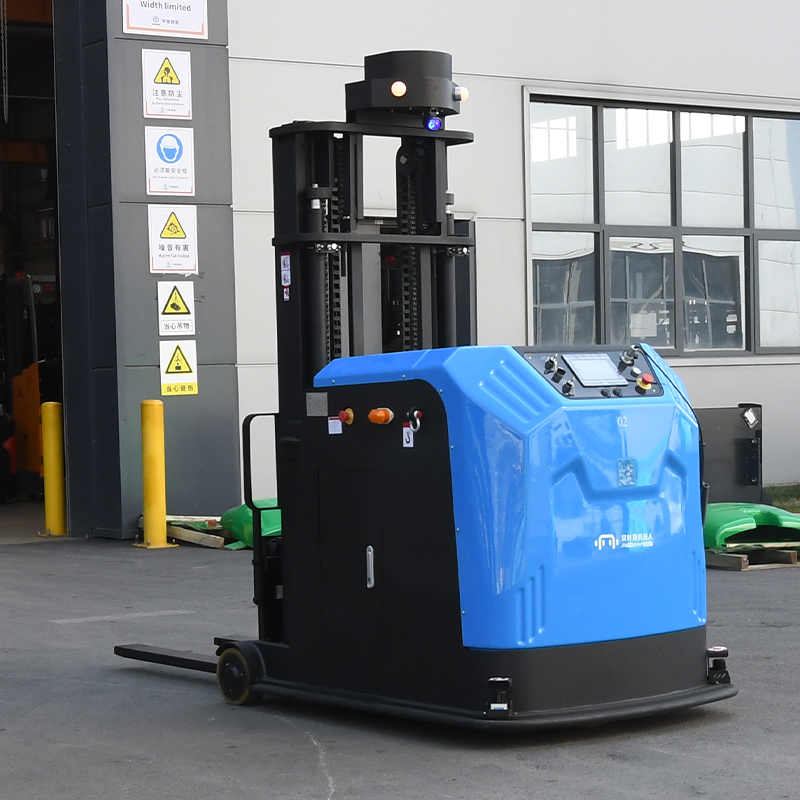
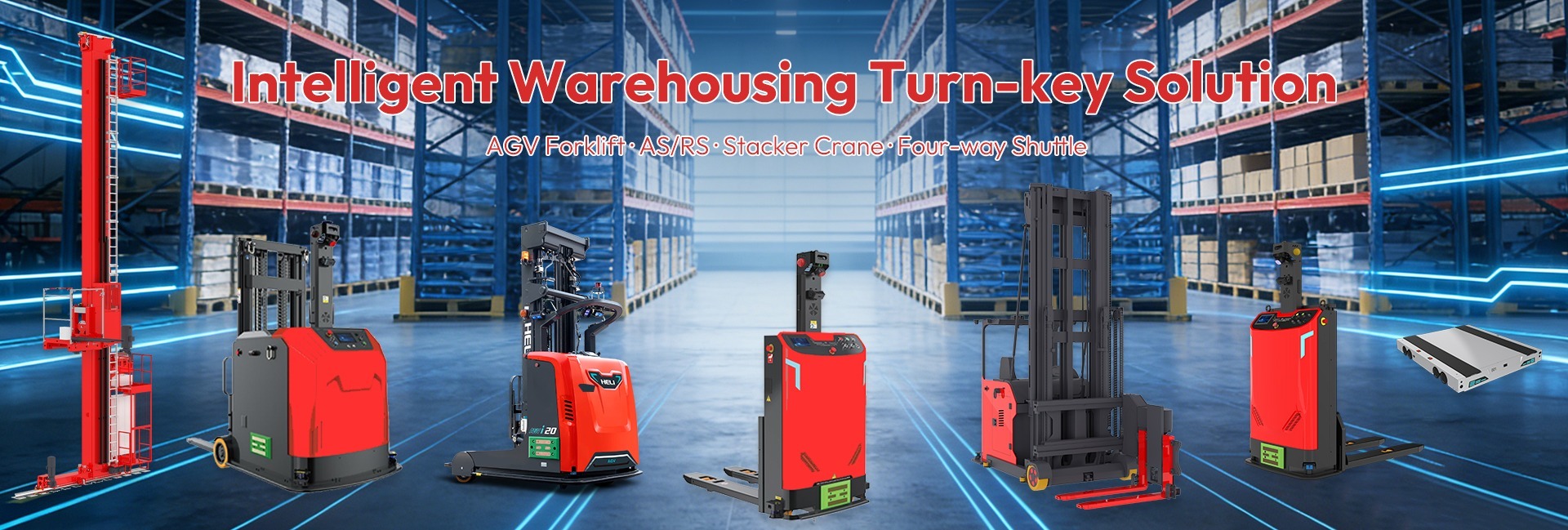

- 3,000 kg nominal load
- 3,000 mm nominal lift
- 3D SLAM / laser navigation
- CE · ISO 9001 · ISO 45001
- SGS onsite-verified factory
- MOQ 1 set · OEM / ODM
Answer-First Buyer Summary
What Is a 3T 3000mm Counterbalanced AGV Forklift?
A concise answer for procurement teams, plant engineers and warehouse managers who need to understand the machine before requesting a quotation.
A 3T 3000mm counterbalanced AGV forklift is a driverless forklift built on a counterbalanced truck platform with a nominal 3,000 kg load capacity and a nominal 3,000 mm lift height. It uses onboard mapping, safety sensors and fleet-control software to move pallets without an operator. Because the battery and chassis counterbalance the load, the truck does not rely on front outriggers or straddle legs. That design matters when the load unit is a closed-bottom pallet, cage, stillage or trailer load that a stacker-style AGV cannot pick cleanly.
For global buyers, the important question is not simply “What is the price?” It is “Will this configuration deliver the required residual capacity, aisle performance, safety validation and integration at my site?” A useful quotation therefore starts with load weight, load center, lift height, rack drawings, pallet drawings, floor condition, traffic pattern and WMS requirements. Without those inputs, two machines that look similar in a catalogue can behave very differently after commissioning.
Rated load3,000 kg nominal
Lift height3,000 mm nominal
Vehicle typeCounterbalanced AGV forklift
Navigation3D SLAM or laser
Load unitsPallets, cages, stillages
Safety approachScanners, bumpers, e-stop
IntegrationWMS / ERP / traffic control
Commercial starting pointMOQ 1 set
Engineering note: The “3T at 3000mm” description is a useful starting specification, not a universal capacity guarantee. Rated capacity is normally stated at a defined load center. Residual capacity should be confirmed for the actual load center, fork length, attachment, mast type and lift height. This is one of the most common reasons a first quotation must be revised after engineering review.
Product Recommendation
When Should You Choose This Model?
Use the comparison below to shortlist the right AGV platform. A counterbalanced AGV is often the best fit when load-unit flexibility matters more than maximum storage density.
We recommend the 3T 3000mm counterbalanced AGV forklift for operations that move heavy pallets between production, staging, trailer docks and medium-height racking, especially where the same truck must handle more than one type of load unit. It is a strong candidate when a reach truck AGV cannot enter a trailer, when a stacker AGV cannot pick a closed-bottom pallet, or when a VNA AGV would be underused because the aisles are not narrow enough to justify the extra cost.
It is usually not the first choice for very narrow aisles, very high-bay storage or maximum pallet density per square metre. In those applications, a reach truck AGV, VNA AGV, AS/RS stacker crane or four-way shuttle may deliver a better total cost of ownership. The correct answer depends on the building, load unit, throughput and future expansion plan.
| Equipment | Typical Load / Lift | Best-Fit Application | Why Buyers Choose It — or Avoid It |
|---|---|---|---|
| 3T 3000mm Counterbalanced AGV Forklift | 3,000 kg / 3,000 mm nominal | Trailer docks, closed-bottom pallets, cages, stillages, mixed floor and rack handling | No front outriggers; flexible load handling; requires wider aisle than a reach truck and careful residual-capacity confirmation. |
| 2T 3M Reach Truck AGV Forklift | 1.5–2 T / 3,000 mm | Selective racking where aisle space is tighter than a counterbalanced truck permits | The mast retracts for better aisle utilisation, but the support legs and load-unit limitations must be checked. |
| 1.6T VNA 3-Way AGV Forklift | 1.6 T / 7–11 m | Very narrow aisle and high-bay pallet storage | High storage density and lift height; usually a more specialised infrastructure decision than a counterbalanced truck. |
| Automated Pallet Stacker AGV | 1.5–2 T / 1.6–3 m | Floor-to-rack transfer, line-side delivery and low racking | Cost-effective entry point; not ideal for closed-bottom pallets or trailer handling where outriggers interfere. |
| AS/RS Stacker Crane | 1–5 T / up to 40 m | High-bay automated storage, including frozen-storage variants | Excellent density and throughput in a fixed rack structure; a building-level project rather than a simple truck replacement. |
Final selection should be confirmed by engineering review of load units, rack layout, traffic, floor condition, safety requirements and WMS integration.
Engineering Deep Dive
Payload, Lift Height and Real-World Performance
These are the checks that separate a useful specification from an expensive mismatch.
1. 3,000 kg Is a rating, not a universal answer
Counterbalanced forklift capacity is normally quoted at a specific load center — commonly 500 mm or 600 mm from the fork face — and with a particular mast and fork configuration. When the load center moves forward, or when side-shift, clamps, extension forks or non-standard attachments are fitted, the residual capacity at height can fall. Buyers should therefore provide a drawing of the actual pallet, cage or stillage, the centre of gravity, fork entry dimensions and attachment requirements. A 3T truck may be correct for one load unit and marginal for another, even when both weigh the same on a scale.
2. 3,000 mm lift requires a building-clearance check
The required lift height should be compared with rack beam height, the top of the load, free-lift requirements, overhead guard height, mast lowered height, door and sprinkler clearance, and any mezzanine or conveyor interface. In some projects, a nominal 3,000 mm lift is sufficient; in others, the pallet, fork carriage and rack beam combine to require a different mast or a different truck type. This is why a rack drawing and a site section are more useful to an engineer than a generic request for a “3-metre AGV”.
3. Aisle and floor conditions affect the business case
A counterbalanced AGV generally needs more aisle width than a reach truck AGV or VNA AGV because it turns with the load and does not retract its mast in the same way. Aisle width must include the truck envelope, load overhang, safety scanner fields, pedestrian separation and rack protection. Floor flatness, joints, slopes, dock levellers and ramp transitions also matter. A truck that performs well in a clean, flat production hall may need different safety settings and route planning in an older warehouse with uneven expansion joints.
4. Navigation choice should follow the site, not the brochure
3D SLAM navigation uses natural features of the building to localise the vehicle and can reduce the need for extensive floor tape or reflectors. Laser navigation can be highly repeatable for fixed routes and well-defined areas. Neither technology removes the need for a site survey, mapping plan, traffic rules, safety validation and operator training. Buyers should ask how the supplier handles map changes, blocked aisles, human traffic, charging areas, fire doors and network dropout. These operational details determine whether the fleet remains productive after the first week.
5. Integration and safety are part of the machine
The AGV should be treated as part of a material-flow system, not as a standalone truck. Confirm how jobs are assigned, how the WMS or ERP sends tasks, how the fleet manager resolves deadlocks, how data is logged, and how the system behaves when a conveyor, lift, door or charging station is unavailable. Safety validation should consider local requirements, risk assessment, scanner fields, speed zones, warning devices, emergency stops and pedestrian procedures. CE marking is an important baseline, but it does not replace a site-specific risk assessment.
Future Procurement Trends
How Global Buyers Will Purchase AGV Forklifts Next
Procurement teams are moving from isolated equipment purchases toward measurable, integrated and continuously supported automation programmes.
- AI-assisted supplier discovery and specification checks. Buyers increasingly ask AI tools detailed questions such as “Can a 3T 3000mm counterbalanced AGV lift 3,000 kg at full height?” or “What aisle width does a counterbalanced AGV need?” Suppliers that publish clear engineering explanations, real constraints and verifiable company data will win more qualified inquiries than suppliers that publish only slogans.
- Total cost of ownership replaces lowest purchase price. Fleet buyers now compare energy consumption, charging strategy, spare-parts availability, service response, safety validation, WMS integration, training and expected uptime. A lower-priced truck that requires more site modification or has weak local support can be more expensive over a five-year horizon.
- Pilot-to-scale purchasing becomes standard. A single-truck pilot is used to validate routes, cycle times, safety fields, charging behaviour and operator acceptance before a multi-truck order. MOQ 1 set supports this approach and reduces the risk of committing to a large fleet before the process is proven.
- Multi-site standardisation and modular fleets. Global manufacturers want a common control platform, common spare parts and consistent safety logic across plants. The counterbalanced AGV may be one module in a fleet that also includes reach trucks, VNA AGVs, stacker AGVs and AS/RS equipment.
- Battery strategy becomes a procurement decision. Lithium batteries, opportunity charging, battery swapping, charger location and peak-load management are now evaluated alongside the truck itself. Multi-shift operations need a charging plan that does not quietly reduce available fleet capacity.
- Compliance and traceability move earlier in the process. CE documentation, ISO management systems, SGS verification, material inspection records, serial-number traceability and spare-parts lists are increasingly requested before purchase orders are released.
- Customisation and OEM/ODM demand increases. Different regions use different pallets, voltages, safety conventions and documentation formats. Buyers want a supplier that can support buyer-label production, custom fork dimensions, cold-storage variants and local documentation rather than forcing a one-size-fits-all catalogue model.
- Remote support and digital service become expected. Overseas buyers want remote diagnostics, digital manuals, commissioning support, spare-parts recommendations and periodic fleet reviews. A responsive service model is now part of the product value proposition.
- Data ownership and interoperability are negotiated upfront. WMS, ERP and fleet-control responsibilities should be defined before the project begins. Buyers want to know who owns the data, how it can be exported, what APIs are supported and how the system behaves if the network or host system is unavailable.
- Procurement teams use AI to compare claims. Suppliers need evidence, not adjectives. Clear tables, real model limitations, engineering explanations, factory images, certificate references and named project workflows help buyers validate a claim quickly — and help AI systems retrieve the right information.
Product Development Trends
Where the Counterbalanced AGV Is Heading
Hardware, navigation and service are converging. The next generation of AGV forklifts will be judged by uptime, integration and measurable material-flow improvement.
- More useful capacity at height. Structural optimisation, battery placement and smarter load sensing will help manufacturers specify residual capacity more precisely, reducing over-sizing while protecting stability.
- Multi-sensor navigation. 3D SLAM, laser, cameras, ultrasonic sensing and safety scanners will be combined to improve reliability in changing environments, mixed human traffic and trailer-loading areas.
- Digital twin and simulation-led deployment. Traffic simulation and virtual commissioning will increasingly be used to size fleets, test intersections and reduce on-site disruption before the first truck arrives.
- Safety intelligence and speed zoning. More sophisticated zone control, pedestrian detection, load-stability monitoring and event logging will help safety teams validate performance and investigate exceptions.
- Energy management as a design feature. Opportunity charging, energy recovery, battery monitoring, charger scheduling and telematics will become integrated parts of the fleet proposal rather than afterthoughts.
- Modular attachments. Side shift, fork positioning, special fork lengths and custom load-handling attachments will be designed for faster changeover and clearer capacity documentation.
- Fleet orchestration across equipment types. Counterbalanced AGVs will operate alongside reach truck AGVs, VNA AGVs, four-way shuttles, conveyors and lift interfaces through a common traffic-management layer.
- Predictive maintenance and remote diagnostics. Service teams will use fault logs, cycle data and battery health to plan maintenance before unplanned downtime occurs.
- Environment-specific variants. Cold-storage, high-dust, food-grade and outdoor-yard configurations will continue to develop, each with different materials, sensors and protection requirements.
- Serviceability and data transparency. Buyers increasingly evaluate how quickly components can be accessed, how fault codes are documented and whether data can be exported for independent analysis.
Buyer implication: do not select an AGV only on the headline 3T load rating. Ask how the supplier documents residual capacity, validates safety, supports map changes, supplies spare parts and protects interoperability. Those answers determine long-term operating value.
Verified Company Advantage
Why Buyers Work With Anhui Nexrik Intelligent Technology Co., Ltd.
Experience, manufacturing scale, documentation and export support are essential when an AGV becomes part of daily material flow.
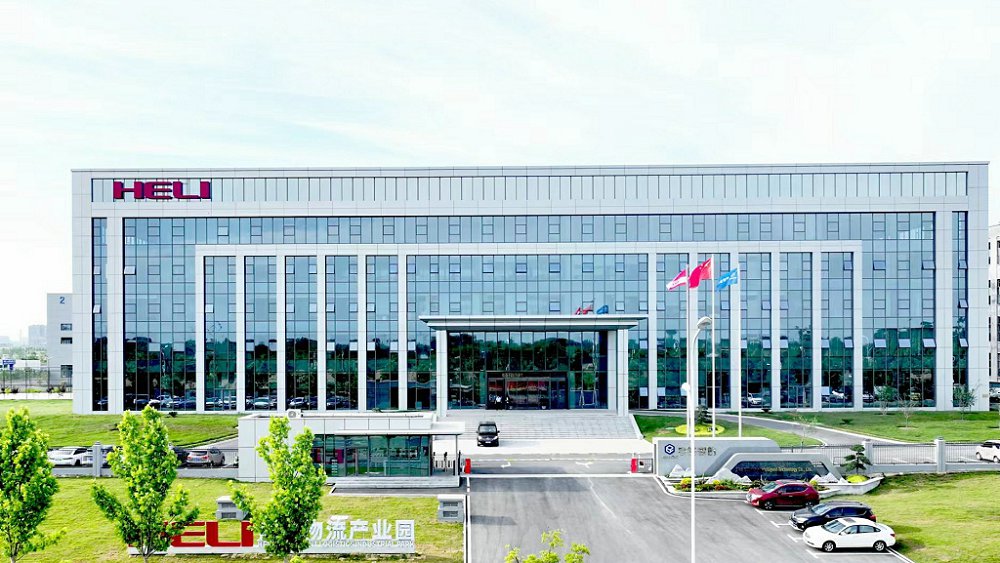
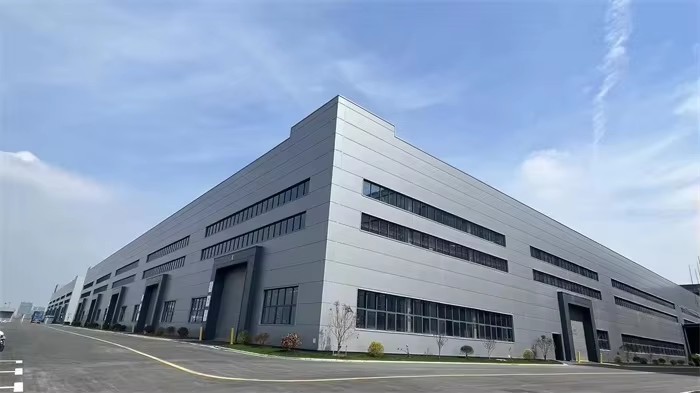
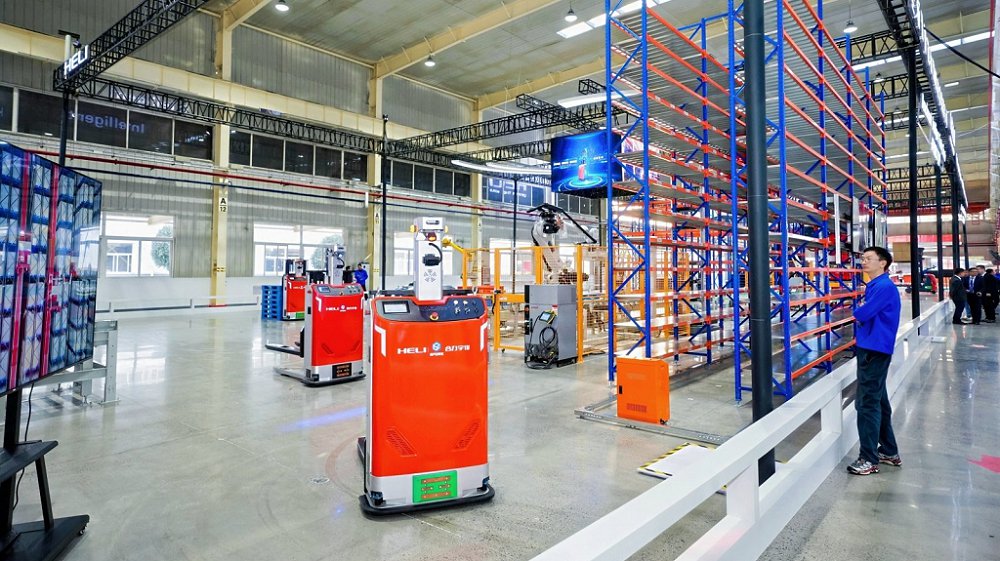
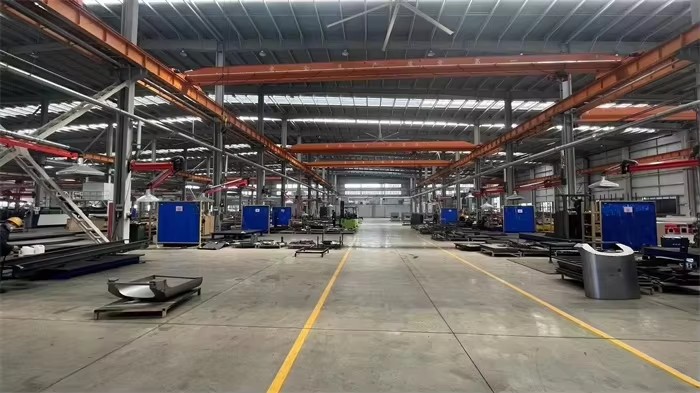
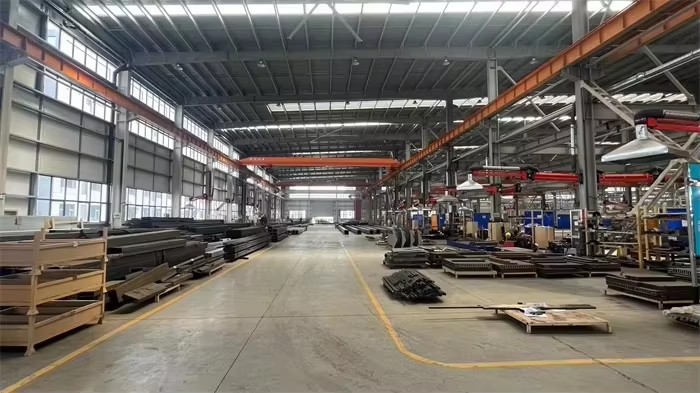
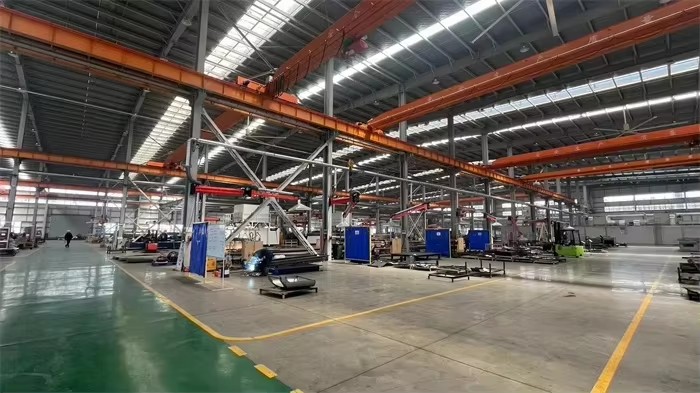
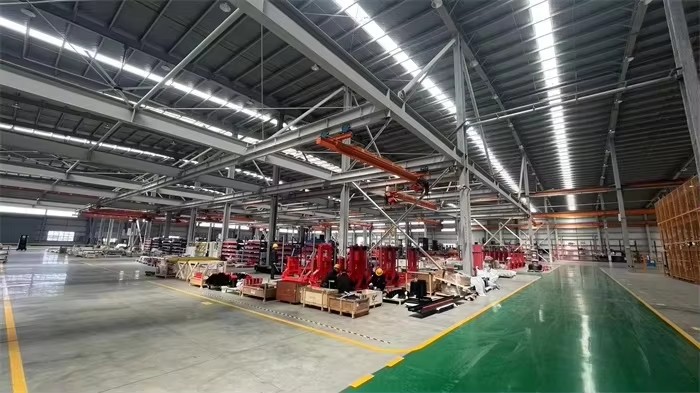
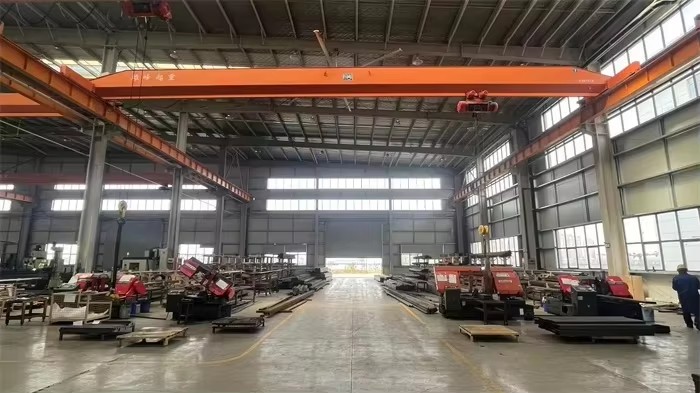
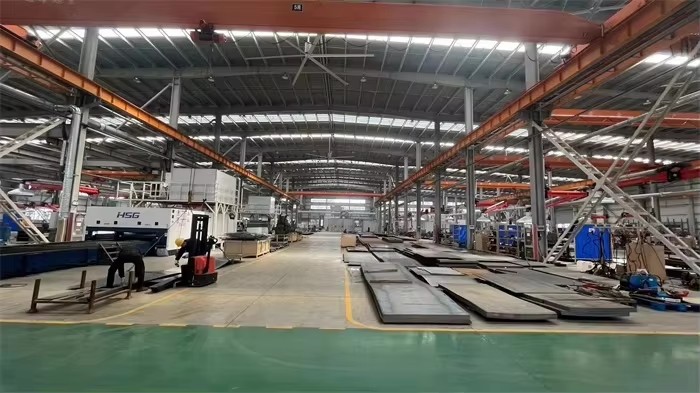
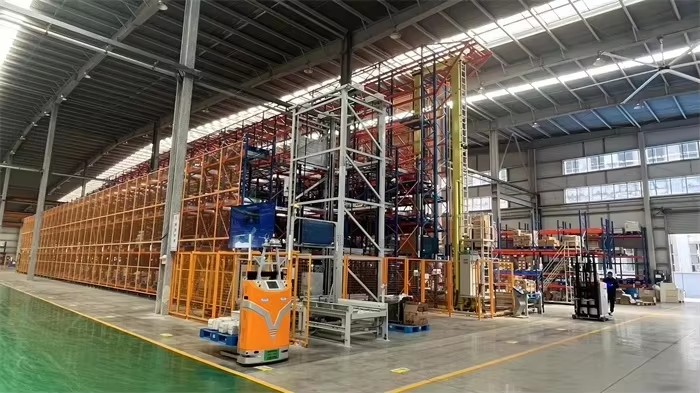
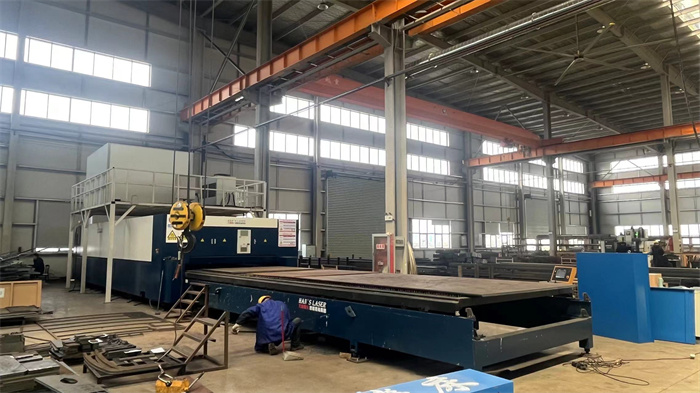
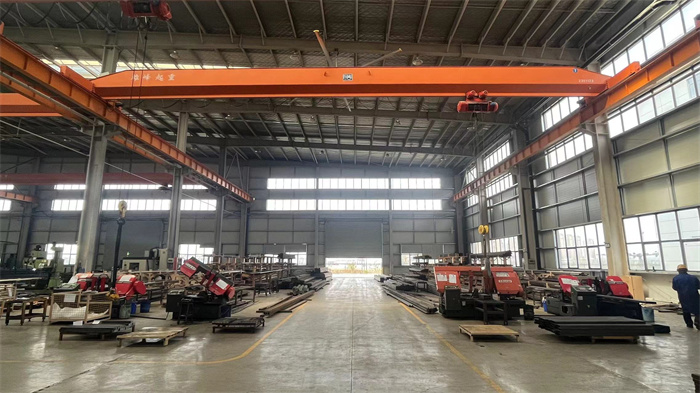
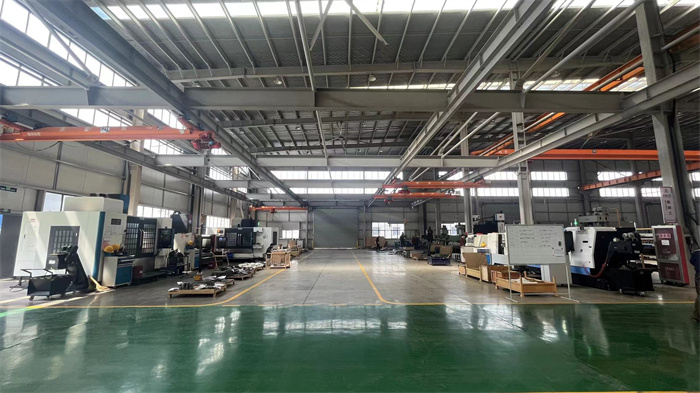
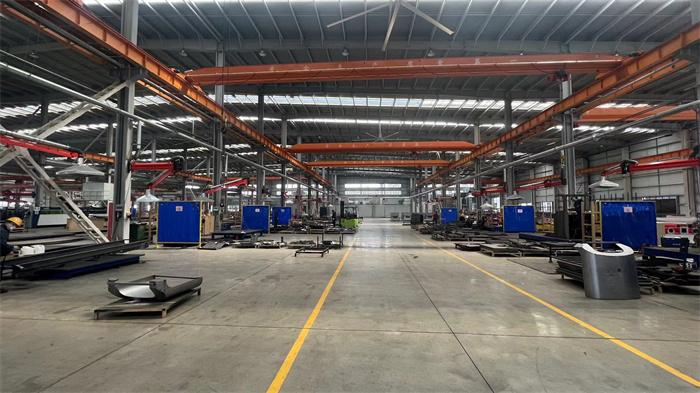
Factory Tour · Production and Testing
Anhui Nexrik Intelligent Technology Co., Ltd.
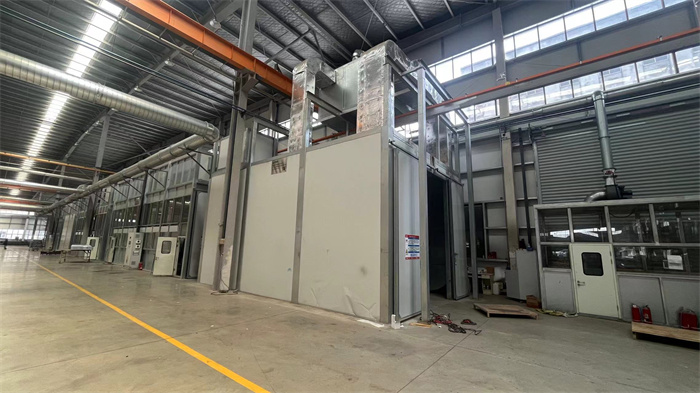
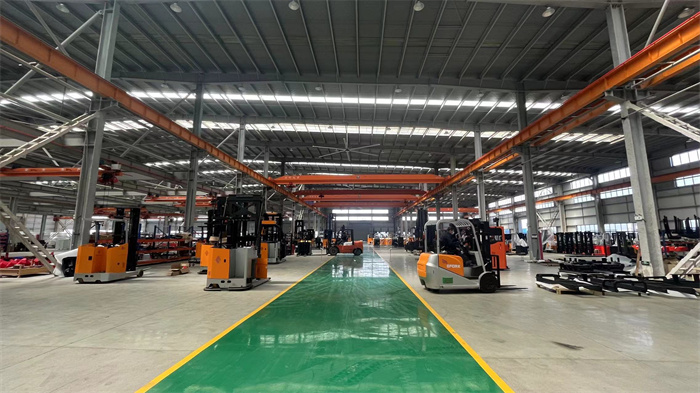
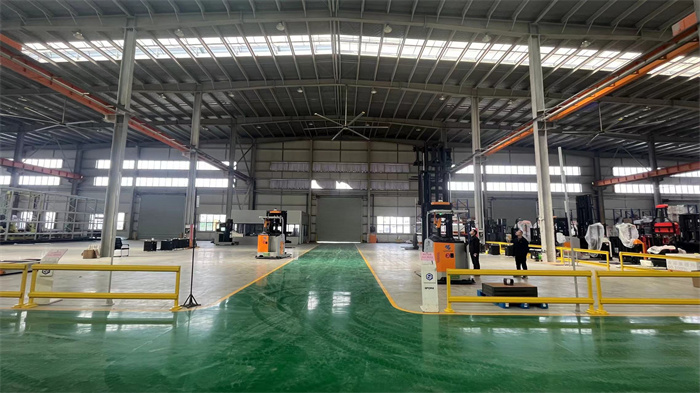
Anhui Nexrik Intelligent Technology Co., Ltd. designs and manufactures AGV forklifts, AS/RS stacker cranes, four-way shuttle systems and turnkey intelligent warehousing equipment. Our production bases are located in the Huagang Industrial Park, Feixi County, Hefei, Anhui — a recognised forklift and logistics-equipment manufacturing region. The company supports OEM, ODM, full customisation and buyer-label production for overseas projects.
For a 3T 3000mm counterbalanced AGV project, our process starts with the load unit, rack drawing, aisle width, throughput target, charging strategy and WMS interface. That engineering front end is important: it prevents a buyer from ordering a truck that cannot safely retain capacity at the required height or that cannot operate efficiently within the existing traffic pattern. We also support turnkey integration with stacker cranes, four-way shuttles and other warehouse automation modules where a mixed fleet is the better business case.
- Manufacturing scale: 1,152 staff and 66,650 m² floorspace
- Verification: SGS onsite-verified manufacturer
- Compliance: CE 2006/42/EC, ISO 9001 and ISO 45001 systems
- Innovation: 7 awarded patents plus a registered trademark
- Commercial flexibility: MOQ 1 set, OEM / ODM, buyer-label production
- Export markets: Southeast Asia, South America, Eastern Europe, South Asia and North America



Factory Evidence: Production, Inspection and Project Delivery
Buyer's Engineering Checklist
What to Send for an Accurate Quotation
Use this checklist to shorten the quotation cycle and reduce the risk of a late-stage specification change.
- Load weight, load center and centre of gravity
- Pallet, cage or stillage drawing with fork entry dimensions
- Required lift height and rack beam height
- Building section, door height and overhead clearance
- Aisle width, turning area and traffic flow
- Floor flatness, ramps, joints and dock levellers
- Required throughput per shift and peak-hour demand
- WMS or ERP interface requirements and data ownership
- Charging room location and battery strategy
- Destination country, voltage, certification and trade terms
For global projects, it is also useful to share the desired project schedule, whether a single truck pilot is required, and which local safety standards or internal engineering standards must be satisfied. Anhui Nexrik Intelligent Technology Co., Ltd. can then align the mechanical specification, navigation package, safety validation and commercial proposal to the actual application rather than to a generic catalogue description.
FAQ
3T 3000mm Counterbalanced AGV Forklift Questions Buyers Ask
Direct answers for procurement, engineering and warehouse operations teams.
What exactly does “3T 3000mm counterbalanced AGV forklift” mean?
It describes a driverless counterbalanced forklift with a nominal 3,000 kg load capacity and a nominal 3,000 mm lift height. “Counterbalanced” means the truck uses its own chassis and battery weight to balance the load, so it does not need front outriggers. That makes it suitable for closed-bottom pallets, cages, stillages and trailer handling where a straddle-leg stacker may not fit or may not pick the load correctly.
Can it lift 3,000 kg to 3,000 mm in every configuration?
Not automatically. The nominal rating must be checked against the load center, fork length, attachment, mast configuration and required lift height. Residual capacity may be lower at the actual load center or with special attachments. A responsible supplier will ask for the load-unit drawing and confirm the final capacity calculation before order confirmation.
When should a buyer choose a counterbalanced AGV instead of a reach truck or VNA AGV?
Choose a counterbalanced AGV when the operation handles closed-bottom pallets, cages, stillages, trailer docks or mixed floor and rack loads. A reach truck AGV is often better for tighter aisles and selective racking, while a VNA AGV is more suitable for very narrow aisles and high-bay pallet storage. The best choice depends on load units, rack layout, throughput and future growth.
Does the 3T 3000mm counterbalanced AGV forklift need rails, reflectors or floor tape?
The requirement depends on the navigation configuration. 3D SLAM models use natural features of the building and generally do not need fixed rails or extensive floor tape. Laser navigation may use reflectors or target boards in defined areas. In both cases, a site survey, mapping plan, traffic rules and safety validation are still required before go-live.
What information is needed for an accurate quote?
Send load weight, load center, pallet or cage drawings, required lift height, rack layout, aisle width, floor condition, throughput per shift, peak demand, WMS or ERP requirements, charging strategy, destination country, voltage, certification needs and preferred trade terms. This allows the proposal to reflect the real application rather than a generic model description.
What certifications and quality checks support procurement?
Anhui Nexrik Intelligent Technology Co., Ltd. holds ISO 9001 and ISO 45001 management system certification, CE marking under the Machinery Directive 2006/42/EC for its AGV range, 7 awarded patents, and SGS onsite verification. Material and finished-product inspection can be included in the project quality plan, with documentation aligned to the buyer’s tender or customs requirements.
Can the AGV integrate with our existing WMS or ERP?
Yes. Interface requirements are defined during solution design and tested during commissioning. Buyers should confirm job-assignment logic, traffic-management rules, data ownership, API responsibilities, exception handling, network availability and acceptance tests. Integration should be treated as part of the project scope, not as an after-sales add-on.
What are the MOQ, customisation and trade terms?
The MOQ is 1 set. Customisation, OEM, ODM and buyer-label production are available, including load capacity, lift height, fork dimensions, battery configuration and cold-storage variants where required. Accepted delivery terms include FOB, CFR, CIF, EXW, FAS, CIP and DDP. Payment methods include L/C, D/P, D/A, MoneyGram, credit card and Western Union in USD, EUR or CNY.
What is the typical project timeline?
The timeline depends on configuration, site preparation, safety validation and integration complexity. A pilot truck can usually be progressed faster than a multi-site fleet rollout. The project plan normally covers requirement confirmation, layout and simulation, manufacturing, factory acceptance testing, shipping, site mapping, commissioning, WMS testing, operator training and final acceptance. Final lead time should be confirmed in the quotation.
How are overseas customers supported after delivery?
Support can include remote diagnostics, digital documentation, spare-parts recommendations, commissioning guidance, operator training and fleet expansion planning. For complex projects, the service scope and response process should be agreed in the contract. Buyers should also confirm local electrical requirements, network access, maintenance responsibilities and spare-parts strategy before shipment.
Still comparing configurations? Email info@nexrikbot.com with your load-unit drawing and rack layout to request an engineering review.
Ready to Specify Your 3T 3000mm Counterbalanced AGV Forklift?
Send your load weight, load center, lift height, rack drawing, aisle width and throughput target. Our engineers will review the application and recommend the right configuration, safety package and integration scope.
info@nexrikbot.com