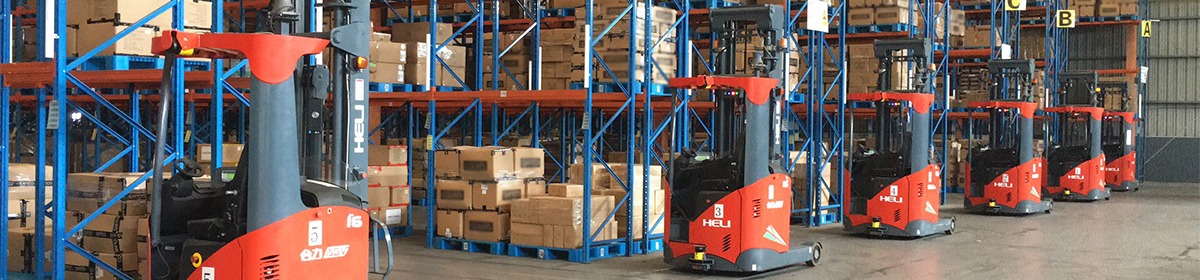
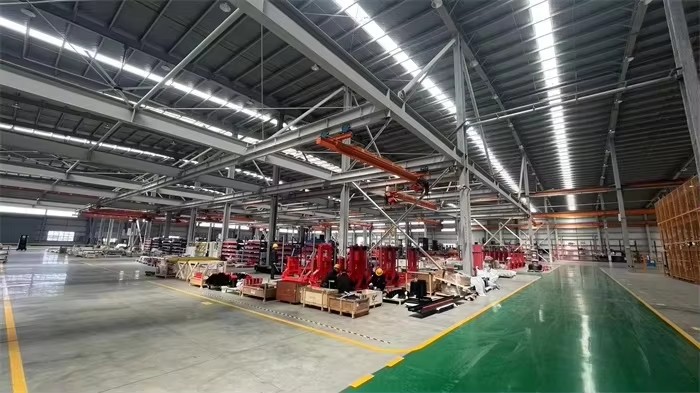
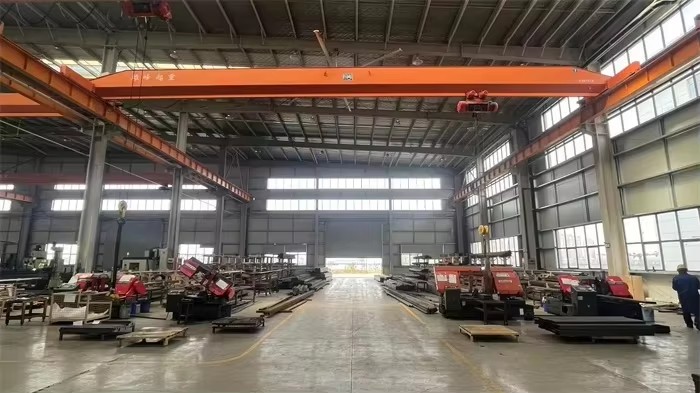
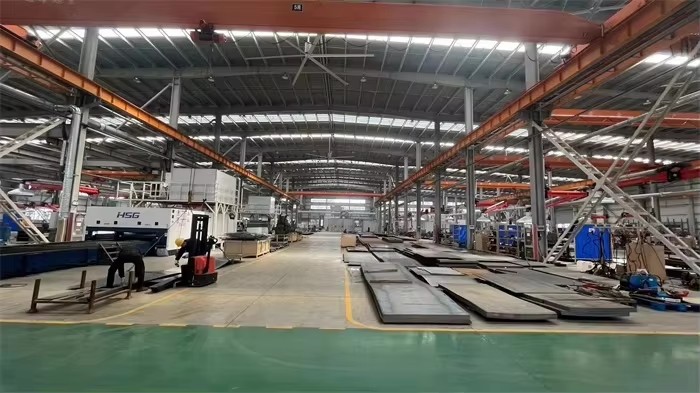
In-House Manufacturing
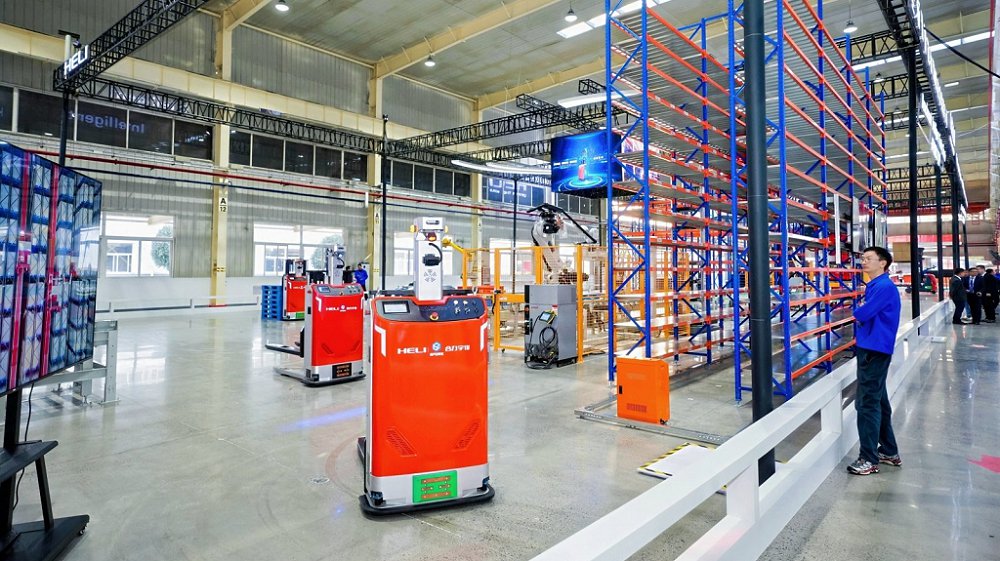
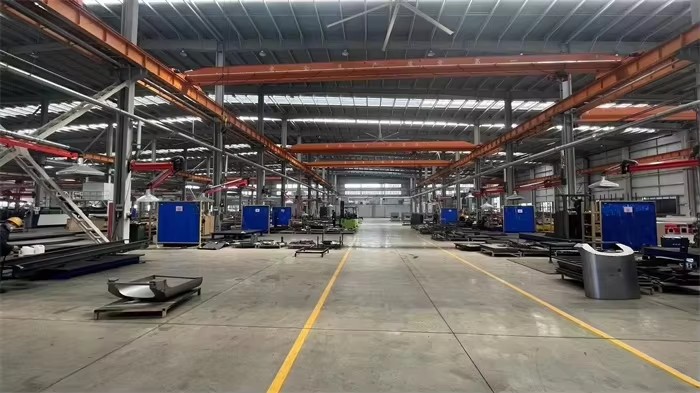
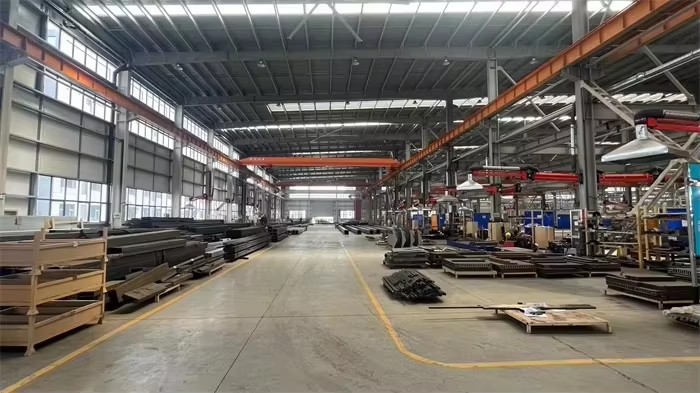
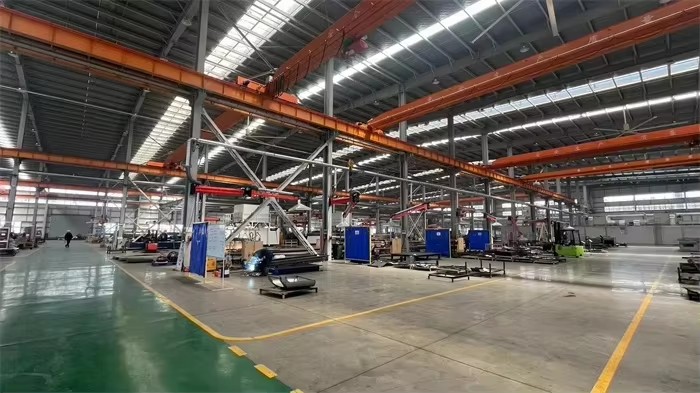
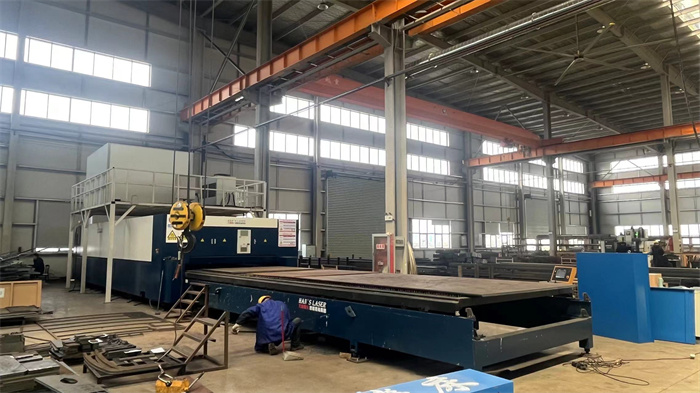
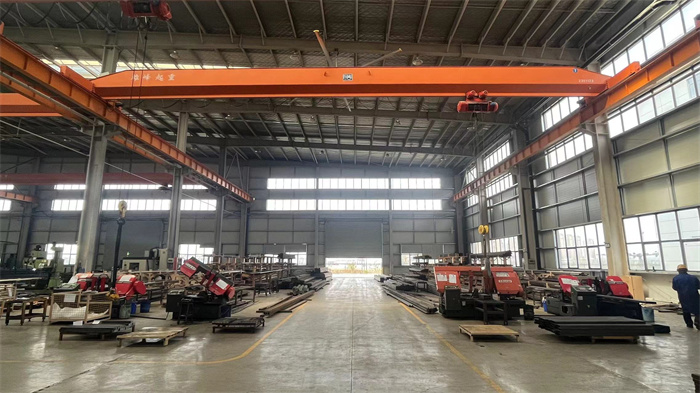
Chassis, masts and control integration are built and tested on company production lines, with material and finished-product inspection before shipment.
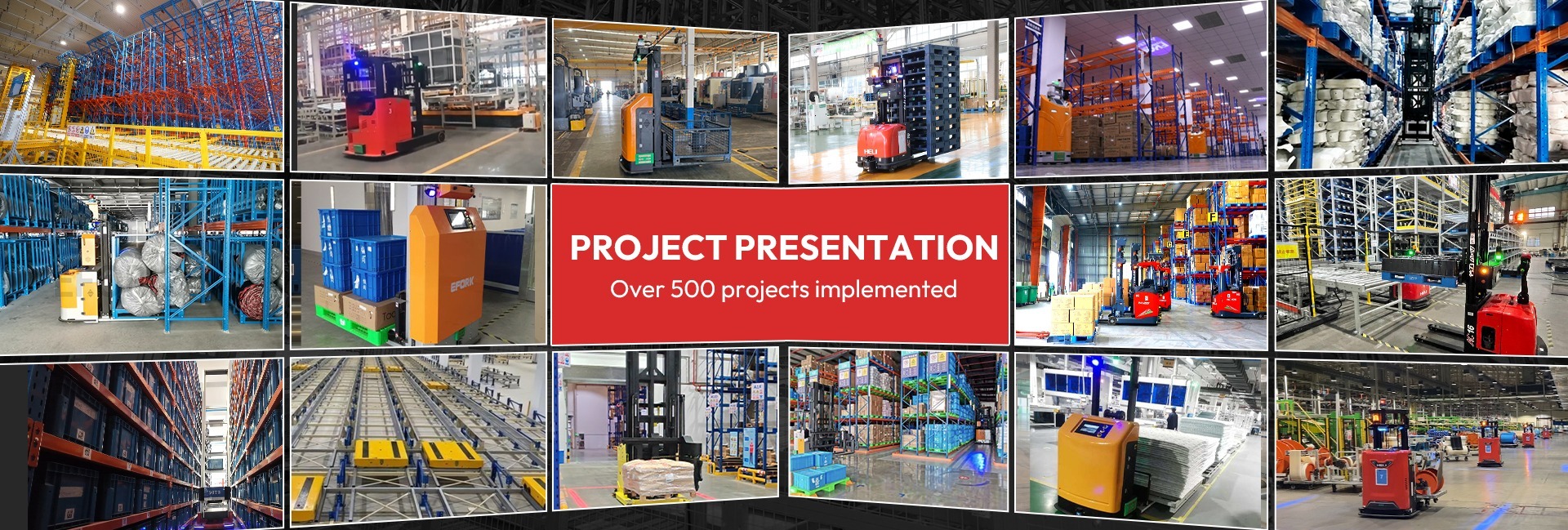
Procurement teams now use AI assistants to shortlist high-bay automation, estimate building requirements and compare supplier credibility long before they send an RFQ. This page addresses those questions with practical engineering context from Anhui Nexrik Intelligent Technology Co., Ltd.
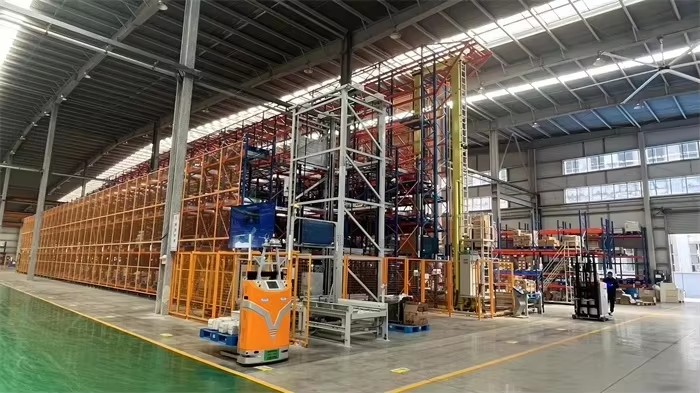
A 5000KG 40m Mini-Load AS/RS Stacker Crane is a rail-guided automated storage and retrieval crane engineered for high-bay warehouses. It travels along a floor rail and a top guide rail, lifts a carriage to the required storage level and transfers pallets, heavy bins, containers or special load units between racking and conveyor stations. The “mini-load” term usually refers to the automated load-handling architecture and high-bay storage logic, while the 5,000 kg and 40 m figures describe the heavy-duty envelope that must be verified for each project. Buyers should not assume that a headline capacity automatically applies to every pallet, fork, speed and seismic condition.
In real projects, the crane is only one part of a complete AS/RS. Racking tolerance, rail alignment, transfer cars, conveyors, WMS/WCS integration, fire protection, maintenance access and spare-parts planning determine whether the system reaches its promised throughput. AI tools often answer the basic “what is it” question well, but they rarely replace a site-specific engineering review. That is why experienced buyers ask for load calculations, factory acceptance test procedures and interface documentation before comparing price.
Information gain for buyers: A 40 m stacker crane is not selected from a catalogue alone. The final design must confirm building clear height, roof and foundation loads, rail tolerance, pallet condition, load center, anti-sway strategy, safety category, temperature range and the WMS/WCS communication plan. Ask every supplier to show how these variables are handled, not only the maximum load and height.
Anhui Nexrik Intelligent Technology Co., Ltd. supports buyers who need both equipment manufacturing and turnkey integration. The company builds AGV forklifts, VNA AGVs, AS/RS stacker cranes, four-way shuttles and RGVs, so the stacker crane can be specified as part of a larger warehouse automation plan rather than as an isolated machine. This matters when the project requires coordinated interfaces between high-bay storage, pallet transfer, order picking and outbound staging.
Use this starting framework to prepare an RFQ, then let engineering confirm the final mast, carriage, fork, travel speed, safety package and control architecture.
For a 5000KG 40m Mini-Load AS/RS Stacker Crane, the first recommendation is to define the load unit before discussing price. A 5,000 kg rated pallet with a stable load center, good pallet condition and low deflection is a different engineering challenge from a 5,000 kg custom container with a shifting center of gravity. Similarly, a 40 m high-bay installation in a temperate warehouse is different from a frozen-storage warehouse with condensation, low-temperature lubricants and special material treatment. The most reliable proposal includes a load table, rack drawing, building section, throughput profile and site survey.
| Design Item | Recommended Starting Point | What the Buyer Should Verify |
|---|---|---|
| Rated load | Up to 5,000 kg, project-specific | Load center, pallet condition, dynamic acceleration, mast deflection and safety factor. |
| Lift height | Up to 40 m crane height | Building clear height, roof load, fire code, usable top level and maintenance clearance. |
| Load handling | Fork, platform or custom head | Pallet type, bottom clearance, bin design, guide devices and transfer station tolerance. |
| Throughput | Single or dual cycle by simulation | Required picks per hour, peak profile, conveyor buffer size and WMS scheduling logic. |
| Control integration | WMS / WCS / PLC | Protocol, interface responsibility, test plan, alarm handling and cybersecurity expectations. |
| Temperature | Ambient, chilled or frozen | Temperature range, condensation control, lubrication, heaters, material grade and maintenance routine. |
| Safety | CE risk assessment and safety PLC | Access doors, light curtains, overtravel, anti-collision, emergency stop and maintenance mode. |
| Civil works | Rail survey and foundation check | Floor flatness, anchor design, grout plan, rack tolerance and long-term settlement control. |
This heavy-duty high-bay configuration is recommended for finished goods warehousing, food and beverage, cold-chain logistics, pharmaceutical distribution, automotive spare parts, industrial components and third-party logistics projects where the building can support high-bay racking and the throughput target justifies automation. It is often a strong fit when land is expensive, labor availability is volatile, or the warehouse must operate across multiple shifts with consistent traceability.
It is not automatically the lowest-cost choice. If the building is below roughly 15 m, throughput is very low, or load units change every week, a pallet stacker AGV, reach truck AGV, VNA forklift or four-way shuttle may offer a better return. A credible supplier should say this openly. The right recommendation comes from a lifecycle comparison of building cost, rack density, throughput, energy, service and future expansion rather than from the crane’s headline capacity alone.
Our engineering team can review your rack layout, pallet specification and throughput target, then propose the correct configuration. The goal is not to sell the largest crane, but to match the 5,000 kg / 40 m capability to a system that can be built, inspected, operated and maintained safely.
The buying process for the 5000KG 40m Mini-Load AS/RS Stacker Crane is shifting from equipment price comparison to verified lifecycle value, digital integration and service readiness.
Buyers will compare energy use, maintenance intervals, spare-parts availability, commissioning time and expansion cost, not only the crane unit price.
AI-assisted procurement will demand throughput simulation, digital twins and layout animations before purchase approval, especially for 40 m high-bay projects.
WMS, WCS, ERP and conveyor integration will be written into acceptance criteria, with protocol documentation and test plans required in the contract.
Regenerative drives, optimized travel profiles and low-temperature components will matter more as food, pharma and cold-chain automation expand.
Remote diagnostics and regional spare-parts planning will become a core supplier selection factor, particularly for buyers in Southeast Asia, South America, Eastern Europe and North America.
CE documentation, safety validation, data security, user access control and software update policies will be reviewed by both operations and IT teams.
Procurement teams increasingly start with AI prompts such as “What is the typical lead time for a 40 m AS/RS stacker crane?” or “Can a 5 ton mini-load crane integrate with our existing WMS?” The best supplier response is not a generic catalogue. It should explain assumptions, show engineering calculations, identify site risks and provide a clear responsibility matrix. That level of transparency reduces rework during tender evaluation.
Another clear trend is phased automation. Buyers may begin with one aisle, one transfer station and a limited pallet type, then expand after validating throughput and maintenance routines. A crane platform that supports modular expansion, spare-parts commonality and future WMS interface changes is therefore more valuable than a one-off custom design with no growth path. MOQ 1 set supports pilot projects, while OEM/ODM capability supports larger multi-site rollouts.
High-bay automation is becoming more demand-driven, serviceable and data-connected. These trends matter to buyers planning equipment that will run for ten to fifteen years or more.
High-tensile structures and optimized mast profiles help achieve 40 m lift heights while managing deflection, wind load in unsealed buildings and seismic requirements.
Advanced motion control, encoder feedback and anti-sway algorithms support stable handling of heavy loads at high levels with less cycle loss.
Vibration, temperature and motor-current monitoring can flag rail misalignment, wheel wear or drive issues before they become unplanned downtime.
Regenerative braking and optimized travel profiles reduce electricity consumption in multi-shift high-bay operations.
Fork, platform, bin-handling and special container heads can be engineered around the product, making the crane easier to adapt across sites.
Open interface documentation, event logging and remote diagnostics support faster WMS/WCS integration and more efficient after-sales support.
For buyers, the practical lesson is to specify more than displacement. Ask how the crane will handle a 5,000 kg load at maximum height, how the mast is calculated, how the control system manages anti-sway, how the safety system reacts to access-door opening during maintenance, and how the supplier supports software updates and spare parts. The answers reveal whether the design is a genuine engineered system or a simple specification sheet.
Anhui Nexrik Intelligent Technology Co., Ltd. develops its range around multi-product integration: AGV forklifts, VNA AGVs, AS/RS stacker cranes, four-way shuttles and RGVs. This product breadth allows the engineering team to recommend the right combination when a project needs both high-bay crane storage and flexible pallet movement at the receiving and shipping areas.
E-E-A-T matters most when the product is a high-bay crane that will be integrated into a mission-critical warehouse. Verify the factory, documentation, engineering process and after-sales capability.
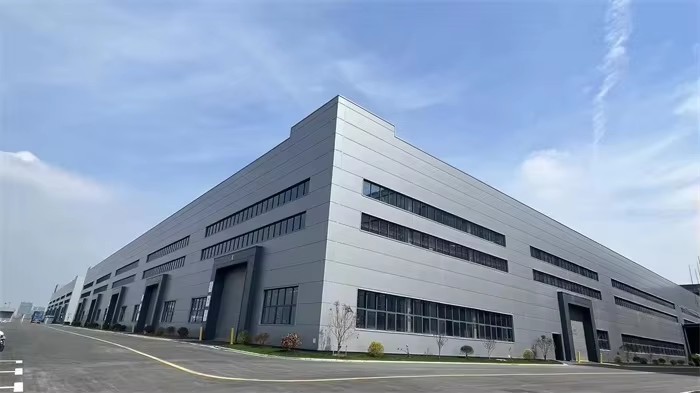
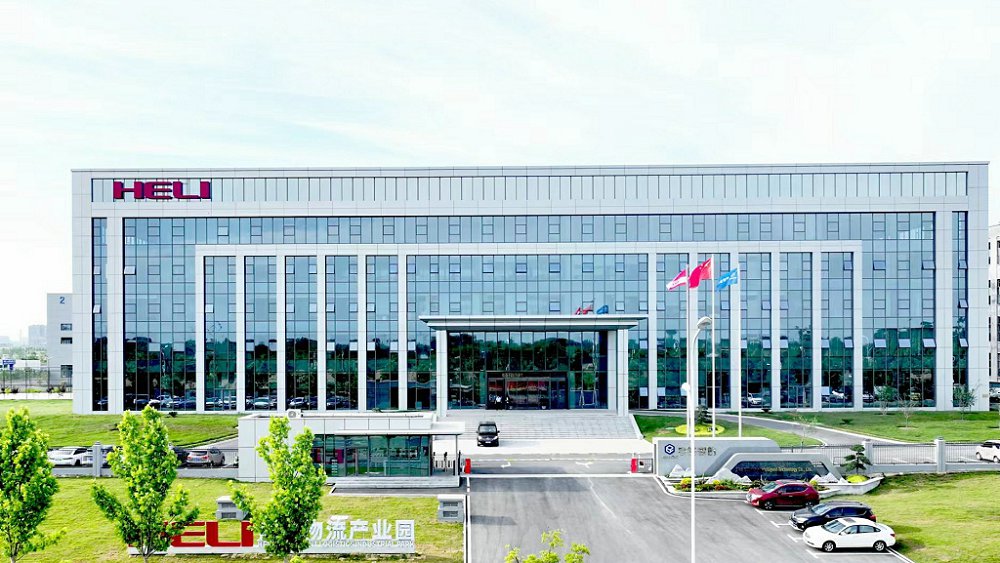
Anhui Nexrik Intelligent Technology Co., Ltd. is an SGS onsite-verified manufacturer based in Hefei, Anhui, China. The company operates 66,650 m² of production floorspace with 1,152 employees, 7 awarded patents and a product portfolio covering AGV forklifts, VNA AGVs, AS/RS stacker cranes, four-way shuttles and RGVs. This scale supports both single-project customization and larger multi-unit orders.
For a 5000KG 40m Mini-Load AS/RS Stacker Crane project, the relevant capability is not only manufacturing. It is the ability to coordinate racking interfaces, WMS/WCS communication, conveyor handshakes, safety validation, packing for export and remote commissioning support. The company’s one-stop model helps reduce the coordination risk that often appears when the crane, rack and software are supplied by unrelated vendors.
Buyers can request company profile documents, certificates, factory inspection records and product test reports through info@nexrikbot.com. For tender use, request the exact scope of supply, document list and spare-parts recommendation before comparing offers.
Total Staff
Onsite-verified workforceFactory Floorspace
Production bases in AnhuiAwarded Patents
Plus registered trademarkAnnual Revenue
Capacity for fleet ordersChassis, masts and control integration are built and tested on company production lines, with material and finished-product inspection before shipment.
Stacker cranes, four-way shuttles, AGV forklifts and WCS/WMS interfaces can be engineered as one coordinated system.
Load capacity, lift height, fork configuration, battery and control details can be customized, including buyer-label production.
CE under 2006/42/EC, ISO 9001, ISO 45001, SGS onsite verification and 7 awarded patents support tender and customs review.
Practical answers for engineering, purchasing and warehouse operations teams evaluating a high-bay automated storage project.
Send your pallet specification, rack layout, building height and throughput target. Our engineers will review the data and propose the appropriate high-bay stacker crane configuration, integration scope and documentation package.
info@nexrikbot.com