High-Density Storage Needs a Complete Handling Layer
A four-way shuttle system is the dense storage engine. The eight platforms below are the stackers, reach AGVs, VNA robots and pallet trucks that feed it, replenish it and keep Guadalajara operations moving during phased automation. Product URLs are preserved; every image is displayed in full proportion.
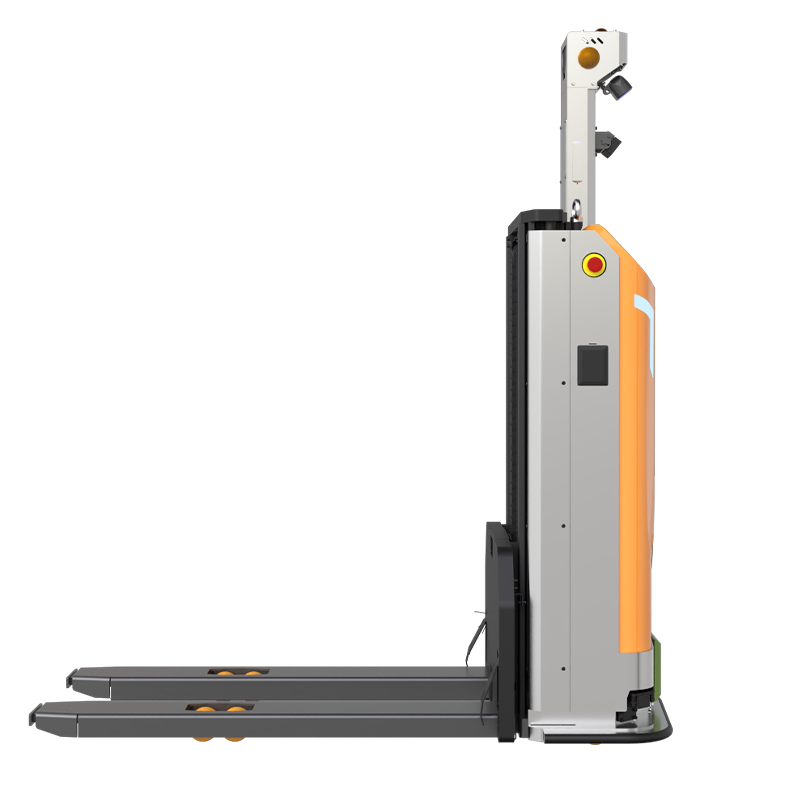
2T 3M Slim Narrow-Body Stacker AGV for High-Density Pallet Stacking
A slim body and 3 m lift make this model useful where Guadalajara tenants want pallet handling without widening every aisle. It can feed a shuttle infeed station or serve low/medium selective racking.
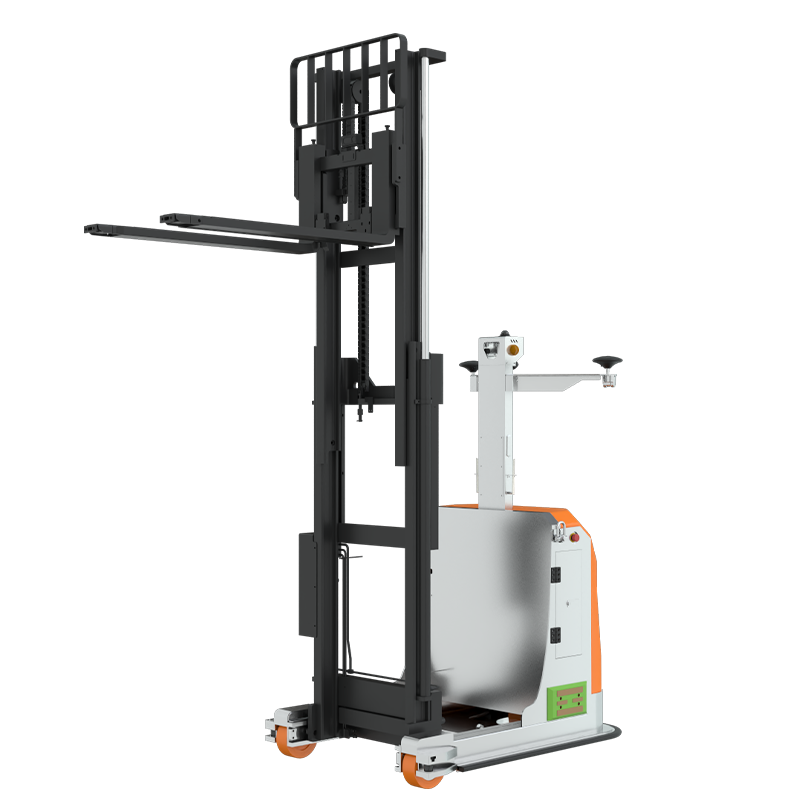
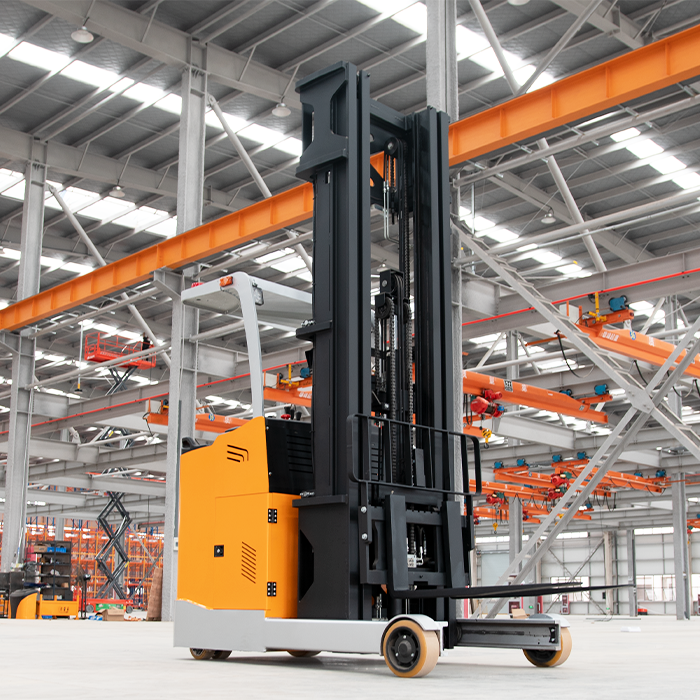
Reach Truck AGV Narrow Body 1.5T 3M Compact Design with 3D SLAM
The retractable mast reduces the turning envelope. In Zapopan, Tlaquepaque and El Salto buildings where reflectors or floor tape are difficult to add, 3D SLAM can lower site-preparation friction.
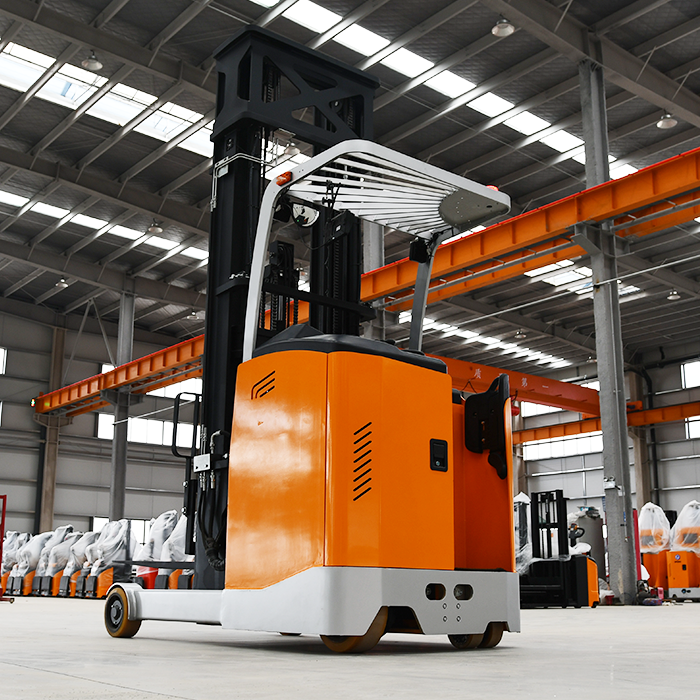
China Wholesale 2000kg Industrial Forklift Pallet Truck
Not every Guadalajara position should be automated at once. A cost-controlled truck is useful for receiving, maintenance, overflow and dock backup while the shuttle zone is commissioned.
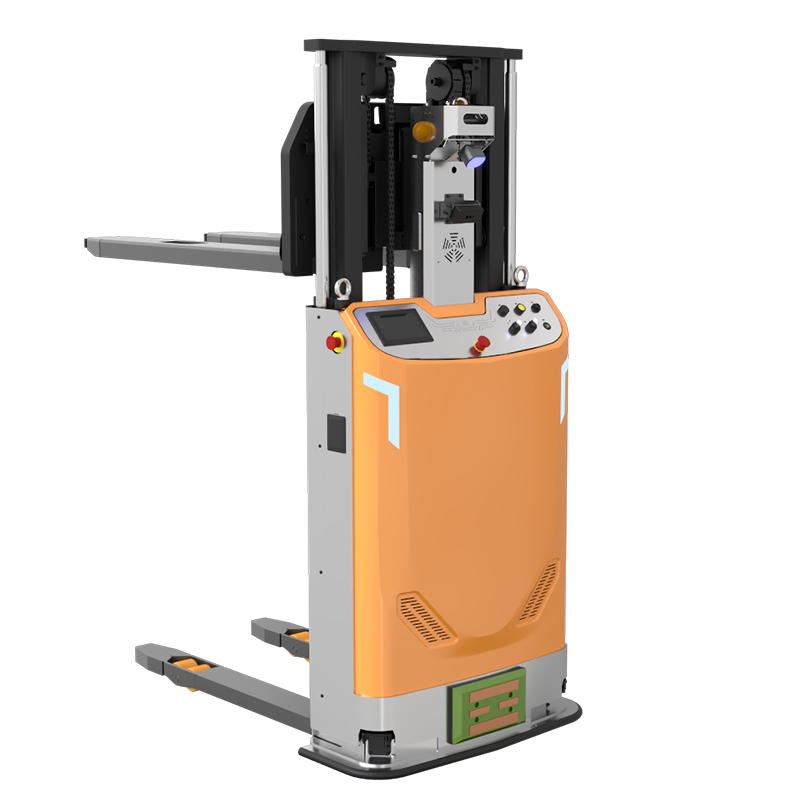
Automatic Stacker AGV Body Slim Narrow-Body 3M 2T with 3D SLAM
Designed for high-density pallet stacking with 3D SLAM navigation. Use it as the flexible feed layer around a four-way shuttle or as a direct stacker in existing low-bay buildings.
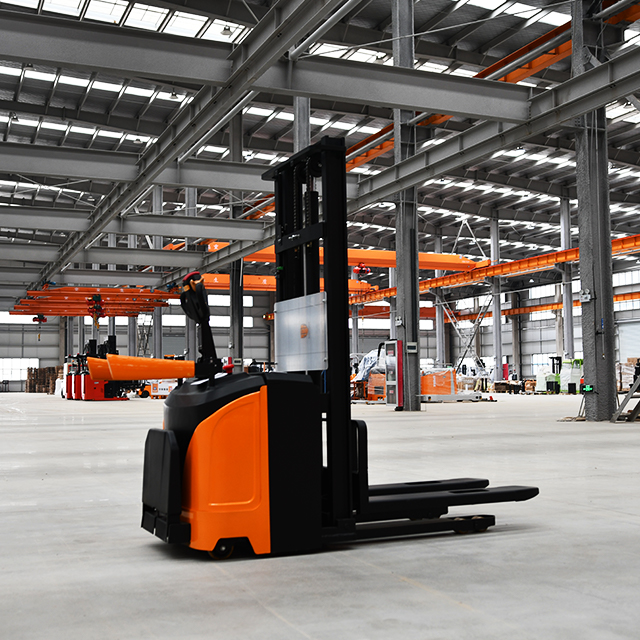
Factory Direct Sales Electric Pallet Lift Stackers 1.5–3 t, 3–5 m
Portable self-loading design for seasonal or contract warehouses. Good for a pilot cell, 3PL overflow and facilities that need flexible handling before committing to fixed racking.
China Wholesale 2000kg Industrial Forklift Pallet Truck – Good Price
A practical support platform for loading, yard movements and operator training. It helps a Guadalajara team standardize pallet handling while the automated fleet is being staged.
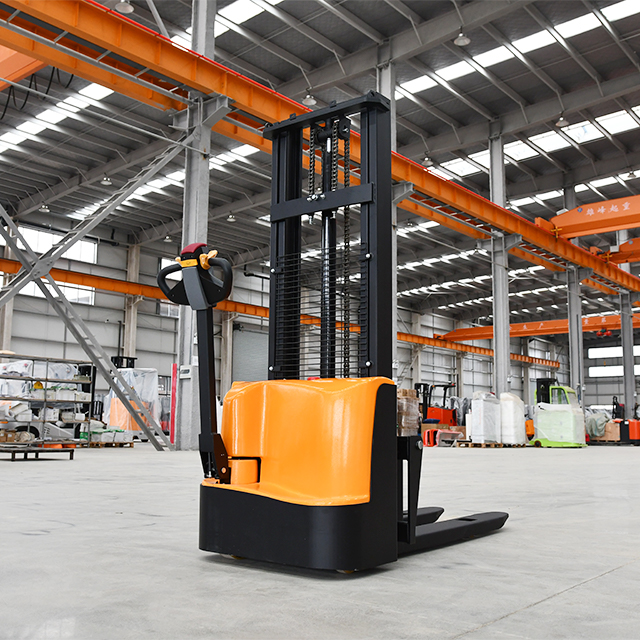
1T & 2T Full Electric Pallet Stacker Walkie Type with Training Wheels
Low-cost and easy to deploy. For small and mid-size Guadalajara 3PLs, it can handle the non-shuttle zone while automated equipment focuses on dense storage and scheduled replenishment.
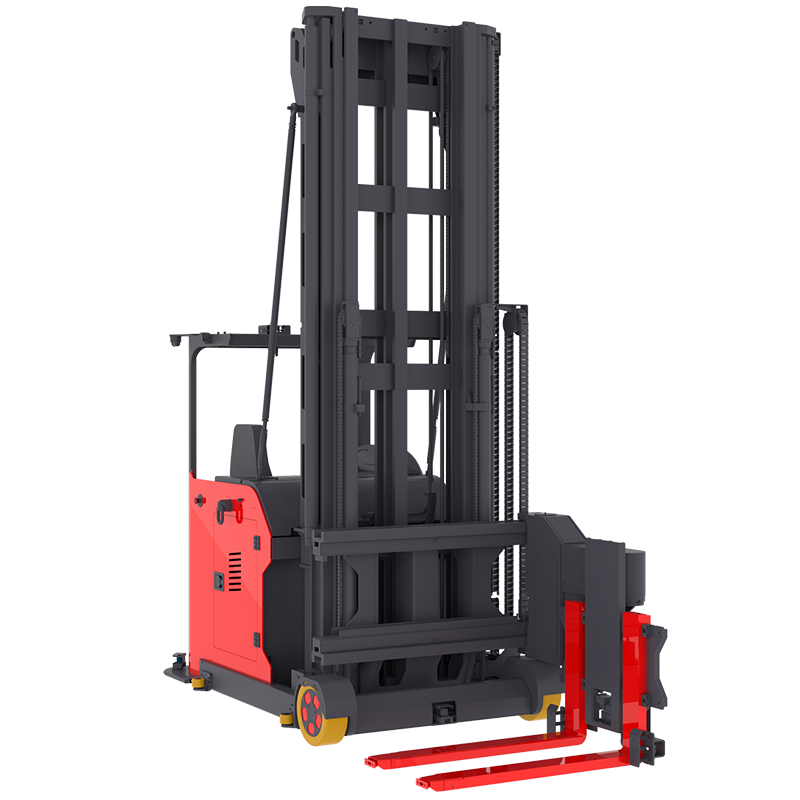
EFORK CDME16J-80S VNA Truck AGV Mobile Robot 1.6T 8M 3-Way Forklift
A laser SLAM narrow-aisle robot with three-way fork action. It is a strong complement to a four-way shuttle in brownfield buildings where high racking already exists but aisle width cannot be expanded.
Product availability, fork dimensions, voltage, lift height and WMS interface scope are confirmed during engineering. The shuttle storage layout is designed around pallet quality, rack tolerance, clear height and Guadalajara building approvals.
What a WMS-Ready Four-Way Shuttle Actually Solves in Guadalajara
Guadalajara is no longer a generic low-cost warehouse market. It is a manufacturing, electronics, medical device, food and cross-border logistics cluster, and its better warehouse decisions are now made around cubic density, labour stability and WMS visibility.
For a Guadalajara buyer, the phrase “high-density four-way shuttle system” should not be treated as a commodity rack-and-robot purchase. The four-way shuttle runs in two directions inside the rack and changes level through a lift, so it removes much of the aisle footprint that selective racking dedicates to truck circulation. The economic benefit comes from storing more pallets inside the same building envelope, but only when pallet quality, rack tolerance, fire strategy, maintenance access and WMS task logic are solved together. If any one of those items is left to the end, the system may look dense on paper while losing throughput in daily operation.
The most reliable starting point is not a truck count. It is a pallet-and-SKU study: pallet footprint, load overhang, damaged-pallet rate, SKU velocity, batch/lot rules, inbound and outbound peaks, shift patterns, and the number of replenishment moves per hour. A four-way shuttle works best when a meaningful share of stock is stable enough for shared dense racking, while fast movers remain in a flexible pick face or staging lane. That is why the product platforms above matter: the shuttle is the density layer, while stacker AGVs, reach AGVs and VNA robots provide the flexible feed and retrieval layer.
What “WMS-ready” should mean in a Guadalajara tender
WMS-ready is not a sticker. It is a defined interface scope between the warehouse management system, the WCS and the shuttle/lift/conveyor controls. The contract should state who supplies each layer, which data is authoritative, how exceptions are cleared and how acceptance is tested before shipment.
- Real-time pallet location by lane, level, depth and status.
- WMS/WCS task handoff for inbound, putaway, replenishment and outbound.
- FIFO, LIFO, batch, lot and serial rules agreed before FAT.
- Fault, alarm, audit trail and manual-override procedures.
- Interface testing with the existing ERP or WMS before SAT.
- Spare-parts, training and remote-diagnostics plan for Mexico.
Four Guadalajara Scenarios Where Density Changes the Business Case
Electronics & Medical Devices
Zapopan and El Salto manufacturers often carry high-value components with strict lot traceability. A four-way shuttle creates a controlled dense buffer, while WMS rules govern FIFO, serial capture and line-side replenishment. ESD and cleanliness requirements should be added to the technical specification.
Food, Beverage & Agave Supply Chains
Guadalajara’s food and beverage network needs lot control, FIFO and often cold-chain discipline. Four-way shuttle storage can hold packaging, finished goods or buffer stock, but hygienic design, wash-down expectations and temperature zoning must be defined with the local facility team.
Automotive, Aftermarket & 3PL
USMCA-linked supply chains reward inventory visibility and fast trailer turnaround. A shuttle system can hold slow-moving SKUs densely while AGVs stage fast movers near dispatch. The integration point is the 3PL’s WMS and customer-specific billing or traceability logic.
E-commerce & Retail Replenishment
SKU proliferation and seasonal peaks make slotting decisions more valuable than raw storage alone. Use the shuttle for dense reserve and replenishment, and use AGVs for dynamic pick-face feeding. The WMS should be able to re-slot based on velocity, not fixed annual plans.
Local Trends Reshaping Supplier Selection
Nearshoring is increasing pallet throughput, but Guadalajara projects are also constrained by land cost, existing building geometry, labour competition and the need to connect automation to a real WMS rather than a spreadsheet.
Nearshoring Raises Peak Throughput
Cross-border manufacturing and 3PL growth make peak inbound and outbound less predictable. Design should model peak hour, not monthly average.
Land Cost Pushes Cubes, Not Footprint
In established Guadalajara corridors, adding floor area is slow and expensive. Four-way shuttle racking can increase pallet positions inside the existing envelope when clear height and floor tolerance allow it.
WMS Skills Become the Bottleneck
Hardware alone does not create flow. Buyers now ask for interface mapping, exception handling, operator screens and Spanish-language training before they sign.
Uptime Beats Theoretical Speed
Battery strategy, spare parts, remote diagnostics and maintenance access decide the real lifecycle cost of a shuttle system in Mexico.
Why Anhui Nexrik Is a Practical Four-Way Shuttle Supplier for Guadalajara
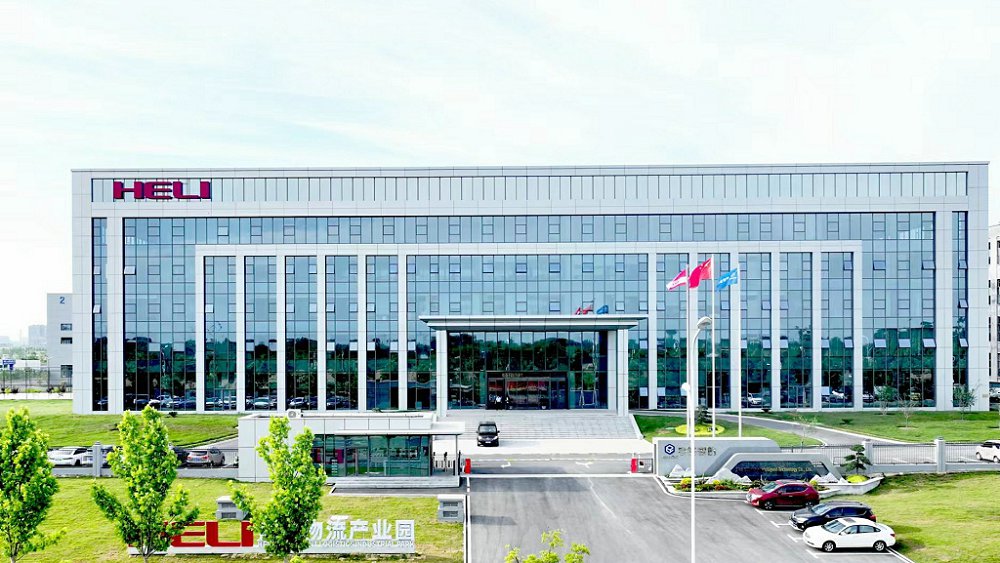
Anhui Nexrik Intelligent Technology Co., Ltd. is a high-tech manufacturer focused on the R&D, production and integration of intelligent warehousing equipment: AGV forklifts, AS/RS stacker cranes, four-way shuttles and RGVs. The company operates from Huagang Industrial Park, Feixi County, Hefei, and describes itself as a manufacturer and trading enterprise with in-house production and testing. For a Guadalajara buyer, that matters because a shuttle project is not only a machine sale; it is a layout, interface, commissioning and lifecycle-support commitment.
The original site states 1,152 staff, 66,650 m² of factory floorspace, USD 100M+ annual revenue, 7 awarded patents, SGS onsite verification, CE marking, ISO 9001 and ISO 45001. It also lists MOQ 1 set, OEM/ODM and buyer-label production, seven international exhibitions, and sales coverage across Southeast Asia, South America, Eastern Europe, South Asia and North America. Those facts are useful procurement evidence, but they should still be checked against your project scope, factory acceptance test plan and spare-parts list.
- One-stop scope: AGVs, stacker cranes, four-way shuttles and RGVs engineered as one system rather than stitched together by unrelated vendors.
- Customization: load capacity, lift height, fork configuration, battery setup and cold-storage variants can be defined during engineering.
- Trade readiness: FOB, CFR, CIF, EXW, FAS, CIP and DDP terms are listed; payment can be arranged by L/C, D/P, D/A, MoneyGram, credit card or Western Union in USD, EUR or CNY.
- Quality documentation: onsite material and finished-product inspection, CE documentation, ISO systems and SGS verification support tender and customs conversations.
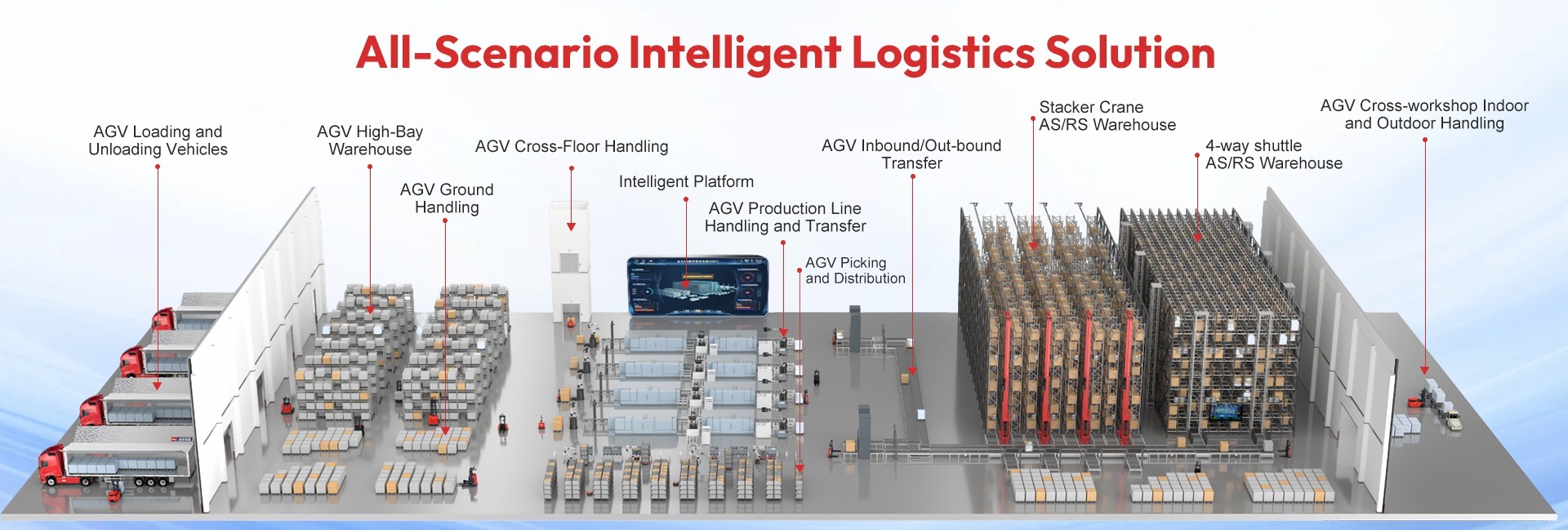



Four-Way Shuttle vs. VNA AGV vs. AS/RS Stacker Crane
Guadalajara buyers often compare three high-density paths. The correct choice depends on building geometry, pallet quality, throughput target and how much flexibility the operation needs after go-live.
| System | Density Mechanism | Typical Guadalajara Fit | WMS / Control Point |
|---|---|---|---|
| WMS-ready four-way shuttle | Shuttle travels in two rack directions and changes level by lift, reducing active aisle metres. | New or upgraded facilities where pallet count must rise inside the same building and SKU rules support dense racking. | WMS/WCS task orchestration, lane/level visibility, FIFO/LIFO and exception handling. |
| VNA 3-way AGV forklift | Rotating fork reaches left, right and forward without turning the truck in the aisle. | Brownfield warehouses with high racking, existing narrow aisles and limited tolerance for rack modifications. | Fleet-manager integration with WMS for pallet movement and high-bay putaway/retrieval. |
| AS/RS stacker crane | Rail-guided crane serves high-bay racking up to very tall buildings. | Purpose-built or new-build high-bay warehouses where throughput and height justify fixed infrastructure. | WCS scheduling, interface with WMS and tight coordination with rack, building and fire systems. |
| Pallet stacker / reach AGV | Flexible mobile handling rather than dense reserve storage. | Line-side feed, dock staging, pilot automation and mixed manual/automated zones. | Fleet dispatch, route logic, safety scanners and WMS task confirmation. |
Final selection should be based on a layout simulation using your pallet list, rack drawing, throughput profile and Guadalajara building constraints — not on a catalogue comparison alone.
Questions Guadalajara Buyers Ask Before an RFQ
Can you supply and support a four-way shuttle project in Guadalajara?
What is the minimum order quantity for a pilot?
How does the system connect to our existing WMS or ERP?
What voltage and utility information should we provide?
How should we handle building, floor and seismic requirements?
What is a realistic project schedule?
Do you provide Spanish-language training and documentation?
Which certifications and trade terms are listed?
Send the Guadalajara Project Brief, Not a Generic RFQ
To receive a useful four-way shuttle recommendation, send the pallet drawing, rack layout, building clear height, peak throughput, shift pattern, existing WMS/ERP details and voltage data. The right answer is not the largest system; it is the system that fits your Guadalajara building, labour model and WMS reality.