Nexrik intelligent warehousing · San Antonio market brief
Top Trusted Three-Way Fork AGV Body for Narrow Aisle Warehouse Manufacturer & Factories Serving the San Antonio Market
Factory-direct three-way fork AGV bodies, narrow-body pallet stackers, counterbalanced AGV forklifts and high-density AS/RS options for San Antonio warehouses. Engineered with 3D SLAM or laser navigation, WIFI/5G communication, 10mm positioning accuracy, 6–8 hour shift coverage and MOQ 1 set.
8 Three-Way Fork AGV & Narrow-Aisle Warehouse Products for San Antonio Projects
The eight configurations below are the most practical starting points for San Antonio buyers comparing a trusted three-way fork AGV body manufacturer and factories. Each product link preserves the original model page. For a leased building, start with 3D SLAM stackers; for high-bay racking, evaluate the VNA and counterbalanced bodies; for greenfield density, compare AS/RS and shuttle alternatives.
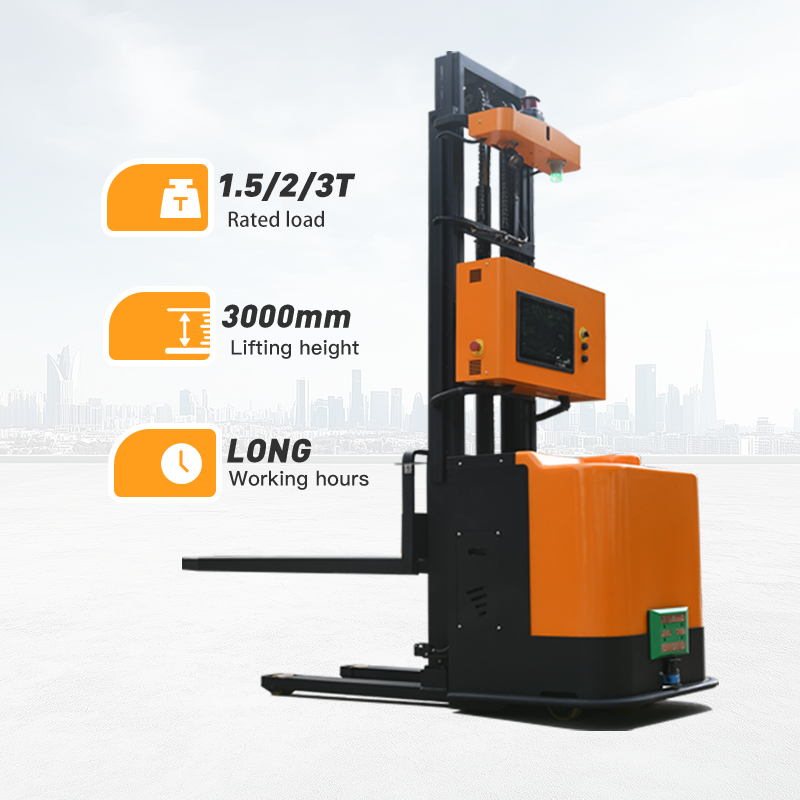
3T 3000mm Pallet Stacker Automated Guided Vehicle Forklift Truck for Intelligent Warehouse Automation
A high-capacity stacker platform for pallet handling where stability at height matters. Suitable for staging, line feed and high-bay support in multi-shift distribution operations.
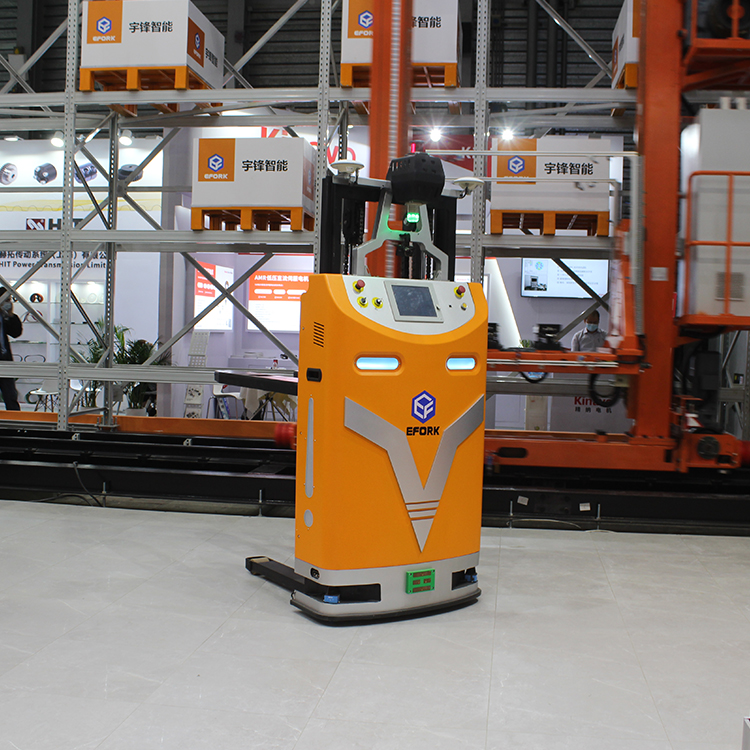
CE Certified EFORK EDA20-16 2T 1600mm Laser Navigation Self-Driving Forklift AGV WIFI/5G 10mm Accuracy 6-8H Working Time
A practical pilot unit for San Antonio 3PLs and manufacturers that need predictable commissioning, 10mm accuracy and 6–8 hour shift coverage without a full greenfield build.
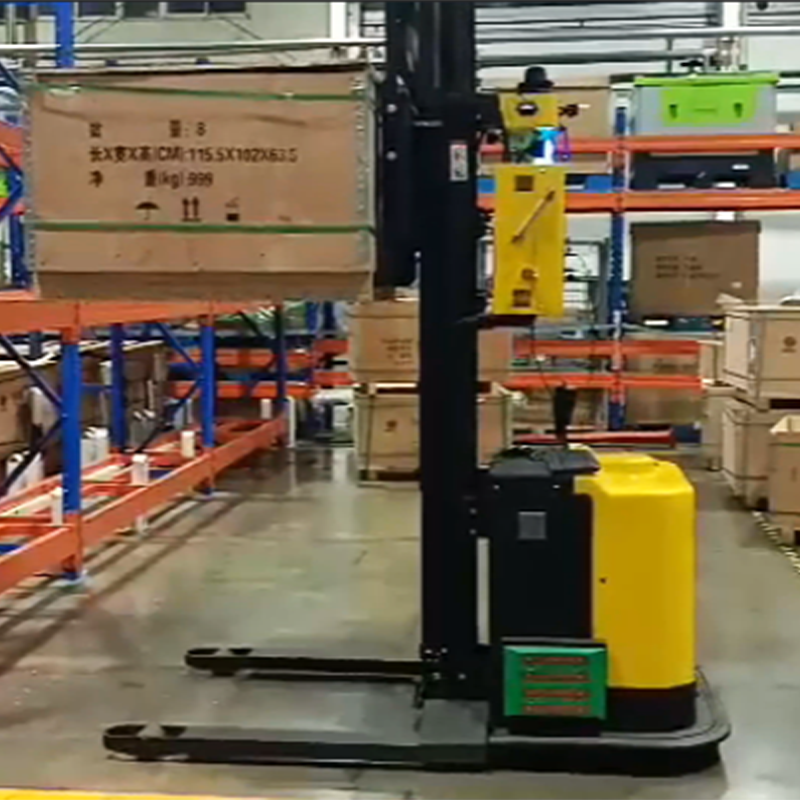
2T 3000MM Pallet AGV Forklift Automated Guided Vehicle 3D SLAM Navigation WIFI/5G Communication for Warehouse Automation Robot
Natural-feature 3D SLAM localization reduces reflector and floor-tape work in leased buildings. A strong fit for selective racking, put-away and replenishment routes.
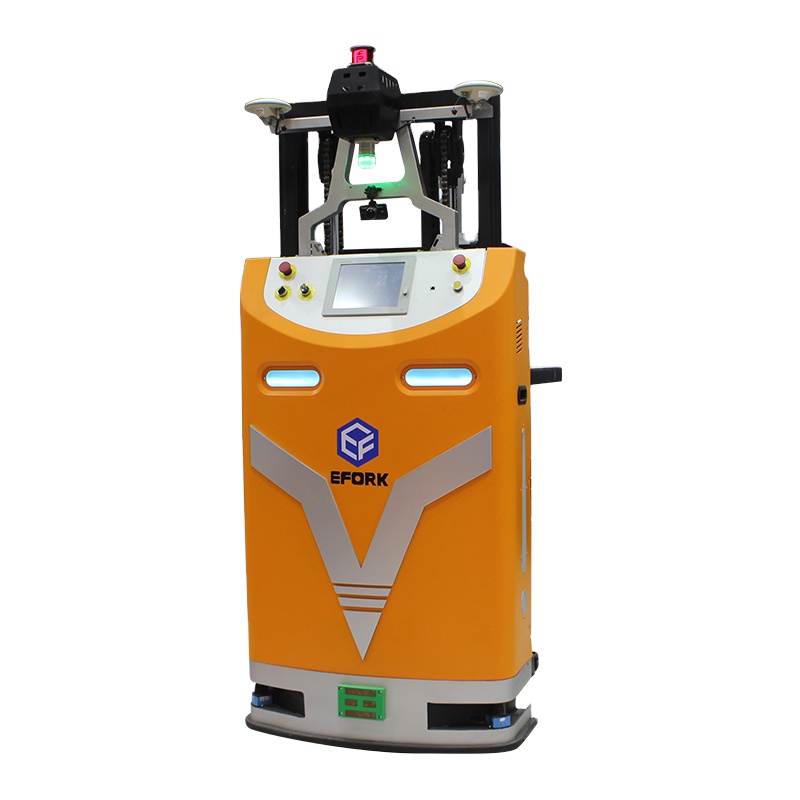
CE Certified EFORK EDA20-16 2T 1200mm Fork Width 180mm 3D SLAM Laser Navigation AGV WIFI/5G 10mm Accuracy 1600mm Lifting Height
A compact laser and 3D SLAM configuration for rack interfaces, conveyor transfer points and repetitive pallet moves where route changes are expected after go-live.
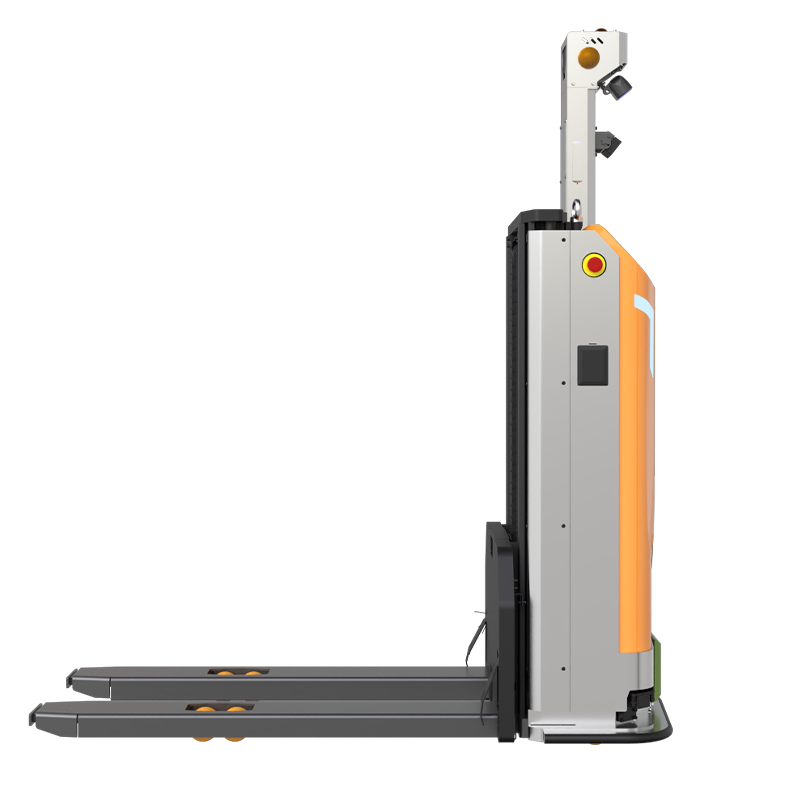
2T 3 M Slim Narrow-Body Stacker AGV High-Density Storage Pallet Stacking AGV for Narrow Aisles Warehouse Automation
A slim body for high-density storage and retrofit aisles where civil works or rack replacement would otherwise be required. Ideal for constrained San Antonio facilities.
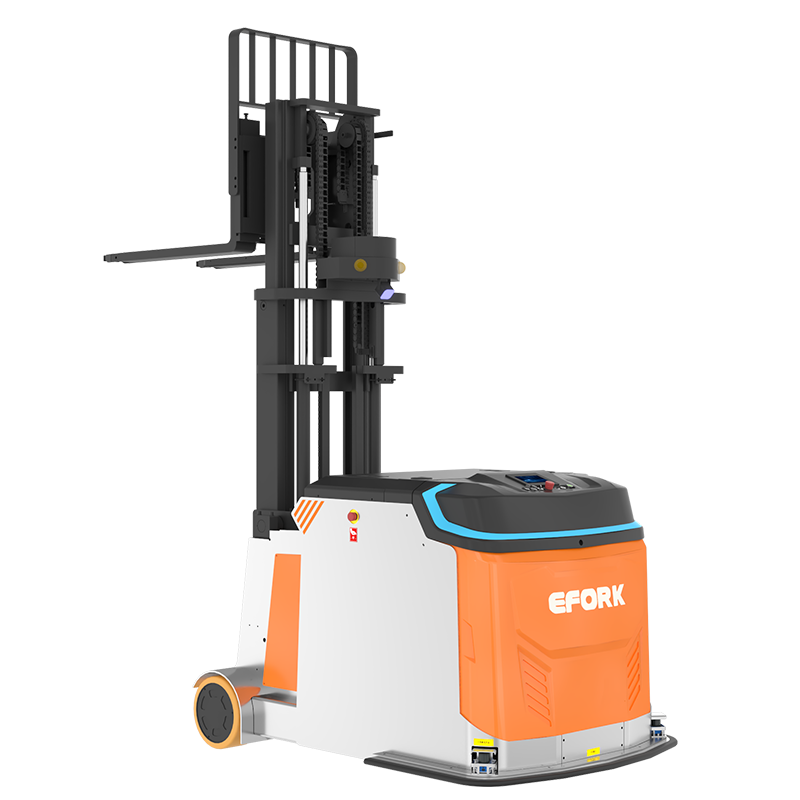
EFORK EDB30-30 Counterbalanced AGV Body 3M 3T High Lift Capacity Forklift Fork Legs High Flexibility 3D SLAM Navigation
A counterbalanced layout for closed-bottom pallets, cages and trailer docks without front outriggers. Useful where one body must handle both production and warehouse moves.
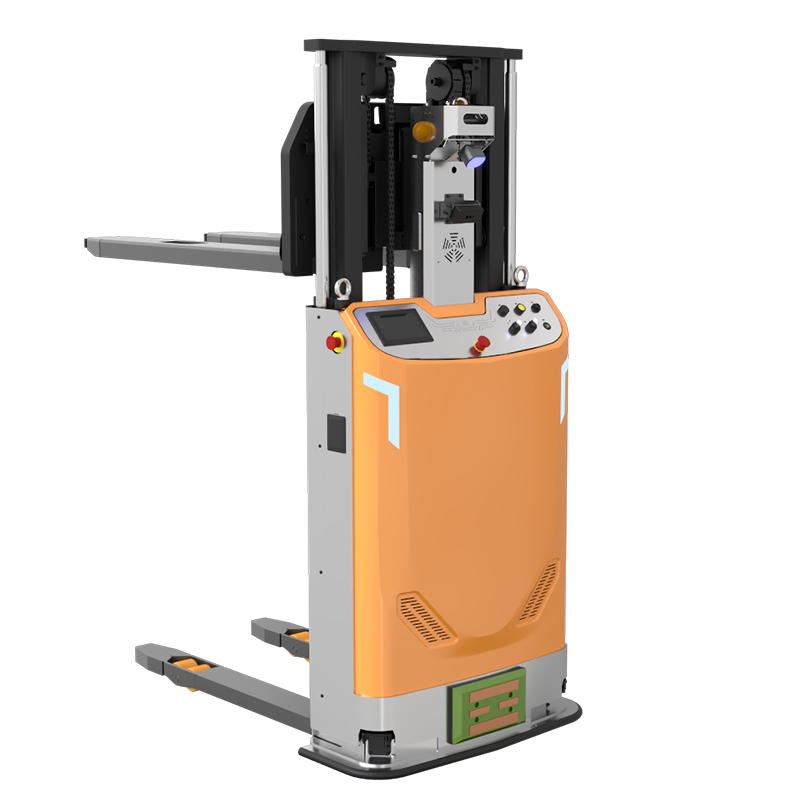
Automatic Stacker AGV Body Slim Narrow-Body 3M 2T High-Density Storage Pallet Stacking 3D SLAM Navigation WIFI/5G
A narrow-body automatic stacker for repetitive put-away and high-density pallet stacking. A good candidate for mixed-SKU operations that need a phased automation path.
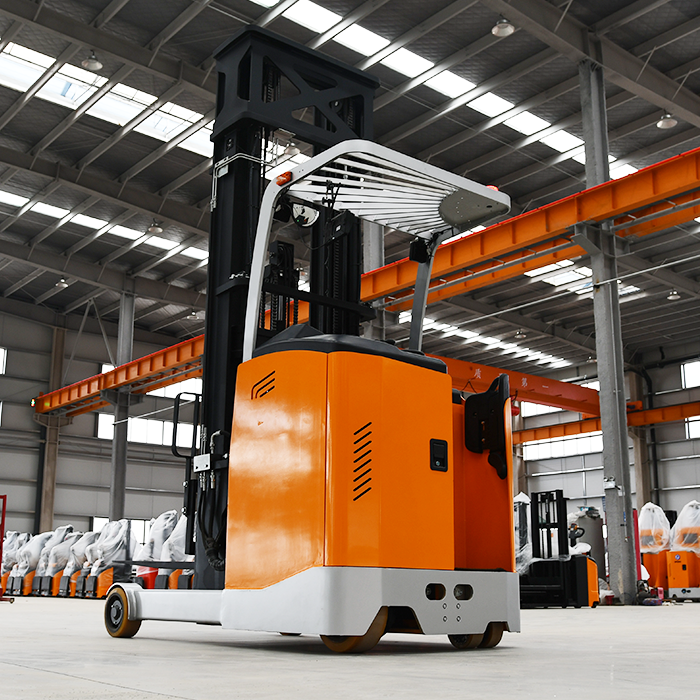
China Wholesale 2000kg 12m 8m 6m Industrial Forklift Pallet Truck High-Speed Steel Hot-Dip Galvanized Good Price
A hot-dip galvanized pallet truck for humid, wash-down or harsh environments. Often specified alongside an AGV fleet for non-automated backup, dock work and maintenance tasks.
Manufacturer Capacity That Supports San Antonio Procurement
A three-way fork AGV body is not a commodity attachment. It combines mast engineering, fork rotation, sensor fusion, safety logic, battery strategy and service access. Buyers comparing factories should verify the production base, quality system and project workflow behind the quotation.
Two production bases in Anhui, with in-house chassis, mast and control integration.
Onsite-verified staffing for manufacturing, engineering, quality and export support.
Plus 1 registered trademark and ongoing R&D in 3D SLAM, laser navigation and WMS-ready controls.
Start with a single-truck pilot, validate routes and cycle times, then scale the fleet.
Credentials referenced from Nexrik original company information: SGS onsite verification, CE marking under Machinery Directive 2006/42/EC, ISO 9001 and ISO 45001 management systems, 7 awarded patents, 1,152 staff and 66,650 m² floorspace.
Why Narrow-Aisle Automation Is Moving From Option to Operating Necessity
San Antonio sits at a useful intersection: I-35 north–south, I-10 east–west, I-37 toward Corpus Christi, and the Laredo border crossing within a practical truck cycle. That geography supports third-party logistics, food and beverage distribution, building products, aerospace and defense supply chains, retail replenishment and Mexico-linked freight.
The constraint is rarely demand. It is usable cubic capacity, labor continuity, safety in aisles that were laid out for a different order profile, and the cost of expanding a building. A three-way fork AGV body is designed for that constraint. Unlike a conventional counterbalanced truck, the fork carriage can rotate and pick left, right or forward without turning the chassis. In a retrofit, this can preserve selective pallet access while narrowing the aisle and reducing the turning envelope. In a new build, it allows denser racking and less circulation space per pallet position.
For San Antonio buyers, the decision should not begin with the truck alone. It should begin with load units, rack tolerances, floor flatness, fire strategy and the WMS/WCS interface. A trusted manufacturer will ask for those inputs before recommending a body. That is the difference between a product quotation and an engineered automation plan.
This white-paper style brief is written from a manufacturer engineering perspective and uses Nexrik verified company data. Final site design must still be confirmed by a qualified engineer, rack supplier, fire protection consultant, insurer and local authority having jurisdiction. U.S. site acceptance may require additional review against OSHA, ANSI/ITSDF B56.5, NFPA and local electrical code requirements.
What San Antonio Buyers Usually Need to Prove First
Space: Can the existing aisle be narrowed without breaking rack access or fire egress?
Labor: Which routes are repetitive enough to automate first?
Safety: How will pedestrians, forklifts, charging areas and dock doors interact?
Integration: What data must move between the AGV fleet and the WMS or ERP?
Service: What spare-parts, diagnostics and commissioning support model is realistic?
Where a Three-Way Fork AGV Body Fits in San Antonio Operations
Narrow-aisle automation is not limited to one industry. The value appears wherever repetitive pallet movement, constrained floor space and safety pressure overlap.
3PL and E-commerce Fulfillment
San Antonio fulfillment centers often face mixed pallet profiles and rapid SKU changes. A 2T or 3T stacker AGV with 3D SLAM can be deployed on put-away, replenishment and dock-to-staging routes without extensive floor modifications.
Food, Beverage and Cold Chain
Temperature-controlled distribution rewards predictable movement and minimal door-open time. Narrow-body stackers and AS/RS alternatives can support dense pallet storage, with thermal management and battery strategy validated for local conditions.
Building Products and Hardware Distribution
Heavy pallets, long loads and high racks require stable masts and conservative load charts. Counterbalanced and VNA configurations help separate high-bay put-away from line-side delivery.
Mexico-Linked and Cross-Border Logistics
San Antonio's position between Mexico, Houston, Dallas and the Gulf Coast supports cross-dock and consolidation operations. AGVs can standardize repetitive trailer-to-rack moves while workers focus on exception handling and inspection.
Retail, Wholesale and Replenishment
Retail distribution centers need consistent case-pick replenishment and pallet put-away. A phased fleet can start with one body and add units as order profiles and service-level targets become clearer.
Aerospace, Defense and Precision Supply Chains
High-value components and traceability requirements favor repeatable routes, controlled acceleration and clear WMS records. The automation case is often built around damage reduction and auditability, not headcount alone.
What Is Changing for Warehouse Operators in South-Central Texas
Procurement teams are no longer asking only whether an AGV can move a pallet. They are asking how the fleet fits the building, the labor model, the safety plan and the WMS data flow.
1. Densification Before Expansion
Land, construction and racking costs push operators to use height and reduce aisle loss. Three-way fork bodies and VNA configurations are evaluated as alternatives to adding square footage.
2. Labor Continuity and Safety
Repetitive travel, shift turnover and pedestrian interaction are constant concerns. AGV bodies with safety scanners, predictable routes and 10mm positioning support a more controlled floor.
3. Nearshoring and Cross-Border Flow
Mexico-linked supply chains create more consolidation, cross-dock and trailer-handling work. Automation helps standardize the repeatable portion while preserving flexibility for exceptions.
4. Heat, Power and Floor Readiness
San Antonio heat and long shifts require battery, charging and thermal planning. Floor flatness, expansion joints and dock transitions should be surveyed before body selection.
5. WMS/ERP Integration
Buyers expect the AGV fleet to exchange task status, location and exception data with the WMS or ERP. Interface requirements should be defined during solution design, not after shipment.
6. Pilot-to-Fleet Procurement
MOQ 1 set lowers the entry barrier. A pilot proves routes, cycle time, charging strategy and operator acceptance before a larger fleet order is released.
Illustrative Planning Weights for a San Antonio Narrow-Aisle Retrofit
This is a planning model, not a market statistic. It shows how a retrofit decision often balances density, labor, safety and integration before equipment is shortlisted.
Match the AGV Body to the Operating Constraint
Use this matrix to frame the first engineering conversation. Final aisle width, lift height, load chart and safety validation must be confirmed against the actual rack layout and building.
Why Nexrik Is a Trusted Manufacturer for Narrow-Aisle AGV Projects
San Antonio buyers need more than a product photo. They need a factory that can support engineering, documentation, export logistics and lifecycle service.
In-House Manufacturing Scale
66,650 m² of factory floorspace across two production bases, with 1,152 staff and in-house chassis, mast and control integration. Onsite material and finished-product inspection supports shipment quality.
Certified and Audited
CE marking under 2006/42/EC for the AGV range, ISO 9001 quality management, ISO 45001 occupational health and safety, 7 awarded patents and SGS onsite verification of premises and legal status.
Laser and 3D SLAM Navigation
Choose reflector-based laser navigation for fixed routes or 3D SLAM for natural-feature localization that typically reduces floor and rack modifications. WIFI/5G communication and 10mm accuracy support real-time task dispatch.
One-Stop Turnkey Integration
AGV forklifts, VNA AGVs, AS/RS stacker cranes, four-way shuttles and RGVs from one source, engineered as a WMS-ready system rather than stitched together after delivery.
OEM, ODM and Full Customization
Load capacity, lift height, fork dimensions, battery configuration and cold-storage variants can be customized. Buyer-label production and full OEM/ODM support are available with MOQ 1 set.
Export-Ready Commercial Support
Incoterms include FOB, CFR, CIF, EXW, FAS, CIP and DDP. Payment methods include L/C, D/P, D/A, MoneyGram, credit card and Western Union in USD, EUR or CNY. Fortune 500 supplier experience is referenced in Nexrik's company profile.
Production, Testing and Project Evidence From Nexrik
Images from the original Nexrik website show the production base, AGV assembly workshop and equipment testing area. For buyers auditing a manufacturer, these are the checkpoints to request during a factory review or virtual inspection.
 AGV forklift production line and factory overview.
 Production base supporting manufacturing scale and export capacity.
 AGV assembly workshop with in-house control integration.
 Equipment testing area before finished-product inspection and shipment.
San Antonio Procurement Questions Buyers Ask First
These answers address the practical questions that arise when a South-Central Texas buyer compares a three-way fork AGV body manufacturer or factory quote.
Can a three-way fork AGV body work in an older San Antonio warehouse with existing racking?
Often it can, but the decision depends on rack tolerances, aisle width, floor flatness, mast height and the load chart. A site survey should confirm the turning envelope and safety distance before the body is ordered.
What aisle width should we budget for a narrow-aisle AGV retrofit?
There is no single number. The required aisle depends on load size, mast and fork geometry, rack uprights, safety scanners and building code. Use an engineering layout rather than a generic benchmark, especially in leased buildings.
How do you handle Texas heat and long shifts?
The project should define battery chemistry, charging windows, ventilation and thermal management. A 6–8 hour working time can be a useful planning baseline, but actual runtime must be validated against route length, lift frequency and ambient conditions.
Do you provide local commissioning and after-sales support?
Nexrik supports factory acceptance testing, remote diagnostics, spare-parts planning and commissioning guidance. The exact service model should be confirmed in the quotation, including response time, parts lead time and coordination with local contractors if required.
What documentation is needed for U.S. procurement and customs?
Typical export documents include commercial invoice, packing list, bill of lading and certificate of origin where applicable, alongside CE and ISO documentation. U.S. site acceptance may also require review against OSHA, ANSI/ITSDF B56.5, NFPA and local electrical requirements; confirm with the authority having jurisdiction and insurer.
Can we start with one unit and integrate with our WMS?
Yes. MOQ is 1 set, which supports a pilot before fleet expansion. WMS/WCS interface requirements should be defined during solution design and tested during commissioning so task dispatch, status and exception handling are clear before go-live.
Plan a Narrow-Aisle AGV Pilot for San Antonio
Send your rack layout, pallet dimensions, aisle width, lift height, shift pattern and throughput target. Nexrik engineers can recommend the right three-way fork AGV body, narrow-body stacker or AS/RS alternative and confirm the factory configuration before quotation.