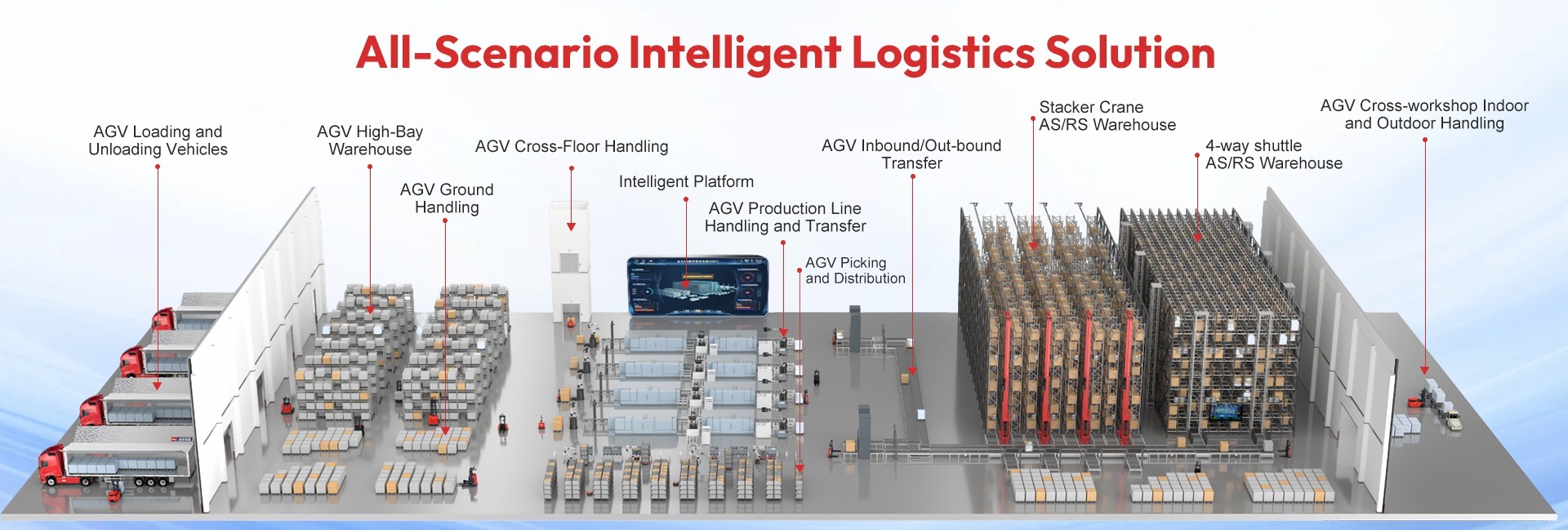
Stacker AGV Factory & Wholesaler in EdmontonNarrow-Aisle, Cold-Climate & High-Throughput Automation
Factory-direct AGV stackers, VNA trucks, reach robots and counterbalanced automated forklifts for Edmonton warehouses. Built for repeatable pallet flow, cold-weather engineering reviews, CE documentation and pilot-first procurement.
Factory-Direct Stacker AGVs Built for Edmonton's Warehouse Reality
Edmonton buyers are not just shopping for a robot. They are managing labour availability, long winter conditions, tight dock schedules, racking constraints, safety expectations and the need to prove ROI before scaling a fleet.
Edmonton sits at the centre of a distribution corridor that serves Northern Alberta, the energy sector, building materials, grocery and cold-chain networks, e-commerce fulfilment and third-party logistics. In these operations, pallet movement is often repetitive but unforgiving: a delayed put-away blocks a dock door, an inaccurate pick faces a customer, and an under-specified AGV becomes a maintenance issue rather than a productivity gain. That is why a Stacker AGV Factory & Wholesaler in Edmonton conversation should begin with the work envelope, not the catalogue.
A stacker AGV is typically selected for floor-to-rack transfer, line-side replenishment, low-to-medium racking and repetitive pallet staging. In Edmonton warehouses, the strongest candidates are routes that repeat hundreds of times per shift: receiving to put-away, production to buffer, pick face to dispatch, or cold-room to staging. For tighter selective racking, a reach truck AGV may be the better fit; for very narrow aisles and high-bay density, a VNA 3-way AGV can unlock storage capacity; for closed-bottom pallets, cages and trailer work, a counterbalanced AGV usually avoids the outrigger constraints of a stacker.
Winter adds engineering questions that a generic specification sheet rarely answers. Unheated docks, condensation, frozen goods, salt and grit at doorways, battery temperature and charging room design all affect uptime. For Edmonton projects we recommend an application review that separates indoor-conditioned routes from cold-dock and cold-storage routes. Where low temperatures are expected, the final configuration should confirm low-temperature battery strategy, hydraulic oil suitability, condensation protection, floor transitions and operator response procedures. The objective is not simply to sell an AGV; it is to specify a system that can be serviced, expanded and audited over a ten-year horizon.
As a factory-direct manufacturer and wholesaler, our role is to shorten the distance between the Edmonton buyer and the engineering team. That means transparent model selection, layout review, OEM/ODM options, export documentation and a pilot-first path with MOQ 1 set. Buyers can test one route, measure cycle time and labour displacement, then scale the fleet with the same navigation platform and spare-parts logic.
What Edmonton Buyers Usually Need to Confirm Before Quotation
Pallet type and load centre, racking height and aisle width, floor flatness, doorway and lift access, shift pattern, peak throughput, WMS/ERP interface, charging location, winter temperature exposure and site safety rules. These inputs determine whether a stacker, reach, VNA or counterbalanced AGV is technically and commercially appropriate.
8 Stacker AGV & Automated Forklift Models for Edmonton Buyers
Compare the core platforms below, then request a layout review. Every model can be quoted as a single-unit pilot, with product URLs preserved for detailed specifications and the live-chat quote button available for Edmonton-specific configuration questions.
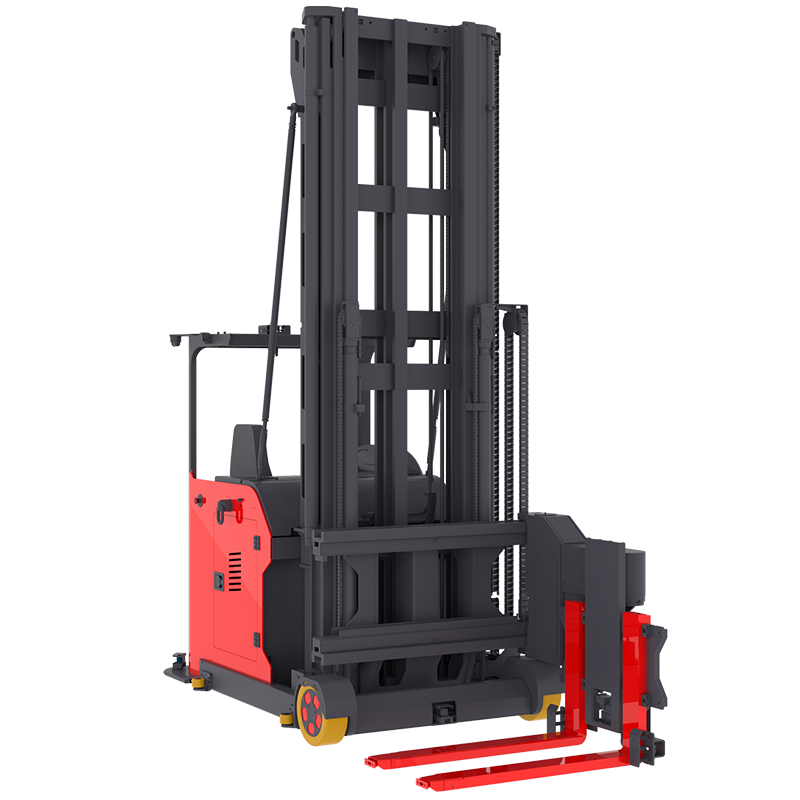 VNA AGV1.6T / 8M
EFORK CDME16J-80S VNA Truck AGV Mobile Robot 1.6T 8M 3-way Forklift Laser Slam Narrow Aisle 1200mm Fork Length 125mm Fork Width
- 1.6T load
- 8m lift
- 3-way fork
- Laser SLAM
A strong fit for Edmonton high-density pallet warehouses where aisle width is the constraint and every square metre of storage must work harder.
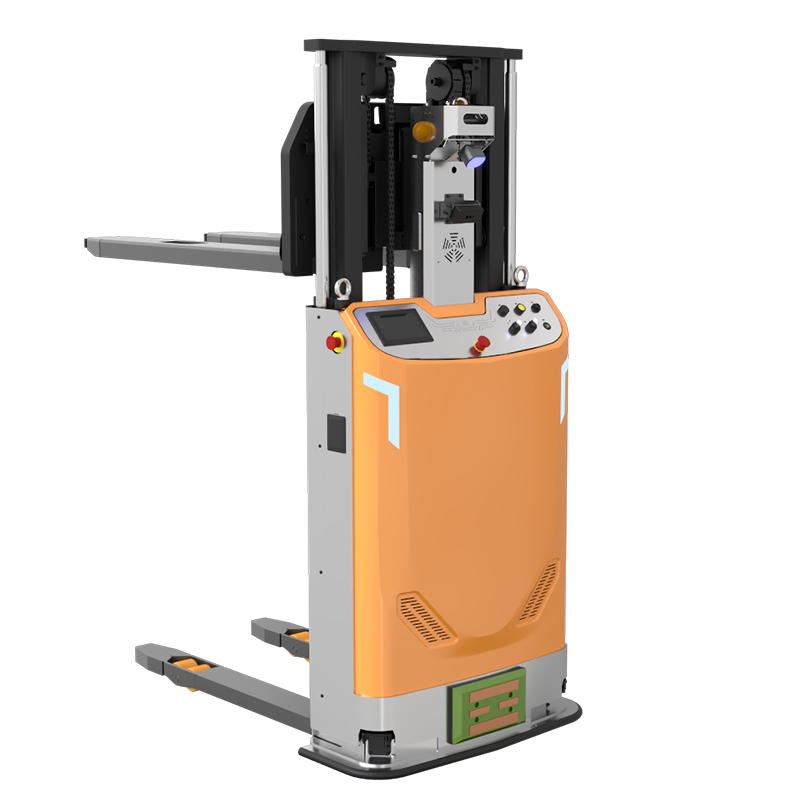 STACKER AGVSLIM BODY
Automatic Stacker AGV Body Slim Narrow-Body 3M 2T High-Density Storage Pallet Stacking 3D SLAM Navigation WIFI/5G Maximize
- 2T load
- 3m lift
- 3D SLAM
- WiFi / 5G
An efficient entry point for Edmonton 3PLs and distributors that need repeatable put-away and replenishment without rebuilding the entire racking layout.
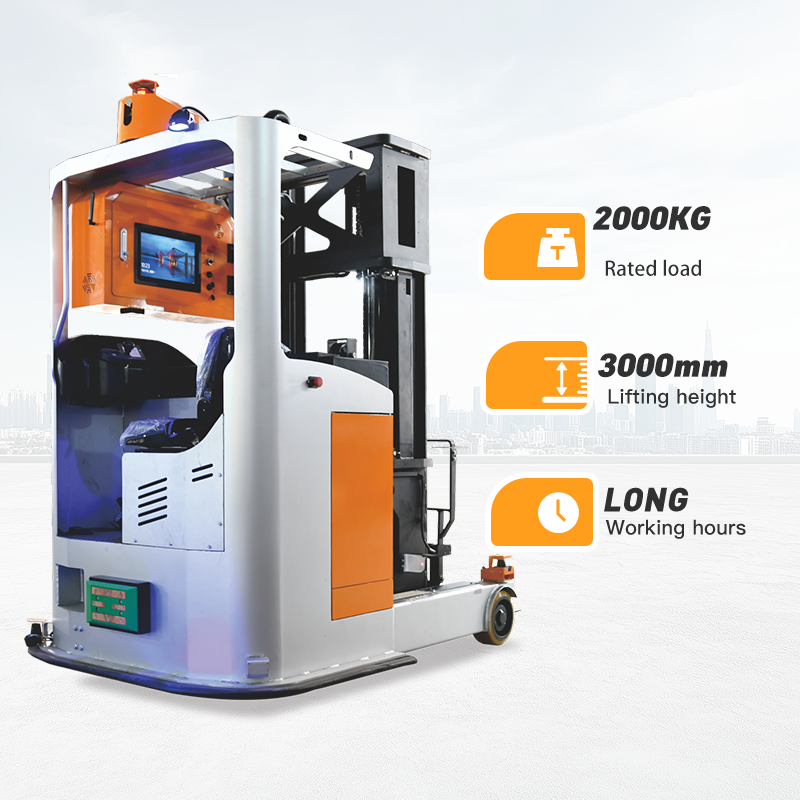 REACH AGVCE
Reach Truck AGV Forklift 2T 3M Laser Slam Navigation CE Certified Warehouse Automation Robot for Factory Logistics
- 2T load
- 3m lift
- Laser SLAM
- CE certified
A practical choice where Edmonton selective racking needs a tighter turning envelope than a counterbalanced truck while preserving medium-height lift capability.
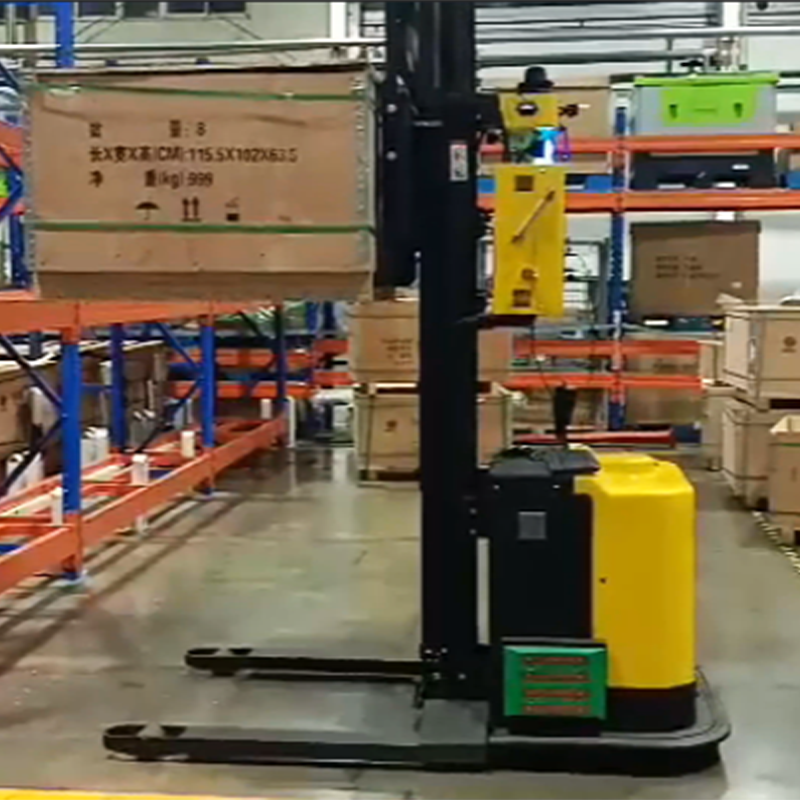 PALLET AGV3D SLAM
2T 3000MM Pallet AGV Forklift Automated Guided Vehicle 3D SLAM Navigation WIFI/5G Communication for Warehouse Automation Robot
- 2T load
- 3000mm lift
- 3D SLAM
- WIFI/5G
Designed for Edmonton pallet flows that repeat between receiving, storage and dispatch, with natural-feature navigation that reduces site modification.
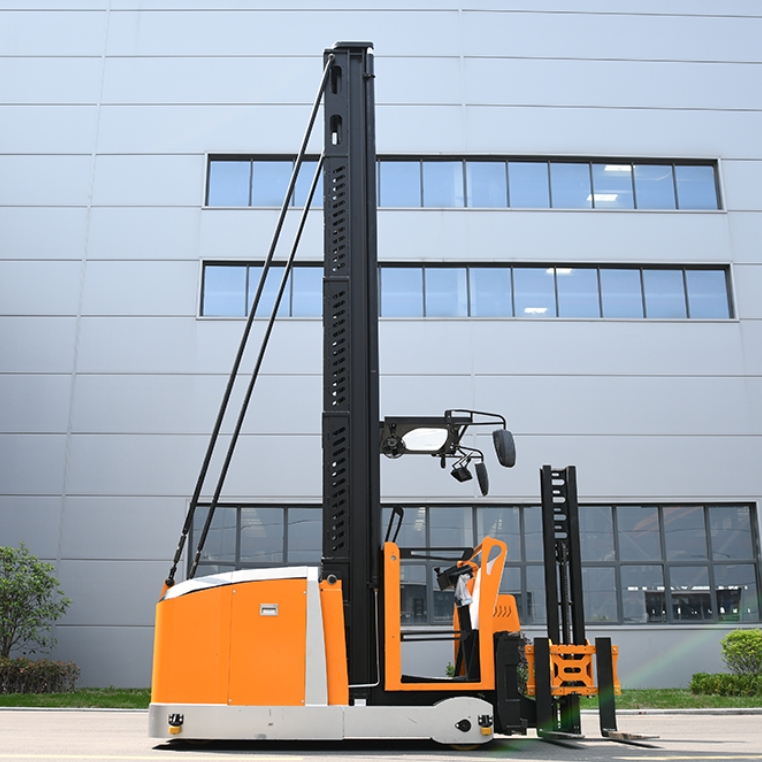 3-WAY VNA1.5T
New 1.5T Manual Electric 3-Way Pallet Stacker Forklift 3 Way Manup Vna Forklift with 1600kg Loading Capacity AC Motor Powered
- 1.5T load
- 3-way fork
- AC motor
- VNA format
Useful for Edmonton operations weighing a manual-electric VNA step before full automation, especially where operators need flexibility during transition periods.
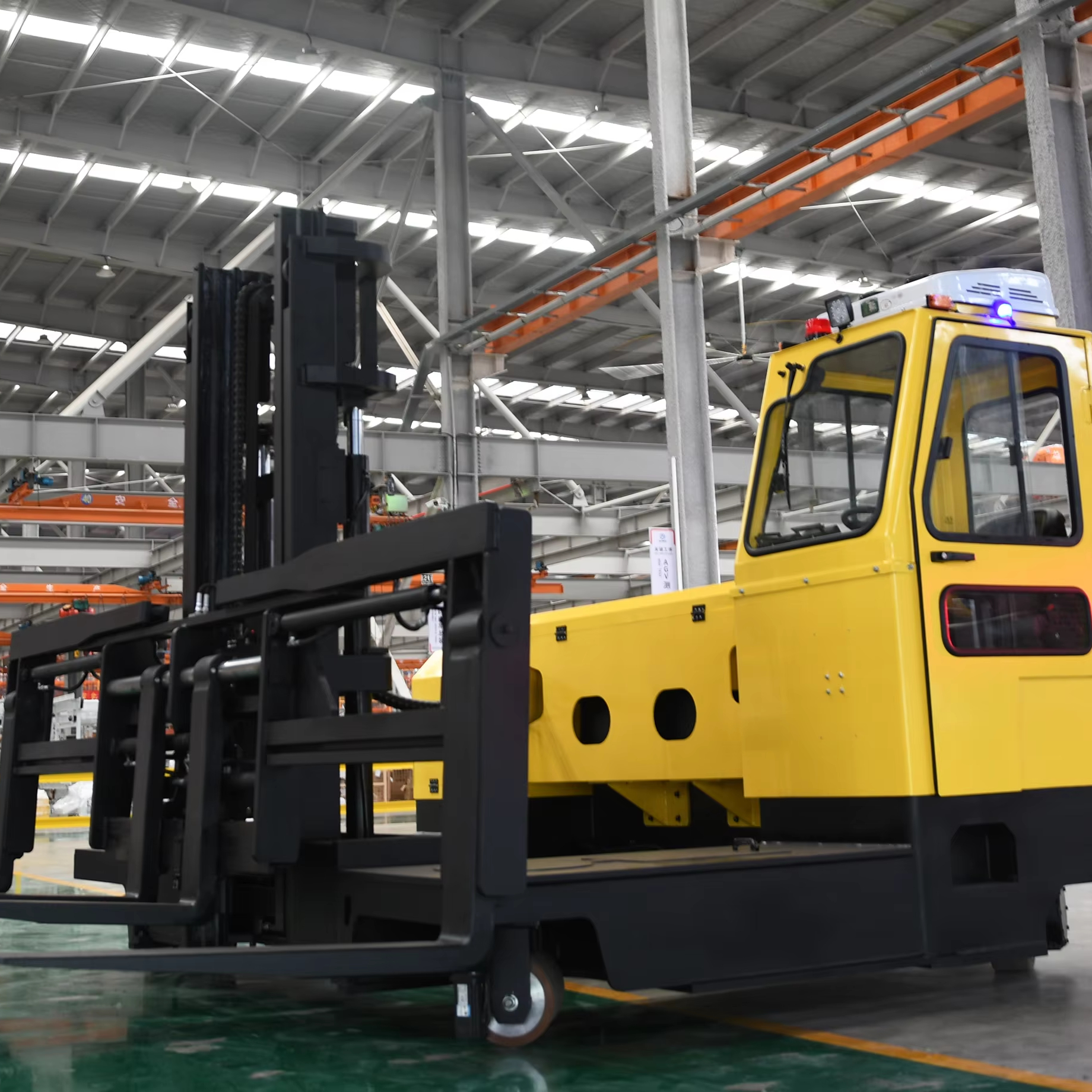 MULTI-DIRECTION3.5T–5T
Multi-directional Forklift Reach Truck Stacker 3.5 Ton 5Ton Full Way Eclectic Side Loader Forklift With Wide Body Seat
- 3.5T–5T
- Full-way
- Side loader
- Wide body
For Edmonton building-material, lumber, pipe and long-load handling where conventional forward-only forklifts waste aisle space and cycle time.
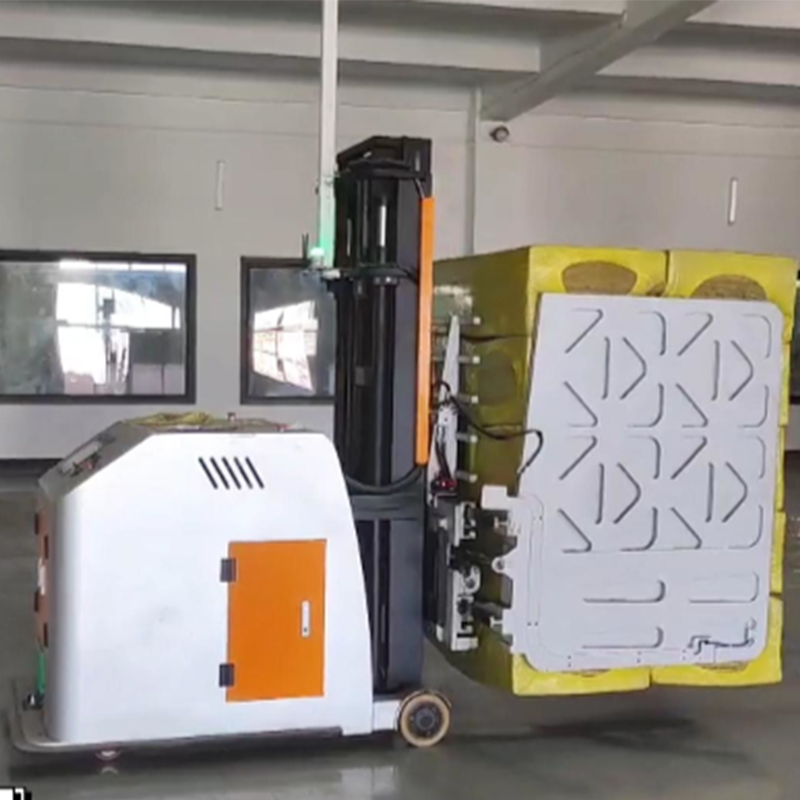 COUNTERBALANCED3T
EFORK Automated Guided Vehicle AGV Forklift 3T 3000MM Counterbalanced 3D SLAM Construction Factory Logistics Pallet Truck
- 3T load
- 3000mm lift
- 3D SLAM
- No outriggers
A good Edmonton fit for closed-bottom pallets, cages, production lines and dock transfers where front outriggers would obstruct handling.
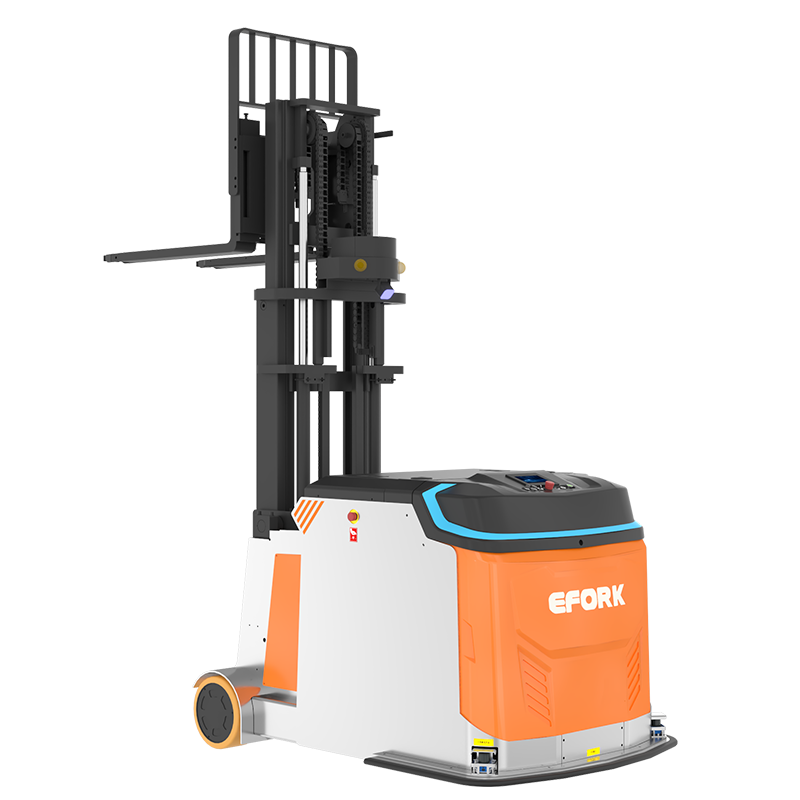 AGV BODYHIGH FLEX
EFORK EDB30-30 Counterbalanced AGV Body 3M 3T High Lift Capacity Forklift Fork Legs High Flexibility 3D SLAM Navigation for
- 3T load
- 3m lift
- 3D SLAM
- High flexibility
A flexible body platform for Edmonton system integrators and multi-site operators that need a common automated base across production and warehouse routes.
| Model Family | Typical Edmonton Use | Why Shortlist It | Check Before Ordering |
|---|---|---|---|
| Slim Stacker AGV | Put-away, line-side delivery, low racking | Cost-effective entry into pallet automation | Floor flatness, pallet condition, rack beam height |
| Reach Truck AGV | Selective racking with tighter aisles | Mast reach improves space efficiency | Aisle width, rack tolerance, lift height |
| VNA 3-Way AGV | High-density, high-bay pallet storage | Rotating fork serves left, right and forward | Very narrow aisle guidance, floor certificate |
| Counterbalanced AGV | Docks, cages, closed pallets, production | No front outrigger obstruction | Trailer gap, dock leveler, turning radius |
| Multi-Directional Side Loader | Long loads, building materials, pipe and lumber | Travel direction and fork direction can differ | Load length, aisle layout, outdoor-to-indoor transition |
Specifications above support early shortlisting. Final capacity, lift height, fork dimensions, navigation, battery and cold-weather configuration must be confirmed through project engineering before order.
Where Stacker AGVs Deliver ROI in Edmonton
The highest-return AGV projects are usually not the most complicated ones. They are the routes with stable pallet formats, clear safety zoning and a measurable gap between manual cycle time and automated cycle time.
Cold-Chain & Refrigerated Distribution
Edmonton food, grocery and pharmaceutical distributors often run cold rooms alongside ambient storage. A stacker AGV can reduce operator time inside cold zones and stabilise put-away during peak waves. The engineering review should confirm temperature exposure, condensation, battery strategy, door interlocks and emergency egress. A standard unit should not be assumed cold-store ready without specification.
3PL & E-Commerce Fulfilment
Third-party logistics operators in Edmonton face seasonal peaks, customer-specific SLAs and frequent SKU changes. An AGV stacker supports repeatable pallet replenishment and dispatch staging while labour is redeployed to picking and exception handling. For multi-client facilities, the WMS interface, traffic rules and battery charging plan matter as much as load capacity.
Building Materials, Manufacturing & Energy Supply
Edmonton's industrial base includes fabrication, construction supply, energy services and equipment support. These sites often move heavy or awkward loads between production, staging and shipping. Counterbalanced and multi-directional platforms may outperform a standard stacker where pallets are closed-bottom, loads are long, or trailers are part of the route. Safety zoning and outdoor-to-indoor transitions must be reviewed early.
Retail, Grocery & Cross-Dock Operations
Retail distribution centres around Edmonton need predictable pallet flow from receiving to pick faces and outbound lanes. A stacker AGV can handle routine moves and free operators for exceptions, but the layout must protect pedestrian crossings and dock doors. Short, repeatable routes are often the best pilot candidates because they generate measurable data quickly.
What Is Changing in Edmonton Warehouse Automation
Automation decisions in Edmonton are shifting from single-machine purchases toward measurable, expandable systems. The trends below are the ones most likely to affect a stacker AGV business case.
From Fixed Paths to 3D SLAM
Buyers prefer natural-feature localisation where possible because it reduces reflector and floor-tape work, simplifies reconfiguration and supports mixed traffic environments.
From One Truck to a Fleet
Pilot projects are designed with fleet expansion in mind: common navigation, shared charging strategy, spare-parts standardisation and WMS-ready traffic management.
Cold-Climate Engineering
Edmonton projects increasingly specify temperature exposure, charging-room design and condensation controls during quotation rather than after installation.
Pilot-First Procurement
MOQ 1 set, staged acceptance and measurable cycle-time targets make it easier for finance and operations teams to approve a wider rollout.
Edmonton Project Priorities — Illustrative Planning Weights
Weights are illustrative and should be replaced by your own operations, safety and finance criteria during the solution review.
Factory Scale, Verification & Engineering Depth
For Edmonton buyers, supplier verification is part of risk management. The equipment may run for a decade, so factory capacity, documentation, customisation capability and spare-parts support should be reviewed before price alone.

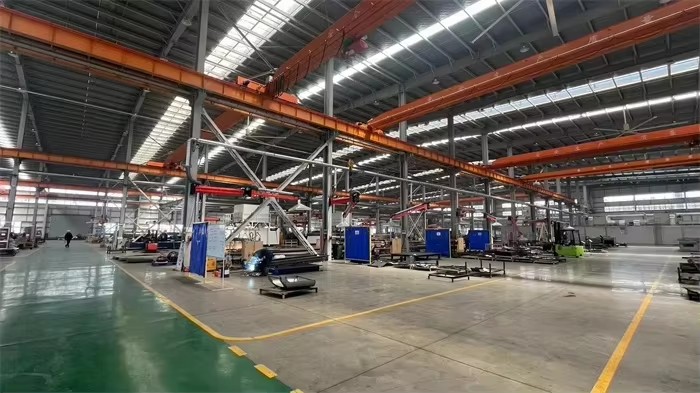
Anhui Nexrik Intelligent Technology Co., Ltd. is a high-tech manufacturer focused on intelligent warehousing equipment, including AGV forklifts, automated stackers, AS/RS stacker cranes, four-way shuttles and turnkey warehouse automation. The company operates from Hefei, Anhui, a recognised forklift and logistics-equipment manufacturing hub, and supports buyers across Southeast Asia, South America, Eastern Europe, South Asia and North America.
- 1,152+ employees and a 66,650 m² manufacturing footprint support repeatable production and project delivery.
- SGS onsite verified premises and legal status, with CE marking under 2006/42/EC for the AGV range.
- ISO 9001 and ISO 45001 management systems, plus 7 awarded patents and a registered trademark.
- MOQ 1 set, OEM/ODM, buyer-label production and customisation for load, lift height, forks and cold-storage variants.
- One-stop project logic: AGVs, stacker cranes, shuttles and RGVs engineered as one WMS-ready system rather than disconnected machines.


Questions Edmonton Buyers Ask Before Buying a Stacker AGV
These are practical procurement questions commonly raised by warehouse operators, integrators and facility teams in Edmonton and Northern Alberta.
Can a stacker AGV operate in Edmonton cold-dock or refrigerated conditions?
What is the minimum order quantity and can we start with one unit?
How are stacker AGVs shipped to Edmonton and which trade terms are supported?
Can the AGV connect to our existing WMS or ERP?
Do you provide installation and service support in Edmonton?
Which model is best for a very narrow aisle in Edmonton?
How should safety and compliance be reviewed for Canada?
What information do you need to prepare an Edmonton-specific quote?
Request a Stacker AGV Layout Review for Your Edmonton Facility
Share your rack drawing, pallet specification and throughput target. We will help shortlist the right stacker, reach, VNA or counterbalanced AGV and define a pilot scope that can be measured before scaling.
Factory-direct engineering · MOQ 1 set · CE documentation · OEM/ODM · Edmonton project support