Eight pallet stacker AGV configurations for Pattaya and Chonburi warehouses
Pattaya is a consumption, tourism, retail and logistics market rather than a traditional forklift manufacturing cluster. Buyers therefore tend to source through export-capable manufacturers in China and regional integrators, then localise the solution for Chonburi’s humidity, Thai power supply, mixed pedestrian traffic and import paperwork. The eight models below are a practical shortlist for pallet stacker AGV manufacturers serving the Pattaya market: each uses a CE-platform safety approach, modular charger and battery configuration, and a route to OEM/ODM customisation. The final model should be validated against pallet dimensions, aisle width, floor transitions, throughput per shift and charger location.
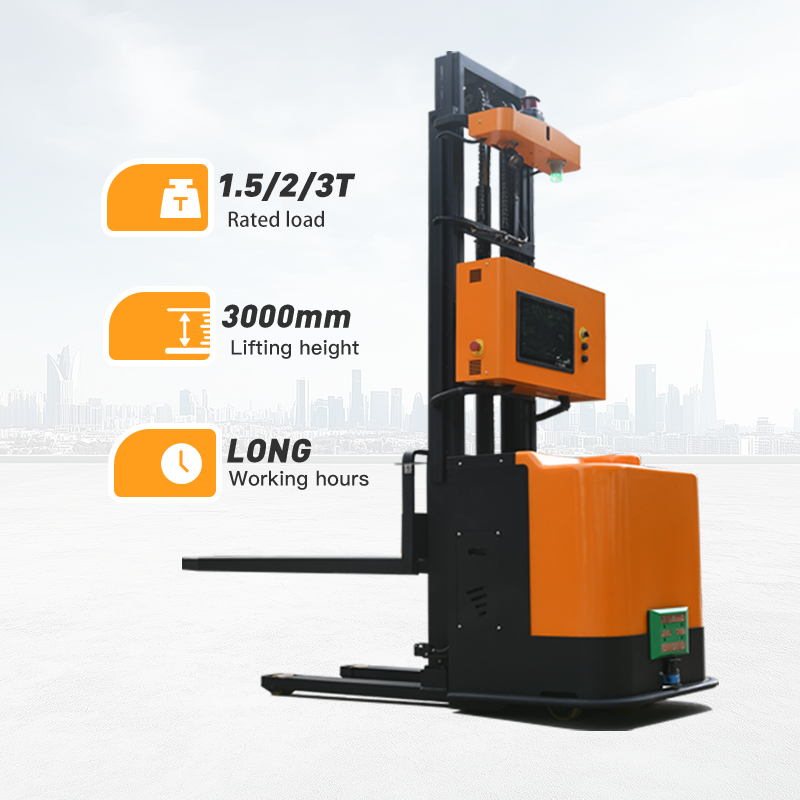
3T 3000mm Pallet Stacker Automated Guided Vehicle Forklift Truck for Intelligent Warehouse Automation
Recommended for heavy beverage, building-material and production-line pallet flows where loads approach 3,000 kg.
- 3,000 kg
- 3,000 mm lift
- Warehouse automation
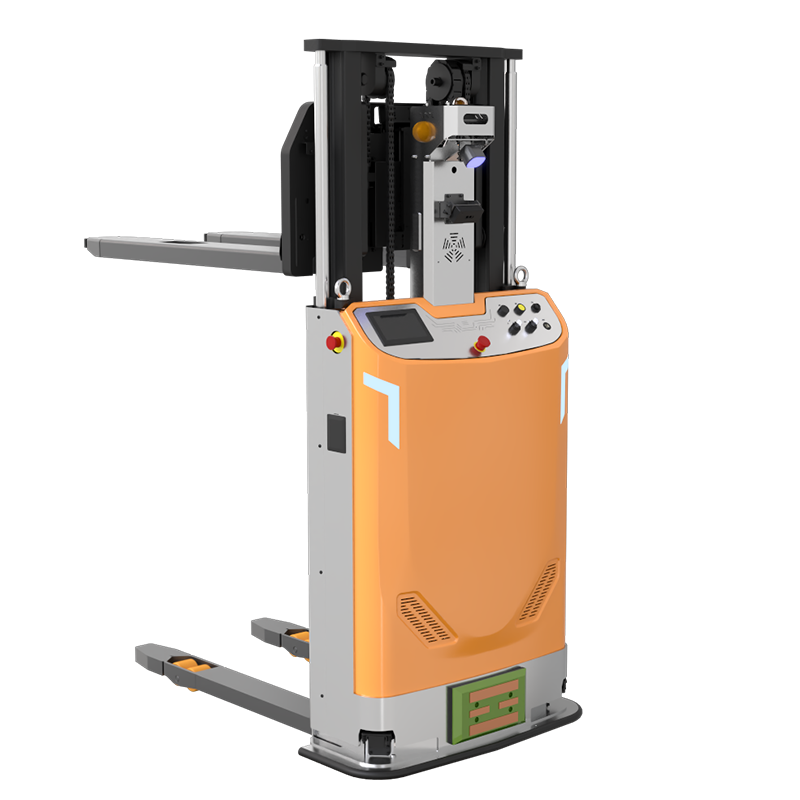
2T 1.6 M Slim Narrow-Body Stacker AGV Body for High-Density Storage High Lift Pallet Stacking AGV Maximize Warehouse Space
A strong fit for Pattaya-area retailers and 3PLs where land cost is high and every metre of aisle must earn revenue.
- 2,000 kg
- 1,600 mm lift
- Narrow body
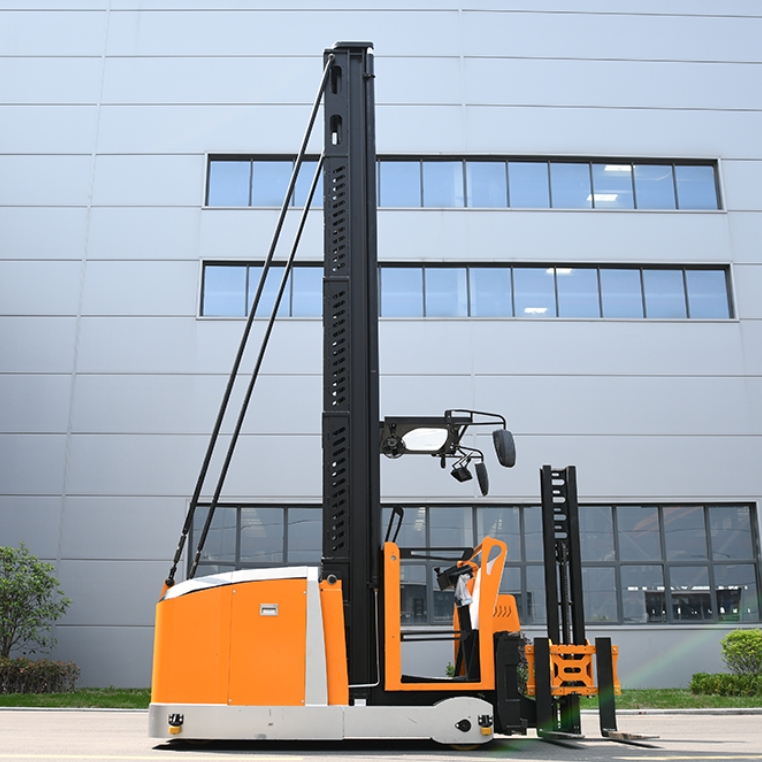
New 1.5T Manual Electric 3-Way Pallet Stacker Forklift 3 Way Manup Vna Forklift with 1600kg Loading Capacity AC Motor Powered
Recommended for narrow-aisle racking and high-density storage where fork rotation reduces the need to turn the truck.
- 1.5T class
- Three-way fork
- AC motor
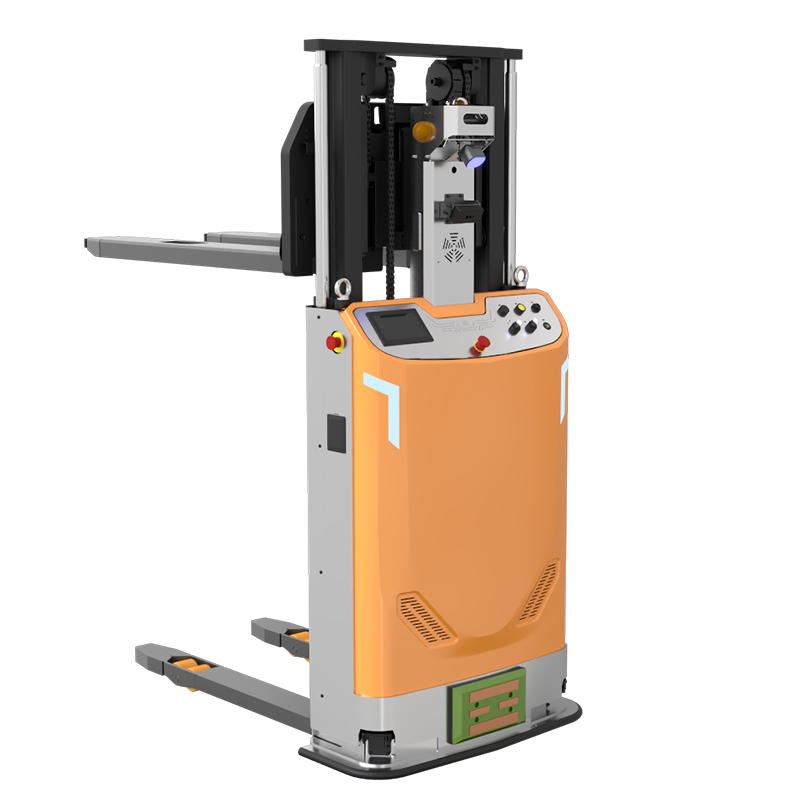
Automatic Stacker AGV Body Slim Narrow-Body 3M 2T High-Density Storage Pallet Stacking 3D SLAM Navigation WIFI/5G Maximize
Suited to existing buildings where installing reflectors or floor tape would disrupt operations; natural-feature mapping supports faster retrofits.
- 2,000 kg
- 3,000 mm lift
- Wi-Fi / 5G
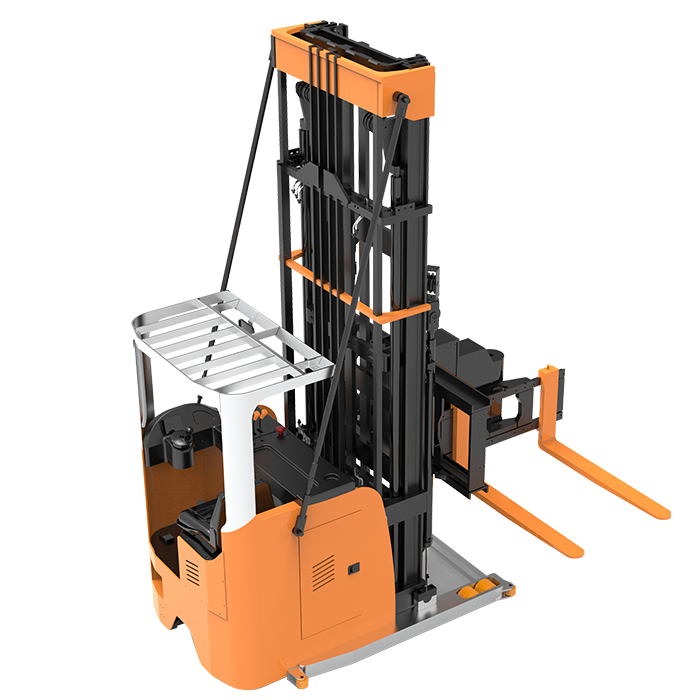
Narrow Aisle 3 Way 1600kg 1.6 Tons1.5 Tons 3 Tons Certified Electric Forklift Forklift Three Stage Mast
A useful benchmark for Chonburi warehouses that need high-bay selectivity but are not yet ready for a full AS/RS project.
- 1.6T class
- Three-stage mast
- Narrow aisle
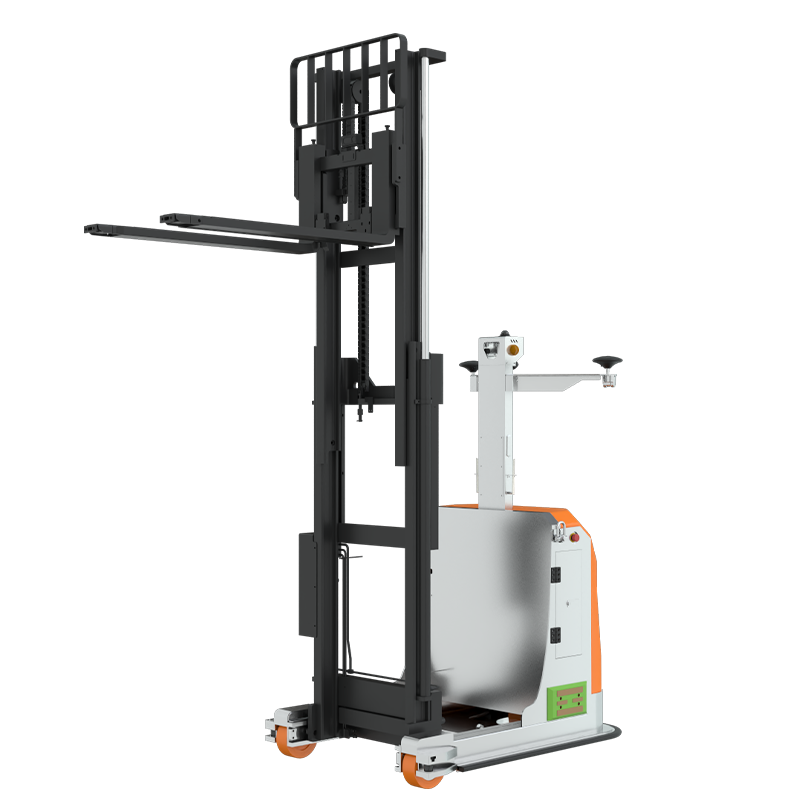
Reach Truck AGV Narrow Body 1.5T 3M Compact Design Fork Forward Function 3D SLAM Navigation 10mm Positioning Accuracy for
Recommended for selective racking in Pattaya retail DCs where aisle space is tighter than a counterbalanced truck can justify.
- 1,500 kg
- 3,000 mm lift
- 10 mm positioning
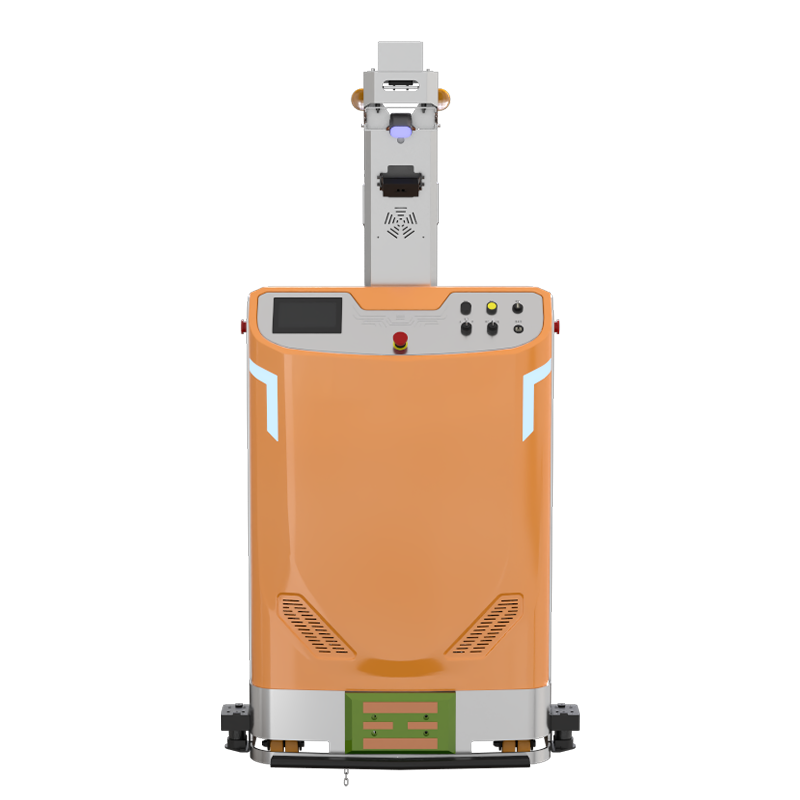
Material Handling AGV Body 2T with Narrow Body Compact Chassis for Efficient Production Line &Workshop Transport in Tight Space
A strong candidate for EEC factories and workshop logistics where standard forklift aisles are constrained by machinery or staging.
- 2,000 kg
- Compact chassis
- Line-side transport
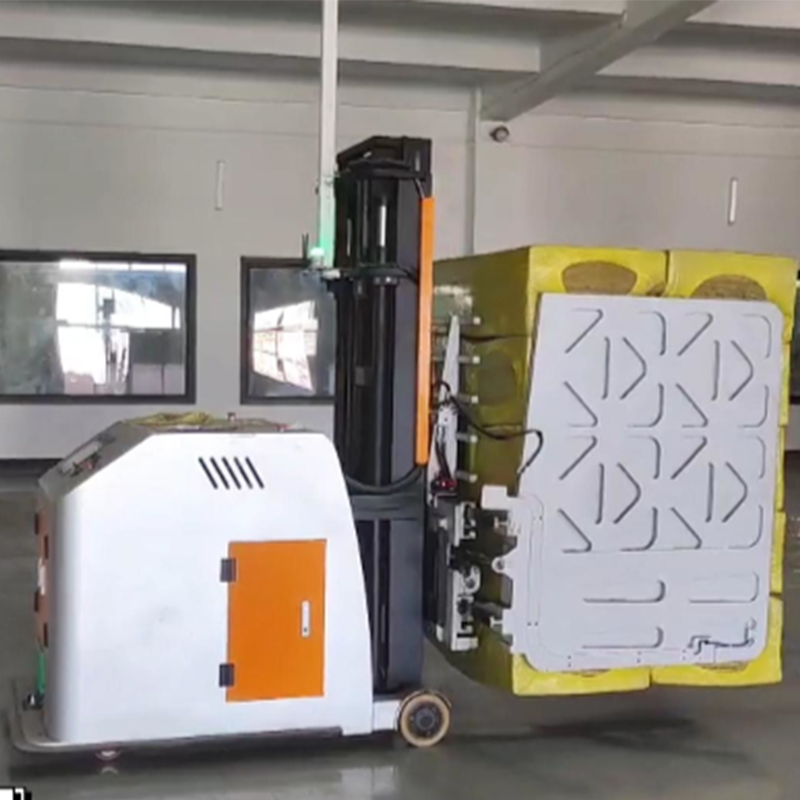
EFORK Automated Guided Vehicle AGV Forklift 3T 3000MM Counterbalanced 3D SLAM Construction Factory Logistics Pallet Truck
Best for closed-bottom pallets, cages, trailer docks and mixed logistics yards where front outriggers would obstruct handling.
- 3,000 kg
- 3,000 mm lift
- 3D SLAM
Pattaya-specific operating scenarios that shape the specification
The right AGV in Pattaya is not simply the lowest-price model in a catalogue. It is the model that survives high-season peaks, coastal humidity, mixed pedestrian traffic, cold-room transitions and Thai import requirements without creating a new bottleneck at the charger, lift or dock.
Hotel, restaurant and beachfront F&B supply
Pattaya’s tourism calendar creates sharp demand peaks for beverages, dry goods, frozen food and linen. Back-of-house corridors are often tight, floors change level at cold rooms, and deliveries arrive at night. A 2T slim stacker or reach truck AGV with 3D SLAM can move palletised stock from receiving to dry store and cold room with fewer aisle modifications. The engineering question is not only payload; it is cold-room transition, condensation management, charger location and pedestrian segregation.
Retail DCs serving Jomtien, Pattaya and Sattahip
Retail and e-commerce fulfilment in Chonburi is moving toward mixed pallets, shorter order cycles and overnight replenishment. Land and rent costs push operators toward higher racking and denser storage, which makes the 2T 1.6m slim narrow-body stacker, 3-way VNA platform or reach truck AGV attractive. Buyers should model pick faces, replenishment frequency and trailer arrival windows before choosing fleet size; a small fleet with fast charging can outperform a larger fleet that queues at the dock.
EEC manufacturing in Chonburi and Rayong
Automotive, electronics, plastics and food-processing plants in the Eastern Economic Corridor operate 24/7 and expect line-side material delivery to be repeatable. Counterbalanced AGV forklifts handle closed-bottom pallets and cages without front outriggers, while compact 2T bodies fit constrained workshop aisles. A 3T 3000mm counterbalanced AGV with 3D SLAM is often the most practical bridge between warehouse and production because it can approach trailers, floor-level staging and racks with one platform.
Laem Chabang port and 3PL cross-docking
3PL operators around Laem Chabang and the Bangkok–Pattaya corridor handle container unloading, pallet exchange and trailer loading under tight dock schedules. Counterbalanced AGVs are generally better suited to trailer interfaces and closed pallets, while stacker AGVs support staging and rack replenishment. The site survey must examine dock levellers, floor slopes, outdoor-to-indoor transitions, rain exposure and safety scanners. For coastal sites, specify corrosion protection and a realistic cleaning regime rather than assuming a standard warehouse package is sufficient.
Local development trends driving pallet stacker AGV demand
The Pattaya market is influenced less by a single local policy than by the combined effect of EEC industrial investment, tourism-driven consumption, cold-chain growth and the practical difficulty of staffing repetitive pallet moves.
EEC investment and industrial spillover
The Eastern Economic Corridor has accelerated logistics and manufacturing activity across Chonburi, Rayong and Chachoengsao. Pattaya sits within the wider labour and logistics catchment, so local warehouses increasingly serve factories, ports and tourism simultaneously. That mixed demand rewards AGV platforms that can be redeployed between racking, staging and line-side delivery rather than single-purpose machines.
Automation incentives and documentation
Thailand’s manufacturing upgrade agenda and BOI-related investment discussions have made buyers more careful about supplier documentation. Even when an incentive is not claimed, CE marking, ISO 9001, ISO 45001 and SGS onsite verification simplify internal procurement, customs review and insurance approval. Buyers should always confirm incentive eligibility with a Thai advisor; the manufacturer’s role is to provide traceable technical and commercial documents.
High-density storage and cold chain
Coastal land values and food-service demand encourage denser racking, smaller aisles and more cold or chilled storage. This is where narrow-body stacker AGVs, VNA three-way platforms and AS/RS stacker cranes become relevant. The equipment decision should follow the rack design, not the reverse: aisle width, beam height, pallet overhang, sprinkler clearance and floor tolerance all influence whether a 3D SLAM stacker or a rail-guided crane is the better investment.
Labour, safety and energy priorities
Repetitive forklift work competes with tourism and service-sector employment, and shift flexibility can be difficult during peak periods. At the same time, safety managers want fewer blind-corner interactions between people and trucks. 3D SLAM AGVs with safety scanners, speed zoning and traffic management are therefore evaluated as much for risk reduction as for headcount. Battery chemistry, opportunity charging and charger placement should be modelled early because energy strategy can change the available operating window.
Which pallet stacker AGV fits which Pattaya application?
Use this engineering reference to shortlist equipment before requesting a layout proposal. The fit is indicative; final specifications are confirmed against your pallet drawings, rack layout, floor survey and throughput target.
| Equipment platform | Typical load / lift | Navigation or guidance | Best-fit Pattaya use | What to validate |
|---|---|---|---|---|
| Pallet Stacker AGV | 1.5 – 2 T / 1.6 – 3 m | 3D SLAM or laser | Retail backrooms, F&B distribution, line-side delivery, low racking | Floor transitions, charger space, cold-room condensation, pallet quality |
| Reach Truck AGV | 1.5 – 2 T / 3 m | 3D SLAM | Selective racking where aisle space is tighter than a counterbalanced truck allows | Rack interface, aisle width, fork clearance, pedestrian routes |
| Counterbalanced AGV | 1.5 – 3 T / 3 m | 3D SLAM | Closed-bottom pallets, cages, trailer docks, production lines and mixed yards | Dock slope, outdoor-to-indoor transition, aisle width, load centre |
| VNA 3-Way AGV | 1.6 T / 7 – 11 m | 3D SLAM | Very narrow aisle and high-bay pallet storage for dense Chonburi warehouses | Rack tolerance, floor flatness, mast clearance, sprinkler and egress rules |
| Narrow Aisle 3-Way Forklift | 1.6 – 3 T class | Manual / electric platform reference | High-bay selectivity before committing to full automation | Operator licence, safety envelope, future AGV conversion path |
| 3D SLAM Narrow-Body Stacker | 2 T / 3 m | 3D SLAM, Wi-Fi / 5G | Existing buildings where reflectors or floor tape would disrupt operations | Lighting, glass walls, moving people, Wi-Fi coverage and sensor cleaning |
| 3T 3000mm Heavy Pallet AGV | 3 T / 3 m | 3D SLAM platform | Beverage, building materials, heavy production replenishment | Floor load rating, stopping distance, rack capacity and charger power |
Technical note: payload, lift height and navigation options vary by final configuration. For high-bay, cold-store and mixed-fleet projects, request a layout study rather than selecting a model from payload alone.
Why Pattaya buyers shortlist Anhui Nexrik as an AGV manufacturing partner
For the Pattaya market, a qualified pallet stacker AGV manufacturer is more than a catalogue. It must combine factory engineering, export documentation, customisation and a realistic commissioning plan for a site thousands of kilometres away.
Factory-direct engineering, export-ready documentation
Anhui Nexrik Intelligent Technology Co., Ltd. is a high-tech manufacturer specialising in the R&D, production and integration of intelligent warehousing equipment: AGV forklifts, AS/RS stacker cranes, four-way shuttles, RGVs and supporting automation. The company operates from Huagang Industrial Park, Feixi County, Hefei, a recognised forklift and intelligent logistics manufacturing base in Anhui, China.
For Pattaya and Chonburi buyers, the relevant advantage is not a claimed local factory. It is the ability to obtain factory-level engineering, SGS onsite verification, CE documentation and OEM/ODM customisation from one source. That matters when a Thai importer, insurer or end customer asks who built the machine, how it was tested and which management system controlled the production process.
Nexrik serves buyers across Southeast Asia, South America, Eastern Europe, South Asia and North America. The company reports 1,152 staff, 66,650 m² of factory floorspace, US$100M+ annual revenue, 7 awarded patents and 1 registered trademark. Its trade terms include FOB, CFR, CIF, EXW, FAS, CIP and DDP; payment methods include L/C, D/P, D/A, MoneyGram, credit card and Western Union in USD, EUR or CNY. MOQ is 1 set, which allows a Pattaya buyer to pilot one route before scaling a fleet.
- SGS onsite-verified manufacturer
- CE marking under 2006/42/EC
- ISO 9001 and ISO 45001 systems
- OEM, ODM and buyer-label production
- 7 awarded patents and 1 trademark
- One-stop AGV, AS/RS and shuttle scope



Total staff verified by onsite inspection
Factory floorspace across production bases
Awarded patents plus 1 registered trademark
Set, enabling a single-route pilot before scaling
Integrated production
Chassis, mast and control integration are handled with material and finished-product inspection before shipment, rather than assembled from unrelated third-party kits.
Navigation flexibility
Laser navigation supports fixed, repetitive routes; 3D SLAM uses natural building features to reduce reflector and floor-tape work in existing Pattaya warehouses.
Turnkey scope
AGV forklifts, stacker cranes, four-way shuttles and RGVs can be engineered as one WMS-ready system, reducing the integration risk of stitching together multiple suppliers.
Export confidence
CE, ISO 9001, ISO 45001, SGS verification, flexible Incoterms and multiple payment currencies support Thai import and tender processes.
A de-risked engineering workflow from drawing to go-live
Automation projects fail when equipment is chosen before the site is understood. A disciplined workflow keeps the Pattaya buyer in control of cost, schedule and operational disruption.
Site data and pallet audit
Collect rack drawings, pallet dimensions, load photos, floor flatness, expansion joints, dock slopes, power supply, Wi-Fi coverage, fire egress and shift patterns. For coastal Chonburi sites, record humidity, salt-air exposure and wash-down routines.
Simulation and model selection
Size the fleet against peak throughput, not average demand. Compare stacker, reach, counterbalanced and VNA platforms, then model charger placement, traffic zones, pedestrian crossings and trailer windows before committing to a layout.
Factory build and FAT
Configure load capacity, lift height, fork dimensions, battery strategy and safety scanners. Factory acceptance testing should cover key functions, documentation and a clear packing and export plan before shipment to Thailand.
Commissioning and lifecycle
Map the site, test WMS/WCS interfaces, validate safety zones and train operators and maintenance staff. After go-live, remote diagnostics, spare-parts planning and fleet-expansion reviews protect the investment.
3D SLAM or laser navigation for a Pattaya warehouse?
Both technologies can work in Thailand. The correct choice depends on how stable the route is, how much building modification is acceptable and how often the operating environment changes.
3D SLAM navigation
3D SLAM localises the vehicle by matching natural features of the building, such as walls, columns and rack structures. It is attractive for existing Pattaya buildings because it typically reduces the need for reflectors or floor tape and shortens site preparation.
- Good fit for retrofits, changing layouts and mixed traffic zones
- Requires a professional site survey for glass, lighting and sensor cleaning
- Works best when Wi-Fi/5G coverage and fleet-management rules are planned together
Laser navigation
Laser navigation uses reflectors or fixed references to deliver highly repeatable positioning on defined routes. It remains a strong option for fixed-aisle, high-throughput warehouses where route stability is high and infrastructure installation can be scheduled without disrupting operations.
- Strong for repetitive pallet flows and fixed transfer lanes
- Requires reflector planning and an installation window
- Well suited to high-bay and tightly controlled aisle geometry
An eight-point procurement checklist for Pattaya buyers
Before requesting a quotation, gather the following data. Complete inputs shorten the engineering cycle and reduce the risk of a vehicle arriving with the wrong fork, charger or safety envelope.
- Pallet quality: record length, width, height, load centre, overhang, damaged boards and whether the pallet is open or closed bottom.
- Floor and route: check flatness, expansion joints, slopes, drain covers, lift thresholds, door closers and outdoor-to-indoor transitions.
- Aisle geometry: measure clear aisle width at the tightest point, rack beam height, sprinkler clearance, column protection and pedestrian crossings.
- Throughput: provide moves per hour at peak, hours per shift and seasonal variation rather than average annual figures.
- Power strategy: confirm charger location, available voltage and frequency, charging windows, battery swap preference and ventilation.
- Safety and fire: review egress routes, fire shutters, detection systems, speed zones and the policy for mixed forklift and pedestrian traffic.
- Digital integration: document WMS, ERP, WCS and access-control interfaces, plus Wi-Fi/5G coverage and cyber-security requirements.
- Local support: agree spare-parts list, training plan, remote diagnostic process, escalation contacts and a realistic response-time expectation.
Procurement FAQ from Pattaya-market buyers
These are the questions that most often appear when a Thai buyer, 3PL or factory compares pallet stacker AGV manufacturers for the Pattaya and Chonburi region.
1. What is the minimum order quantity and can we run a pilot?
The MOQ for Nexrik AGV forklifts, stacker cranes and shuttle systems is 1 set. A single-vehicle pilot is a practical way to validate routes, cycle time, charging behaviour and operator acceptance before expanding to a full fleet. For Pattaya buyers, the pilot should include a peak-season simulation rather than only a quiet-week test.
2. Which navigation is better for an existing Pattaya warehouse?
3D SLAM is often preferred where reflectors or floor tape would disrupt operations or where the layout may evolve. Laser navigation remains strong for fixed, repetitive routes and tightly controlled aisles. The correct answer depends on building geometry, lighting, Wi-Fi coverage, rack stability and the acceptable installation window.
3. How do you address humidity, salt air and heat in Chonburi?
Specify the equipment for coastal operating conditions during engineering: component protection, corrosion treatment, ventilation, battery thermal management and a realistic cleaning schedule. AGVs should not be treated as general-purpose outdoor machines. Indoor-to-dock transitions, condensation at cold rooms and rain exposure at loading bays should be reviewed explicitly.
4. Does the AGV work with Thailand’s power supply and charger strategy?
Chargers and battery configurations are selected for the site’s actual voltage, frequency, charging window and ventilation. Thai industrial sites commonly require a local electrical review before installation. Confirm the charger location, available capacity and whether opportunity charging or battery exchange better matches your shift pattern.
5. What certifications and trade terms support import to Thailand?
Nexrik holds CE marking under 2006/42/EC, ISO 9001 and ISO 45001, and has been verified onsite by SGS. Accepted trade terms include FOB, CFR, CIF, EXW, FAS, CIP and DDP. Payment methods include L/C, D/P, D/A, MoneyGram, credit card and Western Union in USD, EUR or CNY. Final customs treatment should be confirmed with your Thai freight forwarder.
6. Can the AGV integrate with our WMS, AS/RS or existing forklifts?
AS/RS and four-way shuttle systems are designed WMS-ready, and AGV fleet management can be coordinated with existing warehouse processes. Interface requirements should be defined during solution design and tested during commissioning. A mixed fleet is possible, but traffic rules, charging zones and pedestrian safety must be engineered rather than added later.
Request a Pattaya-specific pallet stacker AGV layout study
Send your pallet dimensions, rack drawing, aisle widths, throughput target and site photos. Our engineers will help shortlist the right stacker, reach truck, VNA or counterbalanced AGV platform and define the charger, safety and WMS integration requirements before quotation.
Contact Us