OEM/ODM High Density Storage AGV Factory & Supplier Serving Querétaro
Engineering-led AGV forklifts, narrow-aisle stackers, VNA trucks, AS/RS and shuttle-ready equipment for automotive, aerospace, appliance, food, e-commerce and 3PL warehouses in Querétaro and the wider Bajío manufacturing corridor.
Eight Configurable Platforms for High-Density Storage
These models cover the practical equipment range for Querétaro projects: slim stackers for existing racking, reach trucks for selective pallet storage, counterbalanced AGVs for docks and production lines, and VNA truck AGVs for high-bay dense storage. Each original model URL is preserved below; for a custom fork, load, lift height, battery, cold-store variant or buyer-label build, use the Contact Us button to begin an OEM/ODM technical review.
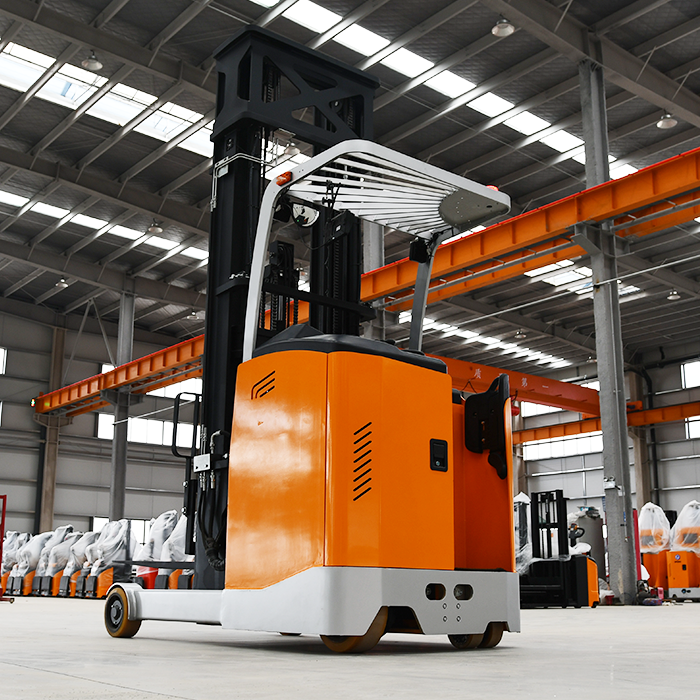
China Wholesale 2000kg Industrial Forklift Pallet Truck
A rugged pallet truck for dock staging, exception handling and maintenance zones. The galvanized finish is relevant for humid, wash-down or outdoor-adjacent areas where AGV fleets need reliable manual backup equipment.
- 2,000 kg load
- Galvanized
- Dock / staging
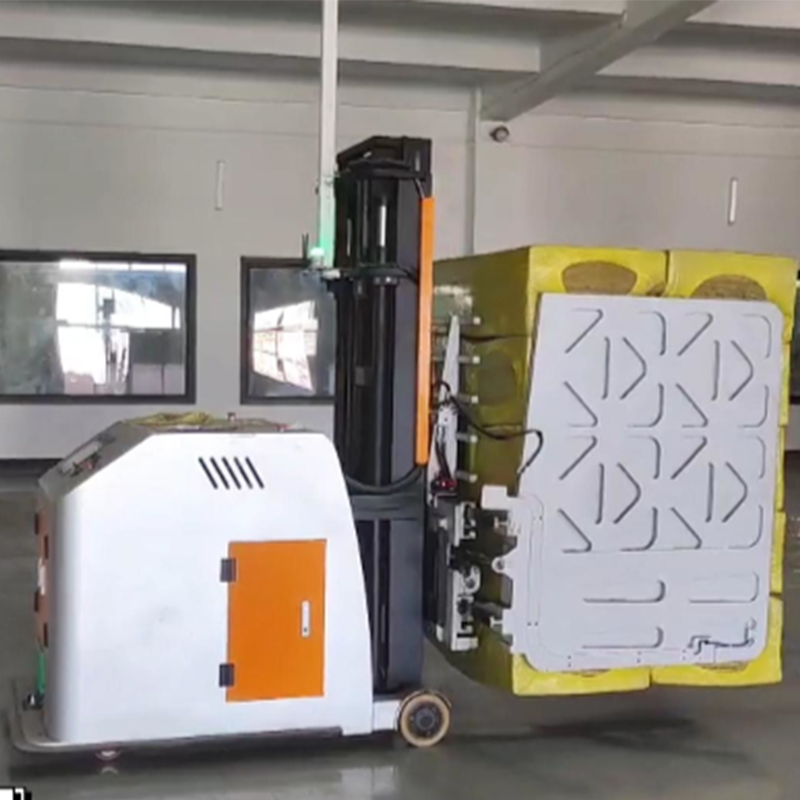
EFORK 3T 3000MM Counterbalanced 3D SLAM AGV Forklift
A 3T counterbalanced AGV for production logistics, trailer loading and closed-bottom pallets. With no front outriggers, it fits mixed routes where cages, stillages and standard pallets share the same traffic lane.
- 3,000 kg
- 3,000 mm lift
- 3D SLAM
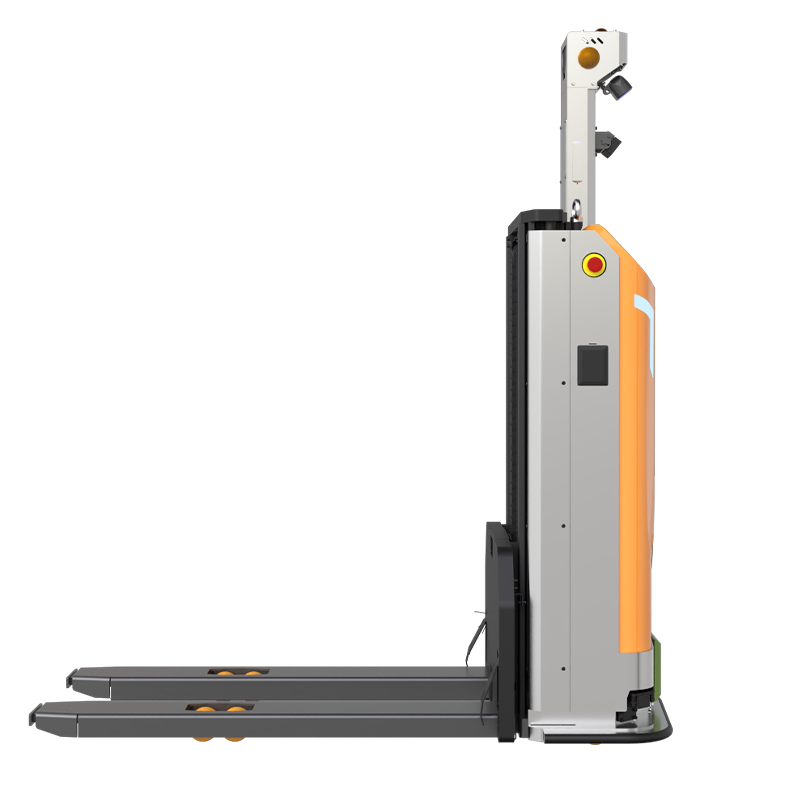
2T 3M Slim Narrow-Body Stacker AGV
A high-density storage workhorse for existing narrow aisles and selective racking. The slim body supports pallet stacking, line-side replenishment and end-of-line transfer without forcing a full building redesign.
- 2,000 kg
- 3 m lift
- Narrow body
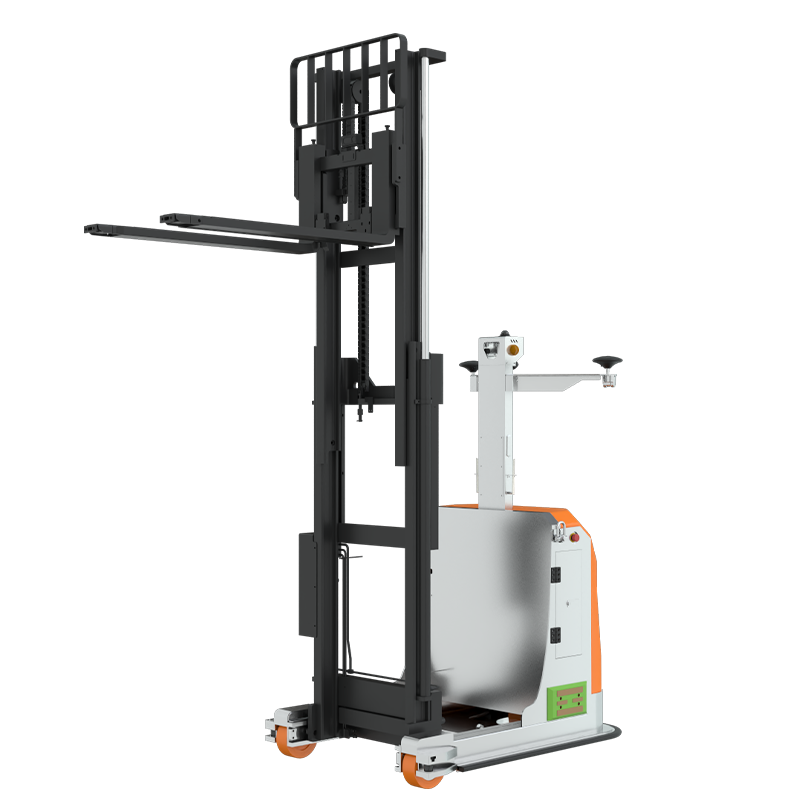
Reach Truck AGV Narrow Body 1.5T 3M
Compact reach truck AGV with fork-forward function and 3D SLAM navigation for tight selective racking. The 10 mm positioning target is useful where pallet openings are unforgiving and rack tolerances require precise approach.
- 1,500 kg
- 3 m lift
- 10 mm positioning
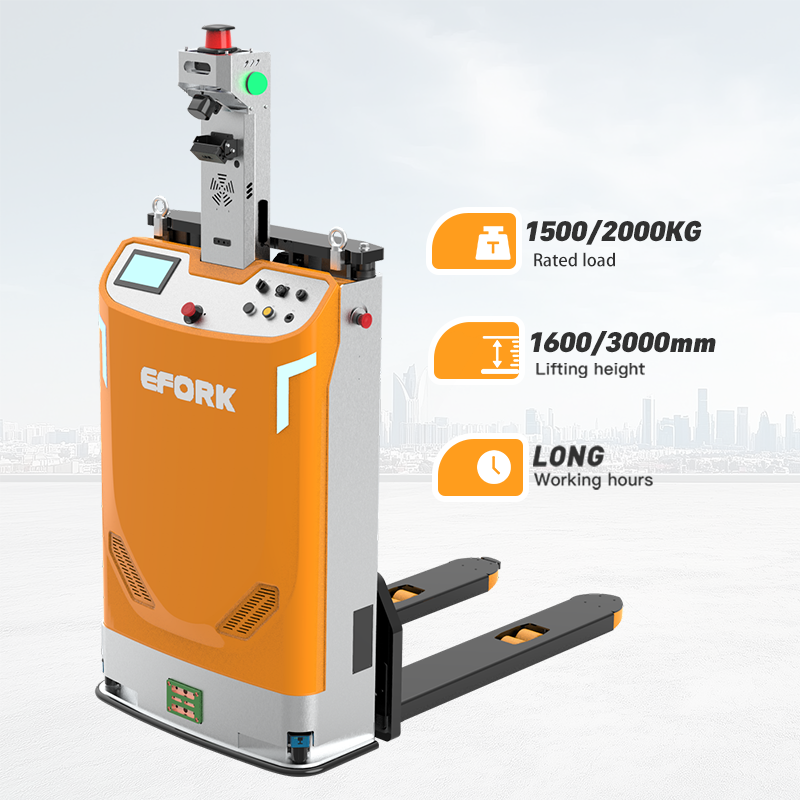
New Heli Yufeng EDA20-30 Slim Stacking AGV Forklift
A CE-certified 2T slim stacking AGV with 3D SLAM and WIFI/5G connectivity. It suits Querétaro appliance, automotive-component and packaging plants that need repeatable pallet stacking with traceable fleet data.
- 2,000 kg
- 3 m lift
- WIFI / 5G
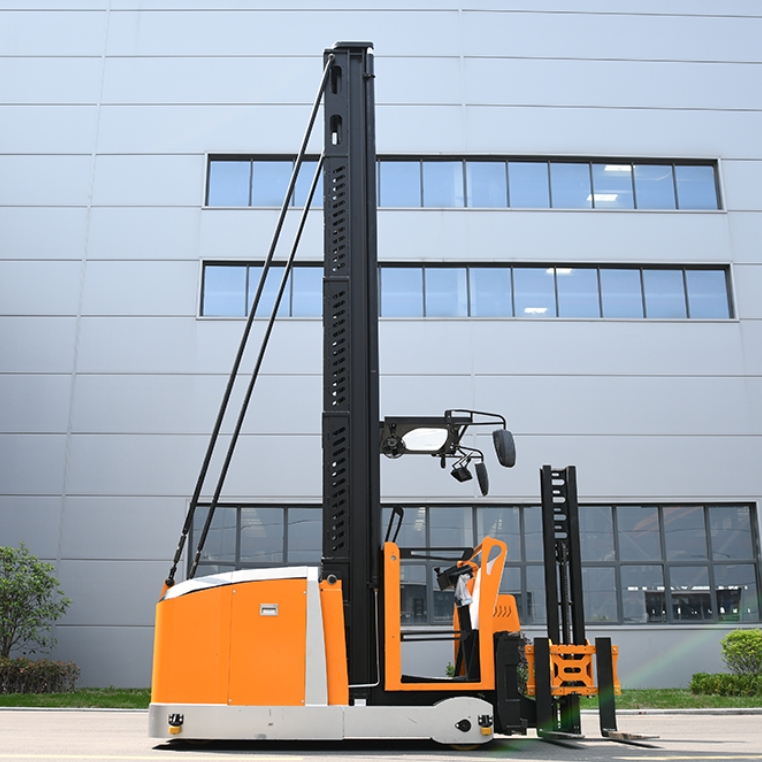
New 1.5T Electric 3-Way VNA Pallet Stacker
A cost-controlled 3-way VNA stacker for warehouses that need dense racking before committing to a fully automated fleet. With 1,600 kg loading capacity and AC motor power, it is a practical brownfield upgrade path.
- 1,600 kg
- 3-way fork
- VNA aisle
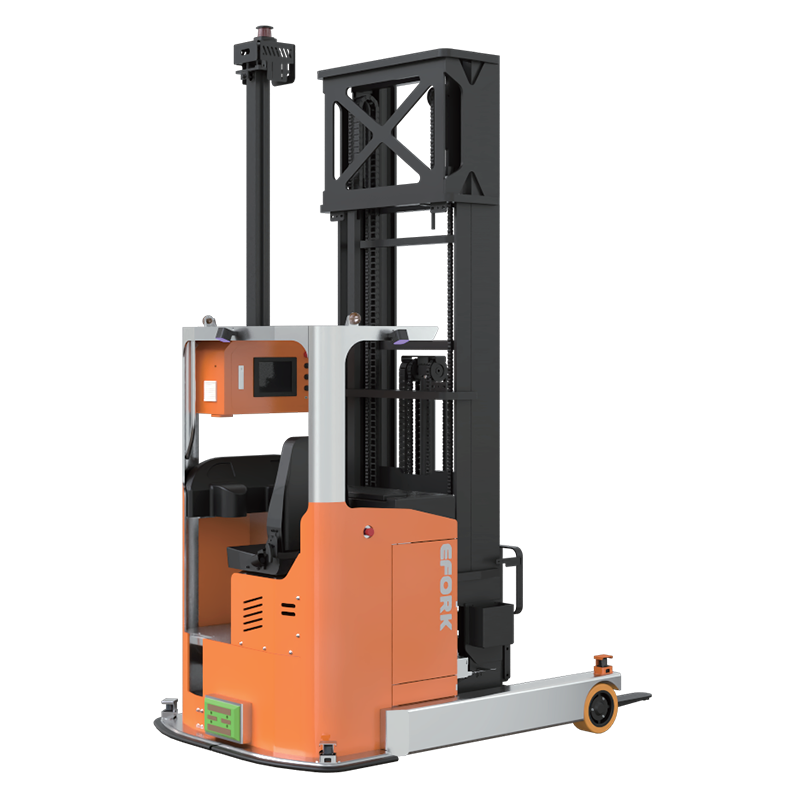
4.5M Reach Truck AGV Body 2T
A higher-lift reach AGV for pallet handling in smart logistics and medium-bay racking. Laser SLAM navigation supports stable fixed-route performance in warehouses with repetitive put-away and replenishment cycles.
- 2,000 kg
- 4.5 m lift
- Laser SLAM
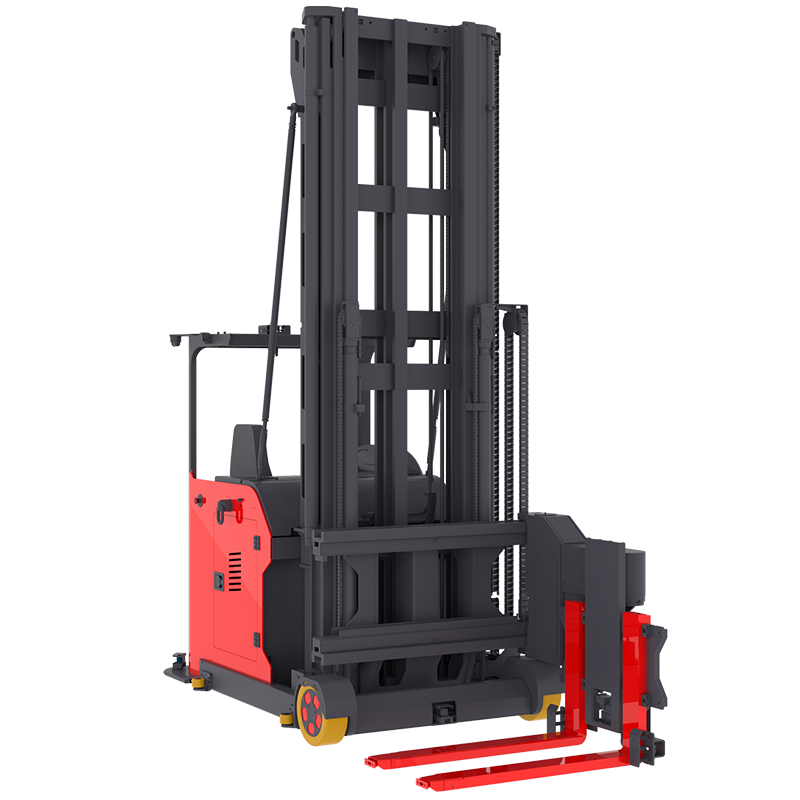
EFORK CDME16J-80S 1.6T 8M VNA Truck AGV
A 1.6T, 8 m three-way VNA AGV for very narrow aisles and high-bay pallet storage. Laser SLAM, 1200 mm fork length and 125 mm fork width make it a strong candidate for high-density storage where every square metre of Querétaro industrial real estate is expensive.
- 1,600 kg
- 8 m lift
- 3-way VNA
Specifications shown reflect standard configurations. Final load, lift height, fork dimensions, battery, navigation and safety configuration must be confirmed by a site survey and risk assessment.
Why Querétaro Is Becoming a High-Density Storage AGV Market
Querétaro has become one of Mexico’s most watched industrial locations because nearshoring, USMCA supply-chain restructuring and continuous investment in automotive, aerospace, appliance and logistics operations are placing new pressure on warehouse productivity. The common constraint is not simply labour availability. It is the combination of land cost, rack height, safety exposure, traceability expectations and the need to move more pallets per shift without adding proportional forklift traffic.
That is exactly where a high-density storage AGV strategy becomes relevant. In Querétaro’s industrial corridor — including El Marqués, San Juan del Río and the wider Bajío logistics axis — brownfield warehouses often need a slim stacker AGV or reach truck AGV that can work inside existing racking. Greenfield projects have more freedom to design VNA, AS/RS or four-way shuttle infrastructure from the start, but they still need a realistic throughput model before selecting equipment.
The purchasing intent in this market is usually practical: “Can the system handle our pallet quality, rack tolerances, Wi-Fi coverage and shift pattern without creating a new bottleneck?” A factory that only quotes a truck specification without reviewing the rack drawing, floor survey, safety zones and WMS interface is not solving the real problem. Our approach is to treat the AGV as part of an intralogistics system, not as a stand-alone machine.
For local buyers, the strongest procurement case combines OEM/ODM flexibility, verified manufacturing capacity, CE/ISO documentation, remote engineering support and a realistic commissioning plan. Querétaro teams often compare Mexican distributors, U.S. integrators and Asian factories at the same time. The winning supplier must be able to explain exactly how the machine will be integrated, inspected, shipped, commissioned and supported after go-live.
Local decision drivers
- Higher land and construction cost push projects toward narrower aisles and taller racking.
- Automotive and aerospace customers expect traceability, repeatability and controlled traffic.
- Existing buildings often have rack tolerances and floor joints that require a site-specific survey.
- Spanish-language operator training, spare-parts planning and remote diagnostics reduce downtime risk.
- DDP, CIF and FOB comparisons must include port, customs, inland freight and commissioning scope.
Which High-Density Storage AGV Fits the Application?
High density is not one equipment category. It is a trade-off between aisle width, lift height, load unit, throughput, safety and capital cost. Use this matrix as a first-pass shortlist for Querétaro projects, then confirm with a rack and floor survey.
| Equipment platform | Typical best fit | Load / lift reference | Local engineering notes |
|---|---|---|---|
| Slim stacker AGV | Brownfield narrow aisles, line-side replenishment, pallet stacking, end-of-line transfer | 1.5–2 T; 1.6–3 m | Usually the fastest entry into automation; verify rack beam clearances, pallet overhang and floor joints before quoting aisle width. |
| Reach truck AGV | Selective racking where a counterbalanced truck needs too much aisle space | 1.5–2 T; 3–4.5 m | 3D SLAM reduces reflector dependence, but natural-feature availability and lighting must be validated during mapping. |
| Counterbalanced AGV | Docks, trailer loading, closed-bottom pallets, cages and production-line interfaces | 1.5–3 T; approx. 3 m | No front outriggers means more flexible load handling, but aisle width and turning radius are usually larger than a reach truck. |
| VNA 3-way AGV | Very narrow aisle and high-bay pallet storage in land-constrained facilities | 1.6 T; 7–11 m | Excellent density, but rack and floor tolerances matter more. Safety scanner fields, wire guidance choices and operator access need early design. |
| AS/RS stacker crane + four-way shuttle | Greenfield high-bay warehouses, cold storage, dense pallet or bin storage | 1–5 T; up to 40 m; bins from 50–100 kg | Best evaluated as a building-level project with WMS/WCS integration, fire strategy, maintenance access and spare-parts planning. |
| Electric 3-way VNA stacker | Manual or semi-automated VNA upgrade before full AGV deployment | 1.6 T; VNA racking | A pragmatic bridge for buyers proving throughput and rack layout before committing to a fleet. |
Aisle width is a calculation, not a catalogue number
Useful aisle width depends on truck type, fork length, load overhang, rack upright projection, safety-scanner fields, floor flatness and required pedestrian access. Allocate time for a measured survey before freezing the rack layout.
Safety and compliance must be designed together
Driverless truck safety should be developed through a site-specific risk assessment with reference to standards such as EN ISO 3691-4 where applicable. CE documentation supports the machinery package, but final site compliance also depends on installation, traffic rules and local authority requirements.
Localized Use Cases in Querétaro and El Bajío
The same AGV platform can behave very differently in an automotive sequencing centre, an aerospace kitting area, a food plant and a 3PL cross-dock. The application defines the fork, safety field, navigation map and WMS logic.
Automotive & Tier 1
Line-side replenishment, empty-container recovery, sequencing buffers and trailer loading. Counterbalanced AGVs and reach truck AGVs reduce pedestrian-forklift conflicts while keeping material flow visible to production.
Aerospace & Precision
Kitting, tooling movement, small-part replenishment and traceable pallet transfers. Slim stackers and WMS-ready automation help protect controlled routes and reduce damage risk in high-value material areas.
Food, Retail & Cold Chain
Pallet put-away, order staging and cold-store transfer. For chilled or frozen environments, battery performance, condensation, wash-down practice and maintenance access must be reviewed together.
3PL & E-commerce
High-density pallet storage, cross-docking, inbound container handling and scalable fleet growth. Modular AGV deployment allows a Querétaro 3PL to add trucks by shift or by customer contract without rebuilding the whole system.
What Is Changing in Querétaro Warehouse Automation
Buyers are moving from single-machine purchases toward measurable system outcomes: higher storage density, fewer safety incidents, faster changeovers and better data visibility.
Nearshoring pressure on space
As manufacturing and logistics investment continues across the Bajío, Querétaro facilities are reviewing rack height, aisle width and building utilization more aggressively. This favours VNA AGVs, slim stackers and building-level AS/RS studies rather than simple forklift replacement.
Safety and labour quality
Automation is increasingly justified by controlled speed zones, repeatable load handling and reduced exposure in high-traffic areas. The strongest proposals include operator training, Spanish-language operational guidance and a clear escalation path for faults.
WMS, WCS and data integration
Querétaro buyers increasingly expect AGV fleets to report location, task status, battery state and exceptions into a WMS or WCS. Interface planning should start before the purchase order, not during the final week of commissioning.
Verified Manufacturing Capacity Behind the Equipment
The factory profile behind this product range is Anhui Nexrik Intelligent Technology Co., Ltd., a Hefei-based manufacturer of AGV forklifts, AS/RS stacker cranes, four-way shuttles and intelligent warehousing systems. The figures below are the credibility anchors buyers should compare against any Querétaro quotation.



OEM/ODM Engineering with Export-Ready Documentation
For Querétaro buyers, a factory relationship matters because AGV projects rarely stop at the base machine. Fork dimensions, load centre, lift height, battery configuration, charger voltage, safety scanners, HMI language, buyer-label branding and WMS interface points all need coordinated engineering. OEM/ODM capability is therefore not a marketing phrase; it is the mechanism that prevents a standard catalogue truck from becoming an expensive site compromise.
The company operates with CE marking under the Machinery Directive 2006/42/EC for its AGV range, ISO 9001 quality management, ISO 45001 occupational health and safety systems, and SGS onsite verification. Trade terms supported include FOB, CFR, CIF, EXW, FAS, CIP and DDP, with payment methods such as L/C, D/P, D/A, credit card and Western Union in USD, EUR or CNY.
- In-house manufacturing and testing
- Laser and 3D SLAM navigation options
- AGV, AS/RS and shuttle one-stop scope
- Buyer-label and custom-fork production
- CE / ISO documentation package
- MOQ 1 set for pilot validation
That combination is especially useful in Mexico, where a project may begin with a single pilot truck and later expand across multiple shifts, buildings or third-party logistics contracts. The supplier must be able to support fleet growth without changing the core engineering logic.
From Querétaro Site Data to Stable Go-Live
A disciplined four-stage process keeps the project commercially controllable and technically verifiable.
Site discovery
Rack drawings, pallet specification, floor survey, throughput profile, shift pattern, Wi-Fi/5G coverage and safety constraints.
Solution design
Equipment selection, fleet sizing, route concept, traffic simulation, battery strategy and WMS/WCS interface definition.
Build & FAT
Production, configuration review, finished-product inspection and factory acceptance testing before export packing.
Commissioning
Mapping, route tuning, safety validation, operator training, spare-parts planning and lifecycle support.
What Querétaro Buyers Should Prepare Before an AGV Quote
A complete data pack shortens engineering review and prevents later scope disputes. These four categories cover most of the gaps seen in first-round enquiries.
Physical data
Rack elevation, aisle width, floor flatness, pallet dimensions, load weight, overhang, rack tolerance, door openings and charging-room location.
Operational data
Peak moves per hour, average travel distance, shift pattern, put-away/retrieval ratio, empty-pallet flow, WMS/ERP details and exception process.
Power & network
Available voltage and frequency, charger location, opportunity-charging policy, Wi-Fi/5G coverage map, access-point height and IT security rules.
Commercial scope
Incoterms, destination port, customs broker, inland delivery to Querétaro, commissioning scope, training language and spare-parts budget.
Questions Local Buyers Ask First
Are you an AGV factory or a trading company?
What is the MOQ, and can we start with a pilot in Querétaro?
Should we choose laser navigation or 3D SLAM for a Querétaro warehouse?
Can the AGV be integrated with our existing WMS or ERP?
Do you provide OEM/ODM customization and buyer-label production?
What certifications and import documents are available?
How do shipments usually reach Querétaro?
What about Spanish-language training, spare parts and service?
Request a Querétaro-Specific AGV Layout Review
Send your rack drawing, pallet specification, throughput target, floor survey and WMS/ERP environment. Our engineering team will help shortlist the right OEM/ODM configuration for your building, load unit and shift pattern — from a single pilot stacker to a high-density VNA or AS/RS project.