Natural Navigation AGV Manufacturer & Exporters Serving the Phoenix Market
3D SLAM and laser-guided AGV forklifts, pallet stackers, reach trucks, VNA platforms, AS/RS stacker cranes and four-way shuttles engineered for high-heat, high-throughput warehouses across Phoenix, Tempe, Mesa, Chandler, Glendale, Goodyear and Buckeye.
Eight Natural Navigation AGV Configurations for Local Operations
Phoenix buyers rarely need a single generic truck. They need a fleet mix that matches pallet quality, aisle width, dock height, racking, throughput peaks, charging strategy and future expansion. The eight models below cover the most common entry points for warehouse automation in the Valley of the Sun, from slim stackers in infill buildings to reach trucks and high-lift VNA platforms.
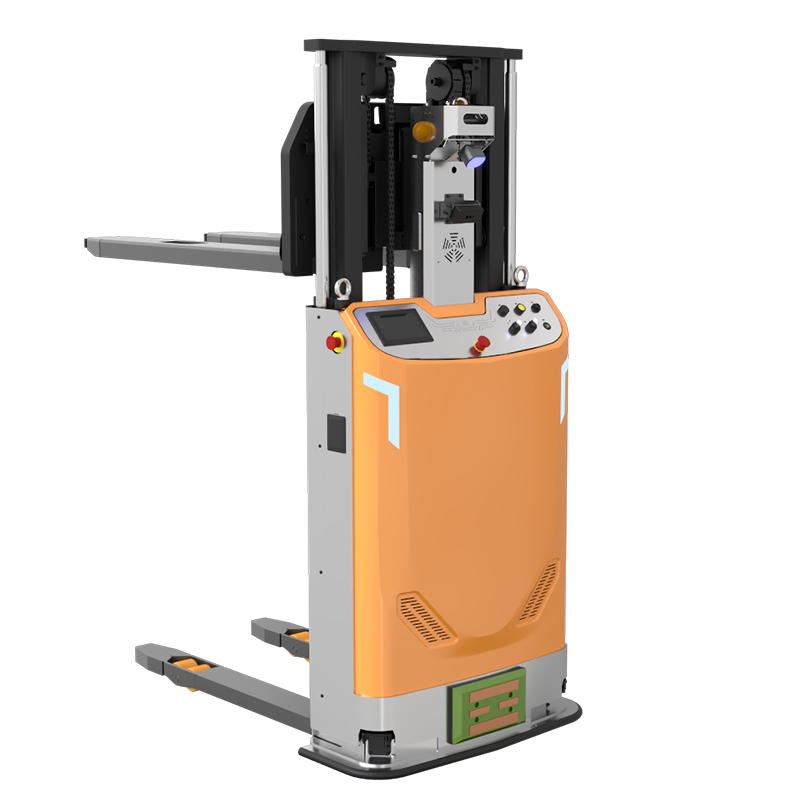
Automatic Stacker AGV Body Slim Narrow-Body 3M 2T High-Density Storage Pallet Stacking 3D SLAM Navigation WIFI/5G
A narrow-chassis stacker for dense storage rooms, line-side supply and pallet staging where every inch of aisle width matters.
- 2T
- 3m lift
- 3D SLAM
- WIFI/5G
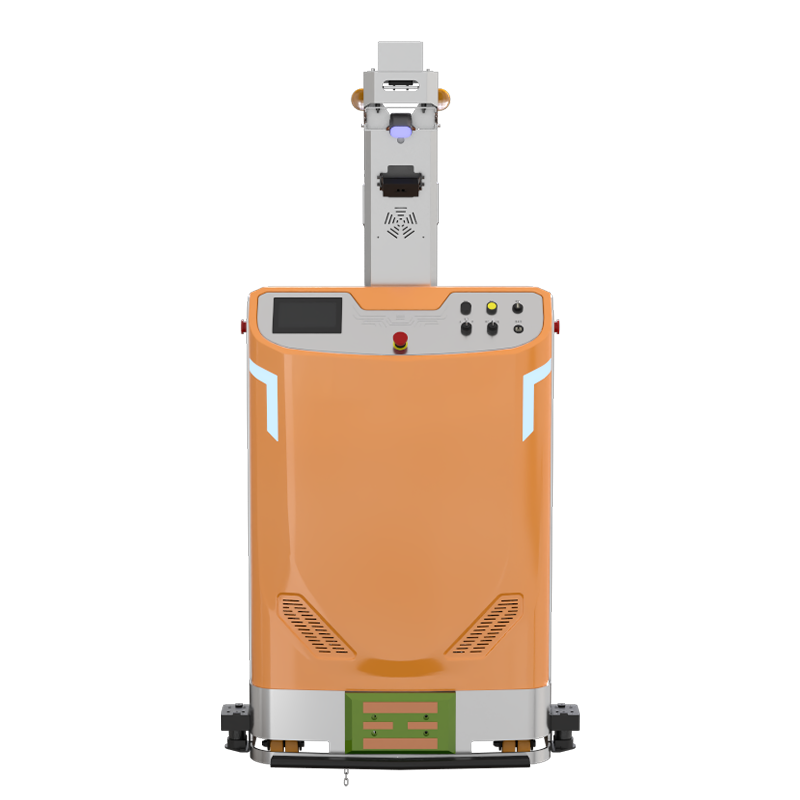
Material Handling AGV Body 2T with Narrow Body Compact Chassis for Efficient Production Line & Workshop Transport in Tight Space
Built for production cells and constrained work areas where conventional forklifts create congestion and safety exposure.
- 2T
- Narrow body
- Line-side
- Compact
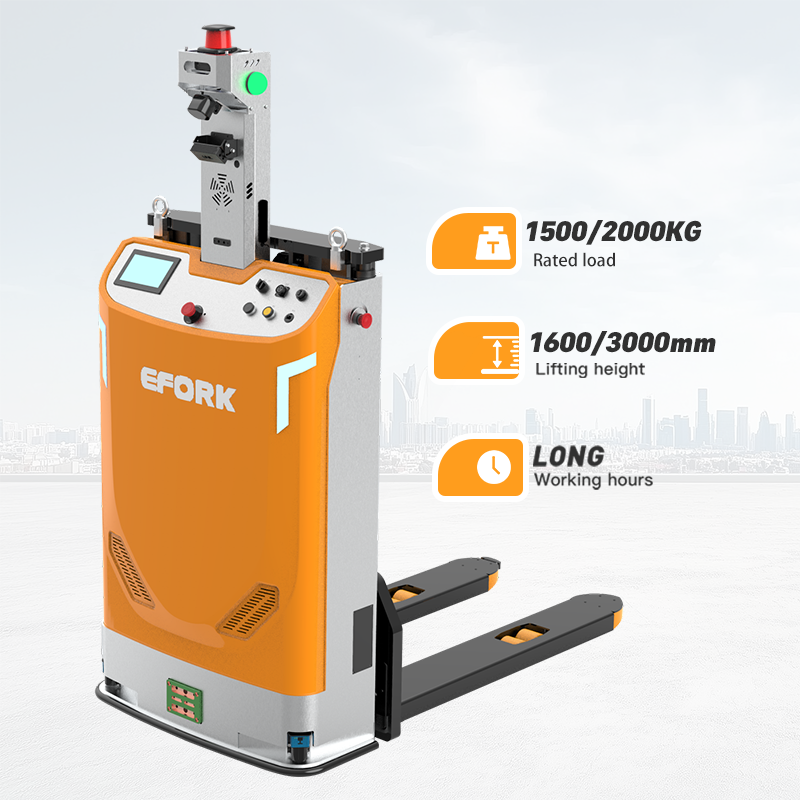
CE Certified EFORK EDA20-16 2T 1600mm Laser Navigation Self-Driving Forklift AGV WIFI/5G for Warehouse Automation Logistics
A proven laser-guided platform for repetitive dock-to-rack and rack-to-staging routes in multi-shift logistics operations.
- 2T
- 1.6m lift
- Laser nav
- CE
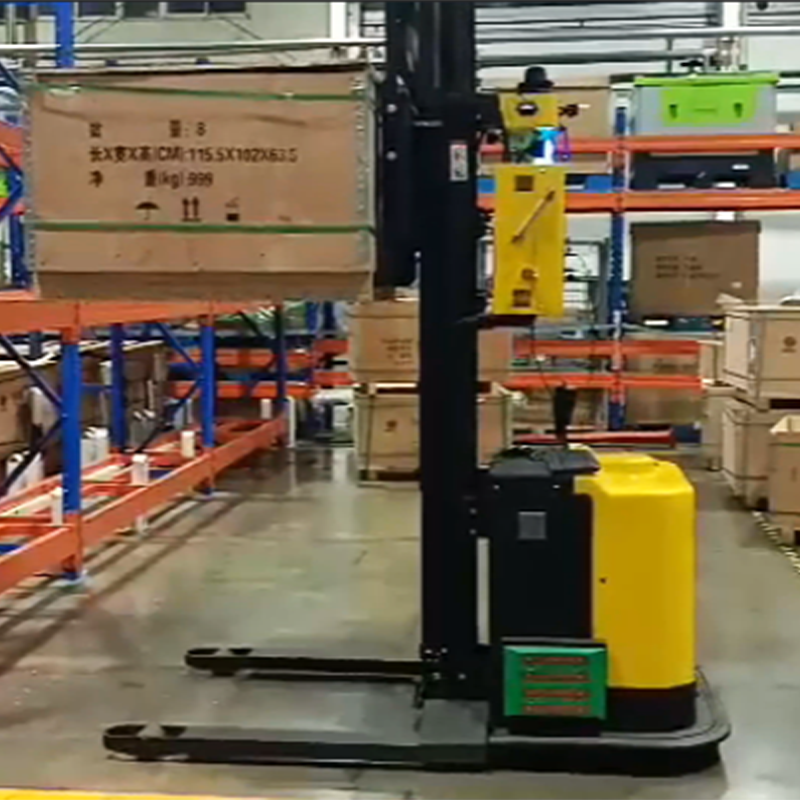
2T 3000MM Pallet AGV Forklift Automated Guided Vehicle 3D SLAM Navigation WIFI/5G Communication for Warehouse Automation Robot
A flexible all-rounder for pallet transfer, 3-meter stacking and mixed routes where reflectors or floor tape would slow deployment.
- 2T
- 3m lift
- 3D SLAM
- WIFI/5G
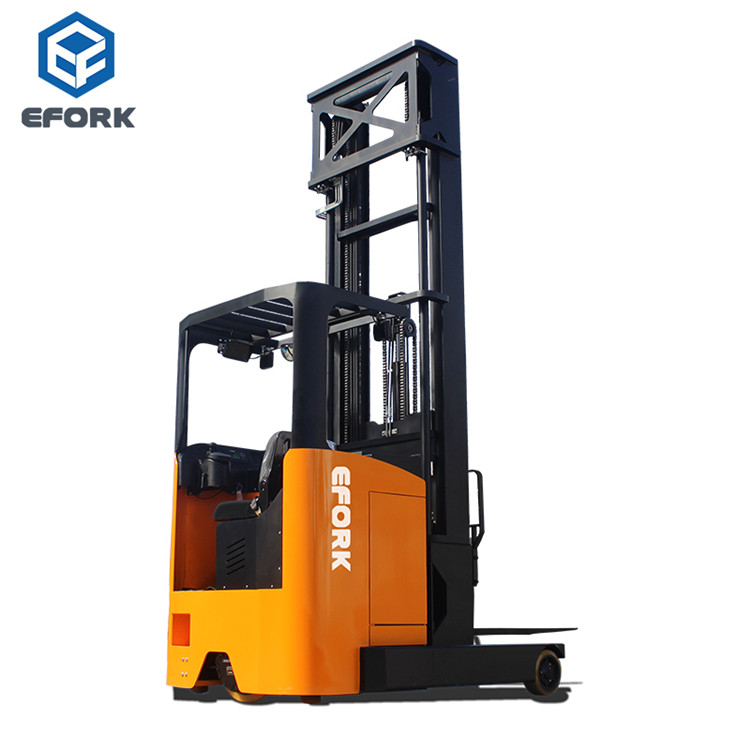
CQDE China Wholesale 2000kg 12m 8m 6m Industrial Forklift Pallet Truck Good Prce
A heavy-duty pallet handling option for building materials, yard-to-warehouse transfer and taller racking requirements.
- 2,000kg
- 6–12m
- Industrial
- Custom
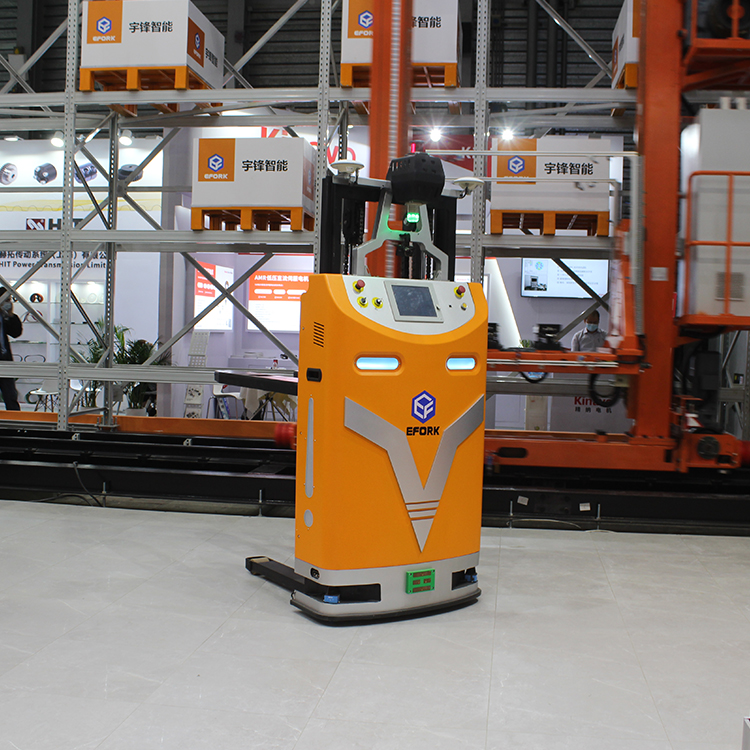
CE Certified EFORK EDA20-16 2T 1600mm Laser Navigation Self-Driving Forklift AGV WIFI/5G 10mm Accuracy 6-8H Working Time
A precision-focused laser navigation model for stable, repeatable pallet engagement and predictable battery duty cycles.
- 2T
- 10mm accuracy
- 6–8h
- Laser
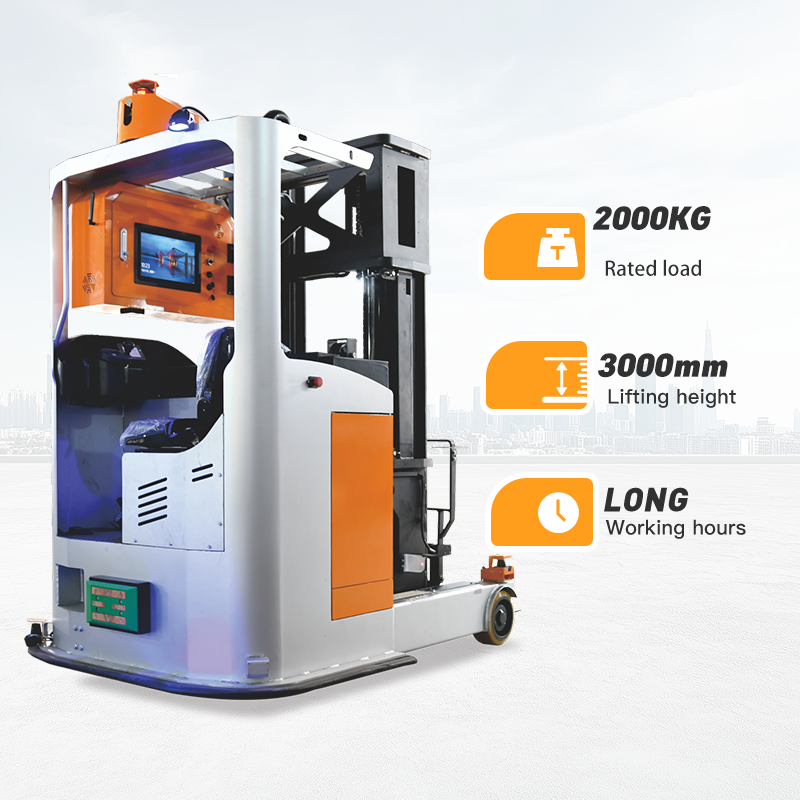
Reach Truck AGV Forklift 2T 3M Laser Slam Navigation CE Certified Warehouse Automation Robot for Factory Logistics
A tighter-aisle alternative to counterbalanced trucks, ideal for selective racking and production logistics in leased buildings.
- 2T
- 3m lift
- Reach truck
- Laser SLAM
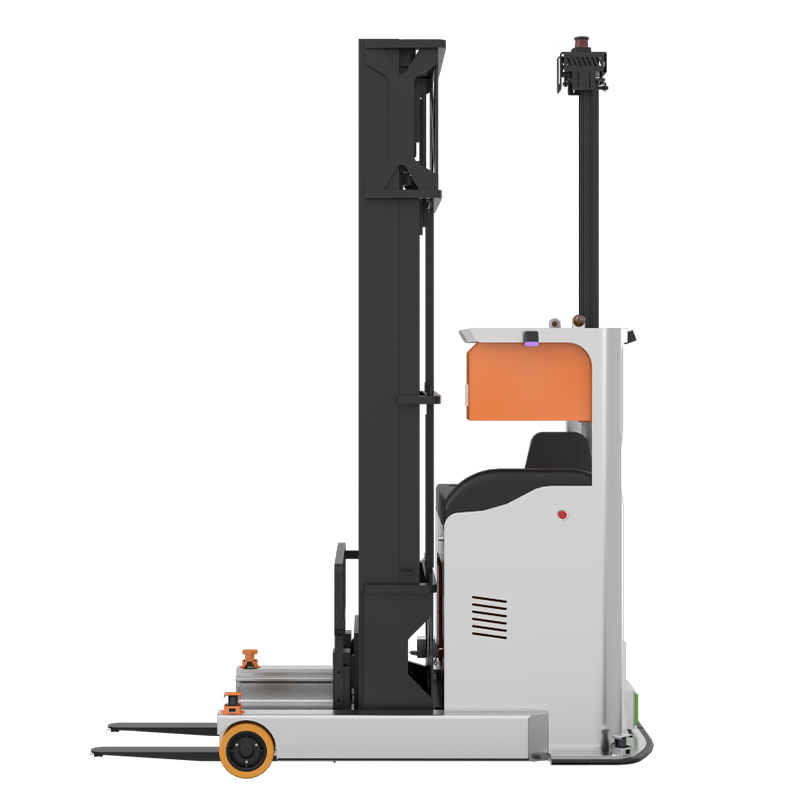
Heli Yufeng CQDE20HJ-65S 2T 6.5M Reach Truck AGV Body Laser Slam Navigation for Pallet Handling High Lifting Smart Warehouse
For Phoenix warehouses adding higher racking without expanding the building footprint; suitable for pallet handling at height.
- 2T
- 6.5m lift
- Laser SLAM
- High bay
Why Natural Navigation AGV Systems Fit Phoenix’s Next Warehouse Cycle
Phoenix is no longer a low-cost backup market. It is a primary distribution gateway for Arizona, the Southwest and cross-border trade with Mexico. Warehouses from Goodyear and Buckeye to Mesa, Chandler and Tempe are under pressure to move more pallets per shift, protect service levels during peak season and reduce dependence on hard-to-fill forklift roles.
For local buyers, the most practical automation strategy is not to begin with a full lights-out warehouse. It is to select a natural navigation AGV platform that can be deployed in phases, validated against real pallet conditions and expanded without rebuilding the entire navigation infrastructure. Natural navigation, usually implemented as 3D SLAM with LiDAR, cameras and inertial sensing, allows the vehicle to localize using permanent building features instead of relying exclusively on floor tape, magnetic strips or dense reflector arrays. That matters in Phoenix because leases turn over, racking is reconfigured, and new tenants often inherit older concrete slabs with patched joints, uneven transitions and mixed lighting.
A manufacturer and exporter serving the Phoenix market must do more than quote a truck specification. The supplier needs to understand pallet quality, dock levelers, trailer types, fire code access, charging room ventilation, summer heat inside non-conditioned buildings and the time required for local electrical and safety reviews. Our export engineering approach starts with these local constraints, then matches equipment from the eight platforms above before recommending a fleet size or navigation method.
In-House Manufacturing
Chassis, mast, control integration and finished-product inspection are managed on our own production lines, not outsourced from unrelated assemblers.
Laser & 3D SLAM
Natural-feature navigation shortens site preparation, while laser reflector navigation remains useful for highly repetitive fixed routes.
One-Stop Fleet
AGV forklifts, VNA, stacker cranes, four-way shuttles and WMS-ready integration can be engineered as one phased roadmap.
Export Documentation
CE, ISO 9001 and ISO 45001 credentials, SGS onsite verification and export packaging support smoother U.S. customs and importer review.
Natural Navigation vs Laser Reflector: What Phoenix Buyers Should Compare
“Natural navigation” is not a marketing synonym for “driverless.” It describes how the vehicle understands its position. The right choice depends on building age, rack density, aisle width, change frequency, environmental conditions and the level of WMS/WCS integration required.
3D SLAM AGVs build a map from structural and natural features, then compare live LiDAR and camera data against that map as they move. In a Phoenix distribution center, this can reduce the need to install hundreds of reflectors or shut down aisles for tape and tag installation. It also supports route changes when racking is relocated, a common event during peak-season reconfiguration or tenant improvement projects.
Laser reflector navigation remains a strong engineering choice when the route is stable and very high positional repeatability is required. Many logistics operations combine both approaches: natural navigation for mixed-traffic travel and laser guidance for precise docking, trailer interfaces or high-bay put-away. The key is to ask for the actual commissioning scope—who supplies reflectors, who validates the map, how changes are handled after go-live, and what local support exists when a route needs adjustment.
Phoenix heat and dust require a separate review. Standard catalog duty cycles may not reflect a non-conditioned warehouse where summer temperatures remain high for months. Ask for thermal derating curves, battery specification, charging-room design, filter maintenance intervals and safety scanner performance under dust. A credible supplier will document assumptions rather than promise a generic “24/7” capability without site data.
Phoenix Technical Checklist
Before selecting a natural navigation AGV, confirm the following with the supplier and your local integration team:
- Measured floor flatness, joint condition and dock transition tolerances.
- Pallet type, condition, overhang and load stability at lift height.
- Summer indoor temperature profile and battery derating assumptions.
- WIFI/5G coverage, latency and handover across racking aisles.
- Safety scanner zones, pedestrian routes and local AHJ review path.
- WMS/WCS interface ownership, test cases and acceptance criteria.
- Spare parts list, remote diagnostics access and escalation process.
| Navigation Approach | How It Localizes | Best Phoenix Use Case | Installation Impact | Key Review Item |
|---|---|---|---|---|
| Natural Navigation / 3D SLAM | LiDAR, camera and inertial data matched to building features and a live map. | Mixed routes, leased buildings, changing rack layouts and phased automation. | Lower reflector and floor-tape density; faster route changes. | Map quality, lighting changes, dust, floor flatness and sensor cleaning. |
| Laser Reflector Navigation | Triangulation against installed reflectors with precise known coordinates. | Stable high-throughput lanes, repetitive docking and fixed put-away routes. | Requires reflector planning, installation and periodic verification. | Reflector maintenance, line-of-sight obstruction and route change cost. |
| Tape / Tag / Rail Guidance | Physical floor markers, magnetic tape or rail-based reference. | Highly fixed, low-change processes or special rail-guided AS/RS areas. | Highest dependence on floor condition and installation work. | Damage repair, aisle closure during changes and long-term flexibility. |
For U.S. projects, CE marking alone is not a substitute for local review. Phoenix deployments should confirm ANSI/ITSDF B56.5 applicability, NFPA 70 electrical coordination, fire marshal access requirements, local AHJ expectations and NRTL field evaluation where required. Final compliance scope must be confirmed by licensed local professionals and the authority having jurisdiction.
Where Natural Navigation AGVs Deliver Value Across Metro Phoenix
Phoenix operations are not identical. A 3PL in Goodyear may prioritize trailer-cycle speed, a semiconductor supplier in Chandler may prioritize repeatability, and a produce distributor near the airport corridor may prioritize cold-chain discipline. The equipment selection should reflect the operating model, not just the building size.
3PL & E-commerce Fulfillment
Use reach trucks and pallet AGVs for replenishment, dock staging and put-away. Natural navigation reduces disruption when seasonal SKU profiles force rack reconfiguration.
Building Materials & Home Improvement
Heavy pallets, long loads and yard-to-warehouse movement call for counterbalanced or high-lift platforms with verified load charts and stable pallet engagement.
Cold Chain & Food Distribution
Produce, frozen foods and refrigerated distribution benefit from AS/RS, VNA and cold-storage variants that reduce personnel exposure and improve inventory density.
Semiconductor, Aerospace & Advanced Manufacturing
Precision material flow, clean interfaces and WMS/WCS traceability matter more than raw speed. 3D SLAM supports flexible routes without excessive floor infrastructure.
Cross-Border & Mexico Corridor Logistics
Phoenix acts as a distribution gateway for Arizona and cross-border supply chains. Standard 48x40 pallet handling, trailer compatibility and bilingual documentation reduce friction.
High-Density Storage & Infill Warehouses
Land-constrained projects can use VNA 3-way AGVs, four-way shuttles or AS/RS stacker cranes to increase cubic utilization without proportionally increasing the building footprint.
Phoenix Trends Reshaping Warehouse Automation Decisions
The business case for AGVs in Phoenix is being shaped by nearshoring, labor availability, land costs, energy management and increasing scrutiny of warehouse safety and code compliance. These trends favor solutions that can start small, prove performance and scale without a full facility shutdown.
Nearshoring & Mexico Trade
More inventory moving through Arizona means more trailer turns, more dock staging and stronger demand for repeatable pallet movement that does not depend on overtime.
Labor Flexibility
Automation is increasingly used to stabilize core flow and redeploy people to exception handling, quality and customer-specific value-added work rather than to simply replace headcount.
Heat, Dust & Power Resilience
Arizona operating conditions demand explicit thermal assumptions, battery strategy, charging design and maintenance intervals—especially in non-conditioned or high-dock-door facilities.
Safety & Code Review
Buyers are asking earlier about traffic segregation, scanner zones, fire access, electrical coordination and local AHJ review, not waiting until equipment arrives onsite.
Planning Weights in Phoenix AGV Business Cases
Illustrative project-planning weights based on common AGV evaluation criteria; not third-party market statistics. Actual weighting should be agreed with your operations, finance and safety teams.
What This Means for Buyers
A credible Phoenix automation proposal should separate capital cost from lifecycle cost. It should show trips per hour, charging assumptions, peak surge capacity, spare parts recommendations and the labor model after automation. It should also explain what happens when a pallet is damaged, a scanner is obstructed or the WMS connection drops.
The strongest projects usually begin with one or two units in a controlled route, measure real cycle time and safety performance, then expand. That phased approach aligns with the local preference for practical, financeable automation rather than speculative full-site transformation.
How to Specify Natural Navigation AGVs for a Phoenix Facility
Start with the load unit, rack drawing, throughput target and building constraints—not with the equipment category. The same pallet may require a different truck depending on aisle width, lift height, dock configuration and whether the load is open-bottom or closed-bottom.
| Equipment Type | Typical Load | Best-Fit Operation | Phoenix Specification to Confirm |
|---|---|---|---|
| Pallet Stacker AGV | 1.5–2T | Floor-to-rack transfer, line-side delivery, low to medium racking. | Floor joints, pallet condition, charging location and aisle clearance. |
| Reach Truck AGV | 1.5–2T | Selective racking where aisle space is tighter than a counterbalanced truck requires. | Mast derating at lift height, rack beam tolerances and dock interface. |
| Counterbalanced AGV | 1.5–3T | Closed-bottom pallets, cages, trailer docks and mixed production routes. | Trailer types, dock levelers, load center and outdoor-to-indoor transitions. |
| VNA 3-Way AGV | 1.6T | Very narrow aisle and high-bay pallet storage. | Rack height, guide tolerance, floor flatness and rescue access. |
| AS/RS Stacker Crane | 1–5T | High-bay automated warehouses and frozen-storage applications. | Building height, fire code, rail survey, WMS/WCS and maintenance access. |
| Four-Way Shuttle | 1–2T | Dense pallet storage with flexible FIFO/LIFO logic. | Rack design, lift interface, shuttle redundancy and battery strategy. |
| Mini-Load Stacker | 50–100kg per bin | Spare parts, e-commerce totes and small-item picking. | Tote standardization, pick rate, storage height and integration testing. |
A practical fleet-sizing formula starts with required trips per hour, divided by verified trips per AGV-hour, then adds a reserve for peak surges, charging windows and route congestion. In Phoenix, that reserve should reflect summer derating and any shift patterns that concentrate replenishment into a short window before outbound trailers close.
Pallet data deserves equal attention. Confirm whether the site uses 48x40 GMA pallets exclusively, or whether Euro, custom or damaged pallets appear in the flow. Measure overhang, load height, center of gravity and bottom-board condition. An AGV that performs well in a demonstration with a perfect pallet may require slower approach speeds, different fork geometry or additional sensors in a real mixed-pallet environment.
Information Gain for Your RFQ
- Provide rack drawings, aisle widths, clear height and sprinkler layout.
- Share 10–20 photos of actual pallets, including damaged examples.
- State peak and average trips per hour, not only annual pallet volume.
- Confirm WIFI/5G coverage, IT/OT security rules and WMS interface owner.
- Document indoor summer temperature range and charging room constraints.
- Define acceptance tests: cycle time, docking accuracy, safety stops and uptime.
Factory Capability That Reduces Project Risk for Phoenix Buyers
Anhui Nexrik Intelligent Technology Co., Ltd. is a high-tech manufacturer specializing in the R&D, production and integration of intelligent warehousing equipment: AGV forklifts, AS/RS stacker cranes, four-way shuttles and related automation. Our production bases are located in the Huagang Industrial Park, Feixi County, Hefei, a recognized hub for China’s forklift and material handling industry.
For Phoenix buyers, supplier capability is not an abstract credential. It affects how quickly non-standard fork dimensions can be produced, whether cold-storage or heat-related options can be engineered, how factory acceptance testing is documented, and how spare parts can be packaged for export. Our team supports OEM, ODM and buyer-label production, including load capacity, lift height, fork configuration, battery strategy and cold-storage variants.
We hold ISO 9001 and ISO 45001 management system certification, CE marking under the Machinery Directive 2006/42/EC across the AGV range, seven awarded patents and SGS onsite verification of our premises and legal status. These credentials support tender submissions, importer due diligence and customs documentation, but they do not replace project-specific engineering. Our approach is to connect factory capability to the actual Phoenix operating environment, then document assumptions clearly.
Export experience across Southeast Asia, South America, Eastern Europe, South Asia and North America has taught us that the most successful projects are not the ones with the largest initial scope. They are the ones with clear acceptance criteria, realistic ramp-up plans and a supplier who can explain exactly what the equipment will do on a hot August afternoon in a non-conditioned warehouse.







From Factory Acceptance Test to Phoenix Go-Live
Shipping an AGV to Arizona is only one part of the project. The larger work is confirming the bill of materials, export packaging, WMS interface scope, safety review path, spare parts plan and commissioning responsibilities before the equipment leaves the factory.
Discovery
Collect pallet data, rack drawings, aisle widths, floor condition, temperature profile, throughput targets and local review requirements.
Simulation
Select equipment, estimate fleet size, review charging strategy and test traffic assumptions against peak periods.
Factory Acceptance
Inspect material, build quality and finished-product performance before export packaging and shipment.
Export Logistics
Prepare documentation and coordinate shipping. Common routes to Phoenix use West Coast ports plus rail/truck, or Gulf Coast entry depending on cost and schedule.
Commissioning
Support mapping, WMS/WCS testing, safety validation, operator training and lifecycle spare-parts planning with local partners where required.
Trade Terms for Phoenix Importers
Accepted delivery terms include FOB, CFR, CIF, EXW, FAS, CIP and DDP. Accepted payment methods include L/C, D/P, D/A, MoneyGram, credit card and Western Union in USD, EUR or CNY. Final Incoterm, HS classification, import brokerage, unloading equipment and local permitting responsibilities should be confirmed in the quotation and purchase order.
Phoenix Buyer FAQ: Natural Navigation AGV Procurement
These are the questions local operations, engineering and purchasing teams most often ask when evaluating a factory-direct AGV supplier for a Phoenix warehouse project.
Are natural navigation AGVs suitable for Phoenix summer heat?
They can be, but heat must be engineered rather than assumed. Share indoor temperature profiles, duty cycle and charging conditions. Confirm battery derating, component temperature ratings, ventilation, filter service intervals and whether the proposed model has been specified for the actual ambient conditions.
How long does delivery from China to Phoenix take?
Production time depends on model, customization and quantity. Ocean freight plus rail or truck to Phoenix also varies by port, carrier schedule and customs clearance. A precise schedule should be confirmed in the quotation after the technical scope and Incoterm are agreed.
Can the AGV handle standard 48x40 GMA pallets and existing racking?
Yes, but pallet condition and rack tolerances must be reviewed. We ask for pallet photos, load height, weight distribution, bottom-board condition, rack beam spacing and aisle dimensions so fork geometry and approach parameters can be set correctly.
What about U.S. compliance if the equipment is CE certified?
CE supports EU conformity but is not a substitute for U.S. review. Phoenix projects should evaluate ANSI/ITSDF B56.5 applicability, NFPA 70 electrical coordination, local fire marshal access requirements and NRTL field evaluation where required. Final compliance scope must be confirmed by local licensed professionals and the AHJ.
What is the minimum order quantity and can we pilot one unit?
The MOQ for AGV forklifts, stacker cranes and four-way shuttles is one set. A single-unit pilot is a common way to validate routes, cycle time and operator acceptance before committing to a larger fleet.
How do you support spare parts and service in Arizona?
Support can include recommended critical spares, remote diagnostics, commissioning documentation and coordination with local integrators or service providers. The exact response model, spare-parts stocking level and escalation path should be defined in the service agreement.
Can the system integrate with our WMS or ERP?
AS/RS and four-way shuttle systems are designed WMS-ready. Interface requirements with the existing WMS, ERP or warehouse control layer are defined during solution design and tested during commissioning. The customer and supplier should agree on data ownership, test cases and acceptance criteria.
Do you offer OEM, ODM and custom configurations?
Yes. Customization can cover load capacity, lift height, fork dimensions, battery configuration, cold-storage variants, branding and documentation packages. Final feasibility and lead time depend on the specific model and engineering scope.
Which route is best for shipping to Phoenix?
Many importers evaluate West Coast ocean ports followed by rail or truck to Phoenix, while others compare Gulf Coast routes or air freight for urgent pilot equipment. The best route depends on Incoterm, budget, schedule, cargo dimensions and customs brokerage arrangements.
Request a Phoenix-Specific AGV Catalog and Layout Review
Send your pallet specification, rack drawing, aisle dimensions, throughput target and indoor temperature profile. Our export engineering team will recommend a natural navigation AGV configuration, outline the factory acceptance test plan and identify the site information needed before formal quotation.
Get Catalog