Material Handling Robot Manufacturer & Suppliers for Tokyo
Factory-direct AGV forklifts, pallet stackers, VNA robots, AS/RS stacker cranes and four-way shuttles from an SGS onsite-verified manufacturer — engineered for Tokyo's narrow aisles, high-bay warehouses, cold-chain sites and 24/7 e-commerce rhythm.
Eight Material Handling Robots for Tokyo Operations
Tokyo buyers rarely automate an ideal greenfield site. They modernise leased warehouses, constrained backrooms, mixed manual/automatic docks and high-bay distribution centres. The eight platforms below cover the most common payload, lift-height, aisle-width and navigation decisions in the Tokyo market.
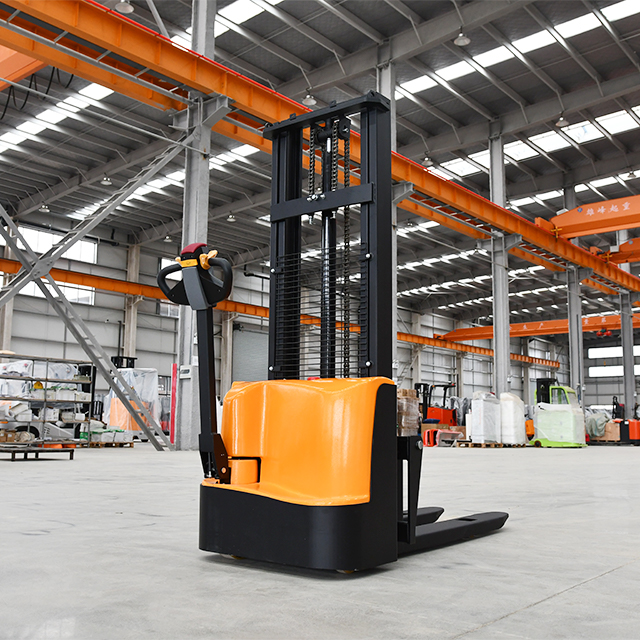 Tokyo fit
1Ton & 2Ton Full Electric Pallet Stacker Walkie Type High Performance, Low Cost Optional with Training Wheels
A low-risk entry for Tokyo 3PLs and retail backrooms where pallet volume is steady but full automation is not yet justified. Electric lifting reduces repetitive strain, while training wheels stabilise new operators during dock unloading, floor-to-rack transfer and buffer staging.
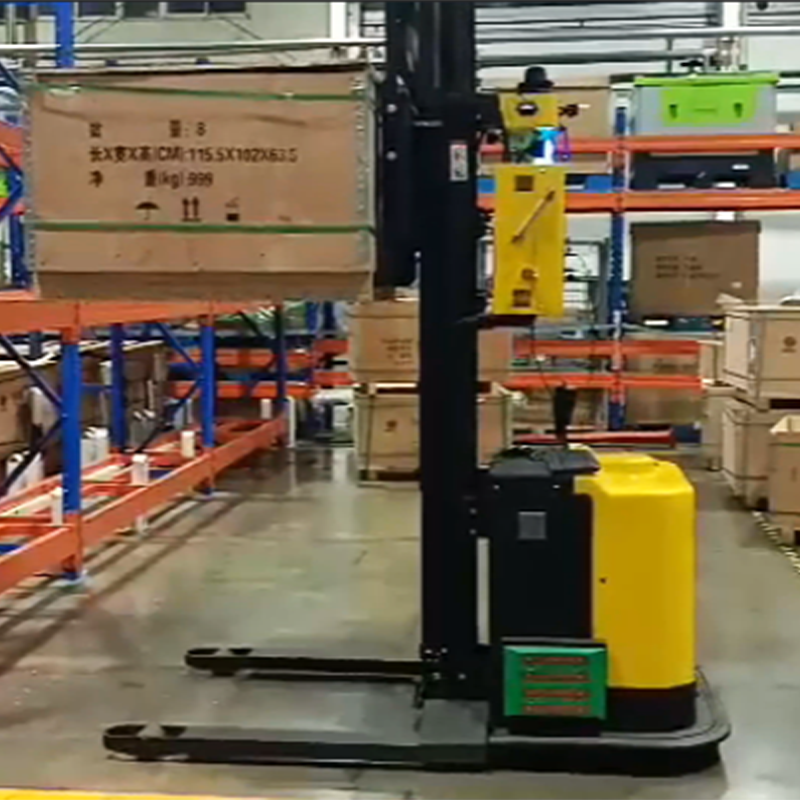 3D SLAMAGV
2T 3000MM Pallet AGV Forklift Automated Guided Vehicle 3D SLAM Navigation WIFI/5G Communication for Warehouse Automation Robot
A 3D SLAM pallet AGV for Tokyo warehouses that need autonomous dock-to-rack movement without extensive reflector or floor-tape work. WIFI/5G communication supports WMS dispatch and route changes, making it a strong fit for leased buildings where modifications must remain reversible.
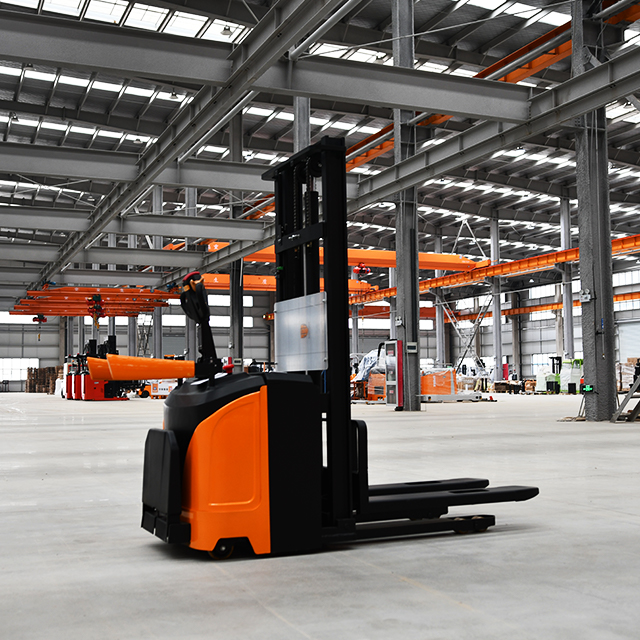 Factory direct
Factory Direct Sales Electric Pallet Lift Stackers 1.5-Ton 2-Ton 3Ton 3m 4m 5m Portable Self-Loading
Self-loading stackers from 1.5 to 3 tonnes with 3m to 5m lift are useful in mixed manual/automated zones, mezzanine feeding and low- to mid-height racking. Factory-direct supply supports OEM fork dimensions and buyer-label programs for Tokyo distributors.
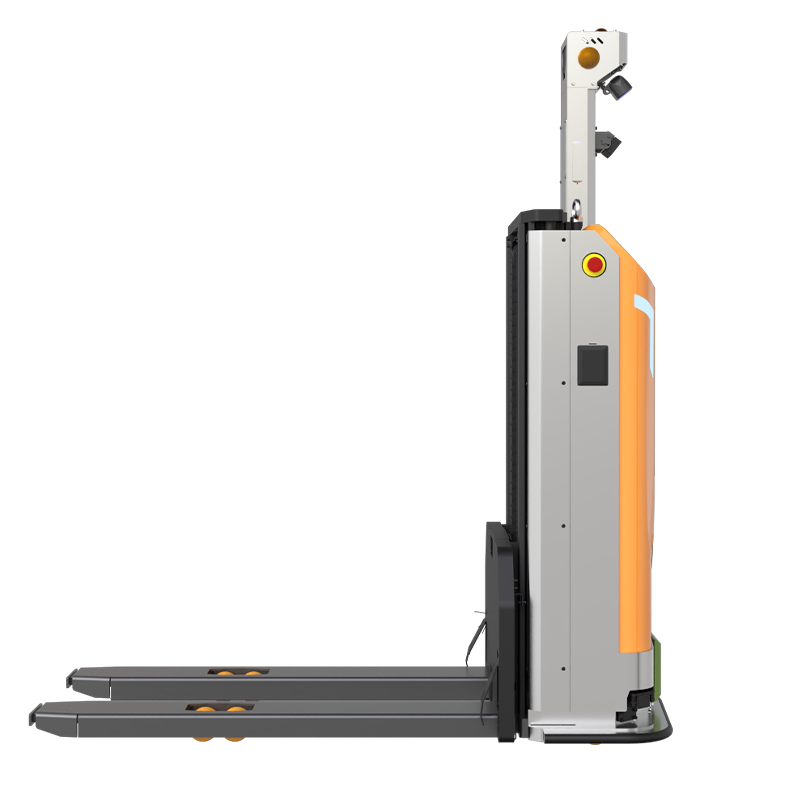 Narrow aisleSlim body
2T 3 M Slim Narrow-Body Stacker AGV High-Density Storage Pallet Stacking AGV for Narrow Aisles Warehouse Automation
A slim-body AGV stacker for Tokyo facilities where aisle width is the binding constraint. The narrow chassis and 3m lift suit high-density pallet storage, cold-chain anterooms and urban micro-fulfilment centres that cannot rebuild racking around a conventional counterbalanced truck.
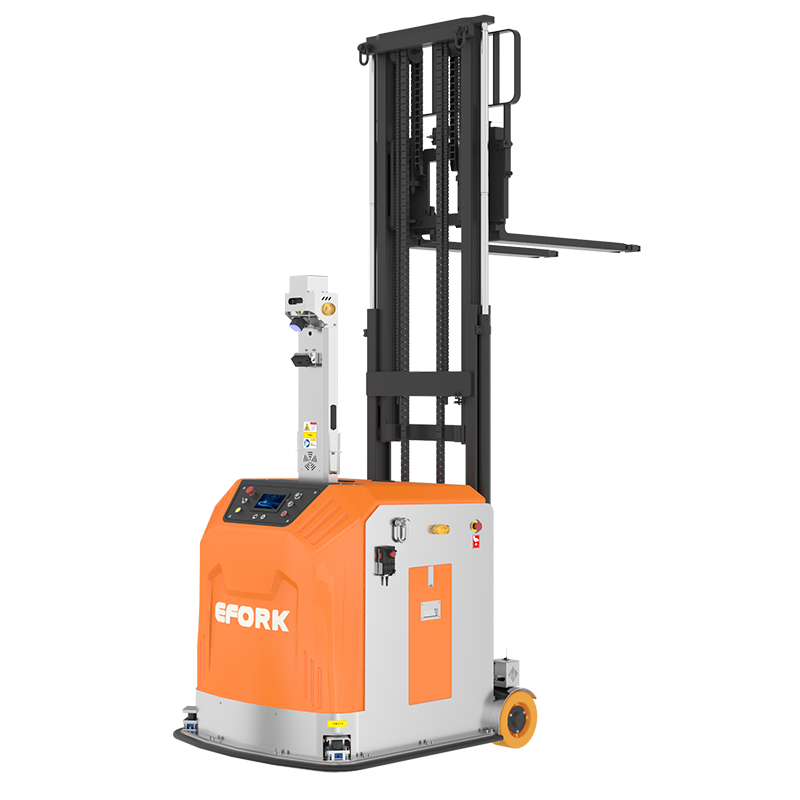 Heavy duty3D SLAM
EFORK Heavy Duty Forklift AGV Counterbalanced Body 2T 3M Fork Legs High Flexibility 3D SLAM Navigation WIFI/5G for Pallet
A 2T, 3m heavy-duty counterbalanced AGV for closed-bottom pallets, cages and production-line interfaces. Because it does not need front outriggers, it handles trailers and mixed load units more naturally than a stacker — often the bridge between manual forklifts and a fully automated Tokyo fleet.
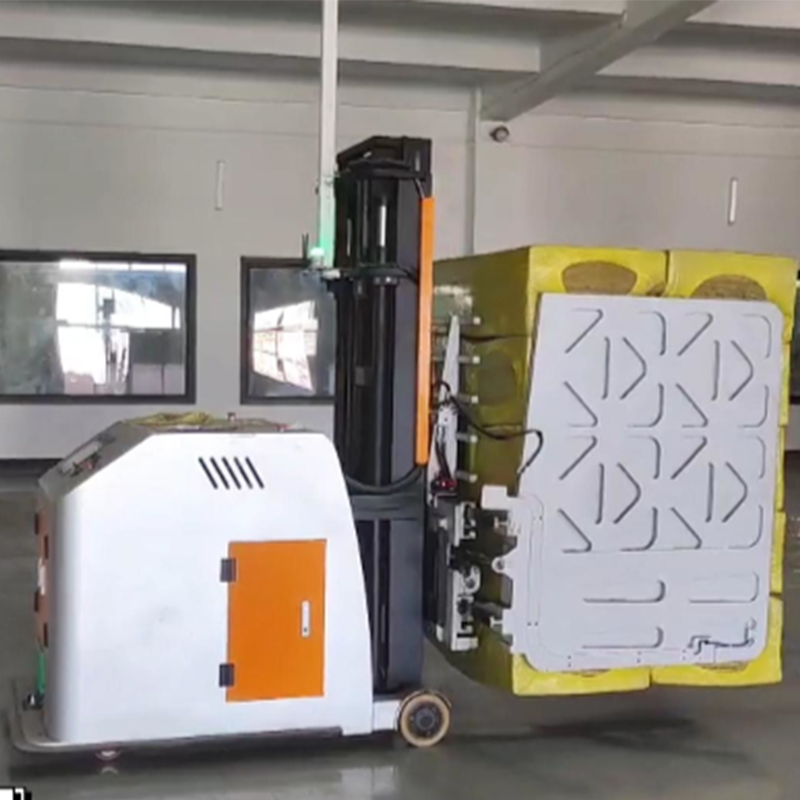 3T payload3D SLAM
EFORK Automated Guided Vehicle AGV Forklift 3T 3000MM Counterbalanced 3D SLAM Construction Factory Logistics Pallet Truck
A 3-ton counterbalanced AGV with 3D SLAM, built for construction factory logistics and heavier pallet flows. It is relevant to Tokyo-area plants and logistics hubs where 2T platforms are at the limit; load, fork length, battery and safety scanner zones are confirmed during engineering.
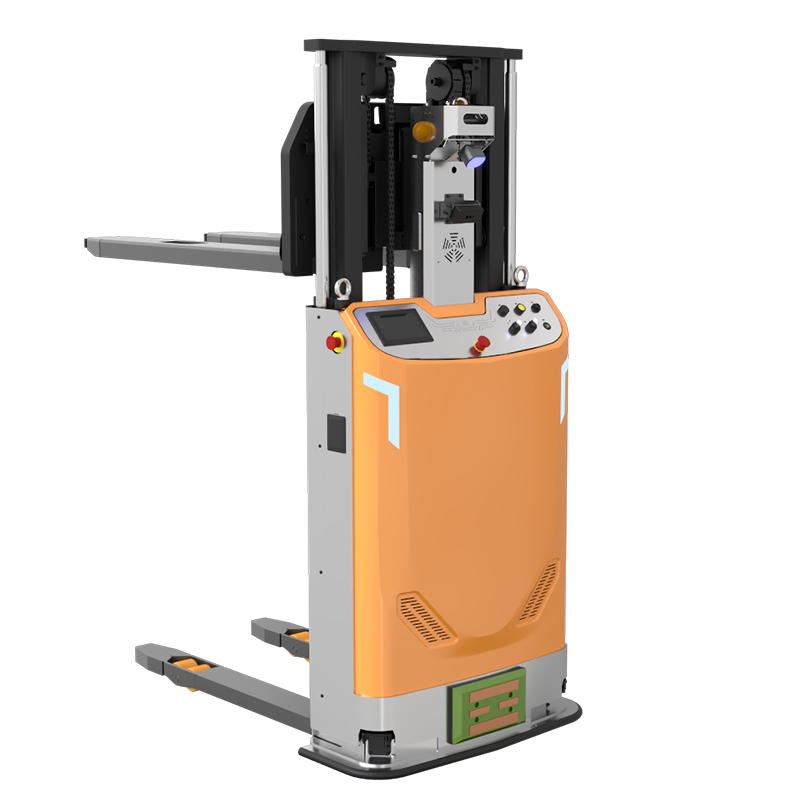 High densityNarrow body
Automatic Stacker AGV Body Slim Narrow-Body 3M 2T High-Density Storage Pallet Stacking 3D SLAM Navigation WIFI/5G Maximize
A 2T, 3m slim-body stacker for high-density storage and narrow aisles. It targets Tokyo warehouses that need more pallet positions per square metre but cannot justify a 40m AS/RS. 3D SLAM navigation minimises fixed infrastructure and supports staged fleet expansion as throughput grows.
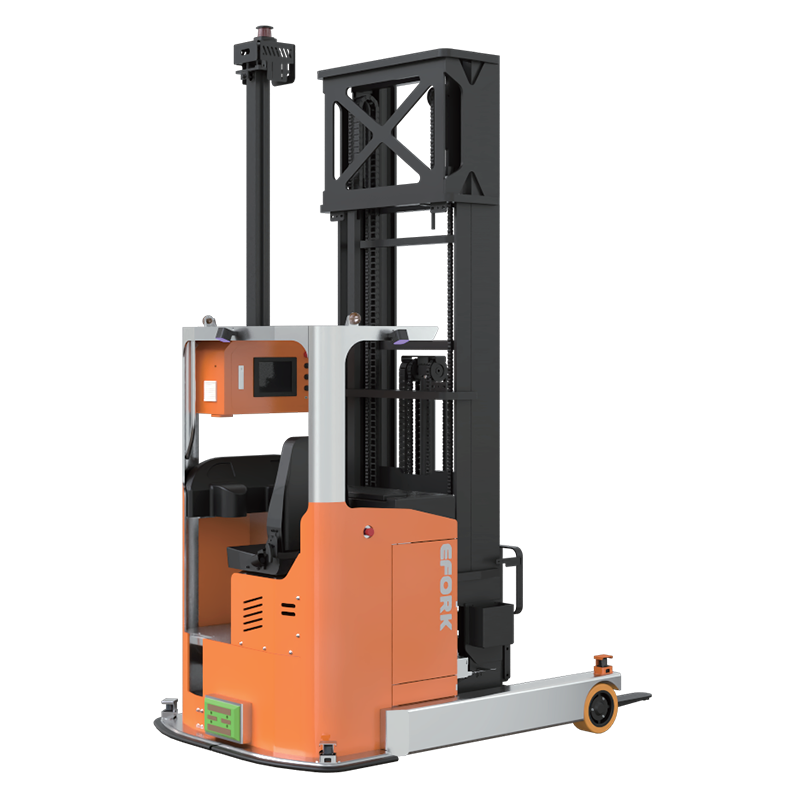 4.5m liftLaser SLAM
4.5M Reach Truck AGV Body 2T for Pallet Handling High Lifting Smart Warehouse Logistics Robot Laser Slam Navigation CE Certified
A 2T reach truck AGV with 4.5m lift and laser SLAM navigation. It suits Tokyo selective racking where 3m stackers are too low and VNA is not yet justified. Laser navigation is a good choice for repetitive fixed routes with high cycle consistency and predictable site infrastructure.
Need a shortlist against your rack drawing, pallet spec and Tokyo lease constraints?
Get CatalogTokyo Is Not a Generic Warehouse Market
Material handling decisions in Tokyo are shaped by expensive land, constrained building footprints, high labour costs, an ageing workforce and the 2024 logistics regulations that put new pressure on driver hours and dock productivity. Robots must fit the building you already lease — not a perfect greenfield layout.
For a material handling robot manufacturer and supplier serving Tokyo, the real work starts before a machine is selected. Our engineers review pallet types, rack drawings, aisle widths, floor flatness, ceiling clearance, charging-room location, WMS/ERP interfaces and shift patterns. The objective is not simply to replace a forklift. It is to reduce travel, stabilise cycle times and create a fleet that can be expanded without rebuilding the warehouse.
This is why Tokyo projects often mix platforms. A leased urban fulfilment centre may start with slim-body stacker AGVs and one reach truck AGV; a 3PL site near Tokyo Bay may combine counterbalanced AGVs with WMS-directed pallet routes; an outer-ring distribution centre in Saitama, Chiba or Kanagawa may justify VNA AGVs, AS/RS stacker cranes or four-way shuttles. The correct answer depends on throughput, storage density, residual lease term and tolerance for fixed infrastructure.
Tokyo evaluation lens
Illustrative engineering priorities for urban and high-bay projects.
Qualitative planning lens, not a performance guarantee. Final specifications are confirmed after site survey and simulation.
Total staff
Onsite-verified manufacturing scaleFactory floorspace
Two production bases in AnhuiAwarded patents
Plus 1 registered trademarkMinimum order
Pilot before fleet expansionWhere Material Handling Robots Fit in Tokyo
Tokyo is a patchwork of very different operating environments. The same robot platform can be a strong fit in one building and a poor fit a few kilometres away. These six application patterns reflect the questions our engineering team reviews most often with Tokyo buyers.
Tokyo Bay 3PL distribution centres
Dock-to-rack, replenishment and cross-docking must handle peak e-commerce volumes with limited staging. Combine reach truck AGVs, pallet stacker AGVs and WMS-directed traffic to reduce forklift travel and free associates for exception handling, labelling and quality checks.
Urban e-commerce fulfilment
In Koto, Edogawa and Adachi, leased multi-tenant buildings often have low ceilings and tight column grids. Slim stackers and compact VNA AGVs improve pallet density; AS/RS or four-way shuttles are considered when throughput and lease horizon justify fixed infrastructure.
Automotive and electronics manufacturing
In Ota and along the Tokyo Bay industrial belt, counterbalanced AGVs move cages and closed-bottom pallets between lines, supermarkets and shipping docks. 3D SLAM shortens route changes when production layouts evolve and new equipment is introduced.
Cold chain and food distribution
Frozen storage AS/RS stacker cranes and cold-duty AGVs support temperature-controlled logistics. Condensation, battery derating, door interlocks and rescue procedures must be engineered before shipment; final fire and building approvals remain with local authorities.
High-bay distribution in the Greater Tokyo ring
Sites in Saitama, Chiba and Kanagawa can justify 40m stacker cranes and four-way shuttles when land cost and storage density dominate. Rack tolerance, floor flatness, seismic bracing and fire-code strategy should be reviewed with Japanese licensed engineers.
Retail, wholesale and micro-fulfilment
Backroom replenishment is often constrained by doors, lifts and low clearance. Pallet stackers and slim AGVs can be deployed in phases, starting with one route and scaling after uptime, cycle time and operator acceptance have been validated.
Tokyo Material Handling Trends Shaping 2025–2030
Automation is moving from stand-alone forklift replacement toward workflow redesign. The strongest Tokyo projects connect robots, storage density, WMS visibility and service continuity rather than treating material handling as a single machine purchase.
From forklift replacement to workflow redesign
Robots are being used to remove repeated pallet travel, stabilise dock cycles and reduce handover points between manual and automatic zones. The design target is flow, not simply fewer operators.
Vertical storage and AS/RS
Land scarcity continues to push Tokyo warehouses upward. Narrow-aisle AGVs, 40m stacker cranes and four-way shuttles are evaluated when a site can support the rack tolerance, fire strategy and structural requirements.
WMS/WES integration and fleet orchestration
Tokyo buyers increasingly ask for real-time task dispatch, route optimisation and exception handling. Interface requirements should be defined before equipment selection and tested during commissioning.
Safety, BCP and lifecycle cost
Safety scanners, redundant charging, remote diagnostics and spare-parts planning are now part of the business case. Downtime risk matters as much as initial robot price.
3D SLAM vs Laser Navigation in Tokyo Buildings
The right navigation choice is a building-specific decision, not a product label. 3D SLAM uses natural features to localise and can reduce reflector or floor-tape work, which is valuable in leased Tokyo warehouses where modifications must be reversible. Laser navigation remains strong for fixed, repetitive and high-consistency routes.
Aisle width, rack tolerance, ceiling structure, lighting changes, glass surfaces, pallet overhang and traffic density all influence navigation performance. We recommend a site survey and traffic simulation before fleet sizing. In many Tokyo projects, the best result is a mixed fleet: 3D SLAM AGVs for flexible dock-to-rack and line-side routes, plus laser-guided or rail-guided systems where cycle consistency and high density dominate.
Floor flatness, expansion joints, ramp transitions, charging-room location, fire compartmentation and local risk assessment belong in the project plan — not in a late installation checklist. CE marking under 2006/42/EC, ISO 9001 and ISO 45001 certification support procurement and import documentation, while Japan-specific site compliance remains a shared process with the building owner, safety officer and locally licensed engineers.
For Tokyo buyers, the most useful supplier is not the one that quotes the lowest robot. It is the one that can explain why a particular platform fits the aisle, the load unit, the WMS interface and the maintenance model — and can prove it with drawings, assumptions and test criteria.
Project fit indicators
Engineering focus for an urban Tokyo deployment.
Illustrative planning focus. Final navigation and safety configuration is confirmed by engineering after site survey.
Why a Manufacturer-Led Supplier Model Matters in Tokyo
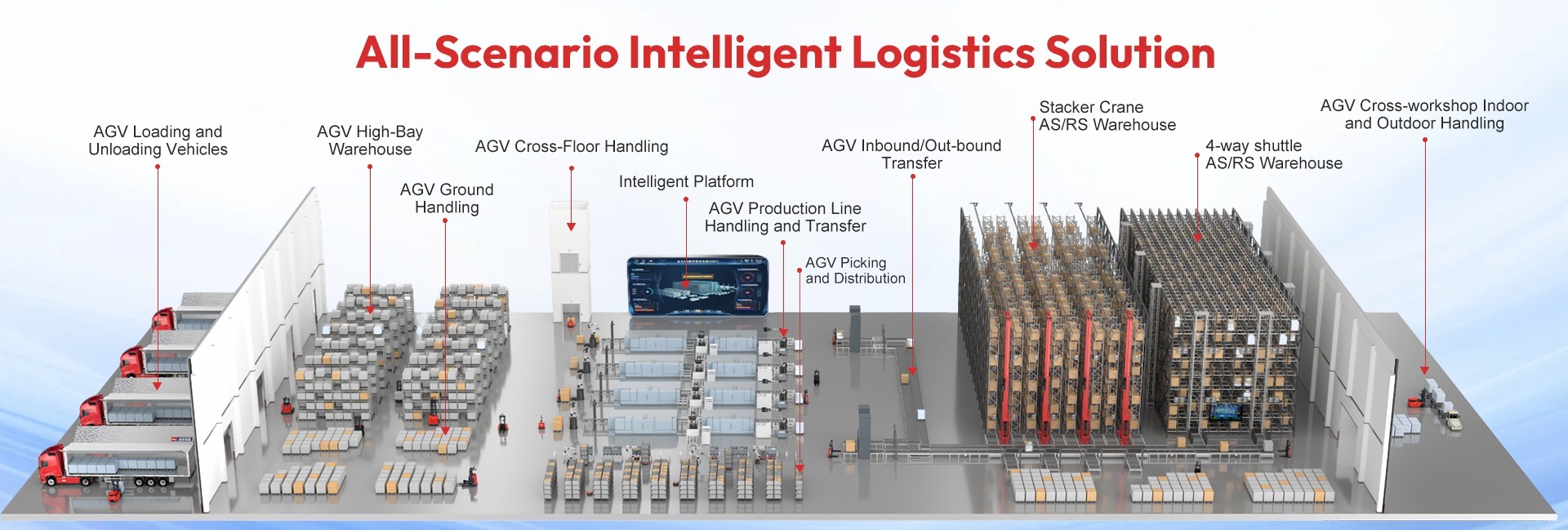
Anhui Nexrik Intelligent Technology Co., Ltd. manufactures AGV forklifts, pallet stackers, VNA AGVs, AS/RS stacker cranes, four-way shuttles and RGVs for intelligent warehousing. For Tokyo buyers, the advantage is traceability: machine design, configuration, testing and documentation stay closer to the factory.
Factory scale you can verify
66,650 m² of factory floorspace and 1,152+ staff across two production bases in Anhui. In-house chassis, mast and control integration are built and tested on our own lines, with onsite material and finished-product inspection before shipment.
Certification and evidence pack
CE marking under 2006/42/EC, ISO 9001, ISO 45001, 7 awarded patents and SGS onsite verification. These documents help Tokyo importers, tender teams and safety reviewers move faster through internal approval.
One-stop intelligent warehousing
AGV forklifts, VNA AGVs, AS/RS stacker cranes, four-way shuttles and RGVs come from one engineering source. The system is designed as one WMS-ready architecture rather than separate machines stitched together after purchase.
3D SLAM and laser expertise
We support both 3D SLAM and laser navigation. 3D SLAM reduces fixed infrastructure in leased Tokyo buildings; laser navigation can be more deterministic for repetitive fixed routes. The recommendation follows the building, not a sales preference.
OEM / ODM and custom engineering
Full customization covers load capacity, lift height, fork dimensions, battery configuration, cold-storage variants and buyer-label production. Distributors and system integrators can specify equipment for their own Tokyo customer base.
Lifecycle support and expansion
Remote diagnostics, spare-parts planning, operator training, WMS interface testing and fleet-expansion planning are part of the project lifecycle. A pilot route can grow into a multi-zone fleet without changing supplier logic.
Built in Hefei. Configured for Tokyo.
Our engineering process starts with your pallet types, rack drawings, throughput target and shift pattern. We simulate traffic before production, inspect materials and finished products before shipment, then support mapping, WMS interface testing, safety validation and operator training during commissioning. Export markets include Southeast Asia, South America, Eastern Europe, South Asia and North America.
Questions Tokyo Buyers Ask Before Ordering
These are the common commercial and engineering questions raised by Tokyo 3PL operators, manufacturers, distributors and systems integrators. Project-specific answers are confirmed after reviewing the building, load unit and throughput target.
What is the minimum order quantity for a Tokyo pilot?
The MOQ for AGV forklifts, stacker cranes and four-way shuttle models is 1 set. Many buyers start with a single truck or one route to validate safety, uptime and cycle time before scaling to a full fleet. A pilot should define acceptance criteria before installation.
Can you integrate with our WMS or ERP?
AS/RS and four-way shuttle systems are designed WMS-ready, and AGVs can be dispatched through WMS/WES or fleet-management interfaces. Interface requirements should be fixed during solution design and tested during commissioning, not left until the final week.
Which is better for Tokyo: 3D SLAM or laser navigation?
3D SLAM is often attractive in leased buildings because it reduces reflector and floor-tape work, and it supports faster route changes. Laser navigation can be more deterministic for fixed, repetitive high-speed routes. The final choice depends on aisle width, rack tolerance, ceiling structure and traffic density.
Are CE and ISO certificates enough for a Tokyo site?
CE marking under 2006/42/EC, ISO 9001 and ISO 45001 provide a strong procurement and quality baseline. They do not replace the site-specific risk assessment, building fire strategy, electrical review and safety validation required by the owner and locally licensed engineers in Japan.
Do you support DDP, spare parts and after-sales for Tokyo?
Trade terms include FOB, CFR, CIF, EXW, FAS, CIP and DDP, with payment options such as L/C, D/P, D/A, credit card and Western Union in USD, EUR or CNY. Lifecycle support includes remote diagnostics, spare-parts planning, commissioning guidance and operator training; local service coordination can be discussed for Tokyo projects.
Can you customize load, lift height, forks, cold storage and labelling?
Yes. Full customization, OEM, ODM and buyer-label production are available, including load capacity, lift height, fork dimensions, battery configuration and cold-storage variants. English documentation is standard; localized manuals and labels can be discussed under an OEM/ODM agreement.
Build a Tokyo-Ready Robot Fleet with Manufacturer-Direct Engineering
Send your pallet specification, rack layout, aisle width, ceiling height and throughput target. Our engineers will help you shortlist the right AGV forklift, pallet stacker, VNA AGV, AS/RS stacker crane or four-way shuttle — and define the site questions that should be answered before purchase.
SGS onsite-verified · CE · ISO 9001 · ISO 45001 · MOQ 1 set