Eight Proven Logistics Automation Products for Indonesian Operations
The models below are selected for Indonesia’s most common logistics profiles: mixed pallet quality, high land and rental costs, labour turnover, humid or coastal sites, and the need to phase automation without stopping current operations. All eight are available through factory-direct wholesale supply, with MOQ from one set and customization for load, lift height, fork dimensions, battery strategy and safety configuration.
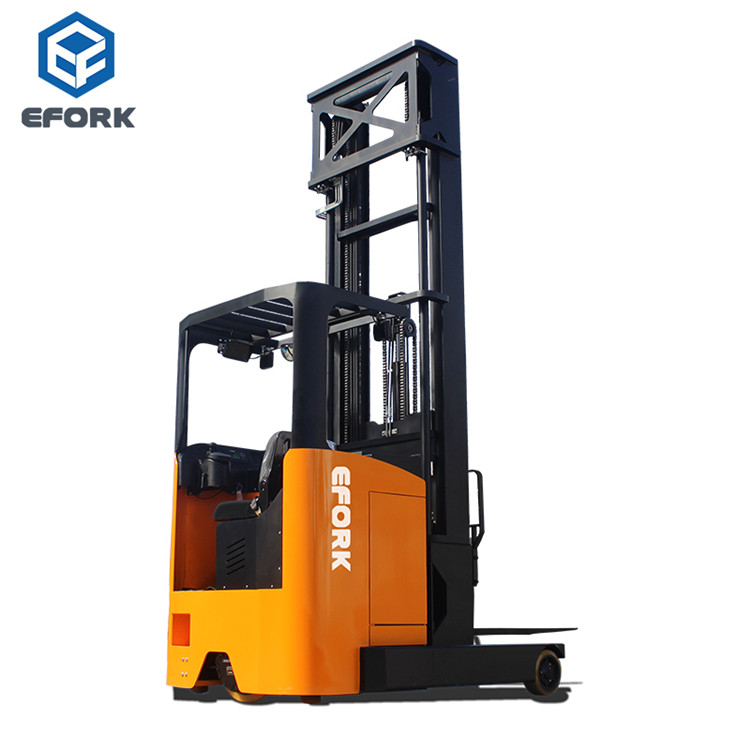
CQDE China Wholesale 2000kg 12m 8m 6m Industrial Forklift Pallet Truck
A versatile 2,000 kg platform for distributors, rental fleets and 3PL operators that need robust pallet handling across multiple configurations. Suitable for staging, warehouse transfer and production support.
- 2,000 kg
- 6 / 8 / 12 m
- Wholesale supply
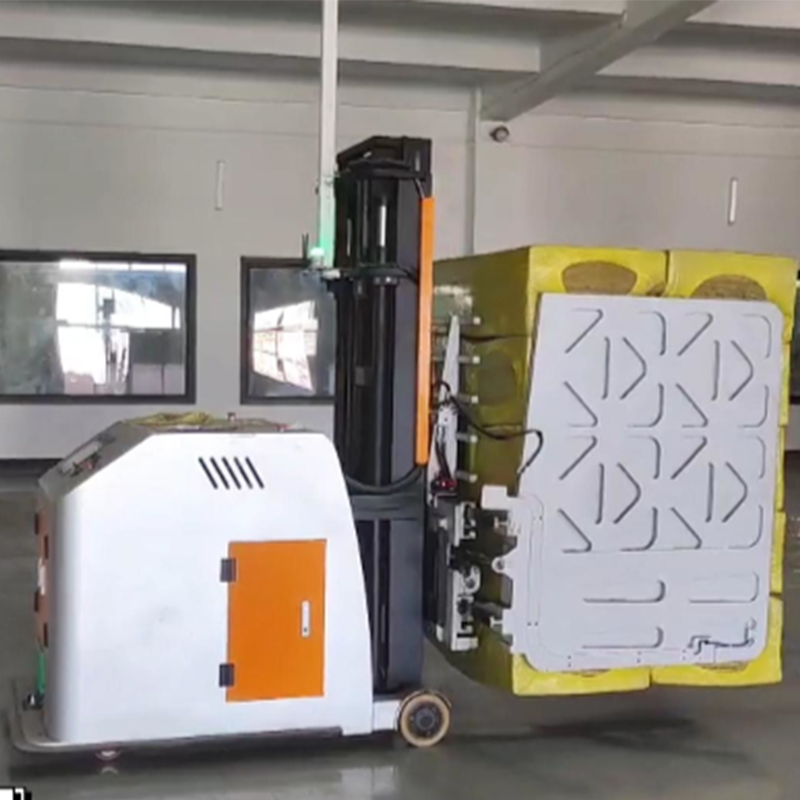
EFORK 3T 3D SLAM Counterbalanced AGV Forklift
A 3,000 kg autonomous counterbalanced truck for construction-material logistics, factory yards and production lines. 3D SLAM navigation reduces fixed infrastructure when Indonesian facilities are retrofitted or re-laid out.
- 3,000 kg
- 3,000 mm
- 3D SLAM
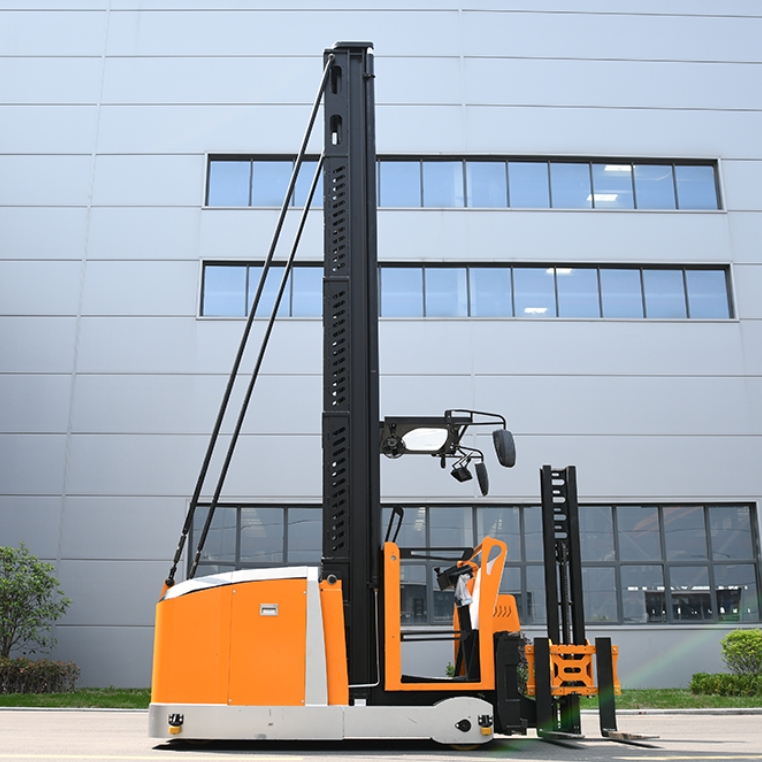
New 1.5T Electric 3-Way VNA Pallet Stacker Forklift
A narrow-aisle three-way stacker with 1,600 kg loading capacity and AC motor drive. Designed for warehouses that need more storage density without relocating or constructing a new building.
- 1.5T class
- 1,600 kg
- 3-way fork
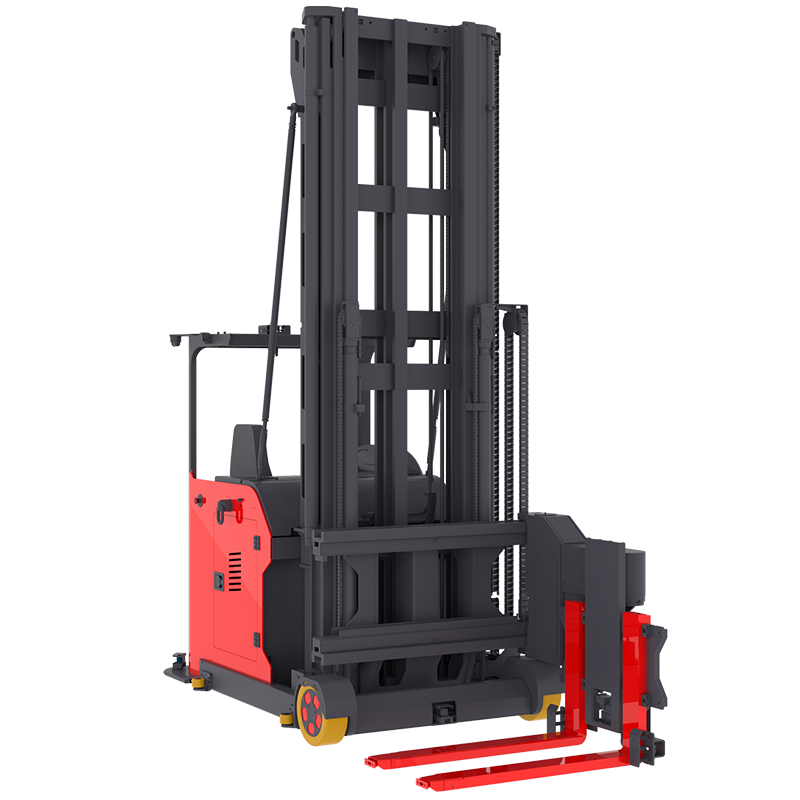
EFORK CDME16J-80S 1.6T 8M VNA Truck AGV Mobile Robot
A laser-SLAM VNA AGV for 8 m high-bay racking and aisles where every square metre of rent matters. The 1,200 mm fork length and 125 mm fork width support standard pallet interfaces.
- 1.6T
- 8 m
- Laser SLAM
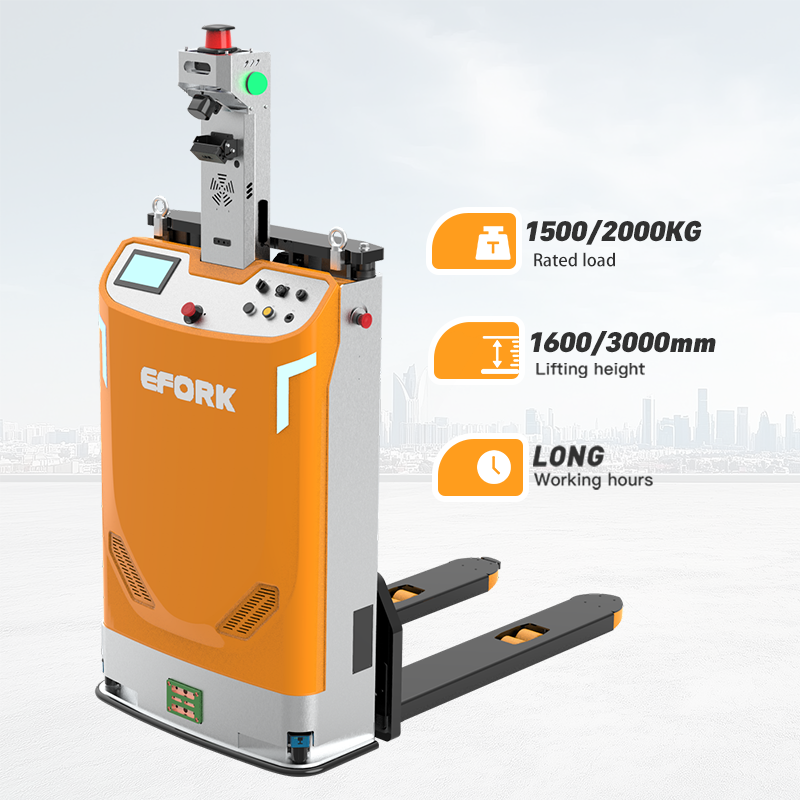
Heli Yufeng EDA20-30 Slim Stacking AGV Forklift
A CE-certified 2 t, 3 m 3D SLAM stacking AGV with WiFi/5G connectivity. The slim chassis suits existing Indonesian warehouses where aisles, lifts and charging rooms were not designed around robots.
- 2T
- 3 m
- 3D SLAM / 5G
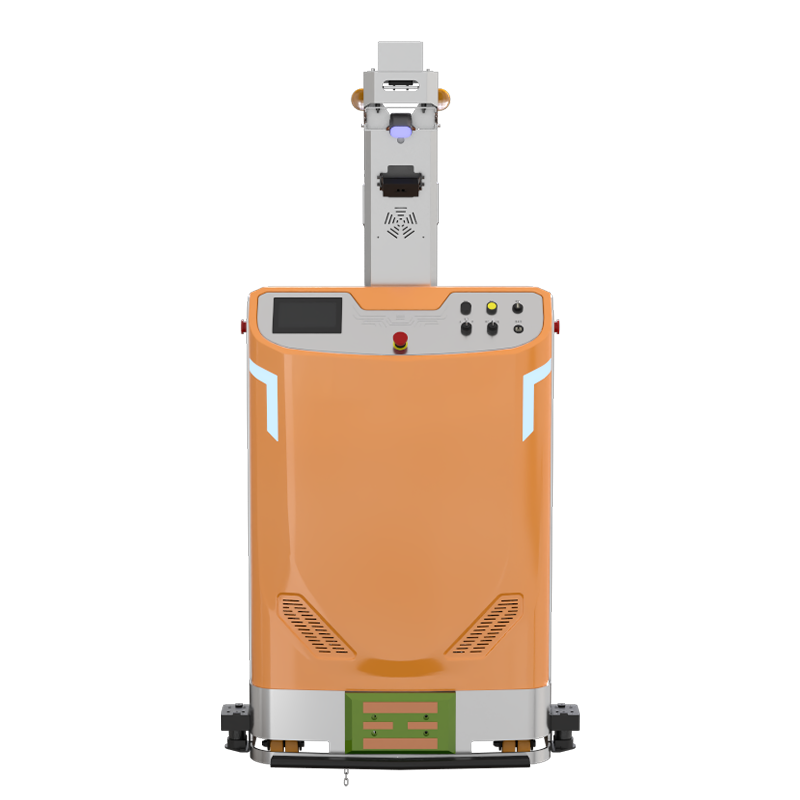
Material Handling AGV Body 2T Narrow Body Compact Chassis
A compact 2 t AGV body for production-line and workshop transport in tight spaces. A practical choice for manufacturers in Bekasi, Karawang and Sidoarjo that need to automate point-to-point moves before full warehouse automation.
- 2T
- Narrow chassis
- Tight-space
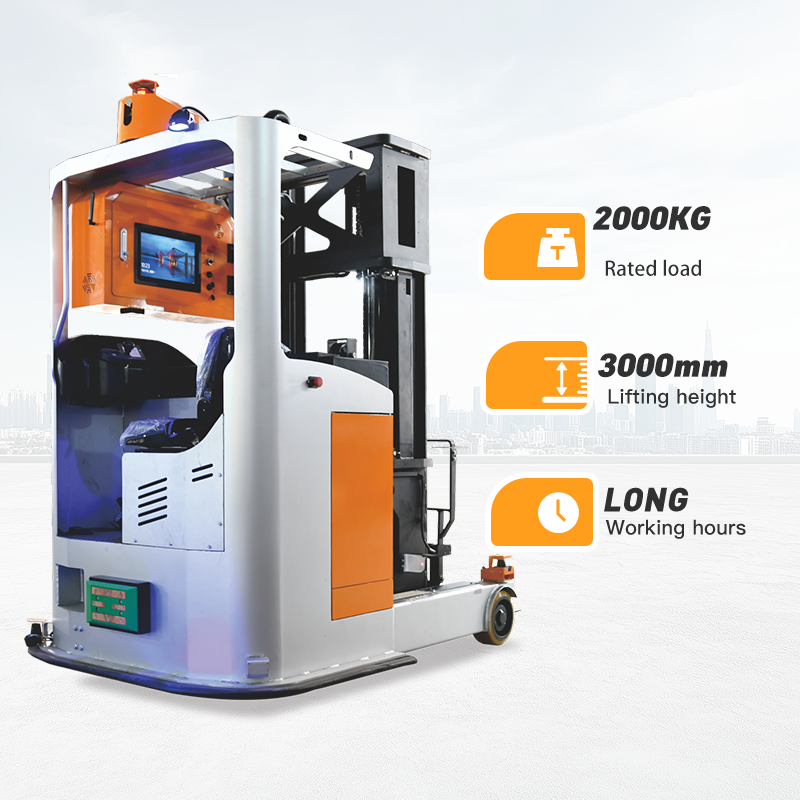
Reach Truck AGV Forklift 2T 3M Laser SLAM Navigation
A 2 t reach truck AGV for selective racking and warehouse automation. Laser SLAM navigation supports stable routes, while the reach mast reduces aisle width compared with a counterbalanced truck.
- 2T
- 3 m
- Laser SLAM
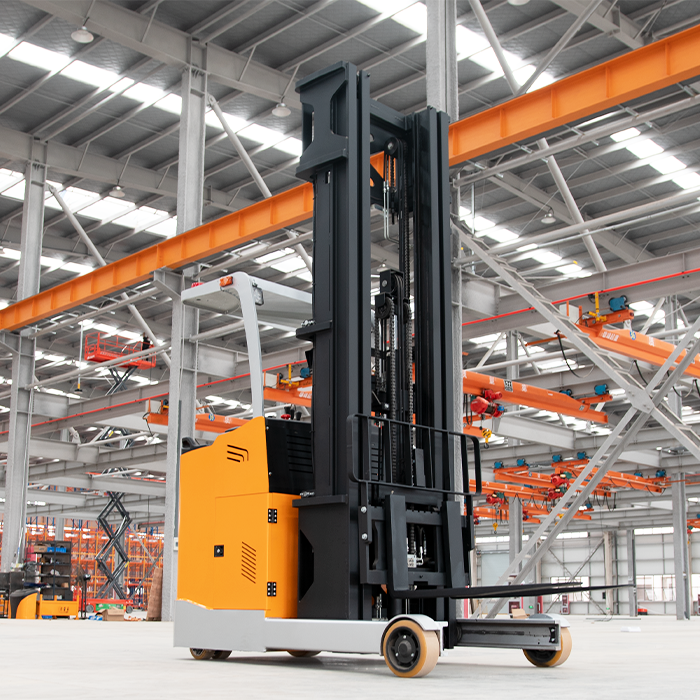
China Wholesale 2000kg Industrial Forklift Pallet Truck
A value-focused 2,000 kg pallet truck for distributors and buyers comparing wholesale options. Suited to standard pallet handling where uptime, spare-part availability and total cost of ownership are the deciding factors.
- 2,000 kg
- Wholesale price
- 6 / 8 / 12 m
Need help matching a model to your racking, pallet quality and throughput target? Send us your pallet length, width, height, maximum load and site location—our engineers will shortlist the safest platform.
Inquire NowIndonesia’s Logistics Automation Opportunity: A Practical Market View
Indonesia’s logistics sector is being reshaped by e-commerce growth, manufacturing relocation, urban distribution pressure and demand for more resilient supply chains. In Greater Jakarta, Bekasi, Karawang, Surabaya, Medan and Batam, warehouses face rising land and rental costs, tightening labour markets and customer expectations for shorter order cycle times. Manual forklift operations can work at low volume, but as order profiles multiply, hidden costs appear: damaged racking, inconsistent put-away, idle labour between picks, dock congestion and safety incidents around staging areas.
For global buyers, Indonesia is not one market. A 3PL warehouse in Cikarang may need multi-client flexibility and WMS integration. A cold-chain facility in Surabaya needs robust components for humidity and temperature transitions. A manufacturing plant in Karawang may prioritise line-side JIT delivery. A distributor in Medan must plan for spare-parts logistics across islands. The right automation architecture therefore starts with the operating environment—pallet quality, aisle width, floor flatness, power supply, fire strategy and maintenance capability—not with a catalogue.
This is where a factory-direct logistics automation manufacturer and wholesale partner adds value. A manufacturer with in-house chassis production, navigation integration and testing can configure load capacity, lift height, fork dimensions, battery strategy and safety scanners around the actual pallet and aisle data. A wholesaler or integrator, in turn, can bundle equipment, installation and after-sales support for local end users. The strongest projects combine both: a verified factory and a local execution plan.
Localized Application Scenarios: Where Automation Pays Back First
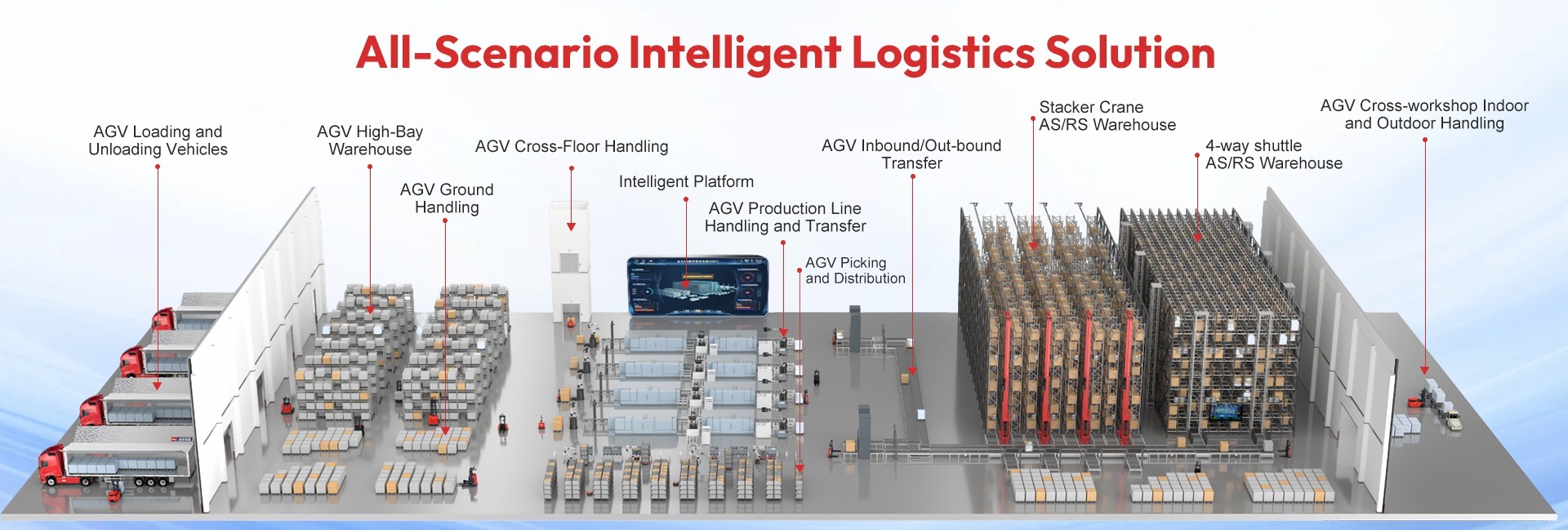
For most Indonesian operations, the fastest payback comes from predictable, high-frequency moves—not from automating every pallet at once. These six scenarios are commonly phased first because they reduce waiting, damage and labour variance without requiring a total warehouse rebuild.
Inbound receiving and put-away
Reach truck or counterbalanced AGVs move pallets from dock to rack or staging area, reducing congestion and inconsistent put-away during peak delivery windows.
High-density pallet storage
VNA 3-way AGVs and AS/RS stacker cranes increase storage density where land, rent and ceiling height make every cubic metre valuable.
Line-side JIT delivery
Compact AGV bodies and counterbalanced units deliver materials to production lines on fixed routes, reducing forklift traffic and operator waiting in manufacturing plants.
3PL multi-client fulfilment
Pallet stacker AGVs with WMS-ready controls help 3PL operators standardise handling across clients with different pallet profiles and order rhythms.
Cold chain and pharma storage
AS/RS stacker cranes with cold-storage configurations support high-bay frozen and chilled storage where manual work is slow, restrictive and uncomfortable.
Spare parts and e-commerce bins
Mini-load and four-way shuttle systems support fast-moving small-item storage, high pick frequency and WMS integration for electronics, spare parts and e-commerce fulfilment.
Match the Platform to the Indonesian Site
Use this table to shortlist equipment for a technical review. Final specifications must be confirmed against pallet quality, aisle width, floor flatness, fire strategy, power supply and maintenance capability.
| Site condition | Recommended platform | Why it fits | Typical first phase |
|---|---|---|---|
| Existing warehouse with low racking and mixed pallets | Compact 2T AGV or slim stacking AGV | Quick deployment with limited rack changes and flexible route design. | Dock-to-staging or line-side transport |
| Selective racking with medium lift height | Reach truck AGV | Reach mast reduces aisle width while supporting standard pallet racking. | Put-away and replenishment routes |
| High rent, limited floor area and high-density storage | VNA AGV or 3-way VNA stacker | Very narrow aisle handling improves cube utilisation without new construction. | High-bay pallet storage retrofit |
| New high-bay warehouse with high throughput | Industrial pallet truck and AS/RS stacker crane options | Rail-guided high-bay cranes support WMS/WCS control and 24/7 operation. | Finished-goods or distribution centre automation |
| Dense pallet storage with phased expansion | Four-way shuttle system | Multi-level shuttle storage supports FIFO/LIFO flexibility and future expansion. | High-density reserve storage |
| Production line and tight workshop transport | 2T narrow-body AGV | Compact chassis navigates tight turns and existing production layouts. | Point-to-point material movement |
| Cold chain, frozen storage or pharma | AS/RS stacker crane with cold-storage configuration | Reduces manual exposure and improves space use in temperature-controlled buildings. | High-bay frozen or chilled storage |
For projects in Indonesia, confirm voltage, humidity protection, spare-parts plan and operator training during the technical review—not after shipment.
Development Trends Shaping Logistics Automation in Indonesia
Buyer expectations are moving from “Can a robot move a pallet?” to “Can the system adapt to our building, our WMS and our service reality?” These four trends are shaping equipment decisions across Indonesian manufacturing and distribution.
3D SLAM over fixed infrastructure
Lower dependence on reflectors and floor tape makes AGVs faster to deploy in leased warehouses and facilities that are frequently re-laid out.
Very narrow aisle and high-bay density
Rising land and rental costs push VNA and AS/RS adoption, with VNA systems reaching 7–11 m and stacker cranes supporting significantly higher buildings.
WMS/WCS integration and fleet visibility
3PL operators and manufacturers want real-time location, task confirmation, traceability and ERP/WMS data exchange—not stand-alone robots.
Tropicalized engineering and lifecycle support
Humidity, heat, coastal air and spare-parts logistics make corrosion protection, electrical specification and remote diagnostics part of the buying decision.
Why Nexrik Is a Credible Manufacturing Partner for Indonesian Buyers
Anhui Nexrik Intelligent Technology Co., Ltd. is a high-tech manufacturer specialising in the R&D, production and integration of intelligent warehousing equipment—AGV forklifts, AS/RS stacker cranes, four-way shuttles and RGVs. Its plants are located in the Huagang Industrial Park, Feixi County, Hefei, Anhui, a recognised hub for China’s forklift industry.
In-house manufacturing and testing
Chassis, masts and control integration are built and tested on company lines, with onsite material and finished-product inspection before shipment.
Laser and 3D SLAM navigation
Reflector-based laser navigation supports fixed routes; 3D SLAM localises using natural building features and reduces site preparation for retrofits.
One-stop turnkey integration
AGVs, stacker cranes, four-way shuttles and RGVs from a single source, engineered as one WMS-ready system rather than stitched together on site.
Compliance and export documentation
CE marking under Machinery Directive 2006/42/EC, ISO 9001 and ISO 45001 systems, plus SGS onsite verification for tender and customs review.
OEM, ODM and full customization
Load capacity, lift height, fork dimensions, battery configuration, cold-storage variants and buyer-label production can be specified for wholesale programmes.
Lifecycle and remote support
Project workflow covers site analysis, simulation, FAT, commissioning, operator training, remote diagnostics, spare-parts supply and fleet expansion planning.



Common Questions Indonesian Buyers Ask Before Purchase
These are the purchasing, engineering and after-sales questions that usually determine whether an automation project proceeds smoothly from inquiry to go-live.
What is the minimum order quantity, and can we run a pilot?
How do you support installation and after-sales service in Indonesia?
Can the equipment work in humid, coastal or cold-chain environments?
Do your AGVs integrate with our WMS or ERP?
What about CE, import documentation and local compliance?
Which trade terms and payment methods are accepted?
Build a Phased Automation Plan for Your Indonesian Site
Send us your rack drawing, pallet specification, throughput target, site location, power supply and target go-live date. Our engineers will return a model shortlist, preliminary fleet size, layout assumptions and a factory-direct quotation. For wholesalers and integrators, we can support OEM/ODM, buyer-label production and multi-site rollouts.
Inquire Now