Industrial Robot Forklift Factory & Exporter in Germany
Factory-direct AGV forklifts, 3D SLAM reach trucks, VNA robots, AS/RS stacker cranes and four-way shuttles for German intralogistics. CE documentation, SGS-verified production, MOQ 1 set, and engineering support from pallet data to commissioning.
8 Robot Forklift & AGV Configurations Recommended for German Operations
German warehouse decisions are shaped by aisle width, rack height, pallet condition, WMS integration and safety validation. The eight models below are the original product series presented by the company, retained with their original product URLs and recommended here against real German application profiles.
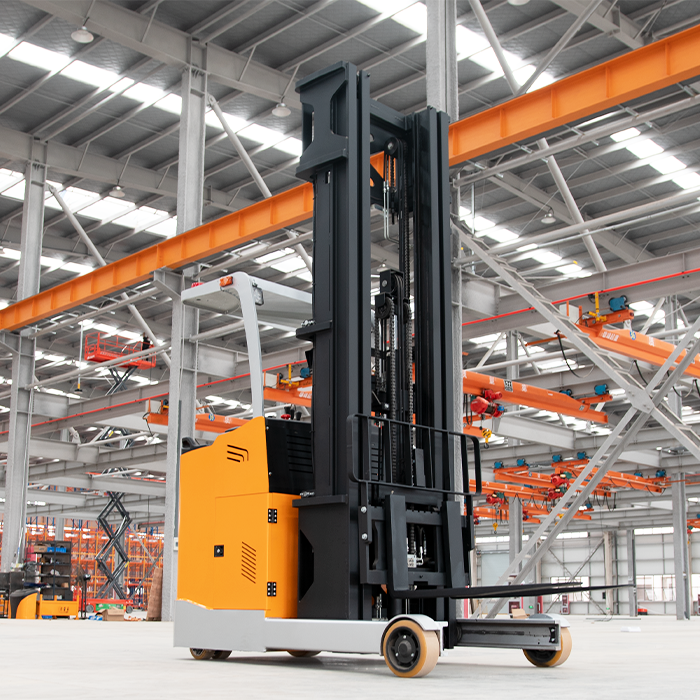
China Wholesale 2000kg 12m 8m 6m Industrial Forklift Pallet Truck Good Price
An export-ready 2,000 kg pallet truck platform with 6 m, 8 m and 12 m lift options. A practical route for factories and distribution centres that need high-bay pallet handling without rebuilding the whole fleet around a bespoke vehicle.
- 2,000 kg
- 6 / 8 / 12 m
- Factory logistics
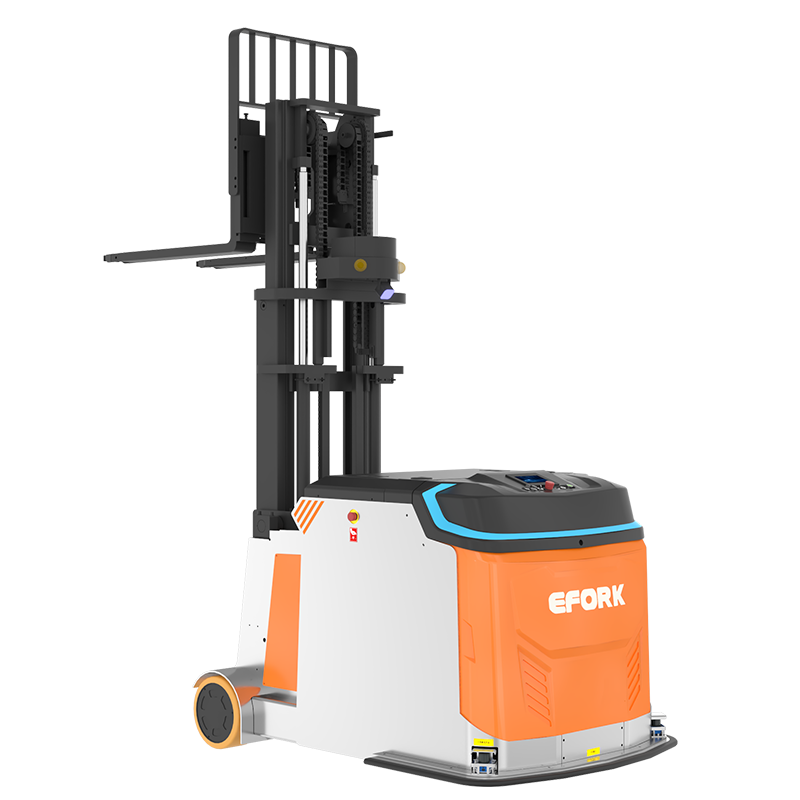
EFORK EDB30-30 Counterbalanced AGV Body 3M 3T High Lift Capacity Forklift Fork Legs High Flexibility 3D SLAM Navigation for
Counterbalanced AGV body with 3T capacity and 3,000 mm lift, using 3D SLAM navigation. Because the truck carries the load without front outriggers, it suits closed-bottom pallets, production-line replenishment and trailer-dock transfers.
- 3,000 kg
- 3 m lift
- 3D SLAM
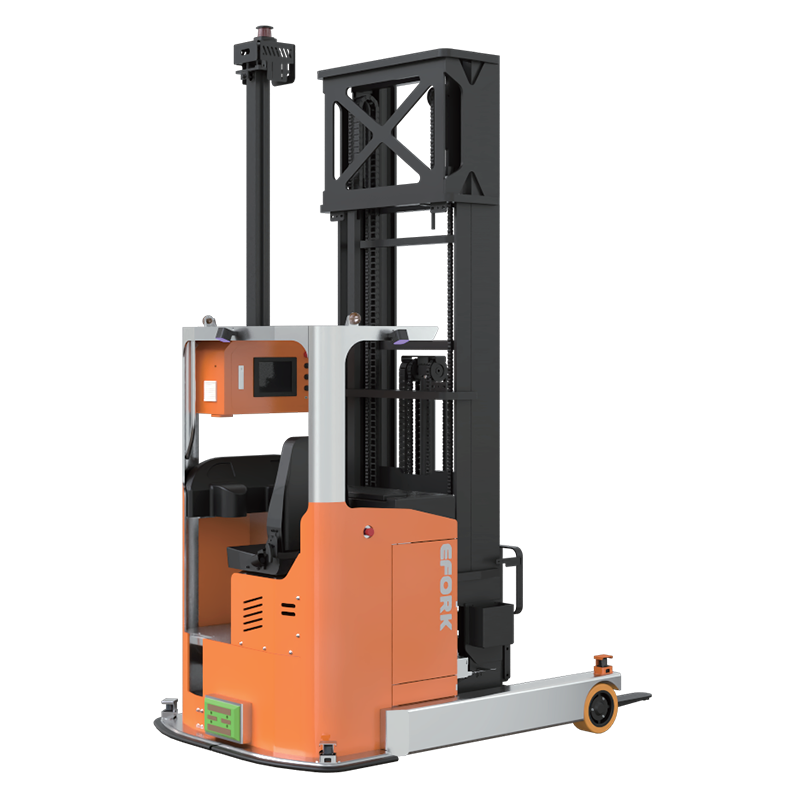
4.5M Reach Truck AGV Body 2T for Pallet Handling High Lifting Smart Warehouse Logistics Robot Laser Slam Navigation CE Certified
2T reach truck AGV for pallet handling in smart warehouses, with laser SLAM navigation and CE certification. The reach design saves aisle width while keeping pallet access stable at height, a strong fit for existing selective racking.
- 2,000 kg
- 4.5 m reach
- Laser SLAM
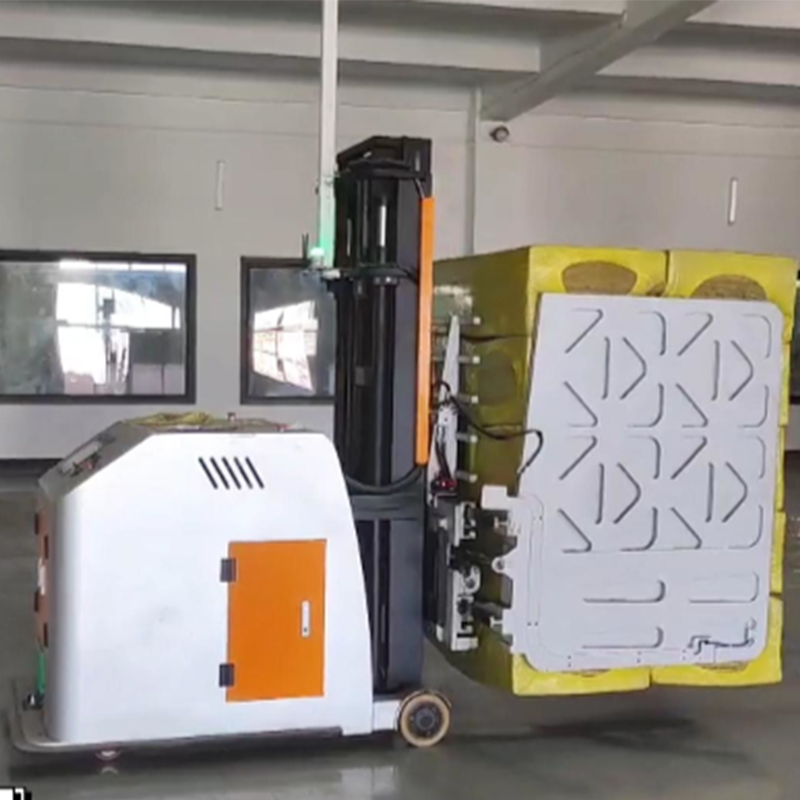
EFORK Automated Guided Vehicle AGV Forklift 3T 3000MM Counterbalanced 3D SLAM Construction Factory Logistics Pallet Truck
3T counterbalanced AGV forklift with 3,000 mm lift for construction-factory logistics and mixed indoor routes. It uses 3D SLAM to reduce reflector work and simplify brownfield deployment.
- 3,000 kg
- 3,000 mm
- Brownfield ready
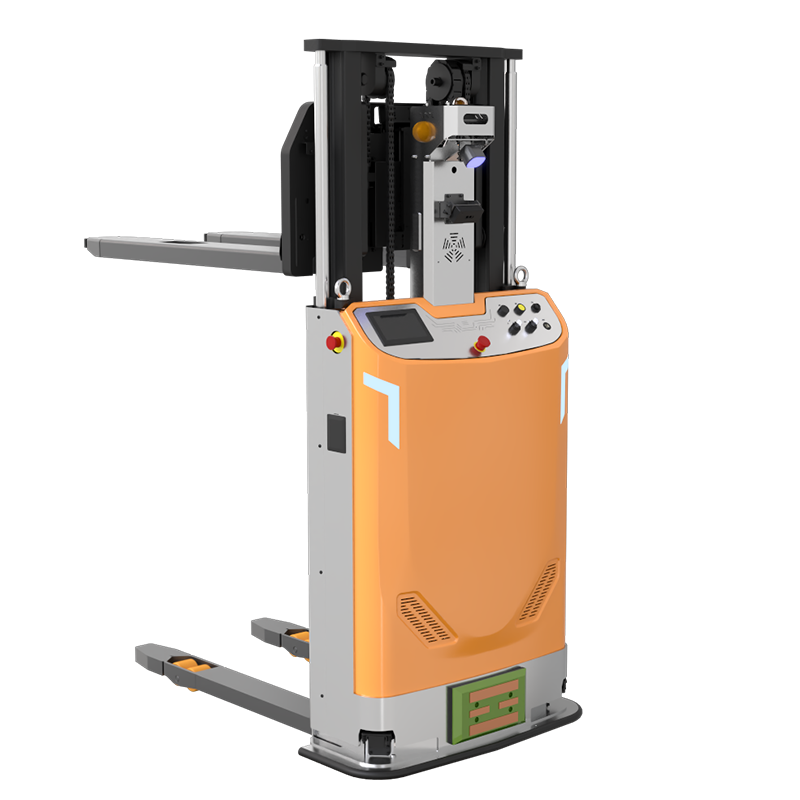
2T 1.6 M Slim Narrow-Body Stacker AGV Body for High-Density Storage High Lift Pallet Stacking AGV Maximize Warehouse Space
Slim 2T stacker AGV body with 1.6 m lift for high-density storage. Its narrow body helps German warehouses recover aisle space and increase pallet positions without a building extension.
- 2,000 kg
- 1.6 m lift
- Narrow body
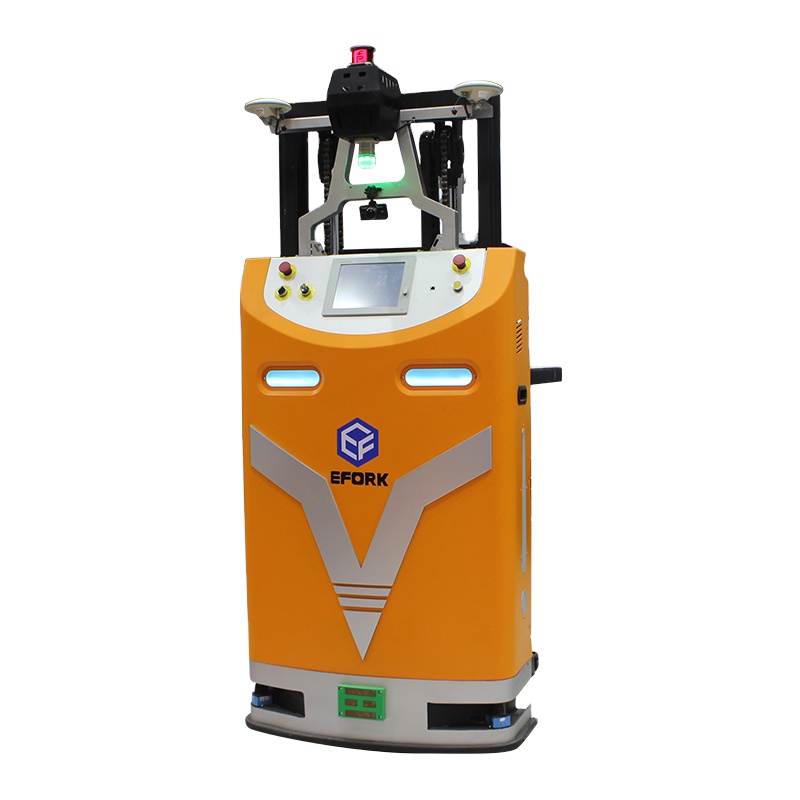
CE Certified EFORK EDA20-16 2T 1200mm Fork Width 180mm 3D SLAM Laser Navigation AGV WIFI/5G 10mm Accuracy 1600mm Lifting Height
CE-certified 2T AGV with 1,200 mm fork width, 180 mm fork profile and 1,600 mm lifting height. 3D SLAM/laser navigation, WIFI/5G connectivity and 10 mm positioning accuracy make it a strong fit for precision pallet handling.
- 2,000 kg
- 1,600 mm
- 10 mm accuracy
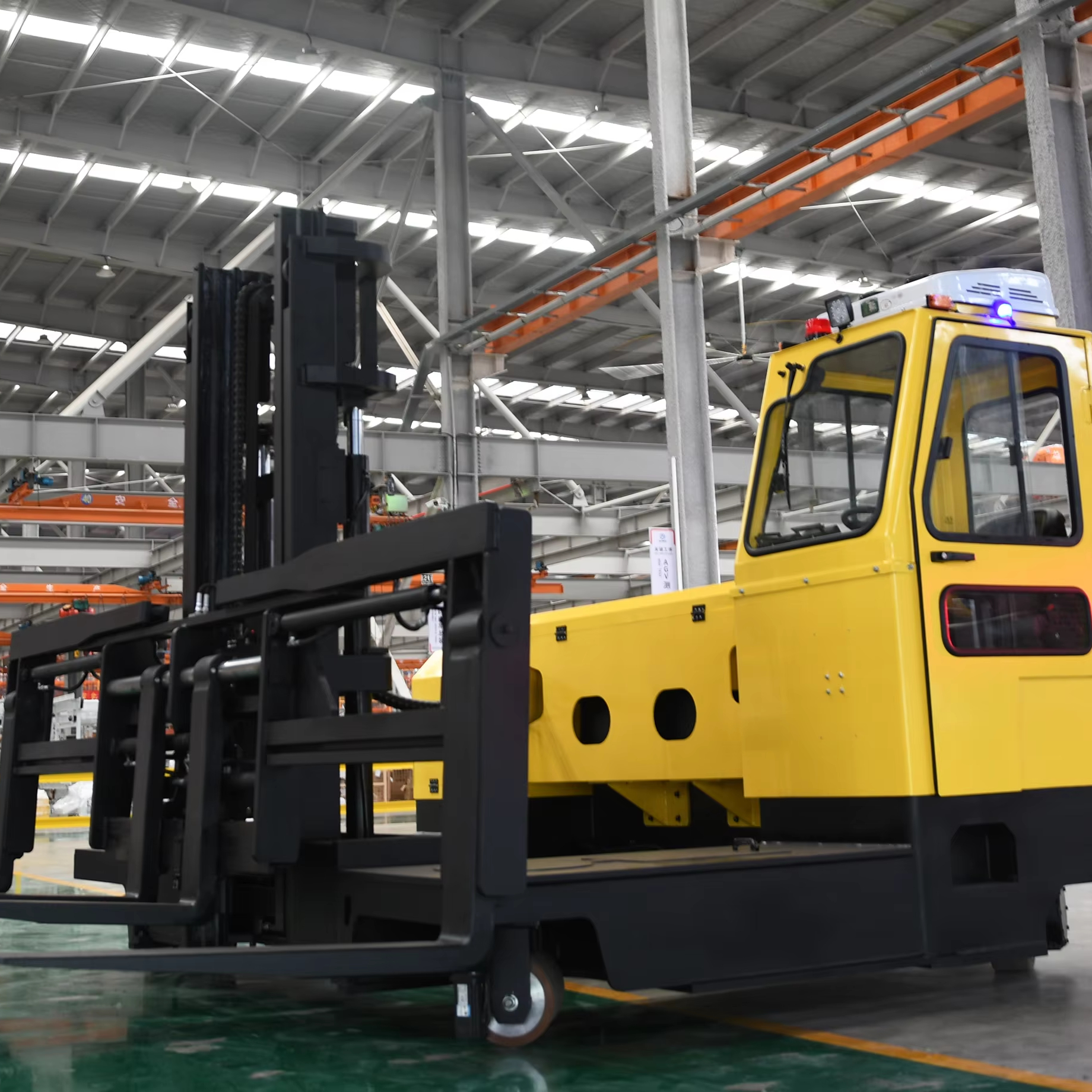
Multi-directional Forklift Reach Truck Stacker 3.5 Ton 5Ton Full Way Eclectic Side Loader Forklift With Wide Body Seat
Multi-directional side loader for 3.5–5T long loads, with a wide-body seat configuration. It is designed for operations handling timber, steel, profiles or other loads that a conventional front forklift cannot turn efficiently.
- 3.5–5 t
- Side loading
- Long loads
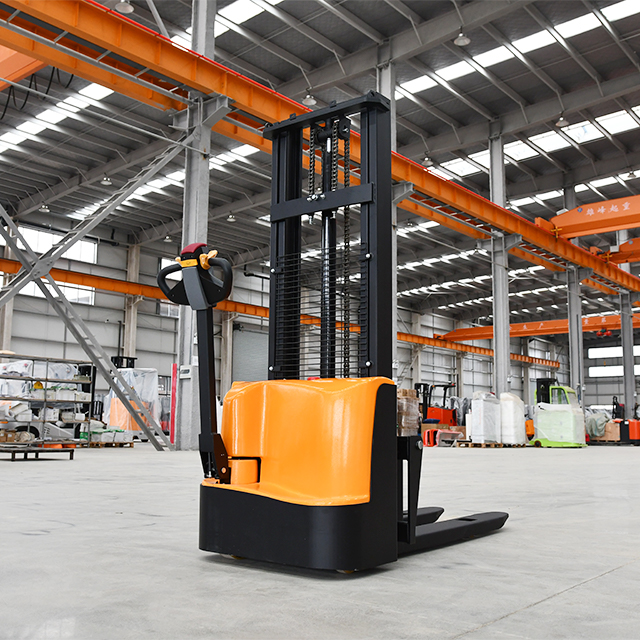
1Ton & 2Ton Full Electric Pallet Stacker Walkie Type High Performance, Low Cost Optional with Training Wheels
1T and 2T full-electric walkie pallet stacker with optional training wheels. A cost-controlled entry for low-level stacking, dock support and small warehouses that need electric handling without a large capital programme.
- 1–2 t
- Walkie type
- Low cost
What “Factory & Exporter in Germany” Should Mean for a Serious Buyer
Germany is one of Europe’s most demanding intralogistics markets: high labour cost, strict machinery safety expectations, complex WMS landscapes and little tolerance for unplanned downtime. A robot forklift is therefore not a commodity purchase. It is a production asset that must pass your safety officer’s review, connect to your ERP/WMS and remain serviceable for years.
Transparency matters. We are not a German-owned factory with a domestic assembly line. We are Anhui Nexrik Intelligent Technology Co., Ltd., an SGS onsite-verified manufacturer in Hefei, China, with an export programme built for German buyers. On this page, “Industrial Robot Forklift Factory & Exporter in Germany” means factory-direct supply to Germany, not a claim of German manufacturing. That distinction should be part of every supplier comparison you run.
The second distinction is engineering scope. A robot forklift quotation is only useful when it is tied to pallet dimensions, rack beam elevations, aisle clearances, floor flatness, lift height, throughput peaks, charging windows and the safety concept. German buyers often ask for a machine price first, then discover that the true project risk sits in the interface between the AGV, the racking, the WMS and the people who still work in the same aisle.
Our approach is to treat the machine as part of a localised intralogistics system. For German operations, that means CE documentation, an EN ISO 3691-4 safety review conversation, a clear WMS/ERP interface definition, an EU spare-parts plan and a realistic commissioning sequence. The objective is not simply to ship a forklift; it is to help your team make a defensible automation decision that survives procurement, operations and maintenance review.
This is also where information gain matters. Rather than repeating a catalogue description, this page compares the eight original product platforms, maps them to German application scenarios, explains the procurement checklist and provides a practical total-cost-of-ownership model. The aim is to shorten your evaluation cycle and reduce the risk of choosing a machine that looks competitive on paper but creates hidden cost after installation.
German-Market Export Package
The page is written for German warehouse operators, 3PLs, automotive suppliers, cold-chain facilities and Mittelstand factories evaluating China-based manufacturing.
- CE marking under Machinery Directive 2006/42/EC for the AGV range.
- ISO 9001 and ISO 45001 management system certification.
- SGS onsite verification of premises and legal status.
- 3D SLAM or laser navigation options to suit brownfield sites.
- WMS-ready AS/RS and four-way shuttle portfolio.
- MOQ from 1 set for pilot deployment.
- Trade terms including FOB, CFR, CIF, EXW, FAS, CIP and DDP.
- Payment in USD, EUR or CNY with L/C, D/P, D/A, credit card or Western Union options.
Factory Scale and Documentation Buyers Can Audit
For a multi-year automation investment, capacity and traceability matter. The figures below are based on the company profile and verification information referenced by the original website.
Total Staff
Onsite verification referenceFactory Floorspace
Production and integration capacityAnnual Revenue
Capacity for fleet ordersAwarded Patents
Plus 1 registered trademarkAdditional company facts include ISO 9001 and ISO 45001 management systems, CE marking under 2006/42/EC, SGS onsite verification, 7 international exhibitions, MOQ 1 set, full OEM/ODM and buyer-label production. The original website also references honors such as Quality Management, Credibility & Service AAA, National Enterprise of Good Creditworthiness and Anhui Famous Brand.
German Application Scenarios: Where Robot Forklifts Pay Back Fastest
German automation projects are rarely about replacing an entire workforce. They are about stabilising repetitive transport, reducing damage, covering shift gaps and making high-value space more productive. These four scenarios show where the eight recommended models are most likely to justify the investment.
Automotive & Tier-1 Suppliers
Line-side replenishment, sequencing, trailer-dock transfers and internal pallet movement across multiple shifts. The requirement is repeatability, safety-scanner coverage and reliable WMS/ERP communication.
Contract Logistics & 3PL
Multi-client warehouses face changing pallet profiles and peaks. Reach truck AGVs, VNA stackers and WMS-ready fleet control can improve slotting density without locking the operation into one client’s layout.
Cold Chain & Food Retail
Frozen and chilled storage places a premium on operator comfort, battery strategy and equipment reliability. AS/RS stacker cranes and cold-storage variants reduce time spent in harsh zones.
E-commerce & Electronics
Fast-moving small parts, high SKU counts and frequent replenishment favour mini-load AS/RS, slim stacker AGVs and precise 3D SLAM navigation with clean handover to picking stations.
Germany-Specific Trends Shaping 2025–2026 Automation Decisions
German buyers are not adopting automation in a vacuum. Labour availability, energy strategy, building constraints and existing IT architecture are all shaping what “good” looks like.
Fachkräftemangel and Wage Pressure
Repeatable transport tasks compete directly with scarce skilled labour. Automation should target stable, high-frequency routes first, not every non-standard movement.
High-Bay Density in Constrained Buildings
German warehouses often face building-height and planning limits. VNA AGVs, AS/RS stacker cranes and four-way shuttles help increase pallet positions per square metre.
Brownfield Retrofit, Not Only Greenfield
3D SLAM reduces dependence on reflectors and floor tape, which is important in existing buildings where production cannot stop for a long installation window.
Energy-Aware Battery Strategy
Lithium batteries, opportunity charging and regenerative braking are increasingly evaluated against shift patterns and local electricity cost, not just purchase price.
Procurement Becomes System Integration
WMS/ERP interface definition, spare-parts planning, safety documentation and remote diagnostics are now part of the purchase decision, not after-sales extras.
Which Equipment Fits the German Warehouse Profile?
Use this matrix to shortlist the right platform before requesting a layout study. Final specifications must always be confirmed against your load unit, rack drawings, floor survey and safety concept.
| German Application | Recommended Platform | Typical Configuration | What to Verify |
|---|---|---|---|
| Low-to-medium racking with mixed pallets | Pallet stacker AGV / reach truck AGV | 1.5–2 T, 1.6–4.5 m lift, 3D SLAM or laser | Pallet quality, aisle clearance, floor flatness |
| High-bay pallet storage in tight aisles | VNA 3-way AGV / AS/RS stacker crane | 1.6–5 T, 7–11 m or up to 40 m | Rack tolerance, safety scanners, WMS integration |
| Closed-bottom pallets, cages and dock transfer | Counterbalanced AGV forklift | 1.5–3 T, 3 m lift, no front outriggers | Load centre, trailer interface, traffic rules |
| Long loads such as steel, timber or profiles | Multi-directional side loader | 3.5–5 T, side-loading configuration | Turning envelope, load stability, operator zone |
| Low-level stacking and cost-controlled entry | Full-electric walkie pallet stacker | 1–2 T, walkie type, optional training wheels | Battery cycle, floor condition, throughput |
| Dense small-item storage | Mini-load AS/RS or slim stacker AGV | 50–100 kg per bin or 2 T pallet | Bin profile, WMS interface, pick station design |
The German Procurement Checklist We Recommend Before You Approve a PO
A robot forklift project can look simple once the machine is on site. The difficult work is proving that it fits your safety system, IT landscape and maintenance organisation.
CE and Risk File
Request the Declaration of Conformity, safety function description and risk-assessment documentation package for your safety officer.
EN ISO 3691-4 Review
Discuss safety-scanner coverage, speed zones, pedestrian interaction and site-specific measures. Relevant EN 1175 electrical points should also be reviewed.
WMS / ERP Interface
Define task allocation, handshake points, error handling and reporting. WMS-ready does not mean zero integration work.
Floor and Rack Survey
Check floor flatness, joints, rack beam tolerances, aisle width, charging location and fire-safety routes before finalising the layout.
EU Spare Parts and Service
Agree the recommended wear kit, critical spare list, remote diagnostic process and escalation path before shipment.
FAT, SAT and Training
Run factory acceptance tests, site acceptance tests and operator/maintenance training with written checklists and sign-off criteria.
This checklist is engineering guidance, not legal advice. Final conformity and site risk assessment remain the responsibility of the operating company and its safety organisation.
A Practical Total-Cost-of-Ownership Model for German Intralogistics
German buyers rarely need the cheapest forklift. They need the lowest risk-adjusted cost per pallet movement over the life of the system. Use this model to compare quotations on a consistent basis.
Start with the annual robot hours. A two-shift operation running 16 hours per day, 250 days per year at 85% utilisation produces approximately 3,400 robot hours per year. If a third shift is added, the energy, maintenance and spare-parts assumptions must be recalculated rather than copied from the pilot.
Then separate the quotation into its true cost lines. A low machine price can be misleading if the project requires extensive floor marking, extra reflectors, a bespoke WMS gateway or long commissioning downtime. In Germany, the cost of a delayed go-live can exceed the difference between two equipment quotes.
Finally, ask how the system scales. If your peak season requires two additional vehicles, can the fleet manager add them without redesigning the traffic plan? Can the spare-parts kit be reused? Can the charger infrastructure support opportunity charging? These questions reveal whether the supplier is selling a machine or an expandable intralogistics platform.
TCO Formula
Factory Advantages German Buyers Can Audit
The original website presents Nexrik as a manufacturer and trading company with 1,152 staff, 66,650 m² floorspace, 7 patents, 7 international exhibitions and a portfolio covering AGV forklifts, VNA AGVs, AS/RS stacker cranes and four-way shuttles. Those are useful signals, but they should be checked against your project requirements.
Our production base is located in the Huagang Industrial Park, Feixi County, Hefei, an established forklift and intelligent logistics manufacturing cluster. The original profile describes an 8-year industry presence, roughly US$100 million annual revenue, in-house material and finished-product inspection, and a product scope that includes AGV forklifts, AS/RS stacker cranes, four-way shuttles and RGVs.
For German buyers, the value of this scale is not the brochure number itself. It is the ability to integrate the chassis, mast, control system, navigation and project engineering under one supplier relationship. A one-stop scope can reduce the number of interfaces you must manage between a truck supplier, a navigation supplier and a WMS integrator.
The company also supports full customization, OEM, ODM and buyer-label production, including load capacity, lift height, fork configuration and cold-storage variants. For a German distributor or system integrator, that flexibility can be more important than a standard catalogue model, provided the conformity and documentation boundaries are agreed in writing.



Manufacturing Scale
66,650 m² floorspace, 1,152 staff and in-house integration capacity for fleet and turnkey projects.
Documented Quality
ISO 9001, ISO 45001, CE under 2006/42/EC, SGS onsite verification and 7 awarded patents.
One-Stop Portfolio
AGV forklifts, VNA AGVs, AS/RS stacker cranes, four-way shuttles and RGVs designed as one WMS-ready system.
Export Flexibility
MOQ 1 set, OEM/ODM, buyer-label production, DDP/FOB/CIF terms and EUR/USD/CNY payment options.
Questions German Buyers Ask Before Requesting a Quote
These are the practical questions that matter during supplier evaluation. Clear answers reduce the risk of a mismatch between procurement expectations and engineering reality.
Do you have a robot forklift factory in Germany?
What is the minimum order quantity for your AGV forklifts and stacker cranes?
Which navigation technologies are available?
What certifications and quality documents can be provided?
Can your equipment integrate with our existing WMS or ERP?
Do you offer OEM, ODM and customization for German distributors?
What trade terms and payment methods are accepted?
How should we prepare for German safety documentation and risk assessment?
How do you support delivery and commissioning to Germany?
What do you need from us to propose the right system?
Send Your Rack Layout, Pallet Drawing and Throughput Target
Our engineers will respond with a focused model shortlist, critical safety points and a preliminary fleet-size recommendation. Share your German site constraints, and we will help you turn a robot forklift enquiry into a defensible intralogistics decision.
Send an Inquiry Factory-direct from Hefei, China · Germany-facing export support · CE / ISO / SGS documented · MOQ 1 set