Eight Models for Cologne Warehouse and Production Logistics
These eight product platforms cover the most common Cologne buying scenarios: trailer-to-rack transfer, narrow-aisle stacking, line-side replenishment, high-bay storage and mixed-fleet automation. Load, lift height, fork geometry, battery strategy and navigation can be engineered around your pallet profile and rack drawing.
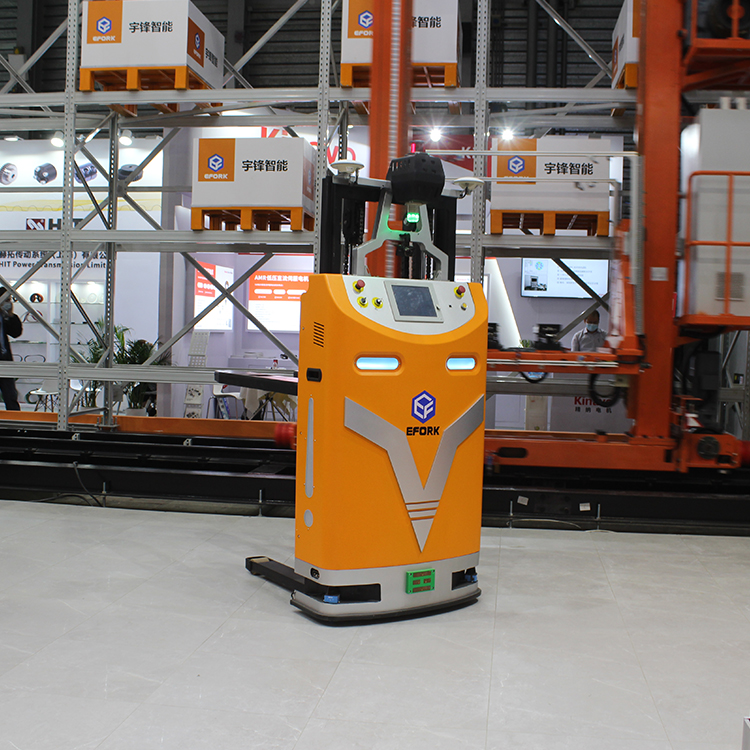
CE Certified EFORK EDA20-16 2T 1600mm Laser Navigation Self-Driving Forklift AGV WIFI/5G 10mm Accuracy 6-8H Working Time
A practical entry platform for Cologne 3PLs and distribution centres that need repeatable dock-to-rack movements with laser navigation, WIFI/5G connectivity and compact 1,600 mm lift height.
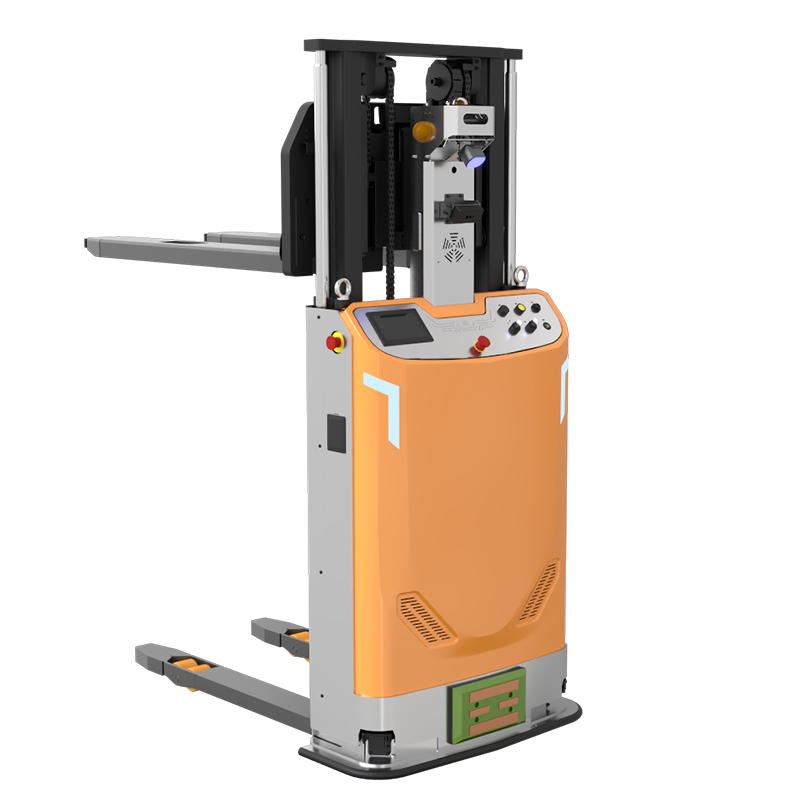
Automatic Stacker AGV Body Slim Narrow-Body 3M 2T High-Density Storage Pallet Stacking 3D SLAM Navigation WIFI/5G Maximize
Slim-body architecture for dense storage areas where aisle space is constrained. Natural-feature 3D SLAM localization reduces dependence on floor tape and supports flexible layout changes.
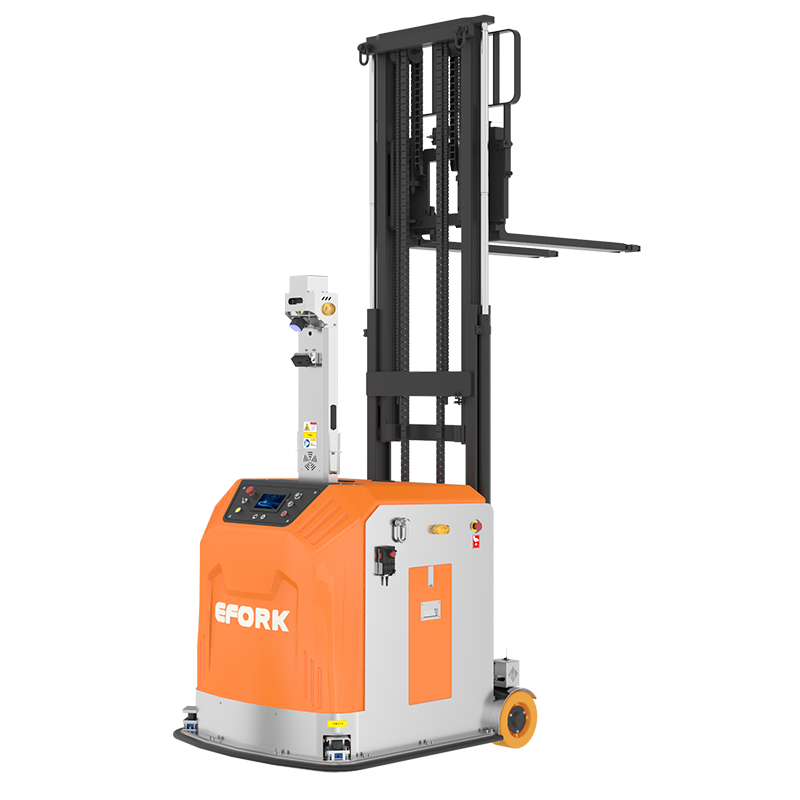
EFORK Heavy Duty Forklift AGV Counterbalanced Body 2T 3M Fork Legs High Flexibility 3D SLAM Navigation WIFI/5G for Pallet
Counterbalanced design without front outriggers, making it suitable for closed-bottom pallets, cages, production-line feeding and trailer operations that are common in Cologne industrial estates.
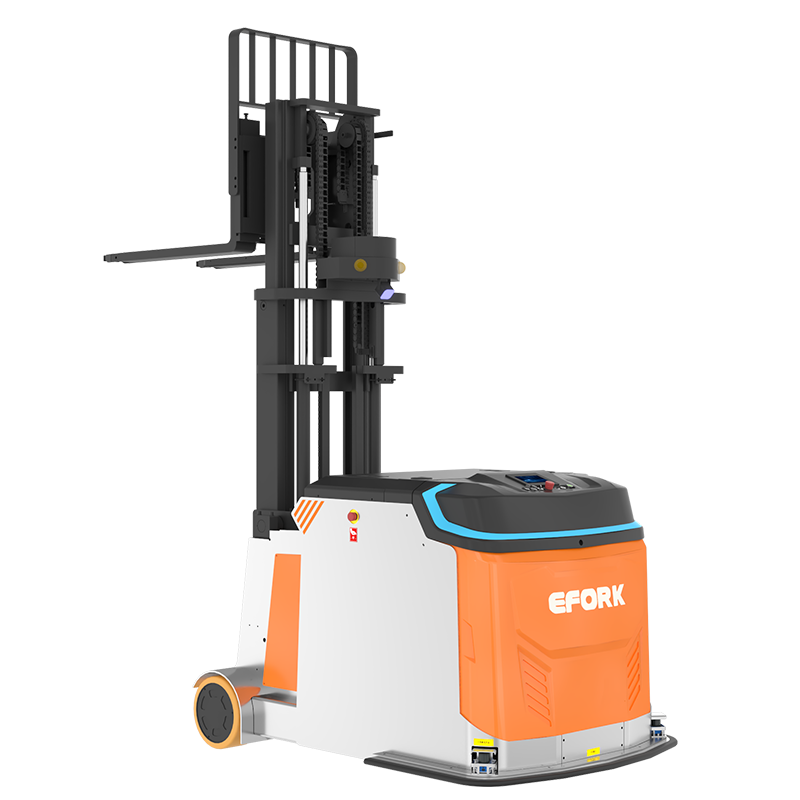
EFORK EDB30-30 Counterbalanced AGV Body 3M 3T High Lift Capacity Forklift Fork Legs High Flexibility 3D SLAM Navigation for
Higher payload for heavy pallets, machinery components and production logistics. It is often specified where a 2T robot would sit too close to its duty limit during peak cycles.
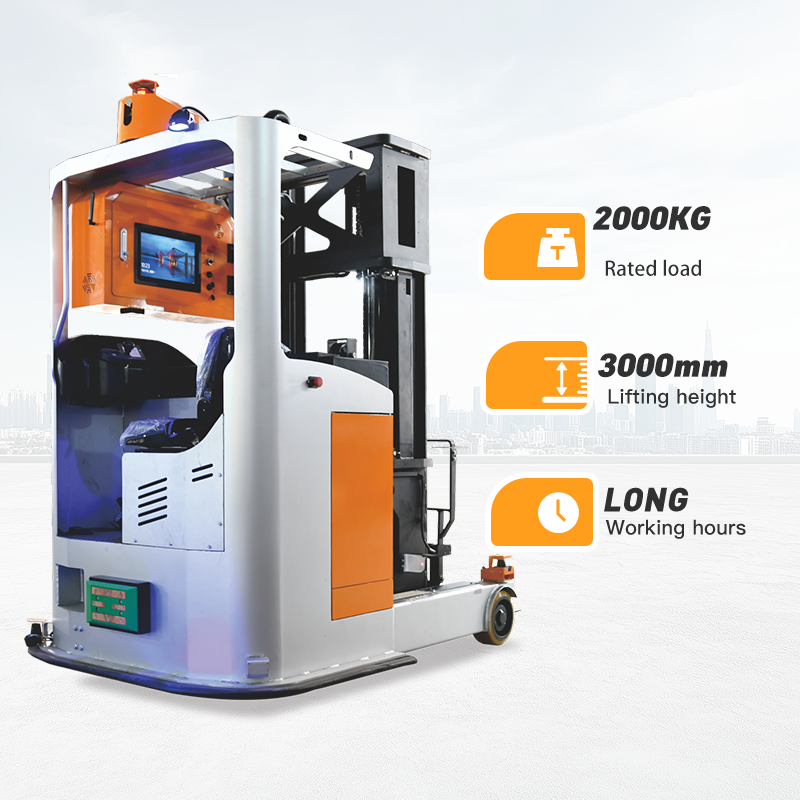
Reach Truck AGV Forklift 2T 3M Laser Slam Navigation CE Certified Warehouse Automation Robot for Factory Logistics
Reach-truck kinematics allow the mast to retract into the chassis, supporting tighter aisle planning than a counterbalanced robot while still serving medium-height racking.
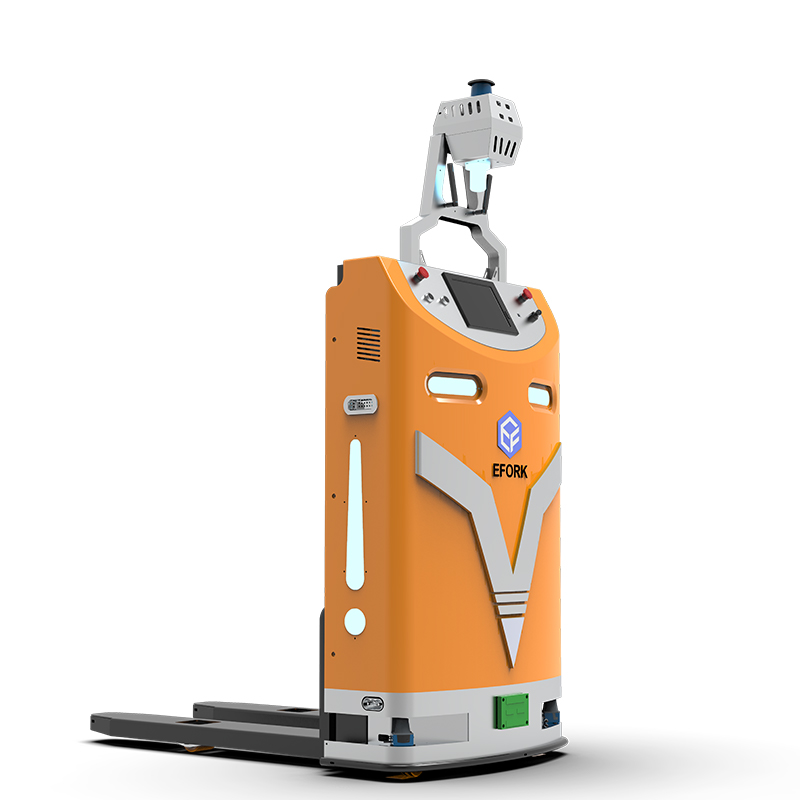
Latest Design Tech Slim Stacking AGV Forklift CE Certified 2T 3M 3D SLAM for Warehouse Automation Handling and Lifting Robot
Designed for high-density warehouses that need a compact turning footprint without sacrificing 3 m lift capability. Suitable for pallet handling, buffer replenishment and racking access.
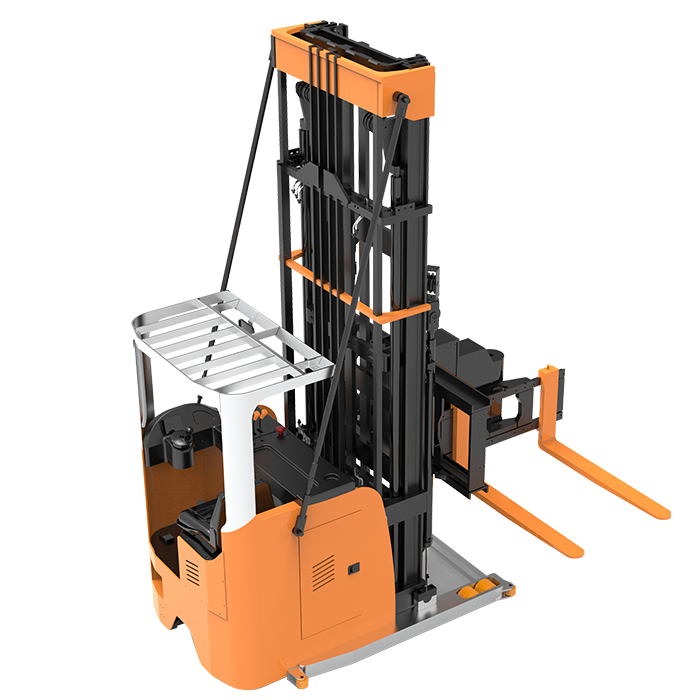
Narrow Aisle 3 Way 1600kg 1.6 Tons1.5 Tons 3 Tons Certified Electric Forklift Forklift Three Stage Mast
Three-way fork positioning picks left, right and forward without turning the truck, supporting very narrow aisles and high-bay pallet storage where Cologne warehouse floor area is expensive.
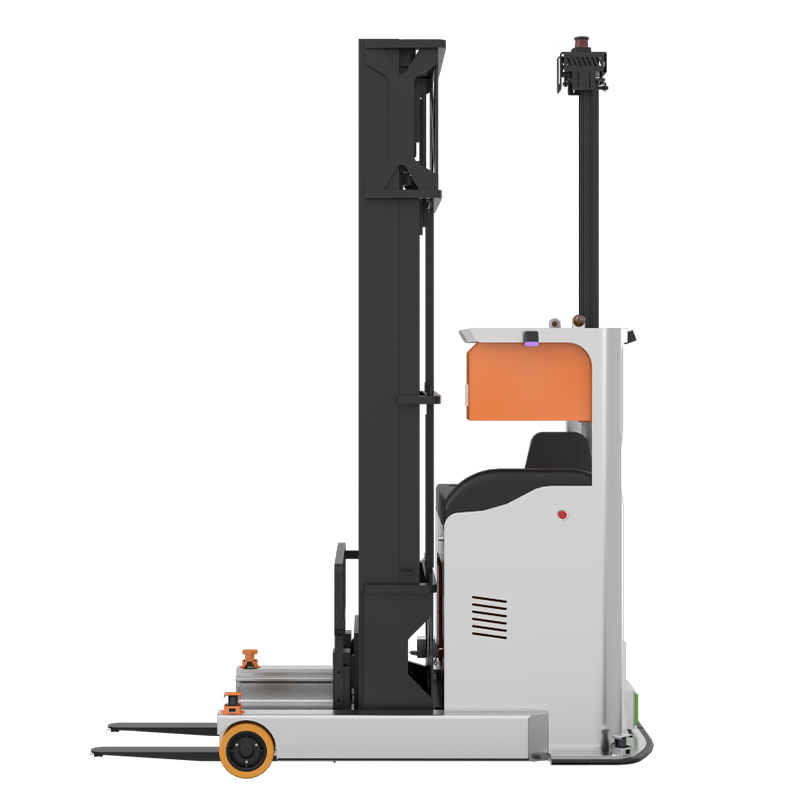
Heli Yufeng CQDE20HJ-65S 2T 6.5M Reach Truck AGV Body Laser Slam Navigation for Pallet Handling High Lifting Smart Warehouse
High-lift reach-truck platform for pallet handling where 3 m is not enough but a full AS/RS installation is not justified. Useful for existing buildings with selective racking.
Why Cologne Is a High-Value Market for Electric Forklift Robots
Cologne sits at the intersection of the Rhine, the Cologne/Bonn cargo catchment and the A1/A3/A4 motorway triangle. For warehouses and plants in Porz, Frechen, Hürth, Leverkusen or the wider Rhine-Ruhr region, the competitive question is not whether to automate, but where automation pays back first.
An electric forklift robot is not simply a manual forklift with the driver removed. It is a system that combines safety scanners, localization, traffic management, battery strategy, WMS/WCS integration and a site-specific risk assessment. German buyers rightly ask for documentation, change control and a credible support path. A manufacturer serving Cologne should answer those questions before discussing price per unit.
Labour and Shift Resilience
Forklift operator availability in the Cologne labour market is unpredictable across shifts, holidays and peak periods. Robots do not replace every operator, but they remove repetitive trailer-to-rack travel and stabilise throughput during night shifts and seasonal campaigns.
Safety and Compliance by Design
German operations expect more than a moving machine. They expect CE marking, risk assessment logic, emergency-stop planning, zone control and operator training. These requirements should be designed into the robot layout rather than checked after installation.
Building and Racking Constraints
Cologne-area warehouses are often brownfield sites with mixed floor conditions, existing racking and limited expansion space. Navigation choice, fork geometry and turning radius matter as much as load capacity. A robot that fits the building is worth more than a headline payload.
Where Electric Forklift Robots Deliver First in Cologne
Local deployment should start where the process is repetitive, measurable and safe to standardise. These four applications are usually the strongest first business cases for Cologne and Rhine-Ruhr operations.
Rhine Port and Cross-Dock Transfer
Inbound trailers, temporary buffers and outbound staging create repeated short-distance pallet moves. A laser AGV or counterbalanced robot can run WMS-directed transfers without waiting for a driver, especially during shift changes and peak dock activity.
3PL and E-commerce Fulfilment
High-SKU fulfilment centres around Cologne face variable order profiles and tight pick windows. Reach-truck AGVs, slim stackers and VNA robots help replenish pick faces, move pallets to packing and recover floor space in existing buildings.
Automotive and Machine-Building Lines
Line-side replenishment requires predictable timing and safe interaction with pedestrians. Counterbalanced AGVs handle closed-bottom pallets, cages and heavy components, while traffic rules and zone control keep material flow structured.
Cold Chain and High-Bay Storage
Cold-store and high-bay projects need equipment selected for the environment, not just the load. VNA robots, AS/RS stacker cranes and four-way shuttles can increase storage density where land is scarce and every square metre of roofed space is expensive.
Cologne-Area Trends Shaping Automation Procurement
The strongest buying signals in Cologne are not only about labour cost. They are about resilience, energy transparency, space productivity and the ability to integrate automation into an existing WMS landscape.
From Pilot to Fleet Standardisation
Buyers increasingly start with one robot on one route, prove the cycle time and then expand by aisle or shift. MOQ 1 set supports this pilot-first logic and reduces the risk of a large capital commitment before layout assumptions are validated.
Energy Transparency and Lower-Carbon Logistics
Electric drive supports cleaner indoor operations and easier energy reporting. Procurement teams should compare charging strategy, opportunity charging, battery configuration and peak-load impact, not just nominal power ratings.
Dense Storage in Land-Constrained Sites
Cologne and the Rhine-Ruhr region have limited industrial land relative to demand. Narrow-aisle robots, VNA trucks, AS/RS cranes and four-way shuttles allow existing footprints to store more pallets vertically and reduce external dependence on new warehouse space.
WMS-First Integration and Data Quality
A robot fleet is only as useful as the data that directs it. Pallet IDs, location logic, traffic maps and exception handling must be defined early. WMS-ready design shortens commissioning and gives Cologne operations managers a clearer route to measurable ROI.
How to Shortlist the Right Electric Forklift Robot for a Cologne Site
Model selection should follow the workflow, not the reverse. Start with the load unit, racking interface and pedestrian zones, then match the robot platform and navigation method to the building.
Dock-to-Rack and Low Racking
Best fit: pallet stacker AGV, slim stacker or 2T laser AGV.
- Short, repeatable routes with clear staging points
- 1.6 m to 3 m lift for low and medium racking
- Fast pilot validation and lower floor modification
Tighter Aisles and Selective Racking
Best fit: reach-truck AGV or high-lift reach platform.
- Mast retraction reduces aisle width versus counterbalance
- 3 m to 6.5 m lift options for existing buildings
- Good bridge between manual fleets and full AS/RS
Closed Pallets, Cages and Line-Side
Best fit: counterbalanced AGV in 2T or 3T class.
- No front outriggers, so closed-bottom pallets are accessible
- Suitable for production feeding and trailer interfaces
- Can be configured for mixed traffic environments
High-Bay and Dense Storage
Best fit: VNA 3-way robot, AS/RS stacker crane or four-way shuttle.
- Less aisle space and more pallet positions per building
- WMS/WCS control for high-throughput storage logic
- Cold-store and frozen-storage variants available
Engineering Weighting for a Typical Cologne Review
Indicative decision weighting used in early project discussions. Actual priorities must be confirmed against your risk assessment, throughput model and building constraints.
Information-gain note: a robot that is “cheapest per unit” can be the most expensive choice if it needs floor tape in every aisle change, cannot connect to your WMS or requires rack modification. The right comparison is total cost per pallet movement, including commissioning, training, spare-parts strategy and future layout flexibility.
Why Cologne Buyers Need a Verified Manufacturer, Not a Trading Intermediary
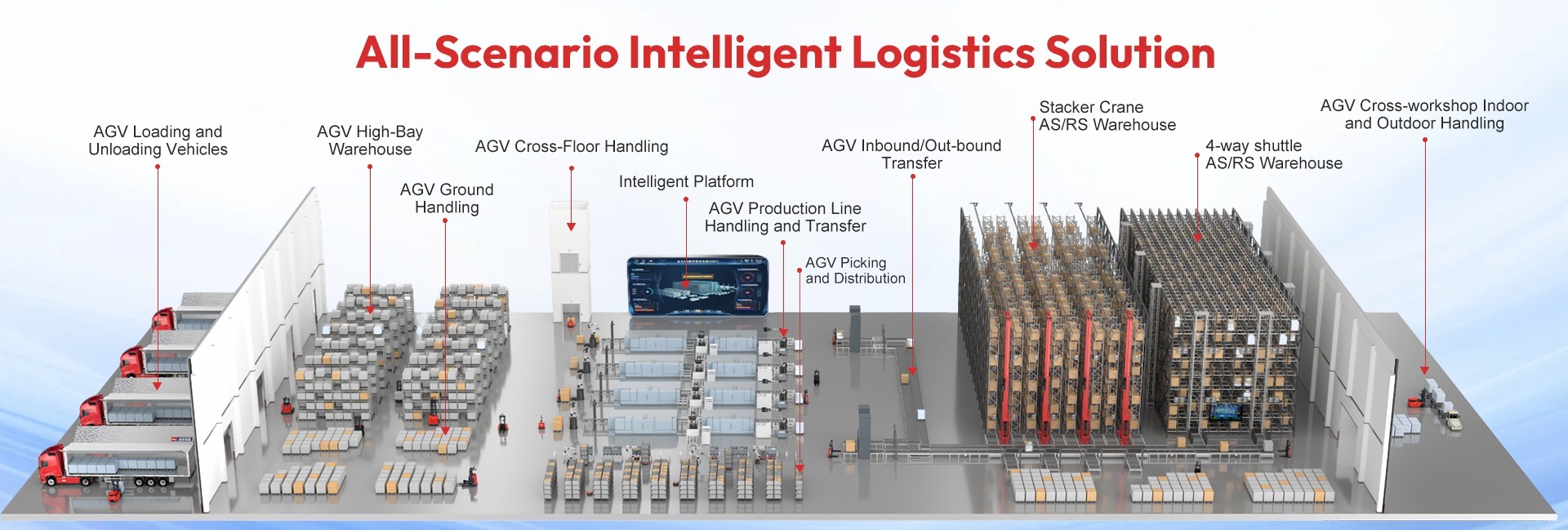
Anhui Nexrik Intelligent Technology Co., Ltd. manufactures AGV forklifts, AS/RS stacker cranes, four-way shuttles and related intelligent warehousing equipment from Hefei, China. For German buyers, the advantage is not simply factory price; it is engineering depth, traceable production and a single point of accountability.
In-House Manufacturing and Testing
Chassis, mast integration, control configuration and final testing are handled on our own production lines. Material inspection and finished-product checks support a more predictable handover to Cologne project teams.
Laser and 3D SLAM Options
Reflector-based laser navigation is well suited to stable fixed routes, while 3D SLAM localizes from natural building features and can reduce retrofit work. We recommend the method after reviewing aisle geometry, racking and traffic.
One-Stop Turnkey Scope
AGVs, stacker cranes, four-way shuttles and RGVs can be engineered as one WMS-ready system. This reduces interface risk between multiple vendors and makes fleet expansion easier after the first Cologne pilot succeeds.
Documentation and Customization
CE marking, ISO management systems, SGS verification and export documentation support tender review and customs clearance. OEM, ODM, buyer-label production and project-specific load or lift configurations are available.




Questions Local Buyers Ask Before Ordering Electric Forklift Robots
These are the practical questions we hear from German and Rhine-Ruhr buyers who are comparing AGV forklift manufacturers for a Cologne site.
Can you deliver and commission an electric forklift robot in Cologne?
Which EU and German compliance points should we verify?
Is CE marking enough for operation in a German warehouse?
Will the robot integrate with our existing WMS or ERP?
Do we need reflectors, floor tape or major floor works?
What is the minimum order quantity and can we pilot first?
How are spare parts, service and training handled for Cologne?
Which trade terms and payment methods are accepted?
Procurement insight: the most useful supplier response is not a one-line price. Ask for a model shortlist, route assumptions, safety scope, WMS interface questions, spare-parts list and commissioning responsibilities. That package lets your Cologne engineering and EHS teams review the proposal in parallel.
Build a Cologne-Ready Business Case for Electric Forklift Robots
Send your rack layout, pallet specification, shift pattern and throughput target. Our engineers will propose a model shortlist, fleet estimate, navigation approach and compliance document checklist for your Cologne or Rhine-Ruhr site.