Why the Düsseldorf Buyer Asks a Different AGV Question
In the Rhine-Ruhr logistics corridor, a narrow aisle AGV is judged by pallet moves per shift, documentation quality and change-readiness—not by brochure speed alone.
Procurement teams in Düsseldorf rarely ask for a “driverless forklift” in isolation. They ask how many pallet moves per shift can be removed from a tight aisle, how a new fleet will behave in a leased hall with floor joints and column obstructions, and whether the machine will still be supportable when the racking layout changes in three years. That is the context in which a custom OEM narrow aisle AGV should be evaluated.
Greater Düsseldorf sits inside one of Europe’s densest logistics clusters. The Rhine-Ruhr axis links the Port of Duisburg and Neuss logistics zones to Düsseldorf Airport, Cologne, Leverkusen, Krefeld, Wuppertal and Mönchengladbach. For a warehouse manager in this corridor, square metres are expensive, labour is competitive, and energy planning has become part of every automation business case. A conventional counterbalanced truck consumes aisle width that could otherwise be racking. A very narrow aisle AGV, slim stacker AGV or 3-way VNA platform can turn that spatial inefficiency into storage capacity.
The Düsseldorf market also brings a distinctive documentation expectation. German buyers ask for CE evidence, operating manuals, risk assessment inputs, fault codes, spare parts lists and a credible path for WMS or ERP integration. Our factory is SGS onsite verified, holds ISO 9001 and ISO 45001 systems, and serves overseas buyers with CE-minded engineering and OEM/ODM customization. For buyers comparing a European integrator with an Asian OEM, the deciding issue is often not the robot alone, but whether the supplier can provide traceable engineering, export documentation and a practical pilot path.
This white-paper style guide is written for Düsseldorf-area operations managers, intralogistics engineers and procurement teams who need an information-rich shortlist before inviting suppliers to a site survey. It compares eight recommended models, local application scenarios, procurement trends and the questions that most often arise when a German buyer evaluates a custom narrow aisle AGV supplier.
Indicative planning visuals only. Final figures depend on building, racking, load unit, safety distances and throughput simulation.
Narrow Aisle AGV Use Cases Across Düsseldorf & the Rhine-Ruhr
Local buyers do not purchase automation in a vacuum. The right platform depends on pallet type, racking, dock constraints, shift patterns and the speed at which the operation may change.
Contract logistics in Neuss & Duisburg
3PL warehouses around Neuss and the Duisburg port corridor often handle mixed pallet heights, multiple clients and peak campaigns. A slim narrow-body stacker AGV plus a counterbalanced AGV can cover dock-to-rack transfer, replenishment and trailer loading without dedicating a fixed conveyor path.
Automotive & machinery suppliers
Suppliers in Düsseldorf, Wuppertal and Mönchengladbach move closed-bottom pallets, stillages, cages and line-side containers. The EFORK 2T counterbalanced AGV and 1.5T reach truck AGV are relevant where outriggers would obstruct pick-up and where repeatable ±10 mm positioning supports production logistics.
Pharma, chemical & cosmetics networks
Facilities near Leverkusen and Cologne often require batch traceability, clean traffic flows and documented change control. A VNA or reach truck AGV integrated with WMS logic can reduce manual touches while keeping audit trails, fault logs and operator training materials available for quality teams.
E-commerce & spare-parts fulfilment
Rhine-Ruhr fulfilment centres face fast SKU turnover and seasonal peaks. A 2T slim stacker AGV with 3D SLAM and WIFI/5G can maximise high-density storage and be redeployed as pick faces change, while a walkie pallet stacker remains useful for backup and low-cost zones.
Food, beverage & cold-chain facilities
Around Krefeld and Mönchengladbach, cold stores and food distributors need robust battery planning, condensation-aware components and clear maintenance access. Cold-storage variants and customized guarding can be discussed during OEM engineering, with final suitability confirmed by a site survey.
Brownfield warehouses in Düsseldorf
Leased buildings, older floors and columns make fixed guidepaths less attractive. 3D SLAM navigation localizes from natural building features, reducing reflector and floor-tape work. That makes it easier to pilot one AGV and expand later without rebuilding the entire aisle layout.
Six Procurement Shifts Shaping Düsseldorf Intralogistics
The strongest automation cases in North Rhine-Westphalia combine space recovery, labour resilience and documentation readiness. These six trends explain why buyers increasingly ask for OEM flexibility rather than a one-size-fits-all truck.
Land scarcity pushes VNA and high-bay
Düsseldorf and the surrounding Rhine-Ruhr region have limited affordable warehouse land. Higher racking and narrower aisles are often the fastest route to more pallet positions without moving to a new site. This is where a 1.6T 8m VNA AGV becomes a strategic asset, not just a machine purchase.
Brownfield retrofit favours 3D SLAM
Many local warehouses are leased or already fitted with existing racking. 3D SLAM reduces fixed infrastructure such as reflectors and floor tape, which can shorten site preparation. Buyers should still verify floor flatness, lighting, Wi-Fi/5G coverage and safety-zone design before committing.
Labour planning moves to multi-shift resilience
Düsseldorf operations increasingly evaluate automation as a way to stabilise throughput across shifts, not necessarily to remove every operator. A hybrid model—AGV for repetitive long runs, operators for exceptions and quality checks—often produces a more realistic business case than a fully lights-out warehouse.
WMS and ERP integration defines value
The AGV is only as useful as the task logic behind it. Düsseldorf buyers ask about WMS/WCS interfaces, mission allocation, battery state, fault reporting and future fleet expansion. Where required, VDA 5050 compatibility can be evaluated during project engineering; final interface scope must be fixed in the technical specification.
EU safety documentation is part of the product
German procurement teams expect CE documentation, risk assessment inputs and safety-function evidence. AGV safety should be assessed against EN ISO 3691-4 and EN ISO 13849-1 where applicable, alongside the Machinery Directive 2006/42/EC framework. Final conformity remains a project-specific responsibility shared with the integrator and end user.
Energy and charging shape ROI
Building electrical capacity is often a hidden constraint. Lithium-ion opportunity charging, charger location, shift breaks and peak-load limits should be modelled early. A custom OEM supplier can adjust battery capacity, charging strategy and truck configuration before the order, which is usually cheaper than retrofitting after commissioning.
Eight Narrow Aisle AGV Platforms for Düsseldorf Projects
These eight models cover counterbalanced handling, reach-truck logistics, VNA high-bay storage, slim stacker automation, self-loading stackers and walkie pallet stackers. All can be discussed as OEM projects with load, lift height, fork and battery customization.
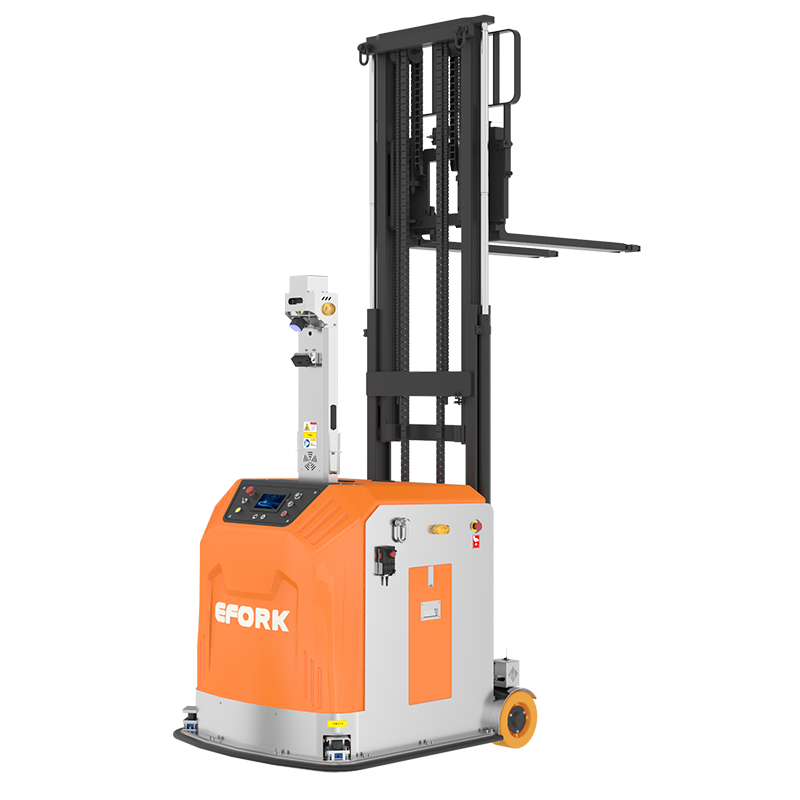
EFORK Heavy Duty Forklift AGV Counterbalanced Body 2T 3M Fork Legs High Flexibility 3D SLAM Navigation WIFI/5G for Pallet
For closed-bottom pallets, stillages and trailer-dock transfers where outriggers would reduce flexibility. The 3D SLAM and WIFI/5G options suit multi-hall Düsseldorf operations that may reconfigure routes.
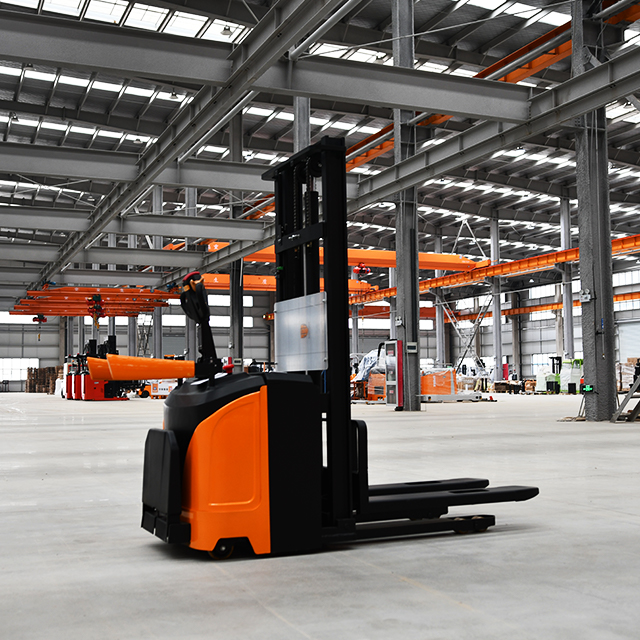
Factory Direct Sales Electric Pallet Lift Stackers 1.5-Ton 2-Ton 3Ton 3m 4m 5m Portable Self-Loading
A cost-controlled platform for low-to-medium racking, line-side replenishment and seasonal peaks. Portable self-loading geometry helps 3PLs move equipment between leased units.
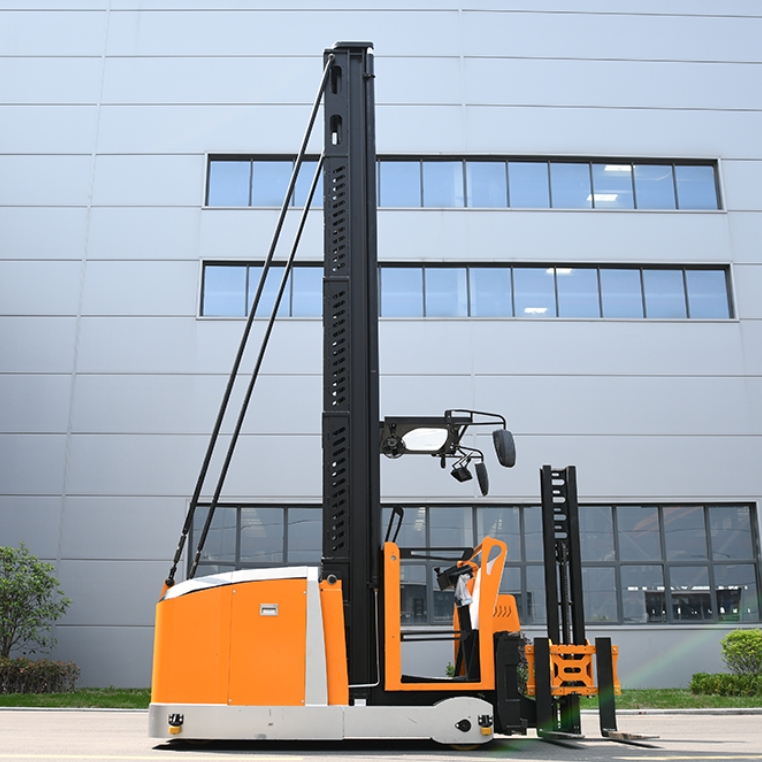
New 1.5T Manual Electric 3-Way Pallet Stacker Forklift 3 Way Manup Vna Forklift with 1600kg Loading Capacity AC Motor Powered
A practical VNA stacker platform for narrow-aisle pilot projects and mixed manual-to-automated operations. AC motor power and 3-way fork geometry support high-density pallet storage.
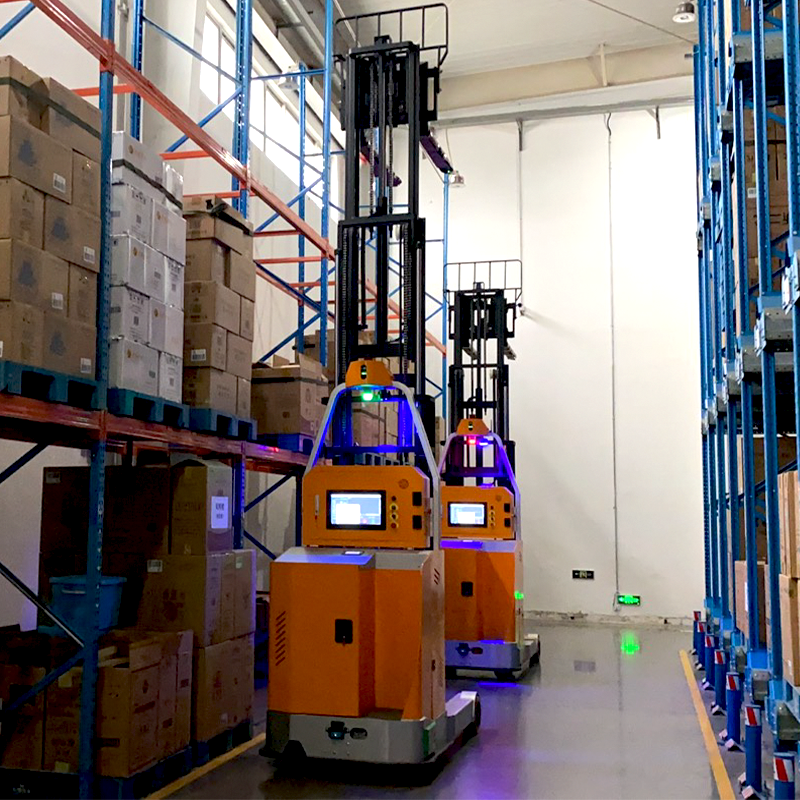
EFORK EQDA15-30 Automated Reach Truck Laser SLAM Navigation 1.5T Capacity ±10mm Accuracy Forklift for Warehouse Logistics
Reach truck AGV for repetitive put-away and picking in selective racking where a counterbalanced truck wastes aisle width. Laser SLAM supports high-accuracy warehouse logistics.
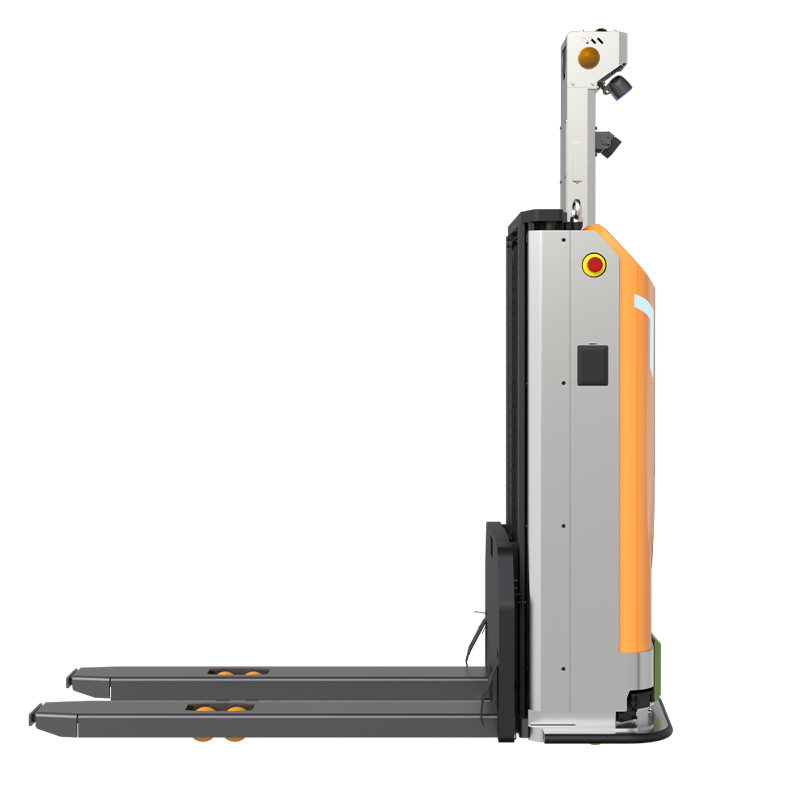
2T Slim Narrow-Body Stacker AGV with 3D SLAM & WIFI/5G for High-Density Storage 1.6M Pallet Stacking Maximize Warehouse Space
Slim narrow-body stacker for high-density storage and tight transfer points. 3D SLAM and WIFI/5G reduce fixed infrastructure in leased halls and support phased expansion.
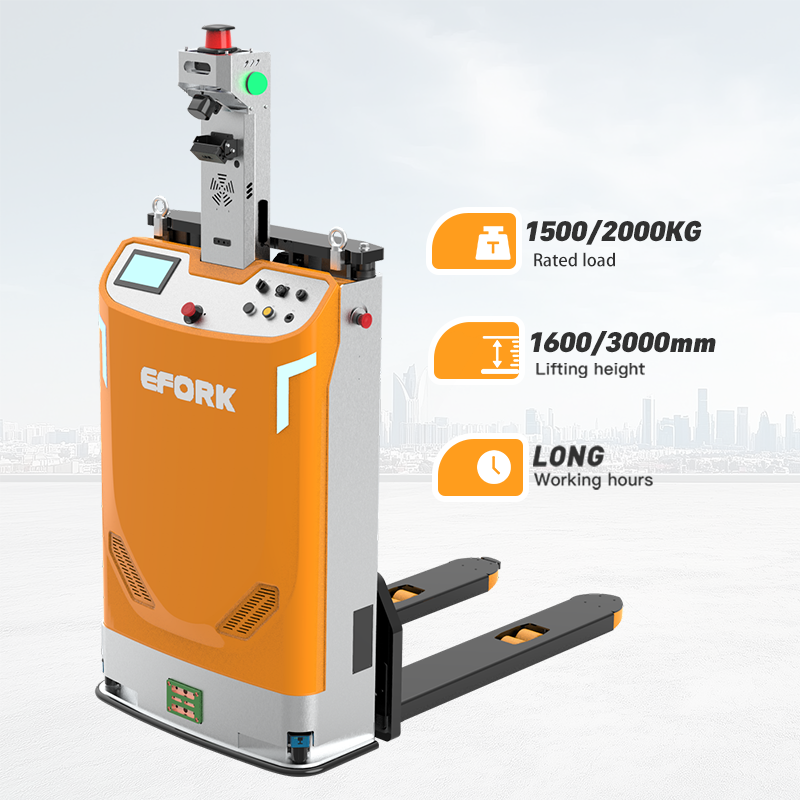
New Heli Yufeng EDA20-30 Slim Stacking AGV Forklift CE Certified 2T 3M 3D SLAM WIFI/5G for Stacking Mobile Robot
A CE-certified slim stacking AGV platform for mobile-robot stacking and compact automation steps. Suitable for Düsseldorf SMEs that need a narrow footprint without losing load capacity.
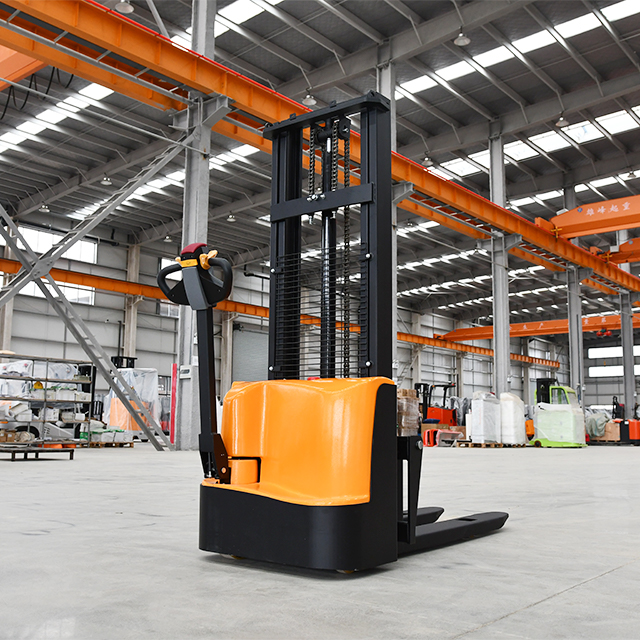
1Ton & 2Ton Full Electric Pallet Stacker Walkie Type High Performance, Low Cost Optional with Training Wheels
Walkie electric pallet stacker for low-cost pallet handling and operator-assisted workflows. Useful for pilot zones, backup capacity and low-throughput areas while AGV deployment scales.
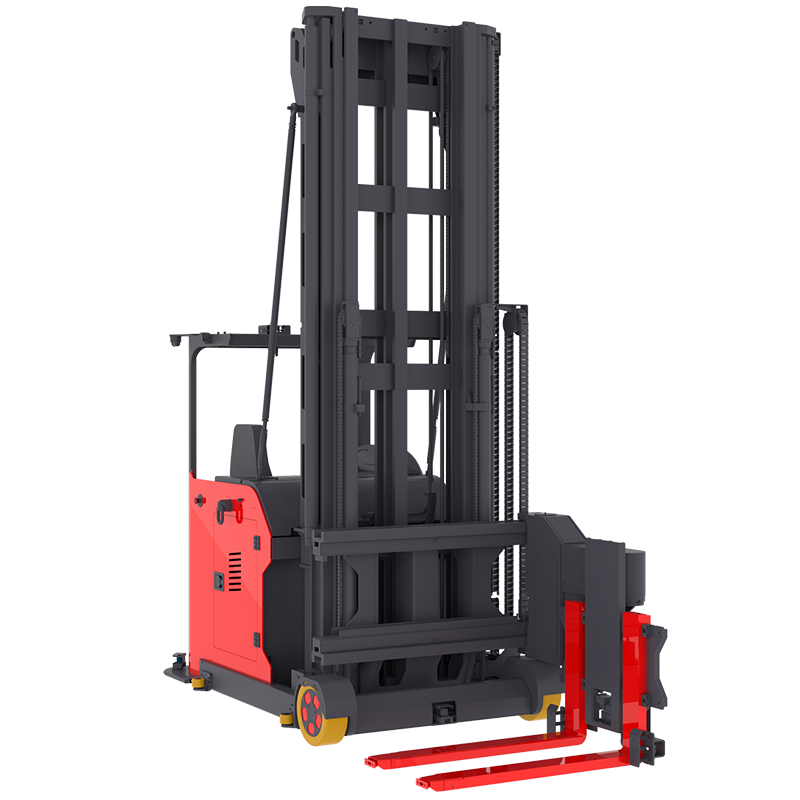
EFORK CDME16J-80S VNA Truck AGV Mobile Robot 1.6T 8M 3-way Forklift Laser Slam Narrow Aisle 1200mm Fork Length 125mm Fork Width
High-bay 3-way VNA AGV with laser SLAM and 1200 mm fork length for narrow aisle pallet warehouses. A strong fit where 8 m lift and high-density storage drive the Düsseldorf business case.
Manufacturing Scale and OEM Flexibility You Can Verify
For a warehouse automation project intended to operate for a decade, supplier capacity, traceability and documentation matter as much as the machine specification.
In-house manufacturing
Chassis, masts and control integration are built and tested on our own lines, with onsite material and finished-product inspection before shipment.
SGS verification & systems
SGS onsite verification, ISO 9001 and ISO 45001 systems, and CE marking support under Machinery Directive 2006/42/EC for the AGV range.
OEM / ODM / buyer label
Full customization of load capacity, lift height, fork dimensions, battery configuration and cold-storage variants, including buyer-label production.
One-stop turnkey scope
AGVs, AS/RS stacker cranes, four-way shuttles and RGVs from a single source, engineered as one WMS-ready system rather than stitched together.
Laser & 3D SLAM navigation
Choose reflector-based laser navigation for fixed routes or 3D SLAM for natural-feature localization that minimizes floor and rack modifications.
MOQ 1 set
Run a pilot line, validate routes and cycle times, then scale to a fleet. This lowers the entry risk for Düsseldorf buyers testing a new intralogistics model.
Customization before order
Load, lift height, fork length, safety scanners, battery and charging strategy can be configured before manufacturing, when changes are far less costly.
Export terms & support
FOB, CFR, CIF, EXW, FAS, CIP and DDP are accepted, with L/C, D/P, D/A, credit card or Western Union payment in USD, EUR or CNY. Remote diagnostics and spare-parts planning support overseas projects.
Factory, Engineering and Testing Evidence
Representative images from our production base, assembly workshop and testing area. These are the same engineering and inspection functions that support custom OEM programs.

Production base exterior: two manufacturing bases supporting AGV, AS/RS and shuttle projects.

AGV assembly workshop: chassis, mast and control integration with onsite inspection.

Testing area: finished-product checks before shipment and project acceptance testing.
From Düsseldorf Site Data to Go-Live
A structured five-stage process that de-risks automation for first-time and multi-site buyers alike.
Site analysis
Rack layout, pallet specification, floor flatness, aisle width, throughput and shift pattern review.
Solution design
Equipment selection, fleet sizing and traffic simulation against peak demand, including charging location.
Manufacturing
Production with onsite material and finished-product inspection, FAT before shipment and documentation preparation.
Commissioning
Mapping, WMS interface testing, safety validation and operator training for the local team.
Lifecycle support
Remote diagnostics, spare parts supply and fleet-expansion planning as the Düsseldorf operation grows.
Four Decisions That Determine AGV Performance
These are the practical questions our application engineers review before proposing an OEM narrow aisle AGV to a Düsseldorf buyer.
Use laser measurements, not only the racking drawing. Include floor joints, columns, sprinkler risers, doorways and load overhang. A model that fits on paper may fail at 8 m lift.
Laser navigation can be efficient for stable, repetitive routes. 3D SLAM is often attractive for leased or reconfigurable buildings, but Wi-Fi/5G coverage, lighting and natural features need validation.
Opportunity charging, battery capacity and charger location should be studied with the facility team. Electrical capacity and break-time patterns can change the required fleet size.
CE file inputs, risk assessment, safety-function description, spare-parts list, fault codes and operating manual scope should be agreed before FAT—not after the machine arrives.
Questions Düsseldorf Buyers Ask First
Clear answers help procurement, engineering and operations teams align before a technical proposal is issued.
Can a Chinese OEM supply a CE-compliant narrow aisle AGV for Düsseldorf?
What is the minimum order quantity and how does a pilot work?
How do you handle WMS or ERP integration for a Düsseldorf warehouse?
What documentation can be provided for German risk assessment and customs?
What lead time and delivery terms apply to the Düsseldorf market?
How is service and spare-parts support organized for the NRW region?
Request a Düsseldorf-Ready Narrow Aisle AGV Proposal
Send your rack drawing, pallet load, aisle width, lift height and shift pattern. Our engineers will return a model shortlist, customization options and a pilot plan with MOQ 1. Use the live chat to request the latest OEM catalog.