China Wholesale Natural Navigation AGV Factories & Suppliers for the Seattle Market
A white-paper buying guide for Puget Sound warehouses: eight wholesale-ready AGV and stacker models, Seattle-specific applications, local trends, procurement FAQ, verified factory advantages, and practical integration checks before you scale a pilot fleet.
8 Wholesale Models Recommended for Seattle Warehouse Projects
Natural navigation means the equipment can localize from fixed building features such as racking, columns, walls, and equipment, reducing dependence on floor tape or reflector arrays. These eight models cover manual support equipment, compact stackers, counterbalanced AGVs, reach trucks, side loaders, and laser/3D SLAM platforms. Product URLs are preserved exactly; use the Get Catalog button for a consolidated Seattle quotation.
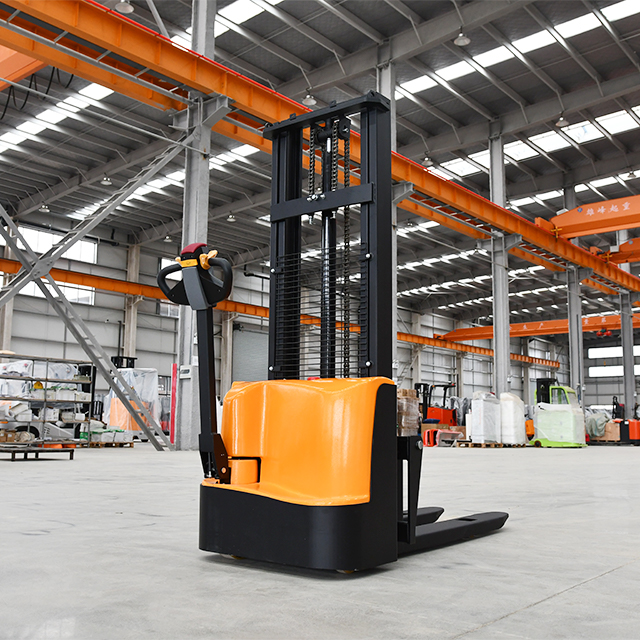 Low-Cost Entry
1Ton & 2Ton Full Electric Pallet Stacker Walkie Type High Performance, Low Cost Optional with Training Wheels
A practical manual/assisted backup for dock staging and truck-to-rack support where Seattle teams want low-cost flexibility before full automation.
- 1–2 T
- Walkie type
- Training wheels
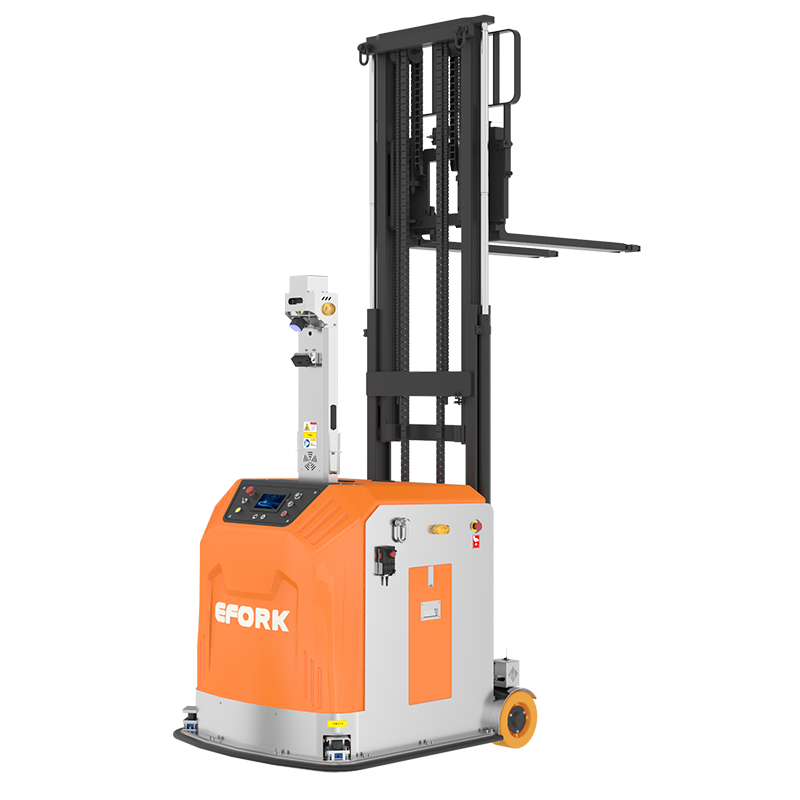 3D SLAM
EFORK Heavy Duty Forklift AGV Counterbalanced Body 2T 3M Fork Legs High Flexibility 3D SLAM Navigation WIFI/5G for Pallet
Counterbalanced AGV for closed-bottom pallets and production replenishment, with 2T capacity, 3M fork legs, 3D SLAM, and WIFI/5G connectivity.
- 2 T
- 3 m fork legs
- 3D SLAM
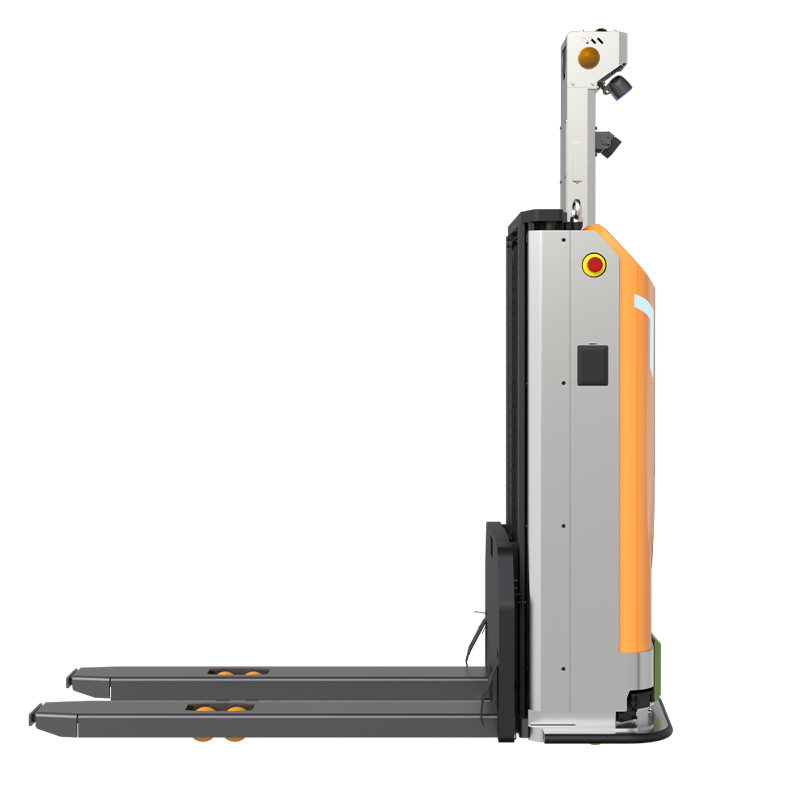 Narrow Body
2T Slim Narrow-Body Stacker AGV with 3D SLAM & WIFI/5G for High-Density Storage 1.6M Pallet Stacking Maximize Warehouse Space
Compact stacker for high-density storage and 1.6M pallet stacking, suitable where Puget Sound industrial rents make aisle width and cubic utilization critical.
- 2 T
- 1.6 m stacking
- 3D SLAM
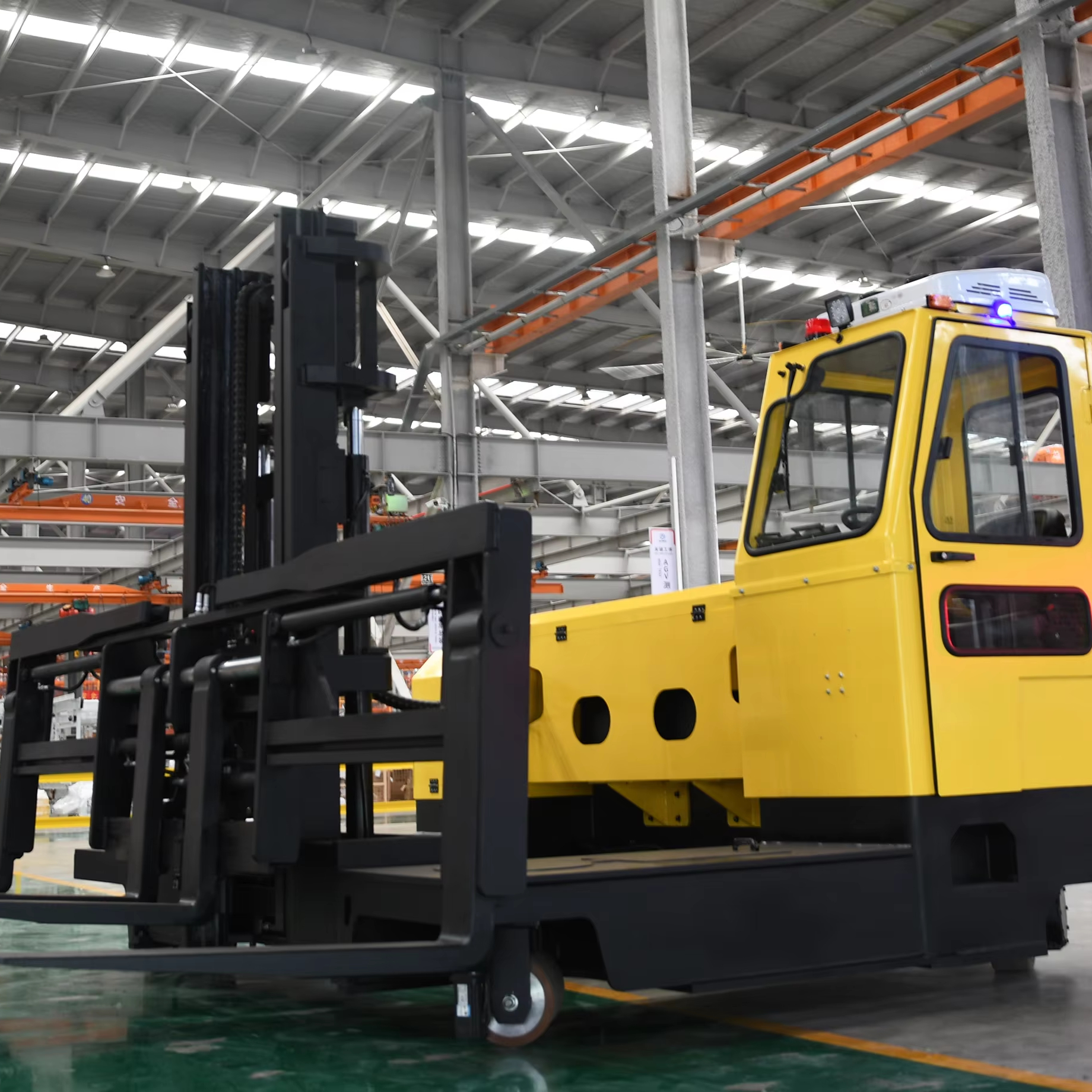 3.5–5 T
Multi-directional Forklift Reach Truck Stacker 3.5 Ton 5Ton Full Way Electric Side Loader Forklift With Wide Body Seat
Multi-directional side-loader platform for long or heavy loads in aerospace, building products, port-adjacent yards, and mixed industrial logistics.
- 3.5 / 5 T
- Full-way electric
- Wide body seat
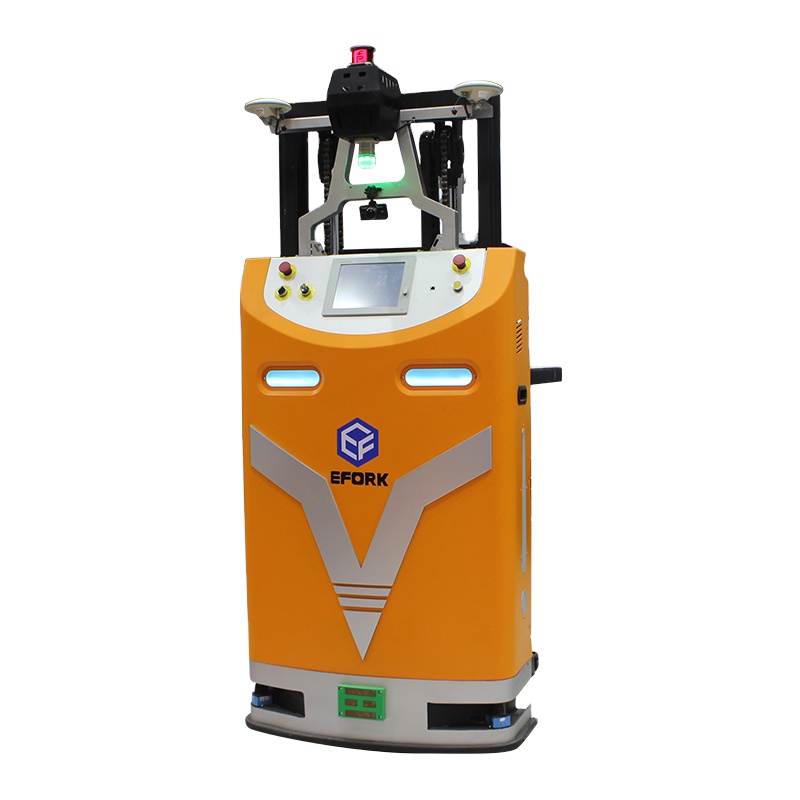 CE Certified
 EFORK EDA20-16 2T 1200mm Fork Width 180mm 3D SLAM Laser Navigation AGV WIFI/5G 10mm Accuracy 1600mm Lifting Height
CE-certified 2T AGV with 1200mm fork width, 180mm fork profile, 3D SLAM/laser navigation, 10mm accuracy, and 1600mm lifting height for mixed pallet flows.
- 2 T
- 10 mm accuracy
- WIFI/5G
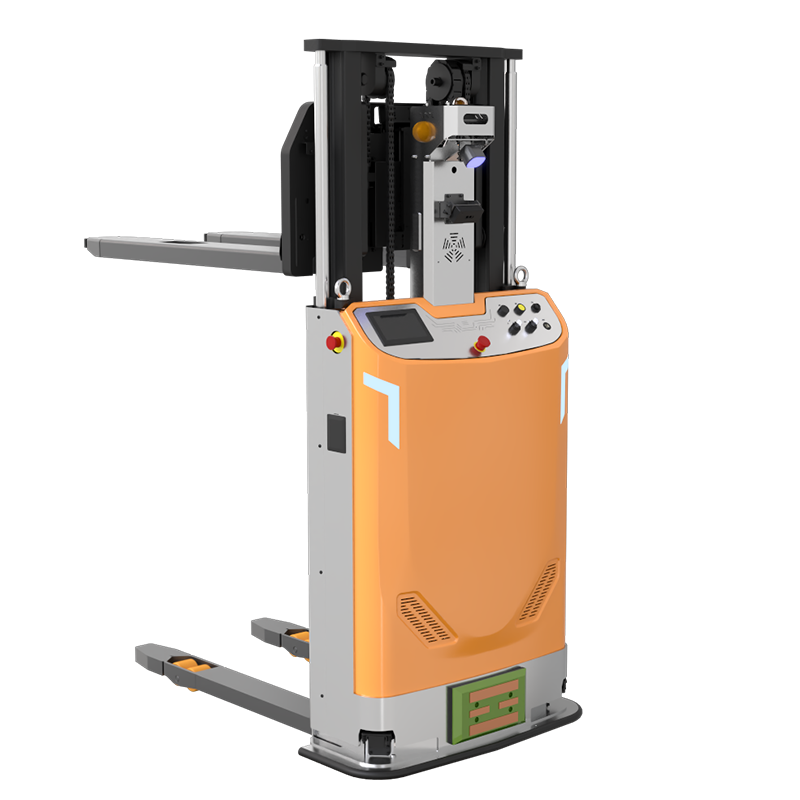 High Lift
2T 1.6 M Slim Narrow-Body Stacker AGV Body for High-Density Storage High Lift Pallet Stacking AGV Maximize Warehouse Space
High-lift slim stacker AGV body for warehouses that need more rack levels without adding floor area, especially in land-constrained Seattle submarkets.
- 2 T
- 1.6 m body height
- High-density storage
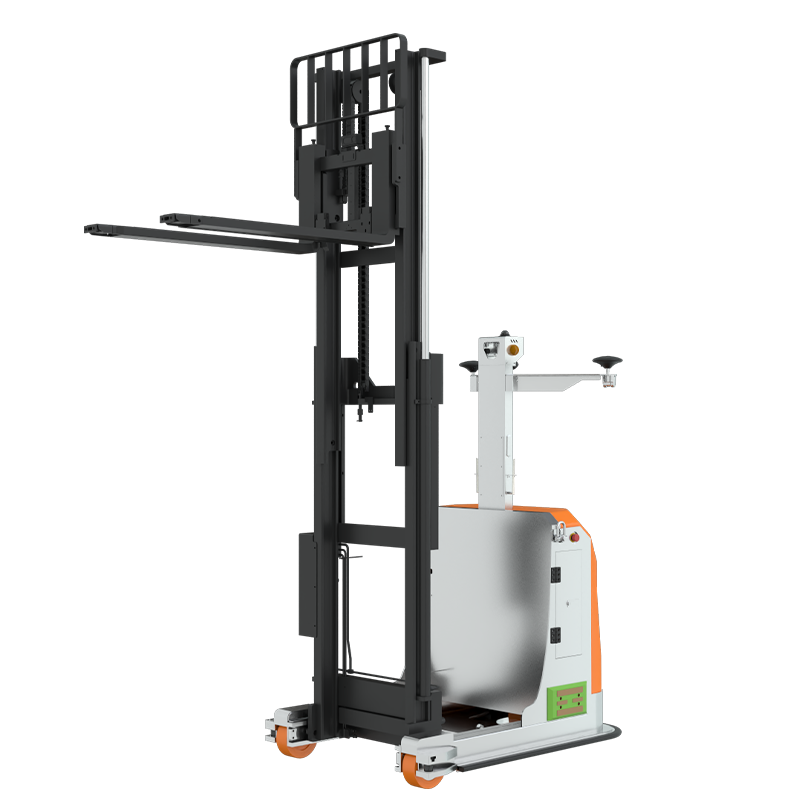 3D SLAM
Reach Truck AGV Narrow Body 1.5T 3M Compact Design Fork Forward Function 3D SLAM Navigation 10mm Positioning Accuracy for
Compact 1.5T reach truck AGV with 3M lift, fork-forward function, 3D SLAM, and 10mm positioning accuracy for tighter selective racking in Kent, Auburn, and Sumner.
- 1.5 T
- 3 m lift
- Compact body
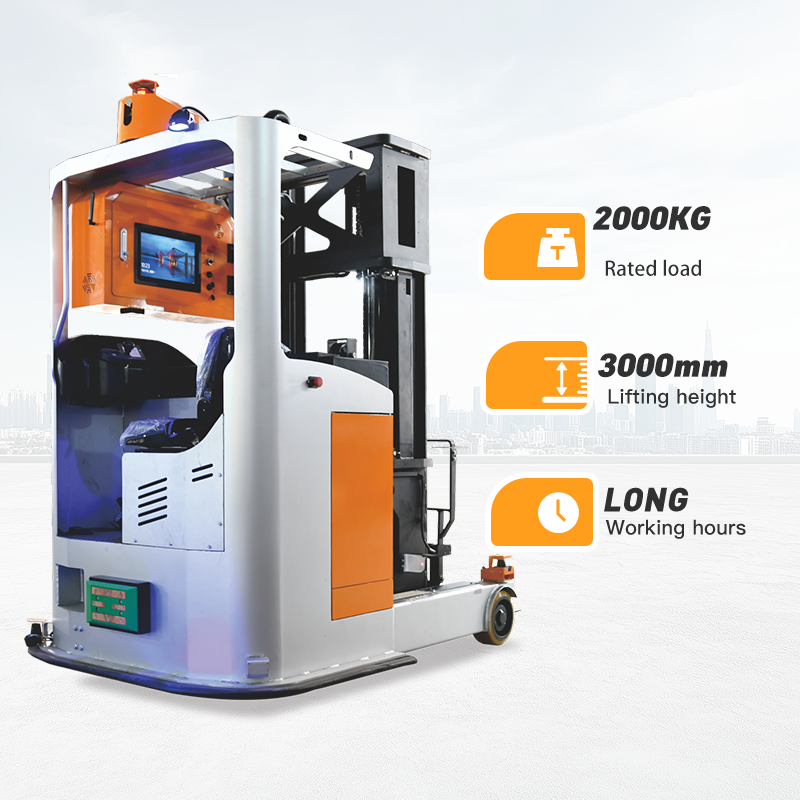 Laser SLAM
Reach Truck AGV Forklift 2T 3M Laser Slam Navigation CE Certified Warehouse Automation Robot for Factory Logistics
CE-certified 2T 3M reach truck AGV with laser SLAM navigation for repetitive factory logistics, trailer loading, and warehouse automation routes.
- 2 T
- 3 m lift
- Laser SLAM
Why Seattle Is a Natural-Fit Market for Natural Navigation AGVs
Seattle is not a generic U.S. warehouse market. The Ports of Seattle and Tacoma create drayage and cross-dock demand; Kent Valley and Pierce County absorb e-commerce and 3PL growth; aerospace and cold-chain clusters demand traceability; and industrial land costs make every square metre count.
For buyers evaluating China wholesale natural navigation AGV factories, the practical question is not simply “How much does an AGV cost?” The better question is: which navigation method, body size, safety package, and service model will keep a Seattle operation productive after the pilot? A 3D SLAM AGV that localizes from existing building features can reduce infrastructure work, shorten re-mapping time, and support changing rack layouts in fast-turn 3PL environments.
At the same time, natural navigation is not a substitute for engineering discipline. Pallet quality, floor joints, rack tolerances, Wi-Fi coverage, charging strategy, and WMS hand-offs still determine success. A white-paper approach should separate verified supplier facts from assumptions, then validate the solution through a site survey, traffic simulation, factory acceptance test, and commissioning plan.
- Infrastructure-light mapping: compare 3D SLAM, laser, and reflector methods against your racking and route flexibility.
- Seattle-specific due diligence: confirm electrical, safety, fire-code, and local service requirements before shipment.
- Verified supplier evidence: request CE, ISO, SGS onsite verification, patent records, test reports, and spare-parts lists.
Verified Factory Snapshot
Anhui Nexrik Intelligent Technology Co., Ltd. is an intelligent warehousing manufacturer in Hefei, Anhui, with AGV forklifts, AS/RS stacker cranes, four-way shuttles, and RGVs. The company reports SGS onsite verification, CE marking under 2006/42/EC, ISO 9001, ISO 45001, 7 awarded patents, and a 66,650 m² production footprint.
For Seattle buyers, that breadth matters because a project may need one compact reach AGV for racking, one counterbalanced unit for closed-bottom pallets, and a WMS-ready storage system later. A coordinated fleet reduces interface risk compared with separately sourced components.
Where Natural Navigation AGVs Fit Puget Sound Operations
Seattle-area buyers usually evaluate automation against a specific bottleneck: dock congestion, narrow aisles, labor turnover, cold storage, or production replenishment. The following scenarios show where the eight recommended models create practical value.
Port-Adjacent Cross-Docking
Near the Port of Seattle and Port of Tacoma, AGVs can move sealed pallets between staging, stretch-wrap, and outbound lanes while reducing forklift and pedestrian conflicts. Natural navigation is useful where temporary lanes and dock doors change by campaign.
Drayage · 3PL · Cross-DockKent Valley E-Commerce & 3PL
In Kent, Auburn, Sumner, and Fife, 3PLs reconfigure pick modules and pallet flow frequently. A 3D SLAM stacker or reach truck can be re-mapped after a rack change without installing new reflectors or floor tape, supporting faster layout experiments.
E-Commerce · 3PL · Re-RackingHigh-Density Urban Storage
Seattle industrial rents reward vertical storage. Slim stacker AGVs and narrow-body reach trucks reduce aisle demand and support high-bay pallet stacking, helping maximize cubic utilization where adding square footage is expensive or impossible.
Narrow Aisle · High-Bay · Land ConstraintCold Chain & Seafood
Puget Sound seafood, produce, and grocery distribution need cold-storage variants, condensation-safe sensors, and batteries rated for low temperatures. Confirm cold-room test conditions, defrost cycles, and service access before ordering a freezer-rated fleet.
Cold Storage · Food Safety · Low TempAerospace & Industrial Manufacturing
Renton, Everett, and Snohomish County manufacturers move heavy fixtures, closed-bottom pallets, and kitted parts. Counterbalanced and multi-directional AGVs can handle these loads without front outriggers, supporting repetitive line-side delivery.
Aerospace · Manufacturing · Heavy LoadRetail & Food Distribution
Regional grocery and retail DCs need repeatable pallet put-away and replenishment. WMS-ready AGVs can support FIFO/FEFO logic, reduce shift-to-shift dependence on labor availability, and keep dock-to-stock cycles predictable during peak seasons.
Retail DC · FMCG · FIFO / FEFOSix Trends Shaping AGV Procurement in the Seattle Market
The strongest business case is usually a combination of labor pressure, land cost, and the need for flexible automation. Natural navigation becomes more attractive when layouts change faster than traditional infrastructure can follow.
Land Scarcity Drives Narrow-Body Design
Seattle-area industrial occupiers increasingly ask for compact reach trucks, slim stackers, and high-bay configurations because adding floor space is slower and more expensive than improving density.
Labor Availability Accelerates 24/7 Automation
High wages and turnover make repetitive pallet moves candidates for automation. A single-truck pilot can validate cycle time and route reliability before a buyer commits to a multi-shift fleet.
Infrastructure-Light 3D SLAM Gains Ground
Natural-feature navigation reduces reflector and tape installation, which shortens site preparation and makes reconfiguration easier for 3PLs and seasonal fulfillment operations.
WMS-First Integration
Buyers expect AGVs to exchange task data with WMS, ERP, and fleet managers. Interface requirements should be tested during commissioning, not deferred until after go-live.
Electrification & Sustainability
Electric AGV platforms support indoor air quality and lower noise. Buyers should review charging strategy, battery chemistry, peak electrical demand, and regenerative energy options.
Safety & Compliance Expectations
CE documentation is a baseline, not a substitute for U.S. requirements. Seattle buyers should discuss NRTL/UL field evaluation where applicable, risk assessment, safety scanners, fire-code review, and local L&I expectations.
Compare the Eight Models Against Seattle Use Cases
Use this matrix to shortlist equipment before requesting engineering drawings. Final capacity, lift height, fork dimensions, navigation hardware, battery, and safety configuration are confirmed during project design.
| Model Family | Typical Load | Lift / Form Factor | Navigation / Drive | Best-Fit Seattle Application |
|---|---|---|---|---|
| Walkie Electric Stacker | 1–2 T | Walkie type; training wheels | Manual / assisted | Dock backup, low-cost staging, incremental automation |
| Counterbalanced AGV | 2 T | 3M fork legs | 3D SLAM; WIFI/5G | Closed-bottom pallets, production replenishment, trailer docks |
| Slim Narrow-Body Stacker AGV | 2 T | 1.6M pallet stacking | 3D SLAM; WIFI/5G | High-density storage in Kent Valley and Pierce County |
| Multi-Directional Side Loader | 3.5–5 T | Wide-body seat; full-way electric | Multi-directional | Aerospace, long loads, port-adjacent yards, building products |
| EFORK EDA20-16 AGV | 2 T | 1.6M lift; 1200mm fork width | 3D SLAM / laser; 10mm accuracy | Mixed pallet flows, WMS-controlled storage, precise put-away |
| Slim High-Lift Stacker AGV Body | 2 T | 1.6M body height; high lift | High-density AGV platform | Vertical storage growth where floor space is limited |
| Compact Reach Truck AGV | 1.5 T | 3M lift; fork forward | 3D SLAM; 10mm accuracy | Tight selective racking in Kent, Auburn, and Sumner |
| Laser SLAM Reach Truck AGV | 2 T | 3M lift | Laser SLAM | Factory logistics, repetitive pallet routes, trailer loading |
Seattle Procurement Questions Buyers Ask First
These are the practical questions that arise when a Seattle buyer moves from an online inquiry to a site survey, pilot, and purchase order.
What does “natural navigation” mean for a Seattle AGV project?
How do we choose between 3D SLAM, laser navigation, and reflector navigation?
Can a China-manufactured AGV meet Seattle electrical and safety requirements?
What is the minimum order quantity and can we run a pilot?
How do we handle shipping, Incoterms, and delivery to Seattle?
What about spare parts, service, and remote support in Washington?
Can the AGVs work in cold storage or freezer environments?
How does WMS integration work?
How do natural navigation AGVs perform with imperfect pallets or floor joints?
What documents should a Seattle buyer request before approving the supplier?
Why Buyers Shortlist This China AGV Factory
For a warehouse automation project that must run for years, supplier capacity and traceability matter as much as the machine itself. The following advantages are drawn from the manufacturer’s verified profile and original site content.
Anhui Nexrik Intelligent Technology Co., Ltd.
The company is an intelligent warehousing manufacturer based in Hefei, Anhui, a recognized hub for China’s forklift and logistics equipment industry. Its product scope includes AGV forklifts, VNA AGVs, counterbalanced AGVs, reach truck AGVs, AS/RS stacker cranes, four-way shuttles, and RGVs. That range allows a Seattle buyer to source a coordinated fleet from one engineering team rather than stitching together unrelated components.
Verified strengths include 1,152 employees, a 66,650 m² production footprint, 7 awarded patents, CE marking under 2006/42/EC, ISO 9001 and ISO 45001 systems, and SGS onsite verification. The factory supports OEM, ODM, buyer-label production, load capacity customization, lift height changes, fork dimensions, battery configuration, and cold-storage variants.
Wholesale terms include MOQ 1 set; Incoterms such as FOB, CFR, CIF, EXW, FAS, CIP, and DDP; payment via L/C, D/P, D/A, credit card, and Western Union in USD, EUR, or CNY; and export experience across Southeast Asia, South America, Eastern Europe, South Asia, and North America.
Get Catalog




CE Marking
Applied across the AGV forklift and AS/RS range.

2006/42/EC
EU Machinery Directive compliance for relevant models.
SGS Onsite Check
Premises and legal status verified by SGS Group.
ISO 9001
Quality management system certification.
ISO 45001
Occupational health and safety management.
7 Patents
Awarded patents plus 1 registered trademark.
From Seattle RFQ to Go-Live: Four Practical Stages
A structured process reduces the risk of buying the wrong body size, under-sizing the fleet, or discovering an integration gap after the equipment arrives.
Site & Pallet Audit
Review rack drawings, pallet dimensions, load weights, floor flatness, aisle widths, dock access, Wi-Fi, charging location, and shift patterns.
Simulation & Configuration
Select navigation, body type, fork dimensions, battery strategy, safety zones, and fleet size against peak and average throughput.
FAT, Export & Commissioning
Run factory acceptance testing, confirm documentation, prepare export packing, then map the Seattle site and test WMS hand-offs.
Lifecycle Support
Plan spare parts, remote diagnostics, operator training, safety checks, software updates, and fleet expansion as volume grows.
Request a Seattle-Specific AGV Layout and Wholesale Catalog
Share your rack drawing, pallet dimensions, throughput target, floor conditions, electrical configuration, and target go-live date. Engineering can respond with a recommended model mix, fleet size, navigation approach, export plan, and documentation package.
Get Catalog Direct inquiry: info@nexrikbot.com