China Wholesale Material Transport Vehicle Manufacturers & Wholesalers Serving Vancouver
Factory-direct AGV forklifts, narrow-aisle reach trucks, 3D SLAM pallet stackers and automated material transport vehicles for Vancouver, Surrey, Richmond, Burnaby, Delta, Langley and the Fraser Valley — engineered for Canadian warehouse realities, not generic catalogue specs.
Material Transport Vehicles Ready for Vancouver Projects
These are the eight product families most often shortlisted for Metro Vancouver warehouses, transload terminals, cold-chain facilities and manufacturing plants. Product URLs are preserved so buyers can compare specifications before requesting a catalogue or layout review.
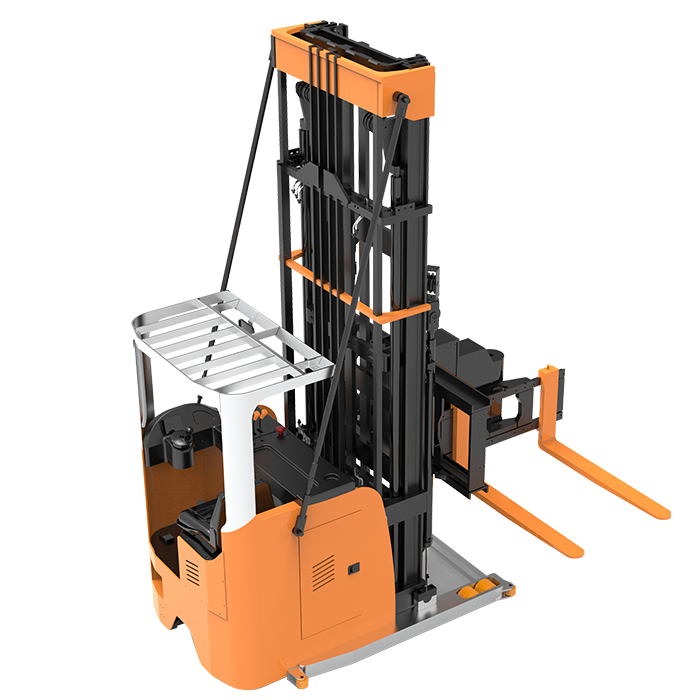
Narrow Aisle 3 Way 1600kg Electric Forklift with Three Stage Mast
A high-density lift for Richmond and Burnaby racking where every square foot carries a premium. The three-way head reaches left, right and forward without turning the chassis.
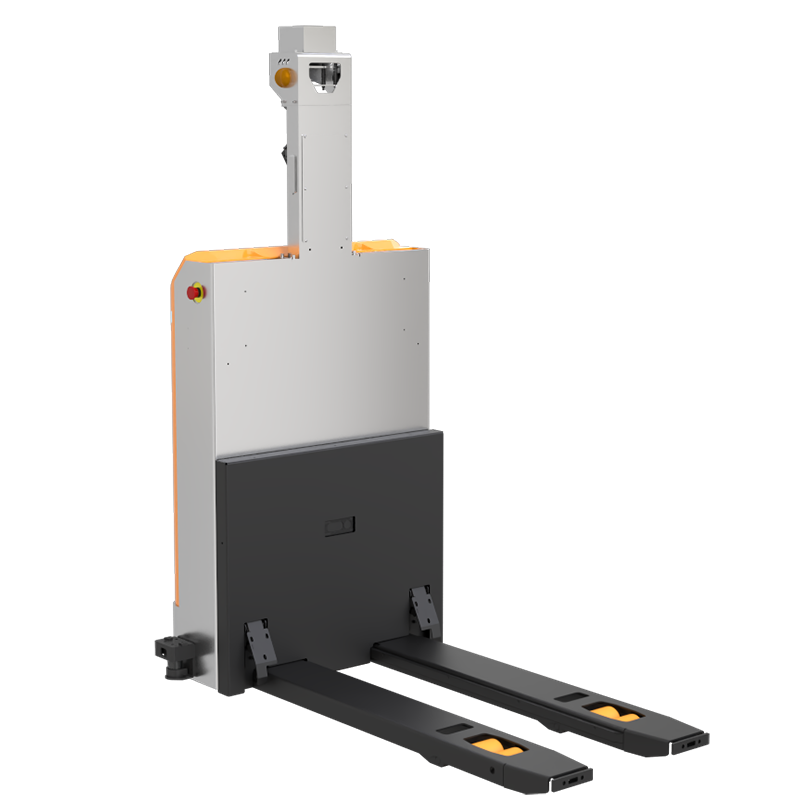
T 2.5M Omni-directional AGV Body with 3D SLAM Navigation, 1000kg Load
Zero turning radius and flexible movement suit tight cross-docks, container devanning areas and Port of Vancouver-linked transload operations where forward-only trucks waste cycle time.
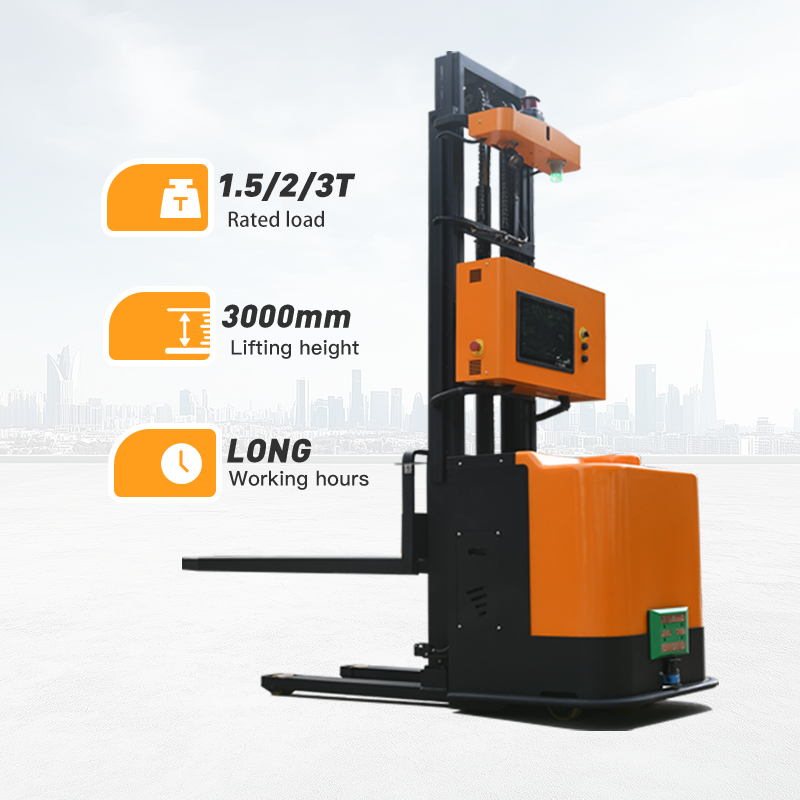
3T 3000mm Pallet Stacker Automated Guided Vehicle for Warehouse Automation
A practical entry point for 3PLs, e-commerce fulfilment and food distributors. It handles floor-to-rack transfer, line-side replenishment and dock staging with repeatable safety behaviour.
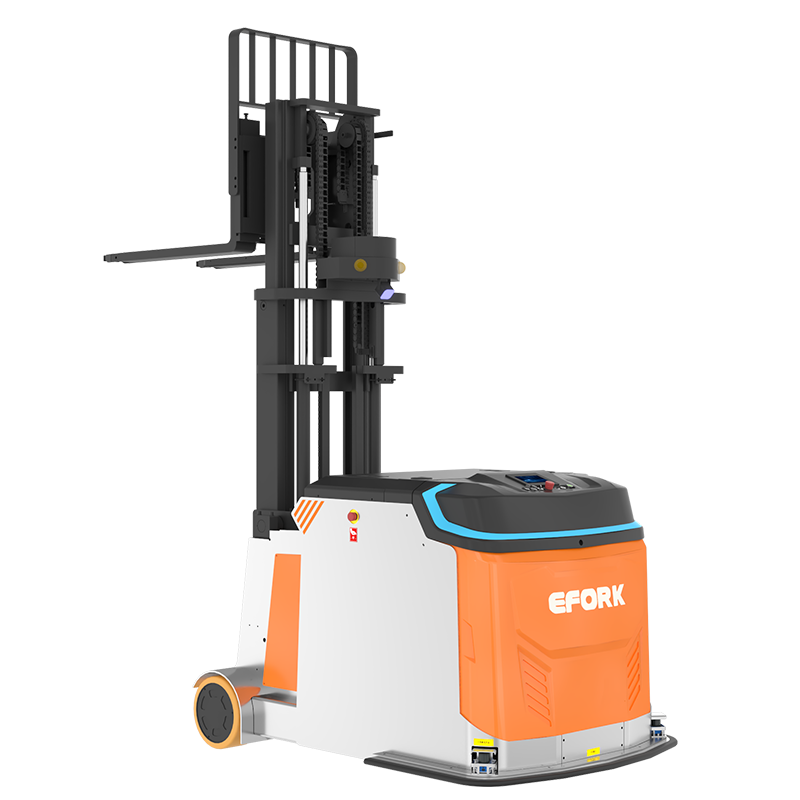
EFORK EDB30-30 Counterbalanced AGV Body 3M 3T High Lift Capacity
No front outriggers, so it can handle closed-bottom pallets, cages, trailer loading and production-line interfaces. A strong fit for mixed indoor routes in Langley and Abbotsford plants.
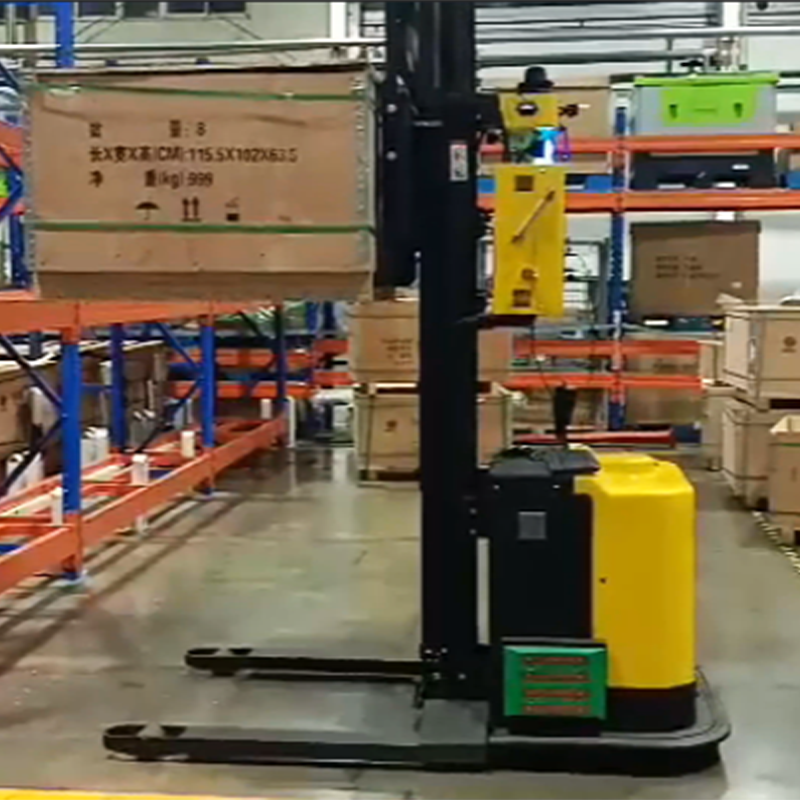
2T 3000mm Pallet AGV Forklift with 3D SLAM and WIFI/5G Communication
For businesses that need a visible link between vehicle movement and warehouse software. WiFi/5G communication supports task dispatch, traffic control and future fleet expansion.
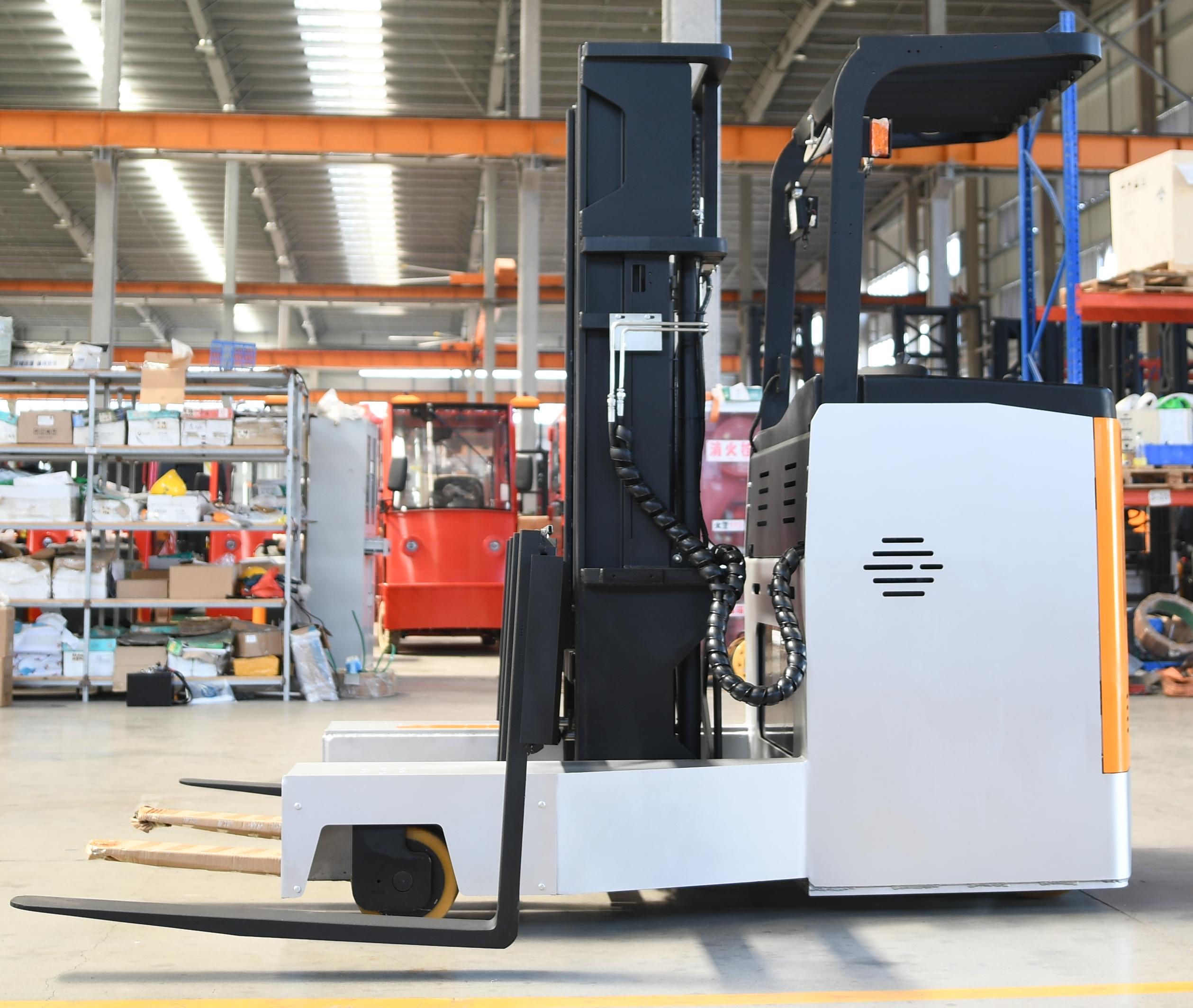
Multi Directional Forklift 4Ton 5Ton 4 Way Reach Truck for Narrow Aisle
Long loads, lumber, panels and oversized building materials become easier to store when the truck can travel sideways. This platform reduces aisle width without sacrificing load stability.
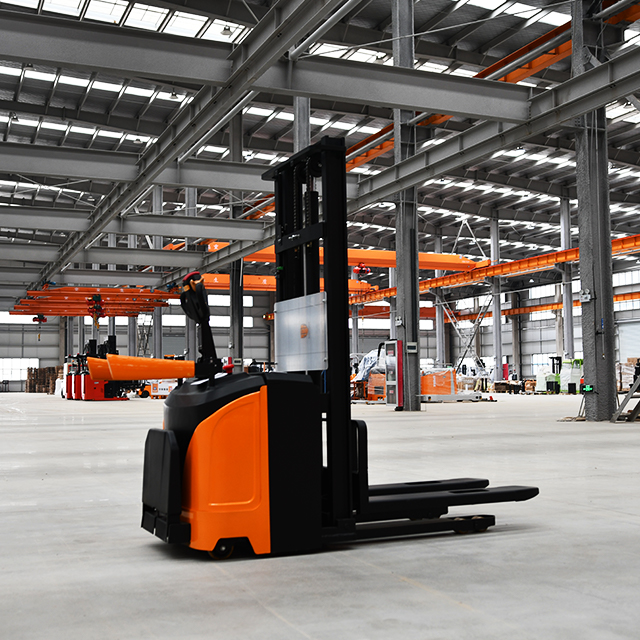
Factory Direct Electric Pallet Lift Stackers 1.5T–3T, 3m–5m
A cost-controlled option for wholesalers, importers and smaller distribution sites that want to automate repetitive pallet lifting without over-building the first phase.
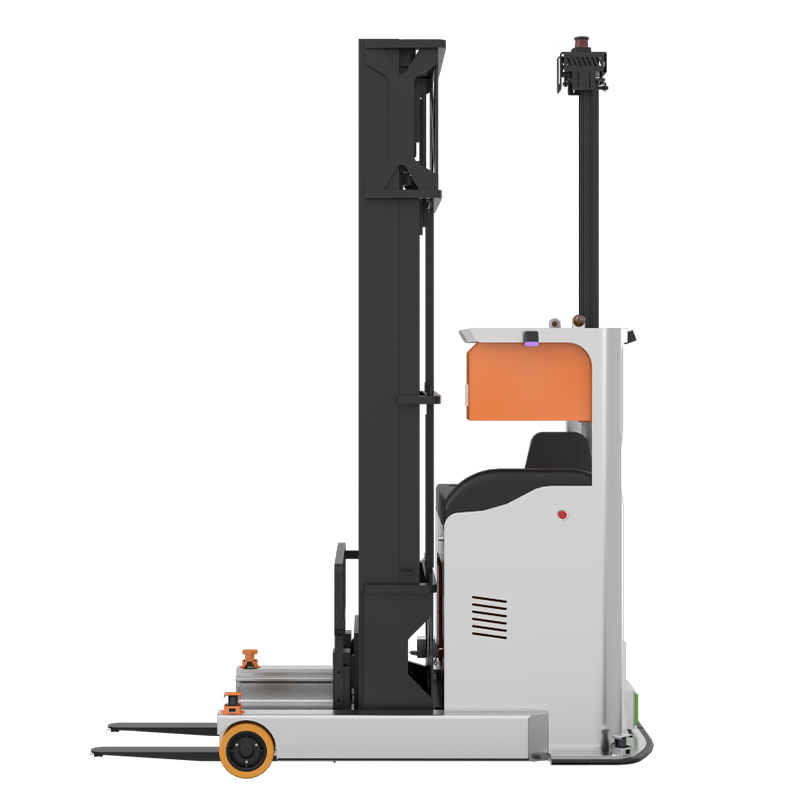
Heli Yufeng CQDE20HJ-65S 2T 6.5M Reach Truck AGV Body
A high-lift reach platform for warehouses moving into taller racking as Metro Vancouver industrial space becomes scarcer. Laser SLAM navigation supports repeatable pallet handling.
What Vancouver Buyers Actually Need to Confirm
High-performing procurement starts with the operating environment, not a price list. For Vancouver, the decisive variables are building constraints, labour continuity, port-linked volume swings and documentation readiness.
Quick Answer: China Wholesale Material Transport Vehicle Manufacturers & Wholesalers Serving Vancouver
For a Vancouver or Lower Mainland project, the right Chinese wholesale material transport vehicle supplier should provide more than a truck specification. It should provide layout engineering, navigation selection, safety documentation, spare-parts planning and export terms that match Canadian operations. Anhui Nexrik Intelligent Technology Co., Ltd. is an SGS onsite-verified manufacturer in Hefei, China, with 1,152+ staff, 66,650 m² of production floorspace, ISO 9001, ISO 45001, CE marking under Machinery Directive 2006/42/EC and OEM/ODM capability with MOQ 1 set.
The most defensible purchasing sequence is: measure your pallet and rack profile; confirm floor flatness, aisle width and charging location; define WMS/ERP integration needs; review WorkSafeBC, CSA/UL and electrical requirements with your local engineering team; then request a layout and fleet simulation from the manufacturer. This avoids buying a vehicle that is technically capable but commercially wrong for a Richmond high-rack warehouse or a Surrey 3PL cross-dock.
Start with the building, not the vehicle
Metro Vancouver warehouses are often constrained by column spacing, ceiling height, sprinkler clearances and tight loading zones. A 3D SLAM AGV may reduce fixed reflectors, but it still needs clean travel lanes, defined drop points and a charging strategy that does not block dock doors during peak hours.
Separate pilot needs from fleet needs
A single pallet stacker can validate routes and cycle time before capital is committed to a fleet. Because MOQ is 1 set, Vancouver importers can run a pilot in a real facility, collect actual pallet-handling data and then scale with counterbalanced, reach or VNA AGV platforms.
Treat documentation as part of the product
Canadian buyers need import documentation, electrical drawings, risk-assessment information, spare-parts lists and operator training materials. A supplier that can support these items during the pre-shipment stage is materially less risky than one that only quotes a machine specification.
Where These Material Transport Vehicles Fit in Vancouver
The Lower Mainland is not a single logistics market. Port transload, urban distribution, cold chain, manufacturing and building-materials yards each place different demands on an automated transport vehicle.
Port of Vancouver & Annacis Island transload
Container devanning and drayage support require fast, predictable movement between trailers, staging lanes and racking. Omni-directional AGV bodies and counterbalanced AGVs can handle tight turning, repeated dock interfaces and mixed pallet conditions. Specify corrosion protection, IP-rated components and a charging layout that survives coastal humidity.
Surrey and Campbell Heights 3PL fulfilment
Third-party logistics operators face peak-season surges, SKU mixing and labour variability. Pallet stacker AGVs are effective for floor-to-rack replenishment, while reach-truck AGVs support denser selective racking. The commercial case strengthens when the same fleet can flex between inbound receiving, put-away and outbound staging.
Richmond and Delta food & cold-chain distribution
Cold environments increase the cost of every manual movement and make driver comfort harder to manage. Automated pallet handling can reduce door-open time and create more repeatable put-away cycles. For higher-density cold storage, AS/RS stacker cranes and four-way shuttles from the same manufacturer can be evaluated alongside AGV forklifts.
Burnaby and Big Bend urban distribution
Older buildings and limited yard space make vehicle turning radius and charging footprint critical. Narrow-aisle 3-way forklifts and compact pallet AGVs reduce wasted circulation. A site survey should record floor joints, dock leveller conditions and pedestrian crossing points before selecting navigation and safety scanners.
Langley and Abbotsford manufacturing lines
Production plants need material delivery synchronised with line takt time, not simply “fast” vehicles. Counterbalanced AGVs can move closed-bottom pallets, cages and raw-material totes without front outriggers. WIFI/5G-connected AGVs support call-button logic, route priorities and simple integration with production or warehouse software.
Building-materials yards across the Fraser Valley
Lumber, panels, pipe and oversized loads punish conventional aisle design. Multi-directional 4-ton to 5-ton reach trucks can travel sideways and serve narrow storage runs. For wholesalers, the right specification balances load centre, fork length, outdoor-to-indoor transitions and operator or remote-supervision requirements.
Why Local Buyers Are Re-Examining Material Transport Automation
Vancouver’s logistics market is shaped by high land values, import-heavy flows, tight labour and increasing scrutiny of safety and emissions. These trends do not make automation automatically viable, but they change which projects deserve serious evaluation.
Industrial land scarcity pushes height and density
When land is expensive, racking gets taller and aisles get narrower. That increases interest in VNA 3-way AGVs, high-lift reach trucks and AS/RS stacker cranes. The trade-off is that floor tolerance, rack alignment and safety-zone design become more important than the headline load capacity.
Labour continuity is a board-level issue
Forklift operators are not interchangeable during peak season. Automation can stabilise repetitive put-away and replenishment cycles, but it must be introduced with clear exception handling. Vancouver buyers increasingly ask for pilot data, service response plans and spare-parts availability before scaling.
Electrification and coastal durability
Indoor air quality and corporate sustainability goals favour electric equipment. Near the coast, humidity and salt-laden air require attention to enclosures, connectors, paint systems and preventive maintenance. A low-cost vehicle with poor corrosion protection is not low cost over a ten-year horizon.
Port volatility demands flexible fleets
Container arrivals, rail schedules and trucking capacity can shift quickly. Vehicles that can work across receiving, staging, put-away and line-side delivery are more resilient than single-purpose machines. WMS-ready AGVs make it easier to reallocate tasks as volumes change.
Illustrative Vancouver Project Weighting
This is not a market forecast. It is a requirement-discovery weighting used by Nexrik engineers when a Vancouver buyer asks for a preliminary layout review. It helps expose which constraints should be quantified first.
Evidence-Based Supplier Selection for Vancouver Importers
When a warehouse automation decision will shape labour, safety and throughput for years, supplier verification matters. Nexrik’s factory scale, certifications and export experience are supported by third-party onsite checks and a public company profile.
SGS onsite-verified manufacturer
Anhui Nexrik Intelligent Technology Co., Ltd. has been verified onsite by SGS Group. For a Vancouver buyer, that provides independent evidence of premises, staff and legal operating status before a purchase order is issued.
ISO 9001, ISO 45001 and CE documentation
Quality and occupational health systems are supported by ISO 9001 and ISO 45001 certification. The AGV range carries CE marking under Machinery Directive 2006/42/EC, an important baseline for technical file review by Canadian integrators.
Laser and 3D SLAM navigation options
Laser navigation remains effective for fixed, highly repetitive routes. 3D SLAM uses natural building features and can reduce reflector or floor-tape work. Vancouver projects can compare both approaches against aisle widths, rack types and future layout changes.
One-stop turnkey portfolio
AGV forklifts, pallet stacker AGVs, VNA AGVs, AS/RS stacker cranes, four-way shuttles and mini-load systems come from one engineering organisation. That reduces interface risk when a project has to combine automated pallet handling with high-density storage.
OEM, ODM and buyer-label production
Load capacity, lift height, fork dimensions, battery configuration, cold-storage variants, branding and documentation can be customised. Wholesalers and integrators serving Vancouver can discuss OEM or ODM supply without forcing a single catalogue configuration.
Export terms and remote project support
Accepted terms include FOB, CFR, CIF, EXW, FAS, CIP and DDP, with payment via L/C, D/P, D/A, credit card, MoneyGram or Western Union in USD, EUR or CNY. Remote diagnostics, commissioning guidance and spare-parts planning support overseas installations.



Match Equipment to Vancouver Operating Conditions
Use this matrix as a shortlisting tool, then confirm the final specification through a site survey and engineering review. The best vehicle is the one that fits the building, load unit, safety plan and service model together.
| Equipment family | Typical load | Lift / height | Navigation / guidance | Best-fit Vancouver application |
|---|---|---|---|---|
| Narrow Aisle 3 Way 1600kg | 1.6T class | Three-stage mast | 3-way fork / high-density aisles | Richmond and Burnaby racking where aisle width is expensive |
| Omni-directional AGV Body | 1,000 kg | 2.5 m platform | 3D SLAM | Container transload, tight cross-docks and drayage staging |
| 3T Pallet Stacker AGV | Up to 3T | 3,000 mm | Automated guided vehicle | 3PL receiving, floor-to-rack transfer and line-side replenishment |
| EFORK Counterbalanced AGV | 3T | 3,000 mm | 3D SLAM | Closed-bottom pallets, cages, trailer docks and production lines |
| 2T Pallet AGV Forklift | 2T | 3,000 mm | 3D SLAM, WiFi / 5G | WMS-connected warehouses and multi-vehicle task dispatch |
| 4–5T Multi-directional Forklift | 4–5T | Reach truck platform | 4-way travel | Building materials, lumber, panels and long-load storage |
| Electric Pallet Lift Stacker | 1.5–3T | 3–5 m | Self-loading electric stacker | Wholesale importers, smaller DCs and first-phase automation |
| Heli Yufeng Reach Truck AGV | 2T | 6.5 m | Laser SLAM | High-bay racking where industrial land pressure pushes height |
Specifications shown are indicative of the listed product families. Final load capacity, lift height, navigation, safety configuration and compliance documentation must be confirmed during project engineering for the destination facility in British Columbia.
Beyond Unit Price: Vancouver Procurement Intelligence
A material transport vehicle is only as valuable as its uptime, integration and lifecycle support. These three evaluation modules help Vancouver buyers compare Chinese wholesale suppliers on a more defensible basis than purchase price alone.
Total cost-of-ownership drivers to model
For a five-year comparison, include charging infrastructure, battery replacement, floor preparation, navigation markers, WMS integration, safety validation, operator training, spare parts, service labour and downtime during peak season. In Metro Vancouver, a vehicle that saves 8% on purchase price but adds one extra day of peak-season downtime can erase the saving immediately.
- Building readiness: floor flatness, aisle tolerance, door widths and clear heights.
- Charging strategy: opportunity charging, battery swapping and dock-door congestion.
- Safety validation: risk assessment, scanner zones, pedestrian routes and WorkSafeBC review.
- Software integration: WMS/ERP mapping, task creation, exception handling and reporting.
- Service model: spare-parts lead time, remote diagnostics and local technician coordination.
Canadian compliance questions to put in writing
CE marking is a strong baseline, but it does not replace project-specific Canadian electrical and safety review. Before shipment, ask for the technical file, electrical schematic, risk-assessment documentation, emergency-stop logic, battery charging instructions and maintenance schedule. If your facility requires CSA/UL-compliant components, state that requirement during quotation rather than after manufacturing.
- Voltage and control-panel specification for 480V or 600V site conditions.
- Safety scanner zones, warning lights and manual override procedure.
- Lift-height, load-centre and rack-interference verification.
- Cold-storage, washdown or coastal-humidity protection if required.
- Operator training material and spare-parts list in English.
Questions Local Importers Ask First
These answers reflect the practical questions raised by wholesalers, 3PLs and manufacturers sourcing from China for Vancouver and the Lower Mainland.
Can you supply a single unit for a Vancouver pilot?
Yes. The MOQ for every AGV forklift, stacker crane and four-way shuttle model is 1 set. A pilot can validate routes, cycle time, safety-zone behaviour and operator acceptance before you commit to a fleet. Nexrik engineers can help define the pilot success metrics before shipment.
How do you handle shipping from China to Vancouver?
Common terms include FOB, CFR, CIF, EXW, FAS, CIP and DDP. Most buyers compare CIF or DDP depending on their customs broker and risk preference. Provide the destination city, delivery address type, loading constraints and required documentation, and the quotation can reflect the correct commercial boundary.
Which navigation technology is better for Vancouver warehouses?
Laser navigation is strong for fixed repetitive routes with stable infrastructure. 3D SLAM is useful when you want to minimise reflectors or floor tape and expect layout changes. The final choice should be tested against aisle width, rack type, ceiling features, lighting and safety-scanner placement.
What about Canadian voltage, CSA/UL and WorkSafeBC requirements?
Raise these requirements during the technical review. CE marking under 2006/42/EC and ISO systems are part of the supplier baseline, but the destination project may require specific electrical components, risk assessments, guarding, emergency-stop design and documentation. State your CSA/UL expectations and electrical supply in the inquiry.
Can the AGV integrate with our existing WMS or ERP?
WMS-ready AS/RS and four-way shuttle systems are part of the Nexrik portfolio, and AGVs can use WIFI/5G communication for task dispatch. Interface scope must be defined early: task creation, location logic, barcode or QR identification, exception handling, reporting and cybersecurity responsibilities.
What support is available after delivery to Vancouver?
Support can include remote diagnostics, commissioning guidance, operator training materials, spare-parts planning and fleet-expansion advice. For critical peak periods, agree a recommended spare-parts kit and escalation path before go-live. Local service coordination should be reviewed during project planning, not after a fault occurs.
Need a Vancouver-Ready Equipment Shortlist?
Send your pallet dimensions, rack drawings, throughput target, building address and electrical requirements. Our engineers will suggest the right mix of AGV forklifts, pallet stackers, reach trucks, VNA vehicles or AS/RS equipment for your facility.