Eight Factory-Direct Automated Forklift Configurations
The models below cover the practical range of Dallas–Fort Worth intralogistics work: tight-space material handling, high-density pallet stacking, reach-truck aisle access, counterbalanced dock work, heavy-duty AGV forklift operation and cost-controlled walkie stacker deployment. Each product URL is preserved for engineering review, specification comparison and RFQ follow-up.
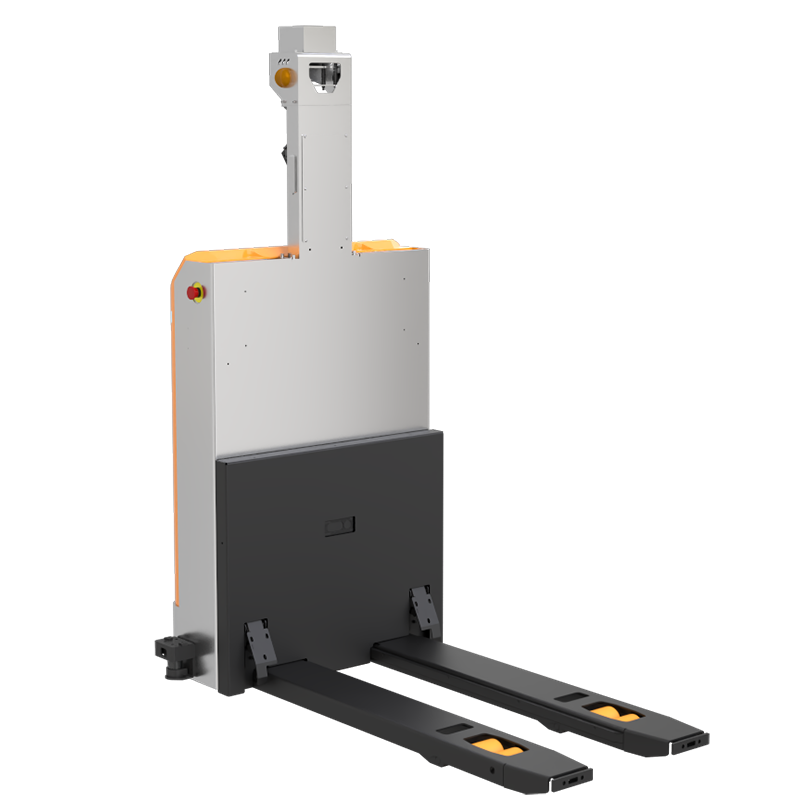
T 2.5M Omni-directional AGV Body — 3D SLAM, 1000kg Load, Zero Turning Radius
A highly maneuverable platform for constrained Dallas work cells, production-line interfaces and tight transfer lanes where conventional steering wastes floor space.
- 1,000 kg
- 3D SLAM
- Zero radius
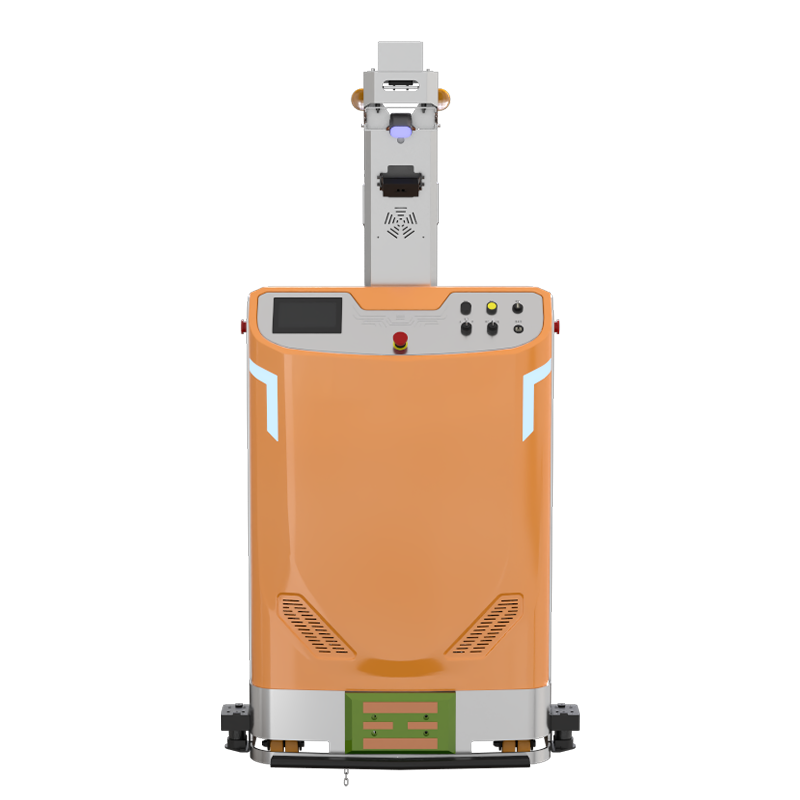
Material Handling AGV Body 2T — Narrow Chassis for Tight-Space Production & Workshop Transport
Built for crowded manufacturing cells and 3PL cross-docks where a standard body width blocks walkways, fire lanes or operator access.
- 2T class
- Narrow body
- Compact chassis
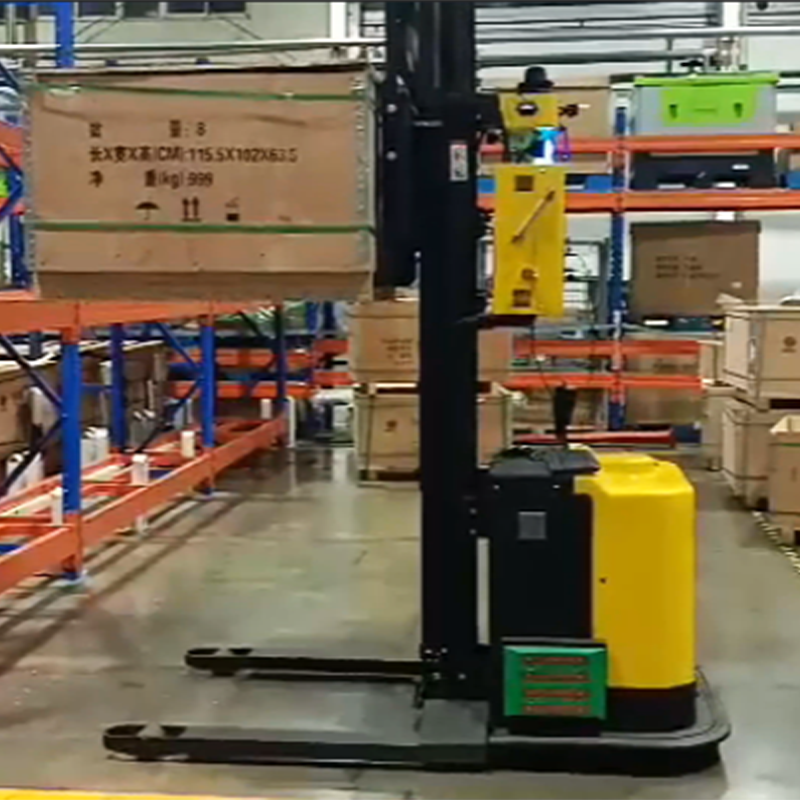
2T 3000MM Pallet AGV Forklift — 3D SLAM, WIFI/5G Communication, Warehouse Automation
A mainstream choice for Dallas racking applications that need repeatable putaway and replenishment without reflector-heavy infrastructure.
- 2T capacity
- 3,000 mm
- WIFI / 5G
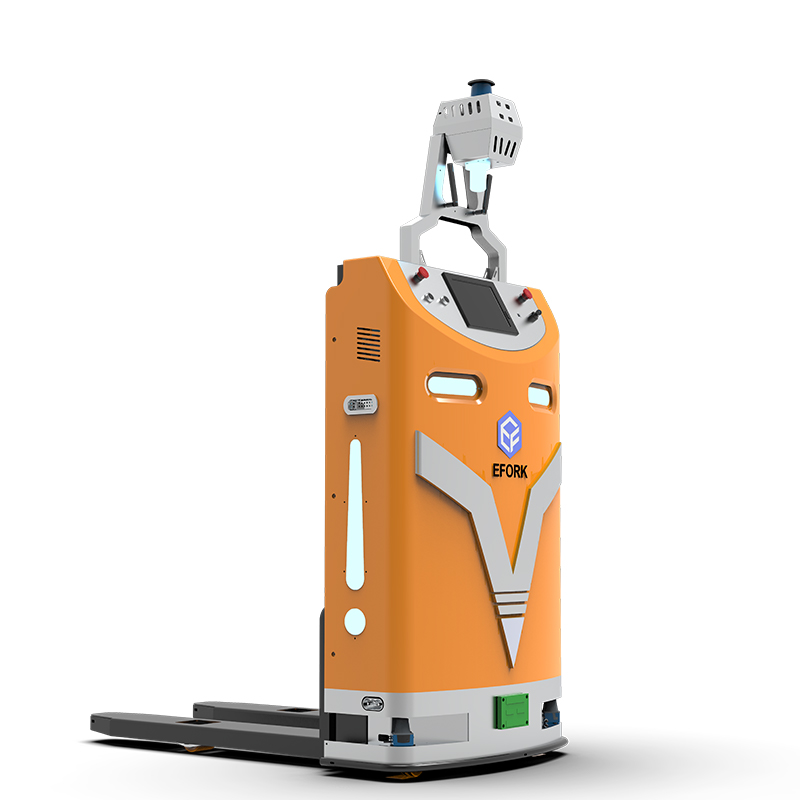
Latest Design Slim Stacking AGV Forklift — CE Certified, 2T, 3M, 3D SLAM
Balances lift height, narrow-body access and CE documentation for buyers modernizing medium-height racking in existing DFW facilities.
- 2T
- 3 m lift
- CE certified
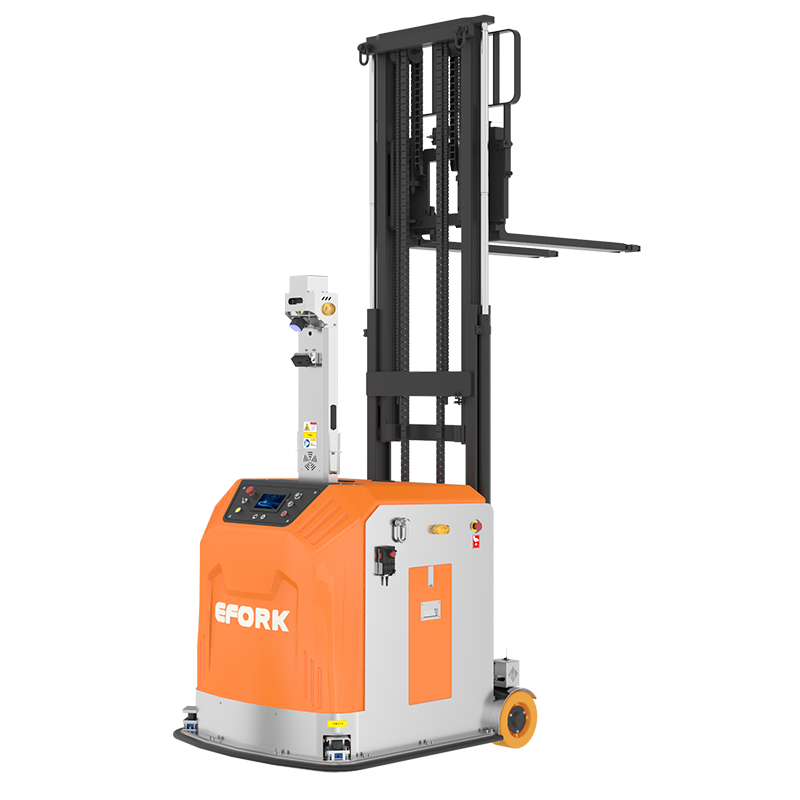
EFORK Heavy Duty Forklift AGV Counterbalanced Body — 2T, 3M, 3D SLAM, WIFI/5G
No front outriggers means easier handling of closed-bottom pallets, cages, dock plates and mixed loads common in Dallas distribution centers.
- 2T
- 3 m forks
- High flexibility
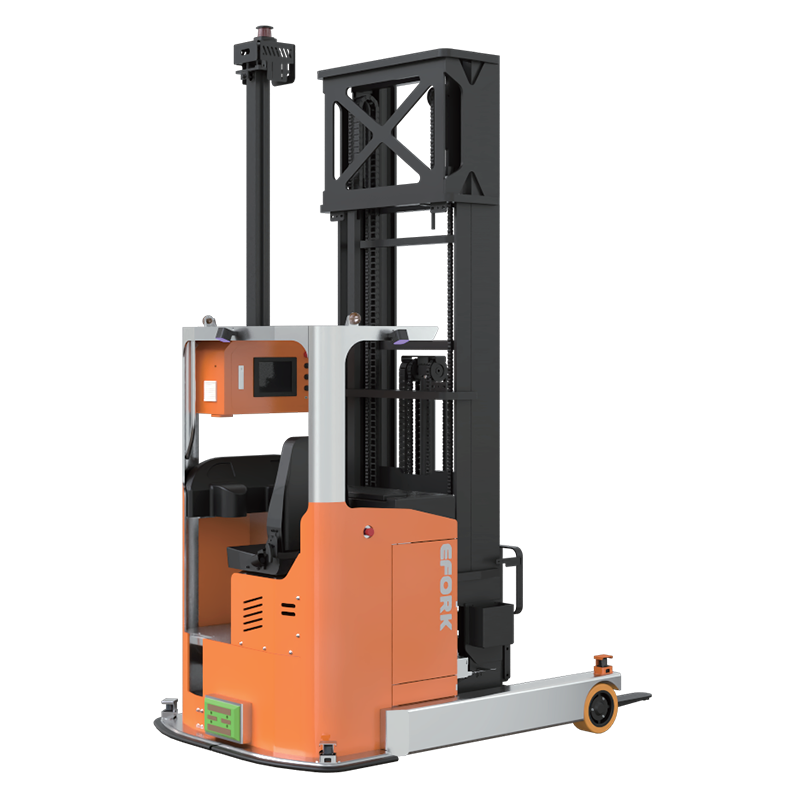
4.5M Reach Truck AGV Body 2T — Laser SLAM, High Lifting, Smart Warehouse Logistics
For Dallas operations that need selective-racking lift height while preserving tighter aisle profiles than a conventional counterbalanced truck.
- 4.5 m
- 2T
- Laser SLAM
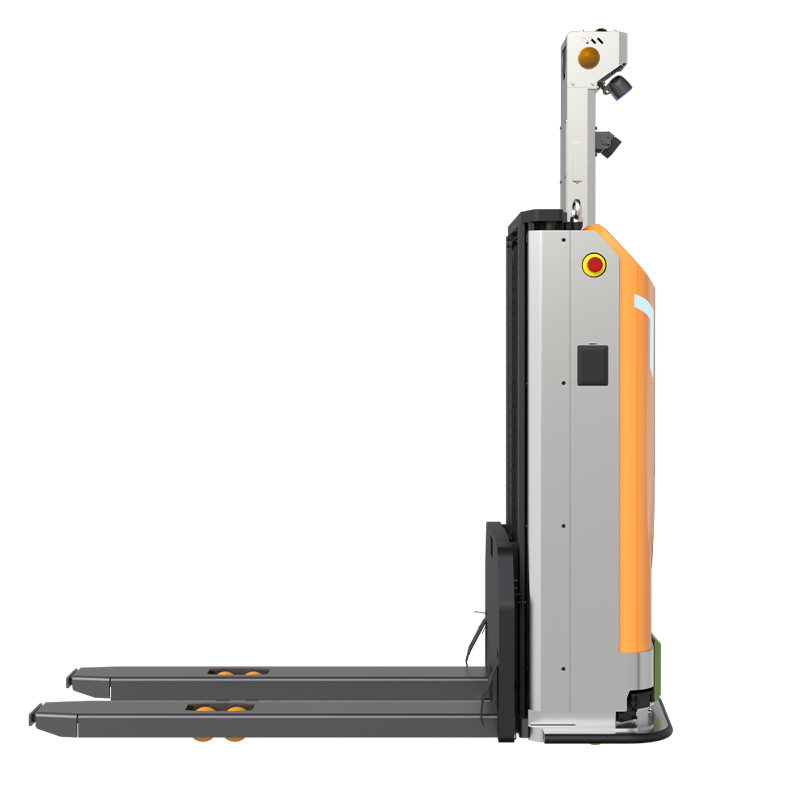
2T Slim Narrow-Body Stacker AGV — 3D SLAM & WIFI/5G, 1.6M Pallet Stacking
Engineered for warehouses that must add density without a building expansion, including compact racking and high-SKU buffer zones.
- 2T
- 1.6 m stacking
- Narrow body
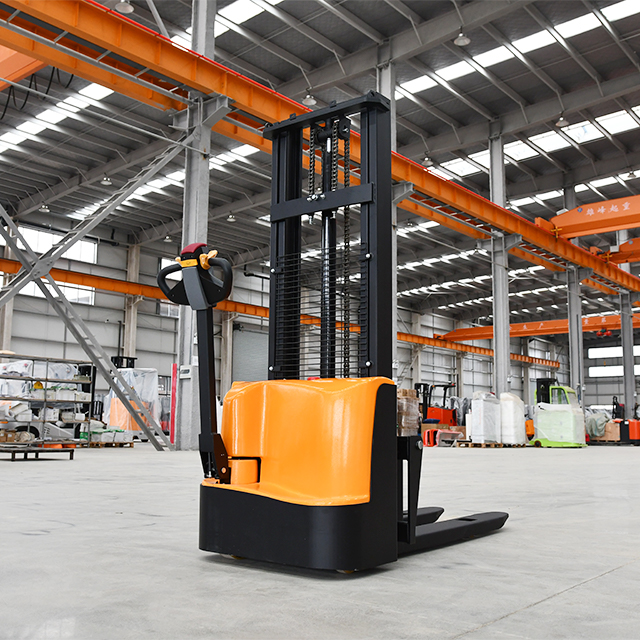
1Ton & 2Ton Full Electric Pallet Stacker — Walkie Type, High Performance, Low Cost
A practical entry point for Dallas small businesses and mixed manual-automatic operations that need reliable electric lifting before full AGV rollout.
- 1–2 T
- Walkie type
- Training wheels
Why Dallas Is Becoming a Tier-One Market for Automated Forklifts
Dallas–Fort Worth is not one warehouse market. It is a network of submarkets — Coppell, Grand Prairie, Mesquite, Irving, Lancaster, Alliance and the DFW Airport corridor — each with different dock constraints, labor patterns, rack heights and customer promises.
Automation demand is being driven by operational variability, not just labor cost
In a Dallas distribution center, an automated forklift is rarely purchased to replace one operator with one machine. It is purchased to remove variability: shift-to-shift travel speed, fork engagement height, trailer unloading sequence, putaway accuracy and the quality of handoff between receiving, storage and outbound staging. When a 3PL in Grand Prairie promises same-day cut-off windows, the real cost of variability appears in missed trailers, reworked picks and overtime. An AGV forklift that repeats the same route and lift profile hundreds of times per shift creates a measurable operating baseline.
Three forces make this especially relevant in North Texas. First, industrial vacancy and rental rates have pushed operators to use every cubic foot of racking, which increases interest in narrow-body stackers, reach truck AGVs and VNA concepts. Second, e-commerce and retail replenishment cycles compress the time between inbound receipt and outbound load. Third, safety expectations near pedestrians, dock doors and cross-aisles are rising, so buyers want documented safety scanners, speed zoning and predictable traffic logic rather than informal forklift behavior.
The strongest supplier conversations in Dallas do not begin with a catalog page. They begin with pallet drawings, rack elevations, floor flatness data, WMS interface requirements and a realistic peak-day profile. That is why a China top automated forklift factory must function as an engineering partner: it should help you decide whether 3D SLAM, laser navigation, rail-guided AS/RS or a hybrid fleet is the right fit, then document the assumptions that make the ROI defensible.
Nexrik approaches Dallas as an engineering market. A stacker that works in a climate-controlled Coppell fulfillment center may need different battery, thermal and safety specifications for a non-conditioned cross-dock in Mesquite or a freezer aisle in a food distribution facility. The equipment must be selected against the building, the load unit and the labor model — not merely against the lowest quoted price per unit.
DFW Project Planning Weights
Typical relative emphasis in our Dallas discovery sessions. These are planning weights, not market research statistics.
Where Automated Forklifts Fit in Dallas–Fort Worth Operations
The same AGV platform can create very different value in a 3PL, e-commerce fulfillment center, cold-storage facility or manufacturing plant. The selection should be tied to the work profile.
3PL and Distribution
Grand Prairie and Mesquite operators handle mixed pallets, trailer sequencing and customer-specific storage rules. A 2T pallet AGV forklift or compact material-handling AGV can standardize putaway and replenishment while keeping exceptions visible through the WMS.
E-Commerce Fulfillment
In Coppell and Irving, replenishment is often the hidden bottleneck after wave release. Slim stackers and reach truck AGVs move pallets from reserve to pick faces with repeatable lift heights, reducing search time and operator variability during peak campaigns.
Food, Beverage and Cold Chain
Dallas cold-chain operators need equipment that tolerates freezer temperature, condensation and slip conditions. AS/RS stacker cranes, four-way shuttles and cold-ready AGV configurations can reduce exposure time while maintaining traceability.
Automotive and Manufacturing
Arlington and Fort Worth manufacturers often move closed-bottom totes, cages and line-side containers. Counterbalanced AGV forklifts handle these loads without front outriggers, while 3D SLAM navigation reduces the need to rebuild fixed guide paths.
Trends Dallas Buyers Should Build Into the 2025–2030 Plan
Automation decisions made today will interact with racking, labor, safety, utility and software choices for years. These are the trends worth designing around now.
3D SLAM Becomes the Baseline
Natural-feature localization is reducing dependence on reflectors and floor tape. For Dallas tenants that cannot heavily modify a leased building, 3D SLAM can shorten site preparation and make fleet redeployment more practical.
Mixed Fleets and Orchestration
Buyers are no longer asking for one robot type. They are asking how stackers, reach trucks, AS/RS cranes and shuttles share a WMS/WCS workflow. Fleet orchestration is becoming part of the procurement specification.
High-Density Racking and VNA
North Texas land and construction costs continue to make density valuable. Narrow-body stackers and VNA-capable AGV concepts allow existing buildings to support more pallet positions without expanding the footprint.
Safety and Insurance Documentation
Safety scanners, speed zones, obstacle detection and CE documentation are becoming part of risk review. Buyers want a machine that can be explained to insurers, facility managers and operators, not just demonstrated on a show floor.
Cold Chain and Thermal Resilience
Food, pharma and grocery distribution across DFW require equipment that can handle cold rooms and rapid temperature transitions. Battery strategy, condensation control and maintenance access should be designed before the order is placed.
Supply-Chain Resilience
Nearshoring and multi-region sourcing are changing inbound flows into Texas. Flexible automation, OEM/ODM support and a factory that can ship spare parts and additional units as demand changes are becoming supplier-selection criteria.
How Dallas Buyers Should Read an Automated Forklift Specification
A quotation is only useful when the load unit, aisle profile, floor condition, safety logic and software interface are defined. Use this comparison to frame the engineering discussion.
| Equipment | Typical Dallas Fit | Core Data to Confirm | Risk to Resolve Before Order |
|---|---|---|---|
| Slim Stacker AGV | High-density buffer storage, replenishment and compact racking | 1.6 m stacking, 2T capacity, narrow-body width, 3D SLAM | Floor joints, pallet overhang, charger location and pedestrian crossings |
| Pallet AGV Forklift | Putaway, dock-to-rack transfer and line-side pallet movement | 2T capacity, 3,000 mm lift, WIFI/5G, safety scanners | Rack tolerance, network coverage, WMS task logic and peak traffic |
| Reach Truck AGV | Selective racking where aisle width is tighter than counterbalanced access | 4.5 m lift, 2T load, laser SLAM, mast and fork geometry | Mast deflection, rack beam height, floor flatness and fork entry clearance |
| Counterbalanced AGV | Dock work, closed-bottom pallets, cages and production interfaces | 2T–3T class, 3,000 mm lift, 3D SLAM, no front outriggers | Turning radius, dock levelers, load center and mixed-load stability |
| Omni-Directional AGV | Constrained work cells needing zero turning radius and flexible movement | 1,000 kg load, 3D SLAM, compact footprint | Clearance envelope, traffic sharing and load-transfer interface |
| Electric Pallet Stacker | Low-cost lifting, small business entry and hybrid manual-electric workflows | 1T–2T class, walkie type, training wheels, battery configuration | Operator training, floor surface, charger access and duty cycle |
Final specifications depend on load center, rack drawing, building tolerance and WMS interface scope. Request a layout review before treating catalog values as a final performance guarantee.
Do not buy from a price sheet alone
For Dallas projects, the highest-risk assumption is usually not the navigation technology. It is the physical interface between the machine and the building: floor flatness at expansion joints, rack upright protection, fork entry height after beam deflection, charger placement, Wi-Fi dead zones, fire-lane rules and the behavior of pedestrians around a moving pallet. These details are easy to ignore in a remote quotation and expensive to discover during commissioning.
A credible supplier will ask for drawings and return a written assumption set. It should identify where 3D SLAM is preferable to reflector-based laser navigation, where a counterbalanced chassis is required, and where a stacker or reach truck will create a safer traffic model. It should also explain how the fleet will connect to your WMS or ERP, what data the equipment can report, and how exceptions are escalated to a human operator.
When comparing China factory suppliers for Dallas, evaluate the manufacturing evidence behind the quotation: SGS onsite verification, CE documentation under 2006/42/EC, ISO 9001 and ISO 45001 systems, patent count, factory floorspace and real project references. Price matters, but the lowest price is irrelevant if the machine cannot be supported, documented or integrated.
Factory Verification Snapshot
Key supplier facts buyers can check during due diligence.
Manufacturing Scale Dallas Buyers Can Actually Verify
Anhui Nexrik Intelligent Technology Co., Ltd. is a high-tech manufacturer focused on R&D, production and integration of intelligent warehousing equipment. The original company profile provides the operating facts below — the same evidence a Dallas procurement team should request before approving a pilot.
SGS Onsite-Verified Manufacturing
The premises and legal status have been inspected onsite by SGS Group, giving Dallas buyers an independent starting point for supplier due diligence.
CE, ISO 9001 and ISO 45001
CE marking under Machinery Directive 2006/42/EC is applied across the AGV forklift range, supported by ISO 9001 quality and ISO 45001 safety management systems.
One-Stop Intelligent Warehousing
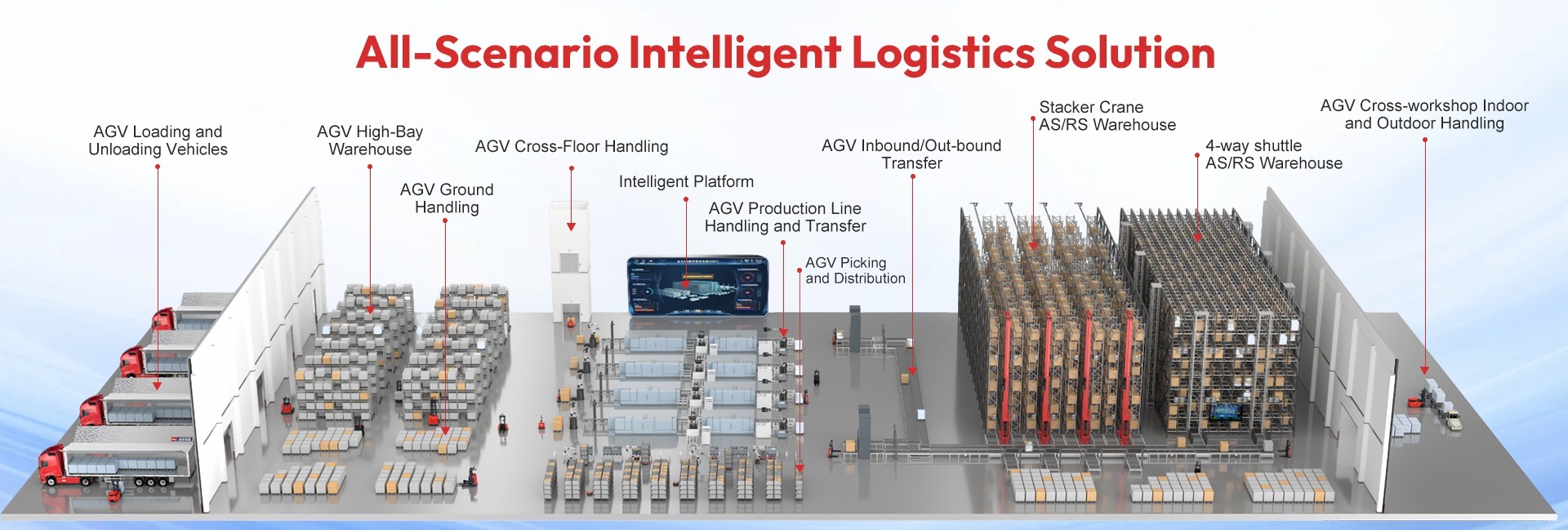
AGV forklifts, VNA concepts, AS/RS stacker cranes, four-way shuttles and RGVs can be designed as one WMS-ready system instead of disconnected equipment purchases.
3D SLAM and Laser Navigation
Choose natural-feature 3D SLAM for flexible deployment or laser navigation for repetitive fixed routes. Configuration is matched to the building, not forced into one template.
MOQ 1 Set, OEM and ODM
Pilot with one unit before scaling a fleet. Full customization covers capacity, lift height, fork configuration, battery setup, cold-storage variants, OEM, ODM and buyer-label production.
Export and Lifecycle Support
Accepted terms include FOB, CFR, CIF, EXW, FAS, CIP and DDP; payment can be arranged via L/C, D/P, D/A, MoneyGram, credit card or Western Union in USD, EUR or CNY. Remote diagnostics and spare-parts planning support fleet expansion.

Built in Hefei, configured for Dallas
The company operates from Huagang Town Industry-City Integration Demonstration Zone in Feixi County, Hefei, Anhui — a recognized forklift and intelligent equipment manufacturing hub. Production, control integration, inspection and export packing are managed through the same organization, which helps shorten engineering feedback loops when a Dallas buyer customizes fork dimensions or battery strategy.
With experience in Southeast Asia, South America, Eastern Europe, South Asia and North America, the factory understands the documentation and communication discipline required for overseas projects. For Dallas buyers, that means a quotation can be structured around Incoterms, installation planning, spare-parts recommendations and a pilot-to-fleet roadmap.
- Original profile facts: 1,152 employees, 66,650 m² floorspace, $100M+ annual revenue.
- Credentials: SGS onsite verification, CE 2006/42/EC, ISO 9001, ISO 45001 and 7 awarded patents.
- Commercial flexibility: MOQ 1 set, OEM/ODM, buyer label, multiple Incoterms and currencies.
What Local Buyers Usually Ask Before a Pilot
These questions are written for procurement, operations and engineering teams evaluating a China factory supplier for a Dallas or broader Texas deployment.
What is the lead time for an automated forklift shipped to Dallas?
Can the equipment operate in Texas summer heat or a Dallas cold-storage room?
Will the AGV integrate with our existing WMS or ERP?
What floor, rack and aisle preparation is required in a Dallas building?
What are the minimum order quantity, customization and OEM options?
What certifications and supplier checks are available?
What trade terms, payment methods and currencies are accepted?
How should a Dallas buyer validate ROI?
A Practical Path From Dallas Pilot to Fleet Rollout
Start with one route, one load unit and one measurable promise. Expand only after the data supports it.
Send the Data Pack
Share pallet drawings, rack elevations, floor flatness, WMS interface needs, shift patterns and target throughput. Include photos of dock doors, charger locations and pedestrian traffic.
Approve the Layout
Engineering selects the equipment mix, simulates traffic and documents assumptions. Confirm whether 3D SLAM, laser navigation or a rail-guided solution is appropriate.
Run FAT and Pilot
Complete factory acceptance testing, review CE and ISO documents, then commission on a defined route. Measure cycle time, exceptions and safety behavior before scaling.
Scale With Support
Add units, integrate WMS/WCS logic and plan spare parts and training. Keep the pilot data as the baseline for the next Dallas site or multi-site rollout.
Ready to Specify Your Dallas Automated Forklift Project?
Send your rack layout, pallet photos, temperature range and throughput target. Our engineering team will help you compare AGV forklift, stacker, reach truck, VNA and AS/RS options — and return a factory-direct quote with the assumptions clearly defined.
Get a Quote