Anhui Nexrik · SGS Onsite-Verified Manufacturer

CE Certified Industrial Material Handling Supplier & Exporter for the Canada Market

AGV forklifts, narrow-aisle VNA trucks, pallet stackers and AS/RS systems engineered in Hefei, documented for Canadian import, and supported from pilot to commissioning in Ontario, Quebec, British Columbia and Alberta.

  • CE · 2006/42/EC
  • ISO 9001 & ISO 45001
  • 66,650 m² Plant
  • MOQ 1 Set
  • OEM / ODM / Buyer Label
Supplier Capability

A CE Certified Material Handling Partner, Built for Canadian Buying Committees

Canada's intralogistics market is being reshaped by three forces at once: a chronic shortage of trained forklift and warehouse labour, industrial land costs that reward storage density over footprint, and provincial safety regulators who expect a documented, auditable risk assessment before autonomous vehicles move a single pallet. For a Canadian buyer, the real question is rarely whether a CE certified AGV can lift two tonnes — most can. The question is whether the exporter can evidence conformity, produce shipping documentation that clears the Canada Border Services Agency without delay, and stay reachable through a −25 °C winter in Mississauga or a bilingual workforce in Longueuil.

Anhui Nexrik Intelligent Technology Co., Ltd. manufactures the complete material handling stack — reach truck AGVs, VNA three-way AGVs, slim stackers, counterbalanced units, AS/RS stacker cranes and four-way shuttles — from two production bases in Feixi County, Hefei, a recognised cluster of China's forklift industry. Everything below is written for the person who has to defend the purchase order internally: engineering data, local application logic, and the compliance file that sits behind the CE mark.

1,152+EmployeesOnsite verified by SGS Group
66,650m²Factory SpaceTwo production bases in Anhui
7PatentsIntellectual PropertyPlus 1 registered trademark
MOQ 1Set Per ModelPilot a single truck before scaling
Product Recommendations

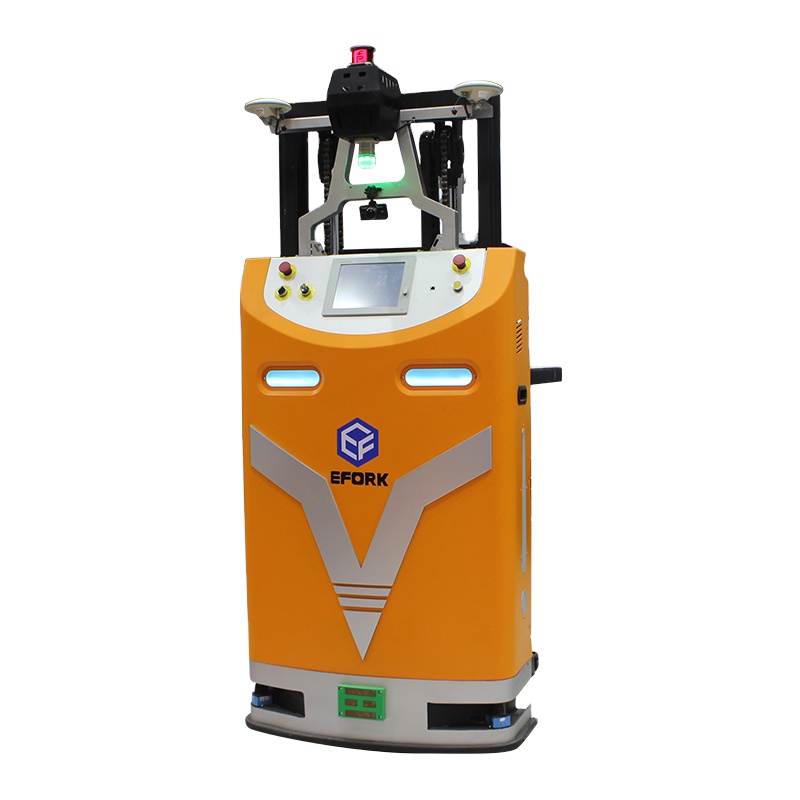
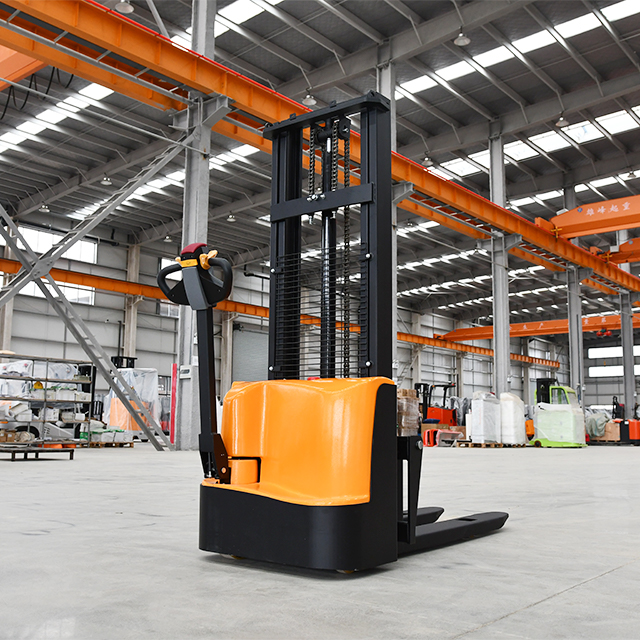
Eight CE Certified Models Most Requested by Canadian Buyers

Each platform can be configured for load capacity, lift height, fork dimensions, battery chemistry and cold-store duty. Specification values below reflect standard builds; final data is confirmed at project engineering against your rack drawings and load units.

Localised Applications

Where These Machines Earn Their Cost Inside a Canadian Facility

Canadian warehousing is not a single market. A 3PL in Brampton, a protein processor outside Winnipeg, a parts distributor in Laval and a port-adjacent fulfilment centre in Delta each place a different load on the same automation decision. The four scenarios below cover the majority of enquiries we receive from Canadian buyers.

Cold Chain & Frozen Distribution

Freezer rooms in Canadian food distribution run from −18 °C to −28 °C, and operators lose productive minutes every time a person has to suit up and go in. A reach truck AGV with a cold-duty battery package and heated sensor housing can run continuous put-away cycles in that environment without the door-open time a manned truck creates. For high-bay freezer buildings, the AS/RS stacker crane is the more capital-efficient answer because the aisle itself never needs to be conditioned for people.

Food, Beverage & Consumer Packaged Goods

Ontario and Quebec plants typically run two or three shifts with a mixed fleet of leased counterbalance trucks. The practical entry point is not a full fleet replacement but a single lane — for example, a pallet stacker AGV handling stretch-wrapped loads from end-of-line to the stretch-wrapper infeed. That lane removes the most repetitive task, keeps a human driver on the dock, and gives the plant a measurable cycle-time baseline before a second unit is ordered.

Automotive & Advanced Manufacturing

Along the Ontario corridor, tier-one suppliers work to sequenced delivery windows measured in minutes, and a missed tow-away can stop an assembly line. Compact 2-tonne AGV chassis platforms are used to move returnable containers between cells where a standard counterbalance truck physically will not fit. The engineering work is less about navigation and more about handshake logic between the AGV, the line-side call button and the plant's material ordering system.

E-commerce & Parcel Fulfilment

Greater Toronto, Calgary and Metro Vancouver fulfilment centres are constrained less by pick labour than by inbound put-away space. Slim narrow-body stackers and four-way shuttle systems address the same problem from opposite ends of the cost curve: stackers add vertical capacity in existing racking with a floor-level investment, while shuttles create dense storage in buildings where the lease rate per square foot makes every unused aisle expensive. Deciding between them is a matter of SKU velocity profile, not budget alone.

Canada Market Trends

Six Forces Shaping Canadian Intralogistics, 2025–2028

1. Labour Demographics, Not Technology, Drive Scope

Forklift operators are retiring faster than licensed replacements enter the workforce, and evening shifts are the hardest to staff. Buyers are now specifying automation for the 10 pm to 6 am window specifically, because that is where wage premiums and turnover are highest. The business case in Canada is frequently built on shift differential and agency staffing cost rather than on raw headcount reduction.

2. Industrial Land Scarcity Rewards Density

Vacancy in the Toronto and Vancouver industrial markets remains structurally tight, and tenants signing five-year renewals are being asked for rates that make horizontal expansion unviable. This is precisely the condition that justifies a VNA three-way AGV in an existing building: reducing aisle width from a conventional counterbalance layout to a very narrow aisle configuration can add double-digit percentage storage capacity without pouring a new slab.

3. Provincial Safety Review Is Now Mandatory

Canadian jurisdictions regulate industrial vehicles through provincial occupational health and safety law rather than a single federal code. Buyers increasingly ask for a hazard assessment package before installation, referencing recognised guidance for driverless industrial trucks alongside the machinery risk assessment that underpins the CE file. Suppliers that can hand over a documented risk assessment, emergency stop architecture and speed-zone logic shorten the approval cycle considerably.

4. Bilingual Documentation and Labelling

Quebec's requirements around the language of commercial documentation and product labelling have pushed bilingual English/French nameplates, warning decals and operator manuals from a nice-to-have to a purchase-order line item. Canadian buyers should confirm at quotation stage whether the supplier can deliver French safety signage and a French quick-start guide, and whether the HMI can be switched at the factory rather than in the field.

5. Battery Chemistry and Cold-Weather Duty

Lithium iron phosphate packs dominate new AGV orders for their cycle life and opportunity-charging behaviour, but Canadian winter unloading and freezer duty change the specification. Buyers should ask for the discharge curve at the lowest ambient temperature the truck will actually see, plus confirmation of how the battery management system handles charging below 0 °C. A pack that performs on a Chinese factory floor in summer is not automatically a pack that performs in a Winnipeg dock in January.

6. Phased Retrofit Beats Greenfield Automation

Most Canadian automation projects in the mid-market are retrofits inside operating buildings, not new builds. That favours suppliers who can stage delivery: one truck, one route, one integration point at a time, with the fleet adding units as internal confidence grows. A minimum order quantity of one set is therefore not a marketing line — it is the commercial structure that matches how Canadian mid-market warehouses actually adopt automation.

Engineering Selection Matrix

Match the Platform to the Building, Not the Brochure

Use this matrix as a shortlisting tool before requesting a layout proposal. In every case the decisive inputs are pallet footprint, rack beam height, aisle width as built, floor flatness tolerance and peak throughput per hour — not the headline capacity figure.

PlatformStandard CapacityLift / HeightGuidanceTypical Canadian Fit
Electric Walkie Stacker1–2 TLow-level stackingOperator controlledManual bridging step; low capex, fast deployment
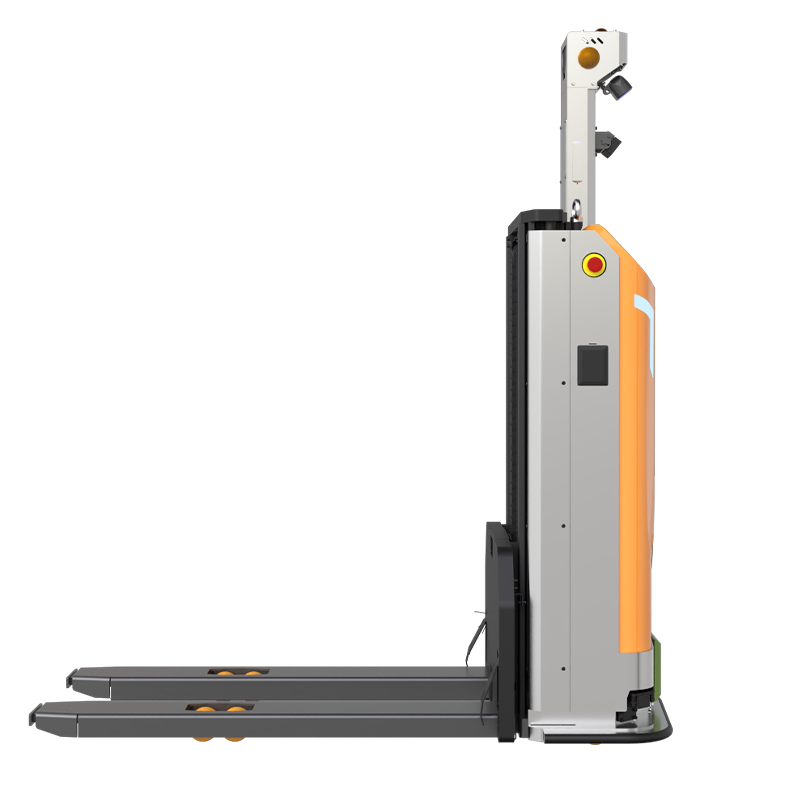
Slim Narrow-Body Stacker AGV2 T3 m3D SLAMExisting racking, tight aisles, high-density put-away
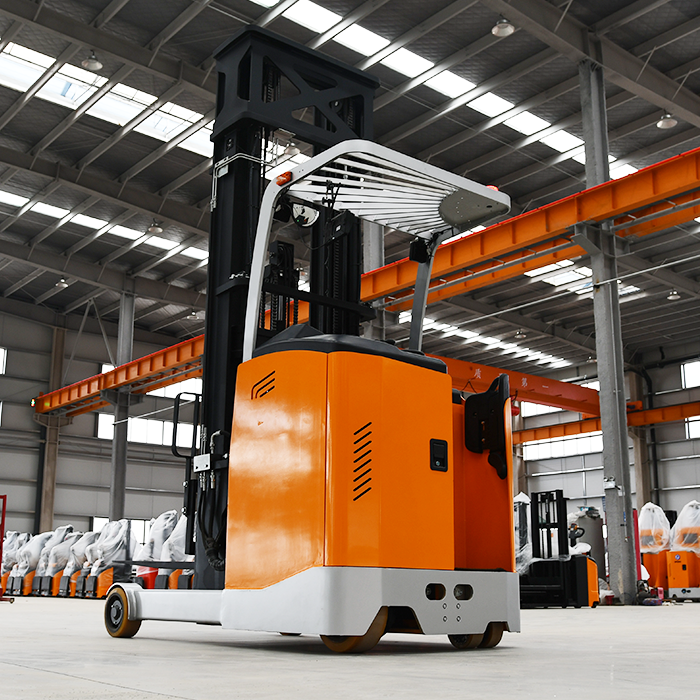
Compact Reach Truck AGV1.5 T3 m3D SLAM, 10 mmSelective racking where aisle width is constrained
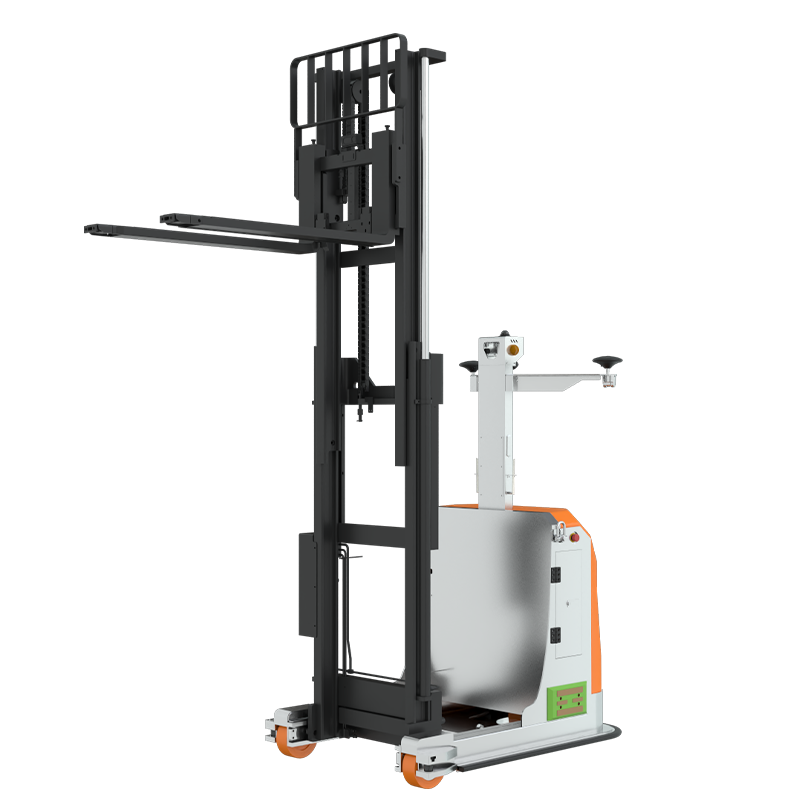
EQDA15-30 Reach Truck AGV1.5 T3 mLaser SLAM, ±10 mmFixed, repetitive routes with predictable traffic
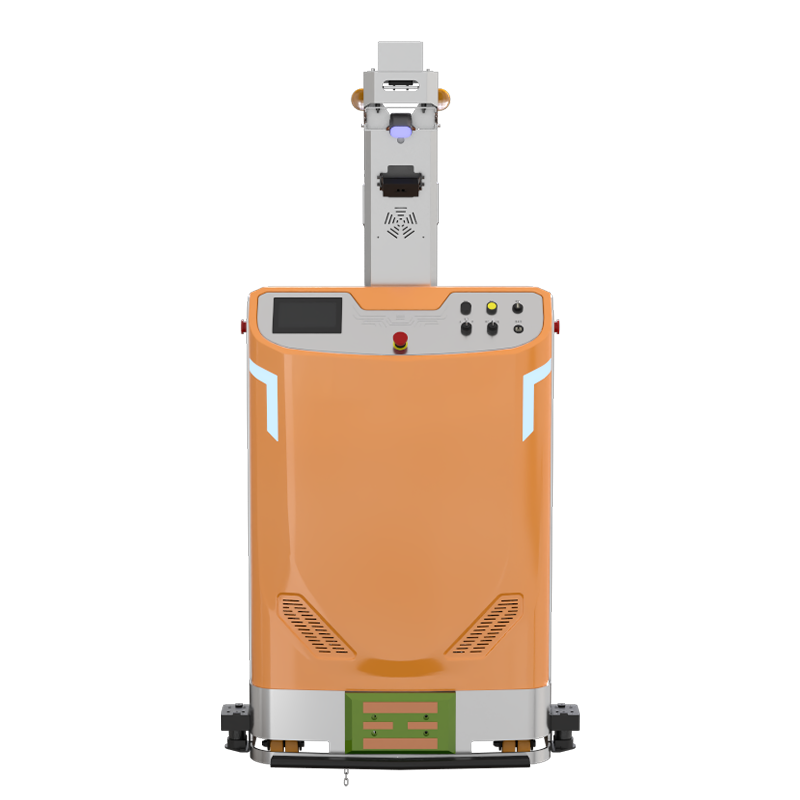
EDA20-16 3D SLAM AGV2 T1,600 mm3D SLAM, WiFi / 5GProduction line replenishment and line-side delivery
Compact 2 T AGV Chassis2 TProject specificConfigurableWorkshop transport where no standard truck fits
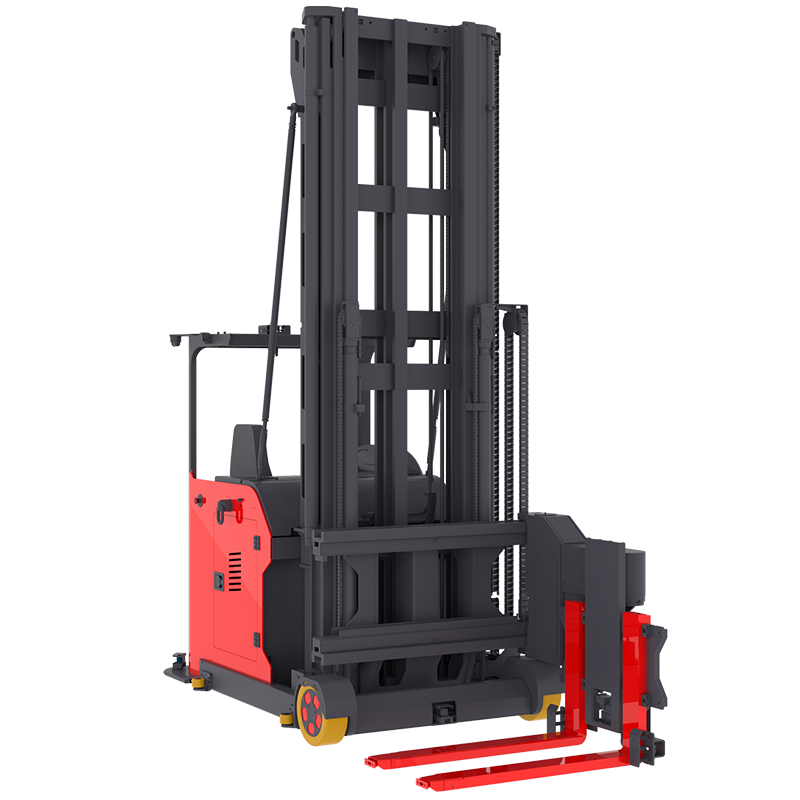
CDME16J-80S VNA AGV1.6 T8 mLaser SLAM, 3-wayVery narrow aisle high-bay pallet storage
Galvanized Pallet Truck2,000 kg6 / 8 / 12 mManualHarsh, humid or wash-down environments
Canada Procurement FAQ

What Canadian Buyers Ask Before They Issue a PO

These are the questions that recur in almost every enquiry from Ontario, Quebec, British Columbia and Alberta — answered directly, including where additional third-party work is required.

Is a CE mark sufficient to operate material handling equipment in Canada?

Not on its own, and any exporter who says otherwise should be treated with caution. CE marking under Machinery Directive 2006/42/EC demonstrates conformity with European essential health and safety requirements and is strong evidence of engineering discipline — particularly the accompanying risk assessment file. Canada, however, applies its own regime: electrical equipment is assessed against Canadian requirements under the Canadian Electrical Code as adopted provincially, typically through a recognised certification body, and workplace operation falls under provincial occupational health and safety law. A responsible supplier provides the CE documentation pack, the electrical schematics needed for a Canadian field evaluation or certification, and a hazard assessment that a provincial regulator or the buyer's own safety officer can review. Budget for that Canadian-side conformity step in the project plan rather than discovering it at installation.

How is the equipment shipped to Canada, and what documentation is needed for customs?

Standard routings are ocean freight from Shanghai or Ningbo to Vancouver or Prince Rupert with rail onward to Toronto, Montreal and Calgary, or all-water service via the Panama Canal to Montreal and Halifax for eastern buyers. Air freight is used only for urgent spare parts because the cost per kilogram is prohibitive for a two-tonne machine. For customs clearance, expect the supplier to provide a commercial invoice with an accurate HS classification, packing list, bill of lading, certificate of origin where applicable, and the CE declaration plus test reports so the importer's broker can answer any CBSA query without a stop. Confirm with your broker which HS heading applies to your specific configuration before the shipment leaves, and ask the supplier to state the classification on the quotation.

What is required to ship the lithium battery, and how is it configured for cold storage?

Battery packs must be accompanied by UN 38.3 test summaries and shipped under the applicable dangerous goods requirements, with the correct marks and documentation on the packaging. For Canadian installations, two configurations are discussed at engineering stage: standard ambient duty for heated warehouses and production halls, and cold-store duty for freezer rooms, where the battery management system, charging strategy and sensor heating are specified for sub-zero operation. Tell us the lowest ambient temperature in the operating area and the charging location at the quotation stage — retrofitting cold-duty behaviour after delivery is materially more expensive than specifying it upfront.

Can you provide French labelling and documentation for Quebec sites?

Yes. Bilingual English/French nameplates, warning decals, the operator quick-start guide and the maintenance schedule can be specified at order stage, and the HMI language set can be configured at the factory. We recommend flagging Quebec deployment at the inquiry stage rather than at delivery, because label artwork and manual translation are on the critical path for production release. For sites operating under a French-language charter, confirm with your legal team which documents must be in French and which may be bilingual, then give us that list so the package matches your compliance obligation exactly.

What support is available after the machine lands in Canada?

Support is structured around remote first-line diagnostics, spare parts supply from the factory, and commissioning assistance that can be delivered remotely or on site depending on project scope. Because a Canadian fleet is a long way from Hefei, the practical questions to settle in the contract are: what spare parts list is recommended for the first twelve months of operation, what the response commitment is for a stopped truck, and whether WMS or fleet-manager access can be granted to your own maintenance team for fault reading. We also support fleet expansion planning so that a second and third unit integrate with the same map and traffic logic rather than becoming a separate island of automation.

What are the lead time, MOQ and payment terms for a Canadian order?

The minimum order quantity is one set for every AGV forklift, stacker crane and shuttle model, which is deliberate — it lets a Canadian buyer run a single-truck pilot before committing capital to a fleet. Lead time depends on configuration and battery specification; it is confirmed in writing once the technical data sheet is frozen, and it excludes ocean transit and Canadian customs clearance. Accepted delivery terms include FOB, CFR, CIF, EXW, FAS, CIP and DDP, and accepted payment methods include L/C, D/P, D/A, credit card and Western Union, settled in USD, EUR or CNY. For first orders we generally recommend a term that ties the balance to factory acceptance testing rather than to vessel departure.
Get Catalog

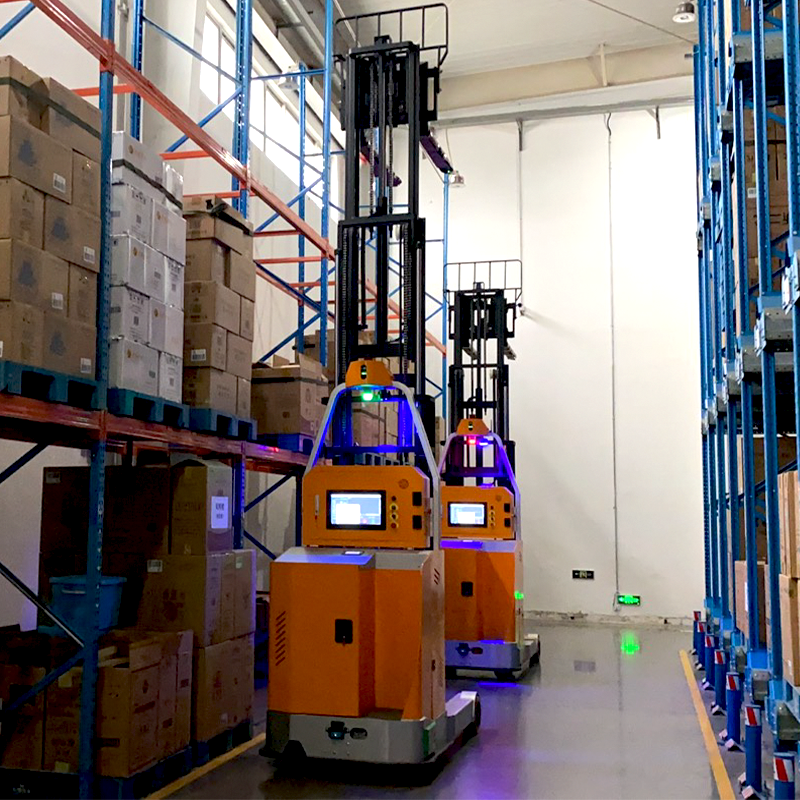
Nexrik AGV forklift operating autonomously inside an automated warehouse
Supplier Verification

Anhui Nexrik Intelligent Technology Co., Ltd.

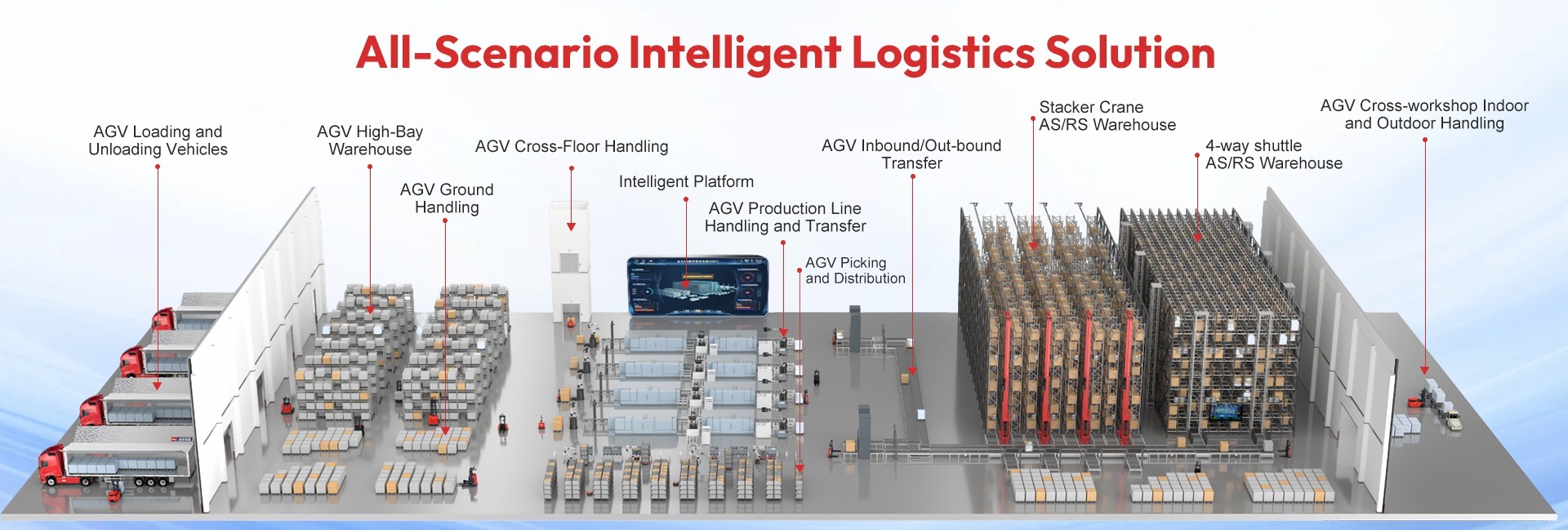
Nexrik is a high-tech manufacturer specialising in research, production and system integration of intelligent warehousing equipment: AGV forklifts, AS/RS stacker cranes, four-way shuttles and RGVs. The company operates from the Huagang Town Industry-City Integration Demonstration Zone in Feixi County, Hefei, Anhui — a region recognised as a cluster for China's forklift manufacturing.

For an exporter, verification is the part of the story a Canadian buying committee can actually check. Our premises, staff count and legal status have been inspected onsite by SGS Group; the management system is certified to ISO 9001 and ISO 45001; the AGV range carries CE marking under the Machinery Directive 2006/42/EC; and seven patents plus one registered trademark are held in the company's own name. Annual revenue is in the USD 100 million range, with export activity across Southeast Asia, South America, Eastern Europe, South Asia and North America.

  • Business type: manufacturer & trading, in-house chassis and mast production
  • Workforce: 1,152 staff, onsite verified by SGS Group
  • Footprint: 66,650 m² across two production bases
  • Quality: onsite material and finished-product inspection before shipment
  • Customisation: OEM, ODM, buyer-label and full-spec builds
  • Integration: AGVs, cranes and shuttles engineered as one WMS-ready system
  • Navigation: laser and 3D SLAM, selected per route rather than per catalogue
  • Trade terms: FOB, CFR, CIF, EXW, FAS, CIP, DDP

Two engineering habits tend to separate a smooth Canadian deployment from a difficult one. The first is designing from the buyer's rack drawings, pallet specifications and floor flatness data before any equipment is quoted, so aisle width and lift height are validated against the building rather than against a datasheet. The second is traffic simulation against peak demand, because an AGV that works at average throughput and deadlocks at peak is not a solved problem. Both happen before manufacturing release, which is why the technical data sheet is a frozen document and not a moving target.

Get Catalog
Nexrik production base exterior in Feixi County, Hefei AGV assembly workshop at Nexrik intelligent warehousing factory Testing area for warehouse automation equipment before shipment

Send Your Rack Layout. Get an Engineered Proposal.

Share your pallet dimensions, aisle widths, beam heights and peak throughput per hour. Our engineers will return a platform shortlist, a suggested fleet size and the compliance documentation list for your province — not a generic price sheet.