Eight Factory-Direct AMR Forklift & Stacker Models
These eight models answer the most common Caloocan buying briefs: narrow-aisle pallet handling, 3PL dock-to-stock movement, high-density racking, counterbalanced trailer work, and slim stacker AGV bodies for brownfield warehouses. Product URLs are preserved exactly; every image is displayed in full without distortion.
 CE
Laser SLAM
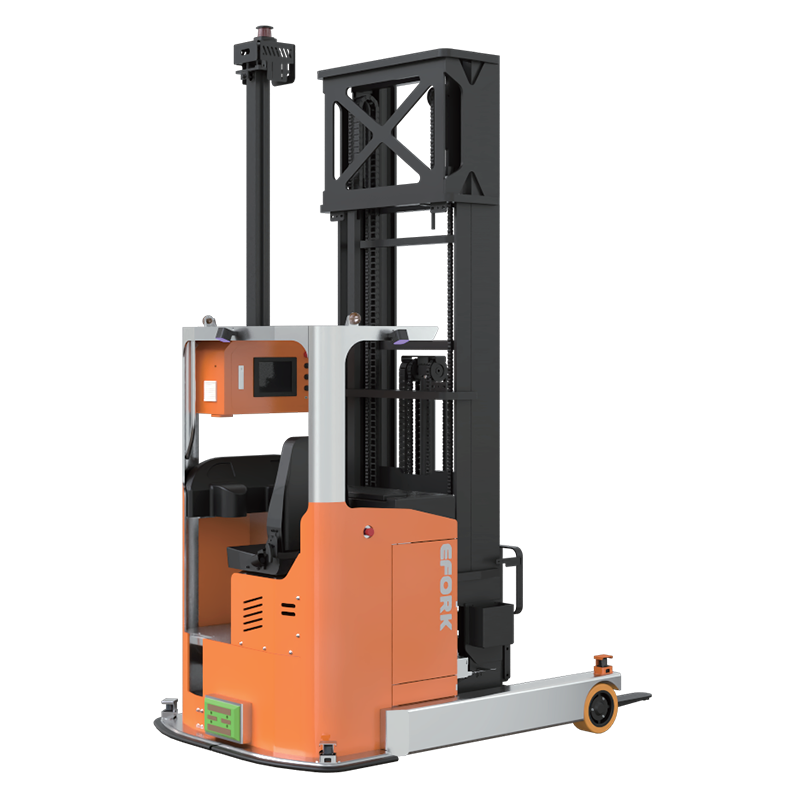
4.5M Reach Truck AGV Body 2T for Pallet Handling High Lifting Smart Warehouse Logistics Robot Laser Slam Navigation CE Certified
- 2T
- 4.5 m lift
- Reach truck
Best for medium-height selective racking where Caloocan warehouses need reach-truck geometry without a fixed driver route.
View model →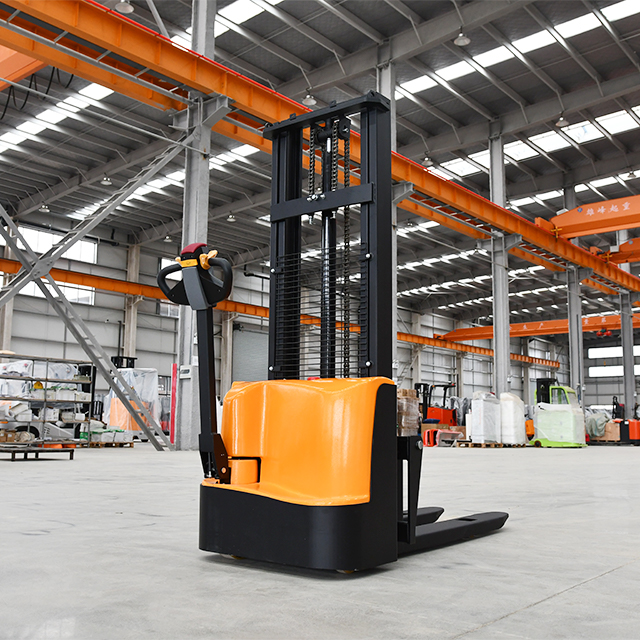 1–2 T
Low cost
1Ton & 2Ton Full Electric Pallet Stacker Walkie Type High Performance, Low Cost Optional with Training Wheels
- Walkie
- Training wheels
- Pallet stacker
A cost-controlled support unit for dock staging, line-side replenishment and low-rack transfer in mixed manual-automation operations.
View model →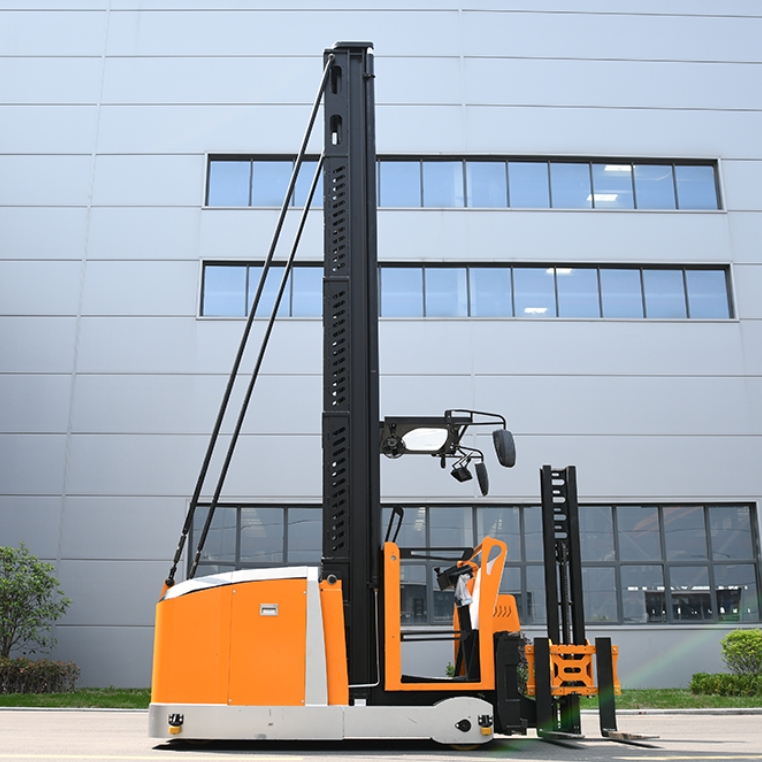 VNA
1.6 T
New 1.5T Manual Electric 3-Way Pallet Stacker Forklift 3 Way Manup Vna Forklift with 1600kg Loading Capacity AC Motor Powered
- 3-way fork
- 1,600 kg
- AC motor
A practical VNA platform for dense pallet storage where aisle width is the limiting cost factor.
View model →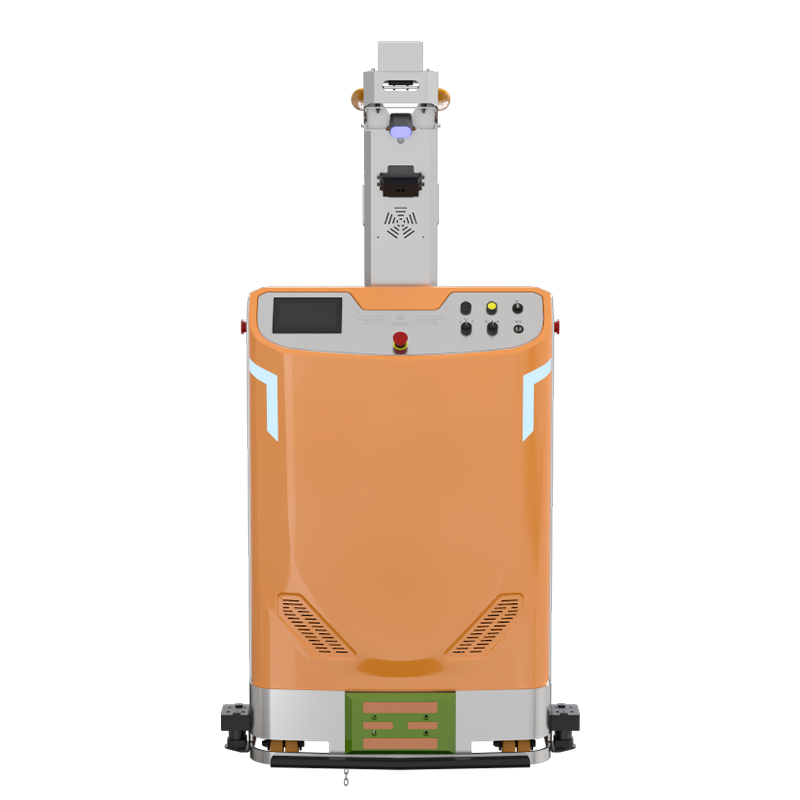 3D SLAM
Compact
2T Material Handling AGV Body Narrow Body Compact Chassis 3D SLAM Navigation Laser Obstacle Avoidance for Workshop Transport
- 2T
- Narrow body
- Obstacle avoidance
Designed for workshop transport inside existing buildings where a compact chassis and natural-feature navigation reduce retrofit work.
View model →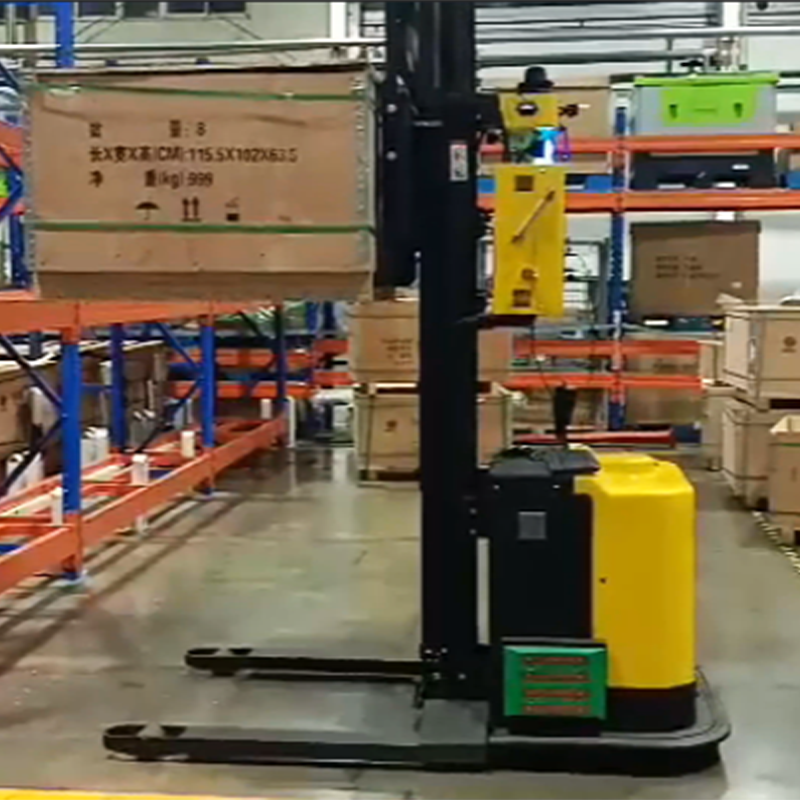 3D SLAM
WIFI/5G
2T 3000MM Pallet AGV Forklift Automated Guided Vehicle 3D SLAM Navigation WIFI/5G Communication for Warehouse Automation Robot
- 3 m lift
- Pallet AGV
- WMS-ready
A core warehouse automation unit for Caloocan 3PLs and distributors moving pallets between receiving, storage and dispatch.
View model →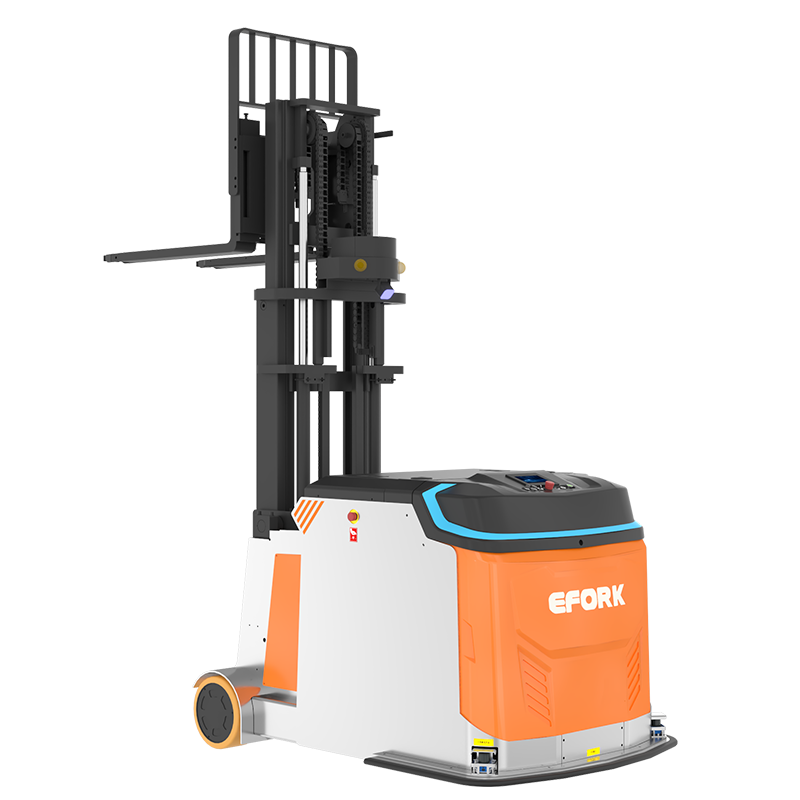 3T
No outriggers
EFORK EDB30-30 Counterbalanced AGV Body 3M 3T High Lift Capacity Forklift Fork Legs High Flexibility 3D SLAM Navigation for
- 3,000 kg
- 3 m lift
- Counterbalanced
Suited to closed-bottom pallets, cages, trailer docks and production-line feeding where front outriggers would interfere.
View model →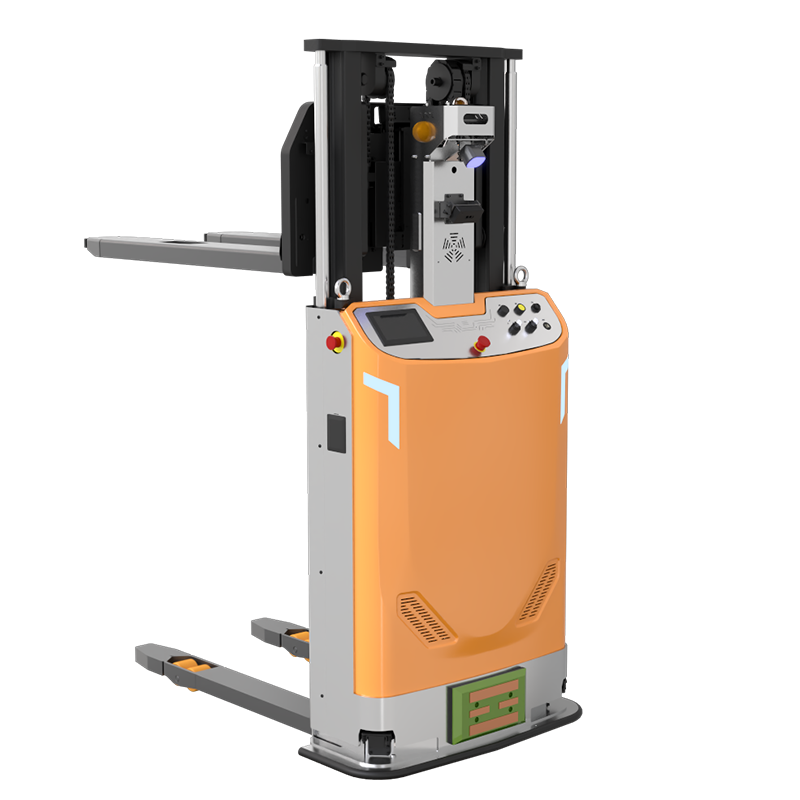 Slim
1.6 m
2T 1.6 M Slim Narrow-Body Stacker AGV Body for High-Density Storage High Lift Pallet Stacking AGV Maximize Warehouse Space
- 2T
- 1.6 m lift
- Narrow body
A space-maximizing option for high-density storage, low racking and line-side stacking in land-constrained Caloocan facilities.
View model →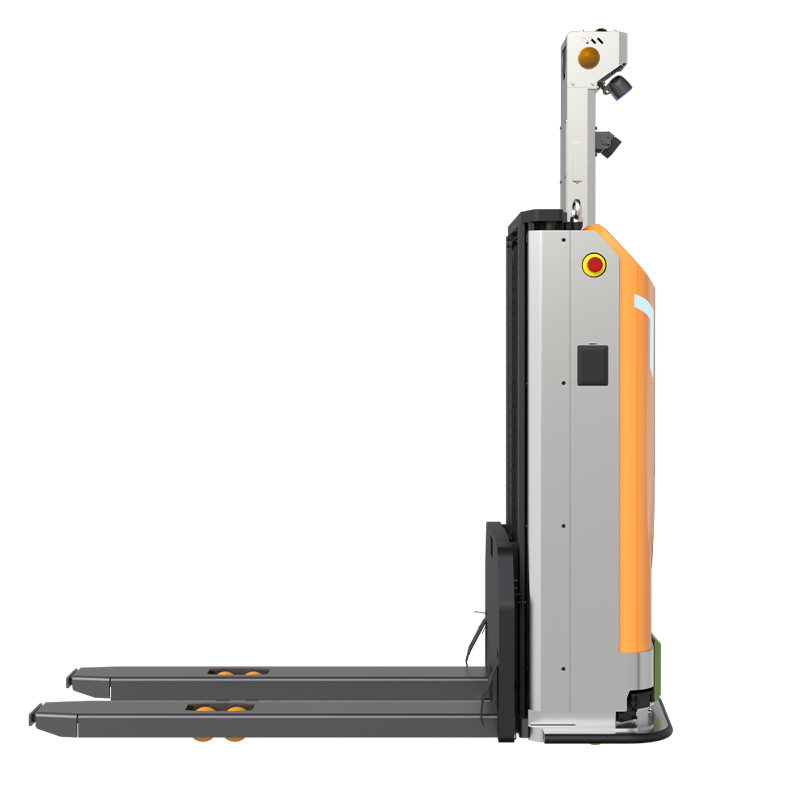 3D SLAM
High density
2T Slim Narrow-Body Stacker AGV with 3D SLAM & WIFI/5G for High-Density Storage 1.6M Pallet Stacking Maximize Warehouse Space
- 2T
- 3D SLAM
- WIFI/5G
A compact, connected stacker AGV for storage-density projects that need a smaller fleet footprint and WMS coordination.
View model →Why Caloocan Warehouses Are Moving Toward AMR Forklifts
In the Caloocan market, warehouse automation is no longer only a multinational-enterprise topic. Local distributors, e-commerce sellers, cold-chain operators and third-party logistics companies are comparing autonomous forklifts against driver-dependent operations because space, labor and service-level pressure are converging at the same time.
A Dense Urban Market With Limited Room to Expand
Caloocan sits inside Metro Manila's commercial and industrial corridor, where warehouse operators often work with existing buildings rather than purpose-built greenfield sites. For many buyers, the practical question is not “How do we build a larger warehouse?” but “How do we move more pallets through the same floor area, without adding another shift of manual forklift drivers?” That pressure explains increasing interest in narrow-body stacker AGVs, VNA forklifts, reach truck AGVs and 3D SLAM navigation that can be commissioned with less floor modification.
An AMR forklift — autonomous mobile robot forklift — combines a forklift platform with onboard localization, perception and traffic control. In Philippine procurement, the terms AMR and AGV are often used interchangeably. For engineering accuracy, distinguish the navigation method: 3D SLAM navigation localizes against natural building features, while laser navigation often relies on reflectors or fixed references. Both can be valid; the right choice depends on aisle geometry, rack tolerance, Wi-Fi coverage, traffic mix and the amount of retrofit work the buyer will accept.
A second factor is the brownfield reality of Caloocan warehouses. Existing floors may not be perfectly flat, mezzanine columns may interrupt routes, and charging space may be limited. A factory-direct supplier should ask for rack drawings, pallet dimensions, load weight, floor flatness, door widths, lift positions, Wi-Fi heat maps and peak throughput before quoting. When those inputs are missing, the honest answer is that the final AMR layout is only conceptual, not engineered.
This is where information gain matters. A low unit price is not the same as a low total cost of ownership. The hidden costs of warehouse automation usually sit in four places: lost storage capacity due to aisle width, charging infrastructure, WMS/WCS integration effort, and after-sales response time for spare parts. Caloocan buyers should score suppliers against those criteria, not just the headline capacity printed on a product page.
White Paper Snapshot: Five Questions Before RFQ
Use this short engineering filter to separate a demo configuration from a deployable AMR forklift plan for the Caloocan market.
- What is the heaviest pallet, including load overhang, and is the pallet closed-bottom or open-bottom?
- What is the narrowest aisle, and does the rack layout allow safe sensor clearance?
- What is the required throughput at peak hour, not average daily volume?
- Which WMS, ERP or warehouse-control system must the AMR communicate with?
- Who will provide spare parts, remote diagnostics and operator training after go-live?
Illustrative project-scoring model for discussion. Final weightings should be agreed by the Caloocan buyer's operations, procurement and IT teams.
Caloocan Application Scenarios That Fit AMR Forklifts
The strongest automation business case is not “replace every forklift.” It is to isolate repetitive, high-frequency, safety-sensitive or space-constrained movements where an AMR forklift can run consistently without interrupting existing manual operations.
3PL & E-commerce Fulfillment
Dock-to-stock replenishment, night-shift put-away and dispatch staging can be standardized with pallet AGV forklifts. The commercial benefit is tighter order cut-off performance and less dependence on shift-to-shift driver availability.
High-Density Storage & Narrow Aisle
Where land cost and rack density dominate, slim stacker AGVs, reach truck AGVs and VNA platforms can reduce wasted aisle space. A professional layout study should confirm actual clear width, sensor clearance and rack tolerance.
Manufacturing & Construction Supply
Counterbalanced AGV forklifts are suited to closed-bottom pallets, cages and trailer loading without front outriggers. They can support repetitive line feeding and finished-goods transfer inside mixed-traffic industrial compounds.
Food, FMCG & Cold-Chain Preparation
Cold-storage and chilled-warehouse projects require battery, lubrication, condensation and safety review. Nexrik can quote cold-storage variants and documentation for tender review, subject to final engineering confirmation.
Four Trends Shaping the Caloocan Automation Market
Brownfield Retrofit First
Caloocan buyers increasingly prefer AMR forklifts that can enter an existing building with minimal floor tape or reflector work. 3D SLAM is attractive for brownfield sites, but it does not remove the need for traffic studies and safety validation.
Space Productivity Over Headcount Alone
The business case is shifting from labor replacement to space productivity. A VNA or slim stacker configuration can change how many pallets fit into the same building envelope, which often outweighs a narrow comparison of machine price.
WMS-Ready Procurement
Warehouse managers are asking for WIFI/5G communication, task dispatching, battery monitoring and WMS/WCS interfacing before the first unit arrives. Integration scope should be written into the RFQ, not discovered after delivery.
Pilot-First Fleet Expansion
With a MOQ of one set, Caloocan buyers can validate a route, cycle time and operator interface before scaling. A pilot truck is also the most practical way to test charging, Wi-Fi dead zones and local maintenance response.
A Manufacturer and Factory Partner Caloocan Buyers Can Verify
Nexrik's manufacturing base is in Hefei, Anhui, China, and serves export markets including Southeast Asia. For the Caloocan market, the value of factory-direct supply is not only pricing — it is engineering responsiveness, documentation, customization and lifecycle support.
In-House Manufacturing & Inspection
Chassis, masts and control integration are built and tested on our own lines, with onsite material and finished-product inspection before shipment. That matters when a Caloocan buyer needs a consistent fleet, not a one-off prototype.
Laser & 3D SLAM Navigation
We support reflector-based laser navigation for repetitive fixed routes and 3D SLAM for natural-feature localization. The right selection should follow a site survey, not a catalogue preference.
One-Stop Turnkey Integration
AGV forklifts, AS/RS stacker cranes, four-way shuttles and RGVs can be engineered as one WMS-ready system. Caloocan buyers can start with a single AMR forklift and later extend into high-density storage.
Compliance, OEM & ODM Support
CE marking under the Machinery Directive 2006/42/EC, ISO 9001 and ISO 45001 management systems, plus OEM, ODM, buyer-label production, load capacity, lift height, fork size and cold-storage customization options.
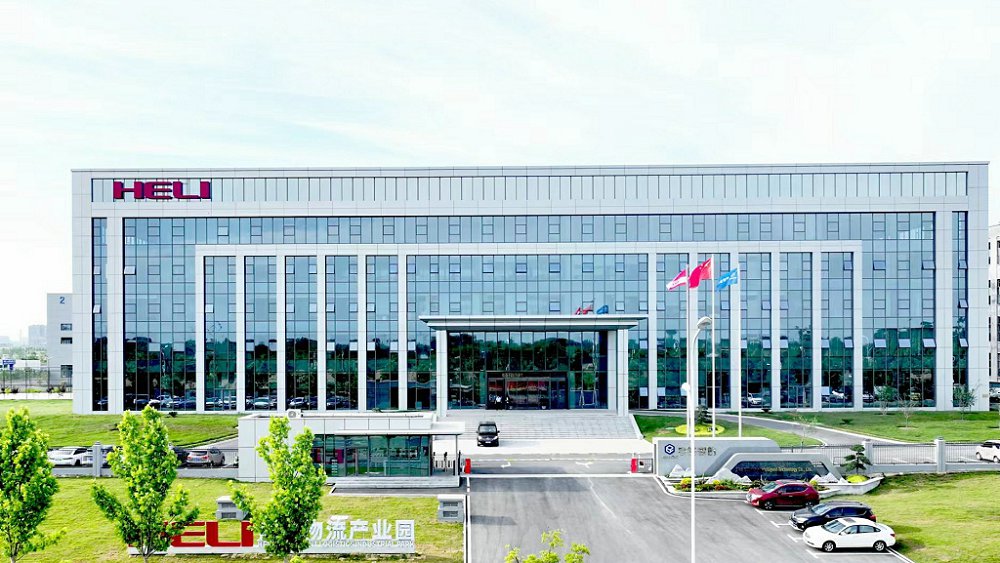
Inside the Manufacturing & Testing Environment
For buyers in Caloocan, factory evidence reduces the risk of sourcing through an unverified intermediary. Nexrik has been verified onsite by SGS Group and holds ISO 9001, ISO 45001 and CE documentation relevant to tender and customs review.



Which AMR Forklift Fits a Caloocan Warehouse?
Use this engineering comparison to shortlist the correct product family before requesting a layout proposal. Final configuration must be confirmed against pallet type, rack drawing, floor condition, throughput and charging plan.
| Model Family | Typical Load / Lift | Navigation | Best-Fit Caloocan Scenario |
|---|---|---|---|
| 4.5M Reach Truck AGV | 2T · up to 4.5 m | Laser SLAM / AGV | Selective racking where aisle space is tighter than a counterbalanced truck would allow. |
| 2T 3000MM Pallet AGV Forklift | 2T · 3,000 mm | 3D SLAM · WIFI/5G | Warehouse automation projects needing pallet movement between receiving, storage and dispatch. |
| EFORK 3T Counterbalanced AGV | 3T · 3,000 mm | 3D SLAM | Closed-bottom pallets, cages, trailer docks and production-line feeding without front outriggers. |
| 1.5T 3-Way VNA Pallet Stacker | 1.6T · VNA lift range | VNA platform | High-density pallet storage where narrow aisles can reduce building footprint. |
| 2T 1.6M Slim Stacker AGV Body | 2T · 1.6 m | AGV platform | Low-rack, high-density storage and line-side stacking in land-constrained facilities. |
Specifications are indicative and model-dependent. The quoted configuration prevails after engineering review.
From Caloocan RFQ to System Go-Live
Site Data Review
Rack layout, pallet specification, floor flatness, aisle width, door and lift dimensions, power supply, Wi-Fi/5G coverage and peak throughput.
Solution Design
Equipment selection, fleet sizing, battery and charging plan, traffic simulation and WMS/WCS interface definition.
Factory Build & FAT
Production with onsite material and finished-product inspection, factory acceptance testing and export documentation preparation.
Commissioning & Support
Mapping, route validation, safety checks, operator training, remote diagnostics and spare-parts planning for the Caloocan site.
Caloocan Buyer FAQ: Import, Fit, Support & Customization
How do Caloocan buyers import an AMR forklift from China?
What site information is needed for an accurate quotation?
Can the charger be configured for Philippine electrical supply?
Is one unit enough to start, or must we order a full fleet?
What support is available for spare parts and operator training?
What certifications and customization options are available?
Request a Caloocan-Ready AMR Forklift Proposal
Send your pallet dimensions, rack layout, required throughput and target commissioning window. Our export engineering team will review the fit for laser SLAM, 3D SLAM, VNA, reach truck, counterbalanced or stacker AGV configurations. You can also request OEM/ODM customization, CE documentation and a single-unit pilot plan.