AMR Forklift Factories & Exporters in Denver
A factory-direct sourcing and deployment guide for Denver teams evaluating autonomous mobile robot forklifts, 3D SLAM AGVs, pallet stackers, reach trucks, counterbalanced vehicles, and WMS-ready warehouse automation.
Eight AMR Forklift Models for Denver Buyers
These models cover pallet stacking, reach-truck handling, narrow-aisle movement, counterbalanced transport, and compact production-line logistics. Product links are preserved exactly, and every image is shown in full without cropping.
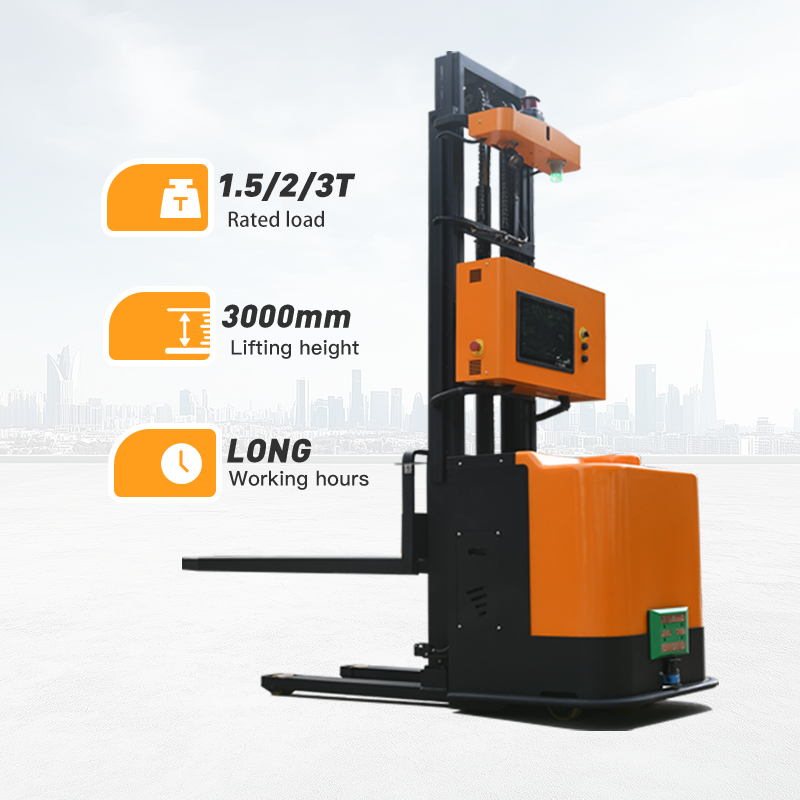
3T 3000mm Pallet Stacker Automated Guided Vehicle Forklift Truck for Intelligent Warehouse Automation
A practical starting point for Denver distribution centers moving sealed pallets between receiving, racking, and staging zones. The 3T load rating and 3,000mm lift suit selective racking and medium-height storage.
- 3,000 kg
- 3,000 mm
- Pallet stacker
- Warehouse automation
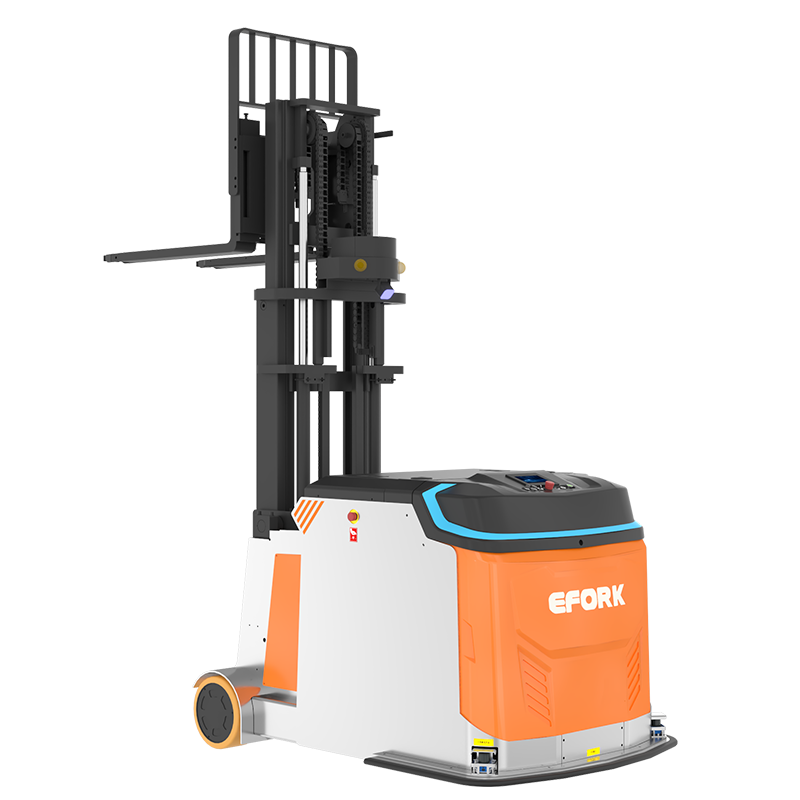
EFORK EDB30-30 Counterbalanced AGV Body 3M 3T High Lift Capacity Forklift Fork Legs High Flexibility 3D SLAM Navigation for Factory Logistics
Designed for closed-bottom pallets, totes, and dock work where front outriggers can interfere. Counterbalanced steering and 3D SLAM navigation make it suitable for mixed traffic inside Denver manufacturing plants.
- 3,000 kg
- 3,000 mm
- Counterbalanced
- 3D SLAM
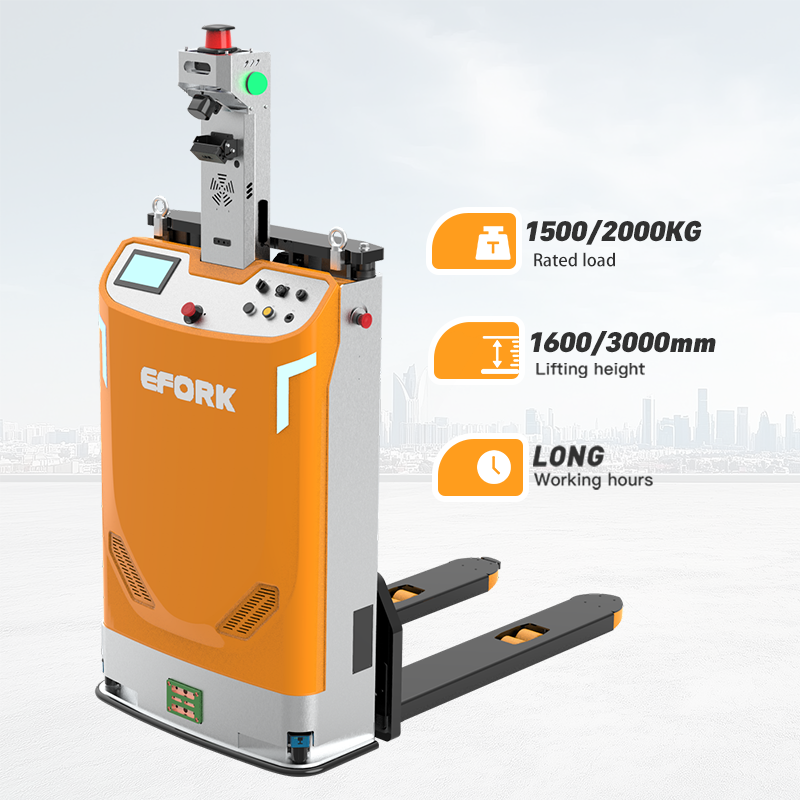
New Heli Yufeng EDA20-30 Slim Stacking AGV Forklift CE Certified 2T 3M 3D SLAM WIFI/5G for Stacking Mobile Robot
A slim-body option for Denver warehouses where aisle width is constrained by existing racking. It is especially relevant for food, beverage, and consumer goods operations that need reliable pallet stacking without rebuilding the floor plan.
- 2,000 kg
- 3,000 mm
- Slim body
- CE certified
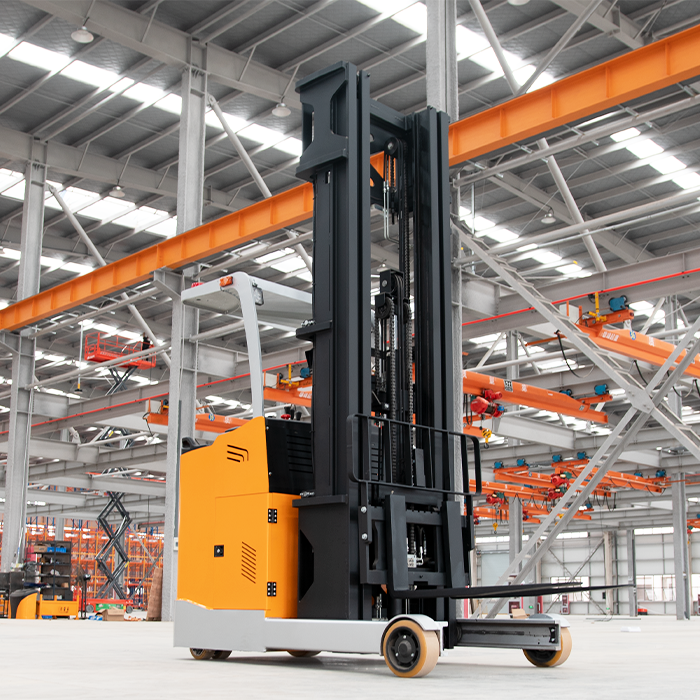
China Wholesale 2000kg 12m 8m 6m Industrial Forklift Pallet Truck Good Price
A cost-sensitive option for industrial handling, construction supply yards, and high-lift pallet operations. Buyers can discuss lift height, fork configuration, and fleet standardization during the request-for-quotation stage.
- 2,000 kg
- 6m / 8m / 12m
- Industrial pallet truck
- Factory pricing
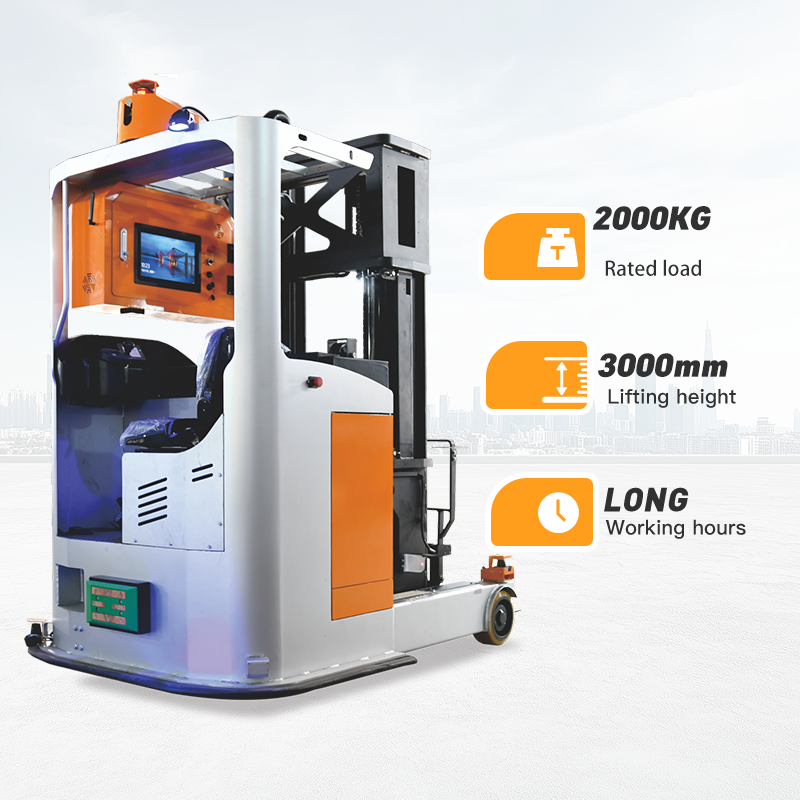
Reach Truck AGV Forklift 2T 3M Laser Slam Navigation CE Certified Warehouse Automation Robot for Factory Logistics
A strong fit for existing Denver racking layouts where a reach truck can work in narrower aisles than a counterbalanced unit. Laser SLAM navigation provides a stable option for repetitive routes and fixed transfer points.
- 2,000 kg
- 3,000 mm
- Reach truck
- Laser SLAM
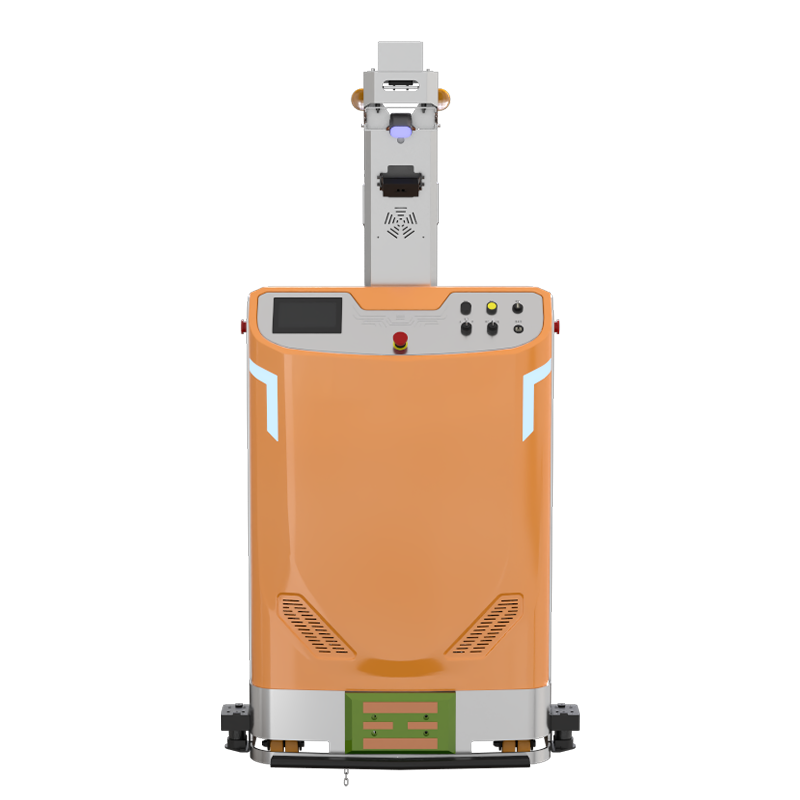
Material Handling AGV Body 2T with Narrow Body Compact Chassis for Efficient Production Line &Workshop Transport in Tight Space
Built for line-side replenishment, work-in-process movement, and workshop transfers where turning room is limited. The narrow chassis is useful in Denver metro facilities that were designed before today’s automation requirements.
- 2,000 kg
- Narrow chassis
- Production line
- Compact handling
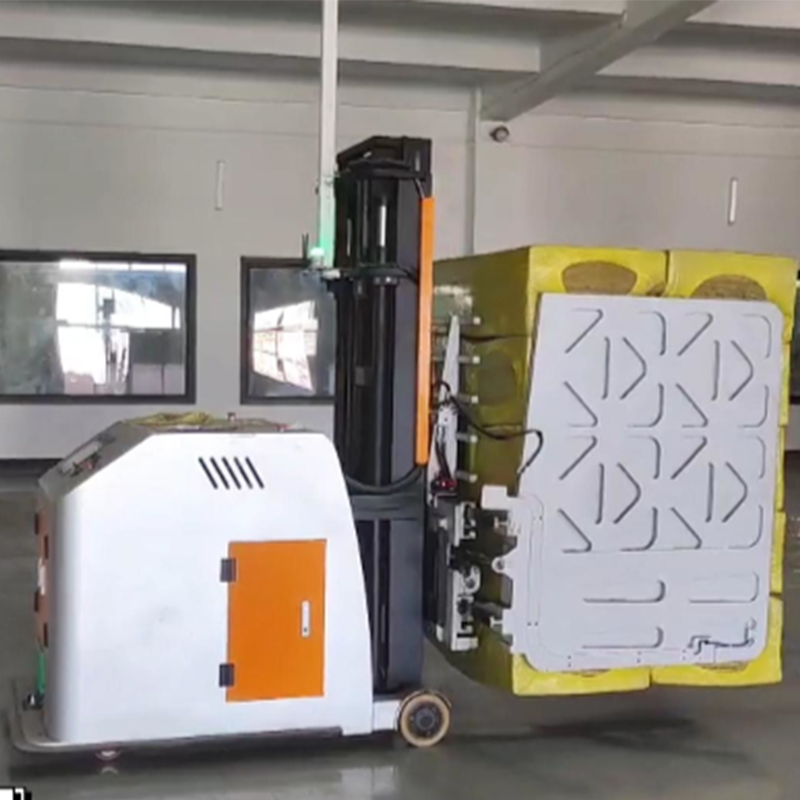
EFORK Automated Guided Vehicle AGV Forklift 3T 3000MM Counterbalanced 3D SLAM Construction Factory Logistics Pallet Truck
Suited to construction-material staging, manufacturing yards, and factory logistics where loads are heavy and routes vary. 3D SLAM reduces dependence on floor tape and reflectors, which matters when layouts change by project phase.
- 3,000 kg
- 3,000 mm
- Counterbalanced
- Construction logistics
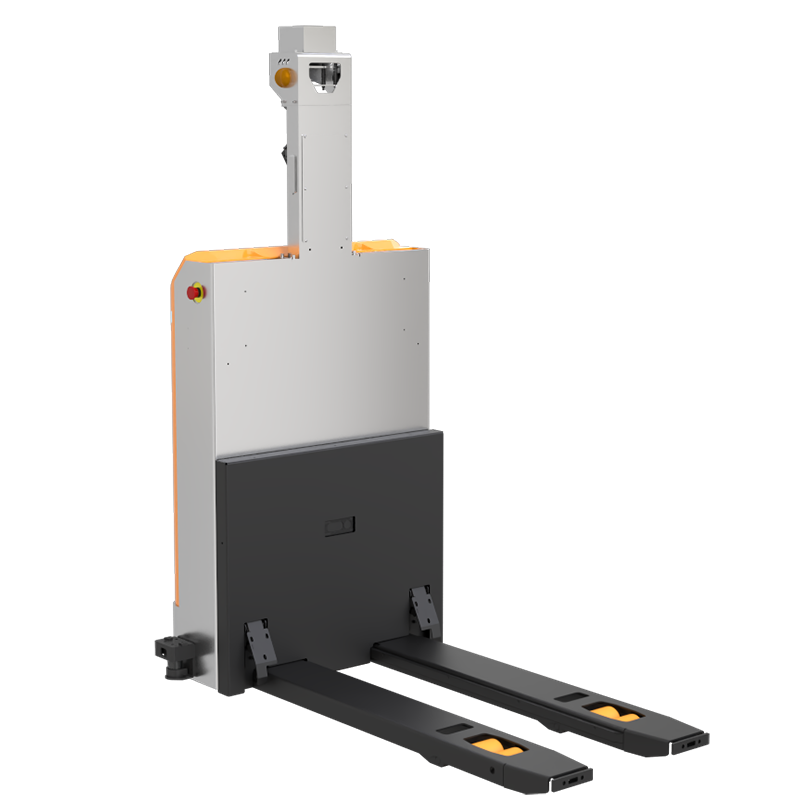
T 2.5M Omni-directional AGV Body 3D SLAM Navigation 1000kg Load Capacity Flexible Movement Zero Turning Radius for Tight Aisles
An omni-directional platform for space-constrained work cells, kitting areas, and production islands. Zero turning radius and flexible movement help Denver operations improve material flow without expanding the building footprint.
- 1,000 kg
- 2,500 mm
- Omni-directional
- Zero turning radius
What Denver Procurement Teams Should Verify First
Denver buyers often search for a local AMR forklift factory, but autonomous forklift manufacturing is concentrated in established industrial clusters. The better question is whether the exporter can prove production scale, certification, testing, spare-parts support, and WMS integration capability.
Where AMR Forklifts Fit in the Denver Metro
The Denver logistics map is shaped by I-25, I-70, E-470, Denver International Airport, and a growing ring of industrial submarkets. The application is not “a robot for every aisle.” It is matching load unit, rack type, throughput, safety case, and WMS workflow to the right platform.
Distribution & 3PL
Denver 3PLs and regional distributors often handle mixed pallet sizes, tight receiving windows, and multiple customer labels. A 3T pallet stacker or reach truck AGV can reduce repeated forklift trips between receiving, put-away, and dispatch.
Food, Beverage & Cold Chain
Cold storage and food distribution in Colorado demand reliable pallet flow and careful battery performance. A slim stacking AGV can support freezer and cooler staging when specified with condensation control, heated cabinets, and cold-duty components.
Construction & Materials
Construction suppliers, lumber yards, and building-material depots need heavy load handling across changing yard layouts. The EFORK 3T counterbalanced AGV and industrial pallet truck options are better aligned with cages, closed-bottom pallets, and uneven routes.
Manufacturing & Production Lines
Denver manufacturers moving work-in-process between cells need compact, predictable transport. A 2T narrow-body AGV or 1T omni-directional platform can fit existing aisles and reduce manual material handling without a full warehouse redesign.
Three Trends Shaping Denver AMR Adoption
Denver warehouse automation is moving from “single robot demos” toward evaluated fleets tied to labor resilience, high-density storage, and connected operations.
Higher-Density Storage
Industrial land and racking constraints push Denver operators toward higher racking, narrow aisles, and denser pallet storage. That favors reach-truck AGVs, VNA platforms, AS/RS stacker cranes, and four-way shuttle systems rather than simple floor-level transfer alone.
Labor Resilience & Safety
Shift coverage, forklift labor availability, and pedestrian safety are recurring issues across the Front Range. AMR forklifts help standardize repetitive routes, reduce forklift idle time, and document material flow for operating teams.
WMS-Connected Fleets
Denver buyers increasingly ask for WMS/WCS integration, interface mapping, and phased fleet expansion. A single autonomous truck can prove a route, but a scalable AMR strategy needs barcode rules, traffic control, charging strategy, and spare-parts planning.
Why Nexrik Is a Viable Export Partner for Denver
For imported AMR forklifts, supplier depth matters as much as the machine. Nexrik’s manufacturing scale, navigation options, and export documentation are the foundation for a practical Denver deployment plan.
Onsite-Verified Manufacturing Scale
Anhui Nexrik Intelligent Technology Co., Ltd. operates with 1,152 employees, 66,650 m² of production space, and SGS onsite verification. Buyers can request factory evidence, production-line photos, and factory acceptance testing before shipment.
Laser & 3D SLAM Navigation
Choose 3D SLAM for natural-feature localization with less floor tape or reflector work, or laser SLAM for repetitive fixed routes. This flexibility helps Denver sites avoid unnecessary building modification during a pilot.
One-Stop Turnkey Range
AGV forklifts, pallet stackers, reach trucks, counterbalanced trucks, AS/RS stacker cranes, and four-way shuttles can be engineered as one WMS-ready system rather than sourced from disconnected vendors. MOQ is 1 set, so a pilot is realistic.
Certification, OEM & Export Terms
CE marking under 2006/42/EC, ISO 9001, ISO 45001, 7 awarded patents, and SGS onsite verification support tender, customs, and insurance reviews. OEM/ODM, buyer-label production, FOB/CFR/CIF/EXW/FAS/CIP/DDP, and multiple payment methods are available.
Recommended Shortlist by Denver Use Case
Use this shortlist to narrow the conversation before requesting a layout review. Final equipment selection should be confirmed against pallet drawings, rack elevations, throughput targets, floor conditions, and safety requirements.
High-Volume Pallet Movement
Start with the 3T 3000mm pallet stacker for receiving-to-rack movement, then compare with the EFORK 3T counterbalanced AGV if loads are closed-bottom or dock handling is required.
Compare Pallet StackerNarrow-Aisle Retrofits
For existing Denver racking, evaluate the 2T 3M reach truck AGV and the slim 2T stacking AGV. Both are better suited to constrained aisles than a conventional counterbalanced platform.
Compare Reach Truck AGVConstruction & Heavy Materials
The EFORK 3T counterbalanced AGV and 2000kg industrial pallet truck are relevant for building-material yards, factory logistics, and outdoor-to-indoor transfer points where loads vary.
Compare 3T AGVSpace-Constrained Production
Use the 2T narrow-body AGV or 1T omni-directional platform for work-in-process movement, kitting, and line-side replenishment inside compact production areas.
Compare Omni AGVHow to Evaluate AMR Forklift Factories & Exporters
Denver buyers should compare suppliers on evidence, not only price. This four-part checklist helps separate a credible AMR forklift exporter from a trading-only listing.
Factory Proof
- SGS onsite verification or equivalent
- Production-line photos and factory video
- FAT procedure and test report sample
- Spare-parts list and lead-time policy
Technical Fit
- Pallet size, weight, and load centre
- Rack height, aisle width, and floor flatness
- 3D SLAM versus laser navigation trade-offs
- Charging strategy and traffic simulation
Compliance Package
- CE declaration and 2006/42/EC documents
- ISO 9001 and ISO 45001 evidence
- Battery transport documents where applicable
- U.S. safety review plan for ANSI/ITSDF B56.5
Commercial & Service
- Incoterms, currency, and payment method
- WMS/ERP interface responsibility
- Remote commissioning and training plan
- Fleet expansion and spare-parts pathway
Questions Denver Buyers Ask First
These are the practical questions that come up when an AMR forklift project moves from a search result to a capital request.
Are there AMR forklift factories physically located in Denver?
Denver has strong integrators, dealers, and service providers, but most AMR forklift manufacturing is concentrated in established production clusters outside Colorado. Nexrik is based in Hefei, China, and exports to North America. For Denver buyers, the practical test is not whether the factory is local; it is whether the exporter can provide verified manufacturing, CE documentation, FAT records, spare parts, and a clear commissioning plan with local support.
How should a Denver team compare AGV and AMR forklift terminology?
Many catalogues use “AGV forklift” and “AMR forklift” interchangeably. An AGV typically follows defined routes or markers, while an AMR can localize using natural features and adapt to changing routes. Nexrik offers both laser SLAM and 3D SLAM options. Ask the supplier to explain which navigation method is proposed for your aisles, traffic, and change frequency.
What shipping and trade terms are available for Denver?
Common delivery terms include FOB, CFR, CIF, EXW, FAS, CIP, and DDP. Payment methods can include L/C, D/P, D/A, MoneyGram, credit card, and Western Union in USD, EUR, or CNY. For a Denver project, confirm who handles customs clearance, inland freight, battery documentation, and final-mile delivery before placing the order.
Can the equipment integrate with a Denver WMS or ERP system?
Yes, WMS-ready integration should be defined during solution design. The supplier should provide interface requirements, task status feedback, barcode rules, and exception handling. During commissioning, test the WMS handshake, route confirmation, charge-cycle logic, and failure alerts before full production release.
What certifications and local compliance points matter?
Ask for CE marking under 2006/42/EC, ISO 9001, ISO 45001, and SGS onsite verification as export baselines. For U.S. deployment, also discuss how the unit will be assessed against OSHA and ANSI/ITSDF B56.5 expectations with your local safety integrator. Battery transport documents, lockout procedures, and operator training should be part of the project file.
Can Nexrik customize load, lift height, fork, battery, or cold-storage configuration?
Yes. OEM/ODM and buyer-label production are available. Customization can cover load capacity, lift height, fork dimensions, navigation configuration, battery strategy, and cold-storage variants. The minimum order quantity is 1 set, which allows a Denver team to run a pilot before scaling to a multi-unit fleet.
Request a Denver-Ready AMR Forklift Catalog
Send pallet drawings, rack elevations, aisle widths, throughput targets, and your WMS/ERP environment. Our team can map the right equipment mix, export documentation, and commissioning path for a Denver warehouse, production line, cold-storage facility, or construction-materials operation.