Top Trusted Autonomous Reach Truck Manufacturer & Wholesalers
Factory-direct autonomous reach trucks, 3D SLAM AGV forklifts and high-bay AS/RS equipment engineered for narrow aisles, cold-chain logistics and 24/7 warehouse throughput. MOQ 1 set, with export-ready documentation and engineering-led customization.
Eight Autonomous Reach Truck & Intralogistics Models for Real Warehouse Constraints
Use this product grid as a first shortlist, not a catalogue dump. Each model solves a different bottleneck: very narrow aisle handling, counterbalanced trailer work, laser-guided put-away, high-lift VNA storage, heavy-duty AGV transport, wholesale pallet truck capacity or factory-direct pallet stacker deployment.
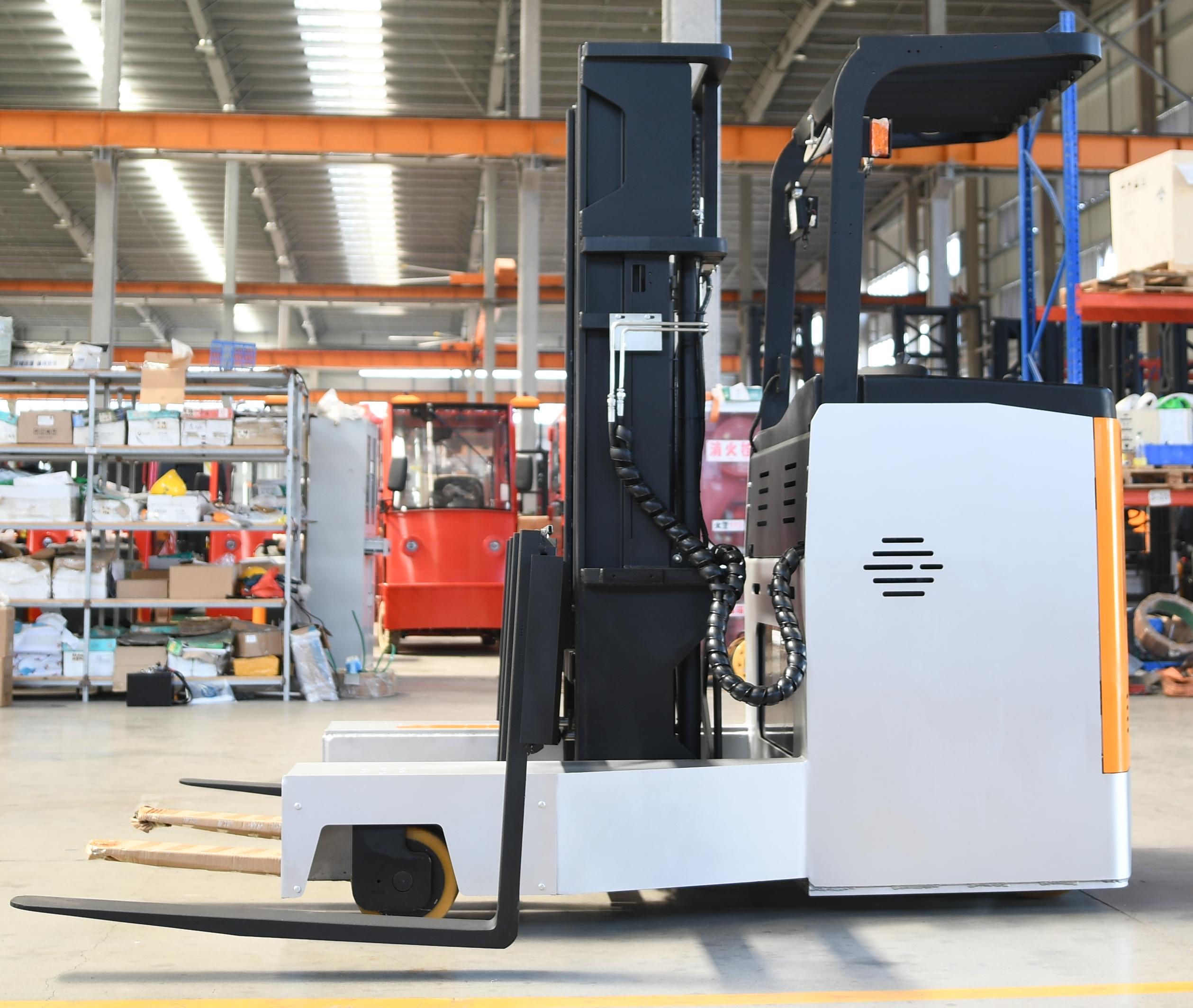
Multi Directional Forklift 4Ton 5Ton 4 Way Forklift Reach Truck Stacker For Narrow Aisle Small Space
For very narrow aisles where a conventional forklift loses time turning. The four-way chassis supports long loads, dense racking and small-space manoeuvring, with 4–5 tonne capacity for demanding warehouse and production logistics.
- 4–5 T
- 4-Way
- Narrow aisle
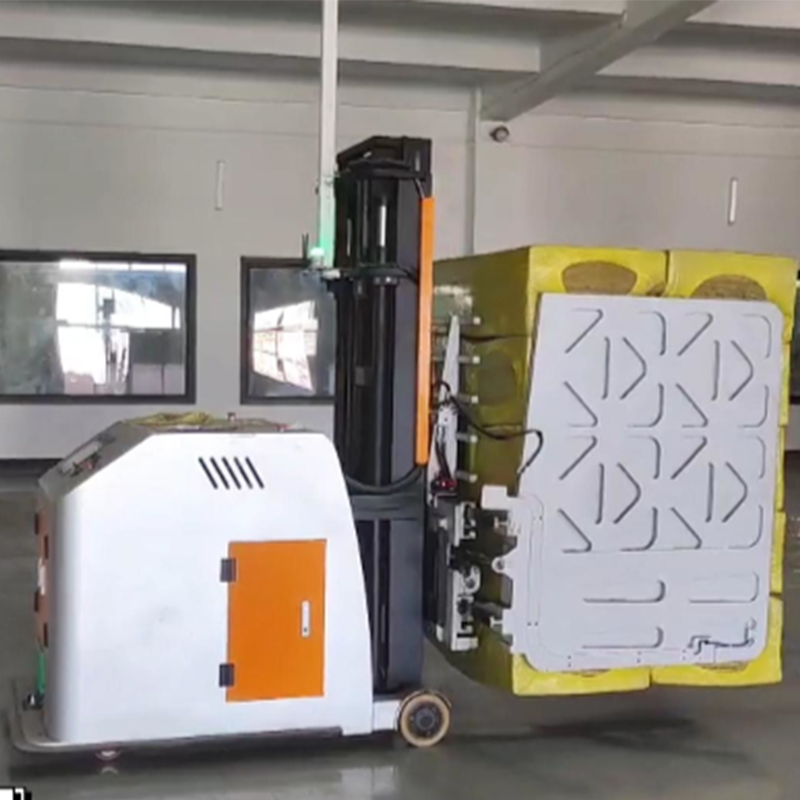
EFORK Automated Guided Vehicle AGV Forklift 3T 3000MM Counterbalanced 3D SLAM Construction Factory Logistics Pallet Truck
A 3-tonne counterbalanced AGV platform with 3,000 mm lift and 3D SLAM navigation. Suited to factory logistics and line-side feed where no reflector network is desired and closed-bottom pallets or trailer work must be handled.
- 3,000 kg
- 3 m lift
- 3D SLAM
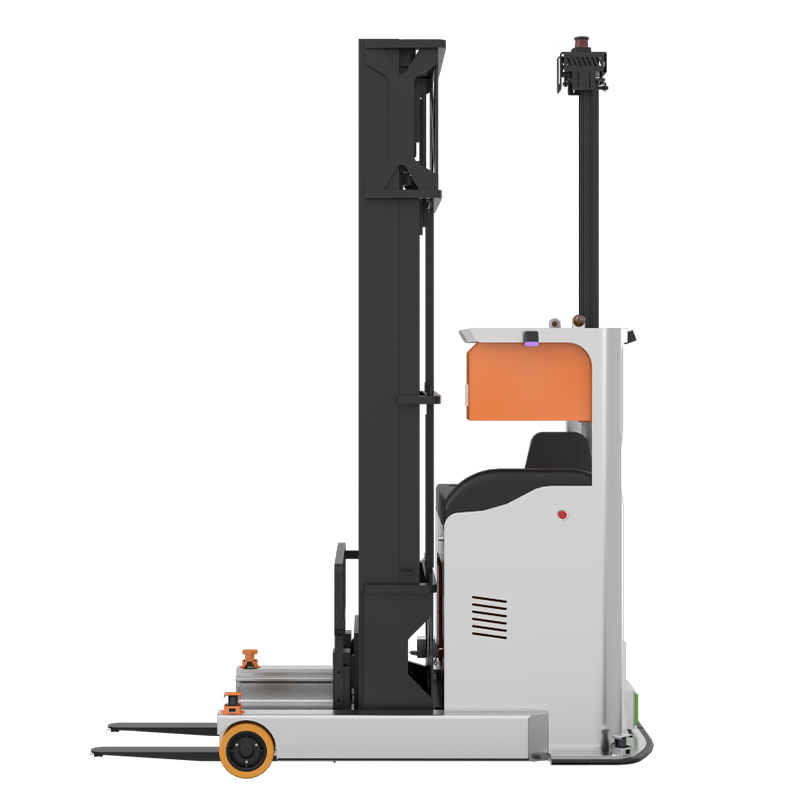
Heli Yufeng CQDE20HJ-65S 2T 6.5M Reach Truck AGV Body Laser Slam Navigation for Pallet Handling High Lifting Smart Warehouse
A reach truck AGV body with laser SLAM navigation and 6.5 m lift, aimed at smart-warehouse pallet handling. Recommended where buyers want proven chassis DNA, higher lift and autonomous operation without extensive fixed-path infrastructure.
- 2 T
- 6.5 m
- Laser SLAM
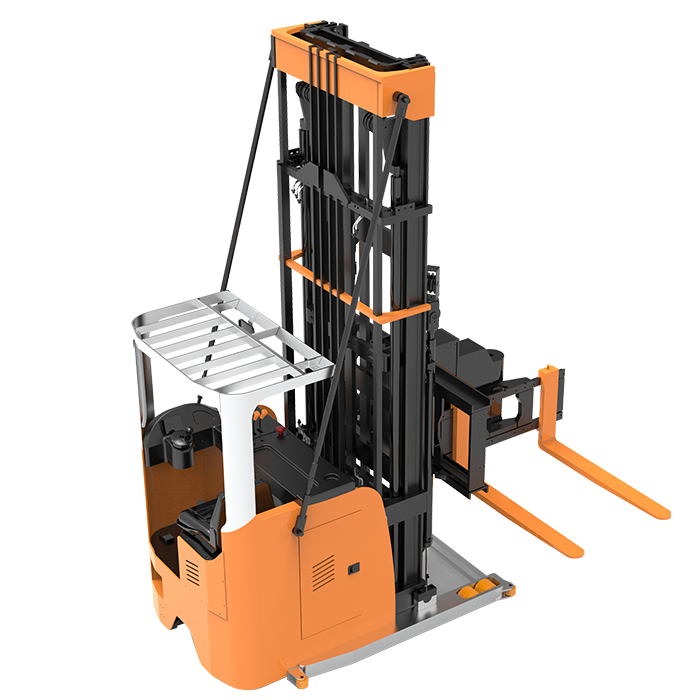
Narrow Aisle 3 Way 1600kg 1.6 Tons1.5 Tons 3 Tons Certified Electric Forklift Forklift Three Stage Mast
A 1.6-tonne narrow-aisle three-way electric forklift with three-stage mast and certified design. The rotating fork head handles left, right and forward storage without turning the truck, making it a strong fit for VNA racking and high-density storage.
- 1.6 T
- 3-way fork
- Certified
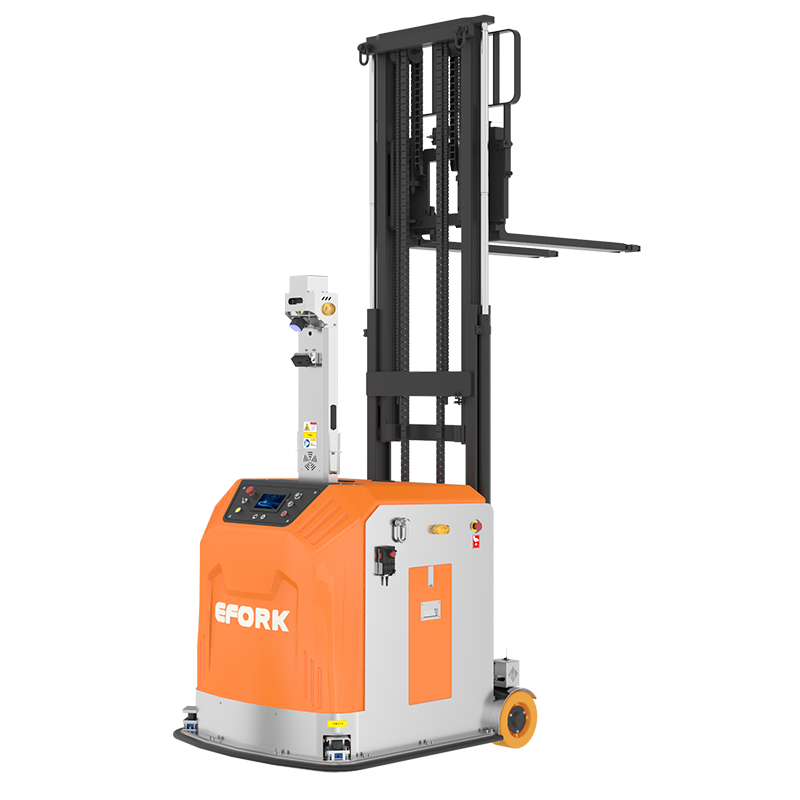
EFORK Heavy Duty Forklift AGV Counterbalanced Body 2T 3M Fork Legs High Flexibility 3D SLAM Navigation WIFI/5G for Pallet
A heavy-duty 2-tonne 3D SLAM AGV with 3 m fork legs, WIFI/5G connectivity and robust counterbalanced body. Suitable for repetitive pallet transport, production-to-warehouse flows and mixed fleets where uptime and structural durability matter.
- 2 T
- 3 m
- WIFI/5G
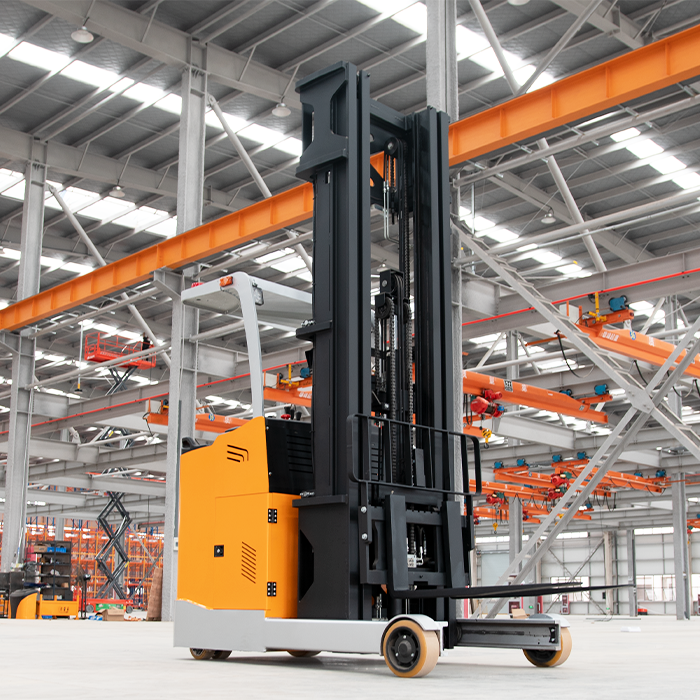
China Wholesale 2000kg 12m 8m 6m Industrial Forklift Pallet Truck Good Price
A wholesale industrial forklift pallet truck offer with 2,000 kg capacity and 6 m, 8 m and 12 m configuration options. Recommended for distributors and project buyers needing scalable specification and factory-direct supply, subject to final engineering review.
- 2,000 kg
- 6/8/12 m
- Wholesale
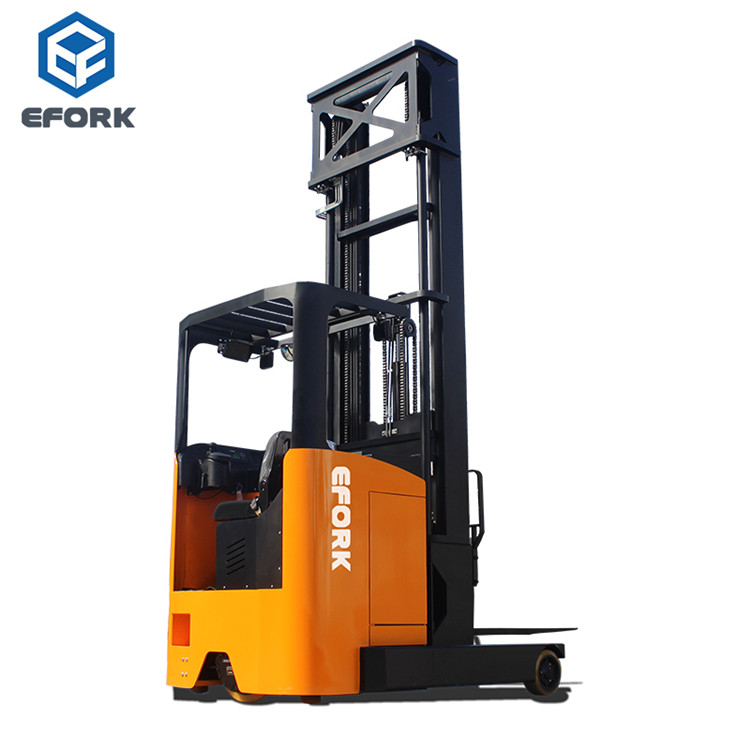
CQDE China Wholesale 2000kg 12m 8m 6m Industrial Forklift Pallet Truck Good Price
CQDE series 2,000 kg industrial forklift pallet truck with 6 m, 8 m and 12 m options. Positioned for wholesale and project procurement that requires scalable specification, China factory-direct supply and a clear customization path before order release.
- CQDE series
- 2,000 kg
- 12 m option
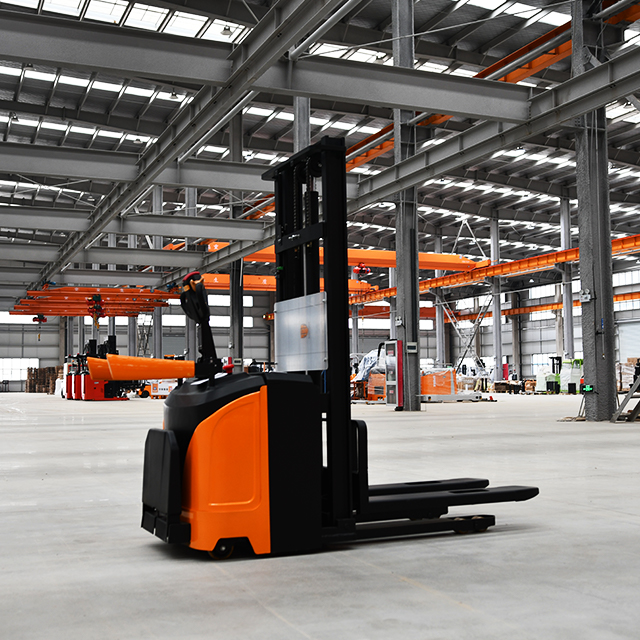
Factory Direct Sales Electric Pallet Lift Stackers 1.5-Ton 2-Ton 3Ton 3m 4m 5m Portable Self-Loading
Factory-direct electric pallet lift stackers in 1.5, 2 and 3 tonne capacities with 3 m, 4 m and 5 m lift options. Portable self-loading design suits distributors, 3PLs and small warehouses moving from manual pallet handling to powered stacking.
- 1.5–3 T
- 3/4/5 m
- Self-loading
What a Trusted Autonomous Reach Truck Manufacturer Must Prove
Autonomous reach trucks sit between a conventional reach truck, an AGV forklift and a warehouse automation system. The buying decision is therefore not only about load capacity or quotation price. It is about engineering evidence, integration risk, safety documentation and lifecycle support.

Scale alone is not enough; traceability is the differentiator
Anhui Nexrik Intelligent Technology operates as a manufacturer and trading company with 1,152 employees, 66,650 m² of production floorspace, more than USD 100 million in annual revenue, 7 awarded patents and SGS onsite verification. Those figures matter because they shorten the distance between specification, prototype, factory acceptance testing and spare-parts continuity. For buyers, the practical question is not simply “how large is the factory?” but “can this supplier prove that my machine was built, inspected and documented in a controlled environment?”
A trusted autonomous reach truck manufacturer should be able to show the relationship between the AGV body, mast, fork carriage, battery system, safety scanners and fleet-control software. Many wholesalers can quote an imported robot; fewer can confirm how the mast was inspected, how CE documentation maps to the delivered configuration, or how a cold-storage variant will be validated. The strongest suppliers reduce that uncertainty before the purchase order is signed.



Total Staff
Onsite-verified workforce capacity
Factory Floorspace
Production bases in Anhui, China
Annual Revenue
Stable capacity for fleet orders
Awarded Patents
Plus one registered trademark
Why Buyers Shortlist This Manufacturer & Wholesaler Network
For a reach truck AGV project, the right supplier combines truck engineering, automation software, safety compliance and export logistics. The following advantages are drawn from the factory’s verified company profile and product portfolio.
In-House Manufacturing & Inspection
Chassis, masts and control integration are built and tested on the manufacturer’s own lines, with onsite material inspection and finished-product inspection before shipment. That matters for buyers who need consistent build quality across repeat orders.
Laser & 3D SLAM Navigation
Choose reflector-based laser navigation for fixed, highly repetitive routes, or 3D SLAM navigation that localizes using natural warehouse features. 3D SLAM often reduces reflector and floor-tape work, shortening site preparation and protecting existing racking investments.
One-Stop Turnkey Automation
AGV forklifts, AS/RS stacker cranes, four-way shuttles, mini-load stackers and RGVs can be engineered as one WMS-ready system. A single-source approach reduces interface gaps between the reach truck AGV, conveyor, lift and warehouse-control layer.
Compliance Documentation
CE marking under Machinery Directive 2006/42/EC, ISO 9001 quality management and ISO 45001 occupational health and safety systems support customs clearance, tender submissions and site safety reviews in regulated markets.
OEM, ODM & Buyer-Label Production
Full customization covers load capacity, lift height, fork dimensions, battery configuration and cold-storage variants. Distributors and wholesalers can scale with buyer-label production while preserving the engineering platform behind each model.
Export-Ready Trade Terms
Accepted Incoterms include FOB, CFR, CIF, EXW, FAS, CIP and DDP, with L/C, D/P, D/A, credit card and Western Union payment in USD, EUR or CNY. Buyers across Southeast Asia, South America, Eastern Europe, South Asia and North America are already served.
Need a specification review before choosing a model? Share your rack layout, pallet size, aisle width, lift height and throughput target. The engineering team can recommend the best autonomous reach truck or AGV platform and confirm customization options.
Get a QuoteHow Autonomous Reach Truck Procurement Is Changing
Search intent is shifting from “cheap forklift price” to “which autonomous truck can integrate, scale and meet safety obligations?” The following procurement trends are already visible in buyer RFQs and project tenders.
Total Cost of Automation Replaces Sticker Price
Buyers now compare mapping effort, WMS integration, operator training, spare-parts logistics, battery strategy and service response. A lower machine price can be offset by longer commissioning or costly rack modifications.
Pilot-to-Scale Purchasing
MOQ 1 set enables a pilot truck to validate routes, cycle time and safety behavior before fleet expansion. This reduces procurement risk for first-time automation buyers and supports staged capital approval.
Software & WMS Integration Become Gatekeepers
Procurement teams increasingly require interface documentation before award. WMS/WCS readiness, API behavior, fleet-manager dashboards and reporting are evaluated alongside load capacity and lift height.
Compliance Travels With the Machine
CE documentation, risk assessment, safety-scanner configuration and traceable serial numbers are becoming tender requirements. Suppliers that cannot produce consistent documentation create customs and site-acceptance delays.
What the Next Generation of Autonomous Reach Trucks Will Deliver
Product development is moving toward less site modification, higher storage density and tighter software integration. These trends should influence the specification you lock into a multi-year supply agreement.
3D SLAM Reduces Infrastructure Work
Natural-feature localization helps AGVs operate without extensive reflectors or floor tape. For existing warehouses, that means less downtime, fewer rack modifications and faster route changes when storage layouts evolve.
Higher VNA Lifts & Modular Fork Heads
Three-way and multi-directional fork heads continue to push narrow-aisle storage higher, with VNA platforms supporting 7 m, 8 m, 9 m and 11 m options. Modular masts and forks allow one platform family to serve multiple markets.
Modular AGV Bodies & Lithium Energy
Counterbalanced, reach and stacker bodies are becoming more modular, while lithium batteries and opportunity charging reduce replacement downtime. Buyers should evaluate energy strategy against shift patterns and peak fleet availability.
AS/RS, Four-Way Shuttle & AGV Convergence
High-bay AS/RS up to 40 m, four-way shuttles with ±2 mm positioning and WMS-ready controls are converging with AGV fleets. The future warehouse treats reach trucks, shuttles and stacker cranes as one orchestrated material-flow system.
Compare Autonomous Reach Trucks, AGV Forklifts and High-Density Systems
The fastest way to avoid overbuying is to match the platform to the physical constraint. Use this matrix as a procurement reference, then confirm final specifications with engineering drawings and a site survey.
| Solution | Best-Fit Application | Typical Load / Lift | Navigation / Guidance | Procurement Note |
|---|---|---|---|---|
| Multi-directional 4-way reach truck | Very narrow aisle, long loads, small-space manoeuvring and dense racking | 4–5 T; project-specific mast | Autonomous platform, four-way travel | Confirm aisle width, load length and floor tolerances before release. |
| Counterbalanced AGV forklift 3T | Factory logistics, line-side feed, closed-bottom pallets and trailer docks | 3,000 kg; 3,000 mm lift | 3D SLAM | No front outriggers; suitable where trailer and cage handling is required. |
| Laser SLAM reach truck AGV | Smart warehouse pallet handling with higher lift and proven chassis DNA | 2 T; 6.5 m lift | Laser SLAM | Evaluate reflector strategy, rack interface and WMS task logic. |
| Narrow-aisle 3-way forklift 1.6T | VNA racking, high-density pallet storage and left/right/forward handling | 1.6 T; three-stage mast options | Electric VNA platform; AGV body available | Confirm clear aisle, rack beam height and certification requirements. |
| Heavy-duty 2T AGV forklift | Repetitive pallet transport, production-to-warehouse flows and mixed fleets | 2 T; 3 m fork legs | 3D SLAM, WIFI/5G | Review charging strategy, route congestion and safety-scanner coverage. |
| Electric pallet lift stacker | Distributors, 3PLs, small warehouses and powered stacking upgrades | 1.5–3 T; 3/4/5 m | Portable self-loading platform | Good entry point when pallet handling is still partly manual. |
Values reflect common configurations of the listed models. Final load, lift, navigation, battery and safety specifications are confirmed during project engineering based on pallet type, rack drawing, building constraints and local regulations.
A Four-Step Route From RFQ to Reliable Operation
Autonomous reach truck projects fail more often from unclear inputs than from machine capability. A disciplined workflow protects schedule, budget and internal approvals.
Share Data, Not Adjectives
Provide pallet photos, load weight, rack layout, aisle width, lift height, floor flatness, throughput per hour, shift pattern and future expansion plans. This gives the manufacturer enough information to recommend a realistic platform.
Simulate Before You Commit
Check travel routes, turning zones, charging positions and traffic bottlenecks. For narrow aisles, validate the relationship between truck body, fork head, rack uprights and safety clearance rather than relying on catalogue dimensions alone.
Verify Factory Acceptance & Documents
Review load testing, lift-cycle tests, safety-scanner configuration, CE documentation, serial numbers and spare-parts list. A clear FAT checklist reduces surprises during site acceptance and customs review.
Plan Commissioning & Lifecycle Support
Agree mapping responsibility, WMS interface testing, operator training, remote diagnostics, warranty terms, spare-parts lead time and fleet-expansion planning. The lowest-risk supplier is the one that stays accountable after go-live.
Autonomous Reach Truck Procurement Questions Buyers Ask First
These answers address the commercial, technical and compliance questions that commonly appear in RFQs, import inquiries and supplier comparison meetings.
What is an autonomous reach truck, and how is it different from an AGV forklift?
An autonomous reach truck is a reach-truck platform fitted with navigation, safety sensors and fleet-control software so it can move pallets without a driver. In practice, the terms overlap: an AGV forklift may use a reach, counterbalanced or stacker body. The important difference is the body type and how it handles loads, aisles and rack interfaces. Buyers should compare the actual chassis, lift height, fork configuration and navigation method, not only the “AGV” label.
Which model fits a very narrow aisle or small warehouse space?
For the tightest aisles, start with the 4-way multi-directional reach truck or the 1.6-tonne narrow-aisle three-way forklift. The final choice depends on load length, rack height and whether the truck must travel left, right and forward without turning. Share aisle width, rack drawing and pallet dimensions so the manufacturer can confirm clearance, mast type and safety distance before order.
Can load capacity, lift height, forks and cold-storage configuration be customized?
Yes. Customization covers load capacity, lift height, fork dimensions, battery configuration, mast design and cold-storage variants, along with OEM, ODM and buyer-label production. Customization should be locked through drawings and a factory acceptance checklist. This is especially important for VNA, AS/RS and frozen-storage applications where small dimensional errors can cause major commissioning delays.
What is the minimum order quantity and can we run a pilot first?
The listed AGV forklift, stacker crane and four-way shuttle models are offered with MOQ 1 set. A pilot is a practical way to validate route design, cycle time, traffic behavior and WMS integration before scaling to a fleet. For multi-site buyers, a pilot also creates internal evidence for safety approval and capital release.
Which certifications and verification documents are available?
The manufacturer holds ISO 9001 and ISO 45001 management system certification, CE marking under Machinery Directive 2006/42/EC for its AGV range, 7 awarded patents and SGS onsite verification of premises and legal status. For tenders, ask for the certificate scope, delivered-configuration compliance and serial-number traceability so the documentation matches the exact machine supplied.
Can the reach truck AGV integrate with our existing WMS or ERP?
AS/RS, four-way shuttle and AGV systems are designed to be WMS-ready. Integration requirements are defined during solution design and tested during commissioning. At RFQ stage, provide your WMS/ERP interface documentation, task types, reporting expectations and network architecture. This helps confirm whether the supplier can support your data flow, not just the mechanical handling task.
What trade terms, payment methods and after-sales support are typical?
Typical trade terms include FOB, CFR, CIF, EXW, FAS, CIP and DDP. Payment can be arranged through L/C, D/P, D/A, credit card or Western Union in USD, EUR or CNY. After-sales support should be clarified in writing: remote diagnostics, spare-parts availability, operator training, warranty scope and response time. For fleet projects, include expansion planning and service-level expectations in the supply agreement.
Ready to Specify an Autonomous Reach Truck With Confidence?
Send your pallet dimensions, rack layout, aisle width, lift height, throughput target and destination market. The engineering team can match the right autonomous reach truck, AGV forklift or high-density warehouse system, confirm OEM/ODM options and prepare a quotation with export-ready documentation.
Get a Quote