Top 10 Material Handling Robot Manufacturer & Factories
A buyer-grade engineering guide to AGV forklifts, narrow-aisle robots, AS/RS stacker cranes and high-density shuttle systems—built around factory verification, total cost of ownership and real material flow.
Eight Factory-Ready Models That Reveal a Manufacturer's Real Engineering Range
Material handling robots should be shortlisted by load unit, aisle geometry, lift height, navigation environment and interface strategy. These eight models reflect the product logic buyers should expect from a top-tier factory: compact bodies for high-density storage, laser or 3D SLAM navigation, CE documentation, WMS-ready integration and one-set pilot orders.
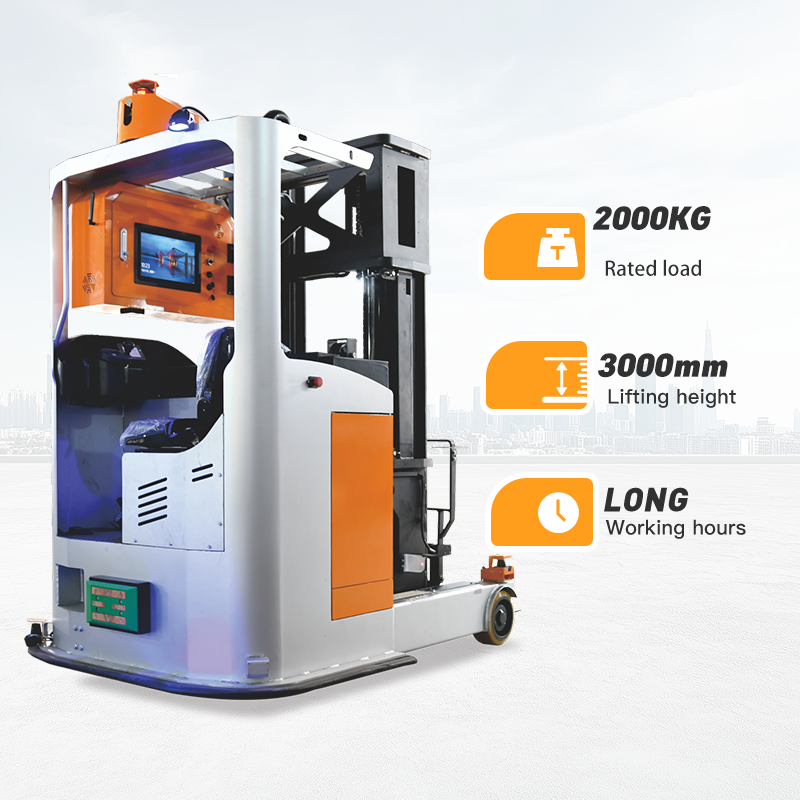
Reach Truck AGV Forklift 2T 3M Laser Slam Navigation CE Certified Warehouse Automation Robot for Factory Logistics
- 2,000 kg
- 3 m lift
- Laser SLAM
- CE
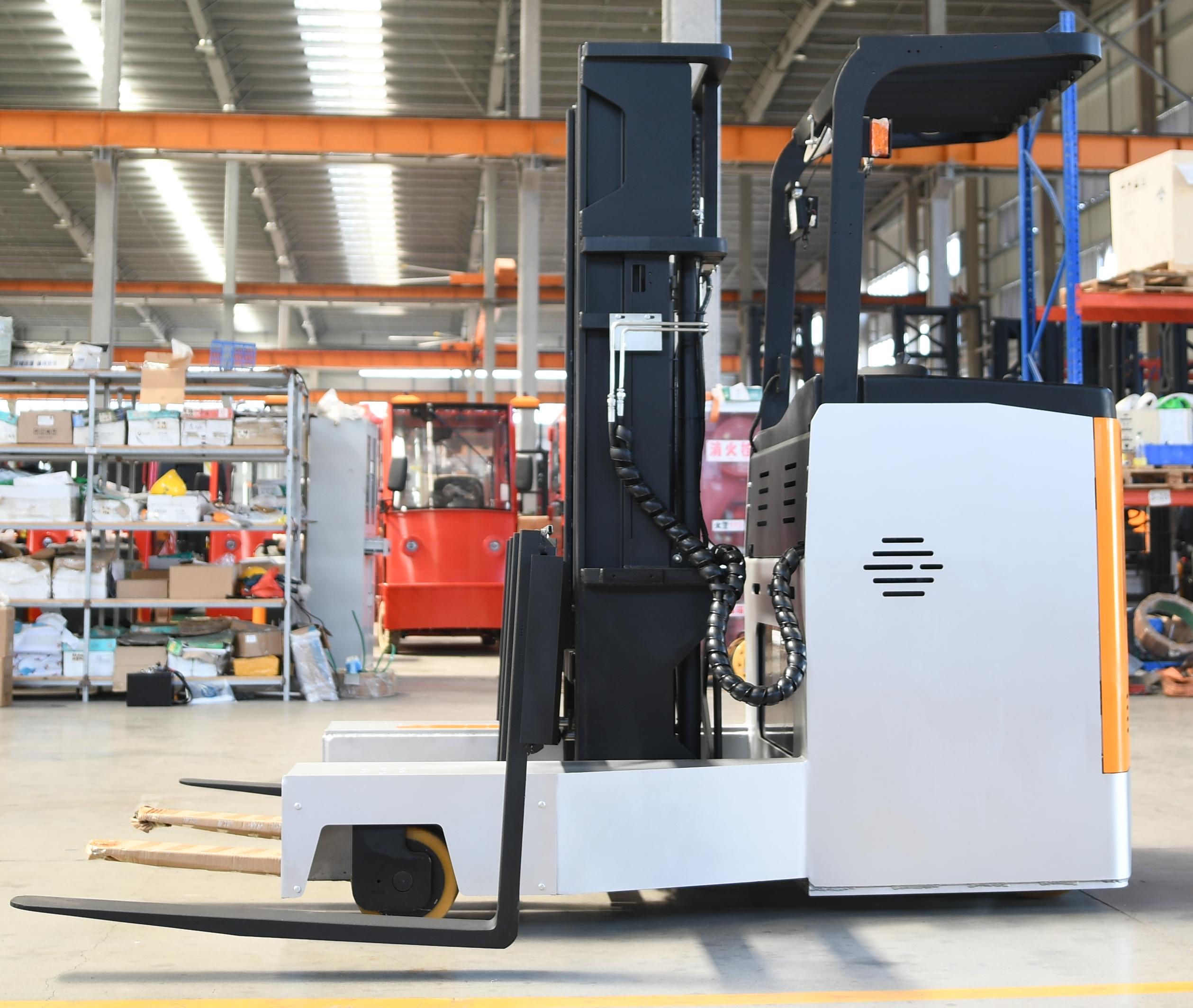
Multi Directional Forklift 4Ton 5Ton 4 Way Forklift Reach Truck Stacker For Narrow Aisle Small Space
- 4–5 T
- 4-way
- Narrow aisle
- Stacker
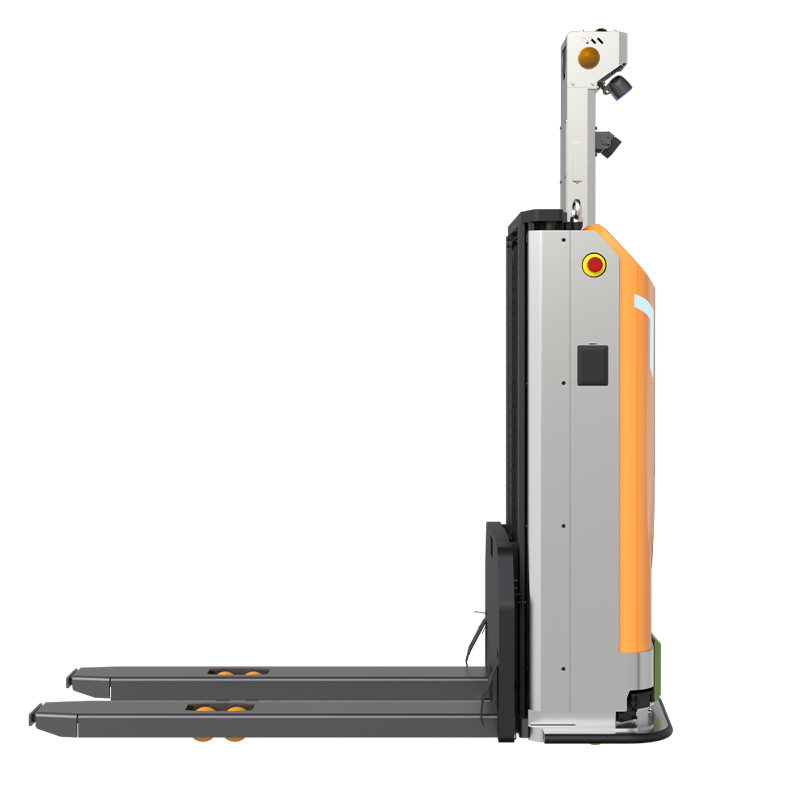
2T Slim Narrow-Body Stacker AGV with 3D SLAM & WIFI/5G for High-Density Storage 1.6M Pallet Stacking Maximize Warehouse Space
- 2 T
- 1.6 m
- 3D SLAM
- WIFI/5G
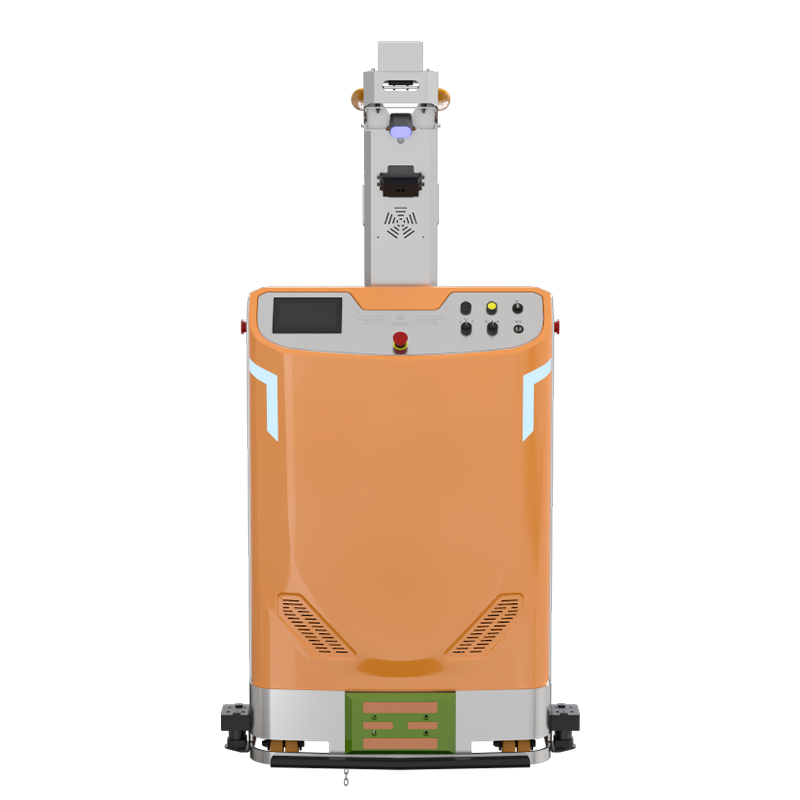
2T Material Handling AGV Body Narrow Body Compact Chassis 3D SLAM Navigation Laser Obstacle Avoidance for Workshop Transport
- 2 T
- Compact chassis
- 3D SLAM
- Obstacle avoidance
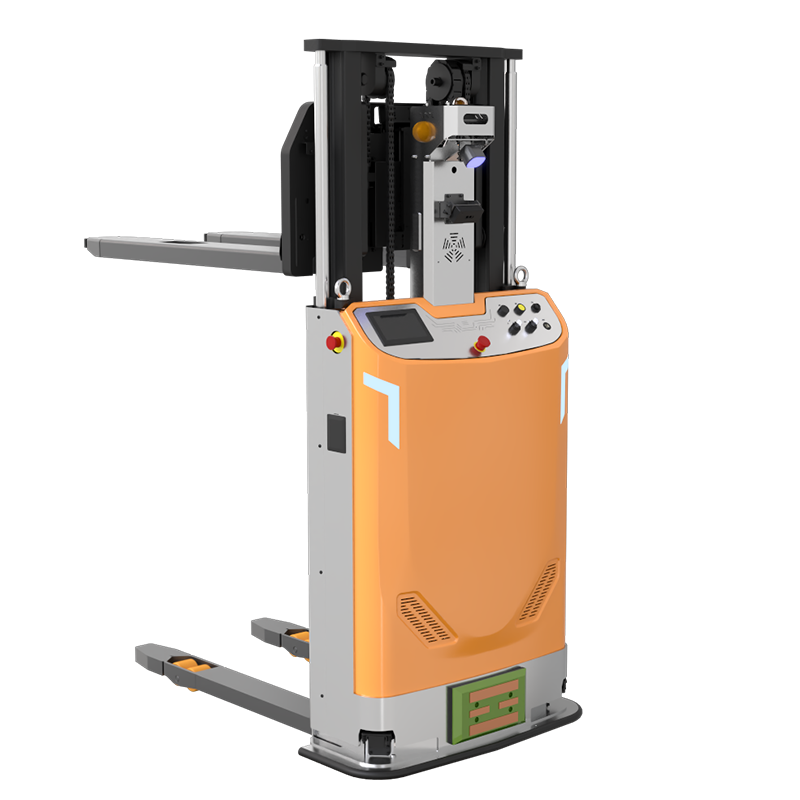
2T 1.6 M Slim Narrow-Body Stacker AGV Body for High-Density Storage High Lift Pallet Stacking AGV Maximize Warehouse Space
- 2 T
- 1.6 m
- Slim body
- High density
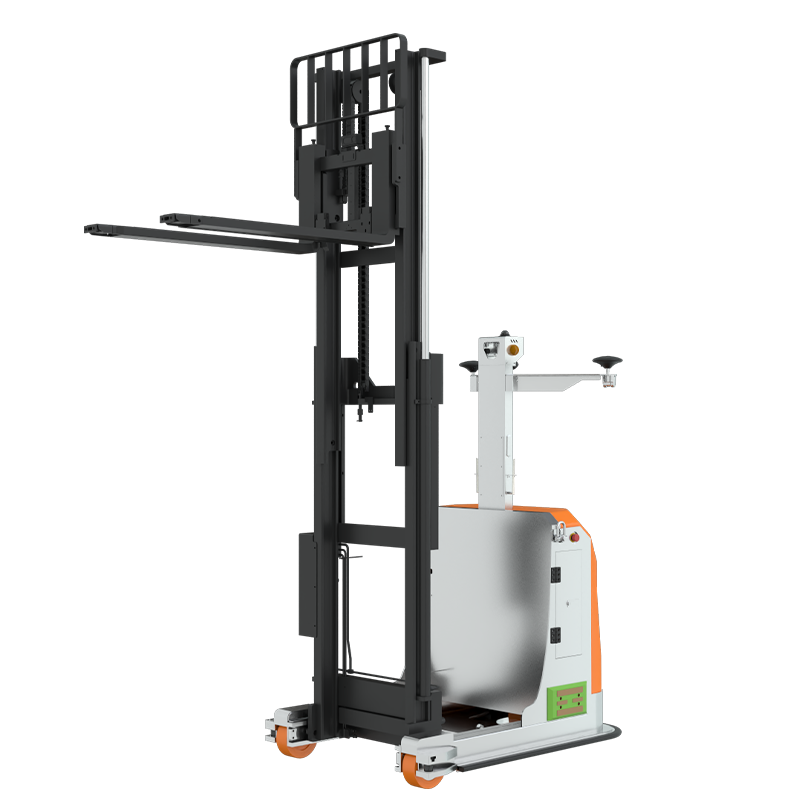
Reach Truck AGV Narrow Body 1.5T 3M Compact Design Fork Forward Function 3D SLAM Navigation 10mm Positioning Accuracy for Narrow-Aisle Operations
- 1.5 T
- 3 m lift
- 10 mm accuracy
- 3D SLAM
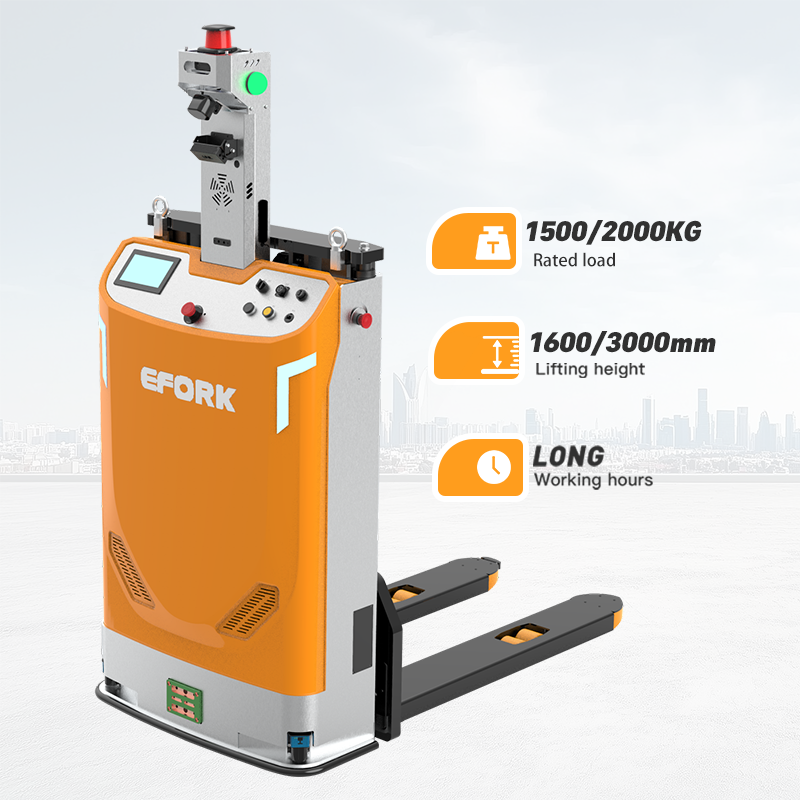
CE Certified EFORK EDA20-16 2T 1600mm Laser Navigation Self-Driving Forklift AGV WIFI/5G for Warehouse Automation Logistics
- 2 T
- 1,600 mm
- Laser
- WIFI/5G
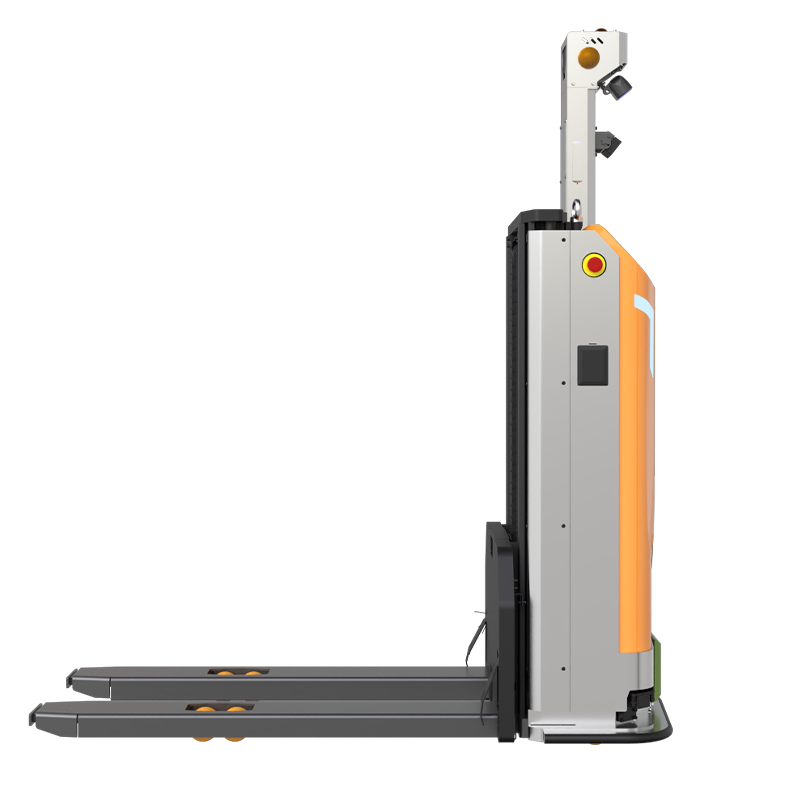
2T 3 M Slim Narrow-Body Stacker AGV High-Density Storage Pallet Stacking AGV for Narrow Aisles Warehouse Automation
- 2 T
- 3 m lift
- Slim body
- High density
Need a model matched to your rack drawing, pallet condition, aisle width and shift pattern? Send the layout for an engineer-led recommendation.
Get a QuoteWhy the Top 10 Conversation Has Moved from Price to Proof
Warehouse automation is now a board-level decision because it touches labour stability, safety, service levels, real estate productivity and cold-chain capacity. For that reason, the strongest material handling robot manufacturers are no longer judged only by catalogue size or price per unit. They are judged by evidence: manufacturing scale, navigation depth, certification quality, integration capability and lifecycle support.
In this guide, “Top 10” is treated as a factory benchmark, not a popularity badge. A serious manufacturer should be able to explain how the chassis is built, how the mast is tested, how 3D SLAM or laser navigation behaves in a real aisle, how safety scanners are validated, and how the robot will communicate with a WMS or ERP system after commissioning. Buyers who ask for that evidence early avoid expensive retrofit work later.
The commercial logic is also changing. A single automated forklift may look more expensive than a manual truck on a purchase order, but the comparison is incomplete without labour availability, shift coverage, damage rates, insurance exposure, energy strategy and fleet scalability. The best procurement teams now request a pilot-first, fleet-later route with clear acceptance criteria before scaling to a multi-robot deployment.
Onsite-verified workforce supporting engineering and production.
Two production bases in Anhui for intelligent warehousing equipment.
Plus a registered trademark and ongoing R&D in robot platforms.
Pilot validation before committing to a larger fleet.
Capacity to support fleet orders and turnkey projects.
CE 2006/42/EC, ISO 9001, ISO 45001 and SGS onsite verification.
The Top 10 Factory Benchmarks That Separate Serious Manufacturers from Catalogue Sellers
Use these ten benchmarks as a due-diligence framework. They are deliberately practical: each one can be verified through documents, onsite inspection, engineering interviews or a factory acceptance test.
01 · Onsite-Verified Scale
Ask for floorspace, staff, legal status and inspection evidence. A factory that can host third-party onsite verification is materially different from a trading office with outsourced assembly.
02 · In-House Fabrication
Chassis, masts and control integration determine structural quality and serviceability. In-house production shortens corrective loops and keeps spare-part logic under one engineering team.
03 · Navigation Depth
Laser navigation suits stable fixed routes; 3D SLAM uses natural building features and can reduce reflector or floor-tape work. A strong factory supports both and explains the trade-off.
04 · Safety & Compliance
CE marking under 2006/42/EC, ISO 9001 and ISO 45001 are not decorative logos. They affect tender eligibility, customs clearance, insurance review and operator confidence.
05 · Integrated Material Flow
Top-tier factories think in systems, not isolated machines. AGV forklifts, AS/RS stacker cranes, four-way shuttles and RGVs should share one WMS/WCS logic and one project interface.
06 · Controlled Customization
Capacity, lift height, fork dimensions, battery configuration and cold-storage variants should be configurable without breaking spare-part continuity or future software support.
07 · Inspection & FAT
Incoming material inspection, finished-product inspection and factory acceptance testing reduce installation surprises. Ask how defects are logged, corrected and documented before shipment.
08 · Trade Fluency
FOB, CFR, CIF, EXW, FAS, CIP and DDP; L/C, D/P, D/A and card payment; USD, EUR and CNY. Commercial flexibility matters when automation crosses borders.
09 · Service Architecture
Remote diagnostics, spare-parts supply, operator training and fleet-expansion planning should be defined before the first robot ships—not after the first bottleneck appears.
10 · Engineering Logic
A credible manufacturer can walk through cycle-time assumptions, traffic simulation, safety validation and WMS interface testing in plain engineering language, with traceable assumptions.
Product Recommendation Matrix: Match the Robot to the Material Flow
Use this matrix to create a shortlist before an RFQ. The optimum system is the one that moves your actual pallet, in your actual aisle, at your actual peak, with a control architecture your team can support for years.
| Equipment family | Typical load / lift | Navigation / guidance | Best-fit application |
|---|---|---|---|
| Reach Truck AGV | 2 T · 3 m | Laser SLAM | Selective racking, factory logistics and medium-height pallet handling |
| Multi-Directional Forklift | 4–5 T · 4-way | Application-specific | Long loads, narrow aisles and tight manoeuvring space |
| Slim Narrow-Body Stacker AGV | 2 T · 1.6 m | 3D SLAM · WIFI/5G | High-density pallet stacking and space-constrained storage zones |
| Compact Material Handling AGV | 2 T · compact chassis | 3D SLAM · laser obstacle avoidance | Workshop transport, line-side delivery and internal logistics |
| High-Lift Pallet Stacker AGV | 2 T · 1.6 m | 3D SLAM / laser | High-density storage where body width and lift height both matter |
| Compact Reach Truck AGV | 1.5 T · 3 m | 3D SLAM · 10 mm positioning | Narrow aisles requiring fork-forward reach and precise placement |
| Laser Navigation AGV Forklift | 2 T · 1,600 mm | Laser · WIFI/5G | Warehouse automation logistics and repetitive laser-guided routes |
| Narrow-Aisle Stacker AGV | 2 T · 3 m | 3D SLAM / laser | Narrow-aisle warehouse automation with high-density pallet storage |
Final specifications are confirmed during project engineering based on load units, rack drawings, floor conditions, traffic rules and WMS/WCS interface requirements.
Material Handling Robot Procurement Trends for 2026–2030
Buying behaviour is shifting from “machine purchase” to “operational capability purchase”. The following trends are already visible in RFQs, tender documents and factory acceptance criteria.
Pilot-First, Fleet-Later Buying
One-set MOQ allows buyers to validate routes, cycle times, safety behaviour and operator acceptance before scaling. Procurement teams increasingly separate pilot validation from fleet expansion, which lowers decision risk and creates measurable acceptance gates.
TCO and Cost per Pallet Movement
Price per robot is being replaced by cost per pallet movement, including energy, maintenance, spare parts, uptime, damage rates and software support. Buyers want a multi-year view before they commit capital.
Mixed Fleets with Open Integration
AGV forklifts, stacker cranes, four-way shuttles and RGVs increasingly coexist in one warehouse. The winning supplier can integrate equipment families under a coherent WMS/WCS architecture instead of leaving islands of automation.
3D SLAM Where Infrastructure Is Costly
3D SLAM reduces dependence on reflectors and floor tape by localising against natural building features. It is not a universal replacement for laser navigation, but it is becoming a strong option where site preparation time and disruption must be minimised.
Safety Evidence as a Tender Filter
CE marking, risk assessment, safety scanner validation, emergency-stop logic and operator training records are moving from “nice to have” to mandatory tender evidence. Compliance maturity is now a commercial advantage.
Lifecycle Contracts and Remote Service
Buyers are asking how diagnostics, spare parts, software updates and fleet expansion will be supported after go-live. A robot that cannot be serviced predictably becomes a production risk, not an automation asset.
How Material Handling Robots Are Evolving
The next generation of equipment is being shaped by density, precision, integration and environment-specific engineering. These themes should appear in a manufacturer's roadmap and in your technical clarification sessions.
01Narrow Bodies, Higher Density
Slim narrow-body stackers and compact reach trucks allow more storage and traffic capacity inside existing buildings. The engineering challenge is not simply shrinking the chassis; it is preserving stability, safety and service access.
02Higher Lift, Narrower Aisles
Very narrow aisle and high-lift applications continue to demand precise positioning. Systems with 3D SLAM, fork-forward reach and tighter aisle capability help buyers increase cube utilisation without expanding the building footprint.
03AS/RS and Shuttle Convergence
AS/RS stacker cranes, four-way shuttles and AGV forklifts are being designed as one material flow. WMS-ready control logic and ±2 mm-level shuttle positioning show how storage density and retrieval flexibility are converging.
04WMS/WCS-Ready by Default
Integration is no longer an afterthought. Project teams expect clearly defined interfaces, test scenarios and commissioning protocols for WMS, ERP and warehouse control systems before the equipment arrives on site.
05Cold-Chain and Special Environments
Frozen storage, temperature variation and condensation affect batteries, sensors and structural materials. Cold-storage variants and application-specific engineering are becoming a normal part of the product roadmap.
06Modular Bodies and OEM/ODM Platforms
Modular AGV bodies, configurable masts, fork options and buyer-label production allow manufacturers and system integrators to localise solutions while retaining proven core platforms and spare-part logic.
Inside Nexrik: Enterprise Advantages That Reduce Project Risk
Anhui Nexrik Intelligent Technology Co., Ltd. is a high-tech manufacturer specialising in R&D, production and integration of intelligent warehousing equipment—AGV forklifts, AS/RS stacker cranes, four-way shuttles and RGVs.
Manufacturing Scale, Engineering Depth and Turnkey Integration
Our production bases are located in the Huagang Town Industry-City Integration Demonstration Zone, Feixi County, Hefei, Anhui—a recognised forklift and intelligent logistics equipment cluster. The company operates 66,650 m² of factory floorspace with 1,152+ staff, supported by an annual revenue scale of USD 100M+ and 7 awarded patents plus a registered trademark.
Our engineering approach starts with the load unit, rack drawing and throughput target, not with a pre-selected robot. We review aisle geometry, floor conditions, pallet quality, shift patterns, safety rules and WMS/ERP constraints, then propose an equipment mix that can be commissioned and expanded without redesigning the whole warehouse.
- In-house manufacturing: chassis, masts and control integration on our own lines.
- One-stop portfolio: AGV forklifts, AS/RS stacker cranes, four-way shuttles and RGVs.
- Navigation options: laser navigation and 3D SLAM for different infrastructure conditions.
- Verified compliance: CE under 2006/42/EC, ISO 9001, ISO 45001 and SGS onsite verification.
- Customization: OEM, ODM, buyer-label production and application-specific configurations.
- Export readiness: buyers in Southeast Asia, South America, Eastern Europe, South Asia and North America.




Quality, Commercial Terms and Go-Live Support Buyers Can Audit
Factory capability only becomes project value when it is documented, tested and commercially clear. These are the areas to verify before purchase order release.
Documentation and Compliance
Request certificates, risk assessments and inspection records that match the exact model being purchased. Compliance is part of the product, not a separate administrative task.
- CE marking under Machinery Directive 2006/42/EC
- ISO 9001 and ISO 45001 management systems
- SGS onsite verification and 7 awarded patents
- Finished-product inspection before shipment
Commercial Flexibility
International projects need commercial terms that fit the buyer's country, financing model and logistics plan. Confirm the terms in the quotation rather than assuming they are available.
- MOQ 1 set for pilot validation
- OEM, ODM and buyer-label production
- FOB, CFR, CIF, EXW, FAS, CIP and DDP
- L/C, D/P, D/A, MoneyGram, credit card and Western Union
- USD, EUR and CNY currencies
Project Governance and Lifecycle
A structured workflow reduces surprises: site analysis, solution design, manufacturing, commissioning and lifecycle support. Each stage should have clear deliverables and acceptance criteria.
- Route planning and traffic assumptions
- WMS/WCS interface testing
- Safety validation and operator training
- Remote diagnostics and spare-parts planning
FAQ: Common Material Handling Robot Procurement Questions
These are the questions buyers usually ask before comparing AGV forklift, stacker crane and shuttle suppliers.
What is the minimum order quantity for these material handling robots?
The MOQ for the AGV forklift, stacker crane and four-way shuttle models is 1 set. Many buyers start with one robot or one pilot zone to validate routes, cycle times, safety behaviour and WMS interaction before scaling to a fleet.
Should I choose laser navigation or 3D SLAM navigation?
Laser navigation is a strong choice for stable, repetitive routes where reflectors can be maintained. 3D SLAM localises using natural building features and can reduce reflector or floor-tape work, which may shorten site preparation. The right answer depends on aisle geometry, building changes, traffic density and the acceptable commissioning window.
Which certifications and audits should a manufacturer provide?
Look for CE marking under Machinery Directive 2006/42/EC where applicable, ISO 9001 quality management, ISO 45001 occupational health and safety, and third-party onsite verification such as SGS. Also request model-specific inspection records, risk assessment documentation and spare-parts information.
Can the robots integrate with an existing WMS or ERP system?
AS/RS and four-way shuttle systems are designed to be WMS-ready, but integration must be engineered rather than assumed. Interface requirements, data ownership, exception handling and test scenarios should be defined during solution design and verified during commissioning.
Do you provide OEM, ODM and full customization?
Yes. Customization, OEM, ODM and buyer-label production are available. Typical configuration variables include load capacity, lift height, fork dimensions, battery configuration, navigation choice and cold-storage variants. The goal is to adapt the platform without compromising safety or long-term serviceability.
What trade and payment terms are accepted?
Accepted delivery terms include FOB, CFR, CIF, EXW, FAS, CIP and DDP. Payment methods include L/C, D/P, D/A, MoneyGram, credit card and Western Union, with USD, EUR and CNY currencies. Confirm the final combination in the commercial quotation.
How should I compare the top 10 material handling robot manufacturers?
Compare verified manufacturing scale, navigation depth, safety documentation, integration capability, customization discipline, inspection records, trade terms and lifecycle support. A manufacturer that can explain the engineering assumptions behind its proposal is usually easier to audit than one that only sends a product catalogue.
What information should I send for a quotation and layout proposal?
Send rack drawings or aisle dimensions, pallet or load-unit specifications, load weight, lift height, throughput target, shift pattern, floor condition, existing WMS/ERP details and any safety or tender requirements. With those inputs, engineers can propose a realistic equipment mix, fleet size and integration path.
Turn Your Shortlist into a Verified Automation Plan
Send rack drawings, pallet specifications, aisle widths, throughput targets and existing WMS/ERP constraints. Our engineers will respond with a practical equipment mix, fleet-size logic and a quotation path.
Get a Quote Factory-direct AGV forklifts · VNA AGVs · AS/RS stacker cranes · four-way shuttles · MOQ 1 set