Top 10 Counterbalance AGV Manufacturers & Supplier
A high-information-gain buying guide for warehouse automation teams comparing counterbalance AGV suppliers, 3D SLAM navigation, CE safety files, factory scale and total cost of ownership.
8 Counterbalance AGV & Intralogistics Configurations Recommended for 2025
These eight configurations are selected as practical building blocks for counterbalance AGV projects. Use them to compare load capacity, lift height, navigation logic and site constraints before sending a formal RFQ.
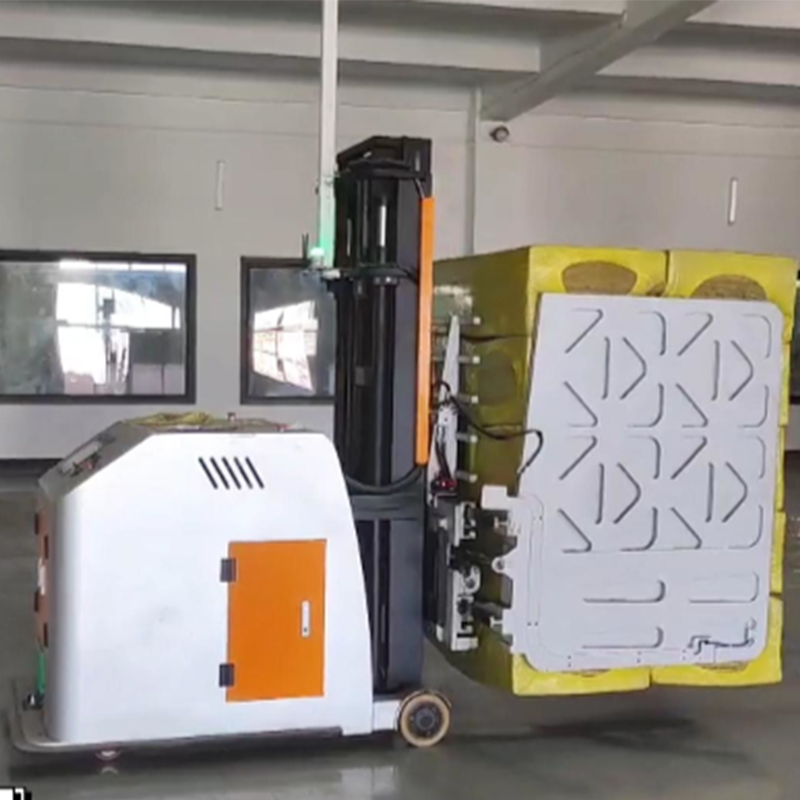
EFORK Automated Guided Vehicle AGV Forklift 3T 3000MM Counterbalanced 3D SLAM Construction Factory Logistics Pallet Truck
Best-fit for construction-material yards and factory logistics where 3,000 mm lift height, 3T capacity and 3D SLAM mapping reduce dependence on fixed guide paths.
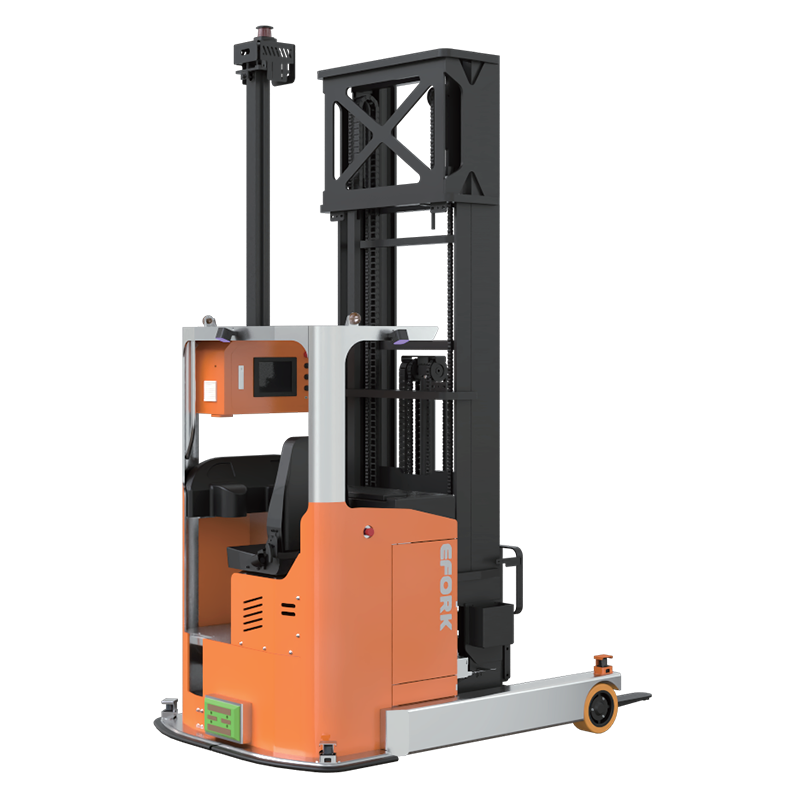
4.5M Reach Truck AGV Body 2T for Pallet Handling High Lifting Smart Warehouse Logistics Robot Laser Slam Navigation CE Certified
A 4.5 m reach platform for selective racking and smart warehouses where high lifting and laser SLAM navigation must coexist with CE-certified safety.
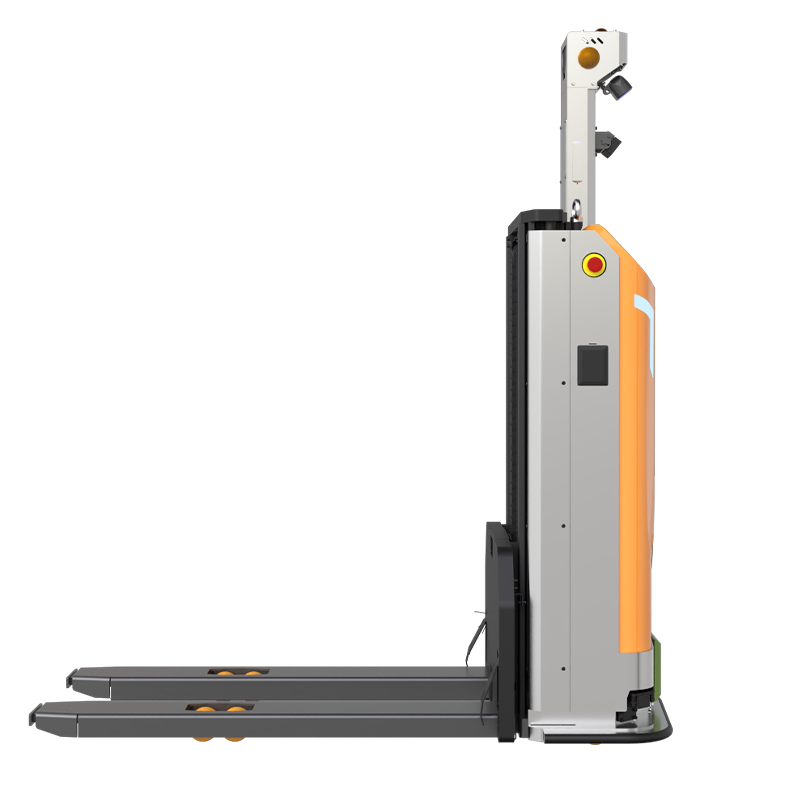
2T 3 M Slim Narrow-Body Stacker AGV High-Density Storage Pallet Stacking AGV for Narrow Aisles Warehouse Automation
Slim-body architecture for narrow aisles and high-density storage, giving a 2T payload and 3 m lift without widening the aisle footprint.
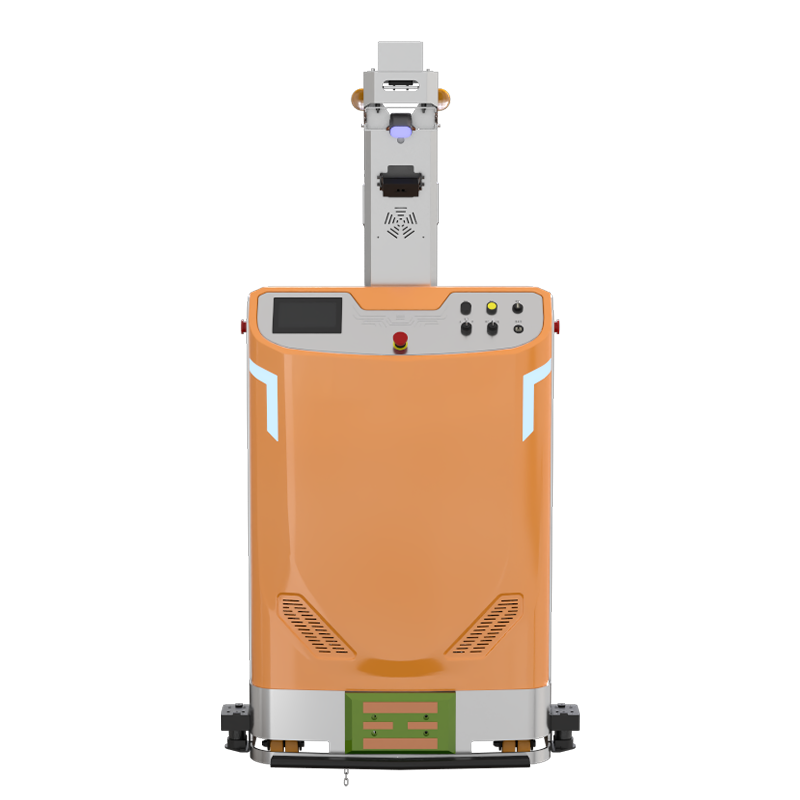
Material Handling AGV Body 2T with Narrow Body Compact Chassis for Efficient Production Line & Workshop Transport in Tight Space
Compact 2T chassis that prioritizes tight-space handling between production lines, workshops and transfer stations.
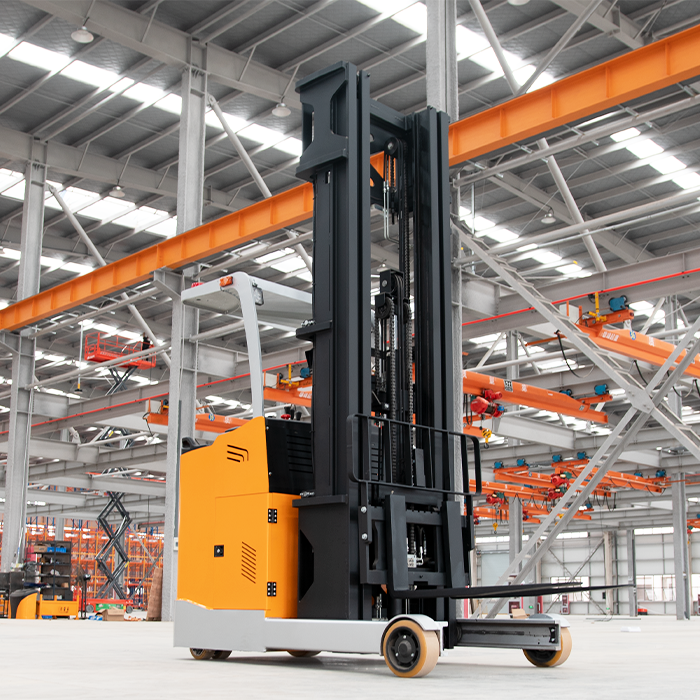
China Wholesale 2000kg 12m 8m 6m Industrial Forklift Pallet Truck Good Price
A price-sensitive 2T industrial forklift pallet truck option for buyers evaluating a phased path from manual handling to automation.
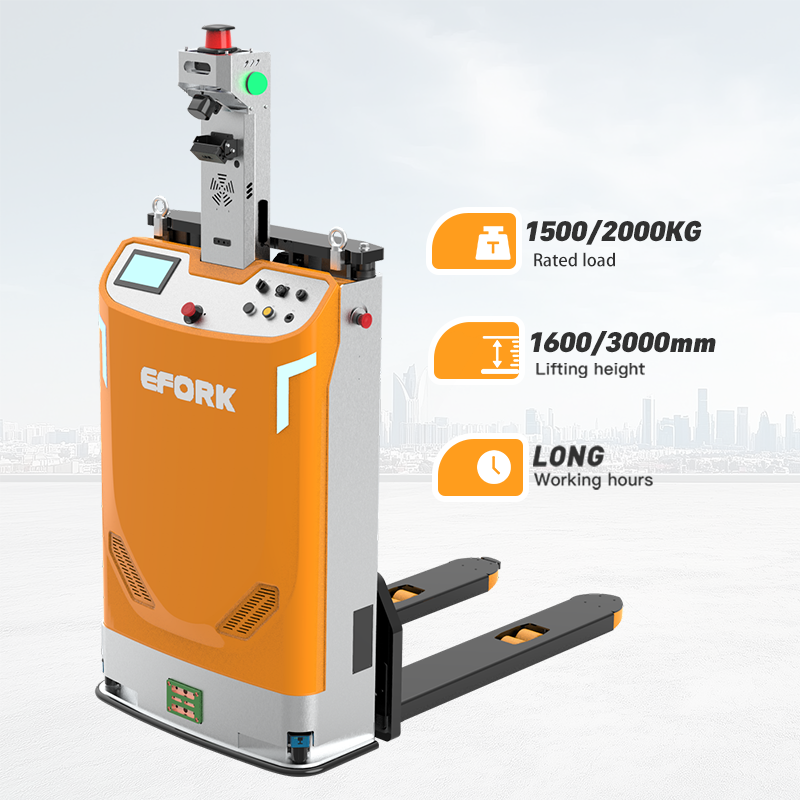
New Heli Yufeng EDA20-30 Slim Stacking AGV Forklift CE Certified 2T 3M 3D SLAM WIFI/5G for Stacking Mobile Robot
3D SLAM stacking AGV with WIFI/5G connectivity, 2T capacity and 3 m lift for high-throughput stacking mobile robot duties.
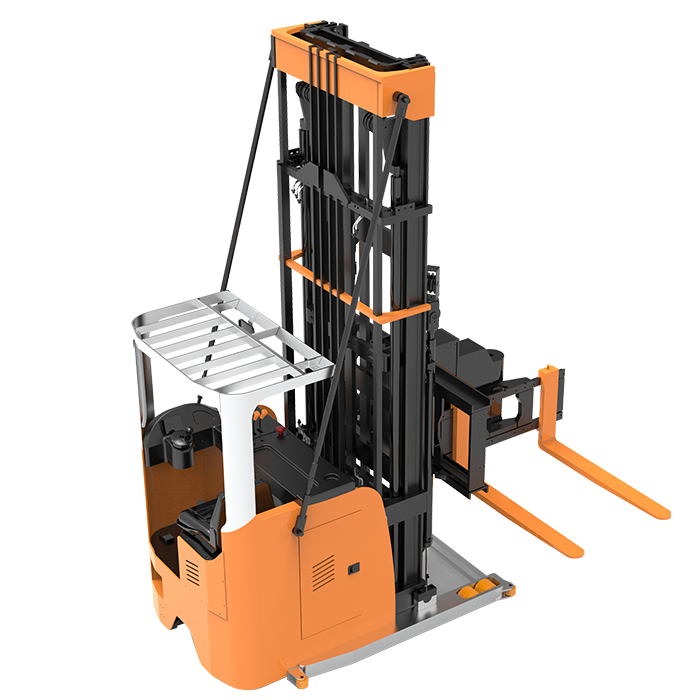
Narrow Aisle 3 Way 1600kg 1.6 Tons1.5 Tons 3 Tons Certified Electric Forklift Forklift Three Stage Mast
Three-stage mast and 3-way electric forklift logic for users who need narrow-aisle flexibility before committing to a fully rail-guided AS/RS.
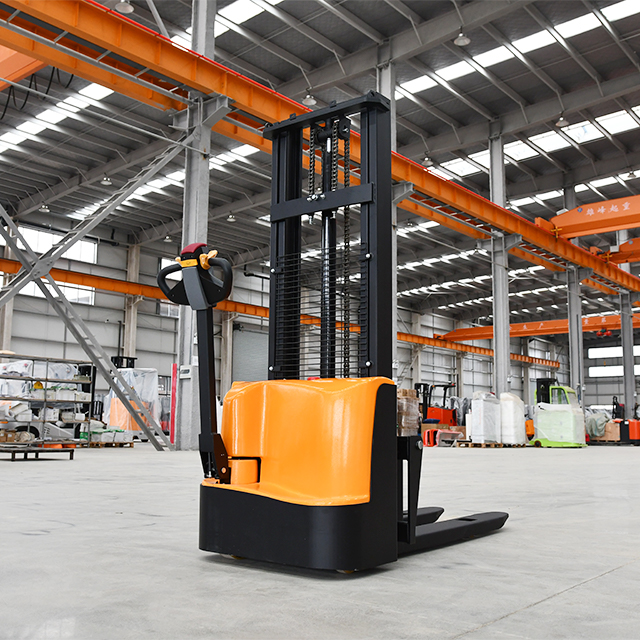
1Ton & 2Ton Full Electric Pallet Stacker Walkie Type High Performance, Low Cost Optional with Training Wheels
Walkie-type full electric pallet stacker for dock and line-side work where a low-cost, training-wheel-compatible platform is more practical than a heavy AGV.
What Counterbalance AGV Buyers Need to Know Before Comparing Suppliers
A counterbalance AGV is not simply a forklift with sensors added. It is a load-carrying robotic platform engineered around stability, safety, navigation and fleet software.
Counterbalance AGVs carry loads outside the wheelbase and use counterweight to balance the truck, so they can handle closed-bottom pallets, pallet cages, racks and trailer-dock work without front outriggers. That makes them a natural fit for production lines, factory logistics and mixed indoor routes where pallet types change frequently.
Supplier comparison is difficult because the machine is only one part of the investment. The higher-risk variables are navigation robustness, safety validation, WMS/WCS integration, spare-parts strategy and local commissioning capability. A supplier that can show factory scale, certifications, project governance and a clear path from pilot to fleet is usually safer than a low-cost seller that cannot explain how the AGV will behave at peak traffic.
This guide uses a practical E-E-A-T framework: manufacturer evidence, engineering fit, commercial transparency and lifecycle support. Featured supplier details are drawn from SGS onsite-verified company information, CE and ISO documentation, and the published product range. Where a claim depends on project-specific conditions, buyers should confirm it during technical review and factory acceptance testing.
Safety Evidence
Ask for risk assessment, safety scanners, emergency stop logic, CE file and operator training documentation.
Navigation Fit
Compare 3D SLAM and laser navigation against ceiling height, rack tolerance, floor conditions and route stability.
Factory Traceability
Verified floorspace, headcount, inspection process and export history reduce supply and quality risk.
TCO Transparency
Model energy, service, spares, integration and uptime — not only the unit price of the AGV.
Top 10 Counterbalance AGV Manufacturers & Supplier: 2025 Recognition List
Positioning below is a procurement recognition framework, not a paid league table. Position #1 is the supplier whose factory, certifications and product fit are documented in this guide; the other names are established benchmarks for global sourcing teams.
Nexrik
Anhui Nexrik Intelligent Technology: 3D SLAM counterbalance AGVs, VNA, AS/RS stacker cranes and four-way shuttles. 66,650 m², 1,152 staff, CE, ISO 9001, ISO 45001, MOQ 1.
Toyota Material Handling
Broad dealer coverage and mature material-handling processes. Verify regional AGV availability and local commissioning depth.
KION Group / Linde
European intralogistics engineering with strong compliance orientation; suitable for multi-site and regulated projects.
Jungheinrich
Established warehouse logistics and automated forklift portfolio; compare WMS integration and service scope by country.
Crown Equipment
Recognized for ergonomic counterbalance platforms and warehouse productivity; ask for AGV-specific references.
Hyster-Yale
Heavy-duty material handling and industrial applications; evaluate automation integration for demanding loads.
Mitsubishi Logisnext
Broad global forklift base and dealer network; request current counterbalance AGV configurations and safety files.
Doosan / Bobcat
Robust counterbalance equipment for industrial handling; validate local automation software and after-sales capability.
Hangcha Group
Large-scale Chinese forklift manufacturing; buyer should verify AGV software maturity and overseas service model.
Heli
Major Chinese forklift manufacturer relevant for regional sourcing and automation pilots; confirm CE and project references.
Procurement note: verify current AGV availability, local spare-parts stock, software interface scope and certification for your destination market before issuing a purchase order.
What Will Separate Good Counterbalance AGV Projects From Costly Ones
Buyers are moving from technology trials to operational infrastructure. The procurement questions are becoming more commercial, more safety-driven and more data-driven.
Brownfield-first automation
Most warehouses cannot shut down for a rebuild. Suppliers must prove how AGVs handle existing rack tolerances, floor flatness, traffic and blind corners.
TCO over sticker price
Smart buyers compare energy consumption, battery strategy, service SLA, spares and uptime alongside acquisition cost.
Fleet interoperability
WMS/WCS and mixed-vendor fleets require open APIs, traffic management and clear responsibility during integration.
Safety as a gate
CE documentation and risk assessment are becoming pass/fail procurement items, especially for factories with mixed pedestrian traffic.
Service-level guarantees
Remote diagnostics, spare-parts lead time and local engineer response are now evaluated as part of the original tender, not after a breakdown.
Pilot-to-fleet modularity
Starting with one set is common. The winning supplier makes it easy to add trucks, routes and software permissions without redesigning the whole system.
Where Counterbalance AGV Technology Is Heading Next
Hardware durability still matters, but the next competitive gap is software-defined reliability: perception, fleet orchestration and lifecycle data.
3D SLAM + LiDAR fusion
Natural-feature localization is reducing reflector and floor-tape dependence while improving performance in dynamic warehouses.
Edge AI perception
Onboard processing improves obstacle classification, path re-planning and safe behavior around people, forklifts and temporary obstructions.
Battery and charging strategy
Opportunity charging, lithium configurations and modular battery access are becoming part of the commercial proposal, not an afterthought.
Digital twin commissioning
Simulation before shipment helps buyers validate routes, fleet size and rack interface before the equipment arrives on site.
Open WMS/WCS interfaces
REST APIs, status telemetry and alarm mapping are shaping supplier selection as much as payload or lift height.
Application variants
Cold storage, heavy-duty, cleanroom and high-bay versions are pushing suppliers to design platforms around real operating environments.
Counterbalance AGV vs Reach, Stacker & VNA: A Practical Selection Guide
Use this matrix to shortlist the correct platform before comparing manufacturers. Many RFQs become expensive because the wrong equipment category enters the tender.
| Platform | Typical Load | Lift / Height | Navigation / Guidance | Best-Fit Application | Watch-Out |
|---|---|---|---|---|---|
| Counterbalance AGV | 1.5–3 T | Around 3 m | 3D SLAM / laser | Closed-bottom pallets, cages, trailer docks, production lines and mixed indoor routes | Needs more aisle width than a reach truck in high racking |
| Reach Truck AGV | 1.5–2 T | 3–4.5 m | 3D SLAM / laser | Selective racking where medium-height pallet storage matters | Retractable mast geometry must match rack and aisle design |
| Slim Stacker AGV | 1.5–2 T | 1.6–3 m | 3D SLAM / laser | Narrow aisles, high-density storage and line-side pallet moves | Confirm pallet bottom and outrigger clearance |
| VNA 3-Way AGV | 1.6 T | 7–11 m | 3D SLAM | Very narrow aisle, high-bay pallet storage and maximum cube utilization | Higher facility and safety engineering requirements |
| AS/RS Stacker Crane | 1–5 T | Up to 40 m | Rail-guided, WMS/WCS | High-bay automated warehouses, frozen storage and dense pallet systems | Requires structured civil works and long-term system planning |
| Electric Pallet Stacker | 1–2 T | Low to medium lift | Manual / walkie | Dock work, line-side staging and low-cost handling before full automation | Not a substitute for a fleet of autonomous counterbalance AGVs |
Decision rule: choose counterbalance when no outriggers and dock/trailer flexibility are essential; choose reach or VNA when rack height and aisle density dominate; choose AS/RS or four-way shuttle when the building is designed for high-bay automation.
Use a Five-Line TCO Model, Not a Purchase Price
Counterbalance AGV buyers often compare unit prices when the larger cost is integration, facility fit and downtime. This model gives procurement teams a cleaner evaluation structure.
Why Anhui Nexrik Intelligent Technology Belongs on the Counterbalance AGV Shortlist
For a project expected to run for a decade, manufacturing scale and document traceability matter as much as the specification sheet.
Anhui Nexrik Intelligent Technology Co., Ltd. is a high-tech manufacturer specializing in R&D, production and integration of intelligent warehousing equipment, including AGV forklifts, AS/RS stacker cranes, four-way shuttles and RGVs. The company operates from the Huagang Town Industry-City Integration Demonstration Zone in Feixi County, Hefei, one of China's recognized forklift industry clusters.
For international buyers, Nexrik combines manufacturing scale with one-stop project execution: 1,152 employees, 66,650 m² of factory floorspace, annual revenue above USD 100 million, 7 awarded patents, SGS onsite verification, CE marking, ISO 9001 and ISO 45001. The portfolio covers counterbalance AGVs, reach truck AGVs, slim stackers, VNA 3-way AGVs, AS/RS stacker cranes and WMS-ready four-way shuttle systems.
Customization is available across load capacity, lift height, fork configuration, battery setup and cold-storage variants. The stated MOQ for the listed AGV forklift, stacker crane and four-way shuttle models is one set, which allows a buyer to validate routes and cycle times before scaling to a fleet.
Total Staff
Onsite-verified workforce supporting production and project delivery.
Factory m²
Two production bases in Anhui for intelligent warehousing equipment.
Annual Revenue
Capacity and cash-flow stability for fleet orders and turnkey projects.
Patents
Awarded patents plus a registered trademark supporting technical differentiation.
 CE Marking
 2006/42/EC
 SGS Onsite Verified




Counterbalance AGV Buying Questions We Hear Most Often
These answers are written for technical buyers, importers and warehouse operators preparing an RFQ or supplier comparison.
What is a counterbalance AGV, and how is it different from a reach truck AGV?
What is the minimum order quantity for the listed counterbalance AGV models?
Is 3D SLAM always better than laser navigation?
Can the AGV be customized for load, lift height and cold storage?
Which certifications and audit documents can buyers request?
How does a counterbalance AGV integrate with our existing WMS or ERP?
What trade and payment terms are accepted?
How should we evaluate ROI before ordering a fleet?
Get a Counterbalance AGV Recommendation Built Around Your Load, Rack and Throughput
Share your pallet specification, aisle width, lift height, WMS environment and target throughput. The engineering team can shortlist the right counterbalance, reach, stacker or VNA configuration and prepare a project-specific TCO discussion.
Inquire Now MOQ 1 set · CE · ISO 9001 · ISO 45001 · SGS onsite-verified manufacturer