Top 10 Automated Electric Forklift Supplier & Exporter
A 2025–2030 procurement and technology guide for buyers evaluating automated electric forklifts, AGV bodies, VNA reach trucks, pallet stackers, counterbalanced robots and WMS-ready warehouse automation. Focused on application fit, verified manufacturing evidence and lifecycle value instead of brochure claims.
8 Automated Electric Forklift Models to Shortlist Before You Issue an RFQ
Instead of publishing an unverifiable popularity ranking, this guide uses a capability-first shortlist. The eight models below cover narrow-aisle transfer, omni-directional movement, walkie stackers, high-lift reach AGVs, slim stackers and counterbalanced AGV bodies. Product URLs are preserved exactly for direct specification review.
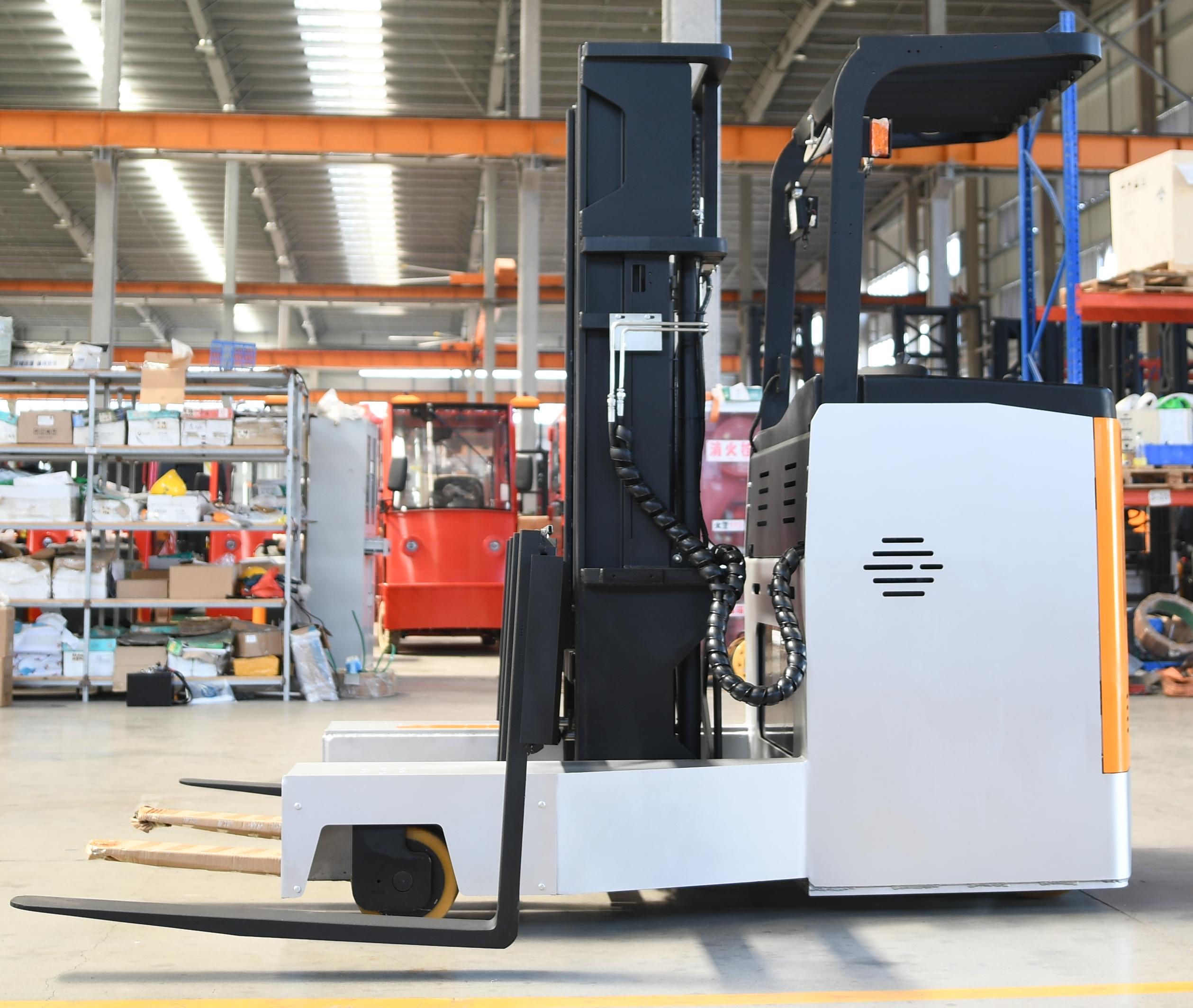
Multi Directional Forklift 4Ton 5Ton 4 Way Forklift Reach Truck Stacker For Narrow Aisle Small Space
Multi-directional 4-ton and 5-ton platform for narrow aisles and small spaces. A strong fit when rack layout or building columns limit the turning circle of a conventional reach truck.
View model →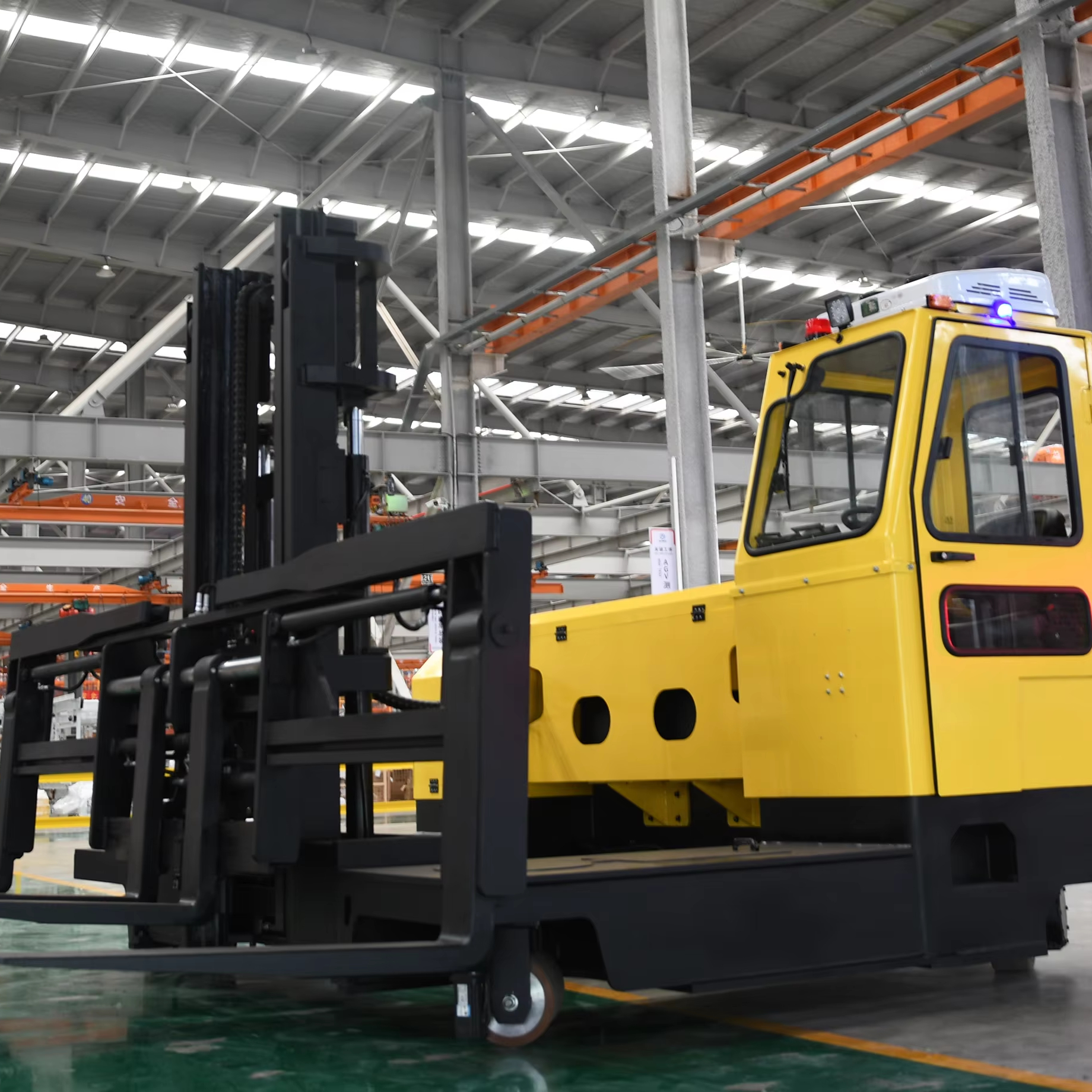
Multi-directional Forklift Reach Truck Stacker 3.5 Ton 5Ton Full Way Eclectic Side Loader Forklift With Wide Body Seat
Full-way side-loader with wide-body seat geometry, engineered for long loads and dense racking where lateral handling and operator space both matter.
View model →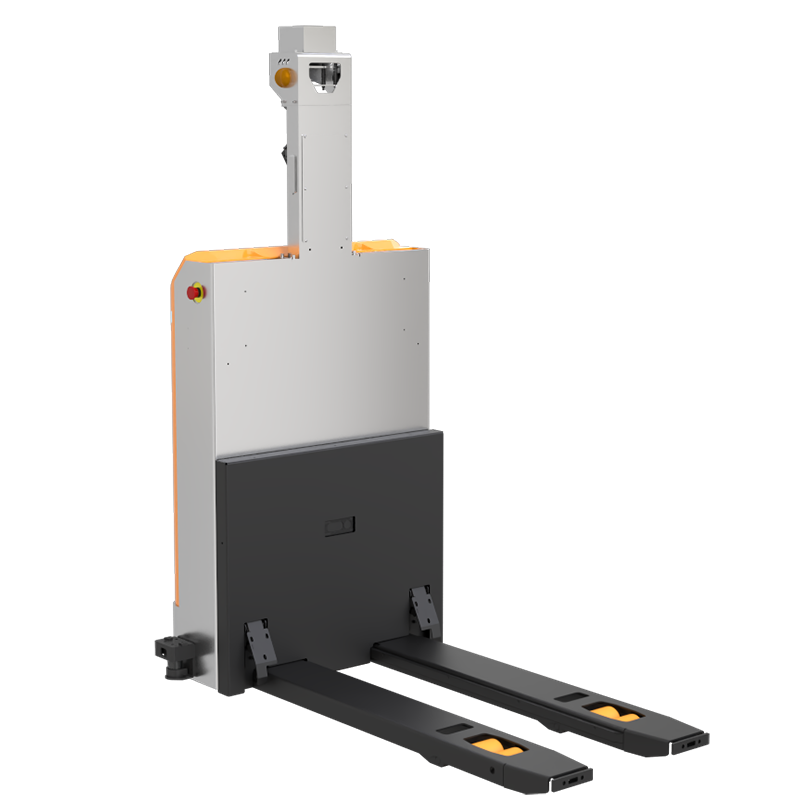
T 2.5M Omni-directional AGV Body 1 3D SLAM Navigation 1000kg Load Capacity Flexible Movement Zero Turning Radius for
Omni-directional AGV body with 1,000 kg load capacity, 3D SLAM navigation and zero turning radius. Suited to flexible movement in mixed zones and tight transfer points.
View model →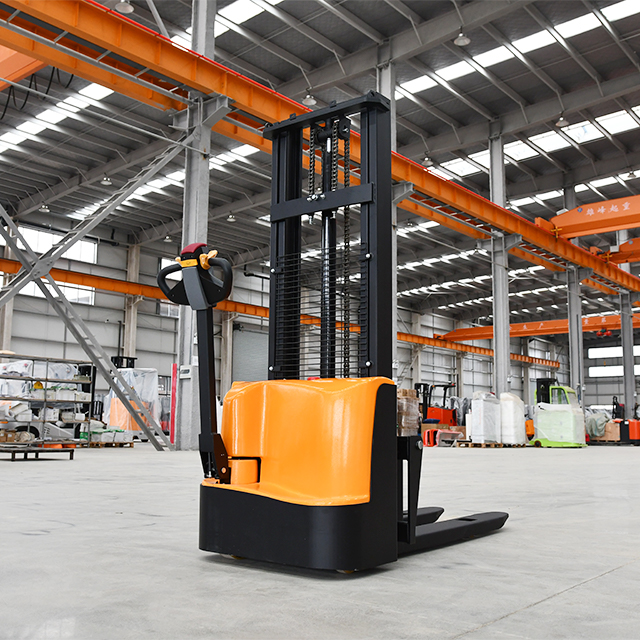
1Ton & 2Ton Full Electric Pallet Stacker Walkie Type High Performance, Low Cost Optional with Training Wheels
Walkie-type full electric pallet stacker in 1-ton and 2-ton classes. A pragmatic first step for low-to-medium lift tasks, with optional training wheels for operator confidence.
View model →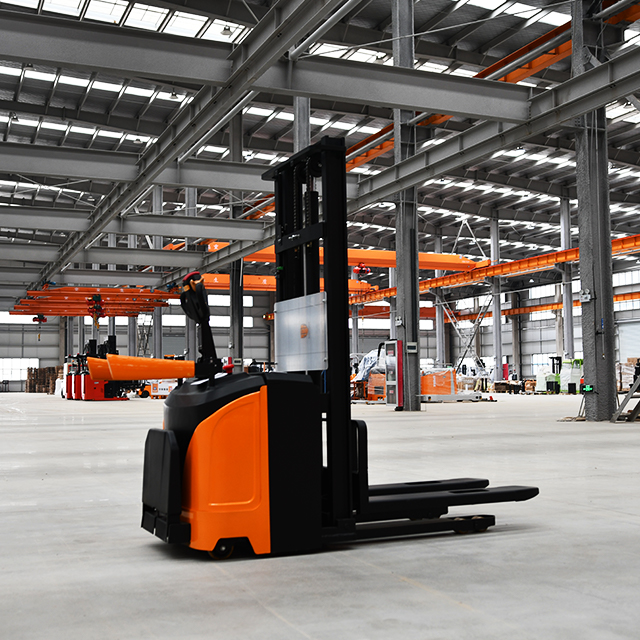
Factory Direct Sales Electric Pallet Lift Stackers 1.5-Ton 2-Ton 3Ton 3m 4m 5m Portable Self-Loading
Portable self-loading pallet lift stacker in 1.5, 2 and 3-ton classes, with 3 m, 4 m and 5 m lift options. Factory-direct configuration for loading bays and distribution centres.
View model →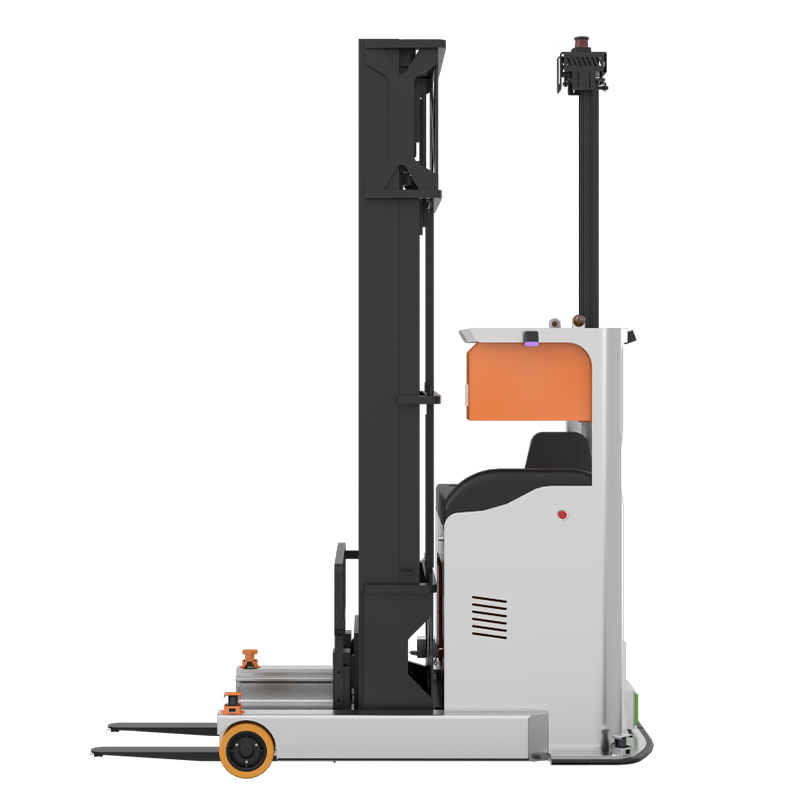
Heli Yufeng CQDE20HJ-65S 2T 6.5M Reach Truck AGV Body Laser Slam Navigation for Pallet Handling High Lifting Smart Warehouse
Heli Yufeng CQDE20HJ-65S 2-ton, 6.5 m reach truck AGV body with laser SLAM navigation. Designed for pallet handling and high lifting in smart warehouses.
View model →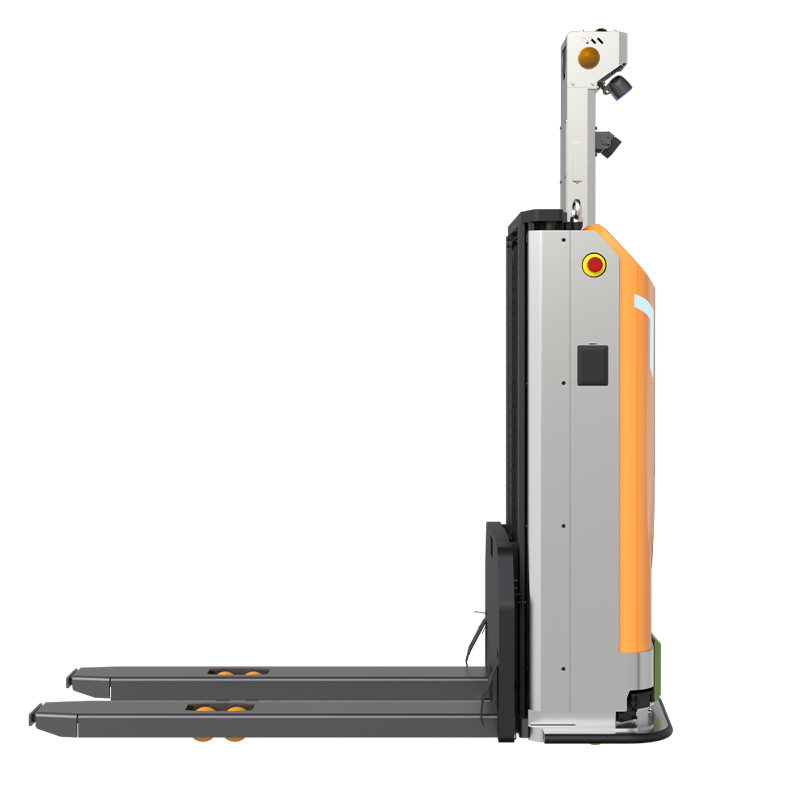
2T Slim Narrow-Body Stacker AGV with 3D SLAM & WIFI/5G for High-Density Storage 1.6M Pallet Stacking Maximize Warehouse Space
2-ton slim narrow-body stacker AGV with 3D SLAM and Wi-Fi/5G connectivity. Targets high-density storage and 1.6 m pallet stacking where body width affects aisle count.
View model →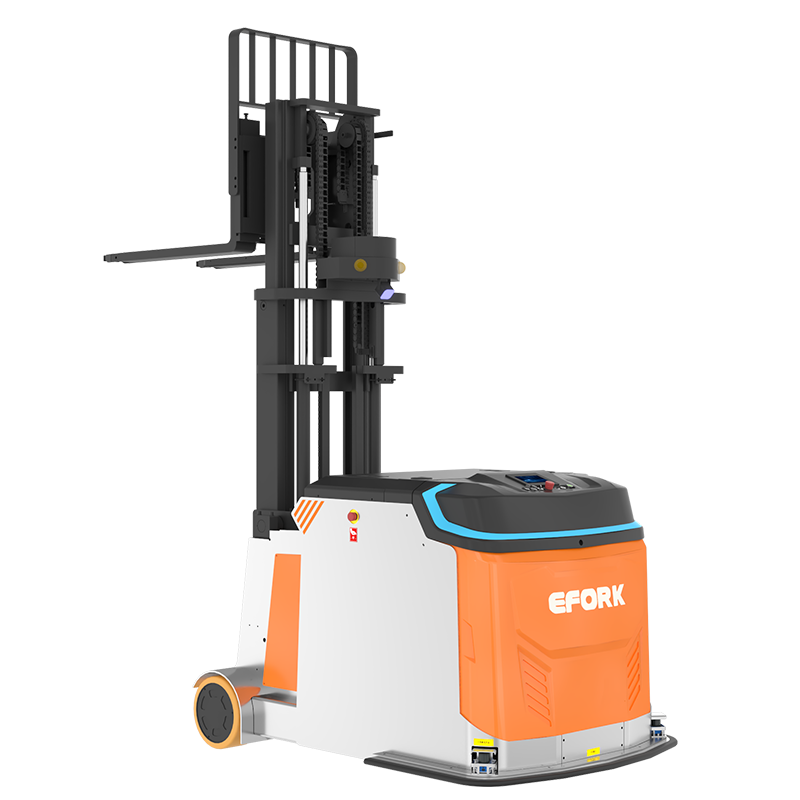
EFORK EDB30-30 Counterbalanced AGV Body 3M 3T High Lift Capacity Forklift Fork Legs High Flexibility 3D SLAM Navigation for
EFORK EDB30-30 counterbalanced AGV body with 3-ton capacity and 3 m lift. The counterbalanced format handles closed-bottom pallets, cages and trailer interfaces without front outriggers.
View model →Product recommendation note: a top-tier automated electric forklift purchase is not a beauty contest between models. The correct starting point is the load unit, aisle width, lift height, throughput, floor condition and handover point. A four-way or omni-directional platform may be the lowest-risk option when the building cannot be modified; a reach truck AGV may be better when selective racking is already installed; and a counterbalanced AGV body is usually the practical choice for closed-bottom pallets, cages and trailer interfaces.
Why the Next Automated Electric Forklift Purchase Is a System Decision
An automated electric forklift is only one node in a chain that includes pallet quality, rack tolerance, floor flatness, traffic rules, charging strategy, WMS task logic and safety validation. A single truck can look excellent on a specification sheet and still fail the business case if the operating model is incomplete.
What buyers should add to the buying equation
For a fleet that must run for five to ten years, the purchase price is only the beginning. Energy and charging, integration and commissioning, safety validation, operator training, spare parts and downtime all affect the true cost per pallet moved. This is where information gain matters: the supplier must be able to explain how the quoted machine performs inside the buyer’s building, not just inside a catalogue.
Illustrative share of a five-year TCO model, not a quotation. Actual ratios vary by duty cycle, building, labor market and battery policy.
Three questions that expose weak proposals
First: can the supplier show how the fleet behaves at peak demand, not average demand? Second: which party owns the safety risk assessment, scanner validation and stopping-distance evidence? Third: what happens when the WMS task queue slows down, a pallet is misaligned, or a route changes after installation?
The strongest proposals answer these questions with named engineering steps and documented responsibilities. They also separate standard configurations from project-specific customization, so the buyer can compare like with like.
10 Supplier and Exporter Criteria That Separate a Real Top-Tier Partner from a Reseller
For buyers searching for a top 10 automated electric forklift supplier and exporter, the ranking should be built on verification, engineering depth and post-shipment support. These ten criteria provide a practical RFQ scorecard.
Verified factory footprint
Ask for production floorspace, employee count, third-party onsite verification and a clear manufacturing boundary. Nexrik reports 66,650 m² and 1,152 staff with SGS onsite verification.
Navigation know-how
Compare 3D SLAM and laser navigation against aisle geometry, rack stability, ceiling structure and change frequency. A good supplier explains trade-offs, not just features.
Safety and compliance
CE marking under 2006/42/EC, ISO 9001 and ISO 45001 are baseline signals. The stronger evidence is how risk assessment, scanner validation and emergency stop logic are documented.
Customization discipline
Load capacity, lift height, fork dimensions, battery configuration and cold-storage variants should be engineered, not improvised. Nexrik supports OEM, ODM and buyer-label production.
Battery and charging strategy
A truck specification is incomplete without charging windows, opportunity charging, battery swap policy and energy tariff review. This is especially important for multi-shift fleets.
WMS and WCS integration
Automation islands create hidden labor. Ask how task allocation, inventory updates, exception handling and interface testing are managed before commissioning.
Fleet-level orchestration
One AGV proves a route; a fleet proves the business case. Traffic management, deadlock avoidance, charging queue logic and expansion planning should be designed from the start.
Export documentation
Reliable exporters handle Incoterms, packing, customs documents and warranty terms without ambiguity. Nexrik accepts FOB, CFR, CIF, EXW, FAS, CIP and DDP arrangements.
Commissioning capability
Mapping, WMS testing, safety validation and operator training should be scheduled, owned and documented. Commissioning quality often determines the real go-live date.
Lifecycle transparency
Spare-part lead times, remote diagnostics, software updates and fleet expansion planning should be part of the commercial proposal, not an after-sales surprise.
Future Procurement Trends Shaping 2025–2030
Automation budgets are moving from isolated equipment purchases toward validated operating systems. The buying conversation is becoming more technical, more data-driven and more focused on lifecycle performance.
TCO becomes a tender criterion
Buyers are shifting from lowest purchase price to verified cost per pallet moved, including charging efficiency, battery replacement, integration and downtime. Lithium and opportunity charging are more common, but the real test is the energy model behind the quote.
Pilot-first, scale-second fleets
Single-truck pilots are now standard because one AGV can prove route logic, safety interaction and WMS latency before capital expenditure expands. An MOQ of 1 set lowers the operational and political risk of automation.
Infrastructure-light navigation
3D SLAM and natural-feature localisation reduce reflector and floor-tape work. Warehouses with changing layouts prefer this flexibility, while fixed high-throughput lanes may still choose laser reflector navigation.
Functional safety as a gate
CE, ISO 45001 and safety scanner validation are moving from paperwork to pre-shipment evidence. Buyers ask for risk assessment, stopping distance, zone logic and a clear integration responsibility matrix.
WMS, WCS and ERP interoperability
No one wants an automation island. WMS-ready AS/RS, four-way shuttles and AGV fleets must expose data for inventory, task allocation and exception handling. Integration quality is becoming a selection differentiator.
Lifecycle contracts and remote support
Remote diagnostics, spare-part availability and fleet expansion planning are moving into the original tender. Buyers want predictable service levels for software, batteries, sensors and safety scanners.
Product Development Trends Inside Automated Electric Forklifts
Hardware is becoming more modular, navigation is becoming less infrastructure-dependent, and the boundary between forklift, mobile robot and AS/RS is disappearing. These shifts affect both product selection and long-term upgrade paths.
Omni-directional chassis
Zero turning radius and multi-directional travel allow machines to work in tighter spaces and adapt to existing buildings. This trend favours side loaders, four-way reach trucks and omni-directional AGV bodies.
VNA and high-lift capability
Very narrow aisle and high-bay handling continue to grow as land costs rise. Three-way forklifts and reach truck AGV bodies are increasingly specified with higher masts, better stability control and WMS-linked task logic.
AGV body platforms
AGV bodies let integrators and buyers build application-specific robots around a proven chassis, mast and drive platform. This modular approach shortens engineering time and supports OEM or buyer-label programs.
3D SLAM plus 5G and Wi-Fi
Natural-feature navigation reduces site preparation, while industrial wireless coverage supports fleet scheduling, remote diagnostics and live exception handling. Connectivity planning is becoming part of the equipment scope.
High-density AS/RS integration
Automated electric forklifts increasingly hand off to stacker cranes, four-way shuttles and mini-load systems. The winning design is not the fastest single machine, but the fastest stable flow across storage, picking and dispatch.
Cold chain and ruggedisation
Frozen storage, condensation, battery behaviour and sensor reliability require specific engineering. Cold-storage variants and ruggedised components are moving from niche options to mainstream procurement questions.
How to Match the Eight Models to Real Warehouse Workflows
Model selection should begin with the physical reality of the building and the load unit. Use the following application logic to narrow the shortlist before asking for a layout simulation and quotation.
Narrow aisle and small-space handling
The multi-directional 4-ton and 5-ton forklift, full-way side loader and omni-directional AGV body are strong candidates when aisle width is fixed or building columns restrict turning. They can increase storage density without forcing a full rack rebuild, provided floor flatness and rack tolerance are verified.
Selective racking and medium-high lift
The Heli Yufeng 2-ton 6.5 m reach truck AGV and 2-ton slim stacker AGV are aimed at pallet handling where lift height and body width both matter. These models suit high-density storage, smart warehouses and routes where a conventional counterbalanced truck would consume too much aisle space.
Low-cost entry and line-side delivery
The 1-ton and 2-ton walkie stacker and portable self-loading pallet stacker are practical first steps for loading bays, line-side delivery and low-to-medium racking. They lower the entry cost of electrification while preserving a path to fleet automation later.
Counterbalanced and trailer interface
The EFORK 3-ton counterbalanced AGV body is the right conversation when loads have closed bottoms, cages or trailer handovers. Without front outriggers, it can address production lines, dock interfaces and mixed indoor routes that are awkward for stacker-style machines.
Verified Manufacturing Advantages Behind the Nexrik Automated Electric Forklift Range
Anhui Nexrik Intelligent Technology Co., Ltd. is positioned as a manufacturer and turnkey solution provider, not a catalogue-only trading label. The evidence below is the kind of verification a serious exporter should be able to support during supplier assessment.
Total staff
Onsite verified manufacturing scaleFactory floorspace
Production and integration capacityAnnual revenue
Stable capacity for fleet ordersAwarded patents
Plus 1 registered trademarkThe company reports ISO 9001 and ISO 45001 management system certification, CE marking under Machinery Directive 2006/42/EC for its AGV range, seven awarded patents and one registered trademark, plus SGS onsite verification. Its location in the Huagang Industrial Park, Feixi County, Hefei, places it inside a recognised Chinese forklift and intelligent logistics manufacturing cluster.
For international buyers, the practical advantages include MOQ 1 set, OEM, ODM and buyer-label production, and a turnkey project workflow covering site analysis, solution design, manufacturing, commissioning and lifecycle support. The company also reports seven international exhibitions and served markets across Southeast Asia, South America, Eastern Europe, South Asia and North America. Accepted trade terms include FOB, CFR, CIF, EXW, FAS, CIP and DDP; payment can be arranged through L/C, D/P, D/A, MoneyGram, credit card or Western Union in USD, EUR or CNY.


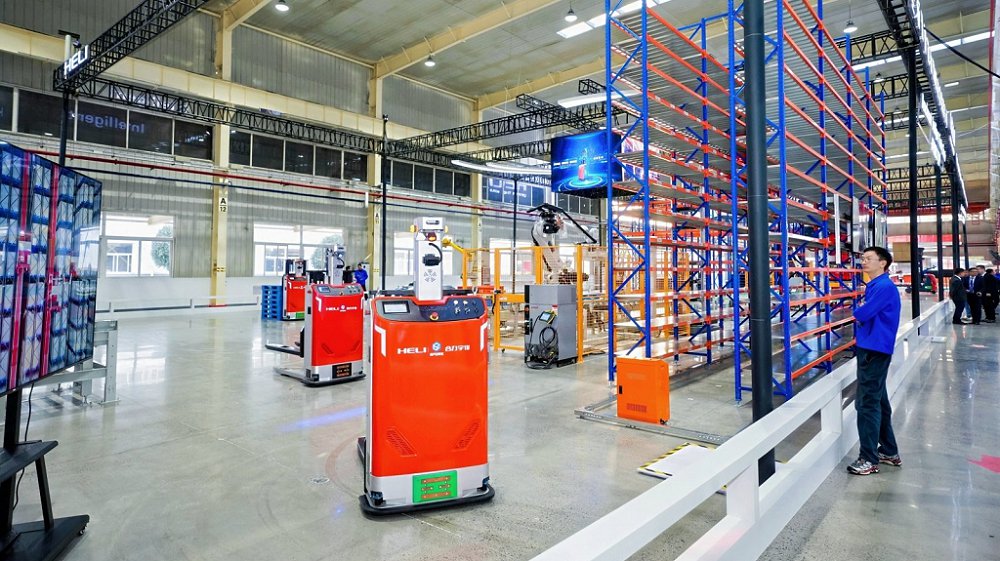
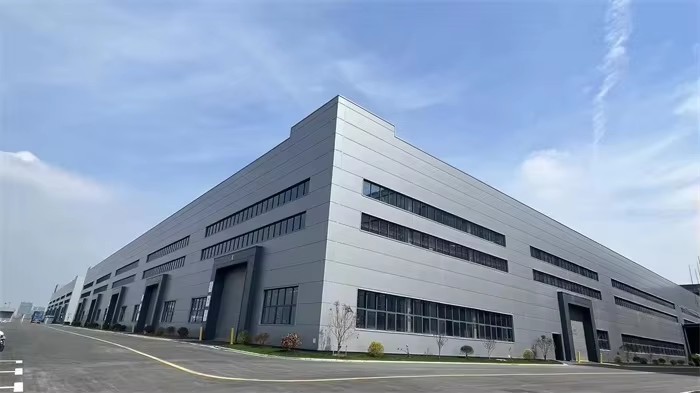
This is the core of the E-E-A-T case: experience in application engineering, expertise in navigation and load handling, authority demonstrated through certifications and third-party verification, and trust supported by transparent trade terms, customization capability and lifecycle support. Buyers should still validate the final configuration against their own drawing set, but the supplier evidence is stronger than a generic claim of being a top 10 automated electric forklift exporter.
Automated Electric Forklift Procurement FAQ
These are the questions buyers usually ask before a technical review, budget approval or factory audit.
What should a buyer verify before calling a supplier a top 10 automated electric forklift exporter?
Verify production footprint, onsite third-party inspection, CE and ISO documents, product-specific safety validation, spare-parts process and export terms. A real manufacturer should be able to connect the quoted model to a production line and a named after-sales process.
What is Nexrik’s minimum order quantity?
The MOQ is 1 set for AGV forklifts, stacker cranes and four-way shuttles. This allows a pilot route before fleet scale-up and makes it easier to validate safety, WMS integration and cycle time with limited capital exposure.
Should we choose 3D SLAM or laser navigation?
Choose 3D SLAM when layout flexibility and lower infrastructure change are priorities. Choose laser navigation for fixed, highly repetitive routes where reflectors are practical. The right answer depends on aisle geometry, rack stability, ceiling structure and required throughput.
Can load, lift height, forks and batteries be customised?
Yes. Nexrik provides full customisation, OEM, ODM and buyer-label production, including load capacity, lift height, fork configuration and cold-storage variants. Final specifications are confirmed during project engineering rather than assumed from the initial listing.
Which certifications and trade terms are available?
ISO 9001, ISO 45001, CE under 2006/42/EC, and SGS onsite verification are part of the supplier profile. Accepted delivery terms include FOB, CFR, CIF, EXW, FAS, CIP and DDP; payment can be made via L/C, D/P, D/A, MoneyGram, credit card or Western Union in USD, EUR or CNY.
How does a turnkey project reduce procurement risk?
The workflow runs through site analysis, solution design, manufacturing, commissioning and lifecycle support. That sequence exposes pallet, rack, safety and throughput assumptions before shipment, rather than discovering them after the equipment has arrived.
Turn Your Shortlist into a Validated Layout, Fleet Plan and Export Quote
Send your pallet specifications, rack drawings, aisle widths, lift heights, throughput target and shift pattern. The engineering team can then compare the right automated electric forklift models, confirm navigation options and prepare a practical project scope.
Contact UsOEM / ODM · MOQ 1 Set · CE · ISO 9001 · ISO 45001 · SGS Onsite Verified