Custom OEM Industrial AGV Factories & Wholesaler
Factory-direct AGV forklifts, 3D SLAM stackers, VNA trucks and AS/RS platforms engineered for wholesalers, integrators and warehouse automation projects that need CE documentation, repeatable quality and one-set MOQ pilot programs.
8 Production-Ready AGV Models for Custom OEM Programs
These are practical starting points for wholesalers, system integrators and factory buyers comparing counterbalanced, reach truck, slim stacker, pallet stacker and narrow-body AGV platforms. Each model can be engineered around your pallet type, rack height, aisle width, safety distance and WMS interface.
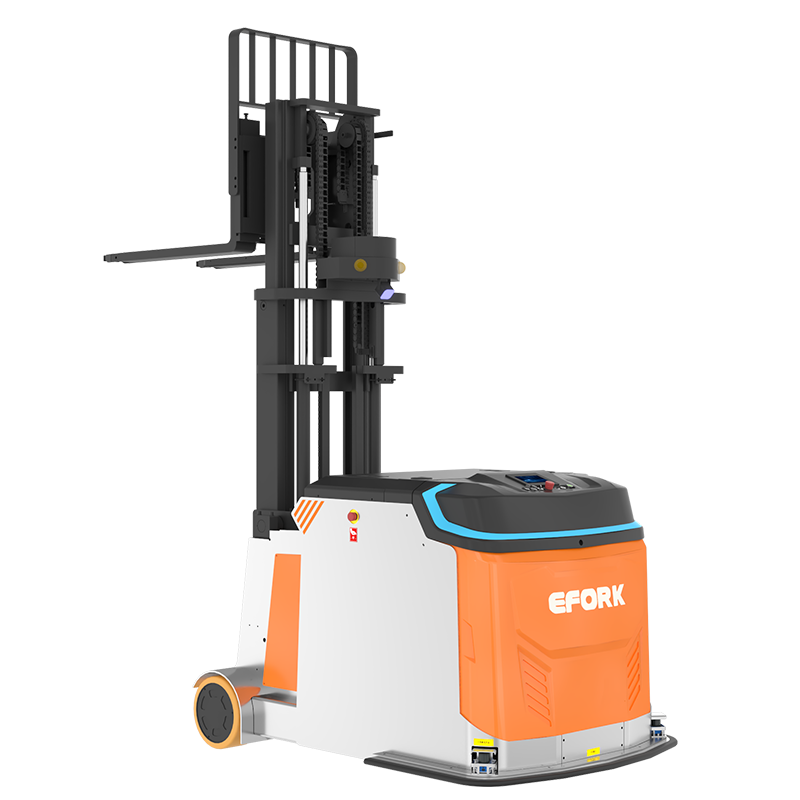
EFORK EDB30-30 3T Counterbalanced AGV Body 3M
A 3-ton counterbalanced platform for closed pallets, stillages and trailer loading. High-lift fork legs and flexible 3D SLAM navigation make it a strong fit for mixed production and warehouse routes.
- 3T load
- 3 m lift
- 3D SLAM
- Custom fork
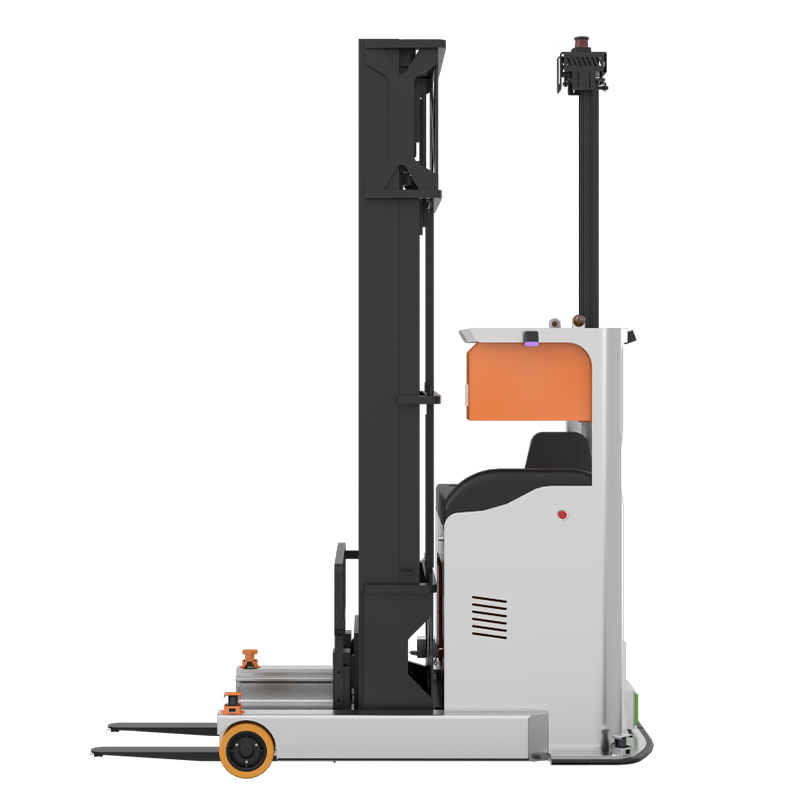
Heli Yufeng CQDE20HJ-65S 2T 6.5M Reach Truck AGV
Designed for pallet handling and high lifting in smart warehouses. Laser SLAM guidance supports stable positioning where racking density matters and tight aisles create a need for compact equipment.
- 2T load
- 6.5 m lift
- Laser SLAM
- Reach mast
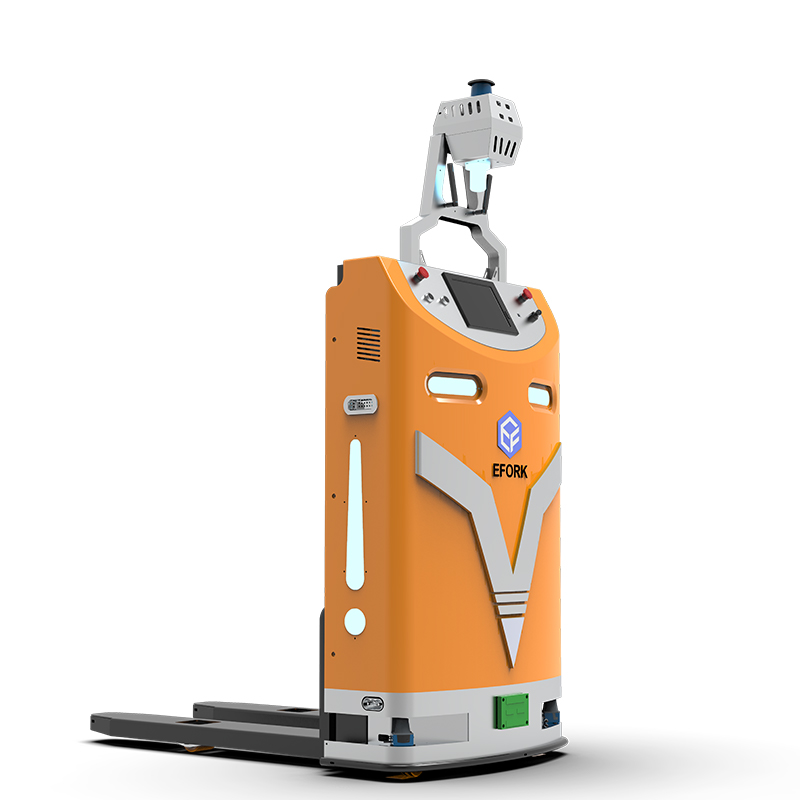
Latest Design CE Slim Stacking AGV Forklift 2T 3M
A compact 3D SLAM forklift robot for warehouse automation, lifting and repetitive transfer tasks. The slim format helps buyers recover aisle width without giving up load capacity.
- 2T load
- 3 m lift
- CE certified
- 3D SLAM
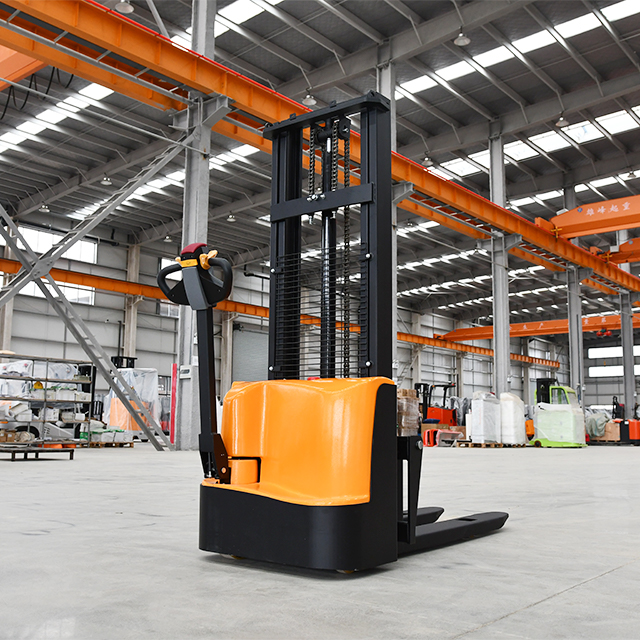
1 Ton & 2 Ton Full Electric Pallet Stacker Walkie
A cost-conscious entry platform for buyers that need electric lifting and horizontal movement before moving to a fully autonomous fleet. Optional training wheels support operator adoption.
- 1–2T load
- Walkie type
- Low cost
- Optional wheels
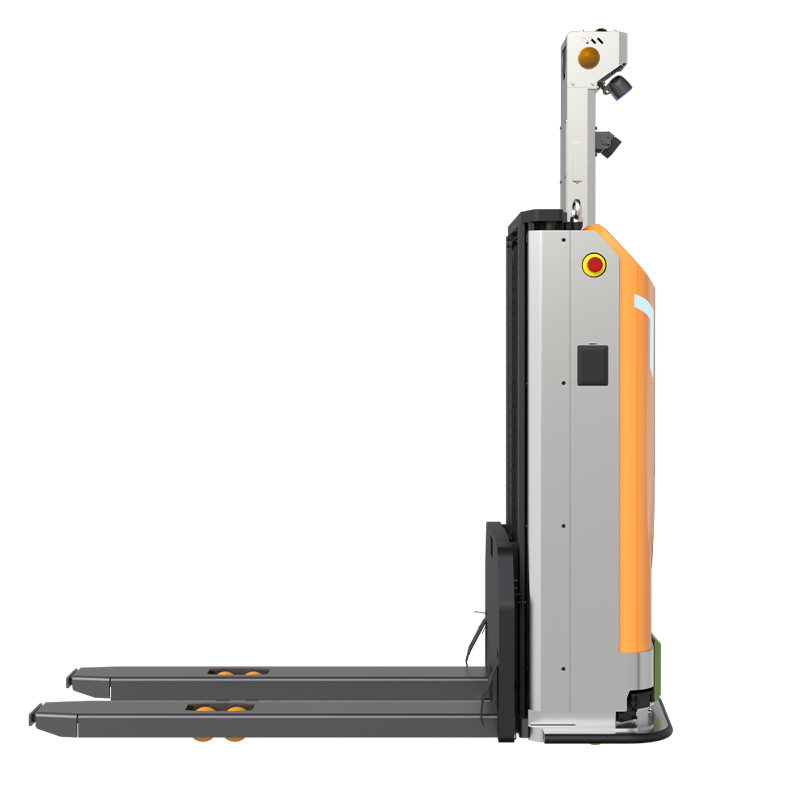
2T Slim Narrow-Body Stacker AGV with 3D SLAM & WIFI/5G
Built for high-density storage and 1.6 m pallet stacking. The narrow body and wireless connectivity make it suitable for projects that plan to scale from one pilot unit to a coordinated fleet.
- 2T load
- 1.6 m stack
- 3D SLAM
- WIFI/5G
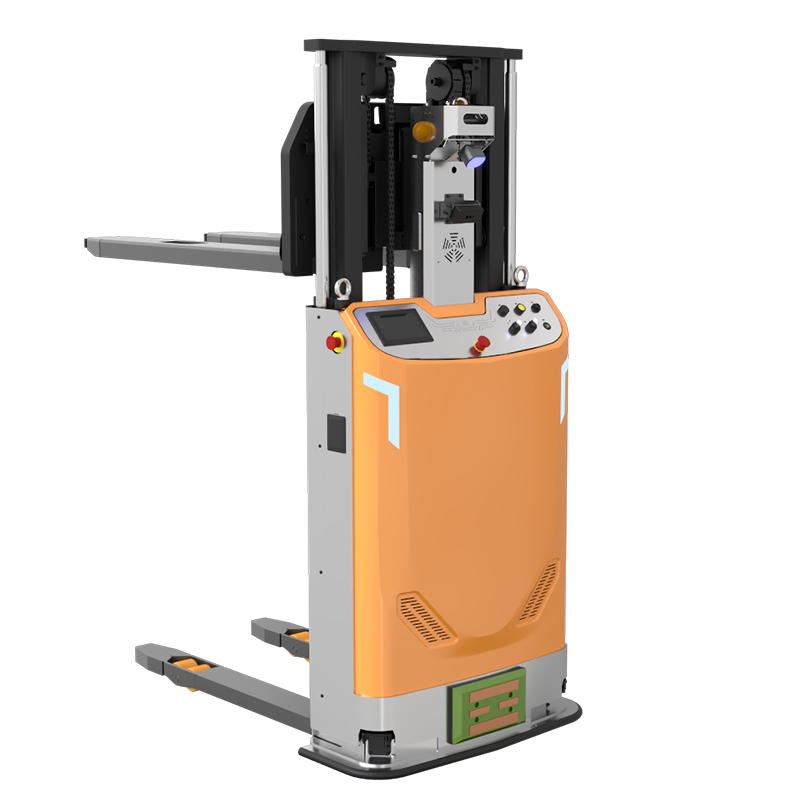
Automatic Stacker AGV Body Slim Narrow-Body 3M 2T
A high-density pallet stacking platform with 3D SLAM navigation and WIFI/5G communication. It is appropriate for buyers that need a repeatable OEM base and local branding flexibility.
- 2T load
- 3 m lift
- Slim body
- OEM ready
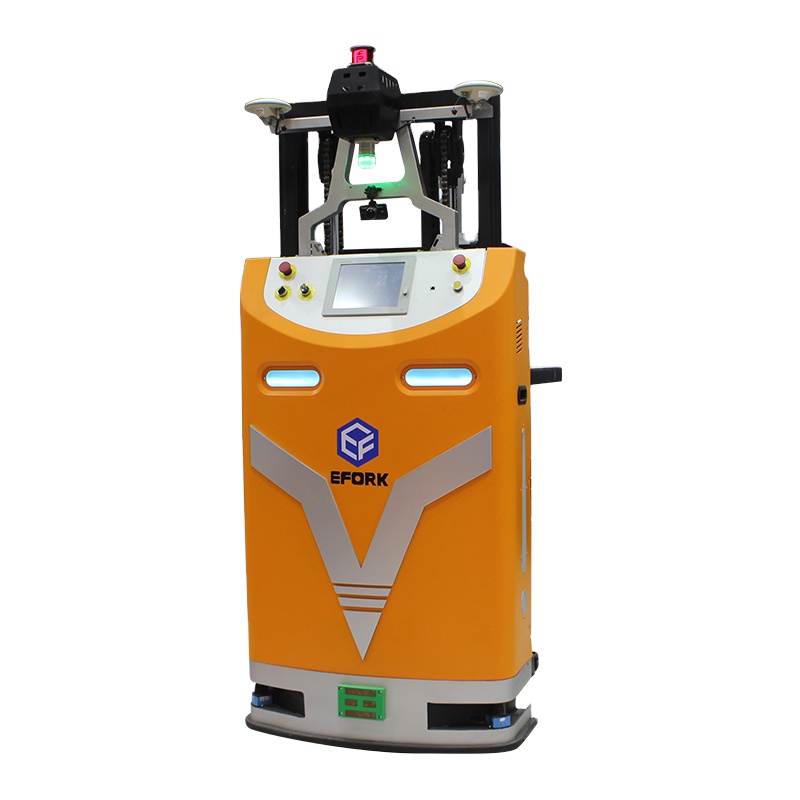
CE EFORK EDA20-16 2T 1200mm 3D SLAM AGV
Fork width, 10 mm positioning accuracy and 1,600 mm lifting height make this model useful for buyers comparing fine pallet control against conventional automated forklift options.
- 2T load
- 1,600 mm lift
- 10 mm accuracy
- WIFI/5G
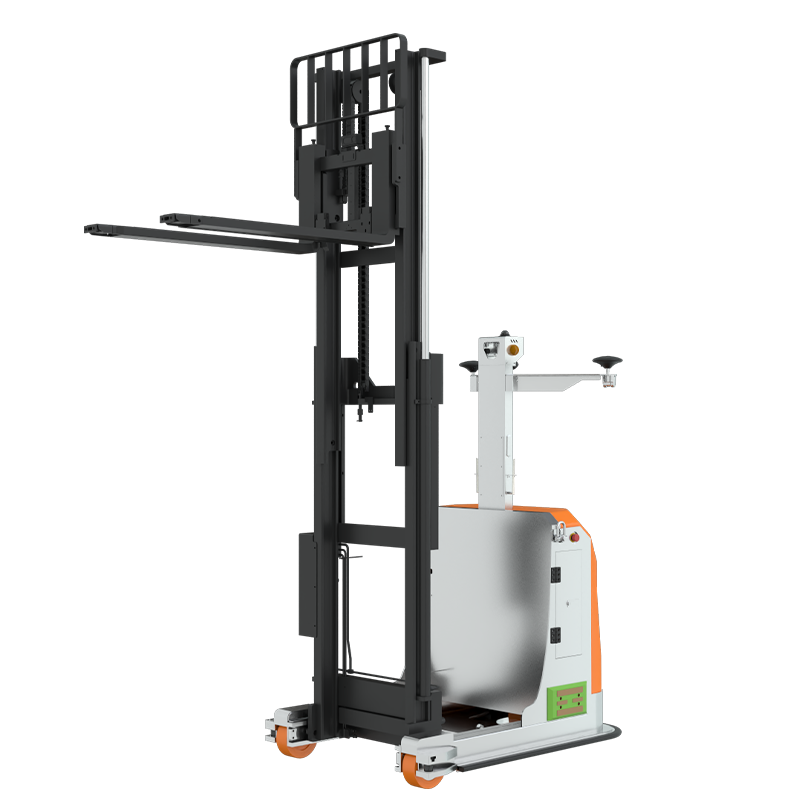
Reach Truck AGV Narrow Body 1.5T 3M Compact
A compact reach truck AGV with fork-forward function and 3D SLAM navigation. It suits projects that need 10 mm positioning accuracy while preserving aisle space in existing buildings.
- 1.5T load
- 3 m lift
- Fork forward
- 10 mm accuracy
Manufacturing Scale That Supports Wholesale and OEM Programs
For a fleet that will run for years, the supplier’s engineering depth, inspection discipline and document readiness matter as much as the quoted machine price. These figures come from the company profile and third-party onsite verification.
Why the Lowest AGV Quotation Is Rarely the Lowest Procurement Cost
Most automation projects do not fail because a truck cannot move. They fail at the interfaces: pallet tolerance, rack deflection, WMS transaction timing, charger dwell time, traffic conflicts and spare-parts response. That is why a custom OEM industrial AGV factory must be evaluated as an engineering partner, not as a catalog wholesaler.
In our Hefei manufacturing base, a project starts with pallet drawings and rack sections, not with a price list. Before we recommend a counterbalanced, reach truck, slim stacker or VNA platform, our engineers check load center, fork entry clearance, aisle width, safety-field geometry, floor condition, peak task flow and the measurement point used for positioning accuracy. These details decide whether a ten-millimeter claim becomes a reliable pick or a maintenance call.
Factory Capability vs. Trading Layer
A genuine OEM factory controls chassis fabrication, mast integration, control tuning, testing and documentation. A trading layer may still offer good service, but buyers should verify who owns the process when a custom fork, cold-storage package or WMS interface is required.
Cycle Time Is a System Result
Travel speed alone does not define throughput. The usable rate depends on pickup dwell, fork alignment, acceleration limits, charger strategy, door waits, lift height and traffic control. Ask for a fleet simulation against peak fifteen-minute flow.
Compliance Protects the Project
CE marking under the Machinery Directive 2006/42/EC, ISO 9001 and ISO 45001 systems, plus SGS onsite verification, help importers clear customs, satisfy tender requirements and reduce safety review friction before installation.
A practical rule for wholesale buyers: compare suppliers on the same load unit, same rack drawing, same safety standard and same uptime assumption. Otherwise the cheapest quote may be measuring a different project.
What AGV Wholesalers Should Specify in the Next Buying Cycle
Procurement is moving from “buy a robot” to “secure a measurable material-flow capability.” The following shifts are especially relevant for distributors, OEM brands and multi-site warehouse operators planning 2026–2030 projects.
Pilot-to-Fleet Procurement
MOQ 1 set is becoming a strategic advantage. Buyers validate routes, cycle time and operator acceptance with one unit, then release a fleet order with documented assumptions instead of buying on a brochure speed figure.
Total Cost of Ownership
Quotes are increasingly evaluated by energy use, tire and scanner wear, spare-parts lead time, service labor, charger efficiency and software support. A slightly higher machine price can be cheaper over a five-year duty cycle.
Infrastructure-Light Navigation
3D SLAM reduces dependence on reflectors, magnetic tape and floor marks, shortening site preparation and making layout changes less expensive. Laser navigation still fits highly repetitive fixed routes, so the right choice should be route-specific.
Modular OEM Bodies
Wholesalers and local integrators increasingly prefer AGV bodies that can be branded, configured and supported regionally. Modular load handling, battery packs and control interfaces shorten customization cycles.
WMS/ERP First, Hardware Second
Buyers now ask for interface maps before placing equipment orders. Task assignment, exception handling, location logic, barcode rules and data ownership should be agreed before the AGV arrives on site.
Safety and Traceability
Procurement teams are adding safety validation, FAT records, serial-number traceability, spare-parts lists and training logs to the purchase specification. These documents matter during audits, insurance review and expansion.
Inside the Next Generation of Industrial AGV Factories
Hardware is becoming more compact, but the real development race is in perception, fleet coordination and lifecycle support. These are the design directions we see shaping custom OEM AGV programs for global buyers.
Multi-Sensor 3D SLAM
Natural-feature localization is being combined with safety scanners, encoders and inertial data to improve stability in changing warehouses. The goal is less site modification and faster re-mapping after layout changes.
Edge Fleet Orchestration
Traffic management is moving closer to the edge, with 5G and Wi-Fi 6 supporting lower-latency coordination. Buyers should ask how task allocation, deadlock recovery and charging queues are handled when connectivity degrades.
High-Density, Slimmer Bodies
Narrow-body stackers, reach trucks and three-way VNA platforms continue to reduce aisle loss. For existing buildings, every centimeter recovered can translate into more pallet positions without new construction.
Cold Chain and Harsh Duty
Frozen storage, food processing and pharma projects require more than a standard forklift. Battery behavior, condensation, seal protection, lubricants and scanner performance must be engineered as a package.
Lithium and Opportunity Charging
Fast opportunity charging is changing fleet sizing. Instead of buying spare batteries, projects can schedule short charging windows and use the saved space and capital for additional material handling capacity.
Digital Twin and Predictive Service
Simulation models are becoming part of the handover package, helping buyers test fleet expansion before purchase. Remote diagnostics and condition monitoring then reduce unplanned downtime and improve spare-parts planning.
Why Nexrik Supports Custom OEM Industrial AGV Projects
Anhui Nexrik Intelligent Technology Co., Ltd. combines factory manufacturing, engineering customization and export documentation in one organization. That structure helps buyers move from a single pilot unit to a repeatable wholesale or OEM program without changing the technical partner at each stage.
In-House Manufacturing
Chassis, mast integration, control configuration and final testing are managed on company production lines. With 66,650 m² of factory space and 1,152 employees, capacity can support pilot orders and multi-unit fleet releases.
OEM / ODM Customization
Load capacity, fork dimensions, lift height, battery configuration, body color, labels and cold-storage variants can be customized. Buyer-label production is available for distributors building a regional AGV brand.
Compliance and Verification
CE marking under 2006/42/EC, ISO 9001 quality management, ISO 45001 occupational health and safety, 7 awarded patents and SGS onsite verification support tender, customs and importer documentation.
Global Export Experience
The company serves buyers in Southeast Asia, South America, Eastern Europe, South Asia and North America. Export support covers documentation, packaging, Incoterms and remote commissioning coordination.
One-Stop System Scope
AGV forklifts, AS/RS stacker cranes, four-way shuttles, RGVs and mini-load systems can be engineered as one WMS-ready solution. This reduces interface gaps between equipment suppliers.
Lifecycle Support
Remote diagnostics, spare-parts planning, operator training and expansion advice help protect the investment after go-live. The objective is repeatable throughput, not a one-time equipment shipment.



How to Compare an OEM AGV Factory Before Ordering
Use a like-for-like evaluation matrix. The goal is not to find the longest specification sheet, but to identify the supplier that can document the assumptions behind the proposal and support the fleet after commissioning.
| Evaluation Area | What to Request | Why It Matters | Red Flag |
|---|---|---|---|
| Load Unit | Pallet drawing, load center, overhang and rack beam deflection | Determines residual capacity and fork design | Capacity quoted without a load center |
| Navigation | 3D SLAM re-mapping procedure or laser reflector plan | Affects site preparation and future layout changes | Navigation claim without a site survey |
| Throughput | Cycle-time model for peak flow and charger strategy | Prevents over-buying or hidden bottlenecks | Only top speed and acceleration figures |
| Safety | Scanner fields, stop distance, warning zones and CE file | Protects people and supports audit review | Generic CE statement with no model scope |
| Software | WMS / ERP interface map, task rules and exception handling | Reduces commissioning delays | Interface left undefined until after shipment |
| Factory Verification | SGS onsite check, production photos, FAT checklist and serial traceability | Confirms who actually builds and tests the equipment | No traceable factory or inspection record |
For wholesale programs, add commercial criteria: minimum order quantity, buyer-label rules, spare-parts list, warranty boundary, training materials and response time for technical questions.
Common Questions About Custom OEM Industrial AGV Procurement
These answers reflect the questions buyers ask most often when comparing AGV factories, wholesalers and turnkey warehouse automation suppliers.
What is the minimum order quantity for these AGV forklifts?
Can you customize an AGV body for our own brand?
Which is better for our warehouse: 3D SLAM or laser navigation?
What certifications and audit documents are available?
Can the AGV connect to our existing WMS or ERP?
What trade terms and payment currencies are accepted?
How should we compare throughput claims from different suppliers?
What support is available after shipment?
Request a Configuration Review and Product Catalog
Send your pallet drawing, rack layout, required lift height, aisle width and target throughput. The engineering team can recommend the right AGV platform, estimate fleet size and prepare a factory-direct quotation for your OEM or wholesale project.
Get Catalog