China Wholesale Stacker AGV Manufacturers & Wholesaler
Source automated stacker AGVs, reach truck AGVs, VNA forklifts and WMS-ready warehouse robots from an SGS onsite-verified, CE-certified manufacturer with MOQ from 1 set and full OEM/ODM support.
What “China Wholesale Stacker AGV” Really Means for a B2B Buyer
Buyers using this phrase usually need more than a low unit price. They need a supplier who can match the AGV to pallet profiles, aisle width, rack height, WMS logic, safety requirements and after-sales obligations.
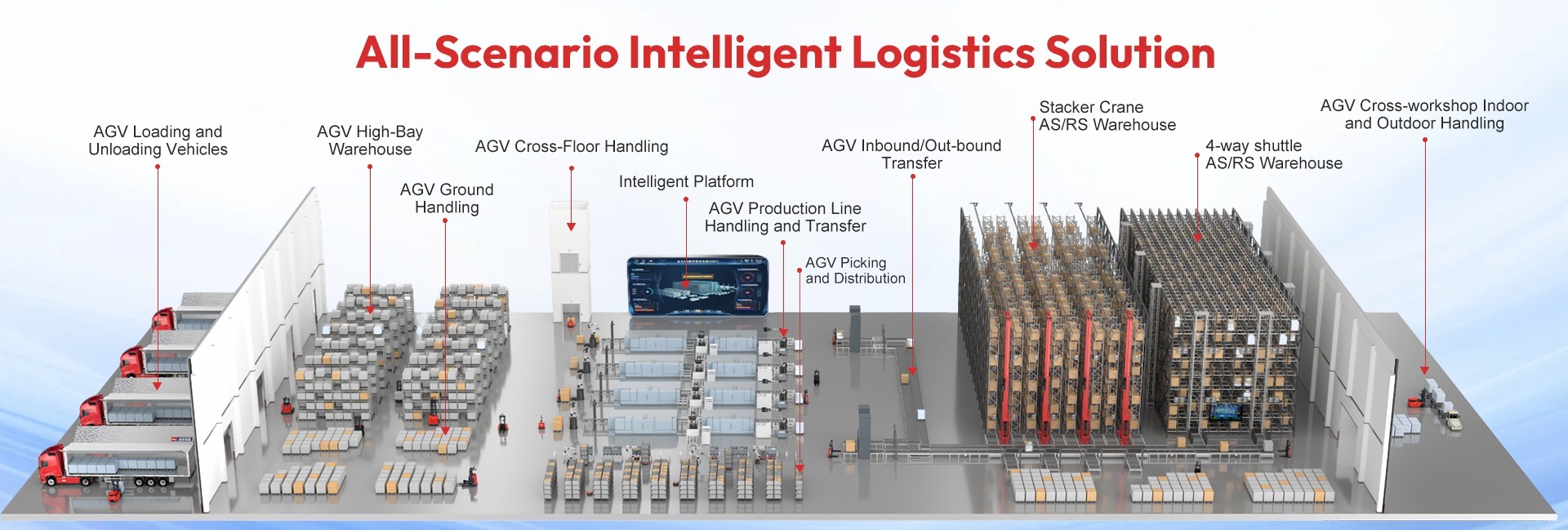
A stacker AGV is an automated guided vehicle designed to lift, move and place palletized loads onto low or medium-height racking, conveyor lines and staging areas. In China wholesale sourcing, the category overlaps with pallet stacker AGVs, reach truck AGVs, VNA 3-way forklifts, counterbalanced AGVs and high-bay AS/RS equipment. The right choice depends less on the product name and more on the load unit, lift height, aisle geometry, throughput and integration layer.
Most serious procurement teams begin with a pilot lane: one route, one shift pattern and one measurable target such as pallet moves per hour, labor hours saved or error-rate reduction. This is practical because a stacker AGV project is not a simple equipment purchase. It combines vehicle engineering, navigation mapping, safety validation, charging strategy, WMS/WCS interfaces and operator training.
China wholesale does not mean accepting untraceable specifications. A credible manufacturer should provide a clear bill of materials, CE documentation where applicable, FAT and SAT procedures, spare-parts lists, remote diagnostic capability and export terms that match your customs and insurance requirements. For projects that will operate for eight to ten years, total cost of ownership is a better decision metric than ex-works price alone.
This guide is structured for that decision process. It explains the procurement trends shaping automated stacker AGV buying, the product development trends buyers should monitor, eight recommended models from the source product range, a selection matrix, the manufacturer advantages that reduce project risk, and the questions purchasing teams ask most often before releasing a PO.
Four search-intent clusters behind this keyword
How B2B Buyers Will Purchase Stacker AGVs Next
Procurement is shifting from “buy a robot” to “buy a measurable, auditable intralogistics capability.” The strongest suppliers will be those who can prove uptime, interoperability, safety and lifecycle support.
TCO replaces sticker price
Buyers now model energy consumption, battery replacement, spare-parts availability, service response and downtime. A lower-priced AGV that lacks local support can cost more over a multi-shift deployment. Procurement teams increasingly ask for a ten-year cost view before approving a fleet.
Compliance-first sourcing
Safety scanners, emergency-stop logic, speed limits, load stability and documentation are moving into the RFQ. CE marking, ISO 9001 and ISO 45001 evidence, plus SGS onsite verification, help purchasing teams satisfy internal audit, customs and insurance requirements.
WMS-ready interoperability
Stacker AGVs are no longer standalone machines. They must exchange tasks with WMS, ERP, MES and fleet-management software. Buyers compare interface readiness, data ownership, task-routing logic and exception handling before selection, not after delivery.
Pilot-to-fleet phasing
MOQ 1 set makes it practical to validate a single route before scaling. The bid winner is often the supplier who can support a pilot, document cycle times and then expand the same platform across more zones without re-engineering the entire site.
Where Stacker AGV Technology Is Moving
The most important product shifts are not cosmetic. They affect how quickly a warehouse can deploy, how much infrastructure it must modify, and how easily the fleet can scale into high-bay or AS/RS operations.
3D SLAM becomes mainstream
Natural-feature localisation reduces reliance on reflectors or floor tape, shortening site preparation and making route changes easier. For brownfield warehouses, this can be a meaningful advantage because production does not need to stop for extensive infrastructure work.
Modular bodies and high-bay growth
Reach truck AGV bodies, three-way VNA modules and stacker platforms are becoming more modular. Buyers can start with a 1.5T to 2T stacker for pallet transfer, then add VNA, 40m AS/RS stacker cranes or four-way shuttles as storage density requirements rise.
WMS/WCS orchestration
Fleet value depends on task allocation, traffic control, charge scheduling and exception handling. Modern projects specify the software interface during solution design, then test it during commissioning. Wi-Fi/5G coverage and edge-computing readiness are now part of the technical checklist.
Energy and cold-chain variants
Battery capacity, opportunity charging and cold-storage protection are moving earlier into specification. Frozen-storage AS/RS, low-temperature lubricants and condensation management are now design requirements for food, pharma and cold-chain distribution.
8 Stacker AGV and Reach Truck Models for Wholesale Buyers
These models cover compact reach trucks, laser-guided stackers, multi-directional side loaders, high-lift VNA equipment and heavy-duty pallet stackers. All product URLs below are preserved from the source range.
 3D SLAM
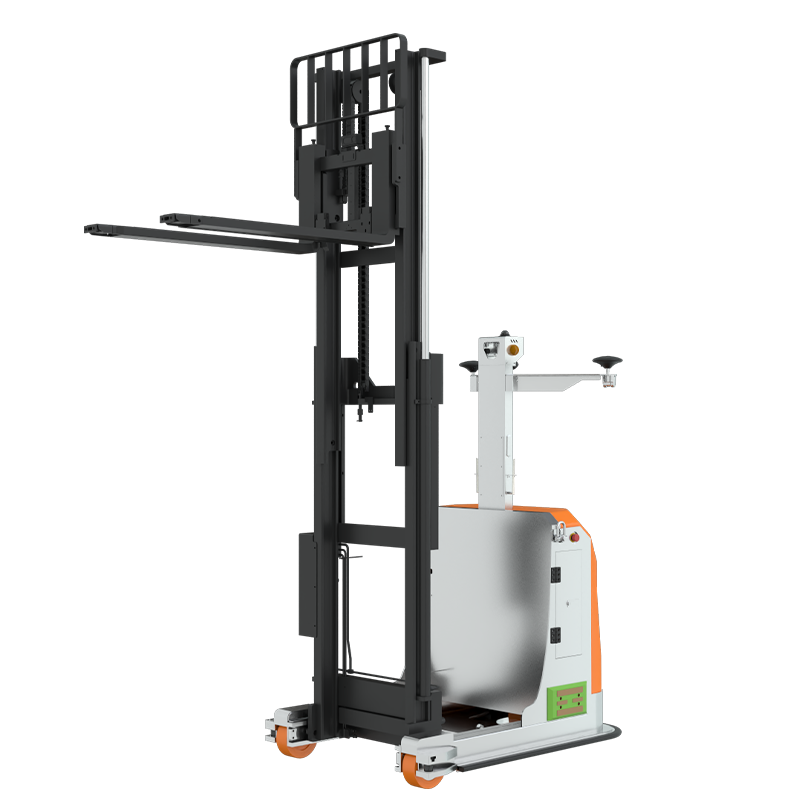
Reach Truck AGV Narrow Body 1.5T 3M 3D SLAM
Compact reach truck AGV with forward fork function, 10 mm positioning accuracy and narrow-body layout for existing aisle retrofits.
- 1.5T
- 3M lift
- 10 mm accuracy
 CE · Laser
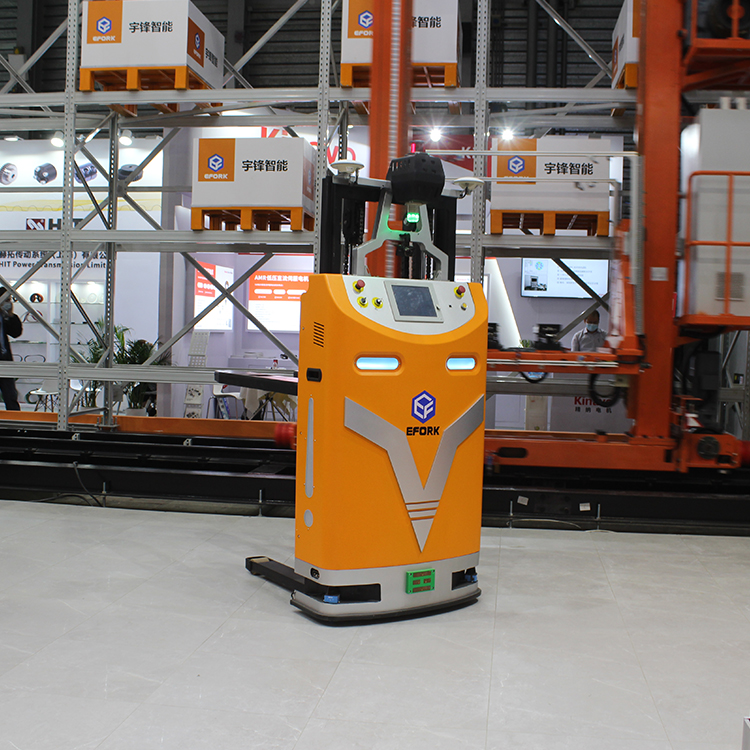
CE Certified EFORK EDA20-16 2T 1600mm Laser Navigation AGV
Self-driving forklift AGV with WIFI/5G connectivity, 10 mm accuracy and 6–8 hour working time for repeatable pallet flows.
- 2T
- 1600mm
- WiFi/5G
 Side Loader
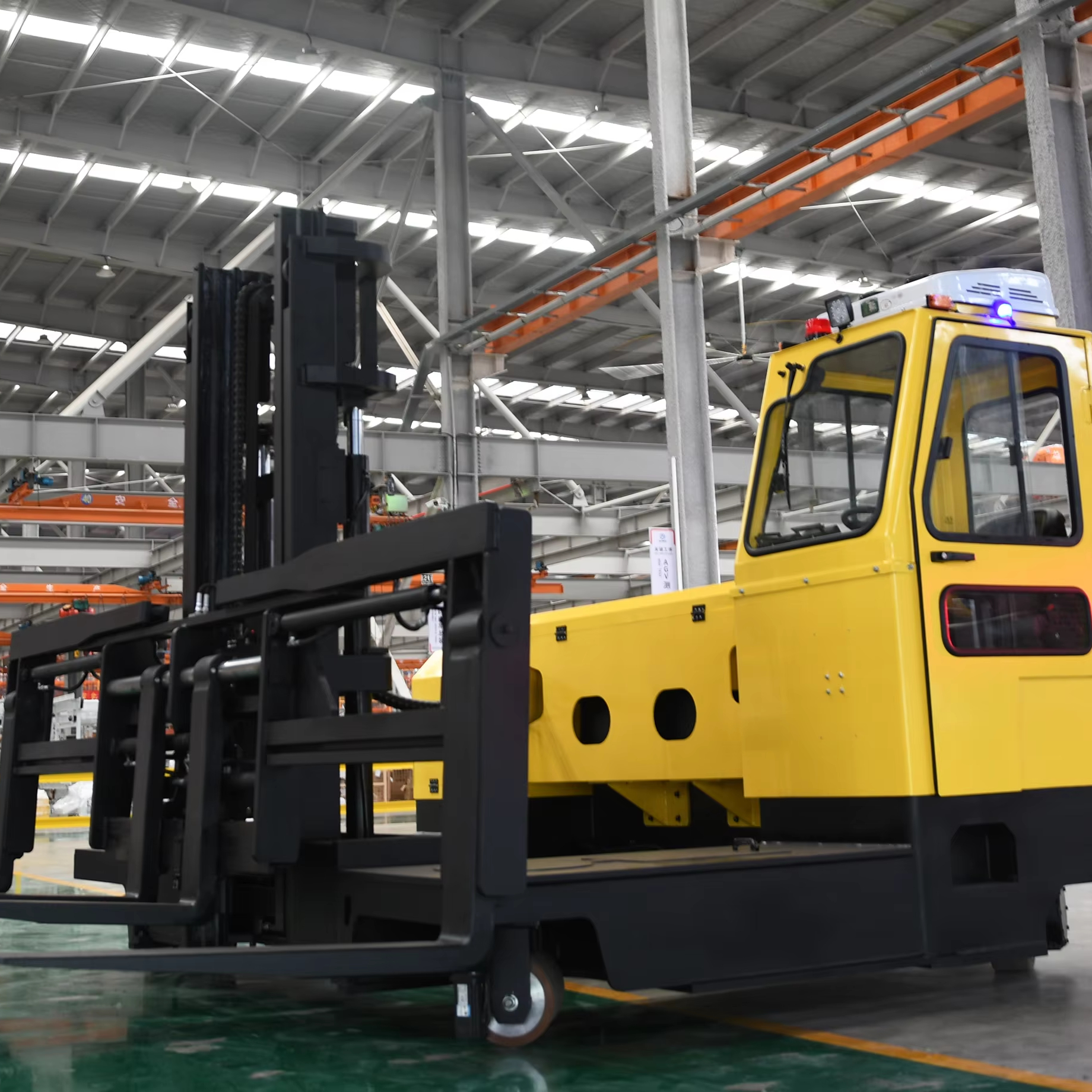
Multi-directional Forklift Reach Truck Stacker 3.5T / 5T Side Loader
Wide-body seat design for multi-directional handling, long loads and high-density storage where conventional forward-only trucks are limited.
- 3.5T–5T
- Full-way
- Wide body
 4.5M
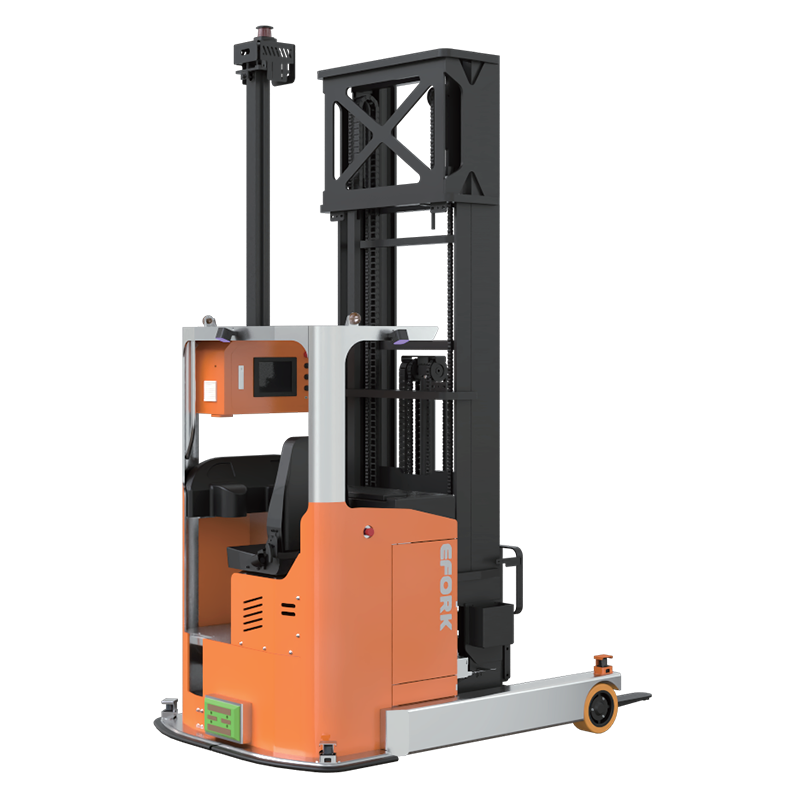
4.5M Reach Truck AGV Body 2T Laser SLAM
High-lifting smart warehouse logistics robot for pallet handling, with CE certification and laser SLAM navigation for mid-height racking.
- 2T
- 4.5M lift
- CE certified
 VNA
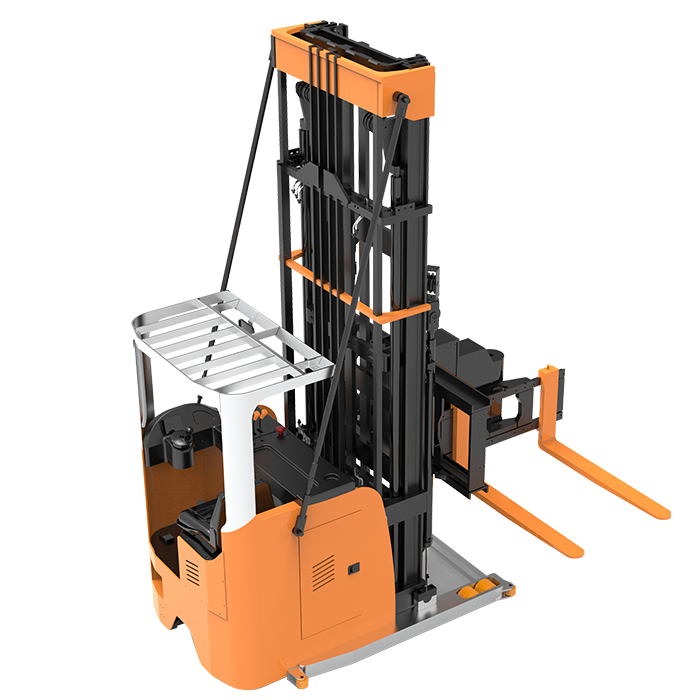
Narrow Aisle 3-Way Electric Forklift 1.6T / 3T Three-Stage Mast
Three-way electric forklift platform for very narrow aisle and high-bay pallet storage, with three-stage mast configurations.
- 1.6T–3T
- 3-way fork
- VNA
 Wholesale
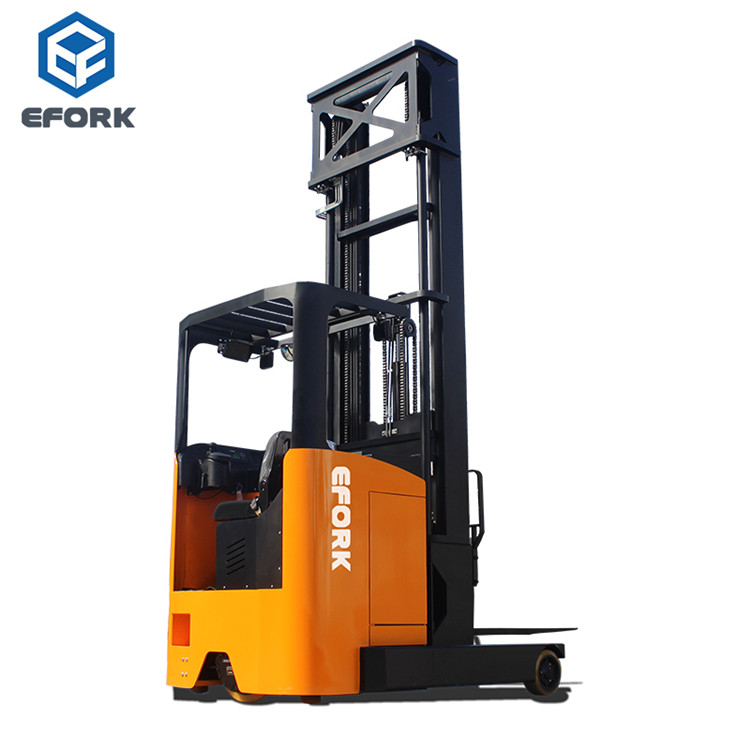
CQDE 2000kg 6m / 8m / 12m Industrial Forklift Pallet Truck
Cost-sensitive industrial pallet truck platform for buyers comparing lift height, load capacity and factory-direct wholesale pricing.
- 2000kg
- 6m–12m
- Good price
 6.5M · SLAM
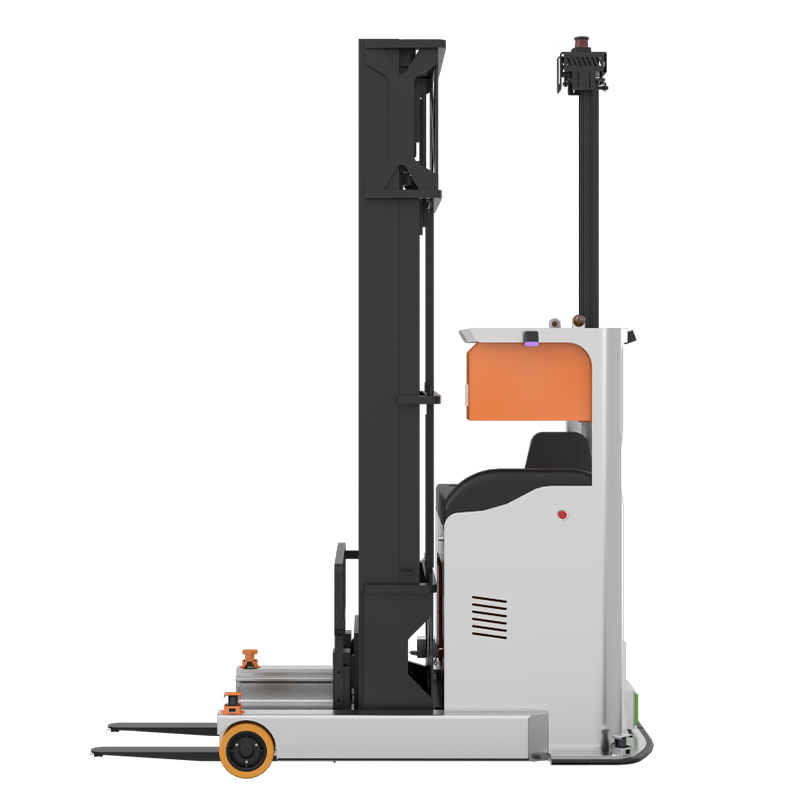
Heli Yufeng CQDE20HJ-65S 2T 6.5M Reach Truck AGV
High-lift reach truck AGV body for pallet handling in smart warehouses, combining laser SLAM navigation with a 6.5 m lift platform.
- 2T
- 6.5M
- Laser SLAM
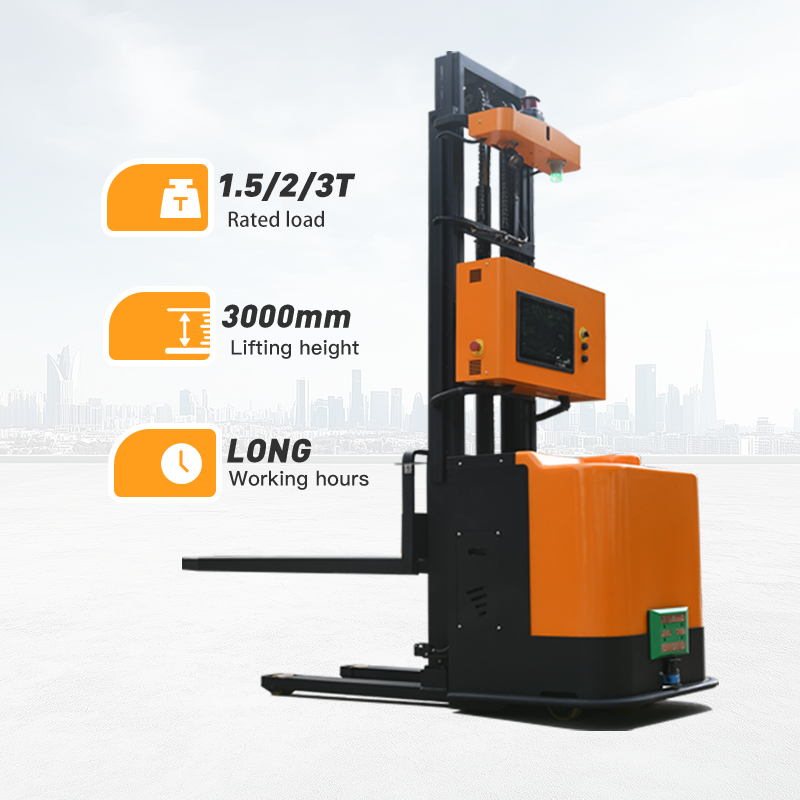 Heavy Duty
3T 3000mm Pallet Stacker AGV for Warehouse Automation
Heavy-duty automated guided vehicle forklift for intelligent warehouse automation, pallet stacking and repetitive horizontal transfer.
- 3T
- 3000mm
- Automation
Need the full specification sheet for these eight models?
Get CatalogStacker AGV vs Reach Truck AGV vs VNA vs AS/RS
Use this engineering reference to shortlist the correct platform before requesting a layout proposal. Final specifications should always be confirmed against your pallet, rack and building drawings.
| Equipment | Typical Load | Lift / Height | Navigation / Guidance | Best-Fit Application | Procurement Note |
|---|---|---|---|---|---|
| Pallet Stacker AGV | 1.5–2T | 1.6–3m | 3D SLAM / Laser | Floor-to-rack transfer, line-side delivery, low racking | Best pilot entry point; confirm outrigger and pallet bottom clearance. |
| Reach Truck AGV | 1.5–2T | 3–4.5m | 3D SLAM / Laser | Selective racking where aisle space is tighter than a counterbalanced truck requires | Check mast retraction, aisle width and rack beam deflection. |
| Counterbalanced AGV | 1.5–3T | 3m | 3D SLAM | Closed-bottom pallets, cages, docks and production lines | No front outriggers; useful for trailers and mixed pallet types. |
| VNA 3-Way AGV | 1.6–3T | 7–11m | 3D SLAM | Very narrow aisle, high-bay pallet storage | Requires precise guide-path, floor tolerance and rack survey. |
| AS/RS Stacker Crane | 1–5T | Up to 40m | Rail-guided, WMS/WCS | High-bay automated warehouses, frozen storage | Building and fire-code review required before layout design. |
| Four-Way Shuttle | 1–2T | Multi-level via lifts | Rail-guided, ±2mm | Dense pallet storage with FIFO / LIFO flexibility | Compare aisle density, redundancy and lift count. |
| Mini-Load Stacker | 50–100kg / bin | Up to 20m | Rail-guided, WMS | Spare parts, e-commerce and small-item picking | Plan bin standardisation and pick-station ergonomics. |
Values reflect standard configurations of listed ranges. Final specifications are confirmed during project engineering based on load units, rack drawings and building constraints.
Why a Verified China AGV Manufacturer Reduces Procurement Risk
For a stacker AGV project, supplier capability matters as much as the machine itself. The most useful evidence is third-party verification, production scale, engineering process and export experience.


Anhui Nexrik Intelligent Technology Co., Ltd.
Anhui Nexrik Intelligent Technology Co., Ltd. is a high-tech manufacturer specialising in the R&D, production and integration of intelligent warehousing equipment, including AGV forklifts, AS/RS stacker cranes, four-way shuttles and RGVs. Its production bases are located in the Huagang Industrial Park, Feixi County, Hefei, Anhui, a recognised hub for China’s forklift and warehousing equipment industry.
Our engineering teams start every project from the buyer’s pallet types, rack drawings, throughput targets and shift pattern. Routes and fleet sizing are simulated before production, and FAT checks are completed before shipment. For overseas buyers, this approach makes it easier to compare proposals on measurable engineering assumptions rather than brochure claims.
Experience signals include 1,152 staff, 66,650 m² of factory floorspace, 8 years in the industry, 7 awarded patents, 7 international exhibitions and an annual revenue level of USD 100 million+. Our AGV range is supported by CE marking under the Machinery Directive 2006/42/EC, ISO 9001 and ISO 45001 management systems, and SGS onsite verification of premises and legal status.
We provide full customization, OEM, ODM and buyer-label production, with MOQ from 1 set for pilot deployments. Accepted trade terms include FOB, CFR, CIF, EXW, FAS, CIP and DDP; payment methods include L/C, D/P, D/A, MoneyGram, credit card and Western Union; currencies include USD, EUR and CNY.
 CE Marking
 SGS Check
From RFQ to Go-Live: A Lower-Risk Stacker AGV Purchase Process
A disciplined procurement sequence helps first-time buyers avoid over-specification, integration surprises and unplanned downtime after handover.
RFQ inputs
Share pallet drawings, load weight, rack height, aisle width, floor tolerance, throughput, shift pattern and existing WMS/ERP interface.
Simulation and proposal
Confirm equipment type, fleet size, navigation, safety scanners, charging strategy and battery planning against peak demand.
FAT and documentation
Review test records, CE documents, spare-parts lists, interface points and training plan before shipment.
SAT and scale-up
Map the site, validate routes, test WMS tasks, train operators and monitor uptime before expanding the fleet.
Buyer’s pre-PO checklist
Request a clear technical proposal that states assumptions, exclusions and acceptance criteria. Confirm navigation method, safety configuration, lift height, load centre, battery runtime, spare-parts lead time and software responsibilities. For China wholesale sourcing, also verify the manufacturer’s export terms, certification scope and service escalation process.
Pilot before fleet
MOQ 1 set makes a pilot commercially practical. Use the pilot to measure cycle time, charging windows, traffic conflicts and exception frequency. A pilot that proves the route logic is often more valuable than a lower initial price, because it protects the later fleet budget.
Stacker AGV Sourcing Questions Buyers Ask First
What is the minimum order quantity for China wholesale stacker AGVs?
For the listed AGV forklift, stacker crane and four-way shuttle models, the MOQ is 1 set. This lets buyers run a single-route pilot before scaling. A pilot is especially useful for confirming pallet quality, aisle clearance, charging location, WMS task flow and operator acceptance before committing to a larger fleet.
Should I choose 3D SLAM or laser navigation?
3D SLAM localises using natural features of the building, which can reduce reflector or floor-tape requirements and shorten site preparation. Laser navigation remains effective for highly repetitive fixed routes. The final choice should be based on the building, route stability, change frequency, safety concept and the supplier’s commissioning experience.
Can a stacker AGV integrate with our existing WMS or ERP?
Integration should be specified during solution design, not after delivery. Confirm task allocation, inventory location logic, exception handling, data ownership and interface responsibilities. WMS-ready AS/RS and four-way shuttle systems are available, and AGV fleet interfaces can be defined around the project’s software architecture.
Which certifications and documents should I request from a China manufacturer?
Request CE documentation where applicable, ISO 9001 and ISO 45001 evidence, SGS onsite verification records, product test reports, FAT records, spare-parts lists and warranty terms. For tenders and customs, confirm that the certificate scope matches the exact model and configuration being purchased.
What trade terms, payment methods and currencies are accepted?
Accepted trade terms include FOB, CFR, CIF, EXW, FAS, CIP and DDP. Payment methods include L/C, D/P, D/A, MoneyGram, credit card and Western Union. Quotations can be issued in USD, EUR or CNY. Buyers should confirm Incoterms, packing, insurance and documentation responsibilities in the contract.
How do I evaluate total cost of ownership before buying?
Compare purchase price with energy consumption, battery replacement, spare-parts cost, service response, downtime risk, training, software integration and expansion cost. For multi-shift operations, a slightly higher-priced AGV with documented support and good parts availability can deliver a lower ten-year cost than a lower-priced unit with weak service coverage.
Ready to Shortlist the Right Stacker AGV?
Send us your pallet drawings, rack height, aisle width and throughput target. Our engineers will compare stacker AGV, reach truck AGV, VNA and AS/RS options, then recommend a pilot-to-fleet configuration with clear assumptions.