Eight Reach Truck AGV & Intralogistics Models for Wholesale Buyers
These eight configurations are the most frequently requested starting points for distributors, system integrators and end users sourcing from China. Product links are preserved as listed, and each model can be customized for load capacity, lift height, fork dimensions, battery configuration and navigation package.
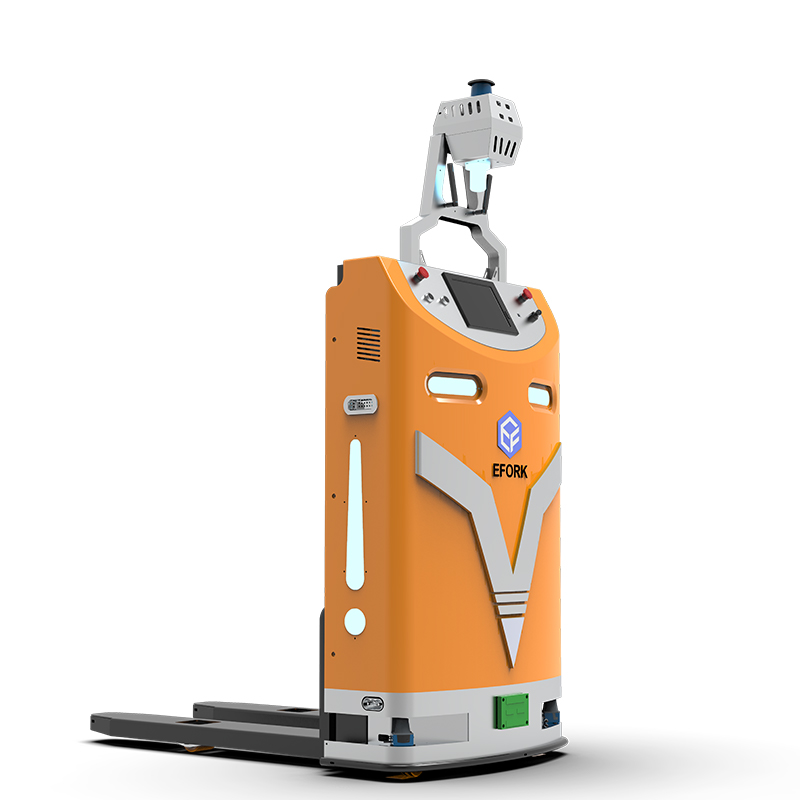
Latest Design Tech Slim Stacking AGV Forklift CE Certified 2T 3M 3D SLAM for Warehouse Automation Handling and Lifting Robot
- 2T
- 3M
- 3D SLAM
Best for: pallet transfer in retrofit warehouses where body width and route clearance matter.
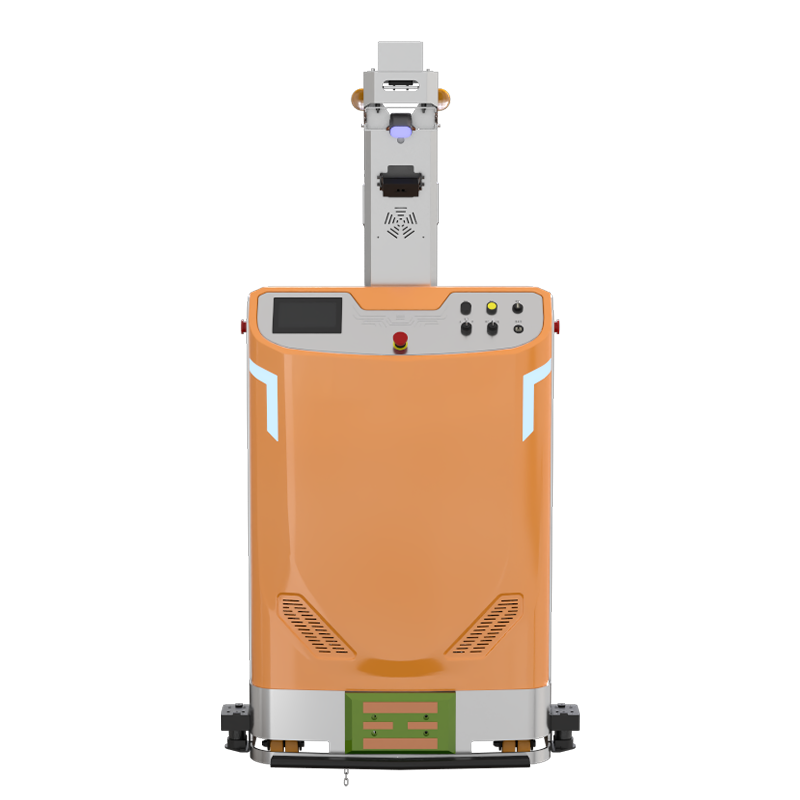
Material Handling AGV Body 2T with Narrow Body Compact Chassis for Efficient Production Line & Workshop Transport in Tight Space
- 2T
- Narrow body
- Tight space
Best for: production-line replenishment, work-in-progress transfer and space-constrained workshops.
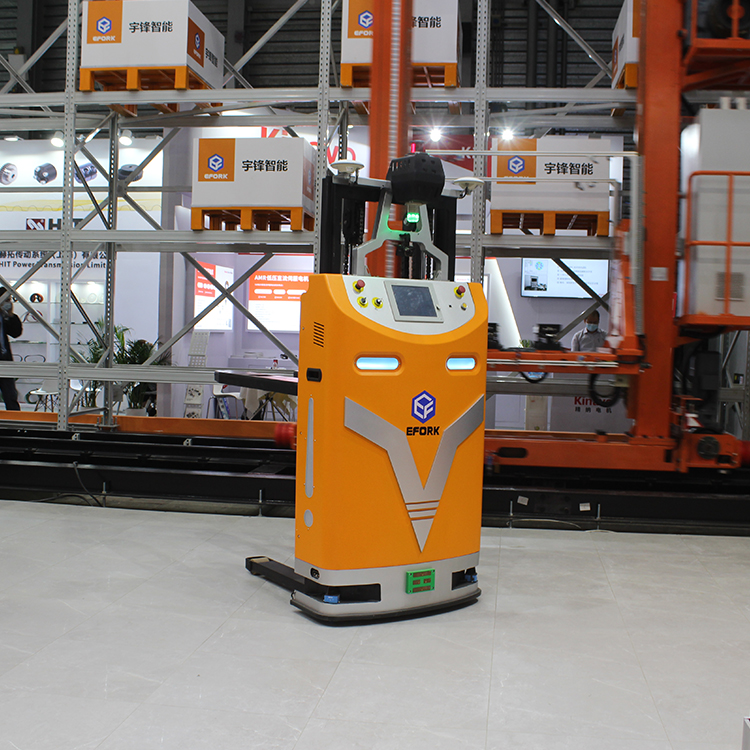
CE Certified EFORK EDA20-16 2T 1600mm Laser Navigation Self-Driving Forklift AGV WIFI/5G 10mm Accuracy 6-8H Working Time
- 2T
- 1600mm
- 6–8H
Best for: repetitive logistics routes where stable laser navigation and predictable cycle time are priorities.
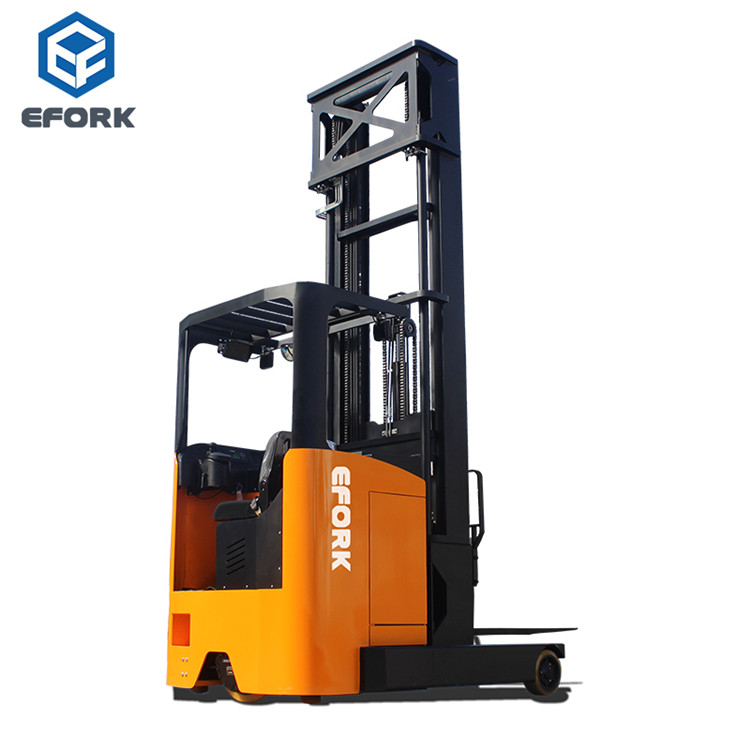
CQDE China Wholesale 2000kg 12m 8m 6m Industrial Forklift Pallet Truck Good Price
- 2000kg
- 6/8/12m
- Wholesale
Best for: buyers who need one supplier to cover multiple mast heights and high-lift pallet handling requirements.
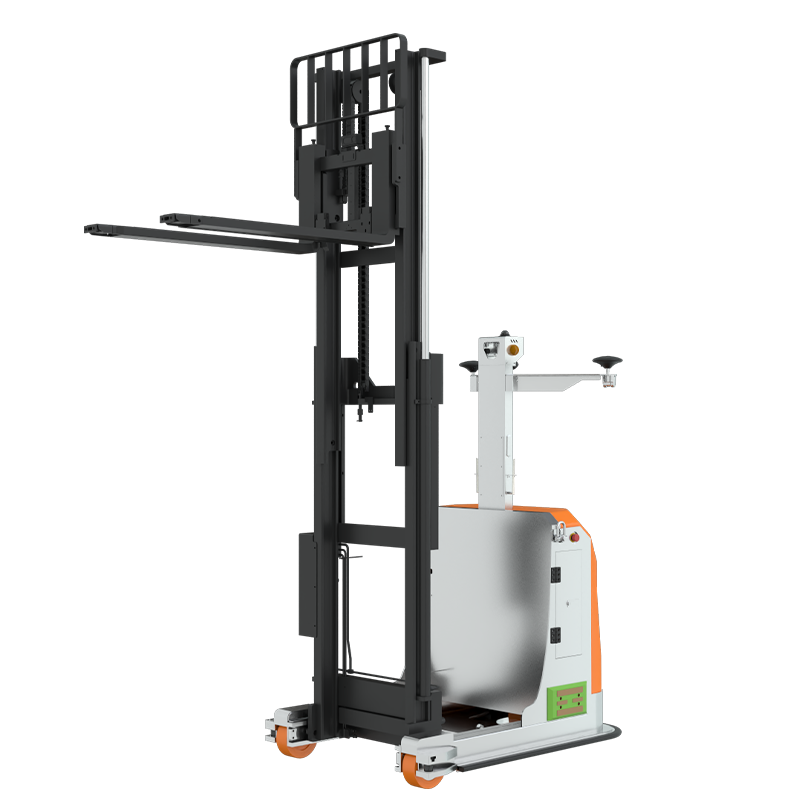
Reach Truck AGV Narrow Body 1.5T 3M Compact Design Fork Forward Function 3D SLAM Navigation 10mm Positioning Accuracy for Narrow Aisle Applications
- 1.5T
- 3M
- 10mm
Best for: selective racking with tighter aisle dimensions than a conventional counterbalanced AGV can serve.
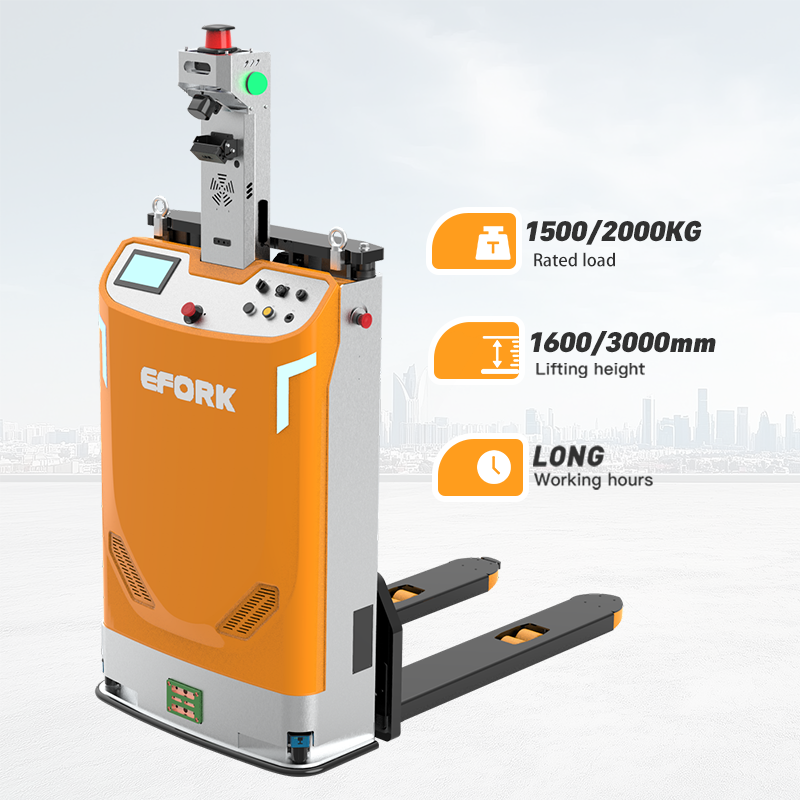
New Heli Yufeng EDA20-30 Slim Stacking AGV Forklift CE Certified 2T 3M 3D SLAM WIFI/5G for Stacking Mobile Robot
- 2T
- 3M
- WIFI/5G
Best for: stacking and mobile-robot duties where slim packaging and connected fleet control are required.
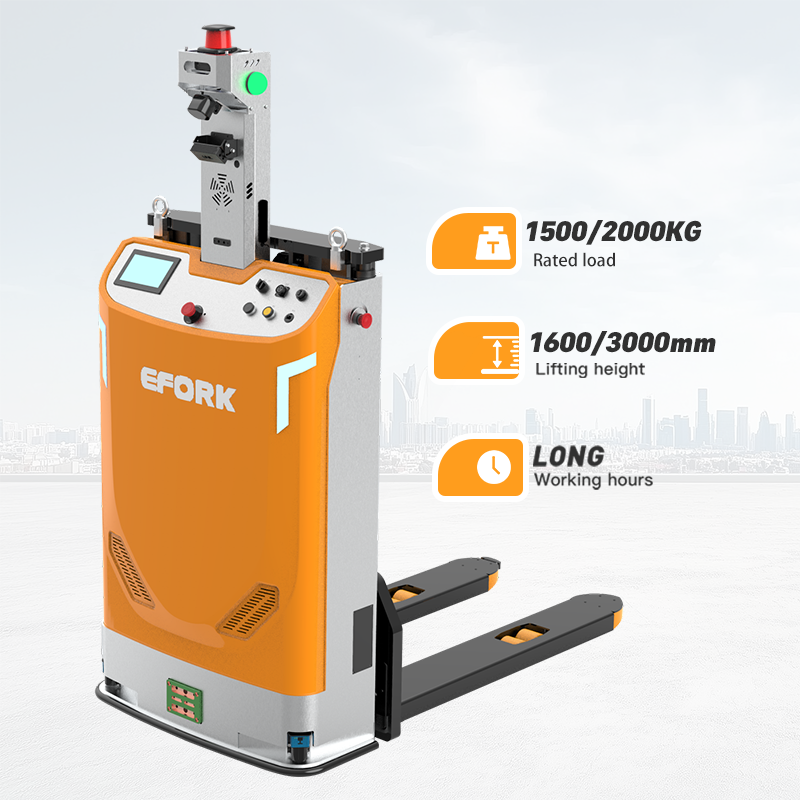
CE Certified EFORK EDA20-16 2T 1600mm Laser Navigation Self-Driving Forklift AGV WIFI/5G for Warehouse Automation Logistics
- 2T
- 1600mm
- WIFI/5G
Best for: warehouse automation logistics with fixed transfer lanes and high repeatability.
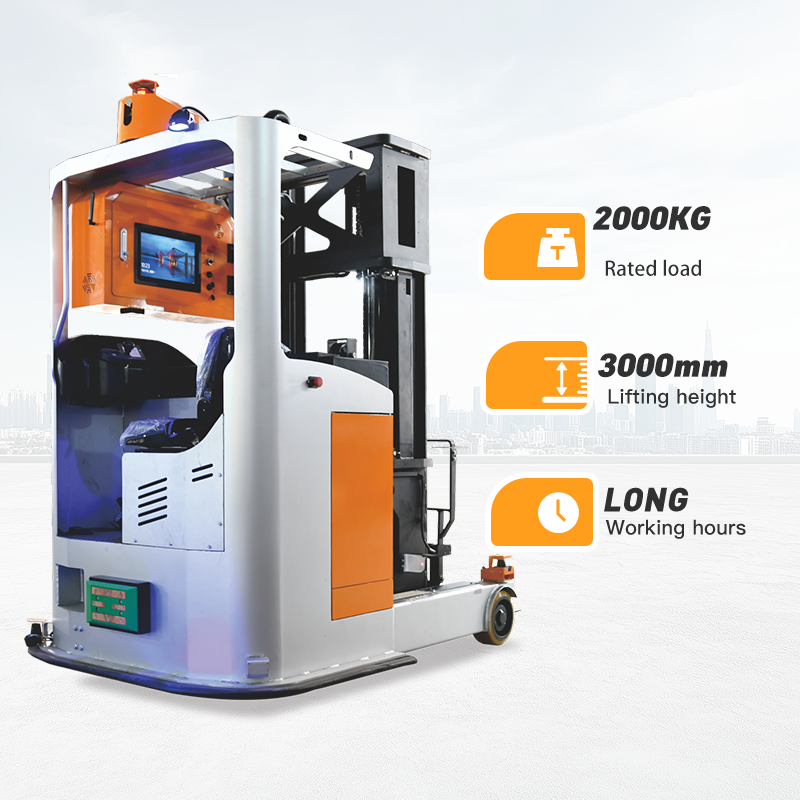
Reach Truck AGV Forklift 2T 3M Laser SLAM Navigation CE Certified Warehouse Automation Robot for Factory Logistics
- 2T
- 3M
- Laser SLAM
Best for: factory logistics projects that need a proven 2T/3M reach platform with CE documentation.
Need a Shortlist Based on Your Rack Drawing?
Send pallet dimensions, lift height, aisle width and throughput target. Our engineers will recommend the right model mix instead of the largest machine.
What “China Wholesale Reach Truck AGV Suppliers & Exporters” Really Means
Buyers searching this phrase are usually not looking for a catalogue image. They are trying to reduce project risk: machine fit, CE evidence, WMS integration, spare-parts support and a realistic total cost of ownership.
From Price Comparison to Engineering Comparison
The reach truck AGV category sits between automated guided vehicles and traditional reach forklifts. A conventional reach truck uses a retractable mast so the fork carriage can move forward to pick a pallet and retract for travel. An autonomous reach truck AGV adds localization, safety scanners, fleet control and a WMS or WCS interface. That difference matters because two suppliers may quote the same “2T 3M reach truck AGV” while delivering very different aisle performance, residual capacity and integration scope.
3D SLAM navigation localizes against natural building features, which can reduce reflector installation and shorten site preparation. Laser navigation remains highly effective where routes are stable and reflective targets can be maintained. The best choice depends on rack tolerance, ceiling structure, traffic density and how often the layout will change.
For wholesale buyers, the most valuable information gain is not another list of models. It is a decision framework that separates quoted capacity from usable capacity at lift height, and separates a CE mark from a complete technical file, risk assessment and declaration of conformity. Ask every exporter for the load chart, safety concept, navigation method, battery strategy and interface responsibility before comparing price.
A reach truck AGV project usually fails at the edges: a pallet that deflects at height, a rack beam tolerance that exceeds the robot’s tolerance, a WMS handshake that was never tested, or a spare-parts plan that assumes next-day delivery across borders. A serious supplier will surface those risks during the RFQ, not after the deposit.
Example 100-Point Supplier Scorecard
Use a weighted model before shortlisting China wholesale reach truck AGV suppliers and exporters.
Factory Floorspace
Two production bases in AnhuiTotal Staff
Verified by independent inspectionAwarded Patents
Plus 1 registered trademarkMinimum Order
Pilot-first procurement supportedRecommended Reach Truck AGV Configurations by Project Type
Wholesale sourcing becomes much faster when the buyer starts from the operating constraint rather than the model name. These four starting points cover most first-stage RFQs.
1.5T–2T / 3M Reach Truck AGV
Choose a compact reach truck with fork-forward function and 3D SLAM when aisle width is tighter than a counterbalanced AGV can serve and lift height is around 3 m.
Compare compact reach model →2T Narrow-Body Material Handling AGV
Use a narrow chassis where the mission is line-side delivery, work-in-progress movement and tight-space transfer rather than high racking.
Compare compact chassis →2000kg / 6m–12m Industrial Pallet Truck
Specify a high-lift platform when the project needs one supplier to cover multiple mast heights and the rack layout is being planned around lift capability.
Compare high-lift model →2T / 1600mm Laser Navigation AGV
Start with a proven laser-guided platform when routes are fixed, cycle times are predictable and the team wants a lower-preparation automation pilot.
Compare laser AGV →How Reach Truck AGVs Will Evolve Through 2028
The next buying cycle will be shaped less by a single specification headline and more by integration quality, safety evidence, fleet software and lifecycle cost.
3D SLAM Becomes the Baseline
Natural-feature localization is reducing dependence on reflectors and floor tape. The commercial advantage is faster site preparation and easier layout changes, but suppliers must still prove repeatability under changing light, pallet loads and human traffic.
Slimmer Bodies, Higher Density
Wholesale buyers increasingly ask for compact chassis and narrow-body reach platforms because existing buildings cannot always be redesigned. Slimmer machines allow more racking or wider safety clearances without sacrificing payload.
10 mm Accuracy + 5G Connectivity
Positioning accuracy, WIFI/5G connectivity and fleet orchestration are becoming a combined requirement. Buyers should ask how the robot behaves during network handover, not only what accuracy appears in the brochure.
Safety Evidence Moves to the Front
CE marking under the Machinery Directive 2006/42/EC, risk assessment, safety scanner zones, emergency stop and braking performance are becoming tender requirements. Exporters that cannot provide a technical file will be filtered out earlier.
Battery Strategy Becomes a TCO Lever
Opportunity charging, battery cycle life, charger efficiency and peak-shift availability should be compared as a system. The lowest machine price can become the highest operating cost if the fleet loses availability during peak shifts.
Modular Customization & Mixed Fleets
OEM and ODM demand is shifting from cosmetic branding to modular engineering: fork dimensions, load capacity, battery configuration, cold-storage variants and WMS interfaces. Mixed fleets will be managed as one system rather than isolated robots.
What Wholesale Buyers Will Require from China Exporters
Procurement is moving from “Can you supply a robot?” to “Can you prove the project will work, be maintained and remain expandable?” The following six shifts are already visible in serious RFQs.
Pilot-to-Fleet Purchasing
MOQ 1 set makes it practical to validate routes, cycle time, safety zones and operator acceptance before scaling. Suppliers that support pilot documentation and expansion planning have an advantage over those selling only container quantities.
TCO Replaces Unit Price
Battery life, charger efficiency, spare parts, WMS interface work, training, floor modification and downtime must be modeled together. A lower FOB price is irrelevant if the fleet cannot cover peak shifts without additional units.
Verified Supplier Evidence
SGS onsite verification, ISO 9001, ISO 45001, CE technical files and patent records are becoming pre-qualification items. Buyers want evidence they can attach to internal risk reviews and tender submissions.
WMS / ERP Integration Responsibility
Clear responsibility for the interface is essential. The supplier should define data points, exception handling, test scripts and acceptance criteria during solution design, then verify them at commissioning rather than leaving integration to the buyer.
Local Service & Spare-Parts Planning
Remote diagnostics help, but overseas buyers still need a practical spare-parts list, recommended stocking quantities and escalation paths. Serviceability should be scored separately from machine specification.
OEM / ODM Without Hidden Gaps
Buyer-label production, custom forks, load capacity and cold-storage variants are increasingly requested. The key question is whether customization changes the safety file, lead time and spare-parts list in a documented way.

Why Anhui Nexrik Is Positioned as a Verified China Wholesale Partner
Anhui Nexrik Intelligent Technology Co., Ltd. specializes in the R&D, production and integration of intelligent warehousing equipment, including AGV forklifts, VNA AGVs, AS/RS stacker cranes, four-way shuttles and RGVs. The company operates from the Huagang Town Industry-City Integration Demonstration Zone in Feixi County, Hefei, Anhui — a recognized forklift and logistics-equipment cluster.
For overseas buyers, the difference is not a slogan. It is the combination of factory scale, inspection evidence, engineering customization and export documentation. Nexrik has been verified onsite by SGS Group, holds ISO 9001 and ISO 45001 management system certification, applies CE marking under the Machinery Directive 2006/42/EC for its AGV range, and has 7 awarded patents plus 1 registered trademark.
- 66,650 m² factory floorspace across two production bases
- 1,152 staff supporting manufacturing, engineering and export service
- MOQ 1 set for AGV forklifts, stacker cranes and four-way shuttles
- CE / ISO / SGS documentation for tender, customs and insurance reviews
- OEM / ODM plus buyer-label production and configuration customization
- Export terms include FOB, CFR, CIF, EXW, FAS, CIP and DDP
Accepted payment methods include L/C, D/P, D/A, MoneyGram, credit card and Western Union in USD, EUR or CNY. Export markets include Southeast Asia, South America, Eastern Europe, South Asia and North America, with applications spanning manufacturing, third-party logistics, food and beverage, retail, automotive, distribution, pharma and FMCG.
Review Company Profile


How a Reach Truck AGV Project Moves from RFQ to Go-Live
A structured workflow reduces the risk of buying a machine that cannot meet cycle time, safety or integration expectations once it reaches the site.
Site & Load Discovery
Collect pallet dimensions, weight distribution, rack drawings, aisle width, floor condition, traffic flow, shift pattern and peak throughput.
Simulation & Configuration
Select navigation, fleet size, battery strategy and safety zones. Simulate congestion and confirm whether the target cycle time is achievable.
Manufacturing & FAT
Build the equipment, verify components and documentation, then run a factory acceptance test before shipment and export packing.
Site Preparation
Prepare charging areas, network coverage, floor markings and safety procedures. Assign responsibility for WMS/WCS interface data points.
Commissioning & Training
Map the site, test routes, validate safety responses, complete interface tests and train operators and maintenance staff.
Lifecycle Support
Plan spare parts, remote diagnostics, firmware updates and fleet expansion. A pilot should be designed to scale, not to stand alone.
Common Questions from China Wholesale Reach Truck AGV Buyers
These are the questions that most often decide whether an RFQ becomes a pilot, a fleet order or a failed project.
What does “China wholesale reach truck AGV suppliers & exporters” mean for an overseas buyer?
What is the minimum order quantity for a reach truck AGV?
Should I choose 3D SLAM or laser navigation for a reach truck AGV?
What load capacity and lift height are available?
Which certifications and verification documents should be requested?
Can the AGV integrate with our existing WMS or ERP?
Do you provide OEM, ODM and buyer-label customization?
What trade and payment terms are accepted?
How should we compare total cost of ownership rather than unit price?
Send Your Rack Drawing and Throughput Target
Our engineers can evaluate your pallet data, aisle width, lift height, shift pattern and WMS requirements, then propose a reach truck AGV configuration and fleet size that matches the real operating constraint. Factory-direct from Hefei, China, with CE documentation and a pilot-first procurement path.