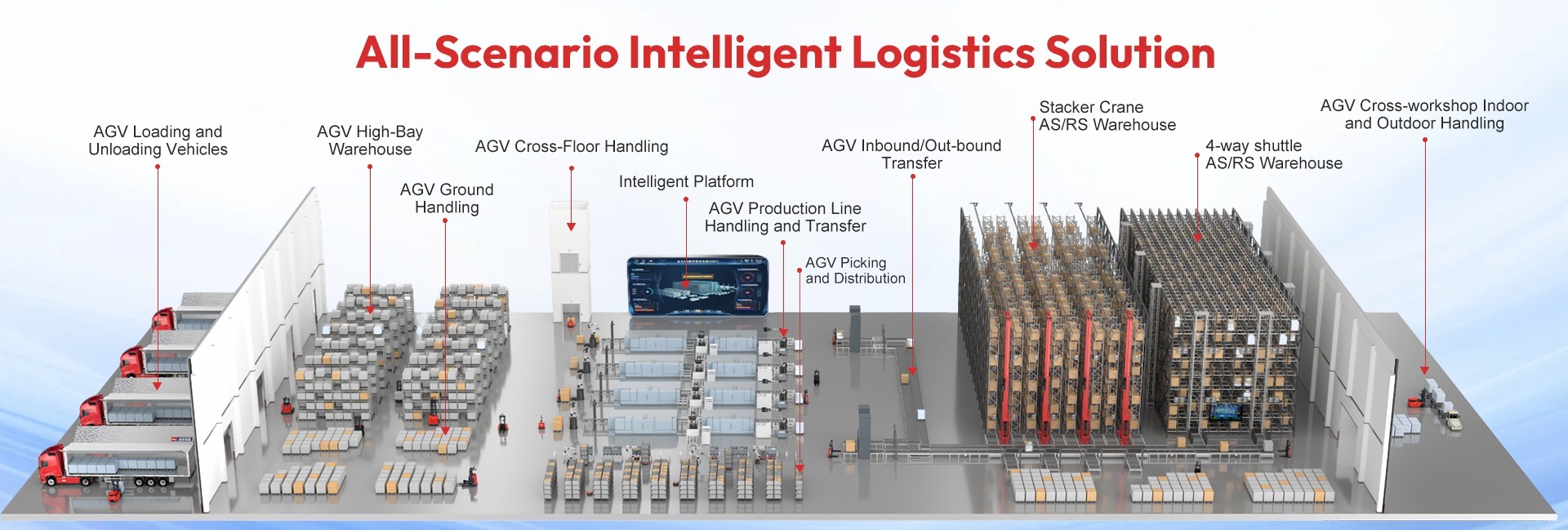
Recommended Equipment for Export Buyers
These eight models cover the most common buyer intents behind “China AMR forklift factory” and “AGV forklift exporter” searches: low-cost pallet handling, CE-certified 3D SLAM navigation, narrow-space movement, VNA high-bay storage, heavy-duty counterbalanced transport and omni-directional AGV bodies for system integrators.
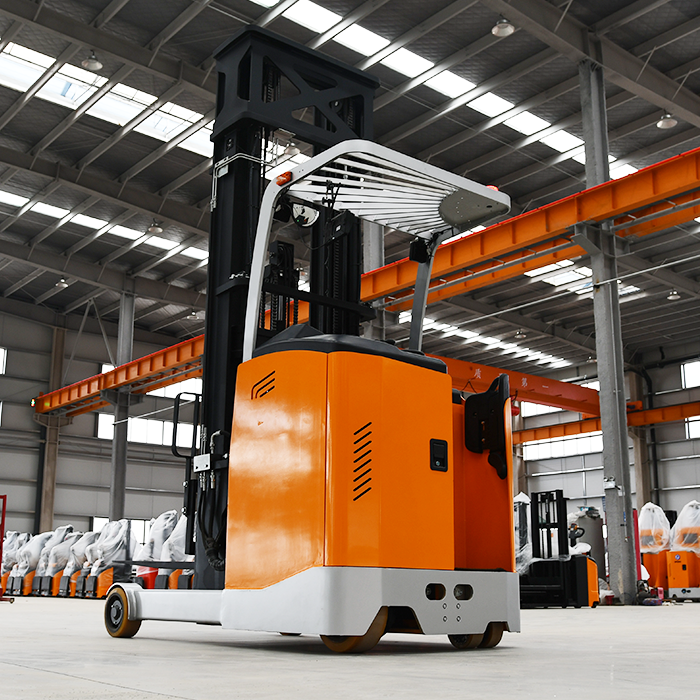
China Wholesale 2000kg 12m 8m 6m Industrial Forklift Pallet Truck High-Speed Steel Hot-Dip Galvanized Good Price
A cost-controlled export recommendation for buyers prioritizing hot-dip galvanized corrosion resistance, 2,000 kg load capacity and practical pallet movement in workshops and distribution centers.
View product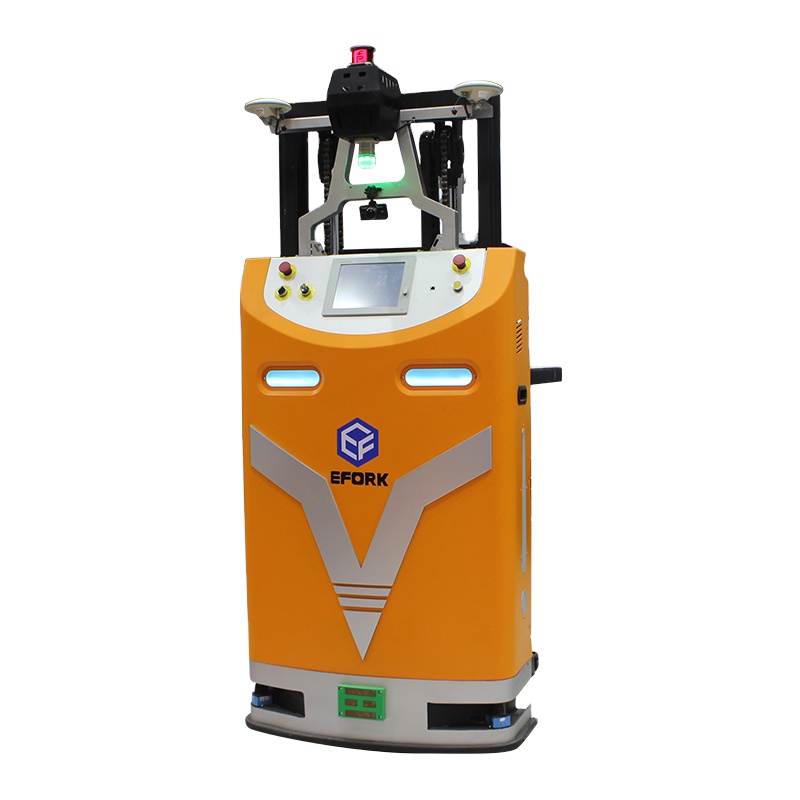
CE Certified EFORK EDA20-16 2T 1200mm Fork Width 180mm 3D SLAM Laser Navigation AGV WIFI/5G 10mm Accuracy 1600mm Lifting Height
A strong fit for buyers who need a 2T AMR/AGV forklift with 3D SLAM plus laser navigation options, 10 mm positioning accuracy, 1,600 mm lifting height and warehouse Wi-Fi/5G connectivity.
View product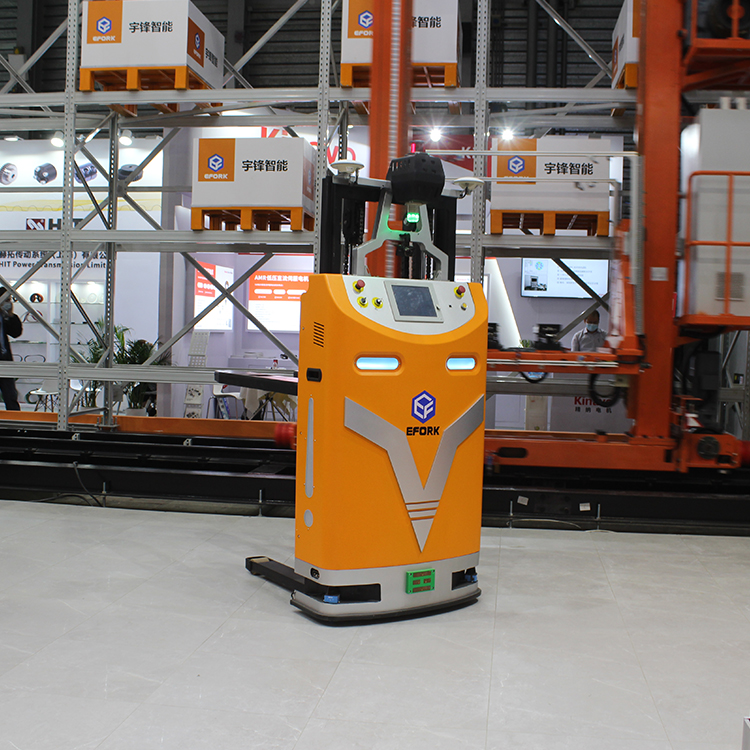
CE Certified EFORK EDA20-16 2T 1600mm Laser Navigation Self-Driving Forklift AGV WIFI/5G 10mm Accuracy 6-8H Working Time
A 2T self-driving forklift AGV for repetitive pallet transfer, with 1,600 mm lift height, 10 mm accuracy and 6–8 hours working time — suitable for pilot lines and multi-shift expansion.
View product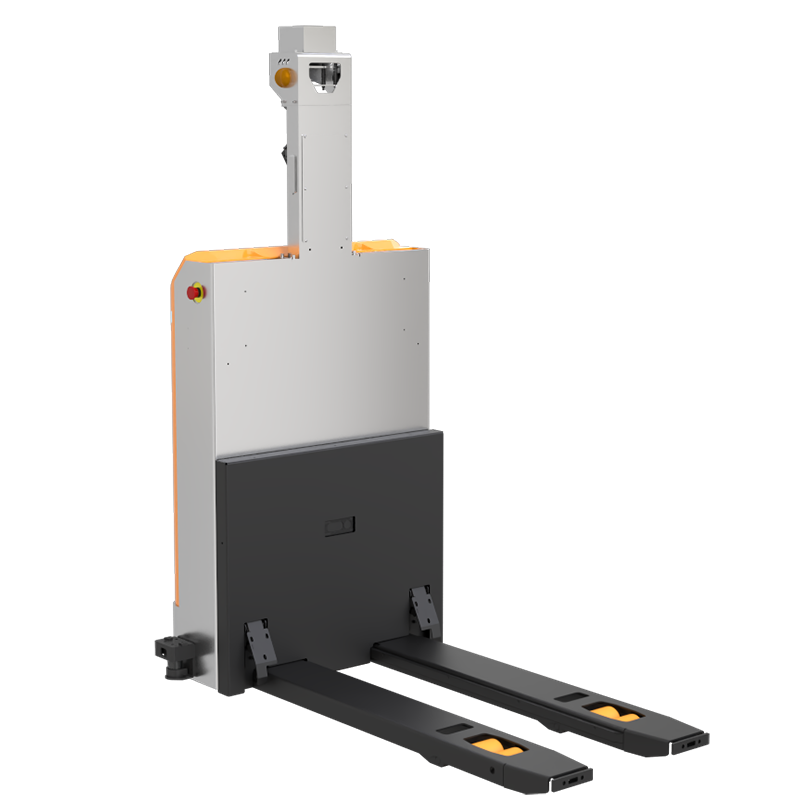
T 2.5M Omni-directional AGV Body 1 3D SLAM Navigation 1000kg Load Capacity Flexible Movement Zero Turning Radius for
An omni-directional AGV body for integrators and factories that need flexible movement, zero turning radius, 1,000 kg load capacity and 3D SLAM navigation in constrained production areas.
View product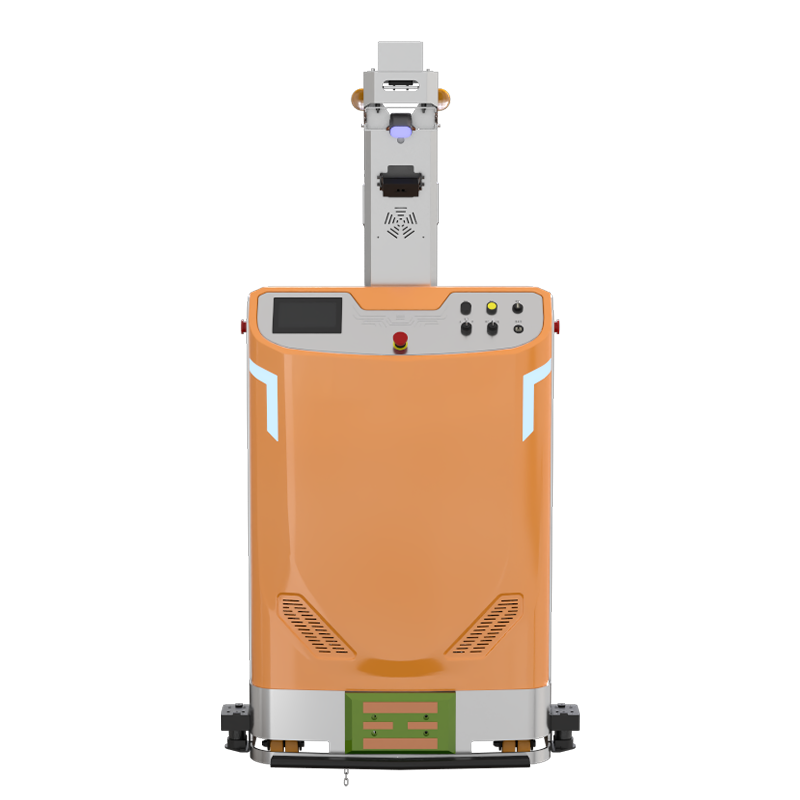
Material Handling AGV Body 2T with Narrow Body Compact Chassis for Efficient Production Line &Workshop Transport in Tight Space
A 2T narrow-body AGV platform designed for tight-space material handling, production-line feeding and workshop transport where standard forklifts struggle to turn safely.
View product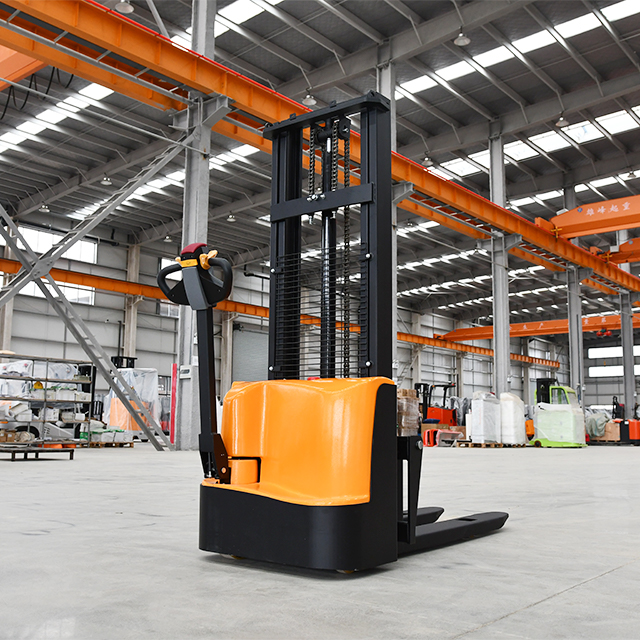
1Ton & 2Ton Full Electric Pallet Stacker Walkie Type High Performance, Low Cost Optional with Training Wheels
A practical low-cost entry point for buyers not yet ready for full fleet automation. The 1T/2T walkie stacker supports high performance, training wheels and straightforward export shipping.
View product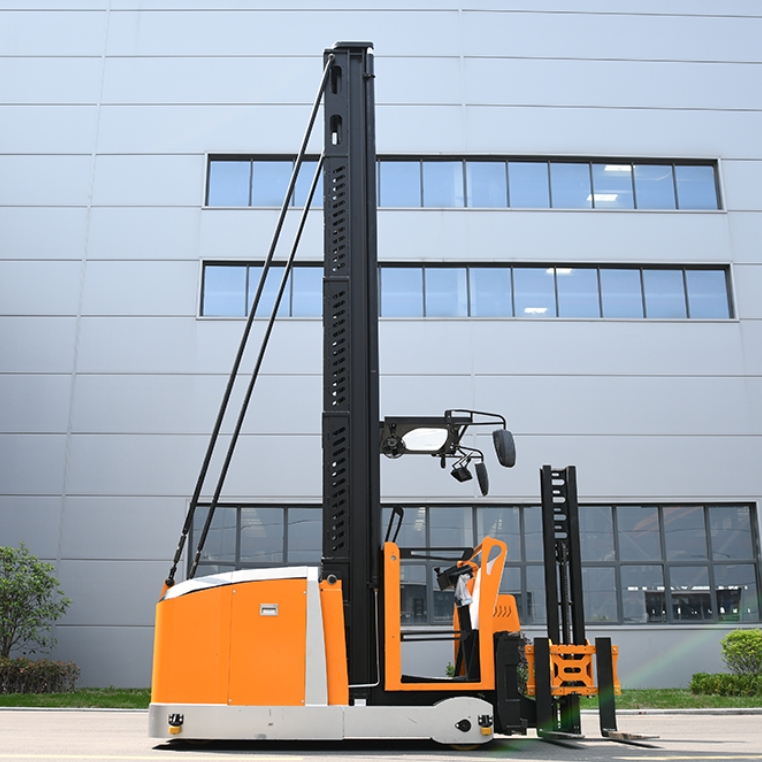
New 1.5T Manual Electric 3-Way Pallet Stacker Forklift 3 Way Manup Vna Forklift with 1600kg Loading Capacity AC Motor Powered
A 1.5T electric 3-way VNA pallet stacker for warehouses that need high-density racking, left-right-forward fork action and AC motor power in a narrow-aisle configuration.
View product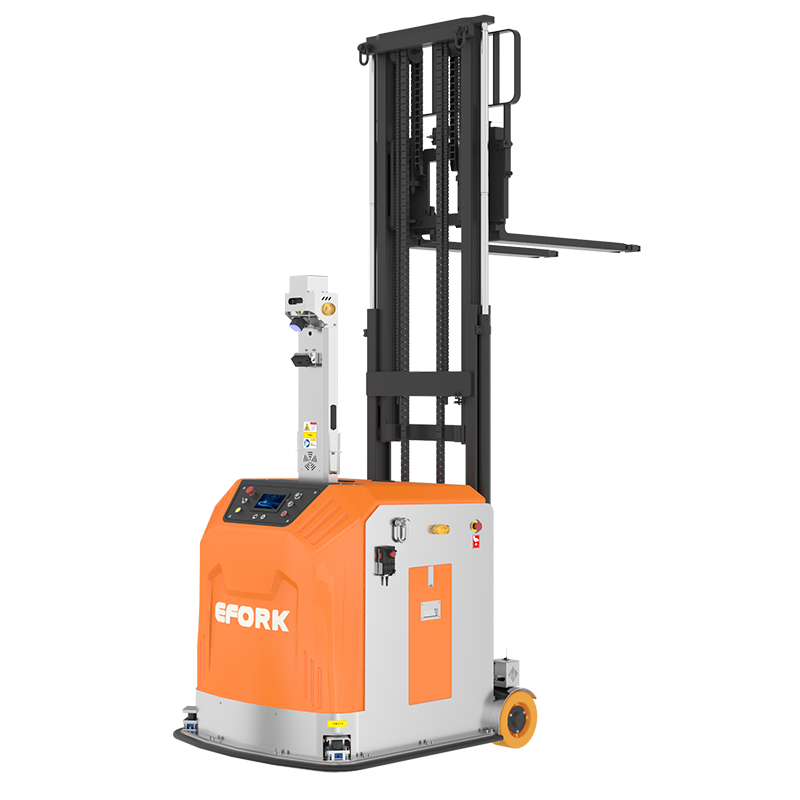
EFORK Heavy Duty Forklift AGV Counterbalanced Body 2T 3M Fork Legs High Flexibility 3D SLAM Navigation WIFI/5G for Pallet
A heavy-duty 2T counterbalanced AGV with 3 m fork legs and 3D SLAM navigation, recommended for closed-bottom pallets, cages, dock transfer and production-line logistics.
View productNeed help shortlisting? Share your pallet size, rack height, aisle width, floor conditions and WMS interface requirement. Our engineers will recommend the right AMR/AGV platform instead of forcing a single model into every project.
Contact UsWhat “China Top AMR Forklift Factories & Exporters” Really Means
Buyers searching for the China top AMR forklift factories and exporters are usually not looking for one more catalogue. They are trying to de-risk a capital project. A factory-direct AMR forklift affects rack design, aisle width, safety validation, WMS/WCS integration, battery strategy, spare parts planning and operator training. The correct supplier is therefore the one that can prove manufacturing control, document compliance and support the system after shipment — not simply the one with the lowest quotation.
In this category, the terms AMR forklift and AGV forklift are often used interchangeably. Technically, an AMR usually relies more heavily on natural-feature localization and onboard perception, while a traditional AGV may use reflectors, magnetic tape or fixed routes. For procurement, the distinction matters less than the engineering evidence: which navigation method is used, how safety is validated, how the fleet is managed and how the machine integrates with your existing warehouse execution layer. A supplier that can explain these points clearly is usually a stronger exporter than one that only lists a capacity and a price.
What a factory-backed exporter should prove
First, verify that the company is the legal manufacturer or has clear production control at the stated plant. Second, request the CE documentation under Machinery Directive 2006/42/EC, ISO 9001 and ISO 45001 certificates, and any third-party onsite verification. Third, ask for a load-center calculation, aisle-width drawing, floor-flatness tolerance and safety-scanner layout. Fourth, require a FAT/SAT plan and a WMS/WCS interface description before the order is placed. Finally, confirm spare-parts kits, remote diagnostics, training materials and Incoterms in writing.
For overseas buyers, this due diligence is especially important because AMR forklifts are not standalone products. They become part of a warehouse system. The factory must be able to support layout changes, fleet expansion and local maintenance. That is why a verified manufacturer with in-house chassis, mast and control integration — plus a documented export process — is often safer than a trading company that cannot trace the build. The best sourcing decision is not always the fastest quotation; it is the supplier that can still answer technical questions three years after commissioning.
Buyer Verification Checklist
- Confirm legal manufacturer, plant address and export history.
- Collect CE, ISO 9001, ISO 45001 and onsite inspection evidence.
- Validate capacity at the real load center, not only nominal payload.
- Check aisle width, rack height, floor flatness and traffic simulation.
- Require WMS/WCS interface specification and FAT/SAT acceptance criteria.
- Confirm spare parts, training, remote support and trade terms.
Factory Advantages That Matter in an Export Tender
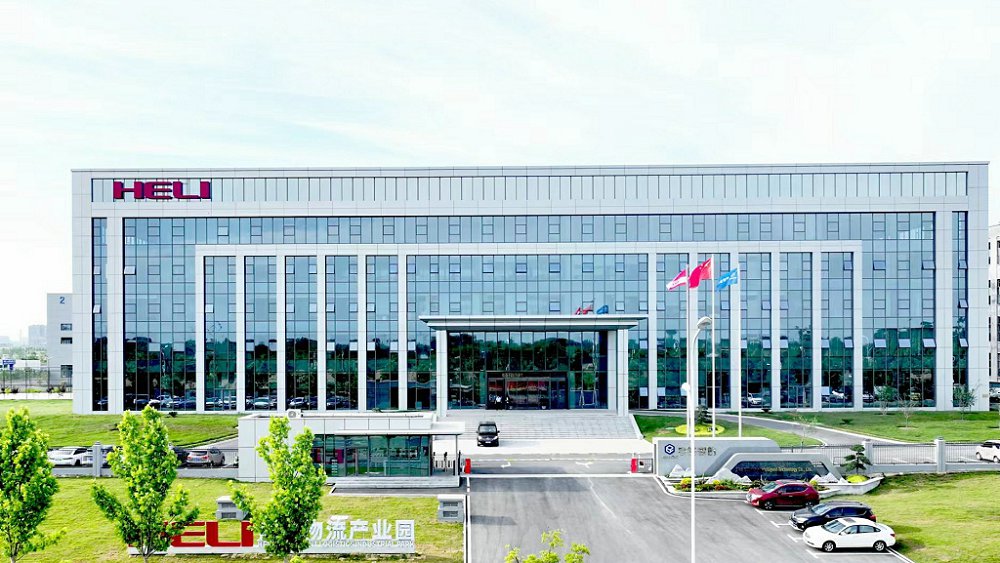
Anhui Nexrik Intelligent Technology Co., Ltd. is a Hefei-based manufacturer of AGV forklifts, AMR platforms, VNA AGVs, AS/RS stacker cranes, four-way shuttle systems and turnkey intelligent warehousing equipment. The advantage is not only machine selection; it is the ability to align product design, production inspection, export documentation and overseas commissioning under one engineering process.
In-House Manufacturing
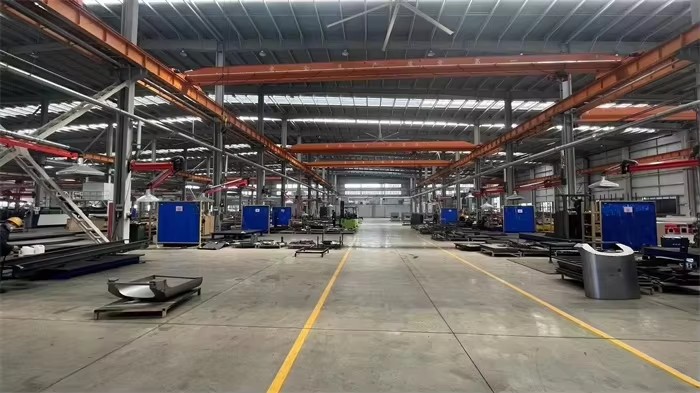
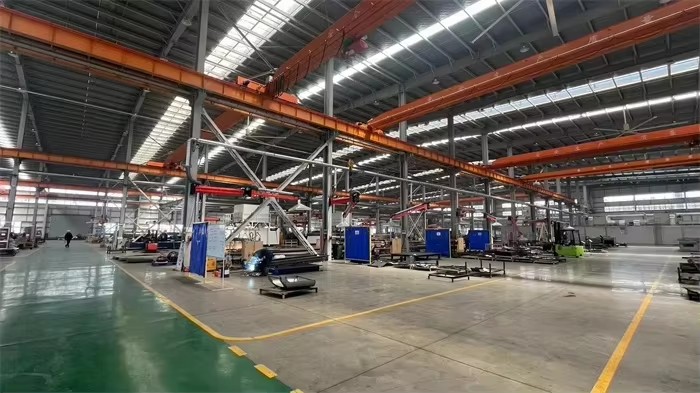
Chassis, mast and control integration are managed on our own production lines in Huagang Town, Feixi County, Hefei, with onsite material and finished-product inspection before shipment.
Laser & 3D SLAM Navigation
Buyers can choose reflector-based laser navigation for fixed routes or 3D SLAM for natural-feature localization that minimizes floor tape, reflectors and rack modifications.
One-Stop Turnkey Integration
AGVs, AS/RS stacker cranes, four-way shuttles and RGVs can be engineered as one WMS-ready system, reducing interface risk between multiple equipment vendors.
Compliance & Export Support
CE marking under 2006/42/EC, ISO 9001, ISO 45001, SGS onsite verification, 7 international exhibitions and flexible OEM/ODM production support tender and customs requirements.
Accepted delivery terms include FOB, CFR, CIF, EXW, FAS, CIP and DDP. Payment methods include L/C, D/P, D/A, MoneyGram, credit card and Western Union in USD, EUR or CNY. Standard MOQ is 1 set, which allows buyers to run a pilot before scaling to a mixed fleet. Customization covers load capacity, lift height, fork dimensions, battery configuration and cold-storage variants.
2025–2030 AMR Forklift Procurement Trends
Price comparison is shifting toward evidence-based procurement. The winning supplier will be the one that can support phased automation, integration standards, safety validation and long-term uptime — not only deliver the first truck.
Pilot-First, Then Fleet Expansion
MOQ 1 set has made single-machine pilots common. Buyers test routes, cycle times, charging behavior and operator acceptance before scaling. Exporters should offer a clear expansion path for fleet management and spare parts.
TCO Replaces Sticker Price
Procurement teams now compare energy consumption, uptime, maintenance access, battery lifecycle, spare-parts lead time and integration hours. A slightly higher machine price can be cheaper over five years if the service model is stronger.
3D SLAM Reduces Site Preparation
Natural-feature localization shortens deployment and avoids extensive reflector or tape installation. Buyers still need to confirm lighting, dynamic obstacles, floor conditions and map-maintenance procedures.
Safety Compliance Becomes a Gatekeeper
CE documentation, risk assessment, safety scanners, emergency stop architecture and functional safety validation are increasingly requested before a purchase order is issued, especially for warehouse projects with mixed pedestrian traffic.
WMS/WCS Integration Standards
Buyers expect documented APIs, protocol options and fleet-manager data. Integration with existing WMS, ERP or MES environments is now part of the technical evaluation, not an after-sales issue.
Export-Ready Service & Spares
Remote diagnostics, commissioning support, training videos, recommended spare-parts kits and clear Incoterms are becoming standard tender requirements for buyers in Southeast Asia, South America, Eastern Europe, South Asia and North America.
How AMR Forklift Technology Is Evolving
Hardware is becoming more modular, while software and service become the differentiators. These development trends directly affect what buyers should specify in a new tender.
Multi-Sensor Fusion & AI Perception
Laser scanners, cameras, 3D SLAM and onboard computing are converging. The result is more robust localization around dynamic obstacles, changing pallet positions and mixed pedestrian traffic.
High-Bay VNA & AS/RS Convergence
VNA 3-way AGVs, 40 m AS/RS stacker cranes and four-way shuttles are being planned together. Buyers increasingly want one partner to optimize rack density, lift height and throughput across technologies.
Modular AGV Bodies for OEM/ODM
Integrators and regional brands are requesting AGV bodies, custom forks, buyer-label production and integration-friendly interfaces. Modular platforms shorten product-development cycles.
Cold-Chain & Tough-Environment Variants
Frozen storage, condensation, low temperature, food hygiene and corrosive environments require modified materials, batteries, seals and service plans. Standard warehouse robots are not always suitable.
Lithium Energy & Opportunity Charging
Fast charging, larger battery options and opportunity charging strategy reduce downtime. Buyers should match battery capacity to shift patterns instead of assuming a nominal working-time figure.
Digital Twin & Simulation First
Traffic simulation, throughput modeling and digital twin validation are moving earlier in the sales process. This reduces the risk of buying the wrong fleet size or aisle layout before installation.
AMR Forklift Selection Matrix for Export Projects
Use this comparison to match equipment to the load unit, rack layout, lift height and navigation environment before requesting a formal proposal.
| Equipment | Typical Load | Lift / Height | Navigation | Best-Fit Buyer Intent |
|---|---|---|---|---|
| Galvanized Pallet Truck | 2,000 kg | Pallet handling | Manual / electric | Low-cost pallet movement, corrosion resistance, workshop transport |
| 3D SLAM / Laser AGV | 2,000 kg | 1,600 mm | 3D SLAM + laser | CE-certified automated pallet transfer with flexible site preparation |
| Laser Navigation AGV | 2,000 kg | 1,600 mm | Laser navigation | Repetitive fixed routes, pilot automation, multi-shift operation |
| Omni-Directional AGV Body | 1,000 kg | 2.5 m body option | 3D SLAM | Tight production areas, zero turning radius, flexible movement |
| Narrow-Body 2T AGV | 2,000 kg | Compact chassis | AGV platform | Production-line feeding and workshop transport in narrow aisles |
| 1.5T 3-Way VNA Stacker | 1,500 / 1,600 kg | VNA high-bay | Manual electric | Very narrow aisle racking, left-right-forward fork action |
| Heavy-Duty Counterbalanced AGV | 2,000 kg | 3,000 mm | 3D SLAM | Closed-bottom pallets, cages, docks and production-line logistics |
| Walkie Pallet Stacker | 1,000 / 2,000 kg | Stacking | Manual electric | Low-cost entry, training wheels, small and mid-size warehouses |
Final specifications must be confirmed during project engineering based on load center, rack beam height, aisle width, floor flatness, safety distance and local regulations.
From Hefei Factory to Overseas Commissioning
A clear project sequence reduces risk for first-time and multi-site buyers. The same process applies whether the project starts with one AMR forklift or a mixed fleet of VNA AGVs and AS/RS equipment.




Application data and layout simulation
Every project starts with pallet drawings, rack layout, load center, aisle width, floor flatness, throughput target and shift pattern. Engineers then model traffic and select equipment. This step prevents a common failure mode: buying a robot that meets the load capacity but cannot achieve the required cycle time or safety distance.
Build, inspection and FAT
Production is supported by onsite material and finished-product inspection. Before shipment, buyers can review FAT criteria, safety checks, navigation tests and interface documentation. Export packing and CE documentation are prepared together so that customs and tender files are consistent.
Commissioning and lifecycle support
Overseas projects can include mapping guidance, WMS interface testing, safety validation, operator training and remote diagnostics. For fleet expansion, the same supplier can support additional AMR forklifts, VNA AGVs, stacker cranes and four-way shuttles without renegotiating the entire system architecture.
Site & Load Review
Pallet spec, rack height, aisle width, floor tolerance and throughput target.
Solution Design
Equipment mix, fleet sizing, navigation choice, traffic simulation and WMS interface plan.
Build & FAT
Manufacturing, inspection, safety checks, navigation testing and export packing.
Commissioning & Service
Mapping, interface testing, operator training, spare parts and remote diagnostics.
Common Questions From AMR Forklift Buyers
These are the questions that most often appear during supplier evaluation, tender preparation and export negotiation.
What is the minimum order quantity for these AMR forklifts?
For the listed AGV forklifts, AMR platforms and stacker models, the standard MOQ is 1 set. This is useful for buyers who want to validate navigation, cycle time and operator acceptance before scaling. During the pilot, we recommend documenting routes, charging windows, safety distance and WMS interface behavior so the expansion specification is based on real data.
Should I choose 3D SLAM or laser navigation?
3D SLAM is often preferred when the building has natural features and the buyer wants to minimize reflectors, floor tape and site modification. Laser navigation can be very effective for fixed, repetitive routes with stable infrastructure. The right choice depends on aisle geometry, dynamic obstacles, lighting, floor conditions, ceiling structure and how often the layout may change. A supplier should evaluate the site rather than default to one technology.
What certifications and documents should I request?
Ask for CE marking under Machinery Directive 2006/42/EC where applicable, ISO 9001 quality management and ISO 45001 occupational health and safety documents, plus evidence of third-party onsite verification. Also request the risk assessment, safety scanner layout, electrical drawings, operating manual, spare-parts list and FAT inspection record. These documents are important for tenders, customs, insurance and internal safety approval.
Can the AMR forklift integrate with our existing WMS or ERP?
Yes, but integration must be defined before the order. The technical discussion should cover task allocation, pallet location, exception handling, API or protocol options, fleet-manager data and acceptance criteria. For AS/RS and four-way shuttle projects, WMS/WCS integration is part of the system scope. Buyers should insist on a written interface specification and a commissioning test plan.
Can you customize load capacity, lift height, forks and batteries?
Customization is available for OEM, ODM and buyer-label projects. Typical changes include load capacity, lift height, fork dimensions, fork width, battery configuration, cold-storage protection, warning devices and fleet branding. The supplier should confirm the load center and derating curve for non-standard loads, because nominal capacity alone is not enough for a safe and stable design.
How long does an export project usually take?
Timing depends on whether the machine is a standard model, a customized unit or part of a turnkey AS/RS project. A pilot AMR forklift may move faster than a mixed fleet with WMS integration. Buyers should request a milestone schedule covering technical confirmation, production, inspection, packing, shipping, mapping, commissioning and acceptance. Manufacturing time should be separated from shipping and site-integration time.
What about safety, spare parts and after-sales support?
Ask for the safety architecture, emergency stop design, obstacle detection, pedestrian warning, speed limits and operating-zone rules. For spare parts, request a recommended kit based on duty cycle, plus battery, scanner, wheel and controller lead times. Remote diagnostics, training materials and local service partners can reduce downtime. A clear escalation path is more valuable than a generic promise of after-sales support.
Which trade and payment terms are accepted?
Accepted delivery terms include FOB, CFR, CIF, EXW, FAS, CIP and DDP. Payment can be made by L/C, D/P, D/A, MoneyGram, credit card or Western Union in USD, EUR or CNY. For project buyers, the supplier should also provide packing details, HS code guidance, CE documentation and a shipping schedule that matches the installation plan.
Request a Factory-Backed AMR Forklift Proposal
Send your pallet dimensions, rack drawing, aisle width, floor conditions, throughput target and WMS interface requirement. Our engineering team will recommend an appropriate AMR/AGV platform, clarify CE and export documentation, and outline a pilot-to-fleet roadmap.