China Best Warehouse AMR Manufacturer & Supplier
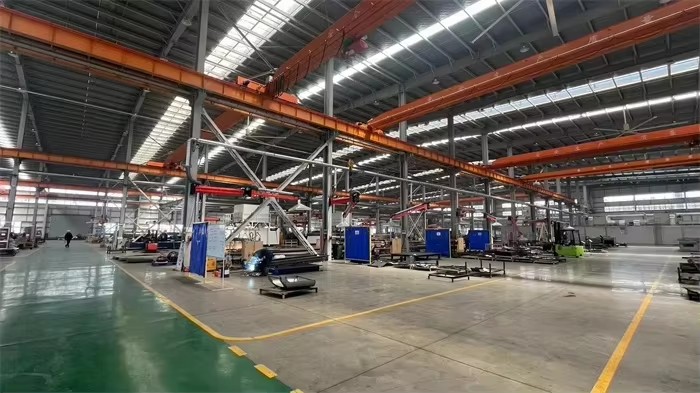
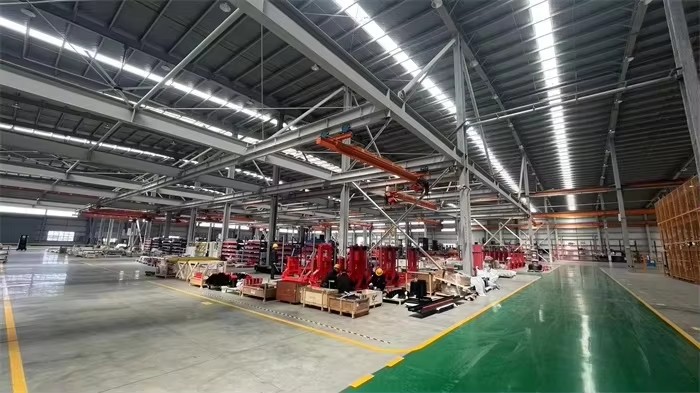
Nexrik designs, manufactures and commissions 3D SLAM autonomous mobile robots, laser-guided AGV forklifts and WMS-ready AS/RS systems from a 66,650 m² plant in Hefei — engineered for 24/7 intralogistics and shipped to buyers across Southeast Asia, South America, Eastern Europe, South Asia and North America.
Eight Warehouse AMR & AGV Forklift Platforms Built for Real Pallet Flows
Each model below answers a specific intralogistics constraint — tight aisles, low racking, high-bay lifting, closed-bottom pallets or heavy counterbalanced duty. Compare capacity, lift height and navigation first, then send your rack drawing for a cycle-time simulation before you commit to a fleet.
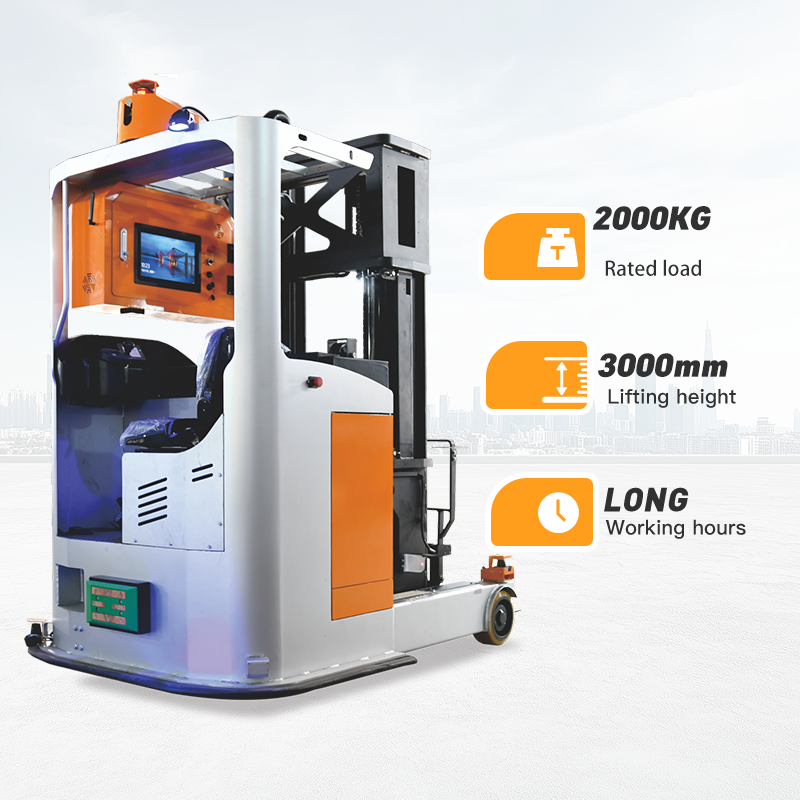 CE
Reach Truck AGV Forklift 2T 3M Laser Slam Navigation CE Certified Warehouse Automation Robot for Factory Logistics
A 2-tonne reach AMR that retracts its mast into the chassis, working in narrower aisles than a counterbalanced truck while still reaching 3 m of selective racking.
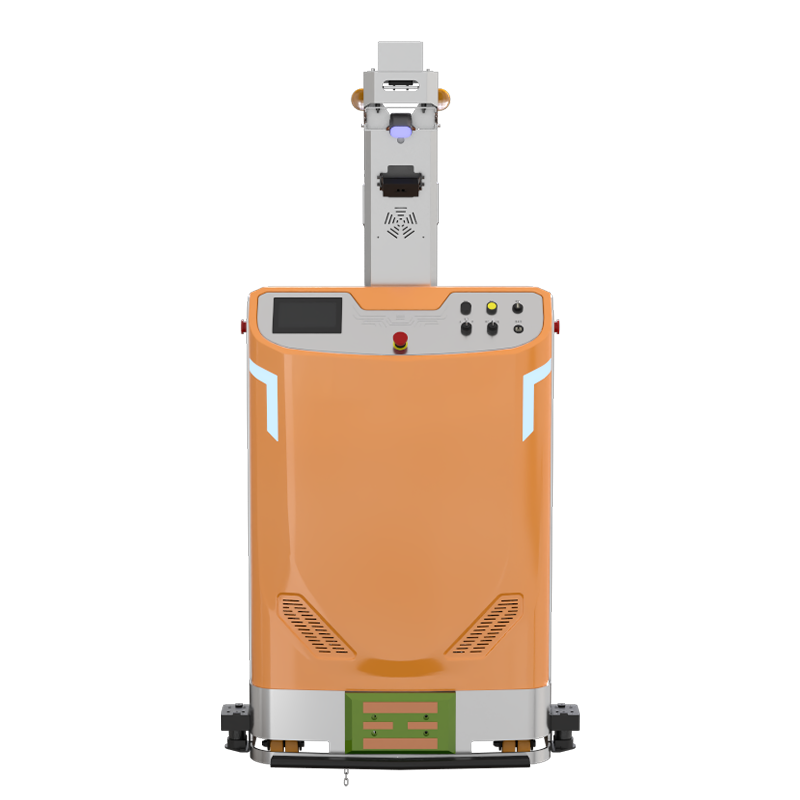 COMPACT
Material Handling AGV Body 2T with Narrow Body Compact Chassis for Efficient Production Line & Workshop Transport in Tight Space
A compact-chassis handling AMR for production lines and workshops where turning radius, not payload, is the binding constraint on throughput.
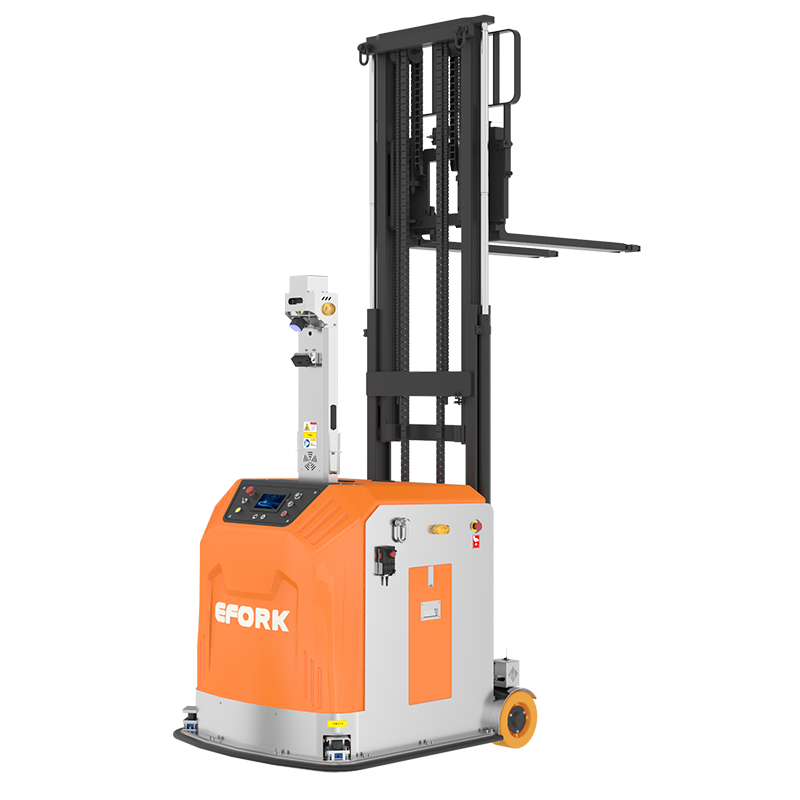 3D SLAM
EFORK Heavy Duty Forklift AGV Counterbalanced Body 2T 3M Fork Legs High Flexibility 3D SLAM Navigation WIFI/5G for Pallet
Counterbalanced body with high-flexibility fork legs and natural-feature 3D SLAM localisation — no reflectors, no floor tape, plus WiFi/5G fleet connectivity.
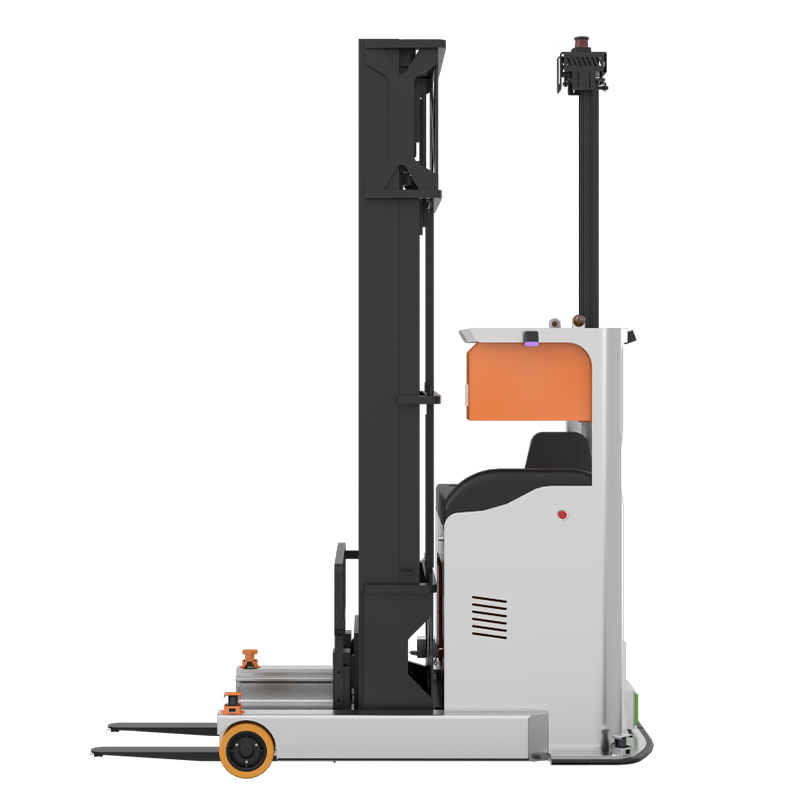 6.5 M
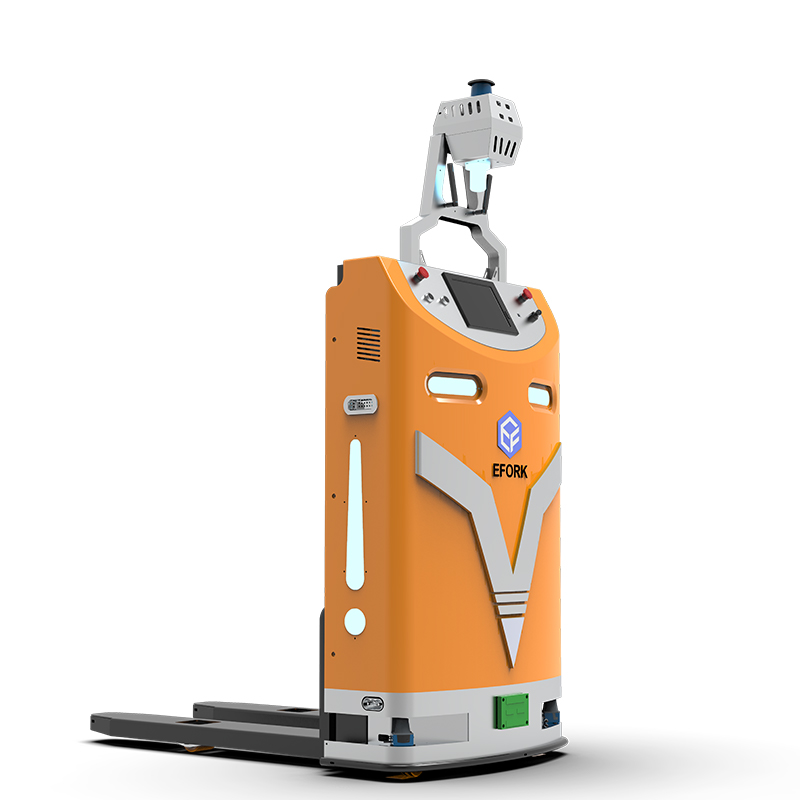
Heli Yufeng CQDE20HJ-65S 2T 6.5M Reach Truck AGV Body Laser Slam Navigation for Pallet Handling High Lifting Smart Warehouse
A 6.5 m high-lift reach AMR built on the proven Heli Yufeng chassis, aimed squarely at high-bay pallet handling inside smart warehouses.
 SLIM
Latest Design Tech Slim Stacking AGV Forklift CE Certified 2T 3M 3D SLAM for Warehouse Automation Handling and Lifting Robot
A slim-body stacking AMR for operations that need CE-certified 2 t / 3 m handling without surrendering valuable aisle width.
 3.5–5 T
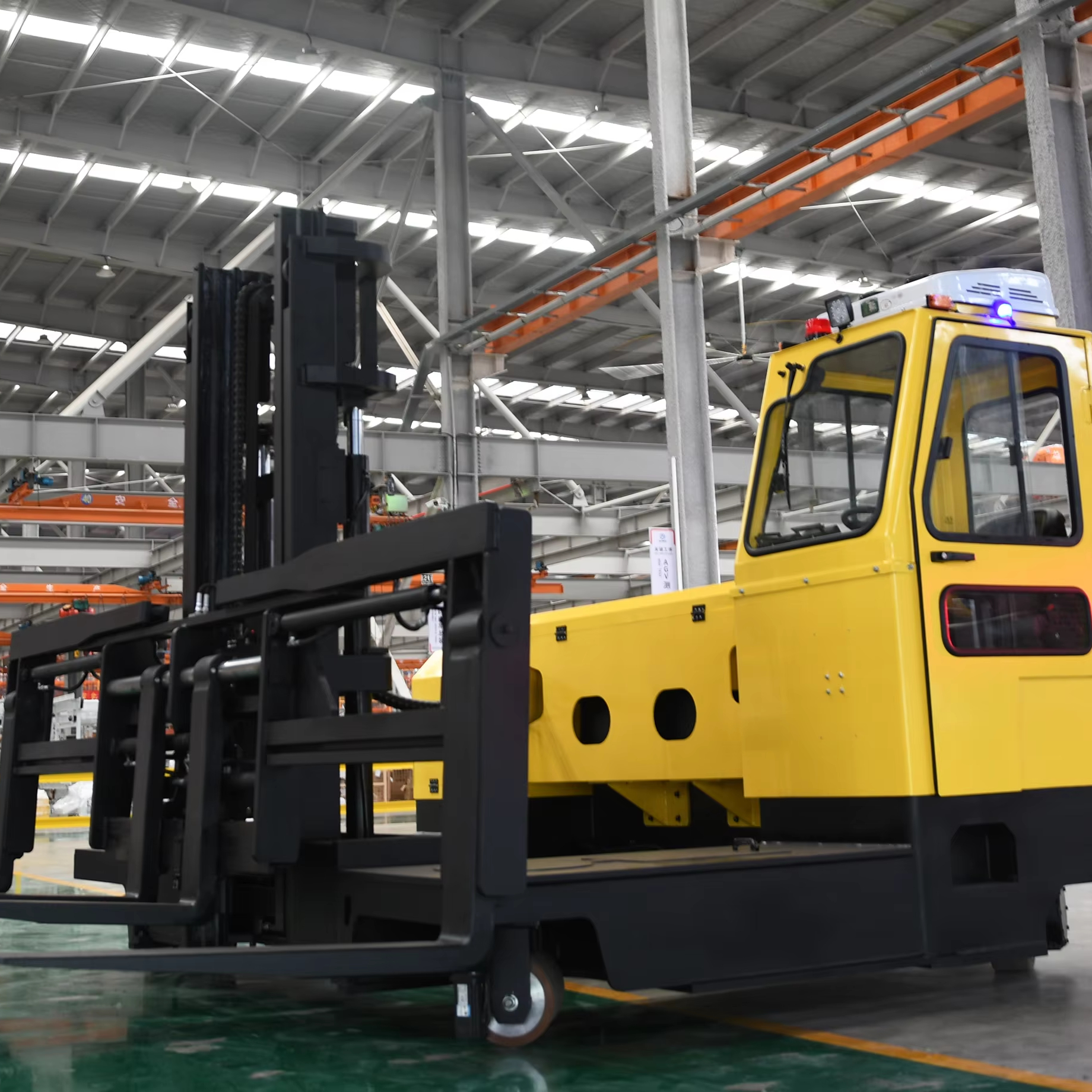
Multi-directional Forklift Reach Truck Stacker 3.5 Ton 5Ton Full Way Eclectic Side Loader Forklift With Wide Body Seat
A full-way side loader in 3.5 t and 5 t versions that travels forward, sideways and diagonally — designed for long loads that conventional trucks cannot turn.
 4.5 M
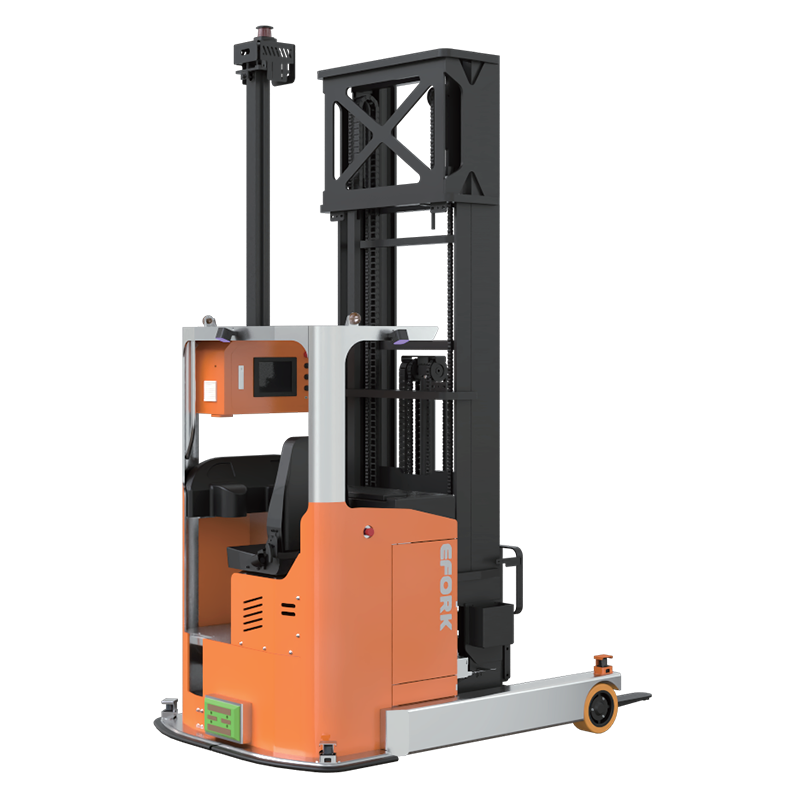
4.5M Reach Truck AGV Body 2T for Pallet Handling High Lifting Smart Warehouse Logistics Robot Laser Slam Navigation CE Certified
Sits between low stackers and 6.5 m high-lift models — the practical choice for warehouses with mid-height racking and CE documentation requirements.
 3 T
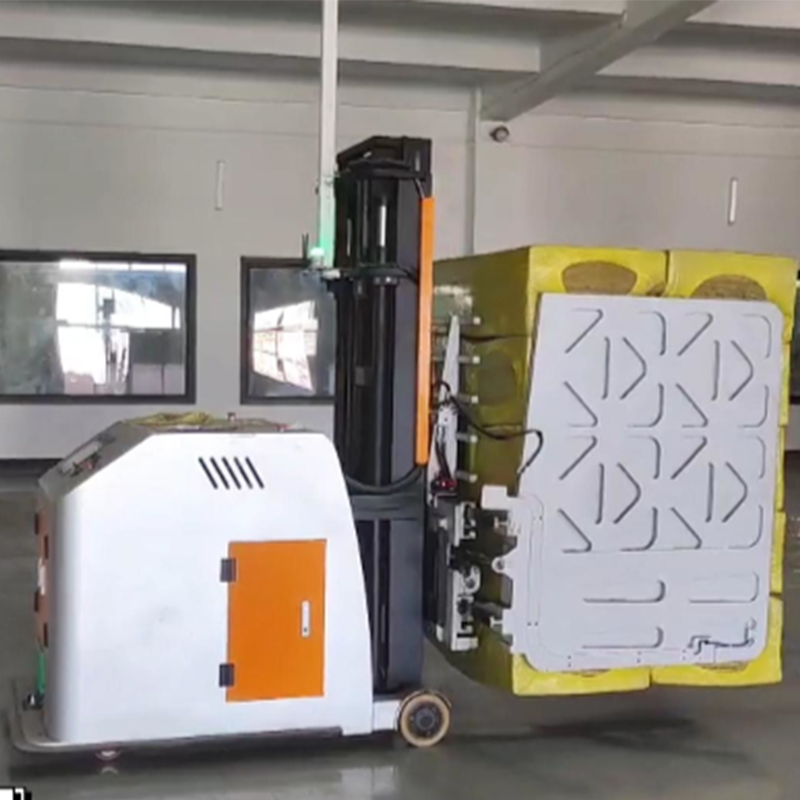
EFORK Automated Guided Vehicle AGV Forklift 3T 3000MM Counterbalanced 3D SLAM Construction Factory Logistics Pallet Truck
A 3-tonne counterbalanced AMR with 3D SLAM, built for construction-material yards and heavy factory logistics where trailer docking and rough duty cycles are routine.
Manufacturing Scale a Procurement Team Can Actually Verify
Automation suppliers are easy to find and hard to validate. Every figure below traces back to an onsite assessment or a management-system certificate — because the company behind the machine decides whether your fleet is still supported in year seven.
Four Capabilities That Separate a Manufacturer From a Reseller
China lists thousands of warehouse robot suppliers. Fewer than a hundred actually control their own chassis production, navigation stack and service documentation. These are the four checks our buyers run first.
In-House Manufacturing
Chassis, masts and control integration are built and tested on our own lines, with incoming-material and finished-product inspection before shipment. Buyers receive FAT reports, packing lists and serial-number traceability — documents that matter for insurance and customs.
Laser & 3D SLAM Navigation
Choose reflector-based laser navigation for fixed, highly repetitive routes, or 3D SLAM for natural-feature localisation that removes reflector and floor-tape installation. Both run on the same fleet controller, so mixed navigation inside one building is practical.
One-Stop Turnkey Integration
AGV forklifts, AS/RS stacker cranes, four-way shuttles and RGVs come from a single source and are engineered as one WMS-ready system. One interface, one schedule, one commissioning team — instead of four vendors blaming each other's software.
Audited Compliance & Export Terms
CE marking under 2006/42/EC, ISO 9001 and ISO 45001 systems, plus SGS onsite verification of premises and legal status. Accepted Incoterms include FOB, CFR, CIF, EXW, FAS, CIP and DDP; payment runs through L/C, D/P, D/A, MoneyGram, credit card or Western Union in USD, EUR or CNY.
How Warehouse AMR Buying Behaviour Is Shifting Through 2030
Purchasing patterns are moving faster than the hardware itself. These four shifts are already reshaping how procurement teams shortlist, budget and contract warehouse robotics suppliers.
From AGV to AMR by Default
Buyers increasingly refuse projects that require reflector grids, magnetic tape or QR floor codes. Natural-feature navigation shortens site preparation by weeks and makes layout changes cheap, so tenders now specify SLAM capability as a baseline rather than an upgrade.
From Single Truck to Fleet Economics
The question has changed from "what does one robot cost" to "what is the cost per pallet moved at peak". Procurement teams now demand cycle-time simulation, charging strategy, traffic management and expansion headroom before they sign — a single-unit quote no longer wins a tender.
From CAPEX to OPEX and RaaS
Robotics-as-a-service, leasing and throughput-based contracts are expanding fast, especially among 3PLs that cannot lock capital into a five-year asset. Suppliers that can offer flexible financing alongside CE documentation and spare-part guarantees move to the shortlist faster.
From Sourcing in China to Co-Engineering With China
Overseas buyers are no longer shopping catalogues. They send pallet specifications, rack drawings and WMS schemas and expect engineering feedback within days. Suppliers who respond with a layout and a simulation — not a price list — are winning the multi-year framework agreements.
Where Warehouse Robotics Hardware Is Heading Next
Four engineering directions are visible across our own roadmap and across every serious tender we receive. They matter because they decide whether today's purchase is still serviceable in 2032.
3D SLAM Becomes the Standard Stack
Multi-layer LiDAR plus visual fusion is replacing single-plane scanning, giving robots stable localisation around moving forklifts, shrink-wrapped pallets and changing rack contents. Expect sub-20 mm docking repeatability to become an ordinary specification rather than a premium feature.
WMS/WCS Native Coordination
Robots are being designed as nodes in a warehouse execution system rather than standalone machines. Native REST and MQTT interfaces, digital-twin commissioning and cloud fleet dashboards are moving from optional services to baseline deliverables on every project.
Higher, Narrower and Colder
Three-way VNA bodies are pushing past 10 m, chassis widths keep shrinking for retrofit projects, and cold-storage variants are specified with heated sensors, low-temperature lubricants and lithium batteries rated for −25 °C duty cycles.
Safety Standardisation and Certification
ISO 3691-4 functional-safety requirements and CE marking under 2006/42/EC are becoming non-negotiable in European and North American tenders. Certified safety scanners, validated stopping distances and documented risk assessments are now procurement filters, not talking points.
Match the Platform to the Constraint, Not the Budget
Start from the aisle width, the rack height and the pallet bottom. Those three variables eliminate more wrong choices than any price comparison ever will.
| AMR Platform | Typical Load | Lift / Height | Navigation | Best-Fit Application |
|---|---|---|---|---|
| Pallet Stacker AGV | 1.5 – 2 t | 1.6 – 3 m | 3D SLAM / Laser | Floor-to-rack transfer, line-side delivery, low racking |
| Reach Truck AGV | 1.5 – 2 t | 3 – 4.5 m | Laser / 3D SLAM | Selective racking where aisles are tighter than a counterbalanced truck allows |
| High-Lift Reach AGV | 2 t | 6.5 m | Laser SLAM | High-bay pallet handling inside smart warehouses |
| Counterbalanced AGV | 1.5 – 3 t | 3 m | 3D SLAM | Closed-bottom pallets, cages, trailer docks and production lines |
| Slim Stacking AGV | 2 t | 3 m | 3D SLAM | Retrofit projects where aisle width cannot be changed |
| Multi-Directional Side Loader | 3.5 – 5 t | Forward / side / diagonal | Operator-driven | Long loads, timber, pipes and oversized goods |
Values reflect standard configurations of the listed models. Final specifications are confirmed during project engineering based on your load units, floor flatness and building constraints.
The Questions Buyers Ask Before the First Quote
Straight answers to the eight issues that come up in almost every warehouse AMR enquiry.
What is the minimum order quantity for a warehouse AMR from Nexrik?
Should I choose 3D SLAM or reflector-based laser navigation?
Can your AMRs integrate with our existing WMS or ERP?
Which certifications and audits does the company hold?
What do I actually need to send you for a proposal?
Do you offer OEM, ODM and buyer-label production?
Which trade and payment terms are accepted?
How should I compare two AMR quotations fairly?
Anhui Nexrik Intelligent Technology Co., Ltd.
Nexrik is a high-tech manufacturer specialising in the research, production and integration of intelligent warehousing equipment — AGV forklifts, AS/RS stacker cranes, four-way shuttles and rail-guided vehicles. Our plants sit in the Huagang Industrial Park, Feixi County, Hefei, a recognised hub for China's forklift industry with mature component supply chains and an experienced technical workforce.
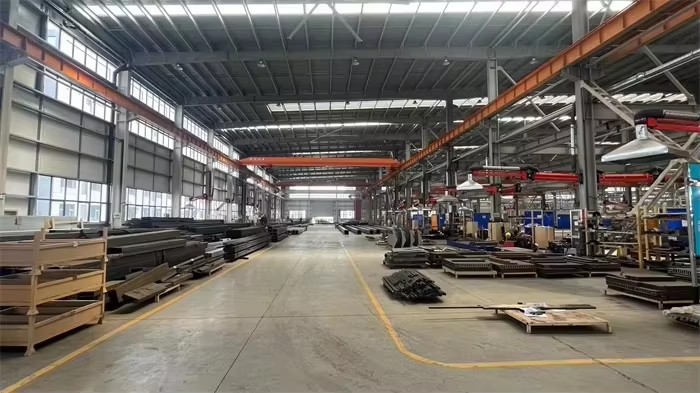
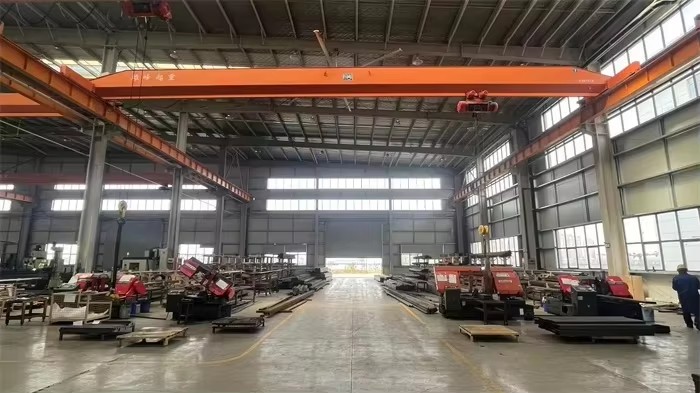
We employ 1,152 people across 66,650 m² of production floorspace, generate more than USD 100 million in annual revenue, and have exhibited at seven international trade shows. Buyers in Southeast Asia, South America, Eastern Europe, South Asia and North America rely on us for turnkey automation rather than single machines.
Every project begins with your pallet types, rack drawings and throughput targets. Our engineers simulate traffic before a single truck is built, then hand over with FAT documentation, operator training and lifecycle support. That sequence is why first-time automation buyers and multi-site operators return to the same supplier.
- Business type: manufacturer and trading, factory-direct supply
- Equipment range: AGV forklifts, VNA AGVs, AS/RS stacker cranes, four-way shuttles, RGVs
- Services: OEM, ODM, full customisation, buyer-label production, WMS integration
- Location: Huagang Town Industry-City Integration Demonstration Zone, Feixi County, Hefei, Anhui, China




Send Three Inputs. Get a Fleet Layout and Payback Estimate.
Share your pallet specification, rack drawing and peak throughput target. An engineer — not a sales script — will come back with the equipment mix, fleet size and an estimated payback period for your building.
Contact Us