Factory-Direct Sourcing · AGV Forklifts · AS/RS · 3D SLAM
China Best Smart Logistics Robot Factories & Suppliers
A procurement-grade guide to choosing China-based AGV forklift, pallet stacker, reach truck and automated storage suppliers — with factory verification, application fit, total cost of ownership and future buying trends.
Product Recommendation
8 Smart Logistics Robot Systems from Verified China Factory Suppliers
These eight models cover the main starting points for warehouse automation: industrial pallet trucks, self-loading stackers, slim AGV bodies, counterbalanced AGV forklifts, reach truck AGVs, Heli/Yufeng slim stackers, automated reach trucks and 3-ton pallet stacker AGVs. Product links and image paths are preserved exactly from the original catalogue so buyers can compare specifications without losing source context.
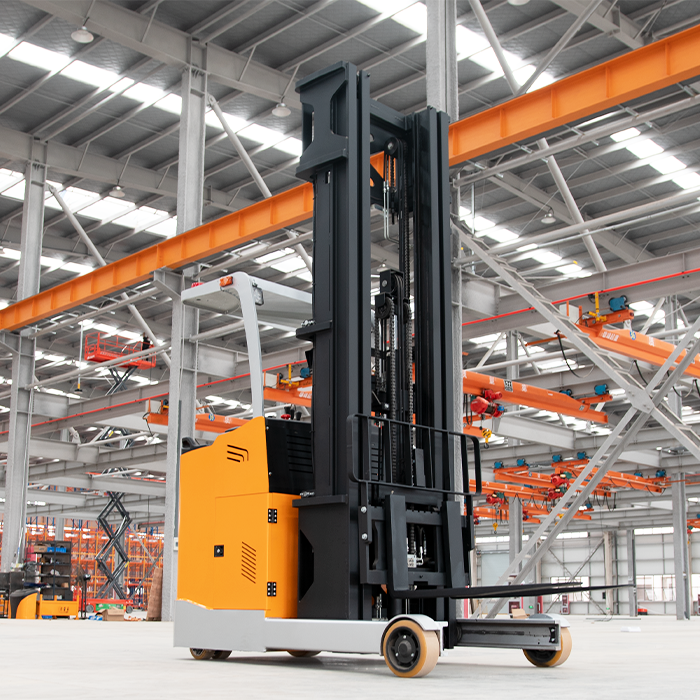
China Wholesale 2000kg 12m 8m 6m Industrial Forklift Pallet Truck Good Price
A 2,000 kg industrial pallet truck engineered for 6 m, 8 m and 12 m handling. Suitable for high-bay pallet movement, loading docks and production logistics where conventional forklift work must be converted into a repeatable automated route.
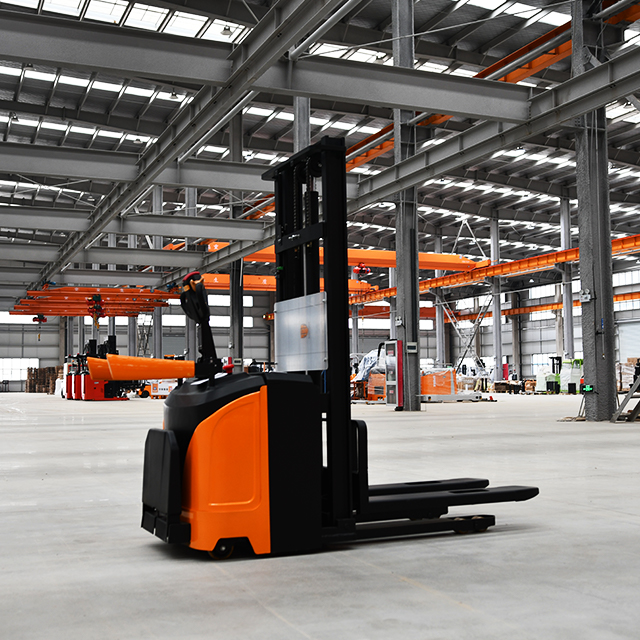
Factory Direct Sales Electric Pallet Lift Stackers 1.5-Ton 2-Ton 3Ton 3m 4m 5m Portable Self-Loading
A self-loading electric pallet lift stacker family in 1.5 t, 2 t and 3 t classes with 3 m, 4 m and 5 m lift options. A practical choice for end-of-line stacking, temporary storage and fast warehouse expansion with lower infrastructure barriers.
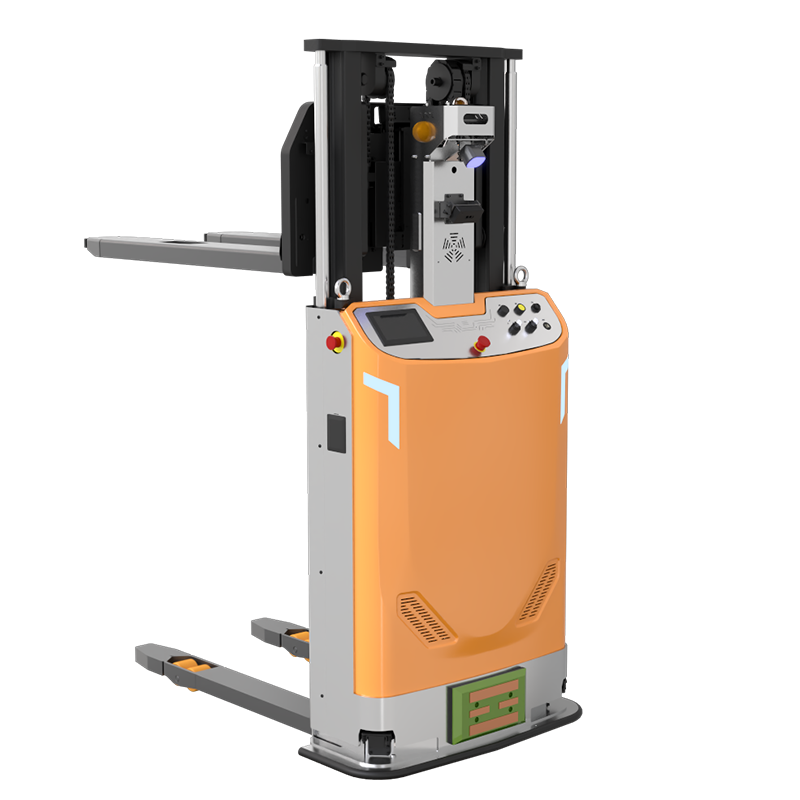
2T 1.6 M Slim Narrow-Body Stacker AGV Body for High-Density Storage High Lift Pallet Stacking AGV Maximize Warehouse Space
A 2 t, 1.6 m slim narrow-body stacker AGV body for high-density storage. Its compact footprint supports high-lift pallet stacking in aisles where a standard truck would waste valuable storage cube and slow down fleet traffic.
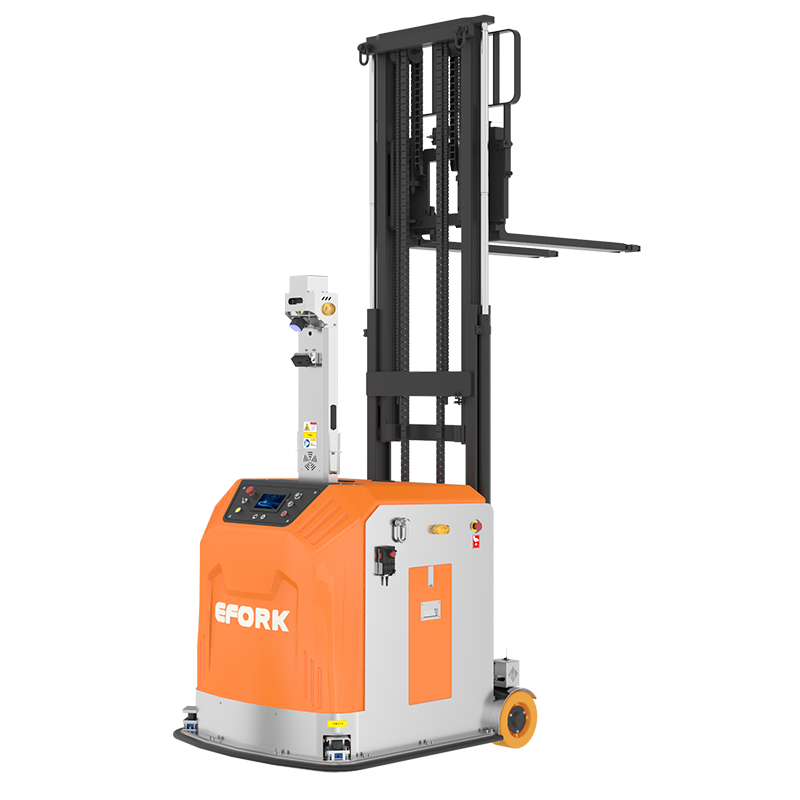
EFORK Heavy Duty Forklift AGV Counterbalanced Body 2T 3M Fork Legs High Flexibility 3D SLAM Navigation WIFI/5G for Pallet
A heavy-duty counterbalanced AGV forklift with 2 t capacity, 3 m fork legs, 3D SLAM navigation and WIFI/5G communications. Designed for pallet handling with high flexibility across mixed production, staging and warehouse zones.
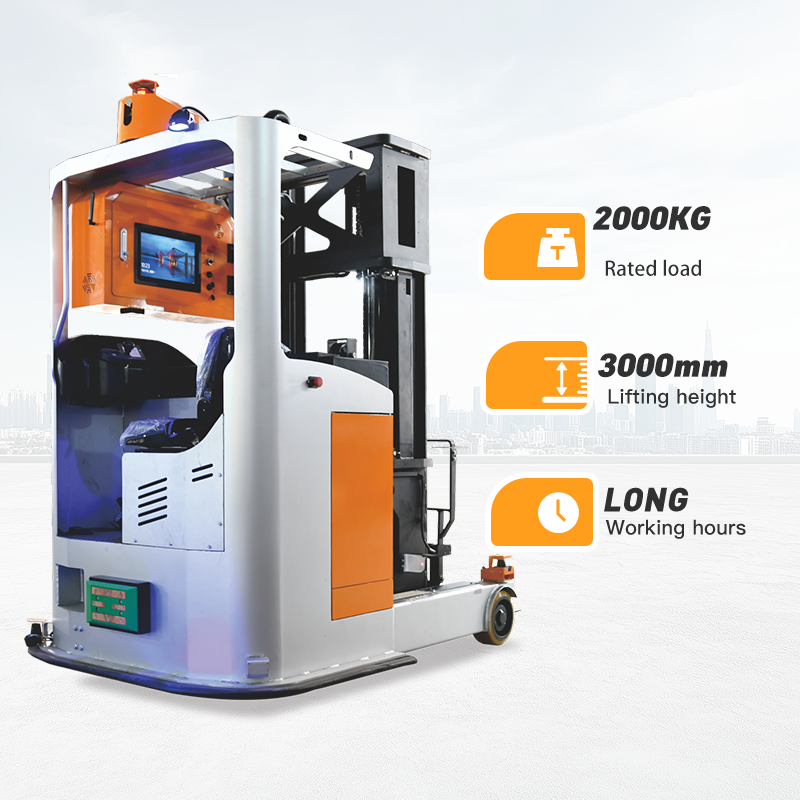
Reach Truck AGV Forklift 2T 3M Laser Slam Navigation CE Certified Warehouse Automation Robot for Factory Logistics
A CE-certified 2 t reach truck AGV with 3 m lift and laser SLAM navigation. Well suited to warehouse automation where tight aisle operation, repeatable pallet put-away and stable route following matter more than maximum travel speed.
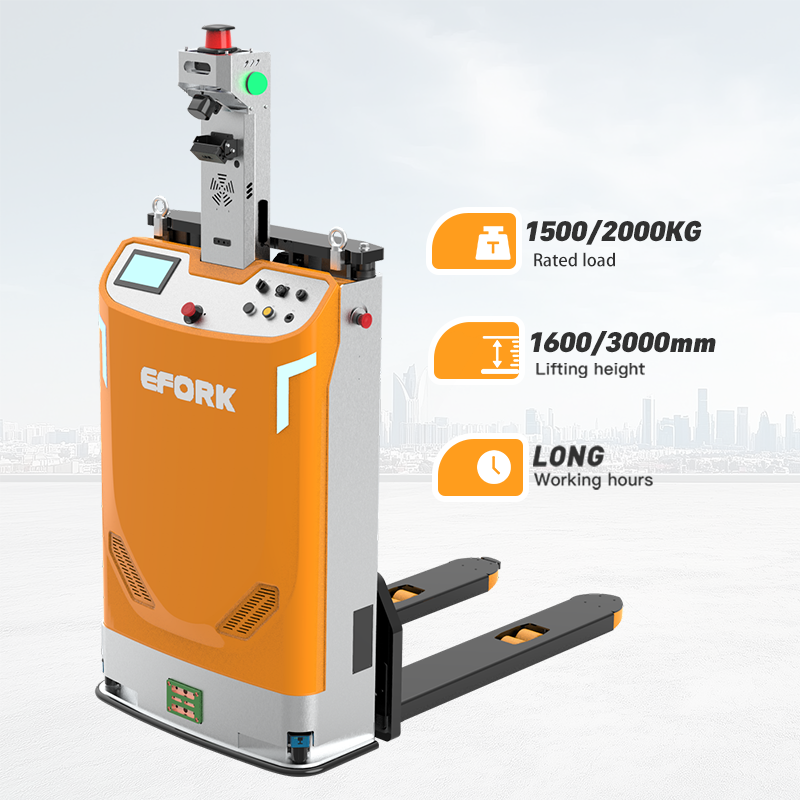
New Heli Yufeng EDA20-30 Slim Stacking AGV Forklift CE Certified 2T 3M 3D SLAM WIFI/5G for Stacking Mobile Robot
A new Heli Yufeng EDA20-30 slim stacking AGV with 2 t capacity, 3 m lift, 3D SLAM and WIFI/5G. CE certified and aimed at mobile robot stacking, line-side replenishment and space-constrained storage zones.
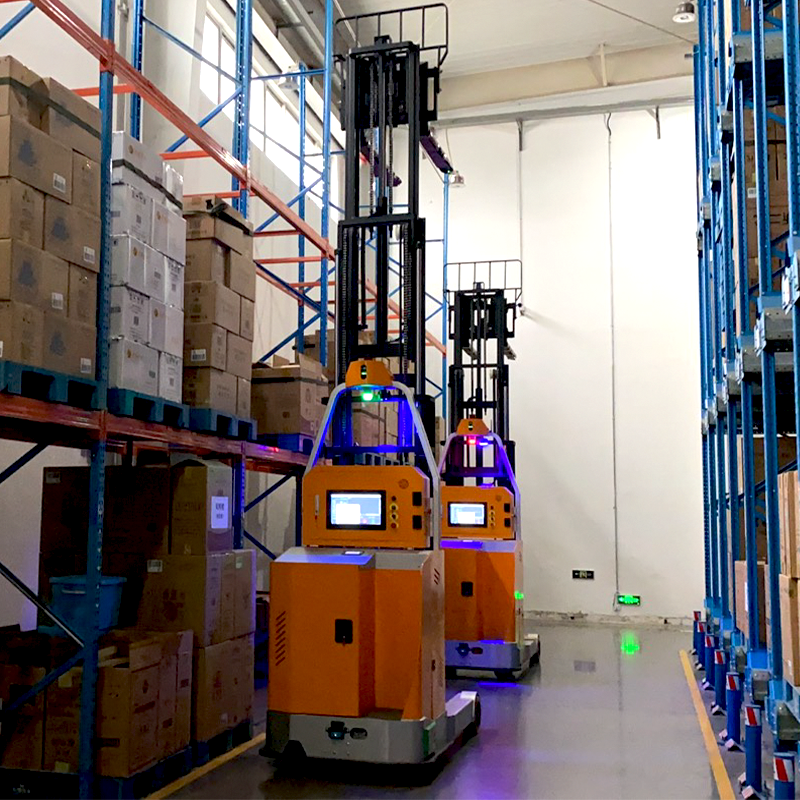
EFORK EQDA15-30 Automated Reach Truck Laser SLAM Navigation 1.5T Capacity ±10mm Accuracy Forklift for Warehouse Logistics
An EFORK EQDA15-30 automated reach truck with 1.5 t capacity and ±10 mm positioning accuracy. Laser SLAM navigation supports warehouse logistics that require high repeatability, careful pallet engagement and reliable rack interface alignment.
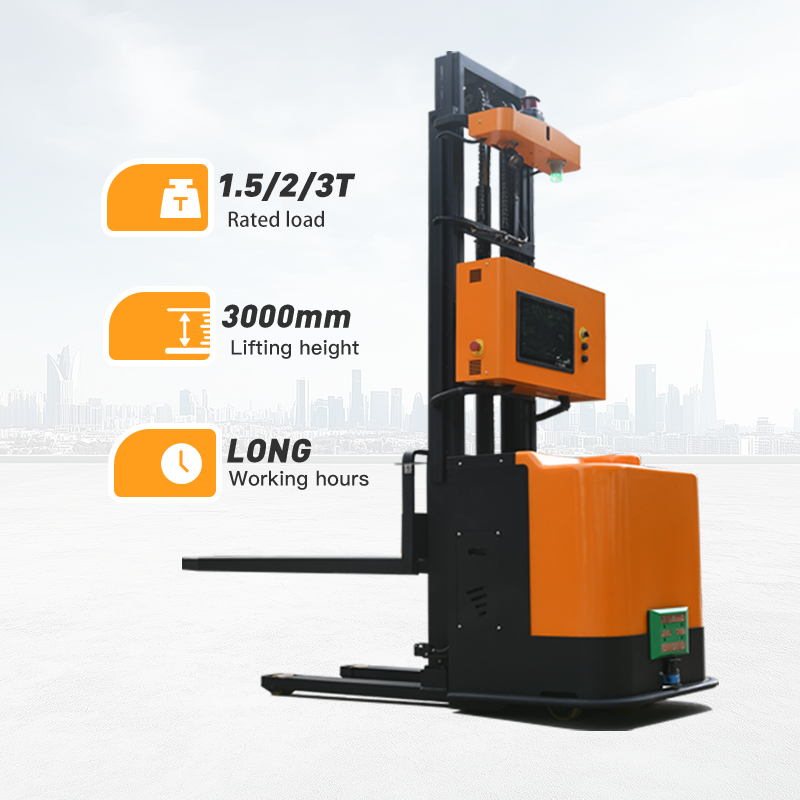
3T 3000mm Pallet Stacker Automated Guided Vehicle Forklift Truck for Intelligent Warehouse Automation
A 3 t, 3,000 mm pallet stacker AGV forklift truck for intelligent warehouse automation. It fits projects that need heavier payloads than a standard stacker without immediately moving to a full counterbalanced platform.
For a layout-specific recommendation, include your pallet drawing, rack height, aisle width, floor condition, WMS interface and required moves per hour when you use the inquiry button. Images are displayed in full without cropping or ratio compression.
Information Gain
What “Best” Means in the China Smart Logistics Robot Market
The phrase “China best smart logistics robot factories” is a commercial search term, not an engineering specification. The useful question is narrower: which factory is best for your pallet, rack, aisle, throughput, software environment and service model?
A supplier can be excellent for a 1.5 t reach truck AGV project and still be unsuitable for a 40 m AS/RS stacker crane, frozen-storage shuttle system or a mixed-fleet brownfield retrofit. Procurement committees should convert “best” into measurable criteria: load accuracy, lift height, navigation stability, safety validation, WMS integration, audit evidence, spare-parts depth, commissioning discipline and the ability to scale from a single pilot unit to a coordinated fleet.
China’s advantage is not only price. The country has a mature supply chain for batteries, sensors, servo systems, forklift chassis, safety scanners and warehouse software. Clusters such as Hefei combine forklift manufacturing experience with automation engineering, which can shorten lead times and make OEM/ODM customization realistic. That same density means buyers must separate trading companies and assemblers from manufacturers with process control, traceability and documented inspection.
A credible evaluation begins with your own data: pallet length, width and weight; rack beam heights; aisle width; floor flatness; required moves per hour; peak and average throughput; shift pattern; WMS/ERP rules; safety policies; and site voltage. Suppliers who quote before asking these questions are selling a catalogue item, not an engineered solution. The stronger supplier will simulate traffic, size the fleet against peak demand and define the acceptance test before production.
For buyers seeking genuine information gain, compare factories on evidence rather than adjectives. SGS onsite verification, ISO management systems, CE marking, patents, factory floor space, employee count and export experience are useful proxies. They become persuasive only when combined with sample project references, a factory acceptance test, a commissioning plan and a documented spare-parts strategy. This is especially important for 3D SLAM AGV forklifts, where performance depends on building geometry, rack density, Wi-Fi/5G coverage and traffic rules.
Supplier Due Diligence
A 6-Point Framework for AGV and AS/RS Suppliers
Use the same scorecard for every Chinese supplier quote. Weight the criteria according to project risk.
Factory Scale and Traceability
Check floor space, staff, production lines, inspection records and legal identity. A 66,650 m² factory with 1,152 verified staff is a meaningful capacity signal, but it must be matched to your product family and order timing.
Navigation Fit: 3D SLAM vs Laser
3D SLAM localizes using natural building features and can reduce reflectors or floor tape. Laser navigation remains strong for fixed, repetitive routes. The “newer” technology is not automatically the lower-risk choice.
Safety and Compliance Evidence
Request CE documentation under 2006/42/EC where applicable, ISO 9001 and ISO 45001 evidence, risk assessment, safety scanner configuration, emergency stop logic, braking performance and load charts. Compliance should be audit-ready, not verbal.
WMS/WCS Integration Capability
Ask for a sample interface architecture, task-allocation logic, error handling and acceptance-test plan. A robot that cannot exchange reliable task status with the WMS becomes a manual island rather than an automated system.
Fleet Simulation and Engineering
Fleet size should be calculated from travel distance, lift height, pallet exchange time, charging windows and peak demand. A supplier that cannot model bottlenecks may over-sell trucks or under-size the charging strategy.
Lifecycle Cost and Service Model
Compare spare parts, remote diagnostics, training, warranty terms, response time, battery replacement and future fleet expansion. The lowest unit price can lose on total cost of ownership once uptime and reconfiguration are included.
Selection Matrix
Specification-to-Application Matrix
Shortlist equipment by task, not by product name alone. Final capacities and lift heights must be confirmed through project engineering.
| Equipment Family | Typical Load / Lift | Navigation / Guidance | Best-Fit Task | Procurement Note |
|---|---|---|---|---|
| Portable Electric Pallet Stacker | 1.5–3 t / 3–5 m | Manual or automated variant | End-of-line stacking, temporary storage, fast expansion | Confirm self-loading function and floor clearance. |
| Industrial Forklift Pallet Truck | 2,000 kg / 6–12 m | Application-dependent | High-bay pallet movement, loading docks, production supply | Check mast height, aisle width and safety zoning. |
| Slim Narrow-Body Stacker AGV | 2 t / 1.6 m | AGV body integration | High-density storage with limited aisle space | Confirm body width, battery strategy and rack tolerance. |
| Counterbalanced AGV Forklift | 2 t / 3 m forks | 3D SLAM, WIFI/5G | Mixed production and warehouse pallet handling | No front outriggers; validate dock and trailer interfaces. |
| Reach Truck AGV | 2 t / 3 m | Laser SLAM | Repeatable put-away in tighter selective racking | Request route stability test and CE documentation. |
| Slim Stacking AGV | 2 t / 3 m | 3D SLAM, WIFI/5G | Line-side replenishment and space-constrained stacking | Check Heli/Yufeng platform support and spare parts. |
| Automated Reach Truck | 1.5 t / ±10 mm | Laser SLAM | High-accuracy pallet engagement and rack interface alignment | Use for tasks where repeatability matters more than speed. |
| 3-Ton Pallet Stacker AGV | 3 t / 3,000 mm | Automated guided vehicle | Heavier pallet stacking in intelligent warehouses | Verify floor loading, tyres and safety scanner coverage. |
Future Procurement Trends
How Smart Logistics Robot Buying Will Change 2025–2030
Procurement teams are moving from unit price to lifecycle outcome. In China sourcing, the change is visible in RFQs: more buyers ask for CAD layouts, WMS integration maps, safety validation and remote commissioning before they discuss price.
TCO Replaces the Lowest Quote
Buyers increasingly compare energy consumption, uptime, battery replacement, spare parts, software updates and reconfiguration cost. A lower purchase price can be more expensive over a decade if the fleet cannot be expanded or serviced locally.
Pilot-First Fleet Purchasing
MOQ 1 set lets a buyer validate routes, cycle times and operator acceptance before scaling. This lowers approval risk and creates real data for the full-fleet business case, especially for 3D SLAM AGV forklifts in existing buildings.
Infrastructure-Light Navigation
3D SLAM reduces dependence on reflectors, floor tape and fixed paths. For brownfield warehouses, that can shorten site preparation and make layout changes less costly. Laser navigation will remain relevant where routes are highly repetitive and controlled.
Outcome-Based Integration
Automation is being purchased as a system outcome: pallets per hour, inventory accuracy, ergonomic risk reduction and uptime. That pushes suppliers to define interfaces, acceptance tests and escalation logic with the WMS/WCS from day one.
Audit-Ready Documentation
Importers and tenders increasingly expect CE, ISO 9001, ISO 45001, SGS onsite verification and patent evidence in the technical file. Documentation quality is becoming a supplier-selection criterion, not an afterthought.
Global Service from Day One
China factory-direct supply is now judged on remote diagnostics, spare-parts kits, local commissioning partners and training. Buyers want to know who will respond when a safety scanner faults during peak season.
Product Development Trends
What the Next Generation of Smart Logistics Robots Will Deliver
Hardware improvements are now less about a single specification and more about how robots behave inside a live warehouse: density, safety, uptime, data integration and expandability.
Higher, Narrower, Denser
Very narrow aisle AGVs, high-bay stacker cranes and four-way shuttles continue to push storage density. Buyers should evaluate future rack heights and aisle plans before choosing a chassis, because changing AS/RS architecture later is costly.
3D SLAM Plus Multi-Sensor Fusion
Future AGVs will combine 3D SLAM, laser scanners, vision, IMU and safety sensors to maintain localization when racks change or people cross the route. The value is less commissioning time and more resilience in real buildings.
Fleet Orchestration Becomes the Product
A single robot is a machine; a fleet is a traffic system. Fleet-manager software, charging rules, deadlock avoidance, task prioritization and live dashboards are becoming more important than top speed in multi-shift operations.
AS/RS and Mobile Robots Converge
Stacker cranes, four-way shuttles and AGV forklifts are increasingly engineered as one WMS-ready system. The practical benefit is fewer integration boundaries, clearer responsibility and a single acceptance test for pallet flow.
Cold Chain and Harsh Environments
Frozen storage, dust, humidity and temperature cycling demand more than a standard battery and seal package. Buyers should specify duty cycle, condensation control, lubrication and spare-parts availability for cold or harsh zones.
Safety and Energy Engineering
Lithium battery strategy, opportunity charging, thermal management and safety validation will shape fleet availability. The procurement question should be: how many productive hours can this robot deliver per day after charging, maintenance and traffic waits?
Enterprise Advantage
Why Factory-Direct Supply from Nexrik Reduces Procurement Risk
Anhui Nexrik Intelligent Technology Co., Ltd. combines manufacturing scale, engineering integration and audit-ready documentation for AGV forklifts, AS/RS stacker cranes, four-way shuttles and intelligent warehousing projects.
In-House Manufacturing
Chassis, masts and control integration are built and tested on company lines, with onsite material and finished-product inspection before shipment. That reduces the gap between catalogue promises and delivered configuration.
One-Stop Turnkey Integration
AGVs, stacker cranes, four-way shuttles and RGVs can be engineered as one WMS-ready system rather than sourced from multiple integrators. Buyers gain clearer responsibility for interfaces, commissioning and acceptance.
Proven Compliance
CE marking under the Machinery Directive 2006/42/EC for applicable AGV ranges, ISO 9001 and ISO 45001 management systems, SGS onsite verification and awarded patents support customs, tenders and customer audits.
OEM, ODM and Buyer-Label Production
Full customization is available for load capacity, lift height, fork dimensions, battery configuration and cold-storage variants. That flexibility helps distributors and project integrators match local market requirements.
Global Sales and Project Support
Nexrik serves buyers across Southeast Asia, South America, Eastern Europe, South Asia and North America. For overseas projects, documentation, remote commissioning support and spare-parts planning should be agreed before the purchase order, not after the equipment arrives.
Accepted delivery terms include FOB, CFR, CIF, EXW, FAS, CIP and DDP. Accepted payment methods include L/C, D/P, D/A, MoneyGram, credit card and Western Union in USD, EUR or CNY.
Best-Fit Buyer Profiles
- Warehouse operators replacing repetitive forklift routes
- 3PL and e-commerce fulfilment centres needing scalable automation
- Distributors seeking OEM/ODM AGV supply from China
- Cold-chain, manufacturing and high-bay storage projects
Procurement FAQ
Smart Logistics Robot Buyer Questions
These are the questions that most often decide whether a China AGV forklift or AS/RS project moves from inquiry to pilot.
What is the minimum order quantity for an AGV forklift or stacker crane?
Should we choose 3D SLAM navigation or laser navigation?
Which certifications and audit documents should buyers request?
Can the robot integrate with our existing WMS or ERP?
How do we calculate the right fleet size?
Can China suppliers customize capacity, lift height and fork dimensions?
What trade and payment terms are commonly accepted?
How can a buyer verify a China factory before paying a deposit?
Turn Your Warehouse Data into a Right-Sized Robot Fleet
Send us your rack layout, pallet drawing, aisle width, floor condition, WMS interface and throughput target. The engineering team can then recommend the right mix of AGV forklifts, pallet stackers, reach truck AGVs or AS/RS equipment instead of guessing from a catalogue.
Inquire NowFactory-direct review · OEM/ODM options · MOQ 1 set for pilot projects · Email: info@nexrikbot.com