8 Forklift AGV Solutions for Fast, Low-Risk Automation
These eight models are the most practical starting points for buyers comparing narrow-aisle storage, reach-truck handling, pallet stacking and industrial pallet transport. Product images are shown in full proportion; model pages and inquiry routes are preserved exactly for procurement follow-up.
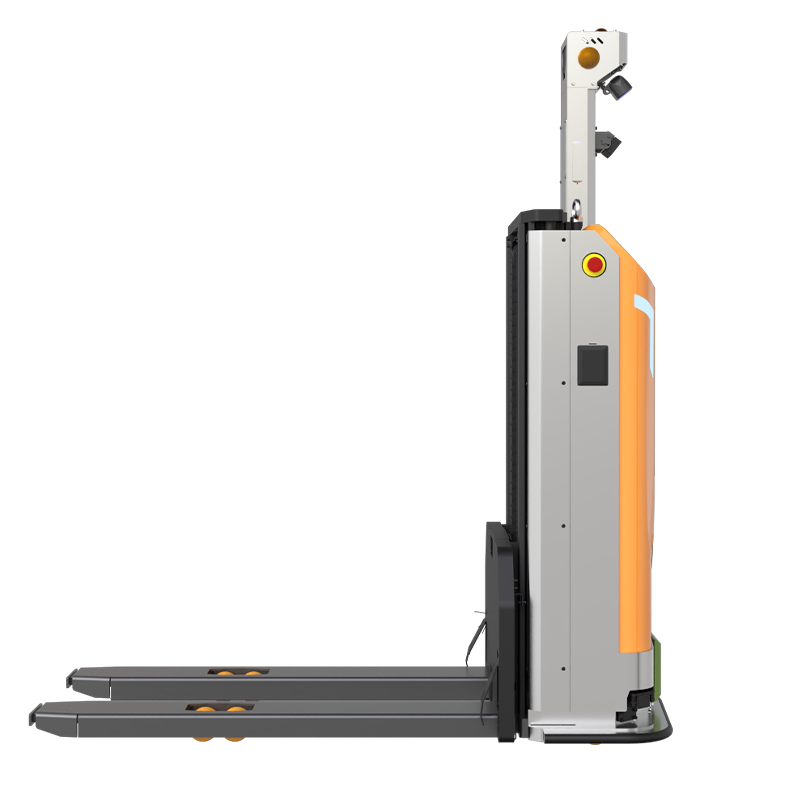
2T 3M Slim Narrow-Body Stacker AGV for High-Density Storage
Compact autonomous pallet stacking for narrow aisles, high-density racking and repetitive warehouse transfer.
- 2 T
- 3 m
- Slim body
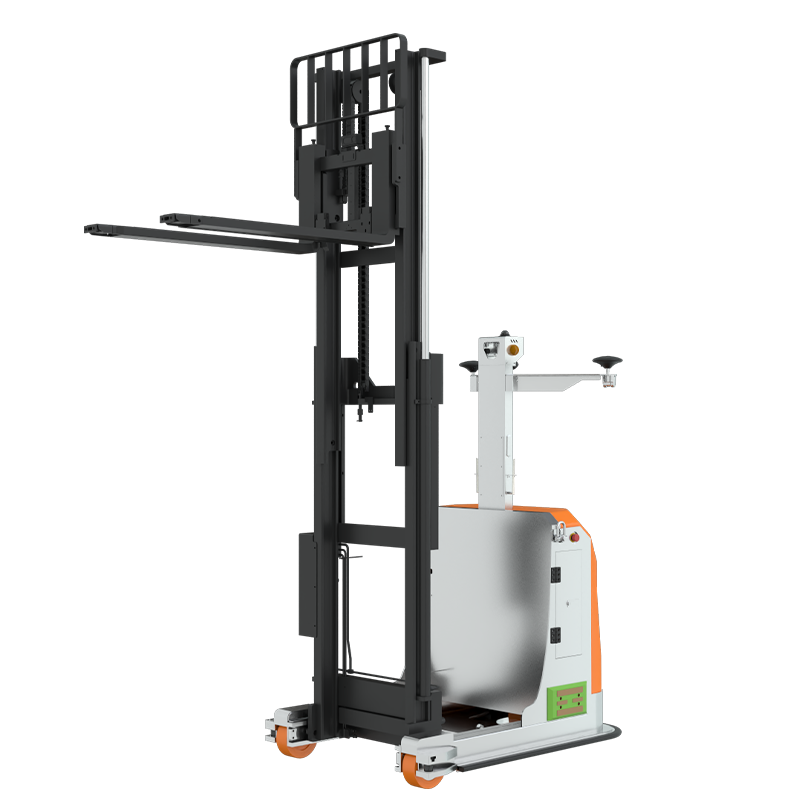
Reach Truck AGV Narrow Body 1.5T 3M with 3D SLAM
Fork-forward design and compact chassis for selective racking where aisle space and positioning accuracy matter.
- 1.5 T
- 3 m
- ±10 mm
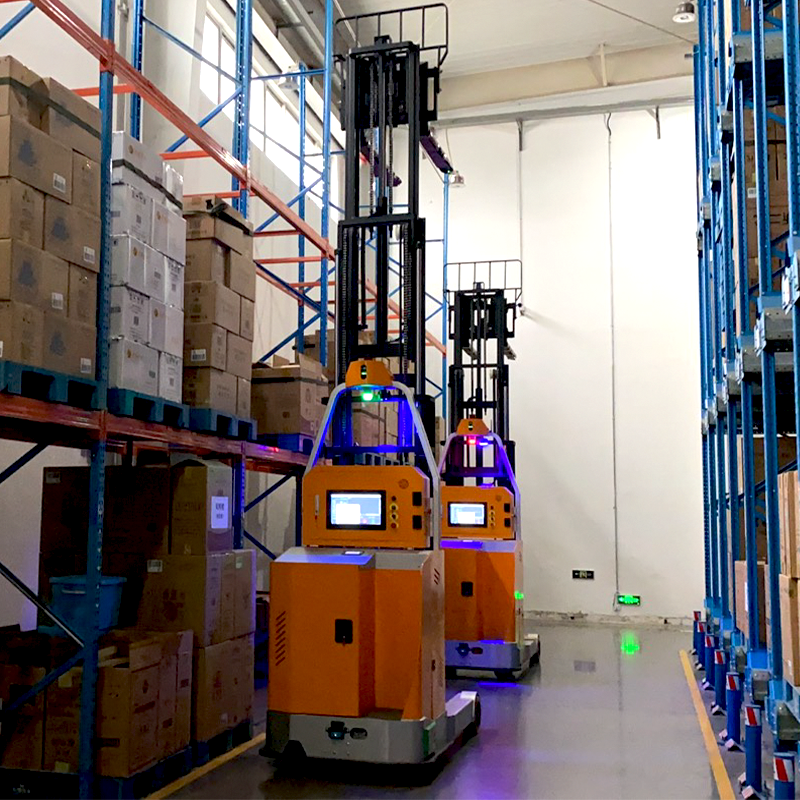
EFORK EQDA15-30 Automated Reach Truck Laser SLAM 1.5T
Laser SLAM navigation and ±10 mm accuracy for warehouse logistics, line-side feeding and repeatable put-away.
- 1.5 T
- Laser SLAM
- ±10 mm
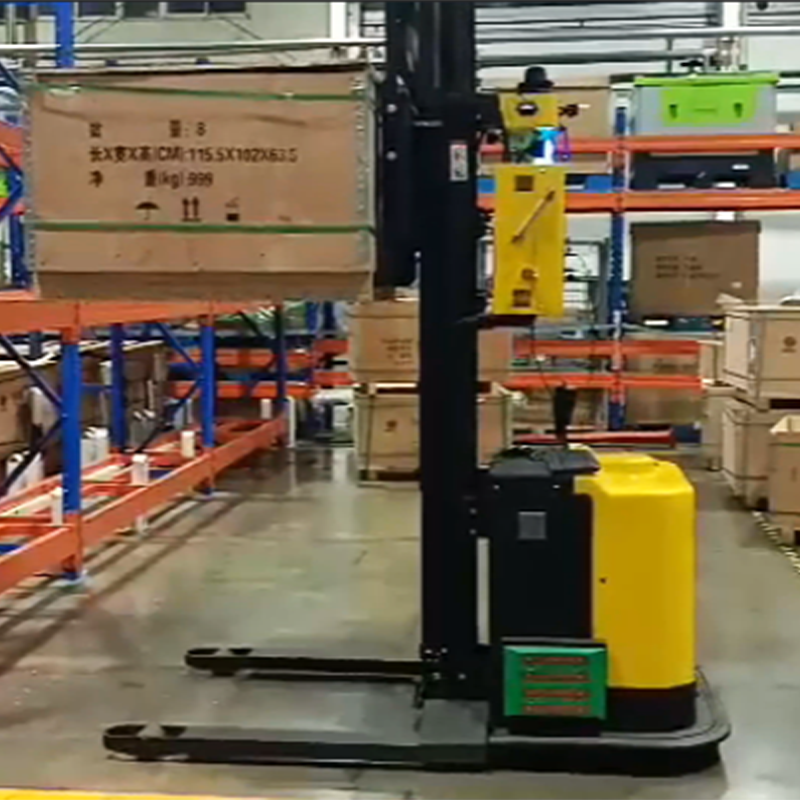
2T 3000MM Pallet AGV Forklift with 3D SLAM WIFI/5G
Automated guided pallet handling for warehouse automation, production logistics and flexible route changes.
- 2 T
- 3000 mm
- 3D SLAM
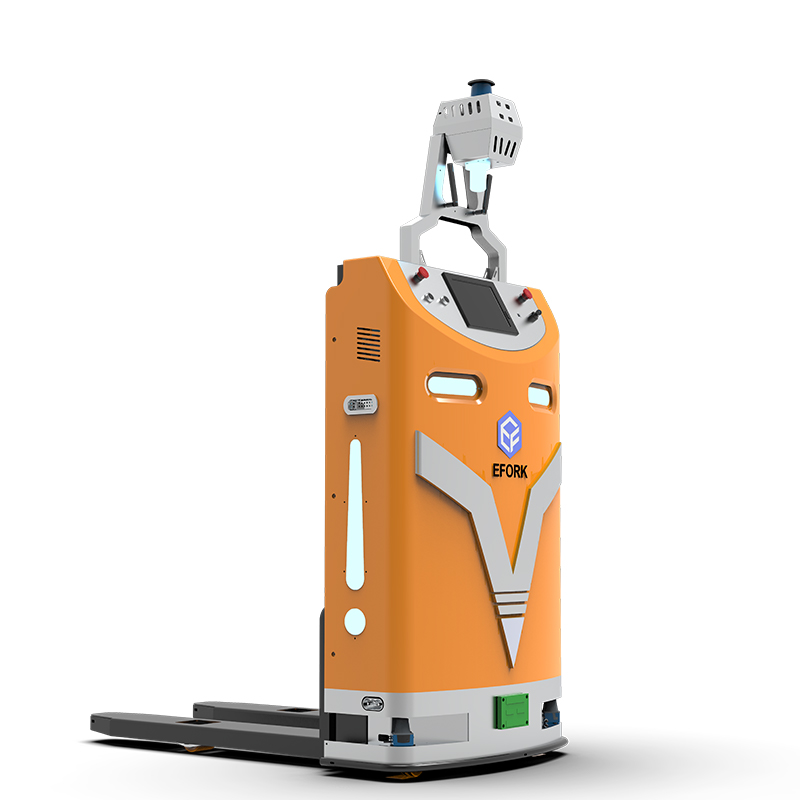
Latest Design Slim Stacking AGV Forklift CE Certified 2T 3M
CE-certified 3D SLAM stacking robot for warehouse handling, lifting and dense pallet flow.
- 2 T
- 3 m
- CE
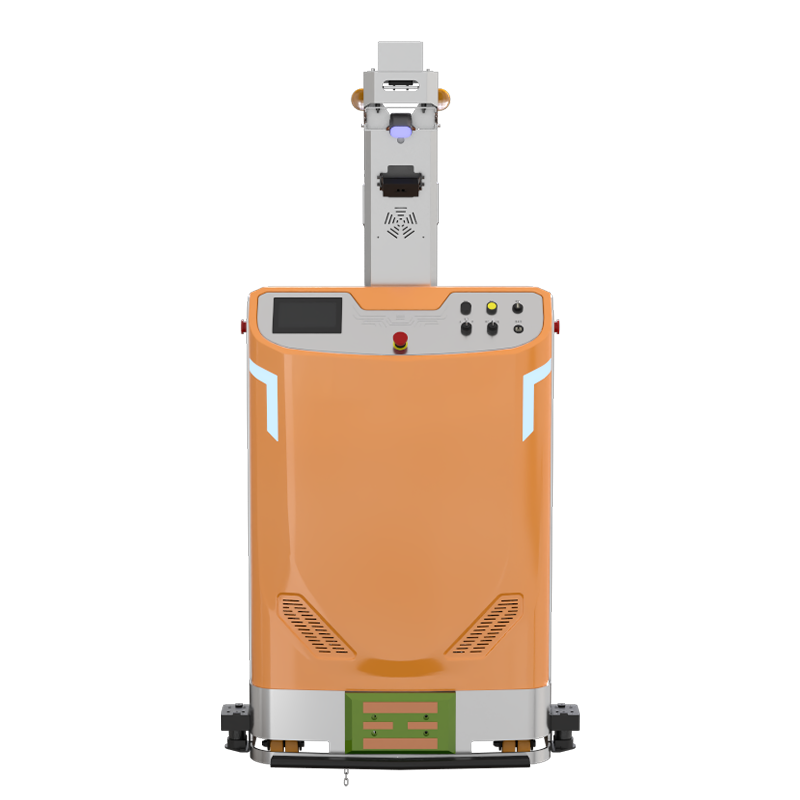
Material Handling AGV Body 2T with Narrow Compact Chassis
Designed for production lines and workshops where turning space is tight and manual handling creates bottlenecks.
- 2 T
- Narrow body
- Line feeding
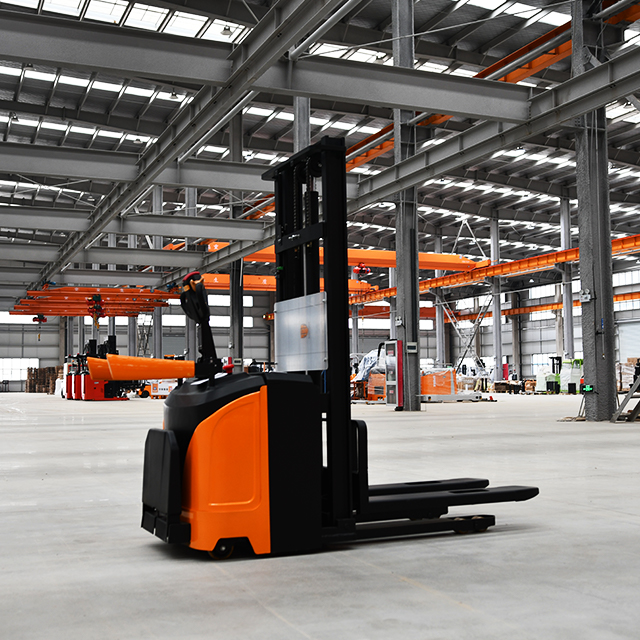
Factory Direct Electric Pallet Lift Stackers 1.5T–3T
Portable self-loading stackers with 3 m, 4 m and 5 m options for buyers comparing manual-assist and AGV-ready handling.
- 1.5–3 T
- 3–5 m
- Self-loading
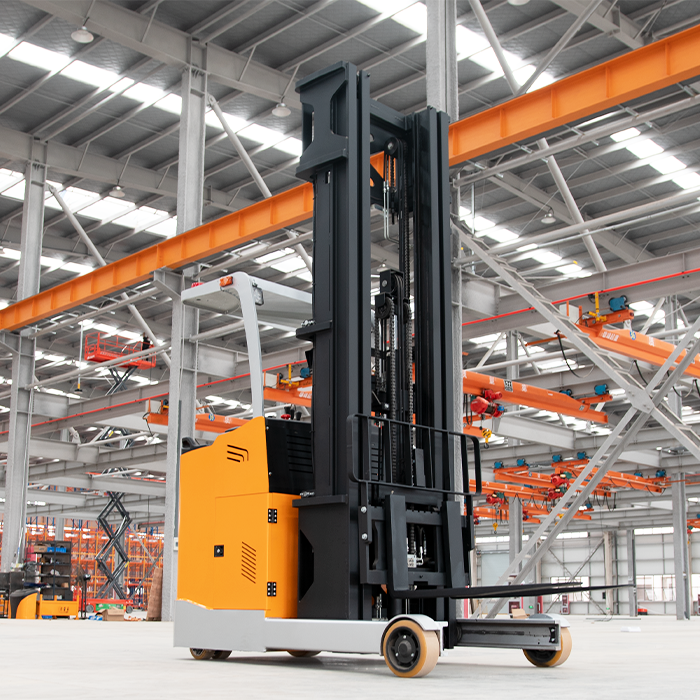
China Wholesale 2000kg Industrial Forklift Pallet Truck
Price-competitive industrial pallet handling for 6 m, 8 m and 12 m applications, with OEM/ODM support available.
- 2000 kg
- 6/8/12 m
- Wholesale
Procurement tip: compare total cost per pallet movement, not only the machine price. Ask for aisle width, residual capacity at lift height, safety scanner coverage, charging ratio and WMS interface documentation in the same RFQ.
Inquire NowWhy “Best” in Forklift AGV Procurement Is Now a Manufacturing and Integration Question
China has become the reference market for forklift AGV manufacturing not because a single truck is cheaper, but because the supplier ecosystem compresses engineering cycles. In Hefei and the wider Yangtze River Delta, drive units, scanners, batteries, masts, controllers and sheet-metal fabrication sit inside a dense manufacturing corridor. That density allows an exporter to move from a rack drawing to factory acceptance testing faster — and it allows buyers to compare design assumptions rather than just catalogues.
When a buyer searches for the China best forklift AGV manufacturer and exporter, the serious meaning should be a supplier that can prove three things: manufacturing scale, safety compliance and application integration. Scale proves that a pilot can become a fleet. Compliance proves that the machine can enter regulated markets and pass tender review. Integration proves that the AGV will not become an isolated island inside the warehouse management system.
Anhui Nexrik Intelligent Technology Co., Ltd. fits that profile as a high-tech manufacturer of AGV forklifts, VNA AGVs, reach truck AGVs, counterbalanced AGVs, AS/RS stacker cranes, four-way shuttles and mini-load systems. Its Hefei production base, 1,152 staff, 66,650 m² of floorspace, $100 million+ annual revenue, 7 awarded patents and SGS onsite verification are evidence for procurement teams that need traceability before placing a fleet order. For first-time automation buyers, MOQ 1 set reduces the cost of validating routes, rack interface and operator workflows before scaling.
Five Checks That Separate a Real Manufacturer From a Reseller
- Factory evidence: verified floorspace, headcount, production lines and onsite inspection records.
- Safety file: CE marking, Machinery Directive 2006/42/EC, ISO 9001 and ISO 45001 documentation.
- Engineering depth: patents, simulation capability, mast and fork customization, battery and cold-storage options.
- WMS/WCS interface: task logic, traffic control, exception handling and API documentation for your IT team.
- Export support: OEM/ODM, buyer-label production, spare parts planning and remote commissioning for overseas sites.
Employees
Onsite-verified manufacturing and support organization.
Factory Floorspace
Production capacity for single-machine pilots and fleet orders.
Annual Revenue
Commercial stability for long-cycle warehouse automation projects.
Awarded Patents
Plus one registered trademark supporting product differentiation.
Set Per Model
Pilot-first procurement lowers the risk of a large initial commitment.
Export Regions
Southeast Asia, South America, Eastern Europe, South Asia and North America.
Which Forklift AGV Platform Fits Your Warehouse?
A high-performing project starts with the load unit, rack geometry and throughput profile — not with a preferred model number. Use this matrix to shortlist the right platform before requesting a layout proposal.
| Platform | Best-Fit Application | Typical Capacity / Height | Procurement Signal |
|---|---|---|---|
| Slim Stacker AGV | Narrow aisles, high-density pallet storage, line-side replenishment | 2 T / 3 m | Choose when building space is fixed and every aisle millimetre affects storage density. |
| Reach Truck AGV | Selective racking where forks must reach forward into rack bays | 1.5 T / 3 m | Ask for residual capacity at full height and fork-forward clearance before comparing price. |
| Laser SLAM Reach Truck | Fixed routes, repetitive put-away and warehouse logistics | 1.5 T / ±10 mm | Laser navigation remains strong where routes are stable and reflector infrastructure is acceptable. |
| Pallet AGV Forklift | Flexible pallet handling with WIFI/5G communication | 2 T / 3000 mm | 3D SLAM can reduce floor modification when natural-feature localization is suitable for the building. |
| Compact Chassis AGV | Production lines, workshops and tight-space material handling | 2 T / narrow body | Measure turning clearance and pedestrian zones; compact chassis can unlock routes a standard truck cannot use. |
| Pallet Lift Stacker | Manual-assist handling, trailer loading and flexible lifting tasks | 1.5–3 T / 3–5 m | Useful during phased automation when some stations remain manual but need faster pallet flow. |
| Industrial Pallet Truck | 6 m, 8 m and 12 m industrial pallet handling | 2000 kg class | Confirm duty cycle, charging window and spare-parts plan for multi-shift operations. |
Every project still needs a layout audit. Floor flatness, rack tolerances, pallet condition, dock levellers, fire doors and Wi-Fi coverage can change navigation design as much as the truck model itself.
What Buyers Will Demand in the Next Forklift AGV Buying Cycle
Procurement is moving from “Can you supply a robot?” to “Can you prove lifecycle economics, integration readiness and export compliance?” These six trends are affecting RFQs, tender scoring and supplier shortlists.
Pilot-to-Fleet Purchasing
MOQ 1 set is becoming a strategic advantage. Buyers validate routes, safety behavior and cycle time with one truck, then release fleet orders only after the data proves payback. Suppliers must support both pilot engineering and volume production under one quality system.
TCO Over Sticker Price
Energy consumption, tire wear, scanner maintenance, battery replacement, spare-parts lead time and uptime now sit inside the business case. A low-price AGV that stops at peak hour is more expensive than a verified platform with documented service support.
WMS-Ready Integration
Warehouse teams expect task assignment, traffic control and exception handling to work through WMS/WCS interfaces. Buyers will ask for API documentation, test protocols and evidence from previous projects before signing.
Compliance as a Gate
CE marking, ISO 9001, ISO 45001 and SGS onsite verification are no longer presentation slides. They are procurement gates for tenders, customs, insurance and internal safety approval. Missing documents can delay a project by months.
Mixed-Fleet Orchestration
Few warehouses run only one machine type. Reach trucks, stackers, counterbalanced AGVs and shuttles must share traffic rules. Suppliers with a broad portfolio reduce interface risk and simplify responsibility when something fails.
Local Service Readiness
Overseas buyers increasingly evaluate remote diagnostics, spare-parts planning, training and commissioning support. The strongest exporter is not the one with the lowest quotation, but the one that can keep the fleet available after go-live.
Where Forklift AGV Technology Is Moving Next
The next generation of autonomous forklifts will be judged by how little site modification it requires, how safely it shares space with people, and how easily it scales from one truck to a coordinated fleet.
3D SLAM With Less Site Modification
Natural-feature localization reduces dependence on reflectors and floor tape. For existing warehouses, this shortens preparation and allows route changes with less disruption to operations.
Slimmer Bodies, Higher Loads
High-density storage pushes manufacturers to increase load capacity without widening the chassis. Slim stackers and reach trucks are becoming more important as warehouse space costs rise.
Lithium Battery and Opportunity Charging
Multi-shift operations favor fast charging windows, longer cycle life and lower maintenance. Battery strategy should be evaluated together with route length and peak throughput, not as an afterthought.
Edge AI and Fleet Orchestration
Onboard intelligence handles obstacle avoidance and route adaptation, while fleet software manages deadlocks, task priority and charging schedules. The AGV is becoming a node in a larger logistics network.
Digital Twin and Simulation
Before a truck is built, traffic simulation can model congestion, charging peaks and rack interfaces. This is a practical way to avoid buying too many or too few vehicles for the real workload.
Cold Storage and Harsh Environments
Frozen warehouses, condensation zones and hygiene-sensitive production areas require different protection, batteries and safety logic. Specialized variants are moving from niche orders to mainstream procurement.
Manufacturing Scale, Custom Engineering and Export Readiness
Anhui Nexrik Intelligent Technology combines factory capacity with turnkey system engineering. For overseas buyers, that combination reduces the coordination burden between machine supplier, software vendor and site contractor.
Manufacturing Traceability
66,650 m² of production floorspace and 1,152 staff support material inspection, finished-product inspection and fleet-order sequencing before shipment.
OEM / ODM Customization
Load capacity, lift height, fork configuration, battery package, buyer label and cold-storage variants can be engineered around the application rather than forced from a fixed catalogue.
Compliance and Export File
CE marking under Machinery Directive 2006/42/EC, ISO 9001, ISO 45001, 7 patents and SGS onsite verification help tenders, customs clearance and safety review move faster.
Turnkey System Portfolio
AGV forklifts, VNA AGVs, AS/RS stacker cranes, four-way shuttles and mini-load systems can be coordinated as one WMS-ready solution with fewer supplier interfaces.

Production base exterior · Hefei, Anhui

AGV assembly and integration workshop

Inspection and testing before export shipment
From RFQ to Go-Live: A Six-Stage Exporter Workflow
A structured process protects both the buyer and the project schedule. The goal is to prove the design before fabrication and prove the integration before the fleet is released to production.
Application Discovery
Define load unit, pallet condition, rack layout, throughput target, shift pattern and existing manual bottlenecks.
Site and Data Audit
Review floor flatness, aisle widths, Wi-Fi coverage, safety zones, charging location and WMS/ERP interfaces.
Simulation and Fleet Sizing
Model traffic, charging windows and peak demand to avoid under-buying capacity or over-buying idle trucks.
Factory Build and FAT
Manufacture with material and finished-product inspection, then run factory acceptance testing before shipment.
Commissioning and Training
Complete mapping, route validation, safety checks, WMS interface testing and operator handover.
Lifecycle Expansion
Use remote diagnostics, spare-parts planning and fleet expansion proposals to support the next automation phase.
Common Questions From Forklift AGV Buyers
These answers reflect the questions most often raised during exporter due diligence, tender review and first-project engineering.
What is the minimum order quantity for your forklift AGVs?
Should I choose 3D SLAM or laser navigation?
What certifications and verification do you hold?
Can you customize load, lift height, forks and battery?
Can the AGV or AS/RS system integrate with our WMS or ERP?
Which trade terms and payment methods are accepted?
How long is delivery for a customized forklift AGV?
How should I calculate ROI for a forklift AGV project?
Turn Your Rack Drawing Into a Verified Forklift AGV Plan
Share your pallet specification, aisle width, lift height, throughput target and WMS environment. Our engineers can recommend the right platform — stacker, reach truck, VNA, counterbalanced AGV or AS/RS — and define a pilot-first path with MOQ 1 set.