CE Certified Robotic Forklift Supplier & Wholesalers
Procurement-grade AGV forklifts, VNA robots, AS/RS stacker cranes and warehouse equipment from an SGS onsite-verified manufacturer in Hefei, China. Built for pilot fleets, OEM programs and turnkey automation projects.
8 CE-Certified Robotic Forklift & Warehouse Equipment Models
Compare eight procurement-ready models for high-density storage, narrow-aisle handling, production-line logistics and wholesale pallet-truck demand. Product URLs and images are preserved for direct engineering review and RFQ preparation.
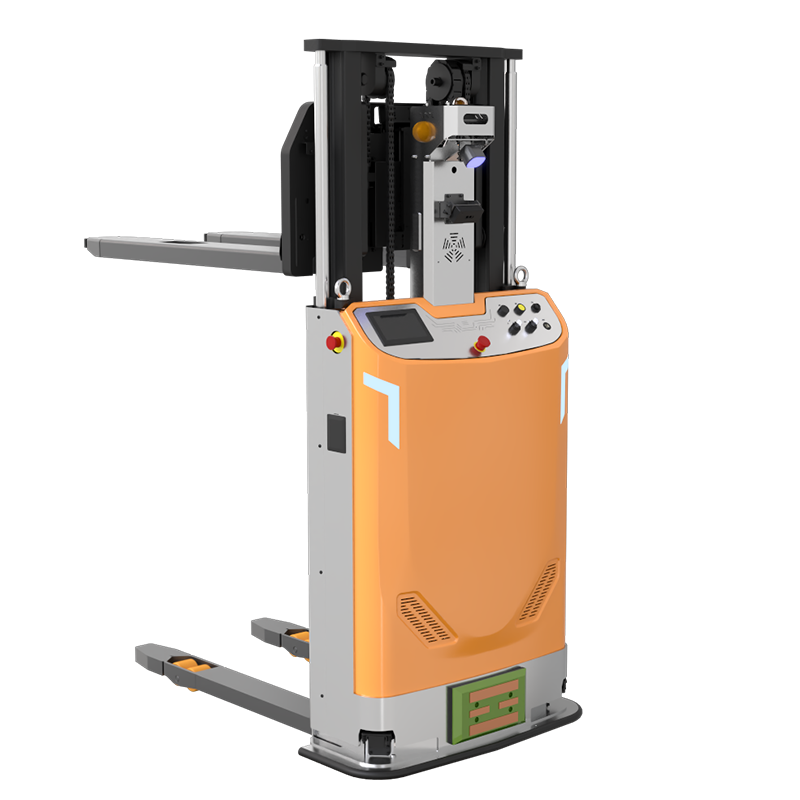
2T 1.6 M Slim Narrow-Body Stacker AGV Body for High-Density Storage High Lift Pallet Stacking AGV Maximize Warehouse Space
A slim-body stacker platform for OEMs and integrators that need CE-ready mechanical hardware, dense pallet stacking and easier brand customization.
- 2,000 kg
- 1.6 m lift
- Narrow body
- MOQ 1
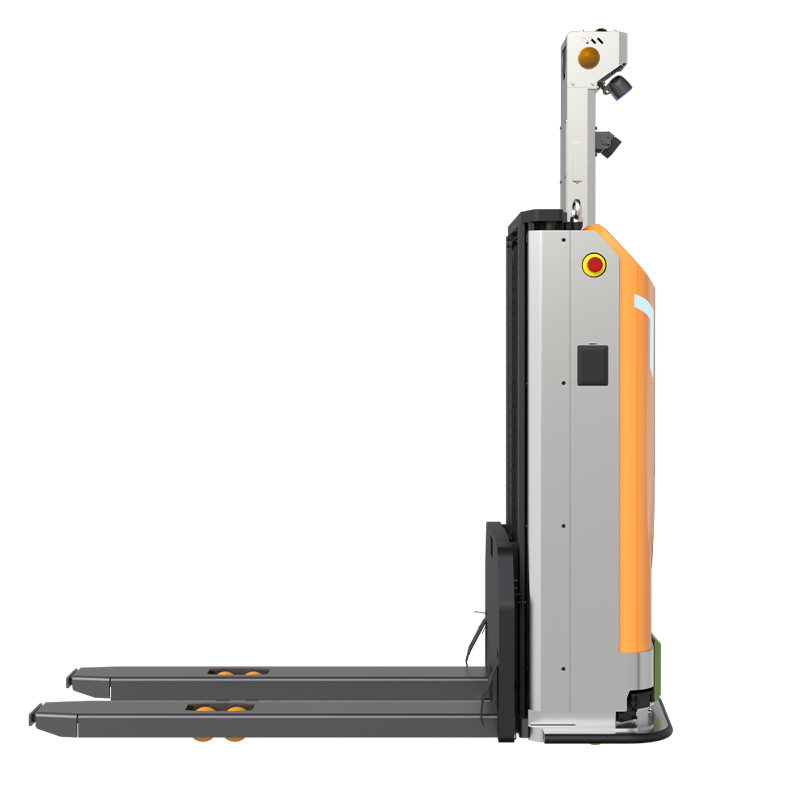
2T Slim Narrow-Body Stacker AGV with 3D SLAM & WIFI/5G for High-Density Storage 1.6M Pallet Stacking Maximize Warehouse Space
Natural-feature 3D SLAM localizes without extensive reflector installation, making it a strong fit for 1.6 m pallet stacking in existing buildings.
- 2,000 kg
- 1.6 m lift
- 3D SLAM
- WiFi/5G
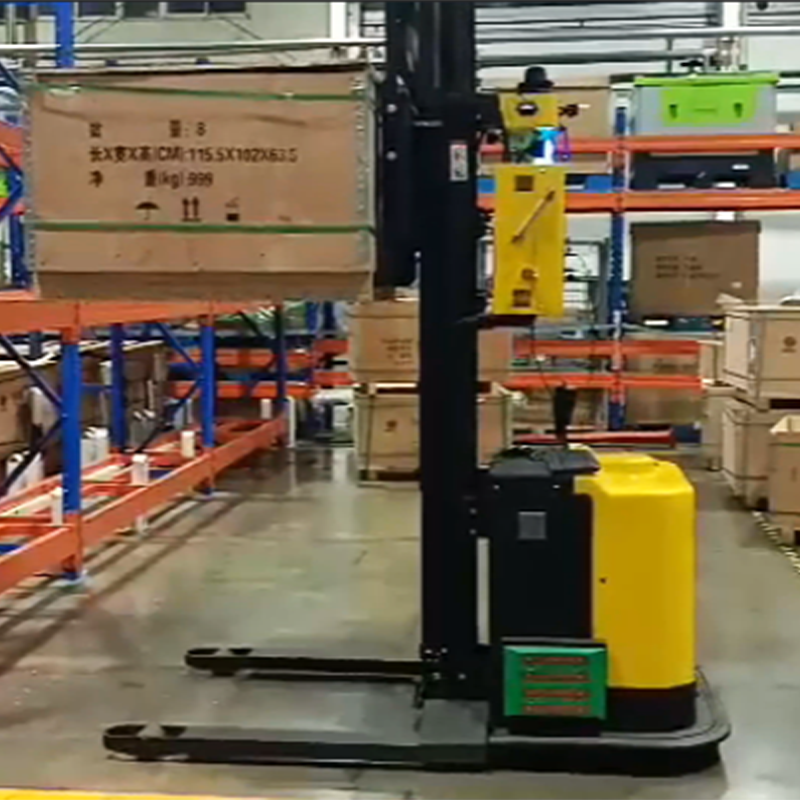
2T 3000MM Pallet AGV Forklift Automated Guided Vehicle 3D SLAM Navigation WIFI/5G Communication for Warehouse Automation Robot
A 3,000 mm automated pallet forklift for repetitive transport and retrieval, with 3D SLAM and wireless connectivity for dynamic warehouse layouts.
- 2,000 kg
- 3,000 mm
- 3D SLAM
- Automation robot
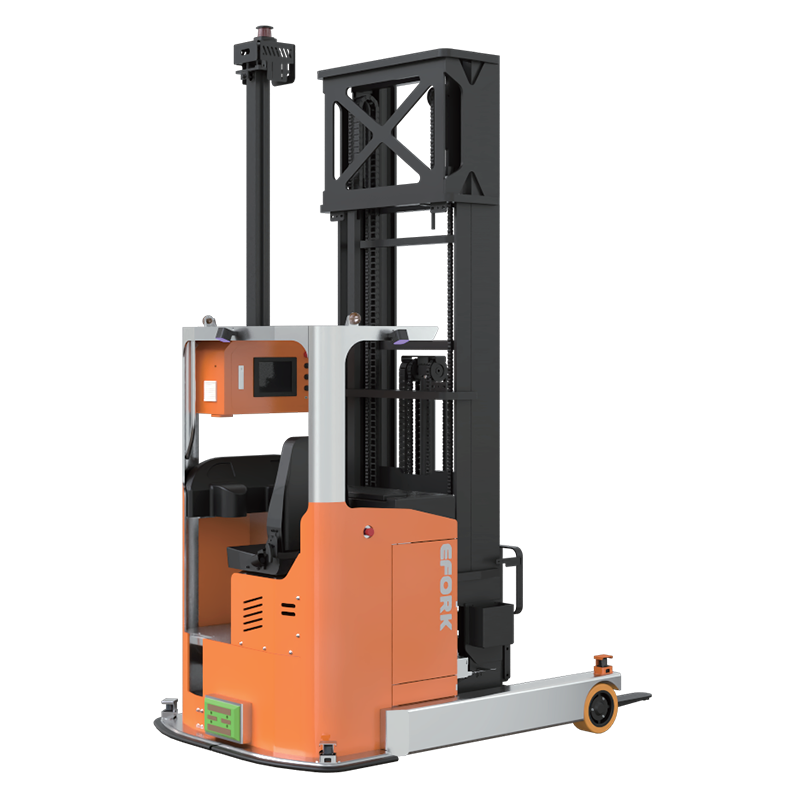
4.5M Reach Truck AGV Body 2T for Pallet Handling High Lifting Smart Warehouse Logistics Robot Laser Slam Navigation CE Certified
A reach-truck AGV platform with 4.5 m lift and laser SLAM, suited to medium-height racking where aisle width is more constrained than a counterbalanced layout.
- 2,000 kg
- 4.5 m lift
- Laser SLAM
- CE
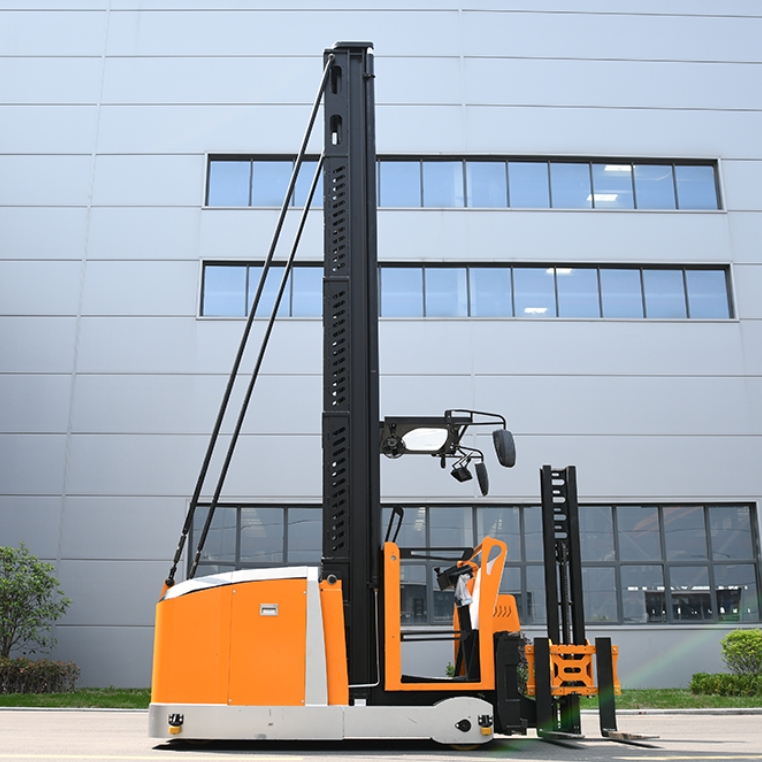
New 1.5T Manual Electric 3-Way Pallet Stacker Forklift 3 Way Manup Vna Forklift with 1600kg Loading Capacity AC Motor Powered
A narrow-aisle 3-way stacker for cost-sensitive sites. Manual electric operation can complement robotic cells during phased automation and peak overflow.
- 1,600 kg
- 3-way fork
- VNA
- AC motor
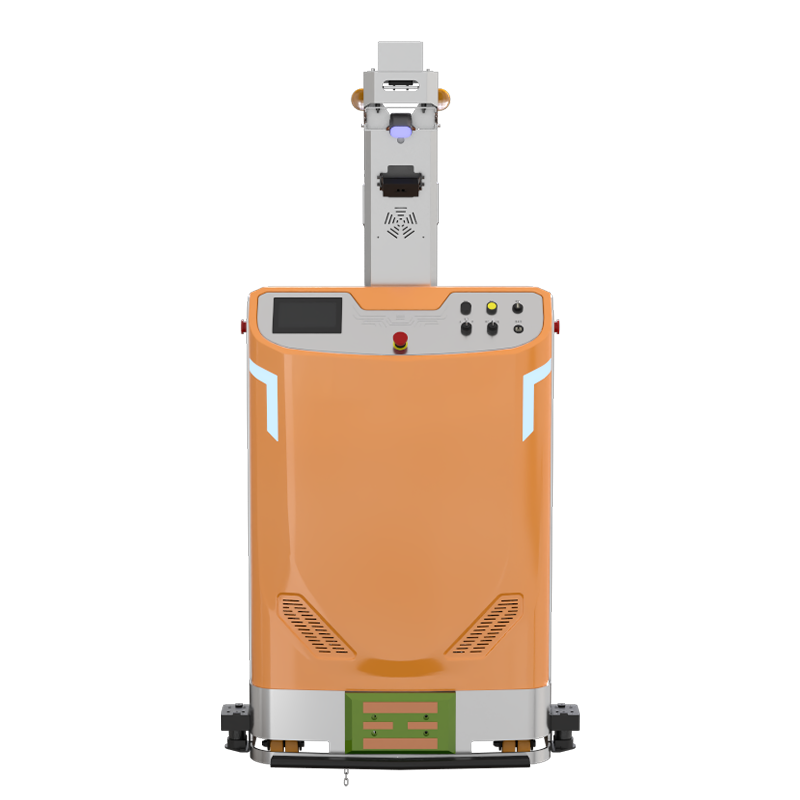
Material Handling AGV Body 2T with Narrow Body Compact Chassis for Efficient Production Line &Workshop Transport in Tight Space
A compact 2T AGV body for production-line and workshop transport where conventional forklifts cannot turn safely or where aisle space is precious.
- 2,000 kg
- Compact chassis
- Tight space
- AGV body
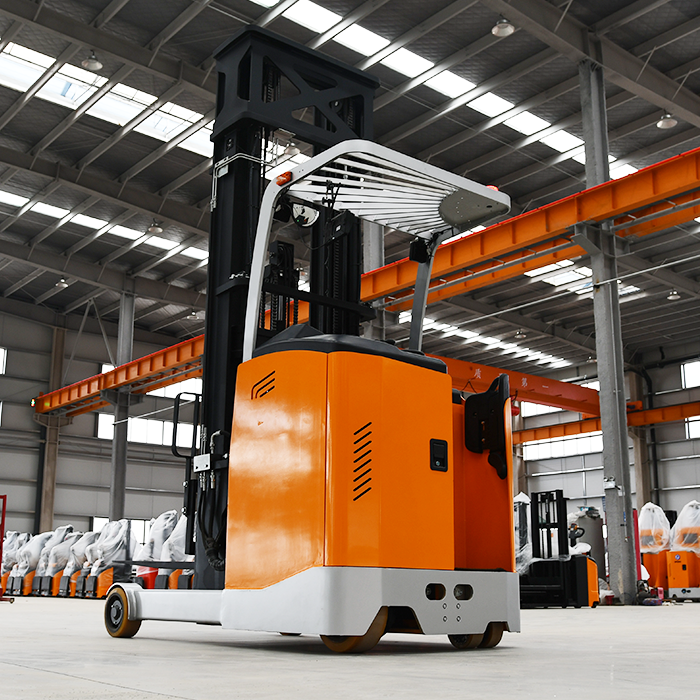
China Wholesale 2000kg 12m 8m 6m Industrial Forklift Pallet Truck High-Speed Steel Hot-Dip Galvanized Good Price
Hot-dip galvanized pallet truck for wholesale mixed orders and non-automated zones. Multiple sizes help distributors serve varied warehouse profiles.
- 2,000 kg
- Galvanized
- Wholesale
- Multiple sizes
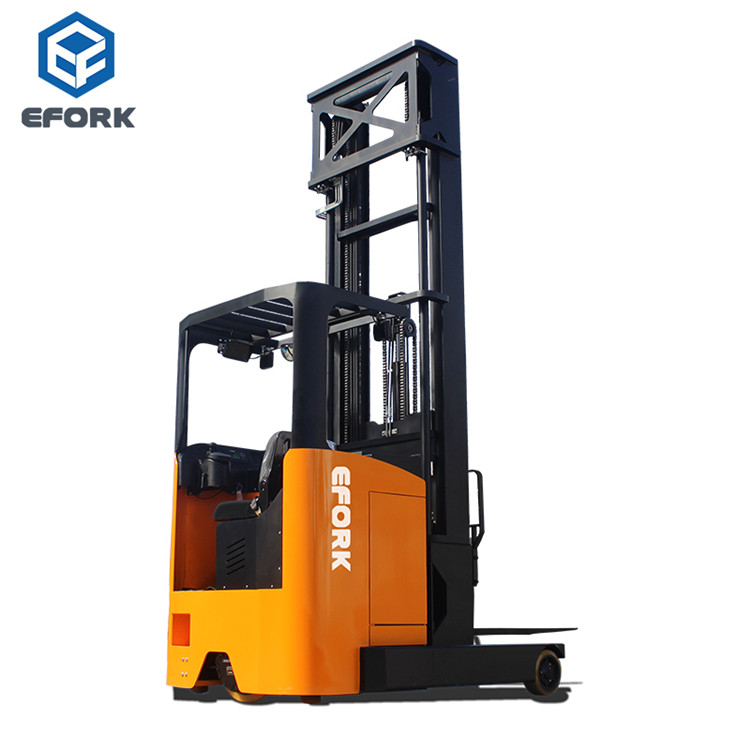
CQDE China Wholesale 2000kg 12m 8m 6m Industrial Forklift Pallet Truck Good Price
A second CQDE wholesale pallet-truck option for distributors that need 2,000 kg capacity, durable galvanized steel and competitive landed cost.
- 2,000 kg
- Industrial duty
- Wholesale
- CQDE
Wholesale and project buying: standard models start at MOQ 1 set, while OEM labels, fork dimensions, lift heights, battery configuration and mixed-container programs are quoted against project volume and destination requirements.
Contact UsWhat “CE Certified Robotic Forklift Supplier & Wholesalers” Really Means for 2026 Buyers
A CE-certified robotic forklift is not simply a forklift with a sticker. It is a material-handling machine that combines an automated guided vehicle or autonomous mobile robot chassis with a mast, forks and safety controls, and is placed on the EU market with a CE Declaration of Conformity under the Machinery Directive 2006/42/EC.
Is the product actually compliant?
Procurement teams should separate product compliance from supplier verification. CE marking requires a technical file, risk assessment, safety functions, emergency stops, scanners and an operating manual. SGS onsite verification confirms premises and legal status; it does not replace product-level FAT, SAT or safety validation.
Can the supplier support wholesale and project volume?
Wholesalers need stable production capacity, repeatable documentation, spare-parts kits, OEM labels and mixed-model export packing. Project buyers need site analysis, traffic simulation, WMS/WCS integration and commissioning support. The right supplier should document both capabilities.
This guide is prepared for procurement managers, systems integrators, distributors and warehouse operators. It reflects the product portfolio and verified company profile of Anhui Nexrik Intelligent Technology Co., Ltd., including CE, ISO 9001, ISO 45001, SGS onsite verification, OEM/ODM support and a 66,650 m² manufacturing footprint.
Why CE Certification and Verified Manufacturing Matter More Than Ever
Automation projects are capital assets that will operate for a decade or more. The cheapest quotation can become the most expensive decision if safety documentation, spare-parts availability or integration support is incomplete.
CE is a legal declaration
For EU-bound AGV forklifts, CE documentation should align with the Machinery Directive 2006/42/EC and include a Declaration of Conformity, technical file, risk assessment and safety-related control performance evidence.
Site verification is not product validation
An SGS onsite check confirms that the supplier premises and legal status exist. Buyers should still request model-specific test reports, FAT checklists, safety validation records and a spare-parts list.
Manufacturing maturity reduces risk
A 66,650 m² factory, 1,152 employees and in-house inspection routines matter when a wholesaler needs repeat orders, consistent paint quality, documentation control and predictable lead times.
ISO systems support repeatability
ISO 9001 and ISO 45001 provide a management framework for quality control, traceability, workplace safety and continuous improvement across repeat wholesale orders.
Customization needs documentation
When load capacity, lift height, fork dimensions, battery configuration or cold-storage protection changes, the technical file and nameplate data should change with it.
Serviceability protects uptime
Ask for mean time to repair assumptions, recommended spare-parts kits, remote diagnostic capability, firmware update policy and training materials before placing a fleet order.
Robotic Forklift Buying Trends Shaping 2026–2030
Buyers are moving from isolated equipment purchases to measurable automation programs. The strongest RFQs now combine safety evidence, integration planning, serviceability and lifecycle cost.
Pilot-to-scale purchasing
MOQ 1 set makes it practical to validate routes, cycle times and operator acceptance before scaling a fleet. Procurement teams increasingly ask for a pilot exit report before releasing volume orders.
TCO replaces lowest bid
Energy consumption, tire wear, scanner calibration, spare parts, training and uptime now sit beside the purchase price in supplier scorecards. A lower-cost machine can lose on lifecycle economics.
Open WMS/WCS integration
Fleet expansion often brings mixed vendors. Buyers want documented task interfaces, alarm mapping, API or protocol details and a clear responsibility matrix for WMS, WCS and PLC integration.
Safety-first RFQs
Safety scanners, emergency stops, speed zoning, load charts, warning zones and human-detection logic are now technical requirements rather than optional add-ons.
The most defensible quotation will include a CE Declaration of Conformity, model-specific technical data, a risk-assessment boundary, commissioning assumptions, operator training, spare-parts recommendations and a written integration scope.
Where Robotic Forklift Technology Is Moving Next
Product roadmaps increasingly focus on reducing site preparation, increasing storage density, improving fleet orchestration and supporting OEM/wholesale customization.
3D SLAM reduces retrofit work
Natural-feature 3D SLAM can localize using walls, pillars and fixed structures, reducing reflector or floor-tape installation in existing warehouses. Laser SLAM remains valuable for fixed, highly repetitive routes.
Higher VNA and AS/RS
Three-way VNA AGV platforms support high-bay pallet storage up to 11 m in listed configurations, while AS/RS stacker cranes extend to 40 m for high-throughput, high-density warehouses.
Modular AGV bodies for OEMs
Wholesalers and integrators increasingly source AGV bodies and mechanical platforms, then add their own brand, controls or software. Modular chassis design shortens product development cycles.
Battery and cold-chain readiness
Opportunity charging, lithium battery strategy, condensation protection and frozen-storage components are becoming selection criteria for cold-chain, food and pharmaceutical warehouse automation.
Which Robotic Forklift or AS/RS Platform Fits Your Operation?
Use this engineering-oriented matrix to shortlist equipment. Final selection should follow a site survey, pallet audit and throughput simulation.
| Buyer Scenario | Recommended Platform | Why It Fits | Configuration Guardrails |
|---|---|---|---|
| Selective racking below 3 m | 2T 3000mm Pallet AGV Forklift | Balances pallet transport and lifting in conventional racking with 3D SLAM navigation. | Confirm pallet bottom board, rack beam clearance, aisle width and floor flatness. |
| Very narrow aisle, 7–11 m high | 3-Way VNA Stacker | Three-way fork movement supports high-density storage without turning the truck in the aisle. | Check rack tolerance, guide-rail strategy, load stability at height and operator/robot access rules. |
| Medium-height reach application | 4.5M Reach Truck AGV Body | Reach mast retracts into the chassis for tighter aisles than a counterbalanced truck. | Validate laser SLAM reflectors or natural-feature route plan and maximum lift load chart. |
| Compact production line or workshop | Compact 2T AGV Body | Narrow chassis improves maneuverability in tight transfer zones and line-side delivery. | Map pedestrian zones, charging location, floor transitions and handover interfaces. |
| High-bay automated warehouse | AS/RS Stacker Crane and Mini-Load Systems | Rail-guided cranes deliver high-density storage and WMS/WCS-controlled retrieval for pallets or bins. | Building height, rack design, fire strategy, seismic load and maintenance access are critical. |
| Dense pallet storage with FIFO/LIFO flexibility | Slim Stacker AGV and Four-Way Shuttle | Combines dense racking with flexible task assignment and high-speed pallet movement. | Confirm shuttle precision, lift interface, WMS rules and battery/charging strategy. |
| Wholesale mixed order or manual zone | Galvanized Industrial Pallet Truck | Provides a cost-effective companion product for non-automated areas, peak season and dealer stock. | Verify load center, wheel type, galvanized finish, fork size and container loading plan. |
Why Global Buyers Shortlist Nexrik for Robotic Forklift Wholesale
Anhui Nexrik Intelligent Technology Co., Ltd. combines manufacturing scale, compliance systems and one-stop intelligent warehousing equipment supply.
Manufacturing scale
66,650 m² of factory space, 1,152 employees and production bases in Anhui support stable output for wholesale and project orders.
Compliance and verification
CE marking under 2006/42/EC, ISO 9001, ISO 45001, 7 awarded patents and SGS onsite verification provide a verifiable starting point for due diligence.
One-stop portfolio
AGV forklifts, VNA AGVs, reach trucks, AS/RS stacker cranes, four-way shuttles and mini-load systems can be sourced through one supplier interface.
OEM / ODM and buyer labels
Full customization is available for load capacity, lift height, fork configuration, battery setup, cold-storage variants and buyer-label production.
Global trade readiness
Export support covers FOB, CFR, CIF, EXW, FAS, CIP and DDP, with payment options including L/C, D/P, credit card and Western Union in USD, EUR or CNY.
Engineering-led deployment
Site analysis, solution design, traffic simulation, FAT, commissioning, WMS interface testing and operator training are scoped around the buyer’s throughput target.
Built in Hefei, Verified for Global Procurement
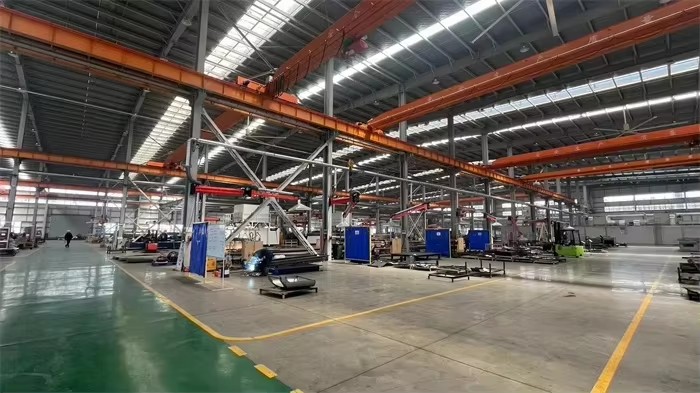
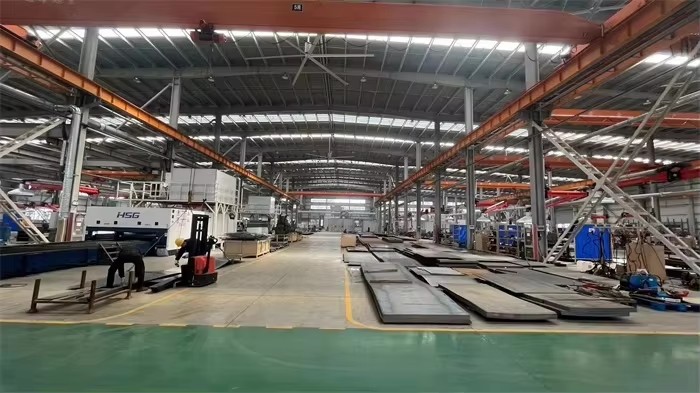
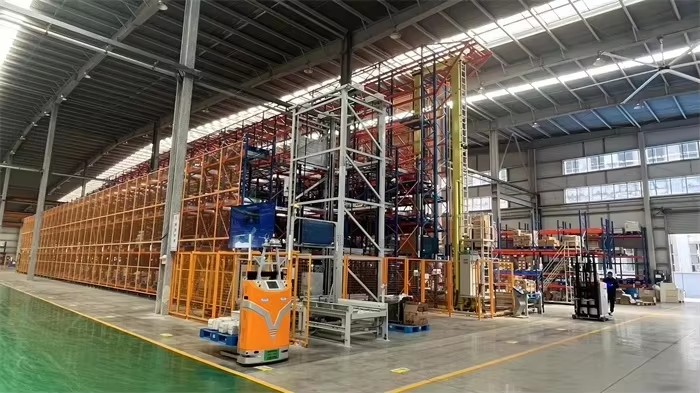
Evidence over claims: production facilities, assembly areas, testing spaces, project sites, certificates and exhibition activity are part of the supplier evaluation package.

Production base in Anhui, China

AGV and stacker assembly workshop

Finished-product testing and inspection
Automated warehouse project reference
Certificates, patents and corporate honors
International exhibition and buyer meetings
From RFQ to Fleet Go-Live
A structured four-stage workflow reduces technical and commercial risk for first-time and multi-site automation buyers.
Discover
Review pallet specifications, rack drawings, aisle widths, floor conditions, throughput peaks, shift patterns, WMS rules and safety constraints.
Design
Select AGV forklift class, navigation method, fleet size and charging strategy. Simulate traffic and confirm interfaces before issuing the final equipment scope.
Build & FAT
Manufacture against approved drawings, run factory acceptance tests, compile CE documentation and prepare export packing, spare parts and training materials.
Commission & Scale
Map the site, validate safety functions, test WMS/WCS integration, train operators and plan the next fleet expansion using measured cycle-time data.
Information That Produces a Better Robotic Forklift Quotation
The quality of the RFQ directly affects the quality of the engineering proposal. Include these eight inputs to reduce quotation risk.
- Pallet type, load, dimensions, bottom-board condition and load center.
- Rack drawing, aisle width, lift height, beam clearance and floor flatness.
- Throughput per hour, peak profile, shift pattern and handover points.
- Building constraints: ramps, doors, lifts, charging room and fire strategy.
- WMS/ERP interface requirements, task rules, alarms and IT security policy.
- Power supply, voltage, language, destination port and Incoterm.
- Safety boundary: pedestrian zones, mixed traffic, speed limits and lockout rules.
- Spare-parts target, training scope, service response and future fleet expansion plan.
Common Questions From Robotic Forklift Buyers and Wholesalers
What does CE certification mean for a robotic forklift?
For EU-bound machinery, CE marking under the Machinery Directive 2006/42/EC normally requires a risk assessment, technical file, Declaration of Conformity, safety-related control functions, emergency stops, protective devices and an operating manual. Buyers should verify the documents match the exact model, configuration and nameplate.
What is the minimum order quantity?
The standard MOQ for AGV forklifts, stacker cranes and four-way shuttle models is 1 set, allowing a pilot project before fleet expansion. Custom OEM labels, special fork dimensions and mixed-container programs may require project-volume review.
Is laser navigation or 3D SLAM better for my warehouse?
Laser navigation is often suitable for highly repetitive fixed routes, while 3D SLAM can localize using natural building features and may reduce reflector or floor-tape installation. The final choice depends on rack density, pedestrian traffic, ceiling structure, changes to the layout and site-preparation budget.
Can you support wholesale, OEM, ODM and private-label orders?
Yes. Customization can cover load capacity, lift height, fork configuration, battery setup, cold-storage variants, color, documentation and buyer-label production. Standard models can start from MOQ 1, while customized wholesale programs are quoted against target volume and destination requirements.
What load and lift ranges are available?
Listed platforms include 1.5–3 t AGV forklifts, 1.6–3 m stackers, 4.5 m reach-truck AGVs, VNA configurations up to 11 m, AS/RS stacker cranes up to 40 m, and four-way shuttle systems with 1–2 t load options and ±2 mm positioning. Final ratings are confirmed by configuration.
How do we integrate the equipment with our WMS or ERP?
AS/RS and shuttle systems are WMS-ready. During solution design, the team defines task interfaces, data fields, alarm mapping, user permissions and responsibility boundaries between WMS, WCS, PLC and fleet-control software, then tests the interface during commissioning.
What certifications and audit evidence can be provided?
The company profile includes CE marking, ISO 9001, ISO 45001, 7 awarded patents and SGS onsite verification. Project-specific documents may include the Declaration of Conformity, inspection reports, FAT/SAT records, manuals, spare-parts lists and training materials.
What trade terms and payment methods are accepted?
Accepted delivery terms include FOB, CFR, CIF, EXW, FAS, CIP and DDP. Payment options include L/C, D/P, D/A, MoneyGram, credit card and Western Union, with quotation currencies in USD, EUR or CNY.
Do you support cold storage and special environments?
Yes. Frozen-storage AS/RS stacker cranes and cold-chain configurations are available. Buyers should provide temperature range, duty cycle, condensation risk, battery strategy, maintenance access and fire-safety requirements during the site survey.
How long does a robotic forklift project take?
Timeline depends on site readiness, equipment class, customization and integration complexity. A pilot can be staged earlier than a full turnkey system, while AS/RS projects normally require building, rack, WMS and commissioning coordination. A schedule is issued after the data package is reviewed.
How should we calculate ROI or total cost of ownership?
Build a baseline for labor, shifts, throughput, forklift damage, energy, maintenance, safety incidents and floor space. Then compare the automation scenario using uptime assumptions, charging strategy, spare-parts plan, training and WMS integration cost. The goal is not only labor savings; it is predictable throughput and safer operations.
What should be included in the first RFQ?
Include pallet data, rack drawings, aisle width, lift height, throughput per hour, peak profile, floor conditions, WMS interface requirements, destination, Incoterm, safety rules, spare-parts target and required training. This allows the supplier to propose the right equipment mix and avoid over- or under-sizing the fleet.
Request a CE-Compliant Robotic Forklift Proposal
Send your pallet specification, rack layout, throughput target and destination port. Our engineering team will review the application, recommend the right AGV forklift, VNA, AS/RS or wholesale pallet-truck mix, and outline the documentation, FAT and integration requirements for your project.