CE Certified Autonomous Mobile Robot Suppliers & Exporter
Factory-direct AGV forklifts, 3D SLAM autonomous mobile robots, narrow-aisle VNA trucks, AS/RS stacker cranes and four-way shuttles — engineered for CE-compliant warehouse automation, OEM/ODM projects and long-term fleet economics.
CE Certified Autonomous Mobile Robots & AGV Forklifts
These eight models cover the most common pallet-handling, racking, narrow-aisle, stacking and production-line duties in intelligent warehousing. Each can be quoted as a single-unit pilot, customised by load, lift height, fork dimensions and battery configuration, or scaled into a mixed fleet with WMS integration.
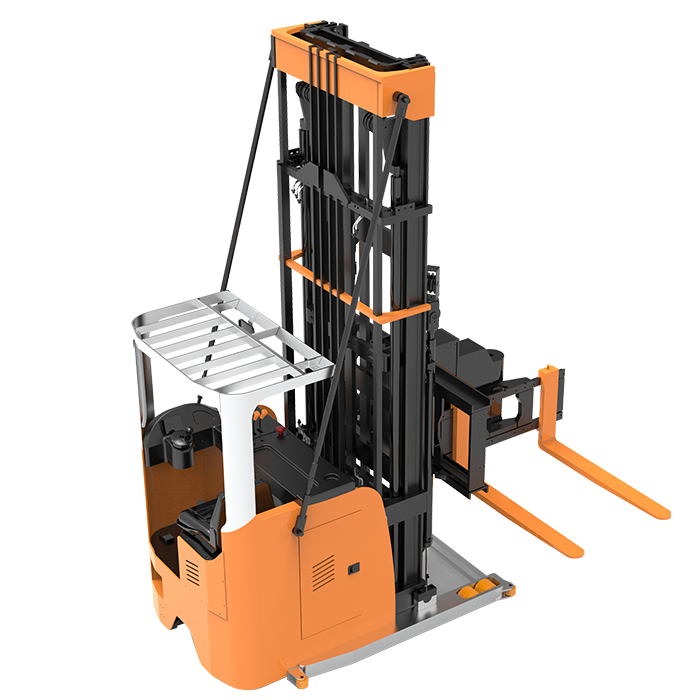
Narrow Aisle 3-Way 1600kg CE Electric Forklift with Three-Stage Mast
- 1600 kg
- 1.5–3 T options
- 3-way fork
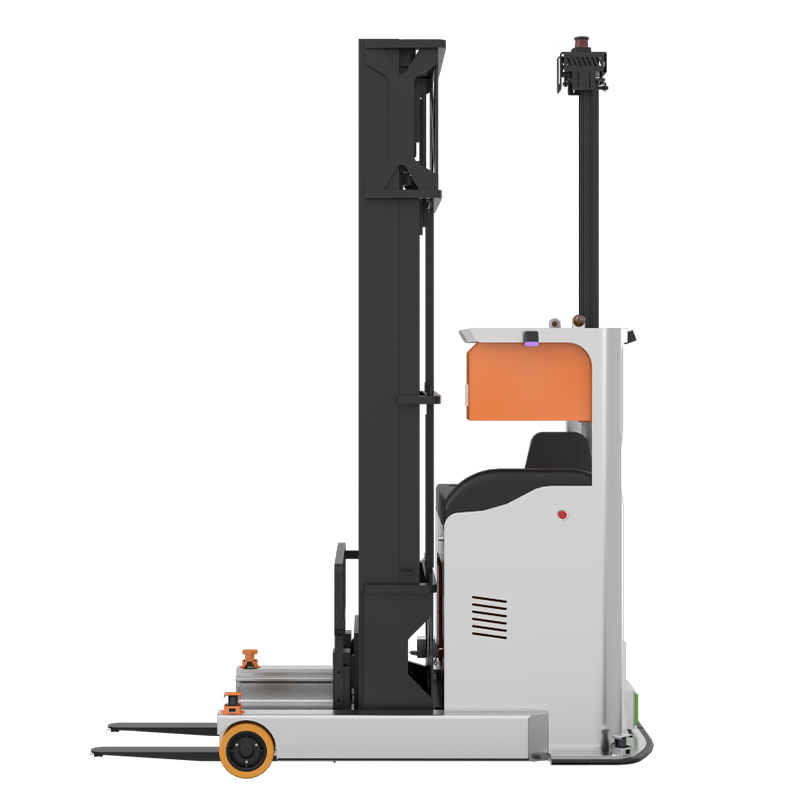
Heli Yufeng CQDE20HJ-65S 2T 6.5m Reach Truck AGV for Smart Warehouses
- 2,000 kg
- 6.5 m lift
- Pallet handling
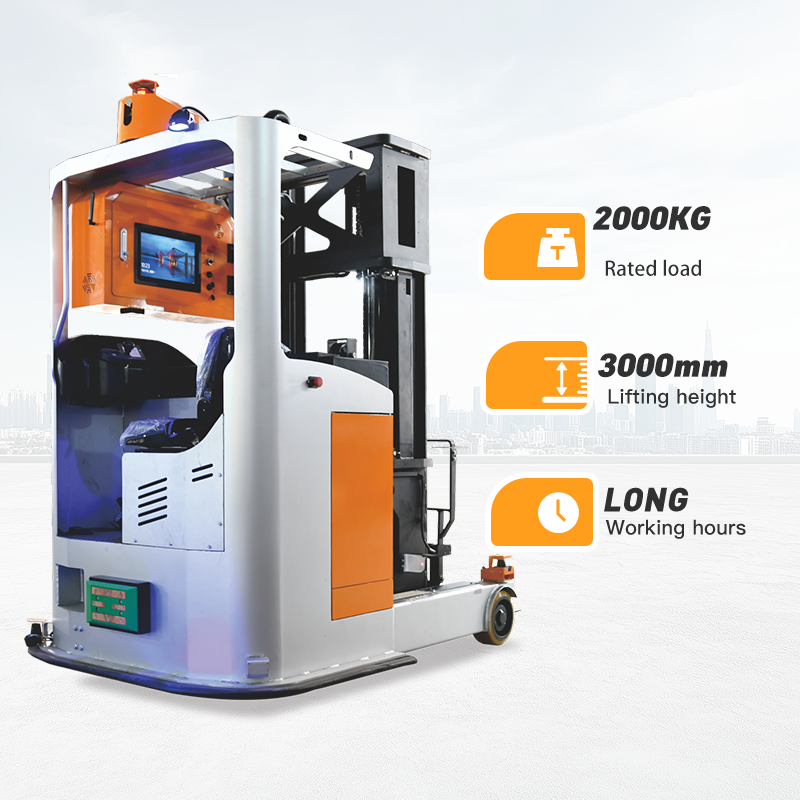
Reach Truck AGV Forklift 2T 3M Laser SLAM Navigation Warehouse Robot
- 2,000 kg
- 3 m lift
- Laser SLAM
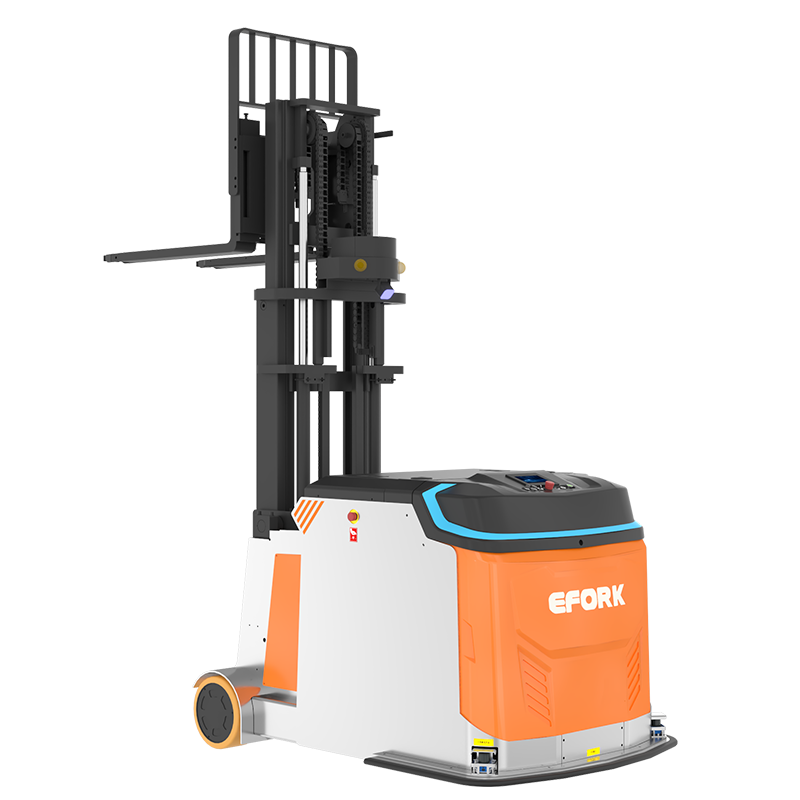
EFORK EDB30-30 3T Counterbalanced 3D SLAM AGV Forklift
- 3,000 kg
- 3 m lift
- High flexibility
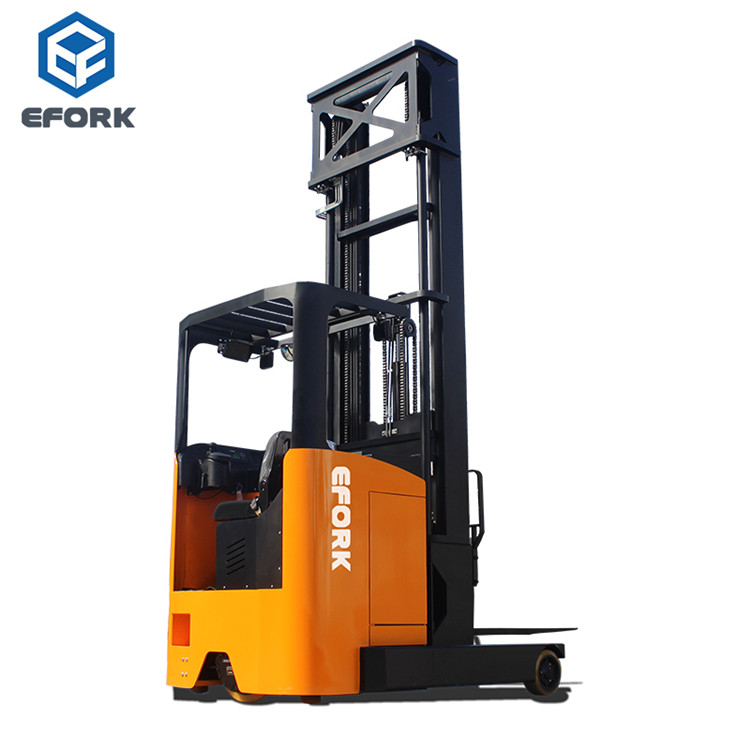
CQDE 2000kg 12m / 8m / 6m Industrial Forklift Pallet Truck
- 2000 kg
- 12m / 8m / 6m
- Wholesale supply
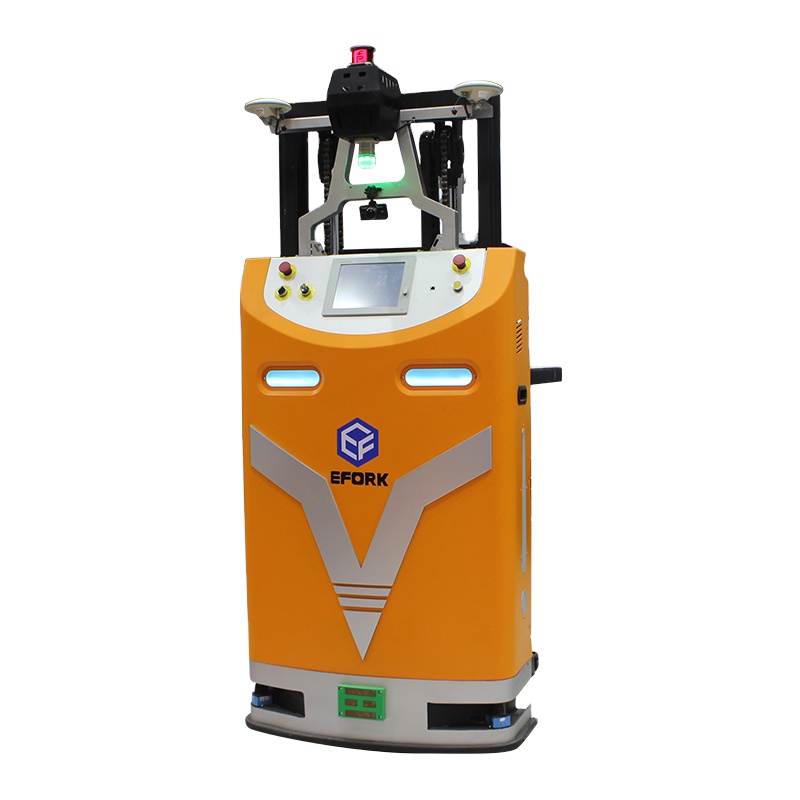
CE Certified EFORK EDA20-16 2T 3D SLAM Laser Navigation AGV
- 2,000 kg
- 1600 mm lift
- WiFi / 5G
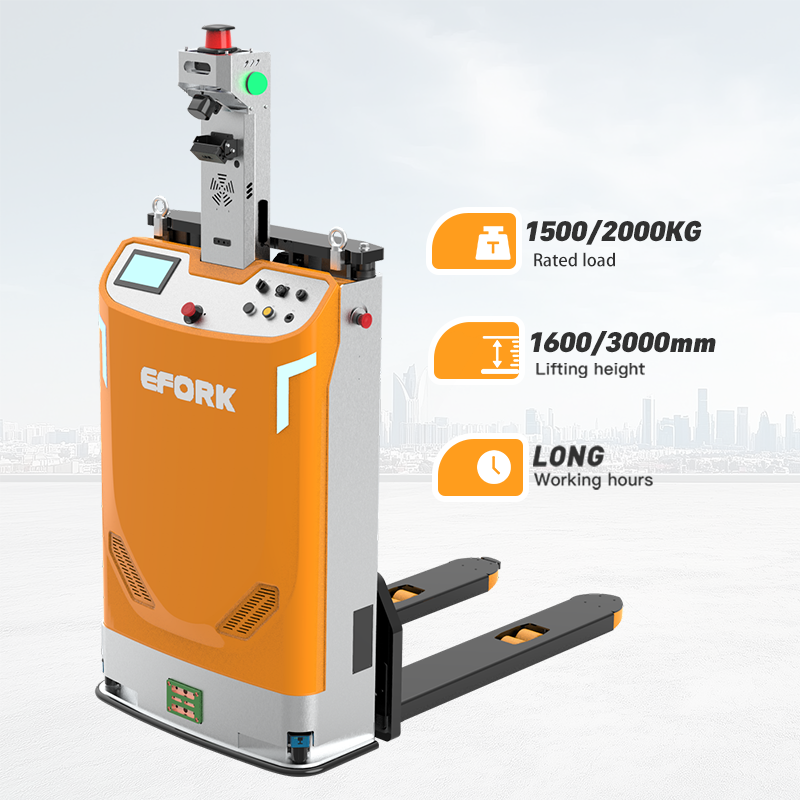
Heli Yufeng EDA20-30 Slim Stacking 3D SLAM AGV Forklift
- 2,000 kg
- 3 m lift
- 3D SLAM / WiFi / 5G
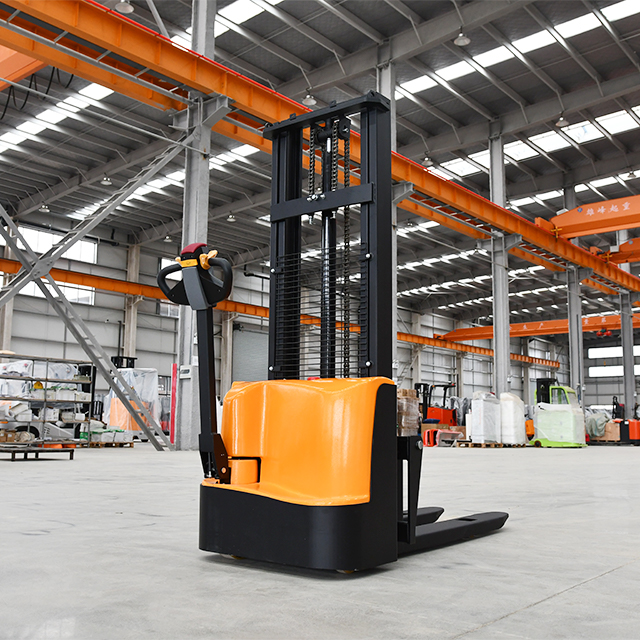
1T / 2T Full Electric Pallet Stacker Walkie with Training Wheels
- 1–2 T
- Walkie type
- Optional training wheels
Supplier Capability Buyers Can Audit
For a fleet that will operate for a decade, supplier capacity, traceability and export documentation matter as much as the machine specification. Our figures come from independent onsite verification and are reinforced by ISO systems, CE documentation and SGS checks.
Total Staff
Engineering, production and service teams
Factory Floorspace
Two production bases in Anhui
Annual Revenue
Capacity for fleet and turnkey orders
Awarded Patents
Plus one registered trademark
Why CE Certified AMR Suppliers Are Evaluated as Engineering Partners
The search intent behind “CE Certified Autonomous Mobile Robot Suppliers & Exporter” is rarely casual. Buyers are usually comparing risk, not just price.
Procurement teams usually arrive with one of three briefs: validate a first autonomous forklift pilot, replace a labour-intensive pallet flow, or source a complete AS/RS and four-way shuttle project. In all three cases, the strongest supplier response answers three questions at once: can the machine be CE-marked for our risk assessment, can the supplier export and support it in our country, and can the fleet integrate with our WMS without forcing a building redesign?
CE marking is not a sticker or a generic certificate. For an autonomous mobile robot or AGV forklift, the discussion normally touches the Machinery Directive 2006/42/EC, electrical safety, electromagnetic compatibility, functional safety of the control system, risk assessment, technical file preparation and a declaration of conformity. A serious supplier should be able to explain which safety functions are monitored, how the robot detects people in the aisle, and how the emergency stop and speed limits are validated during factory acceptance testing.
Export capability is the second filter. A genuine exporter should be comfortable with Incoterms such as FOB, CFR, CIF, EXW, FAS, CIP and DDP, as well as L/C, D/P, D/A, credit card and other payment methods in USD, EUR or CNY. More importantly, the supplier should have the documentation discipline to support customs clearance, tender submission, insurance and after-sales spare-parts planning. This is where an SGS onsite-verified manufacturer with ISO 9001, ISO 45001 and a documented export history reduces project risk.
The third filter is application engineering. A reach truck AGV, counterbalanced AGV and 3-way VNA forklift are not interchangeable. The final choice depends on pallet type, closed or open bottom, rack beam height, aisle width, floor flatness, traffic intersections, charging room distance and peak throughput. Suppliers who simulate traffic before manufacture usually deliver a more stable go-live than suppliers who sell a catalogue model and adjust on site.
What to request before price negotiation
Ask for a CE declaration and technical-file summary, a risk assessment outline, safety scanner and obstacle-detection logic, a factory acceptance test checklist, battery and charging strategy, spare-parts list, WMS interface description and a commissioning plan. This information gain shortens technical review and exposes whether the supplier understands autonomous operation or is simply rebranding manual trucks.
For first-time buyers, the practical route is a single-machine pilot with an option to expand. For experienced buyers, the priority shifts to fleet orchestration, mixed-model support, remote diagnostics and lifecycle cost. Both routes benefit from a supplier with in-house manufacturing, because engineering changes can be controlled at the factory rather than negotiated across multiple tiers.
Procurement Checkpoint
Compare CE certified AMR suppliers with the same scorecard:
- CE 2006/42/EC documentation and risk assessment readiness
- SGS onsite verification, ISO 9001 and ISO 45001 systems
- Laser and 3D SLAM navigation options for different buildings
- WMS-ready AS/RS, four-way shuttle and AGV integration
- MOQ 1 set, OEM/ODM and buyer-label production
- Export Incoterms, payment terms and spare-parts support
An Exporter Advantage Built on Manufacturing Control
Anhui Nexrik Intelligent Technology Co., Ltd. combines in-house production, navigation engineering and turnkey project delivery from Hefei, China, a recognised hub for the forklift and warehousing equipment industry.
In-House Manufacturing
Chassis, masts and control integration are built and tested on our own lines, with onsite material and finished-product inspection before shipment. This supports consistent CE documentation and faster customisation.
Laser & 3D SLAM Navigation
Reflector-based laser navigation suits repetitive fixed routes, while 3D SLAM localises using natural features of the building. Buyers can reduce tape and reflector works and shorten site preparation.
One-Stop Turnkey Systems
AGV forklifts, AS/RS stacker cranes, four-way shuttles and RGVs come from one source and are engineered as a WMS-ready system rather than stitched together by separate vendors.
Proven Compliance
CE marking under 2006/42/EC, ISO 9001 and ISO 45001 systems, SGS onsite verification, 7 awarded patents and support for tender documents and customs clearance.
Which AMR Configuration Fits Your Process?
Start from the load unit and rack layout, not from the robot model. These four application routes cover most first-stage automation decisions.
High-Bay Narrow Aisle
For very narrow aisles and high racking, a 3-way VNA AGV can pick left, right and forward without turning the truck, increasing storage density.
View 3-way model →Medium-Height Pallet Flow
For selective racking up to about 3 m, a reach truck AGV balances aisle width, lift height and cycle time while keeping pallet handling flexible.
View reach AGV →Dock & Production Line
Counterbalanced AGVs handle closed-bottom pallets, cages and trailer docks without front outriggers, making them suitable for mixed indoor routes.
View counterbalanced →Low-Cost First Automation
For a lower-budget pilot in pallet stacking and line-side delivery, a full electric walkie pallet stacker can introduce powered handling before full AMR deployment.
View stacker →What Intelligent Buyers Are Changing in 2025–2030
Autonomous mobile robot procurement is moving from stand-alone demonstrations to audited, integrated and lifecycle-managed fleets.
CE Documentation Before Price
More buyers now request the declaration of conformity, risk assessment logic and safety validation before commercial negotiation. This reduces commissioning surprises in regulated markets.
3D SLAM Over Heavy Infrastructure
Natural-feature 3D SLAM is attractive where floor tape and reflectors are expensive to maintain. It allows faster layout changes and less disruption to live operations.
WMS & Fleet Integration
Robot buyers increasingly expect WMS-ready interfaces, mission scheduling and traffic coordination. A fleet that cannot exchange data with the WMS becomes a constraint, not an asset.
Mixed Fleet and OEM/ODM
Projects often combine VNA AGVs, reach trucks, stackers and AS/RS. Buyers prefer a supplier that can customise load, lift height, fork width and labelling rather than force one standard model.
Energy and Opportunity Charging
Battery capacity, charging windows and opportunity charging are now evaluated against shift patterns. The objective is to avoid hidden fleet growth caused by excessive charging downtime.
Cold Chain and High Density
Frozen storage, high-bay AS/RS and four-way shuttle systems are growing as buyers seek density and labour stability. These projects require tighter integration and maintenance planning.
How the Next Generation of Autonomous Forklifts Will Differ
Hardware, software and service models are converging. The winning platforms will be easier to deploy, safer to validate and cheaper to expand.
Natural-Feature Navigation
3D SLAM, WiFi/5G connectivity and higher positioning accuracy will continue reducing building modifications and spread deployment across multi-site operations.
Slimmer Bodies, Higher Lift
Warehouses are pushing for higher racking without widening aisles. Slim stacking AGVs, 3-way VNA bodies and high-lift masts will keep evolving together.
Safety as a Design Input
Safety scanners, speed monitoring, obstacle detection and risk assessment are becoming design inputs rather than add-ons. CE readiness will remain a core buying criterion.
Modular Bodies and Service
Standardised battery packs, modular fork carriages and remote diagnostics will shorten service response and make it easier to scale a pilot into a full fleet.



Inside Anhui Nexrik Intelligent Technology Co., Ltd.
We are a high-tech manufacturer specialising in the R&D, production and integration of intelligent warehousing equipment — AGV forklifts, AS/RS stacker cranes, four-way shuttles and RGVs. Our plants are located in Huagang Town Industry-City Integration Demonstration Zone, Feixi County, Hefei, Anhui, China, a recognised hub for the forklift industry.
Our engineering workflow starts with your pallet types, rack drawings, floor conditions and throughput targets. We then select navigation, simulate traffic and confirm equipment sizing before any truck is built. That sequence is why buyers in Southeast Asia, South America, Eastern Europe, South Asia and North America trust us with pilot projects and turnkey automation.
- Business type: Manufacturer & trading
- Staff: 1,152 onsite-verified employees
- Floorspace: 66,650 m² across two bases
- Trade shows: 7 international exhibitions
- Service: OEM, ODM, design and buyer label
- Markets: Southeast Asia, South America, Eastern Europe, South Asia, North America
From RFQ to Go-Live in Five Controlled Stages
A structured process de-risks automation for first-time buyers and multi-site expansion teams.
Site Analysis
Review rack layout, pallet spec, floor flatness, aisle width, throughput and shift pattern.
Solution Design
Select equipment, size the fleet and simulate traffic against peak demand before quotation.
Manufacturing
Build on controlled lines, inspect materials and finished products, and complete FAT before shipment.
Commissioning
Map the site, test WMS interfaces, validate safety functions and train operators.
Lifecycle Support
Remote diagnostics, spare-parts supply and fleet expansion planning for long-term uptime.
Match Equipment to Load, Height and Navigation
Use this reference to shortlist the right platform before requesting a layout proposal.
| Equipment | Typical Load | Lift / Height | Navigation / Guidance | Best-Fit Application |
|---|---|---|---|---|
| Pallet Stacker AGV | 1.5–2 T | 1.6–3 m | 3D SLAM / Laser | Floor-to-rack transfer, line-side delivery, low racking |
| Reach Truck AGV | 1.5–2 T | Up to 6.5 m | Laser / 3D SLAM | Selective racking where aisle space is tighter than a counterbalanced truck needs |
| Counterbalanced AGV | 1.5–3 T | About 3 m | 3D SLAM | Closed-bottom pallets, cages, docks and production lines |
| VNA 3-Way AGV | 1.6–3 T | 7–11 m | 3D SLAM | Very narrow aisle, high-bay pallet storage |
| High-Lift Pallet Truck | 2,000 kg | 6 / 8 / 12 m | Application dependent | Industrial pallet handling where height and cost balance matter |
| Slim Stacking AGV | 2,000 kg | 3 m | 3D SLAM / WiFi / 5G | Compact stacking cells, mobile robot deployment and limited floor space |
| Electric Walkie Stacker | 1–2 T | Low to medium | Manual / walkie | Low-cost pallet stacking, training wheels and first-stage handling |
Questions Procurement Teams Ask Before Ordering
Clear answers shorten technical review and help buyers compare CE certified autonomous mobile robot suppliers on equal terms.
What is the minimum order quantity?
The MOQ for every AGV forklift, stacker crane and four-way shuttle model is 1 set. Many customers start with a single-truck pilot to validate routes and cycle times before scaling to a full fleet.
Which navigation technologies are available?
We offer laser navigation and 3D SLAM navigation. 3D SLAM localises using natural features of the warehouse, which typically reduces the need for reflectors or floor tape and shortens site preparation. Laser navigation remains strong for highly repetitive fixed routes.
What certifications support the CE claim?
Our systems include ISO 9001 and ISO 45001 management certification, CE marking under the Machinery Directive 2006/42/EC for the AGV range, 7 awarded patents and SGS onsite verification of our premises and legal status.
Can the robots integrate with our existing WMS?
Our AS/RS and four-way shuttle systems are designed WMS-ready. Interface requirements with your existing WMS or ERP are defined during solution design and tested during commissioning.
Do you offer OEM, ODM and customisation?
Yes. We provide full customisation, OEM, ODM and buyer-label production, including load capacity, lift height, fork dimensions, battery configuration and cold-storage variants.
Which trade and payment terms are accepted?
Accepted delivery terms include FOB, CFR, CIF, EXW, FAS, CIP and DDP. Payment methods include L/C, D/P, D/A, MoneyGram, credit card and Western Union in USD, EUR or CNY.
How is lead time and commissioning managed?
Lead time is confirmed after the layout, equipment scope and interface requirements are fixed. Factory acceptance testing is completed before shipment, followed by mapping, safety validation, WMS testing and operator training during commissioning.
How can a buyer verify a CE certified AMR exporter?
Request the declaration of conformity, technical-file summary, risk assessment outline, safety function description, FAT checklist, certificate scope and SGS or ISO evidence. A credible exporter should answer these items before final price negotiation.
Send Your Rack Layout and Throughput Target
Our engineers will review your pallet types, aisle widths, lift heights and shift pattern, then recommend the right combination of AGV forklifts, 3D SLAM AMRs, VNA trucks or AS/RS equipment for a CE-compliant warehouse automation project.
Inquire Now