8 CE-Certified Equipment Platforms for Automated Warehouses
The eight platforms below match the strongest procurement intent for automated warehouse equipment: narrow-body reach AGVs, laser SLAM VNA trucks, high-lift pallet trucks, slim stacking robots, 3D SLAM laser-navigation AGVs, three-way VNA stackers and multi-directional side loaders. Each card preserves the original product URL and image so buyers can move from category research to supplier evaluation without losing specification context.
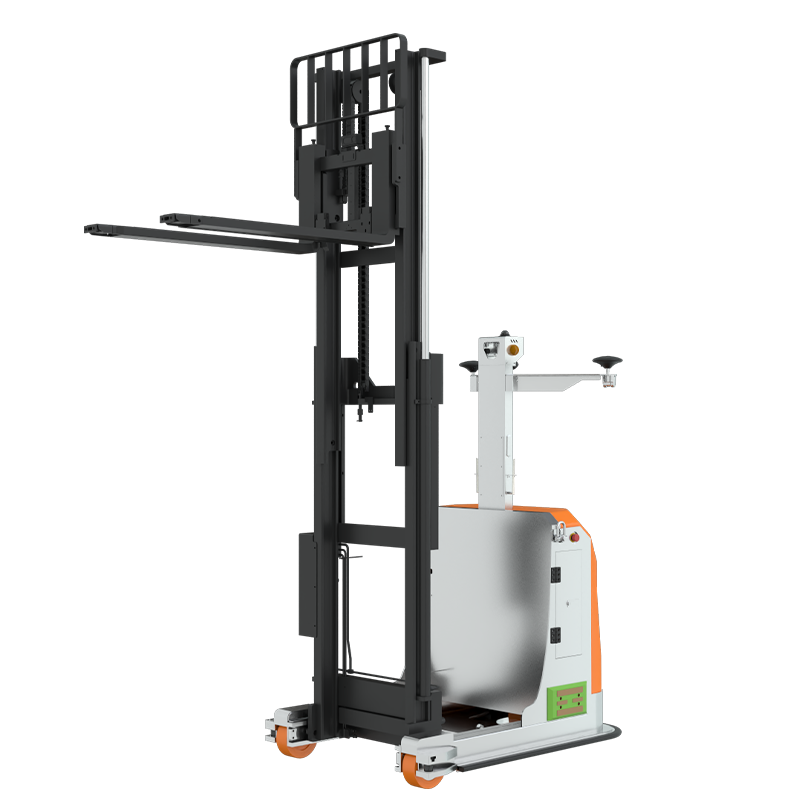
Reach Truck AGV Narrow Body 1.5T 3M Compact Design
Fork-forward function, 3D SLAM navigation and 10 mm positioning accuracy. Recommended for selective racking and pallet movement where a counterbalanced truck would waste aisle width.
- 1.5T
- 3 m lift
- 3D SLAM
- 10 mm accuracy
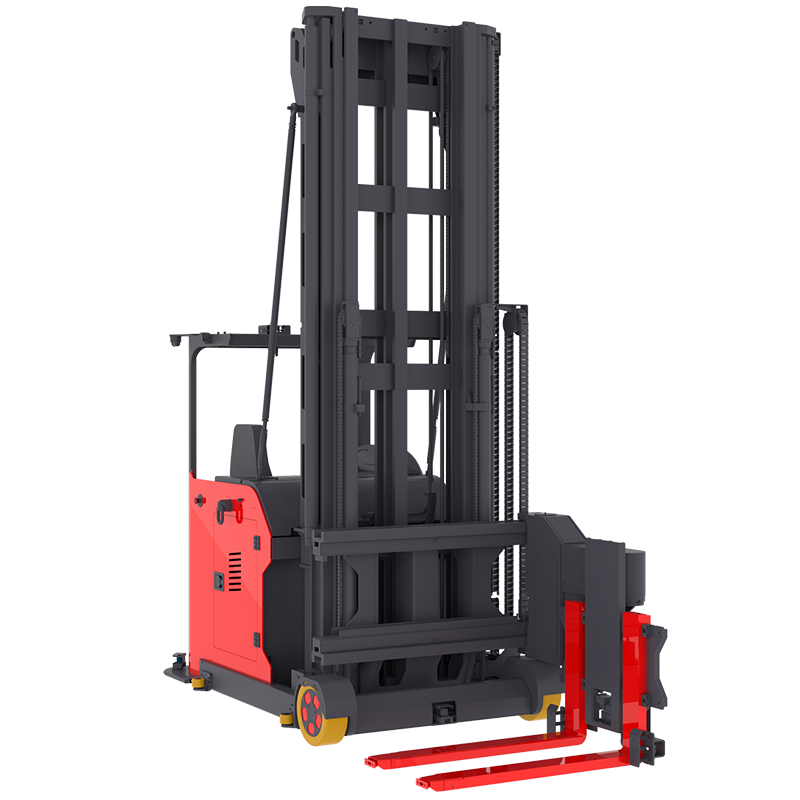
EFORK CDME16J-80S VNA Truck AGV Mobile Robot 1.6T 8M
Laser SLAM three-way VNA AGV for very narrow aisles. With 1,200 mm fork length and 125 mm fork width, it suits high-bay pallet warehouses that need dense storage and high lift.
- 1.6T
- 8 m lift
- 3-way fork
- Laser SLAM
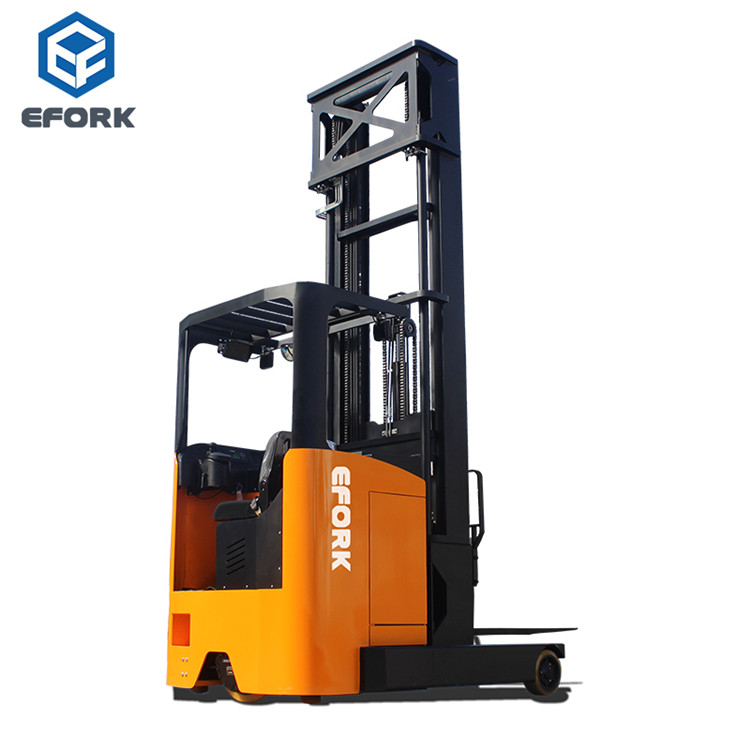
CQDE China Wholesale 2000kg 12m 8m 6m Industrial Forklift Pallet Truck
A cost-sensitive industrial pallet truck platform with 2,000 kg capacity and 12 m / 8 m / 6 m height options. A practical choice where buyers need high-lift pallet handling and a favorable price-to-capacity ratio.
- 2,000 kg
- 6–12 m options
- Wholesale supply
- CE scope
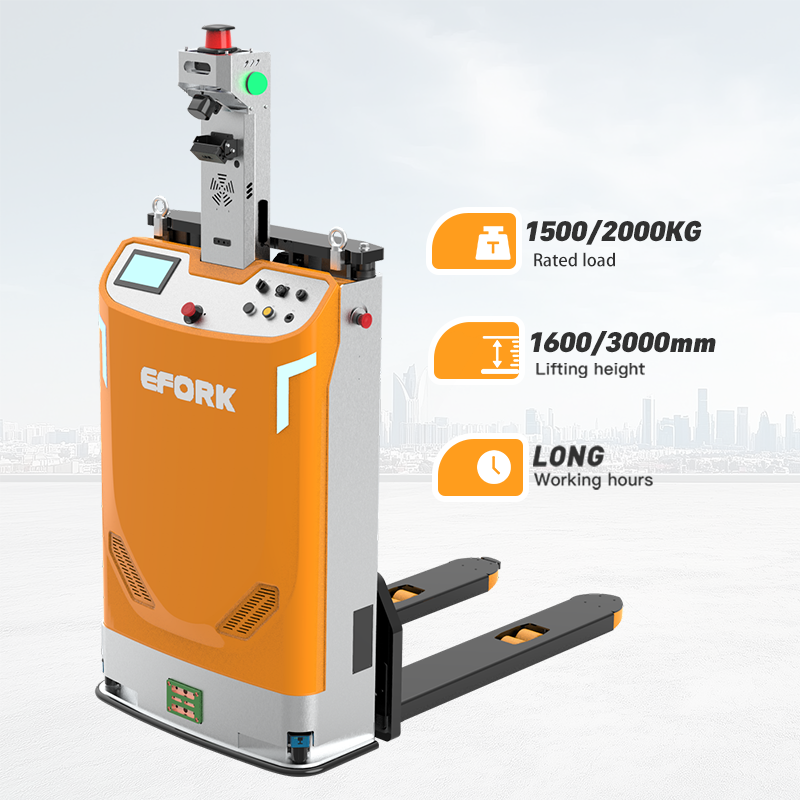
New Heli Yufeng EDA20-30 Slim Stacking AGV Forklift
CE-certified 2T 3M slim stacking AGV with 3D SLAM and WIFI/5G connectivity. Recommended for stacking mobile robot tasks in fenced, high-throughput zones and projects using the Heli-Yufeng platform.
- 2T
- 3 m lift
- 3D SLAM
- WIFI/5G
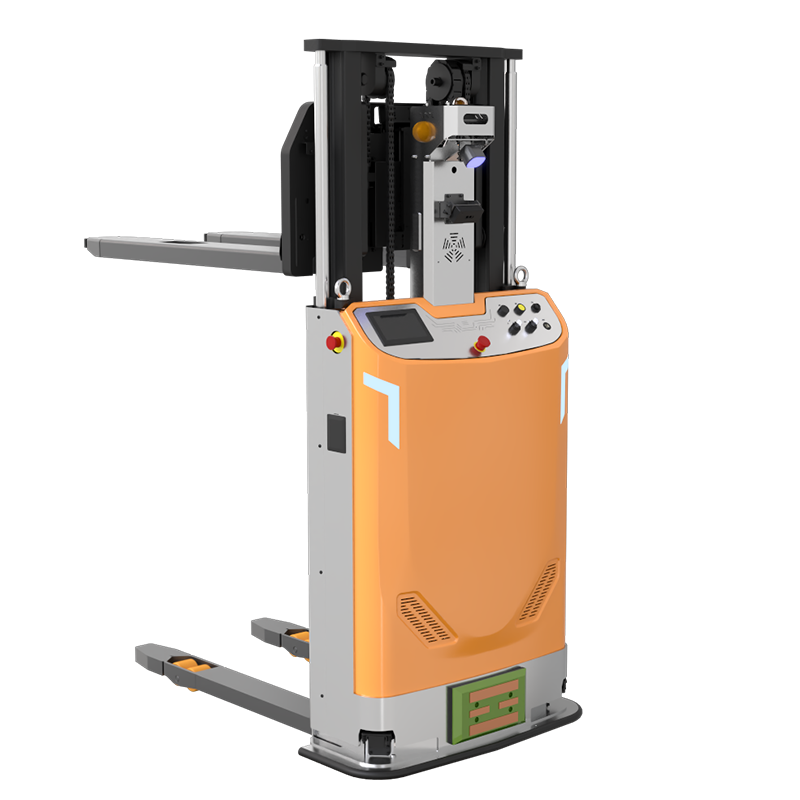
2T 1.6 M Slim Narrow-Body Stacker AGV Body
A high-lift pallet stacking AGV body engineered to maximize warehouse space. The slim, narrow-body format suits high-density storage layouts and retrofit projects where rack clearances are tight.
- 2T
- 1.6 m lift
- High lift
- Narrow body
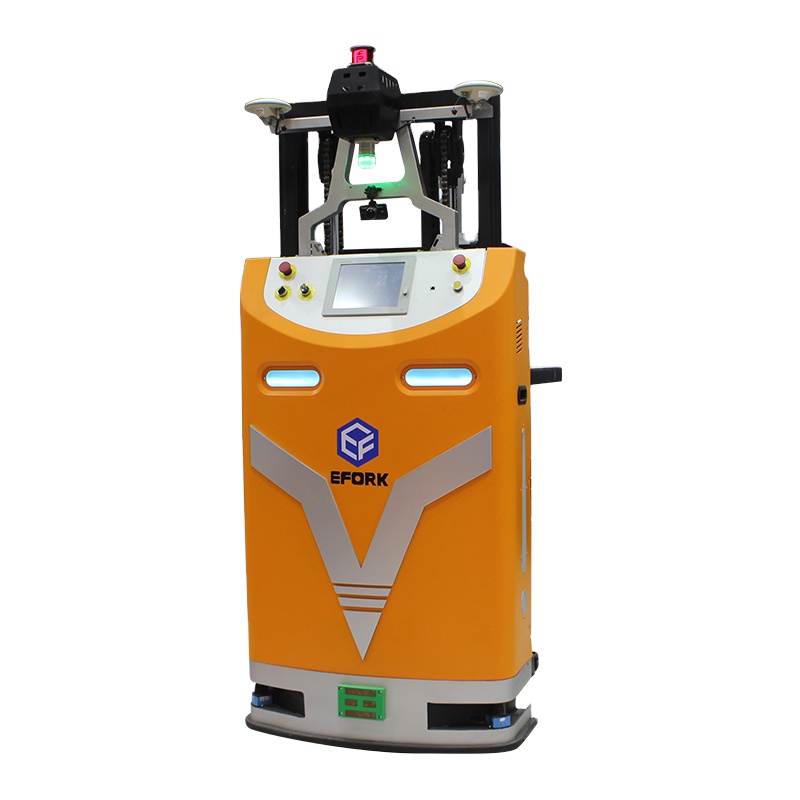
CE Certified EFORK EDA20-16 2T 1200mm Fork Width 3D SLAM Laser Navigation AGV
A CE-certified 2T AGV with 1,200 mm fork width, WIFI/5G connectivity, 10 mm accuracy and 1,600 mm lifting height. Recommended where laser and 3D SLAM redundancy improves route flexibility.
- 2T
- 1.6 m lift
- 10 mm accuracy
- 3D SLAM + laser
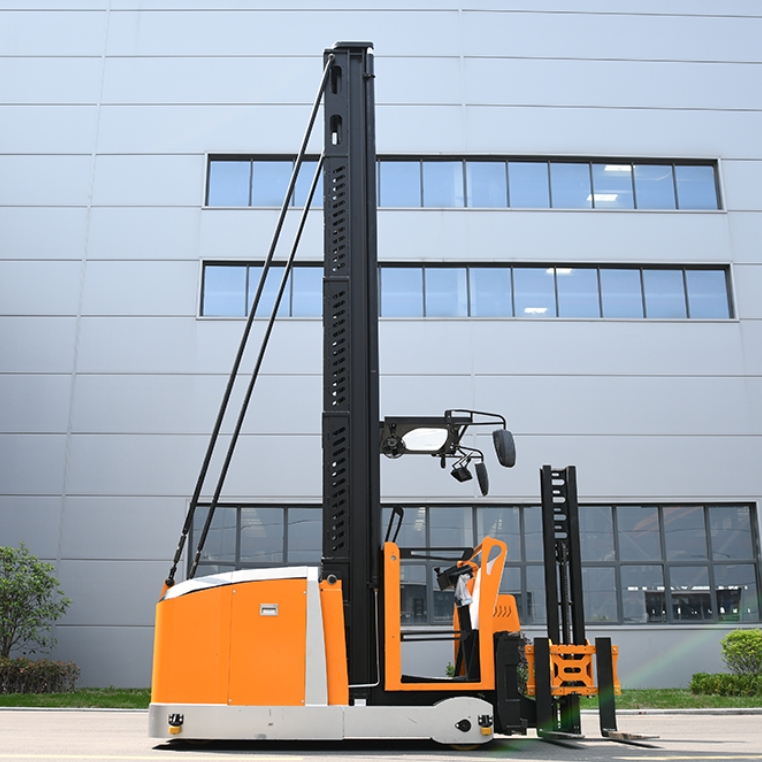
New 1.5T Manual Electric 3-Way Pallet Stacker Forklift
A 1.5T three-way pallet stacker with 1,600 kg loading capacity and AC motor drive. Suits VNA racking and manual-to-electric transition projects that need three-way fork articulation and lower entry cost.
- 1.5T
- 1,600 kg capacity
- 3-way
- AC motor
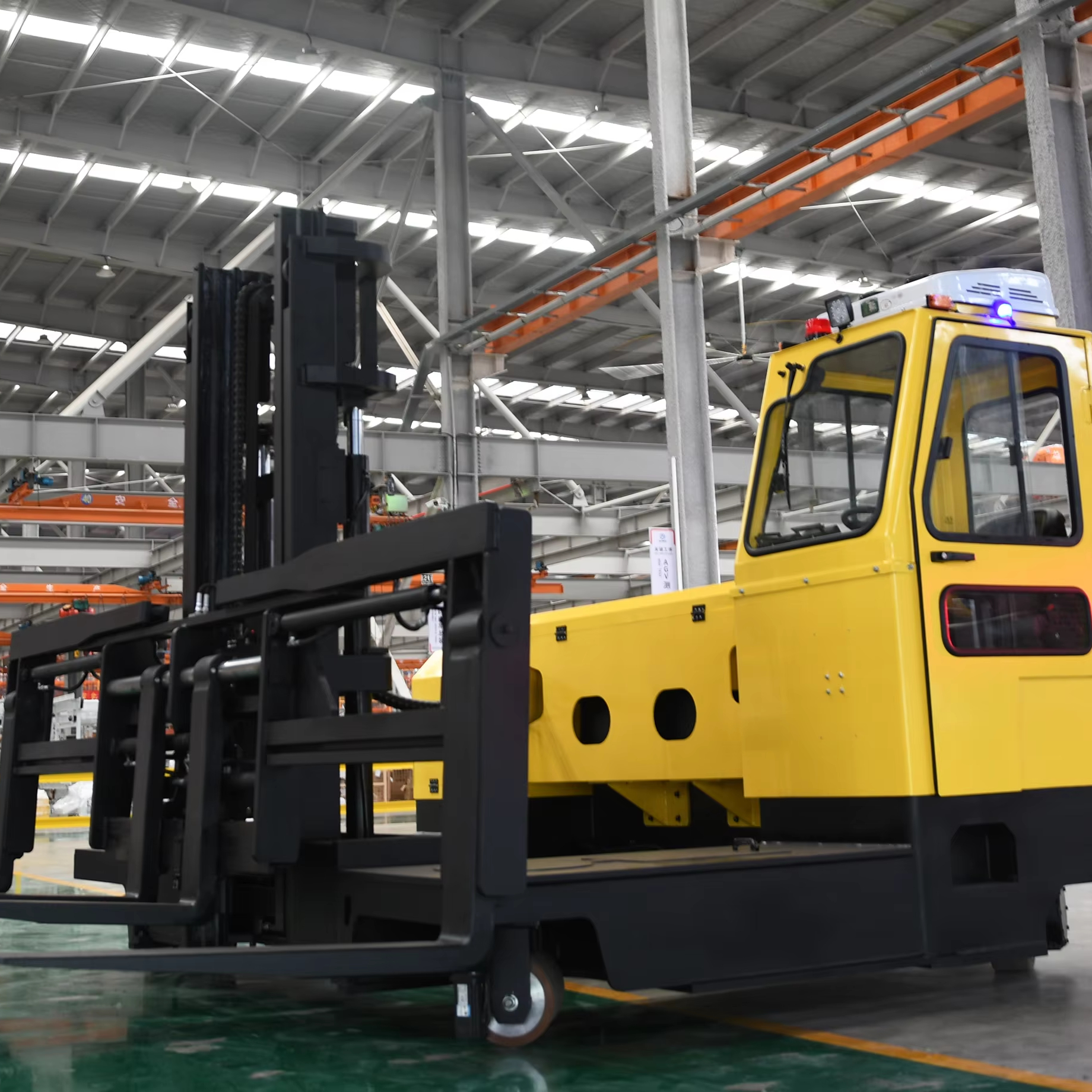
Multi-directional Forklift Reach Truck Stacker 3.5 Ton 5 Ton Electric Side Loader
A heavy-duty multi-directional side loader with wide-body seat and 3.5–5T capacity. Recommended for long loads, wide pallets and side-loading aisles where conventional reach trucks cannot combine capacity and maneuverability.
- 3.5–5T
- Side loader
- Full-way
- Wide body
CE Certification and the New Procurement Logic for Automated Warehouse Equipment
CE marking is not a decorative logo. For AGV forklifts, stacker cranes and four-way shuttle systems, the relevant question is whether the manufacturer can document conformity under the Machinery Directive 2006/42/EC — including risk assessment, safety-related control performance, guarding, emergency-stop architecture, battery charging, and the interface between the autonomous vehicle and the warehouse management system. In public tenders and multinational procurement, an equipment list that omits this evidence often creates hidden costs: re-engineering, delayed customs clearance, insurance exclusions, or site acceptance failures.
Directive-level conformity
Ask for the declaration of conformity, the technical file structure, and the safety functions validated for the exact model. A CE certificate without a model-specific risk assessment is not enough for an automated warehouse operating near people, racks and loading docks.
Factory traceability
For a fleet that will run for a decade, traceability matters as much as the machine. SGS onsite verification, ISO 9001 procedures and finished-product inspection help buyers evaluate whether production quality is repeatable rather than sample-based.
Throughput proof
Autonomous equipment should be evaluated on cycle time, charging strategy, traffic conflict points and WMS handshake reliability. The best proposal includes a fleet sizing calculation and a commissioning plan, not only a list of vehicles and prices.
Information gain for buyers: ask for the EN standards referenced in the risk assessment, the validation report for safety scanners, the FAT and SAT criteria, and the WMS interface specification. A CE certificate alone does not reveal whether the AGV safety logic has been validated for your traffic pattern. This is the difference between buying a product and procuring an automated warehouse system.
What a Verified Automated Warehouse Equipment Factory Looks Like
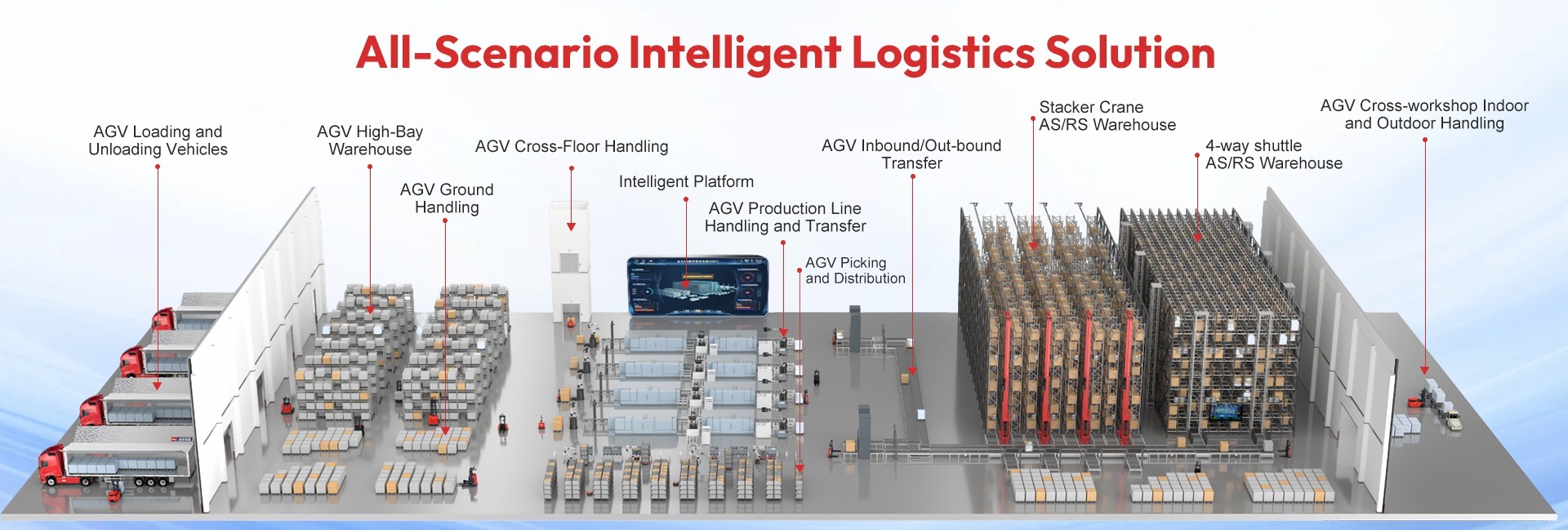
Anhui Nexrik Intelligent Technology Co., Ltd. is a manufacturer and trading enterprise based in Huagang Town Industrial Park, Feixi County, Hefei, Anhui, China. The company focuses on R&D, production and integration of intelligent warehousing equipment: AGV forklifts, VNA AGVs, reach truck AGVs, AS/RS stacker cranes, four-way shuttles, RGVs and turnkey warehouse automation. The figures most useful to procurement teams are not marketing claims but audited facts: 1,152 staff, 66,650 m² of floorspace, annual revenue above US$100 million, 7 awarded patents, 1 registered trademark, SGS onsite verification and ISO 9001 / ISO 45001 management systems.
For international buyers, the factory model also affects trade execution. Accepted Incoterms include FOB, CFR, CIF, EXW, FAS, CIP and DDP. Payment methods include L/C, D/P, D/A, MoneyGram, credit card and Western Union in USD, EUR or CNY. The company has served buyers across Southeast Asia, South America, Eastern Europe, South Asia and North America, and participates in international exhibitions to support direct technical discussions with integrators, distributors and end users.
In-house manufacturing
Chassis, masts and control integration are built and tested on company production lines, with onsite material inspection and finished-product inspection before shipment.
One-stop turnkey system
AGVs, AS/RS stacker cranes, four-way shuttles and RGVs come from one source and are engineered as one WMS-ready system, reducing interface risk between vendors.
Laser and 3D SLAM navigation
Choose reflector-based laser navigation for fixed routes or 3D SLAM for natural-feature localization that minimizes floor tape and reflector installation.
CE, ISO and SGS documentation
CE marking under 2006/42/EC, ISO 9001 and ISO 45001 systems, plus SGS onsite verification support tenders, customs clearance and importer due diligence.
OEM / ODM and full customization
Load capacity, lift height, fork dimensions, battery configuration, body width and cold-storage variants can be customized, including buyer-label production.
Global trade readiness
Export experience across five regions, flexible Incoterms, multiple payment methods and 8 years in the industry help overseas buyers move from inquiry to installation.
What Buyers Will Evaluate Before Ordering Automated Warehouse Equipment
The next procurement cycle will be less about buying a single truck and more about proving system-level performance. These six trends are already visible in tender documents and supplier assessment questionnaires.
Total cost of ownership over sticker price
Buyers are comparing energy consumption, battery cycles, spare-part lead times, scanner calibration and downtime risk. A lower purchase price can be expensive if fleet availability drops during peak season.
Safety validation as a gate item
Safety scanners, speed limits, zone control and emergency-stop architecture are moving into the technical contract. Procurement teams increasingly request model-specific conformity files and FAT criteria before approval.
Mixed fleets and open interfaces
Warehouses rarely automate with one vehicle type. Reach trucks, stackers, VNA trucks and shuttles must share traffic rules, charging areas and WMS tasks. Interface documentation becomes a competitive advantage.
Pilot-first fleet scaling
MOQ 1 set supports a pilot route before full deployment. Buyers validate cycle time, safety behavior and operator acceptance, then scale the fleet with the same control platform.
WMS and ERP integration evidence
Suppliers are asked to demonstrate task allocation, exception handling, inventory reconciliation and data ownership. Integration testing is becoming part of the factory acceptance test rather than a site surprise.
Supply-chain resilience
Spare parts availability, remote diagnostics and local service planning are now evaluated alongside equipment specifications. A warehouse automation project is a lifecycle service agreement as much as a machine purchase.
How the Next Generation of Warehouse Equipment Will Differ
Equipment development is converging around three engineering priorities: less site modification, higher storage density and one control layer for mixed automation.
3D SLAM and multi-sensor fusion
Natural-feature localization reduces reflector and floor-tape work, shortening site preparation. Combined with laser scanning and safety sensors, it allows AGVs to adapt to changing rack layouts and mixed traffic environments.
Slim and high-lift body design
Narrow-body stackers, compact reach trucks and three-way VNA models are designed to unlock existing buildings. Instead of expanding the warehouse, buyers can increase rack height, reduce aisle width and improve cube utilization.
AS/RS, shuttle and AGV convergence
High-bay stacker cranes, four-way shuttles and mobile robots are being integrated under one WMS/WCS architecture. The result is a single material-flow view from receiving to storage to picking and dispatch.
Compare AGV, VNA, AS/RS and Shuttle Equipment Before RFQ
Use this buyer’s reference to shortlist equipment by load, lift height, navigation and application. It is not a substitute for engineering, but it helps align internal stakeholders before a formal quotation request.
| Equipment | Typical load / lift | Navigation / guidance | Best-fit application | Procurement note |
|---|---|---|---|---|
| Reach Truck AGV 1.5T | 1.5T / 3 m | 3D SLAM, 10 mm accuracy | Selective racking and narrow aisles | Compact choice when aisle width is fixed |
| VNA 3-Way AGV 1.6T | 1.6T / 8 m | Laser SLAM | Very narrow aisle, high-bay pallet storage | Best for dense storage and high lift |
| CQDE Pallet Truck 2,000 kg | 2,000 kg / 6–12 m options | Operational platform dependent | High-lift pallet handling and price-sensitive projects | Review exact configuration before RFQ |
| Slim Stacking AGV 2T | 2T / 3 m | 3D SLAM, WIFI/5G | Stacking mobile robot and high-throughput zones | Good fit for standard pallet stacking |
| Slim Stacker AGV Body | 2T / 1.6 m | AGV body integration | High-density storage and retrofit layouts | Evaluate rack clearance and body width |
| EFORK EDA20-16 2T AGV | 2T / 1.6 m | 3D SLAM + laser, 10 mm | Flexible pallet handling with redundant navigation | Review fork width and WIFI/5G plan |
| 3-Way VNA Stacker 1.5T | 1.5T / 1,600 kg capacity | Manual-electric VNA operation | VNA racking and entry-level electric transition | Confirm shift throughput and operator workflow |
| Multi-Directional Side Loader | 3.5–5T | Full-way electric side loading | Long loads, wide pallets and side-loading aisles | Heavy-duty application; validate floor loading |
Final specifications are confirmed during project engineering based on pallet dimensions, rack drawings, floor flatness, throughput targets, safety zones and WMS requirements.
Automated Warehouse Equipment Procurement FAQ
These are the questions technical buyers, importers and project owners most often ask before shortlisting a CE-certified manufacturer.
What does “CE-certified automated warehouse equipment” actually cover?
It should cover conformity under the applicable EU directives, commonly the Machinery Directive 2006/42/EC for AGV forklifts and automated machinery. Ask for the declaration of conformity, model-specific risk assessment, safety function validation and the technical file structure — not only a certificate image.
Can we order a single unit as a pilot?
Yes. The MOQ for every AGV forklift, stacker crane and four-way shuttle model is 1 set. A pilot allows the buyer to validate routes, cycle time, safety behavior and operator acceptance before scaling to a fleet.
Should we choose laser navigation or 3D SLAM?
Laser navigation is strong for highly repetitive fixed routes and reflector-based environments. 3D SLAM localizes using natural building features, typically reducing reflector or floor-tape work and shortening site preparation. For mixed traffic or changing layouts, multi-sensor fusion is often preferable.
How do we compare a VNA AGV with an AS/RS stacker crane?
A VNA AGV is mobile and flexible, making it suitable for high-bay pallet handling where layout changes are possible. An AS/RS stacker crane is rail-guided and optimized for very high, dense automated storage. The decision depends on building height, throughput, fire strategy, rack design and future expansion plans.
What factory evidence should we request before ordering?
Request business license verification, SGS onsite verification, ISO 9001 and ISO 45001 certificates, CE documentation, factory photos or video, finished-product inspection records, and references from similar projects. For high-value tenders, a factory audit or remote FAT observation is also advisable.
Can equipment be customized for cold storage, fork dimensions or battery configuration?
Yes. Full customization, OEM, ODM and buyer-label production are available, including load capacity, lift height, fork dimensions, body width, battery configuration and cold-storage variants. Final specifications are confirmed during engineering review.
How is WMS or ERP integration handled?
AS/RS and four-way shuttle systems are designed WMS-ready. Interface requirements with the buyer’s existing WMS or ERP are defined during solution design and tested during commissioning. Buyers should provide task data, inventory rules, exception-handling expectations and cybersecurity requirements early.
What trade and payment terms are accepted?
Accepted Incoterms include FOB, CFR, CIF, EXW, FAS, CIP, DDP and express delivery. Payment methods include L/C, D/P, D/A, MoneyGram, credit card and Western Union in USD, EUR or CNY, subject to order value and commercial review.
What should be included in a complete technical proposal?
A complete proposal should include equipment selection, fleet sizing, layout concept, cycle-time calculation, safety scope, charging strategy, WMS interface description, FAT and SAT plan, spare-parts list, lead time and commissioning responsibilities. A price list alone is not a procurement-ready proposal.
Send Your Rack Layout, Pallet Spec and Throughput Target
Move from catalogue research to a validated layout. Share pallet dimensions, load weight, lift height, aisle width, throughput per hour and WMS requirements. A qualified reply should include the recommended equipment mix, fleet size, safety scope, factory verification pack and next-step plan.