0%

China has become an important source of Automated Guided Vehicle solutions for factories, warehouses, and distribution centers. Its manufacturers offer vehicles for pallet transport, assembly-line delivery, and movement through narrow aisles. Options may include magnetic-guided, laser-guided, or vision-based navigation. The right choice depends on the work, not the brochure. Small details matter: floor joints, turning space, load dimensions, and how often routes change. A vehicle that performs well in a demonstration may behave differently during a full shift.

This guide looks at leading Chinese manufacturers and the factors that distinguish their products and support services. It is not a fixed ranking; supplier capabilities and product ranges change over time. Buyers should compare payload, positioning accuracy, charging arrangements, fleet-management software, integration support, and access to spare parts. Ask for clear technical documents and, where possible, a site trial using representative loads and routes. Check how the supplier handles commissioning, operator training, and service response after installation. A polished specification sheet helps, but it cannot answer every operational question. Even a careful comparison can miss local constraints, so involve the people who will use and maintain the vehicles. The list is a starting point, not a verdict.
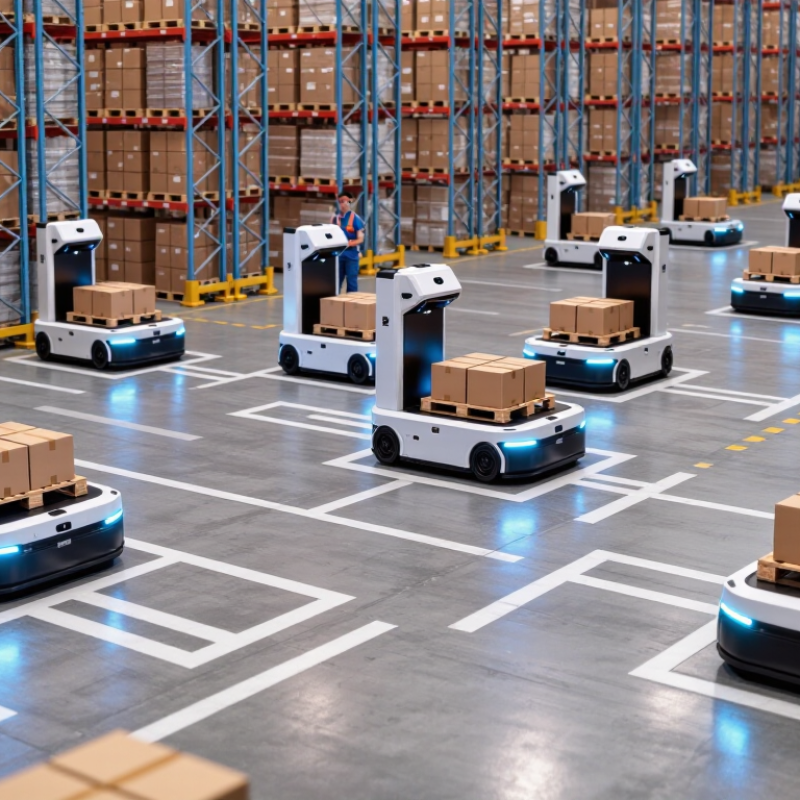
Top Automated Guided Vehicle Manufacturers in China?

What Are Automated Guided Vehicles?

Automated guided vehicles, or AGVs, are driverless industrial vehicles that move materials along planned routes. They carry pallets, bins, or production parts between workstations, storage areas, and loading points. Many follow magnetic tape, floor markers, or laser-based guidance. Their sensors help detect obstacles and slow or stop the vehicle when a person or object enters its path. No driver’s seat is needed.

The definition sounds tidy; factory floors are not. A route may cross a busy aisle, a cold room, or a narrow doorway. AGV selection therefore depends on payload, turning space, floor condition, charging needs, and how often routes change. A vehicle carrying a heavy pallet needs different handling from one delivering small component bins. In Chinese manufacturing facilities, AGVs may support assembly, warehousing, and material replenishment, but they still need careful site planning. That matters. Poorly placed stations or unclear pedestrian crossings can interrupt a well-designed workflow. Navigation terms also vary between suppliers, so buyers should ask how the vehicle behaves when its path is blocked, not just how it finds the route. The answer can expose a gap between a neat demonstration and everyday operation.

Automated Guided Vehicles: Typical Payload by Vehicle Type

An automated guided vehicle (AGV) is a driverless vehicle that transports materials along planned routes in industrial or warehouse environments.

Payload ratings shown are representative examples, not market averages or manufacturer rankings. Actual capacity varies by model, configuration, and operating conditions.

How China's AGV Industry Has Developed

China’s AGV industry grew alongside the country’s expanding manufacturing base. Early systems often followed fixed routes, moving materials between predictable points. As factories adopted more digital production tools, demand shifted toward vehicles that could navigate changing layouts and coordinate with other equipment.

The change is visible on the factory floor. A vehicle may carry parts from a storage aisle to an assembly station, pause for a worker, then accept a new task through a fleet-management system. Cameras, laser sensors, and mapping software have made flexible navigation more practical. Progress is real, but uneven. Some sites still rely on fixed routes because they are easier to maintain and suit stable workflows.

Chinese manufacturers have also benefited from dense component supply chains and extensive experience building industrial equipment. That has helped broaden product options, from simple material carriers to vehicles designed for heavier loads or tighter spaces. Yet buying a vehicle is only part of the decision. A useful assessment should include floor conditions, traffic patterns, charging arrangements, and integration with existing systems. Small details matter. A narrow turn or poorly placed rack can disrupt an otherwise capable fleet, and real-world performance may differ from a polished demonstration.

Leading Automated Guided Vehicle Manufacturers in China

Leading automated guided vehicle manufacturers in China are competing on more than vehicle price. Buyers should compare navigation accuracy, payload ratings, fleet software, service coverage, and integration with existing warehouse systems. A low-cost unit can look convincing on a quotation; its real value depends on reliable movement through busy aisles, around people, and beside loading stations.

The International Federation of Robotics reported that sales of professional service robots for transportation and logistics reached nearly 113,000 units in 2023, up 35% year over year. This figure covers a broader category than AGVs alone, so it should not be read as China-specific market data. Still, it signals strong demand for automated material handling.

Ask manufacturers for task-specific test results, including stopping distance, navigation performance, and uptime under realistic operating conditions. Numbers matter.

Factory visits and reference checks can reveal details a brochure misses: uneven floors, narrow turning points, battery-change routines, and how quickly faults are resolved. Request clear documentation for interfaces, maintenance intervals, and software updates. Then verify those claims with a pilot.

One limitation: pilot results may not reflect peak-season traffic. A careful buyer should plan for that gap before choosing a supplier.

Key AGV Types and Technologies

In China’s material-handling sector, AGVs are designed around the load, route, and floor conditions. Tugger vehicles pull carts between production areas, while unit-load models move pallets or bins. Fork-style AGVs can lift loads from floor level or transfer them to conveyors.

Navigation options include magnetic or QR markers, laser-based mapping, and camera-guided systems. Markers offer predictable routes but require floor upkeep. Laser navigation can adapt to changing layouts, though reflections and blocked sightlines may cause trouble. No method fits every site.

Safety and fleet software matter just as much as vehicle type. Laser scanners can detect people or obstacles and trigger a controlled stop; sensors need sensible placement and regular checks. In a narrow aisle, turning clearance may matter more than top speed.

Battery choice also affects shift planning, especially when charging time interrupts continuous work. A useful assessment records load weight, aisle width, floor joints, and traffic peaks.

Ask suppliers to demonstrate the vehicle with real loads and representative routes. A tidy test area can hide awkward conditions. Pilot results are useful, but one quiet shift rarely reveals every problem.

How to Compare Chinese AGV Manufacturers

Comparing Chinese AGV manufacturers means testing more than vehicle speed or quoted price. Check payload accuracy, turning radius, navigation stability, charging time, and recovery after a blocked aisle. Ask for a live trial using your floor conditions: reflective surfaces, narrow passages, pedestrian crossings, and loaded racks. Test it live. A polished demonstration can hide weak exception handling, and that is easy to overlook.

Review safety documentation against ISO 3691-4:2023, which covers driverless industrial trucks and their systems. Also verify interfaces with warehouse software, elevators, doors, and existing fleet controls. IFR’s World Robotics 2024 report recorded 541,302 industrial robot installations worldwide in 2023, with Asia accounting for about 70 percent. This is broader than AGVs, so it signals automation activity, not AGV demand specifically. Compare warranty terms, spare-parts availability, remote support hours, and local service response times. Request evidence from deployments with similar loads and shift patterns, not just reference counts. Then calculate total cost across several years, including batteries, software, maintenance, and downtime. Price matters. But the cheapest quotation may leave costly gaps. A fair comparison still needs judgment: published performance figures rarely capture every real-world disruption.

FAQS

How has China’s AGV industry changed?

Early vehicles followed fixed routes between predictable points. Newer systems can map changing layouts and accept tasks through fleet software. Progress remains uneven.

What can an AGV do on a factory floor?

It can carry parts from a storage aisle to an assembly station, pause for workers, then receive another task. Small details matter.

What should buyers check before choosing an AGV?

Compare payload accuracy, turning radius, navigation, charging time, software integration, and service support. Check your floor, too.

Why should buyers test vehicles in their own facility?

Reflective floors, narrow passages, people, and loaded racks can affect performance. Test it live. A showroom demo may miss awkward problems.

What should a realistic pilot include?

Test stopping distance, blocked-aisle recovery, uptime, and task performance under normal operating conditions. Peak-season traffic may change the results.

Do industry sales figures show AGV demand in China?

Not directly. One 2023 report counted nearly 113,000 professional transport and logistics robots worldwide, up 35 percent. That category is broader than AGVs.

What safety and integration details need review?

Review relevant safety documentation and test connections with warehouse software, elevators, doors, and existing fleet controls. Interfaces can be easy to underestimate.

How should buyers compare the full cost?

Include batteries, software, maintenance, spare parts, and downtime over several years. The cheapest quote may leave costly gaps. I would still double-check the assumptions.

Conclusion

An Automated Guided Vehicle (AGV) is a driverless vehicle that moves materials along planned routes in facilities such as factories and warehouses. China’s AGV industry has developed alongside growing demand for smarter, more efficient material handling, with manufacturers offering a wider range of vehicle designs, navigation methods, and system integration options. This overview introduces the industry’s development and the capabilities buyers may encounter when exploring Chinese suppliers.

AGVs vary by load capacity, shape, navigation technology, and intended task. Common approaches include magnetic or optical guidance, laser-based navigation, and systems that use sensors to navigate changing environments. When comparing manufacturers, consider product reliability, safety features, customization, integration with existing equipment, technical support, and the suitability of the vehicle for your workflow. A careful evaluation of these factors can help organizations identify an AGV solution that fits their operational needs and long-term plans.

Clara

Clara

Clara is a professional marketing specialist with a strong understanding of the company’s products, services, and the needs they are designed to address. She regularly contributes expert articles to the company’s blog, turning product knowledge and industry insights into clear, practical......