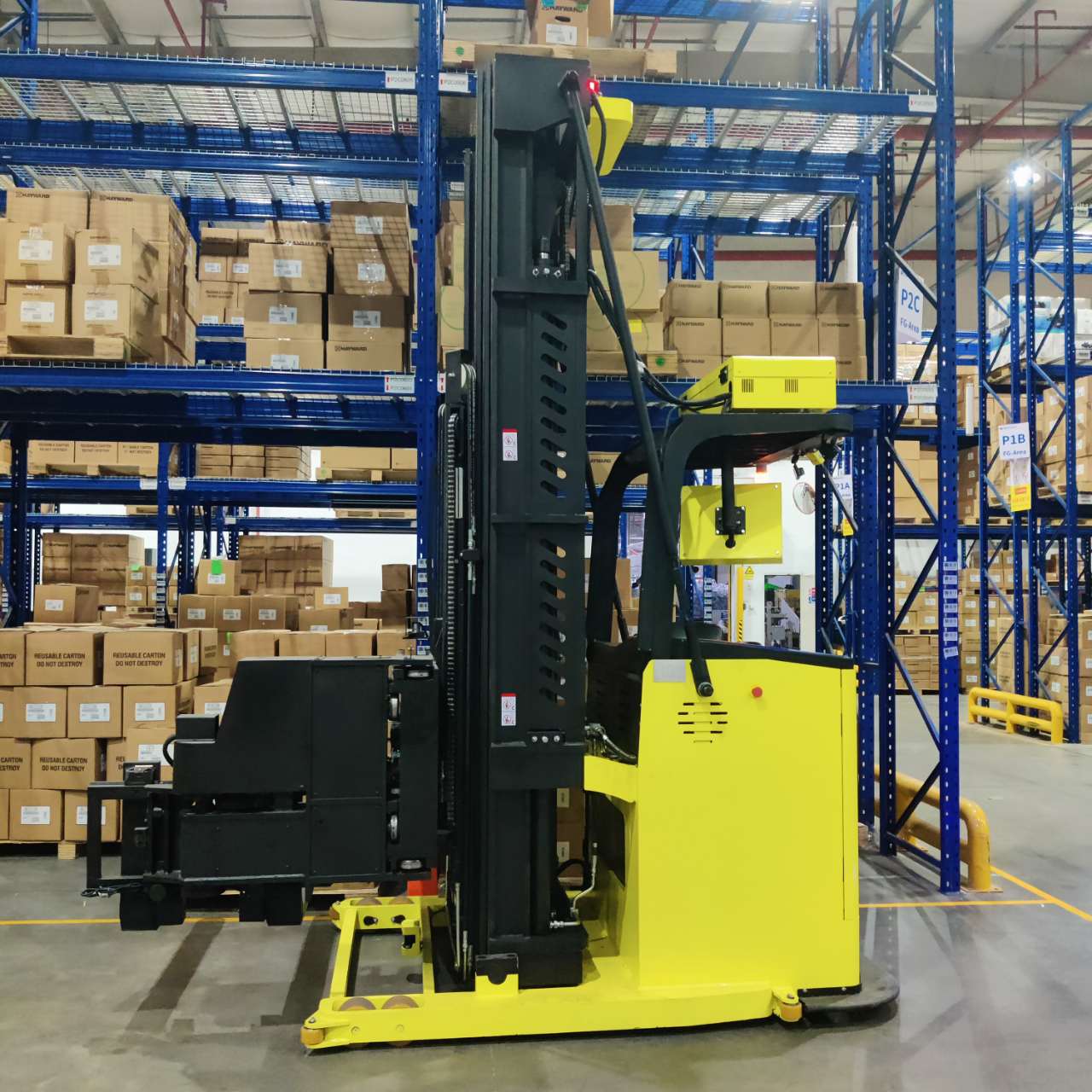
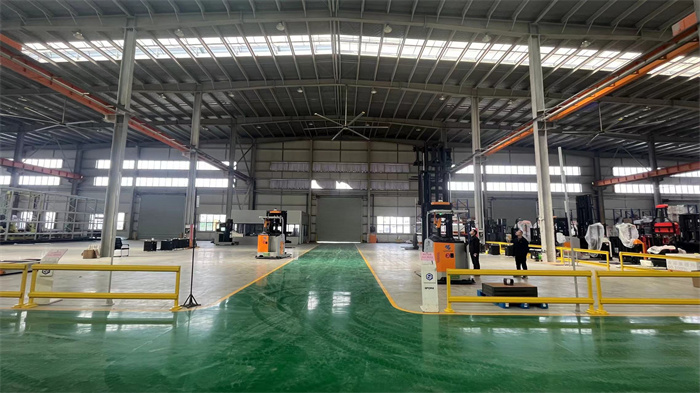
What does “1600kg 7m-11m VNA Automated Forklift AMR” actually mean?
It describes an autonomous forklift AMR with a nominal load capacity of 1,600 kg and a lift-height range of approximately 7 m to 11 m, designed for very narrow aisle (VNA) pallet storage. The exact residual capacity, aisle width and mast configuration must be confirmed by engineering because load centre, fork attachment, rack height and floor tolerance all affect the final specification.
Is 1,600 kg enough for my pallets?
Many standard pallet loads fall below 1,200 kg, so 1,600 kg can provide useful engineering margin. However, you should always compare the rated capacity at the required lift height and load centre, not just the headline number. If you handle dense beverages, building materials or heavy components, request a residual-capacity chart before approving the configuration.
What aisle width is required for a VNA AMR?
Very narrow aisle systems commonly operate in aisles around 1.6 m to 1.9 m, but the true minimum depends on the truck model, fork rotation, rack uprights, pallet overhang, floor flatness and safety clearances. Never approve an aisle width from a brochure alone. Send your rack drawings and floor survey to the supplier for a written clearance check.
Can it work safely at 11 m?
Yes, 11 m configurations can be engineered, but high lift requires active stability control, correct mast design, load detection, speed limiting and a verified rack tolerance. The buyer should review the residual-capacity chart at 11 m, building clear height, sprinkler clearance and the expected pallet condition before finalizing the order.
Should I choose 3D SLAM or laser navigation?
3D SLAM uses natural features for localisation and can reduce reflector or floor-tape work, which is attractive for existing buildings and changing layouts. Laser navigation remains strong for fixed, repetitive routes. The right choice depends on rack geometry, open areas, traffic, temporary storage and how often the layout will change. Ask the supplier to explain the commissioning assumptions.
Can the AMR integrate with our existing WMS or ERP?
Integration is possible but must be defined during solution design. The review should cover task dispatch, pallet position verification, exception handling, data ownership, API method, acceptance tests and reporting. The AS/RS and shuttle product lines are WMS-ready, and VNA AMR interfaces are configured according to the project’s WMS/WCS environment.
What certifications should a global buyer request?
At minimum, request CE marking under the Machinery Directive 2006/42/EC where applicable, ISO 9001 quality management, ISO 45001 occupational health and safety, and evidence of onsite verification such as SGS. Also request a risk assessment, CE declaration, electrical documentation and operator training plan for your internal compliance file.
What is the MOQ and typical lead time?
The MOQ for AGV forklifts, stacker cranes and four-way shuttles is typically 1 set, which supports pilot deployment. Lead time depends on lift height, battery configuration, WMS interface, customization and factory schedule. A realistic project plan should include engineering review, factory acceptance testing, shipping, site preparation, mapping, commissioning and operator training.
Can the forklift be customized for our pallets and building?
Yes. Customization can include load capacity review, lift height, fork dimensions, fork position, battery configuration, cold-storage protection, safety zones and buyer-label production. OEM and ODM services are available. The best starting point is a rack drawing, pallet photo, load weight, floor survey and throughput target.
What after-sales support is available?
Support typically includes remote diagnostics, spare-parts planning, maintenance guidance, software support and operator training. For overseas projects, buyers should ask about time-zone response, local partner availability, spare-parts lead time and escalation procedure before placing the order.
Which trade and payment terms are accepted?
Accepted delivery terms include FOB, CFR, CIF, EXW, FAS, CIP and DDP. Payment methods include L/C, D/P, D/A, MoneyGram, credit card and Western Union, with USD, EUR or CNY available depending on the transaction structure.
How do we request a layout plan and quotation?
Send the supplier your rack layout, pallet dimensions, load weight, required lift height, aisle width, throughput per hour, shift pattern, floor condition, WMS details and target country. The engineering team can then propose a VNA AMR configuration and identify the site information needed for a firm quotation.